When a health system, specialty pharmacy, or payer-mandated biosimilar conversion initiative prepares to switch patients from a reference biologic to a biosimilar, the operational assumption is often straightforward: verify that the brand holds an FDA interchangeability designation, select the patient-preferred autoinjector presentation, and execute automatic pharmacy-level substitution without contacting individual prescribers.
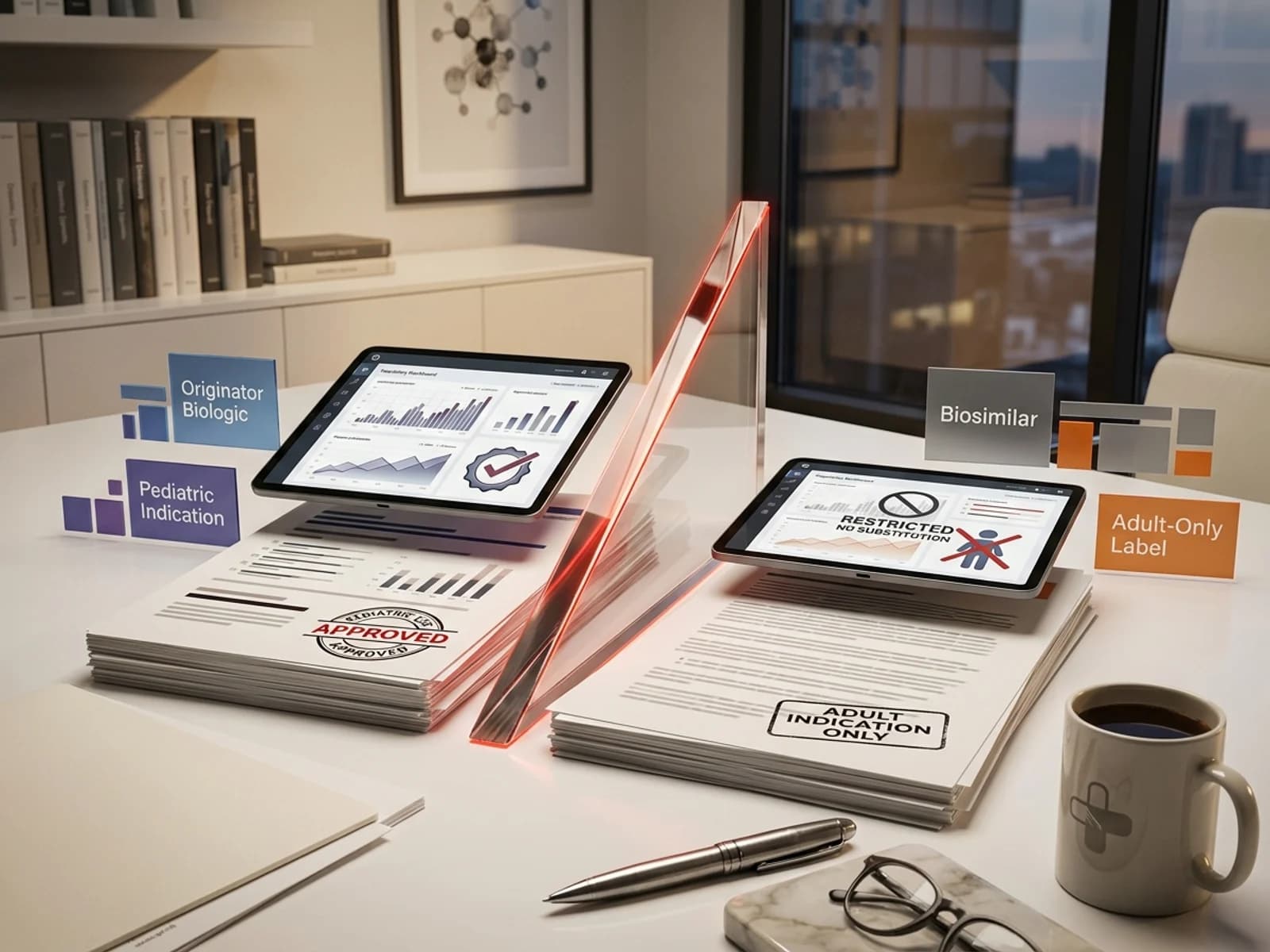
That assumption can lead to a serious regulatory and compliance breach. In the FDA Purple Book, interchangeability is granted presentation by presentation, not brand by brand. A biosimilar may be licensed as an interchangeable biologic in a pre-filled syringe or vial, yet remain licensed strictly as a non-interchangeable biosimilar in an autoinjector.
On August 3, 2026, the FDA published a landmark draft guidance in the Federal Register: Biosimilar and Interchangeable Biosimilar Products: Considerations for Container Closure Systems and Device Constituent Parts (91 FR 48880, Docket No. FDA-2026-D-4272, comments due October 2, 2026). Fulfilling a core commitment under the Biosimilar User Fee Amendments (BsUFA III), this guidance establishes the FDA's formal regulatory framework for evaluating container closure systems and drug-device combination products under Section 351(k) of the Public Health Service Act (PHS Act).
This dossier pairs a line-by-line read of the FDA's new draft guidance with an original, reproducible audit of all 229 licensed 351(k) product rows in the FDA Purple Book database. We reveal where interchangeability breaks across presentations today, unpack the three comparative analyses FDA mandates, examine state substitution law friction, and establish an operational compliance checklist for pharmacy and commercial launch teams.
What does the August 3, 2026 draft guidance actually require of a 351(k) applicant?
For over a decade, biosimilar sponsors navigating drug-device combination products relied on fragmented guidance: Question I.4 of the September 2021 Biosimilar Q&As and Section VIII of the May 2019 Interchangeability Guidance. The August 3, 2026 draft guidance consolidates and substantially expands these standards.
FDA Draft Guidance Scope & Administrative Spine
| Milestone / Document Field | Regulatory Metadata |
|---|---|
| Document Title | Biosimilar and Interchangeable Biosimilar Products: Considerations for Container Closure Systems and Device Constituent Parts |
| Publication & Docket | August 3, 2026 (91 FR 48880); Docket No. FDA-2026-D-4272 |
| Statutory Authority | Section 351(k) PHS Act; 21 CFR Part 3 and Part 4 |
| BsUFA Commitment | BsUFA III Goals Letter (FY 2023–27) |
| Comment Close Date | October 2, 2026 |
| Superseded Documents (Upon Finalization) | • Removes Q.I.4 of 2021 Q&A Guidance • Updates Section VIII of 2019 Interchangeability Guidance |
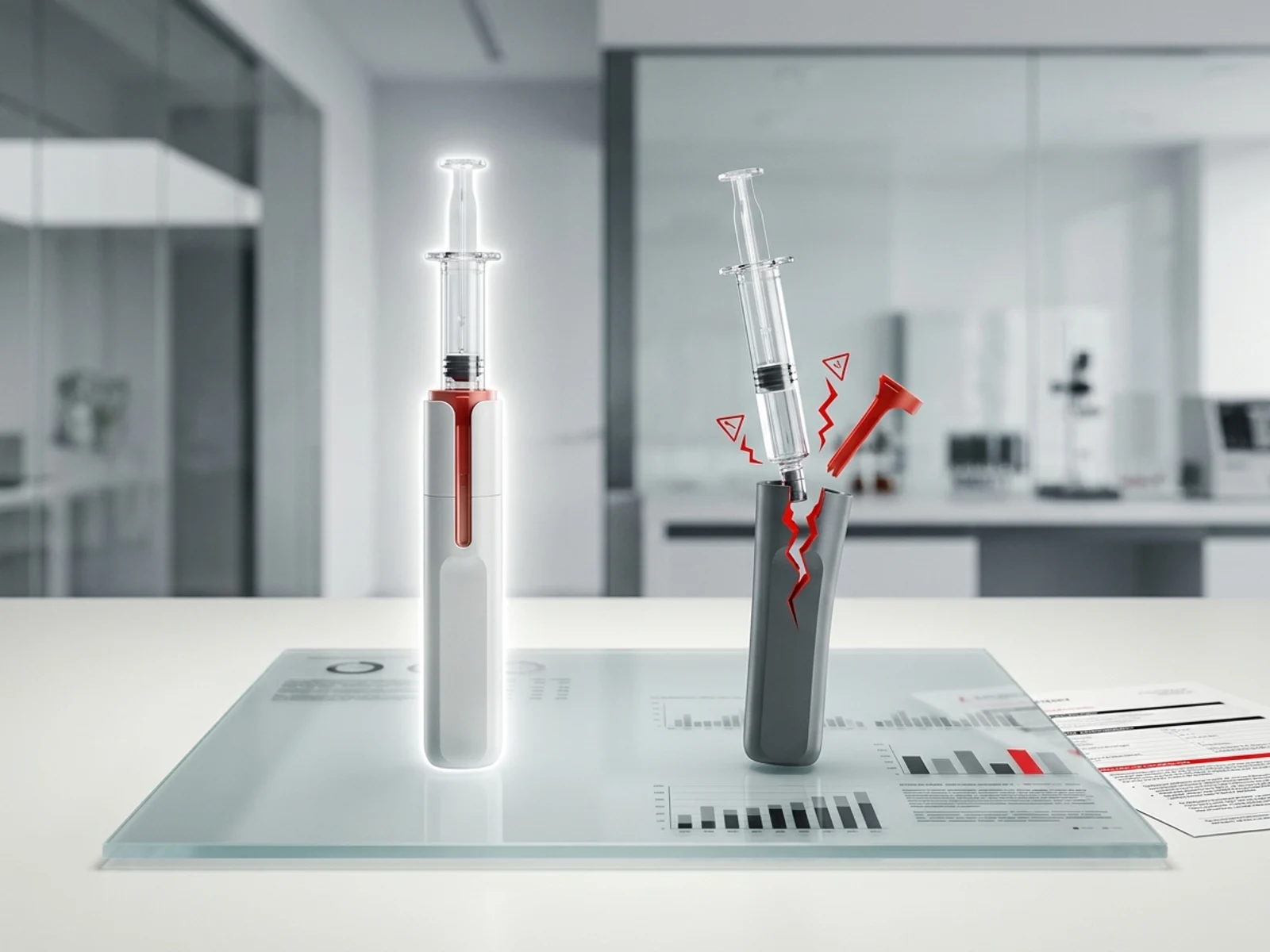
The draft guidance applies to both single-entity and co-packaged drug-device and biologic-device combination products, such as pre-filled syringes (PFS), autoinjectors (AI), on-body delivery systems, pen injectors, and specialized reconstitution kits.
Core Chemistry, Manufacturing, and Controls (CMC) Mandates
In Module 3 of the 351(k) Biologics License Application (BLA), sponsors must submit complete, independent CMC data for the container closure system and any device constituent parts:
Design Verification & Functionality: Complete engineering documentation demonstrating break-loose force, glide force, injection duration, dose accuracy, and needle safety shield activation.
Extractables and Leachables (E&L): Controlled extraction studies and toxicological risk assessments evaluating leachable compounds from elastomeric stoppers, plunger seals, syringe barrels, and adhesive lubricants (e.g., silicone oil subvisible particulate profiling).
Stability and Compatibility: Real-time and accelerated stability testing demonstrating container closure integrity (CCIT) and physicochemical stability under representative storage, shipping, and cold-chain conditions.
What are the three comparative analyses FDA wants, and what can they not fix?
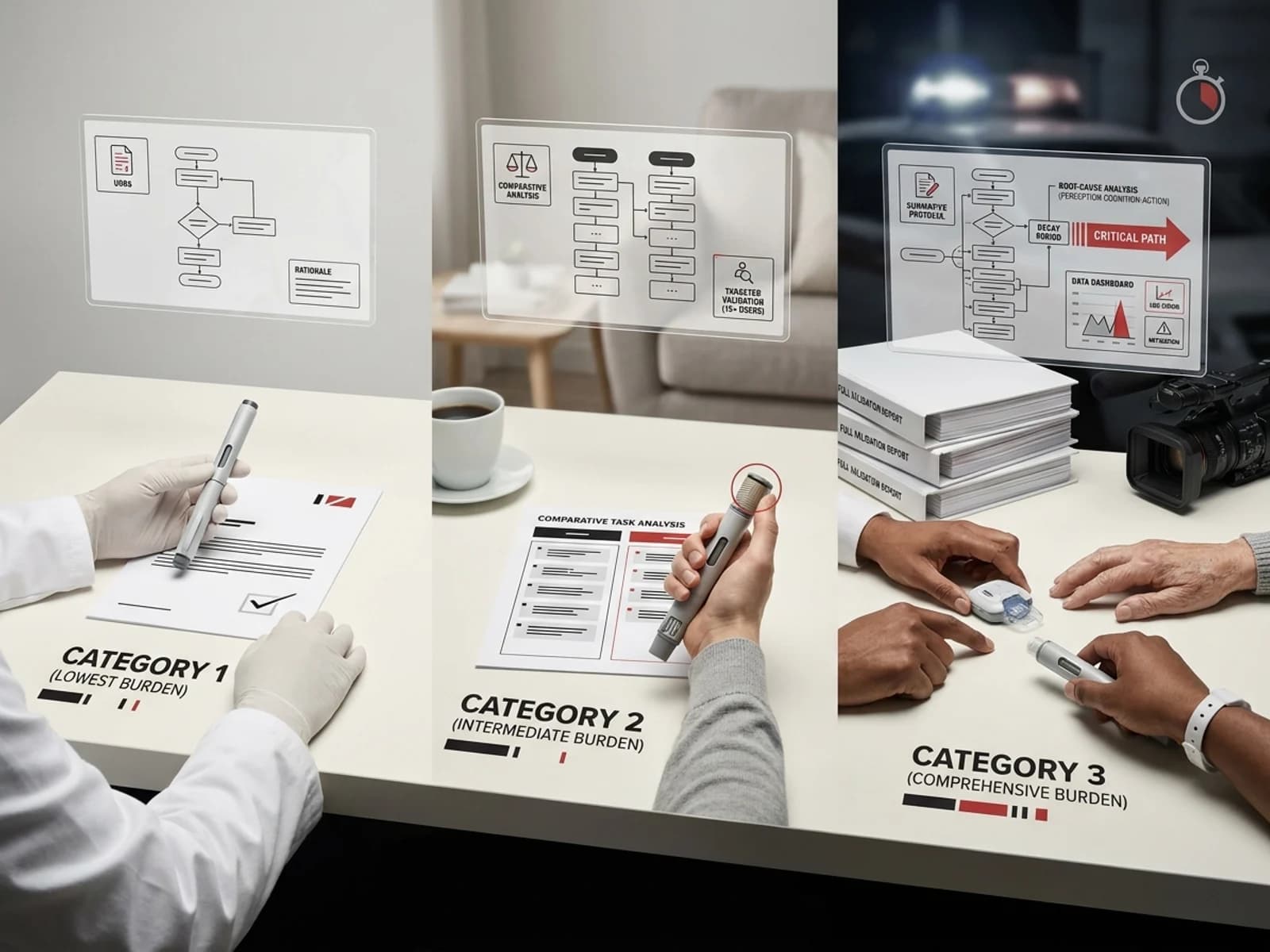
When a sponsor seeks licensure for a proposed biosimilar or interchangeable combination product whose device constituent part differs in design, shape, or operation from the reference product, the FDA recommends three structured comparative analyses:
┌────────────────────────────────────────────────────────────────────────┐
│             The Three Comparative Analyses for 351(k) Devices          │
├────────────────────────────────────────────────────────────────────────┤
│ 1. Physical Comparison Analysis                                        │
│ └── Direct side-by-side engineering evaluation of device constituent   │
│     parts (dimensions, weight, grip profile, viewing window, needle    │
│     gauge/length, activation force, and tactile/audible feedback).     │
├────────────────────────────────────────────────────────────────────────┤
│ 2. Comparative Task Analysis (CTA)                                     │
│ └── Step-by-step comparison of the user actions required to:           │
│     • Prepare the device (inspection, cap removal, equilibration)      │
│     • Administer the dose (positioning, skin pinch, activation, hold)  │
│     • Dispose of the device (needle retraction, sharps management).    │
│     Evaluates whether differences introduce new or modified use errors.│
├────────────────────────────────────────────────────────────────────────┤
│ 3. Side-by-Side, Line-by-Line Labeling Comparison                      │
│ └── Granular comparative mapping of the Instructions for Use (IFU),    │
│     Quick Reference Guides, packaging layout, and warning panels.      │
└────────────────────────────────────────────────────────────────────────┘
What Differences Are Acceptable vs. Unacceptable?
The right-hand column below is statutory and not a matter of guidance judgment: Section 351(k)(2)(A)(i) of the PHS Act requires that a proposed biosimilar share the reference product's route of administration, dosage form, and strength, and a 351(k) application cannot add an indication the reference product does not hold. The left-hand column is our reading of the kinds of device differences the comparative-analysis framework exists to evaluate — it is illustrative, not a list published by FDA, and each example is a difference a sponsor would have to support with comparative data rather than one FDA has pre-cleared:
Permissible vs. Unacceptable Device Differences
| Permissible Differences (With Supporting Comparative CTA) | Unacceptable Differences (Statutory Non-Starters) |
|---|---|
| • Button activation vs. push- on-skin auto-activation | • Different route of administration (e.g., IV vs. Subcutaneous) |
| • Transparent vs. translucent inspection viewing window | • Different dosage form or strength (e.g., 50 mg/mL vs. 100 mg/mL) |
| • Integrated needle safety shield vs. passive manual sheath | • New, unapproved clinical indication or patient population |
| • Different external grip shape, casing dimensions, or colors (provided labeling is clear) | • Device design changes that create clinically meaningful differences in safety, purity, or potency |
If the Comparative Task Analysis identifies new or modified user tasks that could result in critical use errors (e.g., premature needle withdrawal, incomplete dose delivery, or unintentional needle sticks), the sponsor must conduct human factors validation testing, as detailed in our guide on human factors validation for combination products.
Where does interchangeability actually break at the presentation level in the Purple Book today?
To determine how presentation-level regulatory decisions impact the market, we conducted an exhaustive, reproducible audit of the FDA Purple Book Database of Licensed Biological Products (data snapshot dated 2026-07-24).
Across the entire Purple Book, there are 229 licensed 351(k) product rows corresponding to 85 unique BLA applications (217 active Rx marketing status rows; 12 discontinued rows).
Total Licensed 351(k) Product Rows in Purple Book: 229 (85 BLAs)
├── 351(k) Biosimilar: 102 Rows (49 Applications)
└── 351(k) Interchangeable: 127 Rows (40 Applications)
The Designation-by-Presentation Cross-Tabulation
When we cross-tabulate 351(k) regulatory designation against the recorded Product Presentation field, a significant asymmetry between device and vial presentations becomes evident:
FDA Purple Book: 351(k) Designation by Product Presentation
| Product Presentation | 351(k) Bio Row | 351(k) Interch | Total Rows |
|---|---|---|---|
| Pre-Filled Syringe Single-Dose Vial Autoinjector Multi-Dose Vial | 29 (28.4%) 52 (51.0%) 10 (9.8%) 11 (10.8%) | 62 (48.8%) 42 (33.1%) 21 (16.5%) 2 (1.6%) | 91 (39.7%) 94 (41.0%) 31 (13.5%) 13 (5.7%) |
| Total Rows | 102 (100.0%) | 127 (100.0%) | 229 (100.0%) |
Device Presentations (PFS + Autoinjector) by Designation
351(k) Interchangeable:  ████████████████████████████████ 83 of 127 (65.4%)
351(k) Biosimilar Only:  ███████████████████ 39 of 102 (38.2%)

Autoinjector Presentation Rows
Interchangeable:         █████████████████████ 21 Rows
Biosimilar Only:         ██████████ 10 Rows
Device presentations (PFS and autoinjectors) account for 122 of the 229 licensed rows (53.3%). However, while 65.4% of interchangeable rows are device presentations, only 38.2% of biosimilar-only rows are devices. Autoinjector presentations remain the most challenging presentation category for securing interchangeable status.
For broader competitive context across biological classes, see our Purple Book biosimilar competition analysis and our dataset breakdown of interchangeable biosimilars in the Purple Book.
The Four Mixed-Designation BLAs: When One Brand Holds Two Statuses
The most critical operational finding in our Purple Book audit is that four distinct 351(k) BLA applications carry both designations simultaneously within the same license.
In every single one of these four cases, the syringe or vial presentations hold 351(k) Interchangeable status, while the autoinjector or newer presentation is licensed strictly as a 351(k) Biosimilar:
The Four Mixed-Designation 351(k) Applications in the Purple Book
| Product / BLA | Ref. | 351(k) Interchangeable | 351(k) Biosimilar | Mkt |
|---|---|---|---|---|
| Eticovo 761066 etanercept-ykro | Enbrel | PFS 25mg, 50mg (Original, 2019-04-25) | Autoinjector 50mg (Suppl 1, 2024-05-03) | Disc |
| Yesafili 761274 aflibercept-jbvf | Eylea | Vial 2mg/0.05mL (Original, 2024-05-20) | PFS 2mg/0.05mL (Suppl 1, 2026-01-13) | Rx |
| Wezlana 761285 ustekinumab-auub | Stelara | PFS 45mg, 90mg; Vial 45mg (Original, 2023-10-31) | Autoinjector 45mg, 90mg (Suppl 1, 2024-12-26) | Rx |
| Avtozma 761420 tocilizumab-anoh | Actemra | Vial 80/200/400mg; PFS 162mg (Original, 2025-01-24) | Autoinjector 162mg/0.9mL (Original, 2025-01-24) | Rx |
Mkt is the Purple Book Marketing Status field. Eticovo's rows are all coded
Disc, so it is a regulatory artifact rather than a live dispensing risk —
worth understanding as a precedent, but not worth a pharmacy alert. The three
live cases are Yesafili, Wezlana, and Avtozma. Note also that marketing status
here is regulatory, not commercial: an Rx row means the license is active, not
that the presentation is currently stocked in any given channel.
Why Does This Split Happen?
Two distinct regulatory and commercial mechanisms drive this split:
Lifecycle Supplement Sequencing: In three of the four cases (Eticovo, Yesafili, Wezlana), the original BLA was approved with interchangeability for traditional presentations (vials or syringes), and the autoinjector or pre-filled syringe was added later via a supplemental BLA (sBLA). If the sponsor did not submit comparative task analyses or human factors data meeting the interchangeability standard, the supplement was approved under standard biosimilarity.
Device-Specific Comparative Thresholds: For an interchangeable biologic, the statutory standard under Section 351(k)(4) requires demonstrating that the product can be expected to produce the same clinical result as the reference product in any given patient, and that the risk of alternating or switching is not greater than remaining on the reference product. When device mechanics differ (e.g., different activation force or auditory feedback), the FDA often requires additional human factors comparative evidence before granting interchangeable status to the device.
The Critical Counter-Example: Pyzchiva's Interchangeable Autoinjector
A common misconception among regulatory teams is that the FDA will never grant interchangeability for an autoinjector if the reference biologic does not list an autoinjector in the Purple Book.
Our dataset audit disproves this rule through an explicit, landmark counter-example:
┌────────────────────────────────────────────────────────────────────────┐
│           The Pyzchiva (ustekinumab-ttwe) Counter-Example              │
├────────────────────────────────────────────────────────────────────────┤
│ • BLA Number: 761373 (Samsung Bioepis)                                 │
│ • Reference Product: Stelara (Janssen). The subcutaneous presentations │
│   sit under BLA 125261; BLA 761044 is the 130 mg/26 mL IV vial.        │
│ • Reference Presentations Listed in Purple Book:                       │
│   - Pre-Filled Syringe (45 mg/0.5 mL, 90 mg/mL)                        │
│   - Single-Dose Vial (45 mg/0.5 mL; the 90 mg/mL vial is Disc)         │
│   - Single-Dose Vial 130 mg/26 mL (IV, BLA 761044)                     │
│   - (ZERO Autoinjector Presentations Listed for Stelara)               │
├────────────────────────────────────────────────────────────────────────┤
│ • Pyzchiva Autoinjector Licensure Status:                              │
│   - Approved June 27, 2025 (Supplement 1)                              │
│   - Purple Book BLA Type: "351(k) Interchangeable"                     │
│   - Both 45 mg/0.5 mL and 90 mg/mL Autoinjectors are INTERCHANGEABLE   │
└────────────────────────────────────────────────────────────────────────┘
Pyzchiva proves that FDA does grant interchangeable licensure for an autoinjector even when the reference biologic is marketed only as a pre-filled syringe or vial.
To achieve this, the sponsor satisfied the rigorous comparative task analysis and human factors validation expectations articulated in the new draft guidance, demonstrating that patients transitioning from a reference syringe to the biosimilar autoinjector would not experience preventable use errors.
Across the entire Purple Book snapshot, only four applications hold a presentation absent from their reference product's listed presentations:
| Biosimilar Application | Reference Brand | Biosimilar Presentations (Purple Book) | Reference Presentations | Presentation Not Held by Reference |
|---|---|---|---|---|
| Retacrit (BLA 125545) | Procrit | Single-Dose Vial, Multi-Dose Vial | Single-Dose Vial only | Multi-Dose Vial |
| Udenyca (BLA 761039) | Neulasta | Pre-Filled Syringe, Autoinjector | Pre-Filled Syringe only | Autoinjector |
| Wezlana (BLA 761285) | Stelara | Pre-Filled Syringe (Interch), Single-Dose Vial (Interch), Autoinjector (Bio) | Pre-Filled Syringe, Single-Dose Vial | Autoinjector |
| Pyzchiva (BLA 761373) | Stelara | Pre-Filled Syringe (Interch), Single-Dose Vial (Interch), Autoinjector (Interch) | Pre-Filled Syringe, Single-Dose Vial | Autoinjector |
Two limits on that comparison. The match is on reference proprietary name, so a
reference presentation that was licensed under a separate BLA or has been delisted
will not be picked up. And the Product Presentation field is coarse: Udenyca's
on-body injector and Neulasta Onpro are both coded Pre-Filled Syringe, so the
device architecture that most distinguishes those two products is invisible in
this field. The table reports what the register records, not the full device
landscape.
What does presentation-level interchangeability mean for pharmacy substitution and payer-mandated switching?
The gap between brand-level assumptions and presentation-level reality creates immediate legal and operational liability at the pharmacy counter.
┌─────────────────────────────────────────────────────────────────────────┐
│           Pharmacy Substitution Workflow & Legal Vulnerability          │
├─────────────────────────────────────────────────────────────────────────┤
│                                                                         │
│ Prescription Written: "Stelara 90 mg/mL Autoinjector" (or Syringe)      │
│                       │                                                 │
│                       ▼                                                 │
│ Pharmacy Dispense Goal: Wezlana (ustekinumab-auub)                      │
│                       │                                                 │
│       ┌───────────────┴───────────────┐                                 │
│       ▼                               ▼                                 │
│ Dispense: Wezlana PFS         Dispense: Wezlana Autoinjector            │
│ • Status: INTERCHANGEABLE     • Status: BIOSIMILAR ONLY                 │
│ • Action: Automatic           • Action: CANNOT AUTOMATICALLY            │
│   substitution permitted        SUBSTITUTE!                             │
│   under state pharmacy law    • Requires direct prescriber              │
│   without prescriber call       authorization / new Rx                  │
│                               • Unauthorized dispensing =               │
│                                 STATE BOARD PRACTICE VIOLATION          │
└─────────────────────────────────────────────────────────────────────────┘
State Pharmacy Substitution Laws
Under the pharmacy practice acts of all 50 states, the legal authority for a pharmacist to substitute a biological product without consulting the prescribing physician hinges strictly on whether the product is designated as interchangeable in the FDA Purple Book.
If a pharmacist receives a prescription for a reference autoinjector and dispenses a biosimilar autoinjector that holds only standard biosimilar licensure (such as Wezlana's or Avtozma's autoinjector), that substitution is illegal under state law without explicit prescriber approval, even if the pharmacist knows that the same brand's pre-filled syringe is interchangeable.
For a comprehensive review of state notification requirements and opt-out rules, consult our guide on interchangeable biosimilar substitution and state-law workflow.
Payer-Mandated Conversion and Nocebo Communication
When commercial health plans or PBMs execute formulary exclusions and mandate biosimilar switching, access teams must design communication strategies that address device differences.
As explored in our analysis of payer-mandated biosimilar switching and nocebo risk, forcing a patient to switch from a familiar reference autoinjector to a biosimilar pre-filled syringe (to satisfy interchangeability) can trigger user anxiety, administration errors, and perceived loss of efficacy. P&T committees should coordinate with specialty pharmacies to ensure robust patient onboarding and injection device training.
To navigate the evolving clinical bar, see our analysis of interchangeability without switching studies and our comparative breakdown of Orange Book versus Purple Book for launch teams.
Action Checklist for Sponsors and Specialty Pharmacies Before October 2, 2026
With public comments on Docket No. FDA-2026-D-4272 closing on October 2, 2026, stakeholder teams should execute the following operational steps:
┌────────────────────────────────────────────────────────────────────────┐
│           Operational Checklist: Biosimilar Device Compliance          │
├────────────────────────────────────────────────────────────────────────┤
│ For 351(k) Regulatory & Device Development Sponsors:                   │
│ [ ] Audit Module 3 device constituent data against draft guidance;     │
│ [ ] Perform Comparative Task Analyses (CTA) early in development;      │
│ [ ] Engage CDER/CDRH via BsUFA Type B/Type 4 device meetings;          │
│ [ ] File formal docket comments on FDA-2026-D-4272 before Oct 2, 2026. │
├────────────────────────────────────────────────────────────────────────┤
│ For Health Systems, Specialty Pharmacies, & P&T Committees:            │
│ [ ] Audit all formulary biosimilars at the NDC and presentation level; │
│ [ ] Update pharmacy dispensing software logic to verify Purple Book    │
│     BLA Type by exact NDC rather than parent brand name;               │
│ [ ] Flag the live mixed-designation BLAs: Yesafili, Wezlana, Avtozma   │
│     (Eticovo is mixed but all rows are discontinued);                  │
│ [ ] Establish automated prescriber outreach workflows for autoinjector │
│     presentations that lack interchangeable designation.               │
└────────────────────────────────────────────────────────────────────────┘
Frequently Asked Questions (FAQ)
Is the Purple Book interchangeability designation recorded per product or per presentation?
The FDA Purple Book records interchangeability designation at the individual strength and product presentation row level, not at the parent brand level. A single BLA can hold both 351(k) Biosimilar and 351(k) Interchangeable designations across different packaging configurations.
Can a pharmacist automatically substitute an interchangeable biosimilar's autoinjector?
Only if that specific autoinjector presentation is licensed as 351(k) Interchangeable in the Purple Book. If the autoinjector row is listed as 351(k) Biosimilar (even if the same brand's pre-filled syringe is interchangeable), automatic substitution without prescriber consent is prohibited under state pharmacy law.
Does the August 3, 2026 draft guidance alter the status of already-licensed biosimilars?
No. The draft guidance reflects the FDA's current thinking and is explicitly non-binding. It does not retroactively revoke or modify any existing 351(k) license. However, it establishes the evidentiary standard FDA will apply to all pending and future original BLAs and sBLA presentation supplements.
What are the three comparative analyses recommended by the FDA?
The FDA recommends: (1) a Physical Comparison Analysis evaluating device engineering, dimensions, and activation mechanisms; (2) a Comparative Task Analysis (CTA) mapping user tasks and use-error potential; and (3) a side-by-side Labeling and IFU Comparison.
Can a biosimilar have a different strength, dosage form, or route of administration than its reference biologic?
No. Under Section 351(k)(2)(A)(i) of the PHS Act, a biosimilar must have the same route of administration, dosage form, and strength as the reference product. A proposed product cannot change an IV infusion to a subcutaneous injection under the 351(k) pathway.
When do public comments on the draft guidance close?
Public comments on Federal Register Document 2026-15630 (Docket No. FDA-2026-D-4272) must be submitted via Regulations.gov on or before October 2, 2026.
Sources
Federal Register / Food and Drug Administration. Biosimilar and Interchangeable Biosimilar Products: Considerations for Container Closure Systems and Device Constituent Parts; Draft Guidance for Industry; Availability. 91 FR 48880, Document No. 2026-15630, Docket No. FDA-2026-D-4272. Published August 3, 2026. Federal Register.
U.S. Government Publishing Office (GovInfo). Federal Register Volume 91, Number 147 (August 3, 2026), pages 48880–48882. Official PDF Notice. GovInfo.
U.S. Food and Drug Administration. Biosimilar and Interchangeable Biosimilar Products: Considerations for Container Closure Systems and Device Constituent Parts (Draft Guidance). Docket Document FDA-2026-D-4272-0002. July 2026. Regulations.gov.
U.S. Food and Drug Administration. FDA Purple Book: Database of Licensed Biological Products. Complete Relational Dataset. Snapshot July 24, 2026. Purple Book Search.
U.S. Food and Drug Administration. Considerations in Demonstrating Interchangeability With a Reference Product: Guidance for Industry. May 2019 (84 FR 21342). FDA Guidance Portal.
U.S. Food and Drug Administration. Questions and Answers on Biosimilar Development and the BPCI Act: Guidance for Industry. September 2021 (86 FR 52154). FDA Guidance Library.
U.S. Food and Drug Administration. Biosimilar Biological Product Reauthorization Performance Goals and Procedures Fiscal Years 2023 Through 2027 (BsUFA III Goals Letter). FDA BsUFA Portal.
U.S. Food and Drug Administration. Biosimilar Product Information and Approval Trackers. Center for Drug Evaluation and Research. FDA Biosimilars.
Regulatory Affairs Professionals Society (RAPS). FDA Drafts Guidance on Container Closure Systems, Device Constituents for Biosimilars. Regulatory Focus. Published July 31, 2026. RAPS.