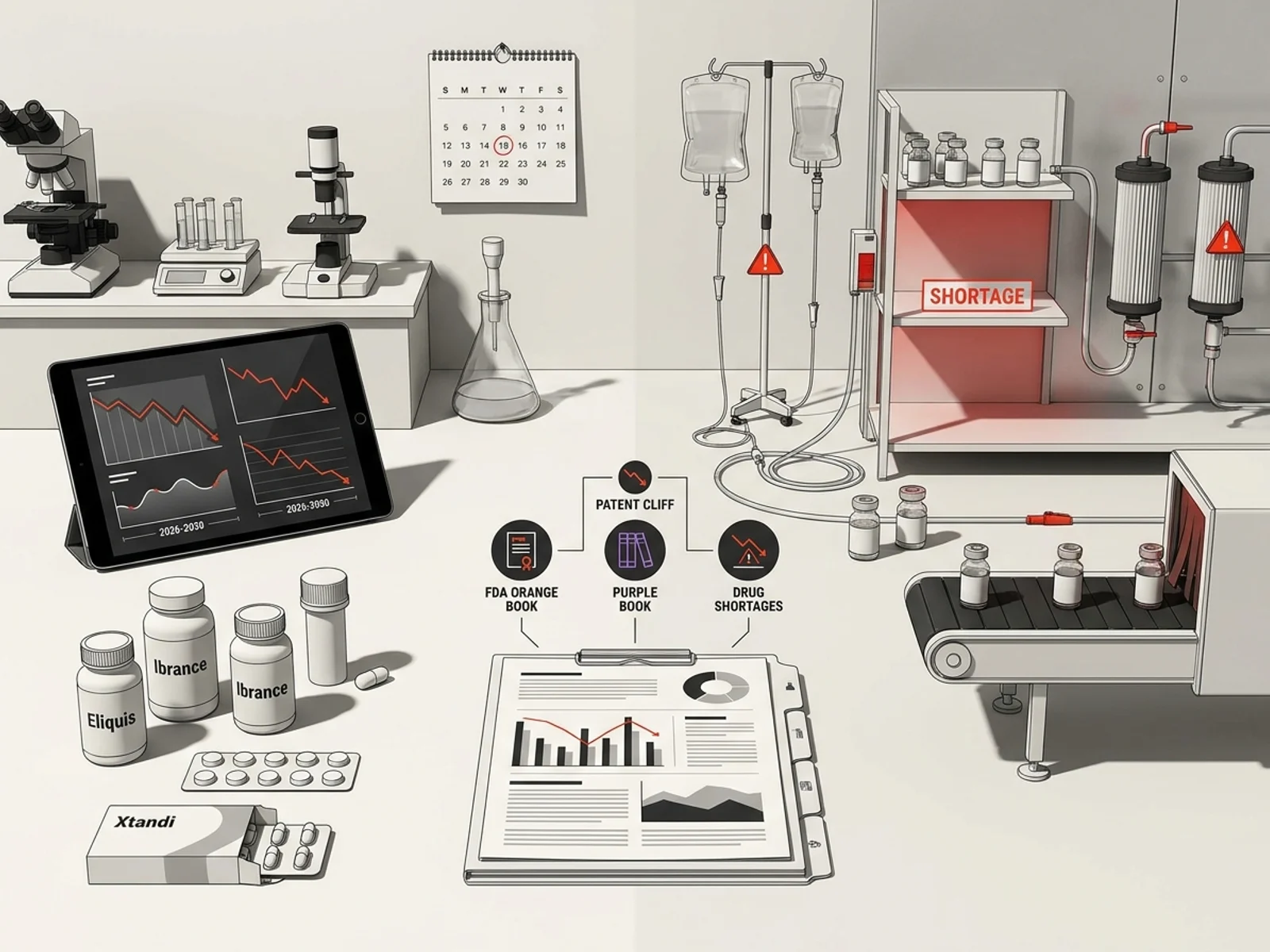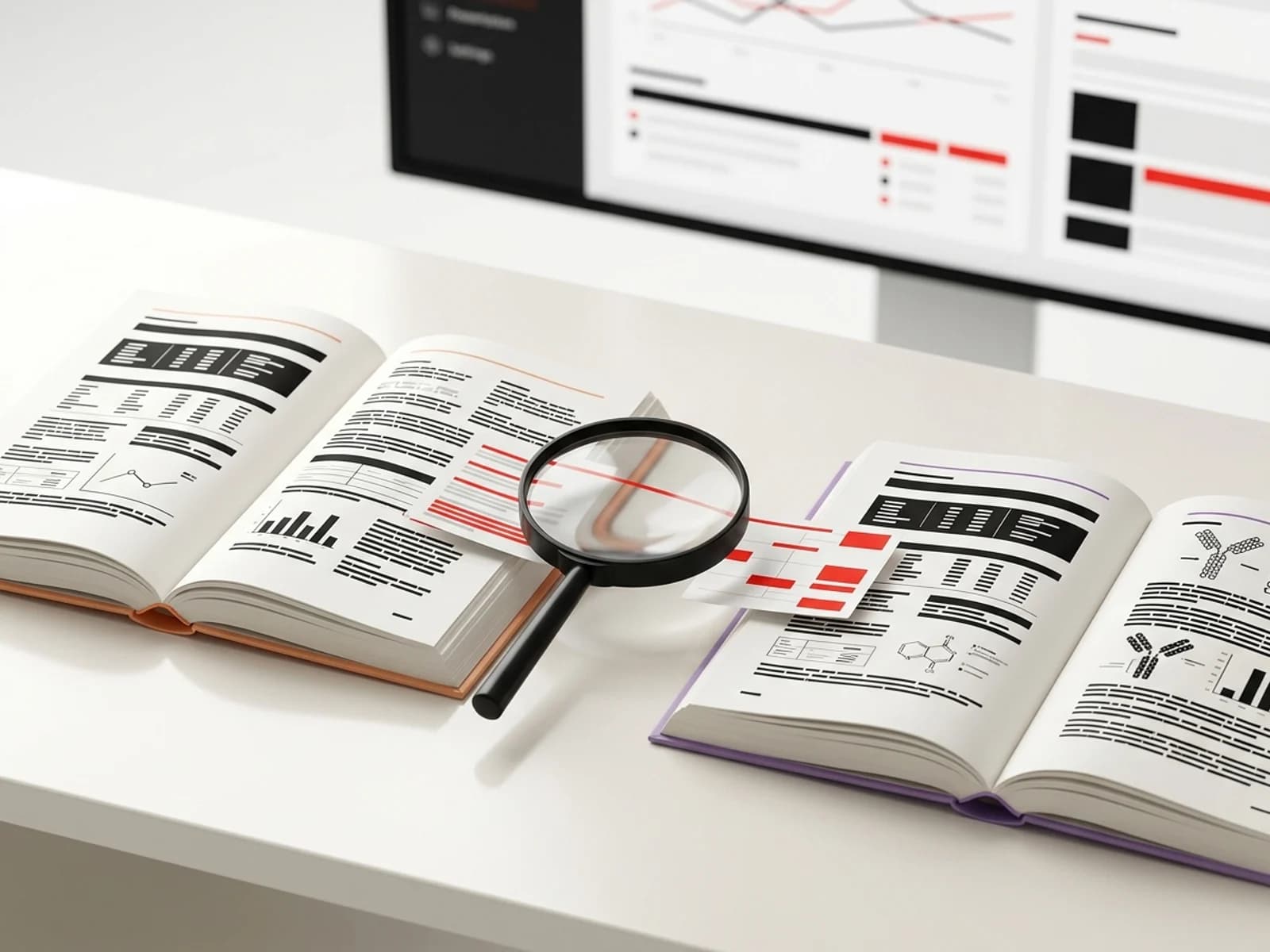
The Orange Book and Purple Book are both FDA reference tools, but they are not interchangeable. The Orange Book is the operating table for approved drug products with therapeutic-equivalence evaluations and patent/exclusivity information. The Purple Book is the reference for biological products, biosimilars, and interchangeability status.
Launch teams make mistakes when they use the names as generic shorthand for "FDA database." The better approach is to know which commercial question each book answers.
What the Orange Book is for
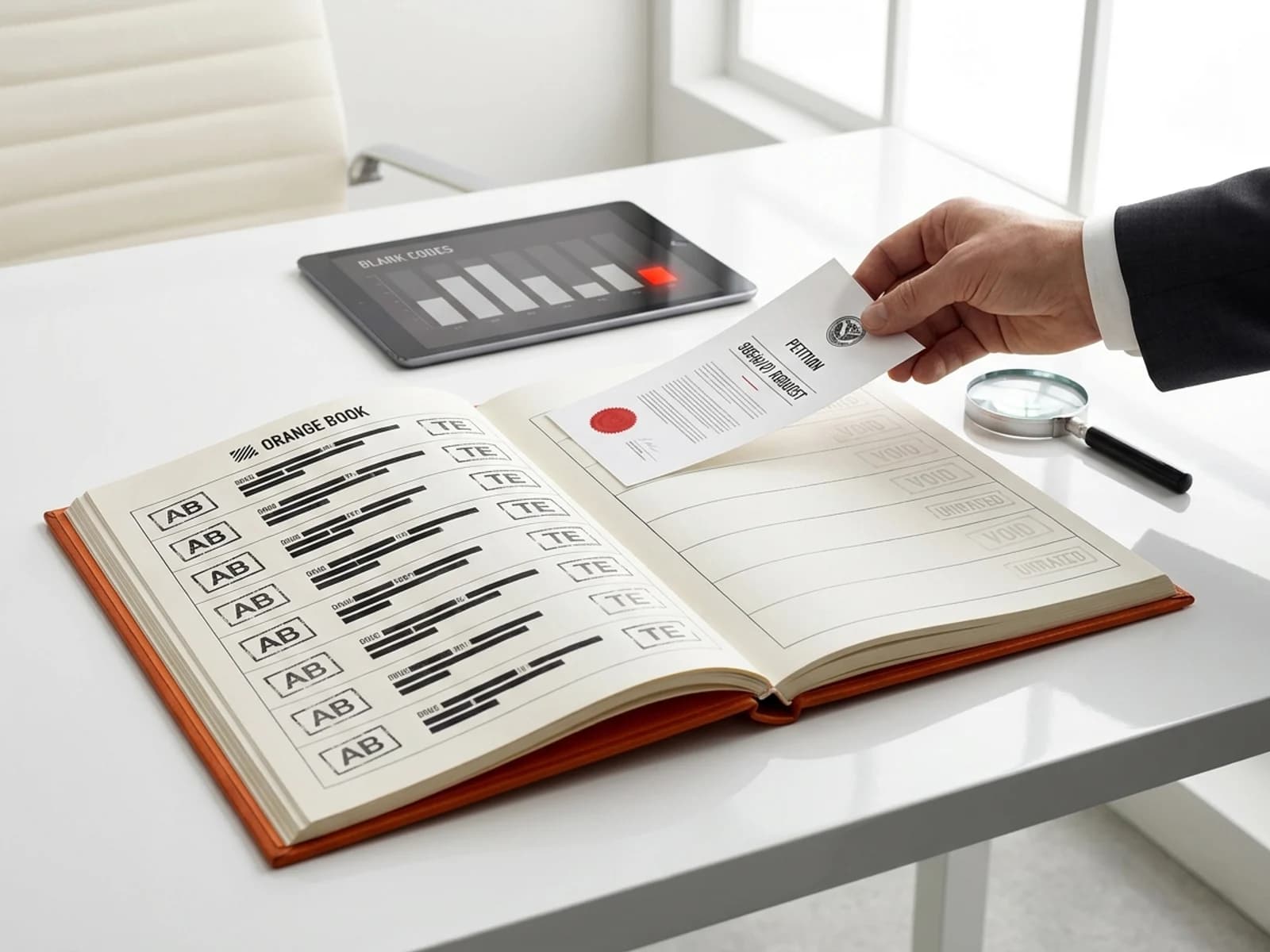
The Orange Book lists approved drug products with therapeutic-equivalence evaluations. It is central to generic competition because it identifies reference listed drugs, therapeutic equivalence codes, patents, and exclusivity information. ANDA strategy, Paragraph IV planning, and generic-substitution assumptions all begin here.
If the question is "what is the reference listed drug?" or "does an approved generic have an AB rating?" the Orange Book is the right tool. If the question is "what patent or exclusivity information has been listed for this drug product?" the Orange Book is also the starting point, though legal teams will still need a deeper patent analysis.
The Orange Book does not tell you whether a biologic has an interchangeable biosimilar. That is a Purple Book question.
What the Purple Book is for
The Purple Book lists licensed biological products and indicates whether a product is biosimilar to or interchangeable with a reference product. It is the practical first read for biologic competition and biosimilar launch planning.
If the question is "which biosimilars are licensed against this reference product?" or "has FDA designated this product interchangeable?" the Purple Book is the right source. It helps frame the competitive map, but it does not provide a payer preference order, rebate position, or automatic market-share projection.
The substitution trap
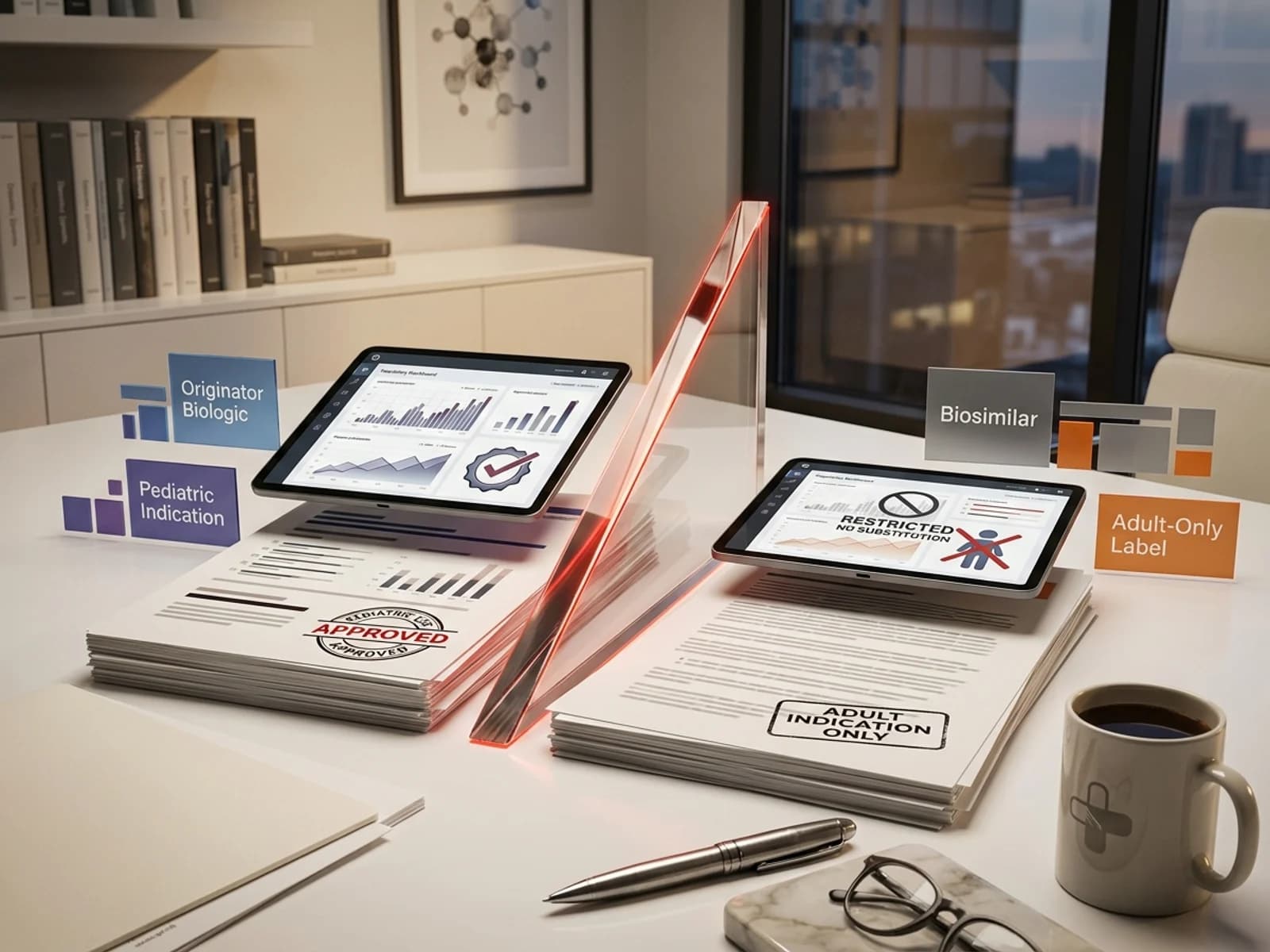
Orange Book therapeutic equivalence and Purple Book interchangeability often get collapsed into the word "substitution." They are not the same system. Small-molecule generic substitution is built around therapeutic-equivalence codes and state pharmacy law. Biosimilar substitution depends on FDA interchangeability status and state biologic-substitution rules.
Commercial language should avoid saying "the biosimilar is the generic." That shortcut may work in casual conversation, but it is wrong in regulated and payer-facing materials. A biosimilar is approved under the biologics pathway, and an interchangeable biosimilar has a specific FDA designation. The distinction matters for prescriber confidence, pharmacy workflow, and payer policy.
The launch-team checklist
For a small-molecule or 505(b)(2) product:
check Drugs@FDA for approval history and labels;
check DailyMed for current labeling;
check the Orange Book for RLD, TE codes, patents, and exclusivity;
map approved generics and likely Paragraph IV exposure;
compare payer generic-substitution expectations.
For a biologic:
check Drugs@FDA for licensure and labels;
check DailyMed for current labeling;
check the Purple Book for biosimilar and interchangeable status;
map reference-product and biosimilar launch timing;
separate regulatory interchangeability from payer preference and specialty-channel routing.
Why this matters commercially
The wrong source read can create the wrong market model. A team may assume generic-like erosion for a biologic category when payer switching is slower. Or it may assume a 505(b)(2) product avoids generic-style competition when the Orange Book tells a more complicated story. The point is not to memorize databases. It is to connect the source document to the commercial mechanism.
Use the Orange Book when the commercial question is generic entry and therapeutic equivalence. Use the Purple Book when the question is biological product status, biosimilarity, and interchangeability. Use both only when the product strategy crosses categories or when a portfolio team needs a unified competition map.
Sources
FDA Orange Book: https://www.accessdata.fda.gov/scripts/cder/ob/index.cfm
FDA Purple Book database: https://purplebooksearch.fda.gov/
FDA Drugs@FDA database: https://www.accessdata.fda.gov/scripts/cder/daf/
DailyMed: https://dailymed.nlm.nih.gov/dailymed/