The U.S. market for Direct Oral Anticoagulants (DOACs) is undergoing its first major transition from brand-name monopoly to multi-source generic competition. As the flagship blockbuster brand Xarelto (rivaroxaban, marketed by Janssen/Johnson & Johnson) faces the patent cliff, commercial generic equivalents have entered the distribution channel.
For payers, specialty pharmacies, drug-procurement teams, and generic manufacturers, understanding the mechanics of this generic entry is essential. This analysis breaks down the FDA Orange Book patent chain that governed the launch timing, details the competitive landscape of the 17 approved Abbreviated New Drug Application (ANDA) applicants, and quantifies the acquisition cost erosion of generic rivaroxaban using National Average Drug Acquisition Cost (NADAC) data through May 2026. It is a molecule-level case study that complements our broader DOAC access landscape coverage and the macro 2026–2032 patent cliff by the numbers.
Short Answer
Generic Xarelto (rivaroxaban) entry began with the FDA approval of the first generic 2.5 mg tablets on March 3, 2025 (awarded to Taro Pharmaceuticals ANDA 208557 and Lupin), followed by a massive approval wave for the 10 mg, 15 mg, and 20 mg strengths on May 14, 2025 (including applicants such as Alembic, Ascent, Dr. Reddy's, InvaGen, Lupin, Macleods, Sunshine, and Aiping). This entry was made possible by the expiration of the core molecule patent (US 7,157,456 on February 28, 2025) and the solid-oral-formulation patent (US 9,415,053 on May 13, 2025).
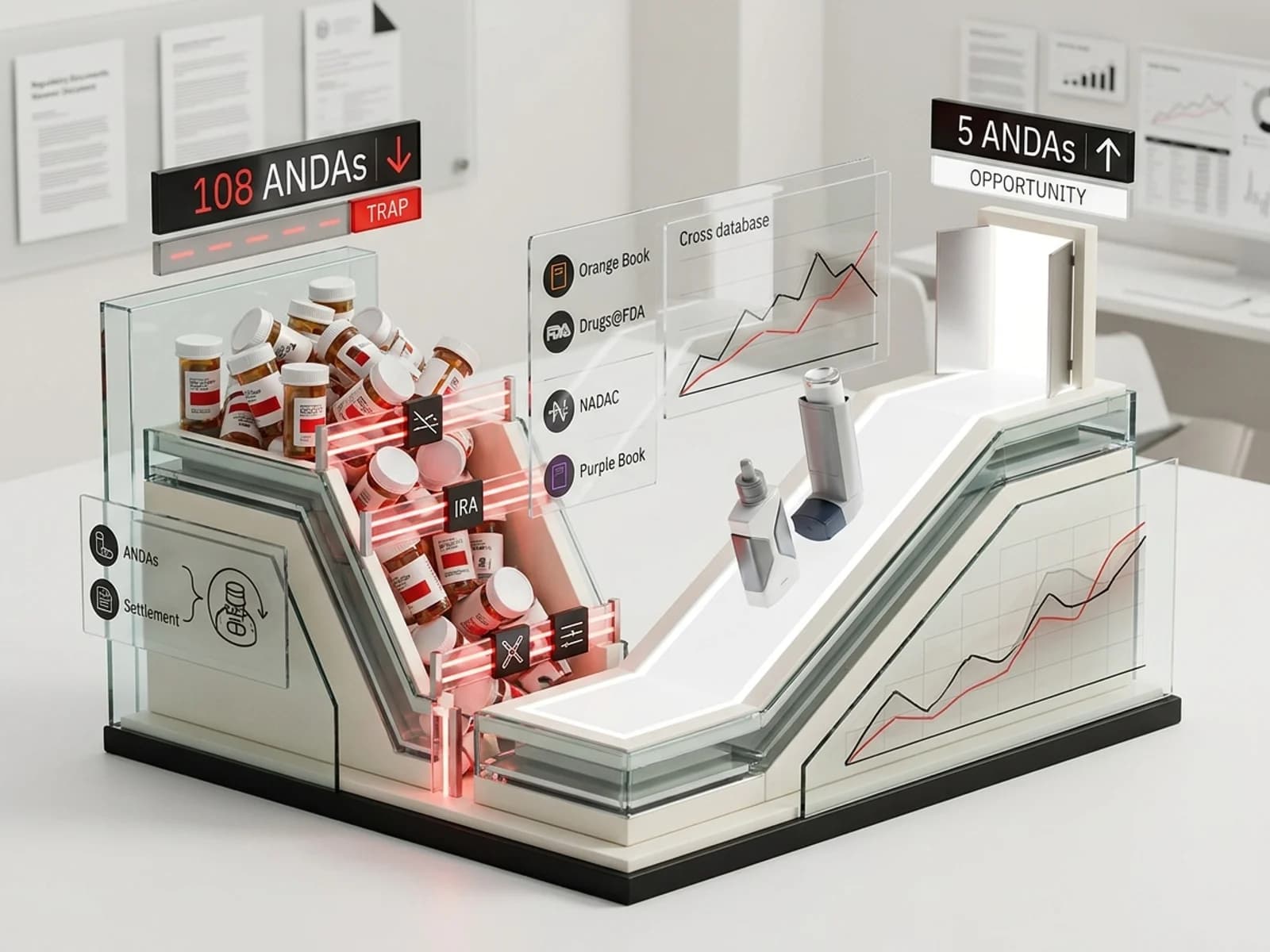
While use patents extending to 2034 (US 9,539,218) and 2039 (US 10,828,310) remain active in the Orange Book, generic manufacturers entered the market through Paragraph IV litigation settlements and Section viii labeling carve-outs. According to the FDA Orange Book snapshot, there are currently 64 generic ANDA product rows across 17 distinct approved applicants. In terms of commercial pricing, CMS NADAC data shows that the average acquisition cost for generic 2.5 mg tablets eroded by 37.8% in the first half of 2026, falling from $1.40444 per unit on January 14, 2026 to $0.87286 on May 20, 2026.
The Rivaroxaban Orange Book Patent Expiry Chain
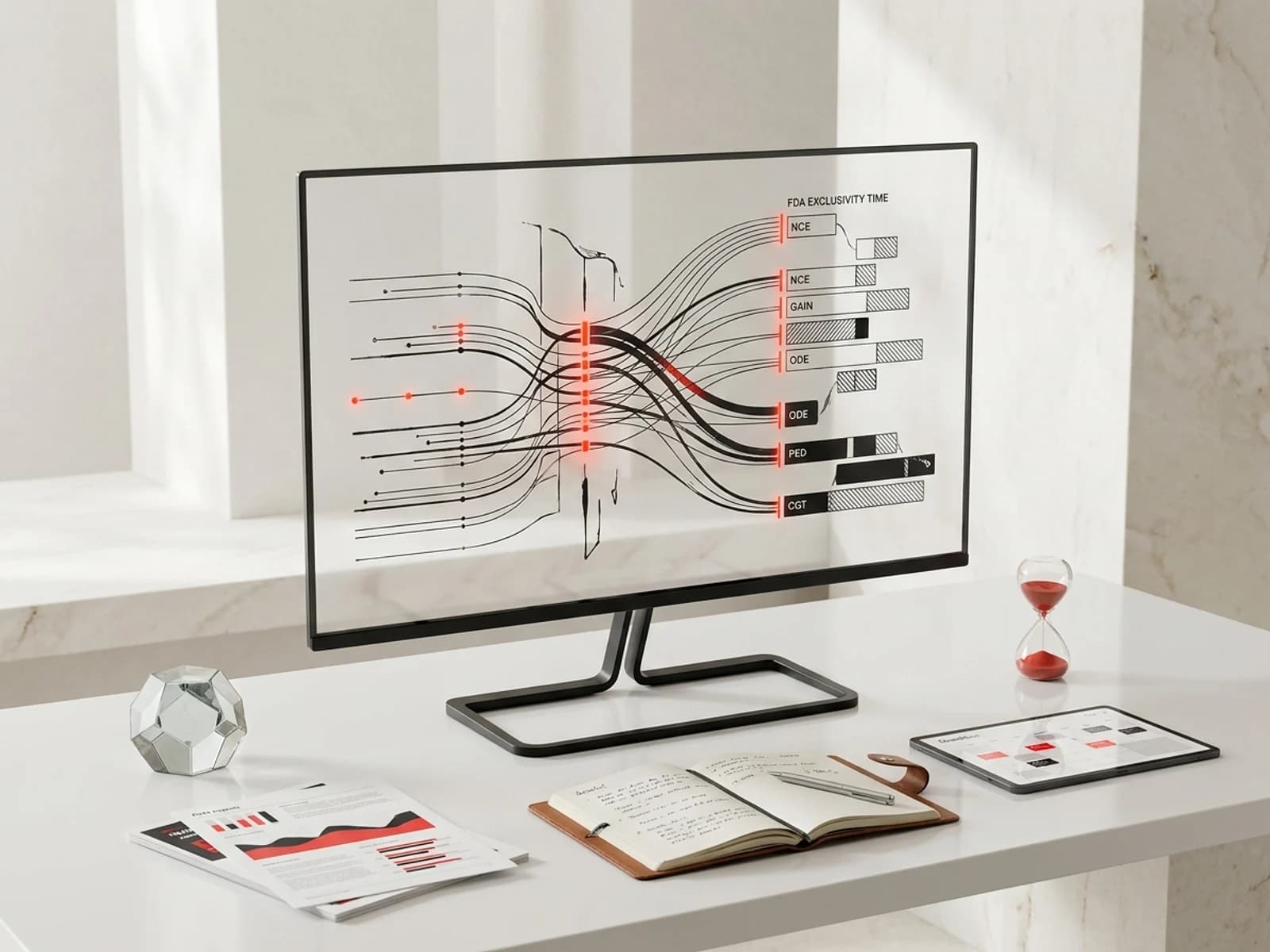
The timing and structure of generic rivaroxaban entry were dictated by a complex web of patents listed in the FDA's Approved Drug Products with Therapeutic Equivalence Evaluations (Orange Book) under NDA 022406. Rather than a single expiration date, generic entry required navigating a sequence of molecule, formulation, and clinical indication patents.
Patent Inventory and Expiration Timeline
| Patent Number | Expiry Date (incl. Pediatric Exclusivity) | Patent Type | Role in Generic Launch |
|---|---|---|---|
| US 7,157,456 | February 28, 2025 | Active Ingredient (Molecule) | Core protection block; no generic approvals permitted before this date. |
| US 9,415,053 | May 13, 2025 | Formulation (Solid Oral Dosage Form) | Blocked marketing of standard 10/15/20 mg tablets; generic wave approved the following day. |
| US 9,539,218 | February 17, 2034 | Indication / Method of Use (Thromboembolic Disorders) | Addressed via Paragraph IV settlement and Section viii labeling carve-out. |
| US 10,828,310 | July 31, 2039 | Indication / Method of Use (Rivaroxaban + Aspirin Combination) | Addressed via Section viii labeling carve-out. |
Navigating the Method-of-Use Patents
While the active ingredient and formulation patents expired in early 2025, two significant method-of-use patents remain active in the Orange Book:
US 9,539,218 (expiring Feb 17, 2034): This patent covers the use of rivaroxaban for treating and preventing deep vein thrombosis (DVT) and pulmonary embolism (PE), as well as reducing the risk of recurrence. To bypass this, generic manufacturers utilized Paragraph IV certifications. Janssen filed patent infringement lawsuits, which eventually resulted in confidential settlements permitting generic launch on or before the formulation patent's expiry.
US 10,828,310 (expiring July 31, 2039): This patent covers the co-administration of a low dose of rivaroxaban (2.5 mg twice daily) with aspirin to reduce the risk of major cardiovascular events in patients with chronic coronary artery disease (CAD) or peripheral artery disease (PAD). Because this cardiovascular indication represents a distinct labeled clinical use, generic applicants submitted Section viii statements to the FDA. This regulatory mechanism allows a generic manufacturer to "carve out" the protected cardiovascular (CAD/PAD) indication from its label (creating a "skinny label"), while still obtaining approval for the non-protected indications—such as stroke prevention in non-valvular atrial fibrillation, treatment of deep vein thrombosis (DVT) and pulmonary embolism (PE), and venous thromboembolism (VTE) prophylaxis after hip or knee replacement surgery.
Generic Rivaroxaban Competitive Landscape
The size of the DOAC market attracted a large number of generic developers. The FDA Orange Book dataset contains 64 generic product rows for rivaroxaban (the bulk being oral tablets, plus a few rows for a newer oral-suspension formulation) across 17 distinct ANDA sponsors. This represents one of the most crowded drug launches since the entry of generic atorvastatin.
Approved Generic Applicants (17 Distinct ANDA Sponsors)
Aiping Pharmaceuticals Inc
Alembic Pharmaceuticals Ltd
Alkem Laboratories Ltd
Apotex Inc
Ascent Pharmaceuticals Inc
Aurobindo Pharma Ltd
Biocon Pharma
Breckenridge Pharmaceutical Inc
Dr. Reddy's Laboratories
InvaGen Pharmaceuticals (Cipla)
Lupin Pharmaceuticals
Macleods Pharmaceuticals Ltd
MSN Laboratories
Regcon Holdings
ScieGen Pharmaceuticals Inc
Sunshine Lake Pharma
Taro Pharmaceuticals
Sample List of FDA-Approved ANDAs for Generic Rivaroxaban
To illustrate the competitive distribution of approvals, the following table lists selected ANDAs, their sponsors, the approved tablet strengths, and the approval dates recorded in the Orange Book (June 10, 2026 snapshot):
| ANDA Number | Generic Sponsor | Approved Tablet Strengths | Approval Date (Orange Book) | TE Code |
|---|---|---|---|---|
| ANDA 208557 | Taro Pharmaceuticals | 2.5 mg; 10/15/20 mg | March 3, 2025 (2.5 mg); October 7, 2025 (10/15/20 mg) | AB |
| ANDA 208555 | Lupin Pharmaceuticals | 2.5 mg; 10/15/20 mg | March 3, 2025 (2.5 mg); May 14, 2025 (10/15/20 mg) | AB |
| ANDA 210301 | Alembic Pharmaceuticals | 2.5/10/15/20 mg | May 14, 2025 | AB |
| ANDA 208534 | Dr. Reddy's Laboratories | 2.5/10/15/20 mg | May 14, 2025 | AB |
| ANDA 208544 | Aurobindo Pharma | 2.5 mg; 10/15/20 mg | April 10, 2025 (2.5 mg); May 15, 2025 (10/15/20 mg) | AB |
| ANDA 213114 | Macleods Pharmaceuticals | 2.5/10/15/20 mg | May 14, 2025 | AB |
| ANDA 219332 | Ascent Pharmaceuticals | 2.5/10/15/20 mg | May 14, 2025 | AB |
Profile of Key Approved Generic Manufacturers
The approved applicant field represents a mix of multinational generic drug manufacturers and specialized drug-delivery firms. The manufacturing and supply chain capabilities of these developers will determine product availability and long-term price stability.
Taro Pharmaceuticals
Taro secured the coveted first approval for the 2.5 mg dosage strength on March 3, 2025. Known for its strong presence in dermatologicals and oral solids, Taro's early entry allowed it to establish relationships with wholesalers ahead of the main therapeutic wave. Taro manufactures its oral solid formulations in its FDA-approved facility in Haifa, Israel, and its Canadian site in Brampton, Ontario.
Lupin Pharmaceuticals
Lupin was Taro's co-first approved partner for the 2.5 mg tablet on March 3, 2025, and also secured approvals for the 10 mg, 15 mg, and 20 mg strengths in the May 14 wave. As a global generic giant headquartered in Mumbai, India, Lupin has massive active pharmaceutical ingredient (API) and finished dosage form (FDF) manufacturing capacities, supporting large-scale institutional contracts.
Dr. Reddy's Laboratories
Dr. Reddy's is a tier-one generic manufacturer with deep integration in the cardiovascular and hematological sectors. Approved in the May 14, 2025 wave, Dr. Reddy's utilizes its FDA-approved FDF facilities in Bachupally, India, and its packaging facilities in Shreveport, Louisiana, to support U.S. commercial distribution.
InvaGen Pharmaceuticals
InvaGen (a subsidiary of Cipla) operates substantial oral solid manufacturing facilities in Hauppauge, New York. Its approval on May 14, 2025, allows it to market local, U.S.-manufactured generic rivaroxaban, which is increasingly preferred by federal purchasers and state Medicaid programs operating under domestic-sourcing mandates.
MSN Laboratories
MSN Laboratories (based in Hyderabad, India) is one of the world's leading suppliers of active pharmaceutical ingredients. MSN's vertical integration—manufacturing both the raw rivaroxaban API and the final finished tablets—gives it a significant cost advantage, allowing it to compete aggressively during the mature phases of price erosion.
Clinical Dosing and Indication Alignment
Rivaroxaban is prescribed in different strengths and dosing schedules depending on the specific clinical indication. Payer formulary designs must align these clinical differences with the available generic alternatives:
2.5 mg Tablets (Dosed twice daily):
Indications: Co-administered with aspirin to reduce the risk of major cardiovascular events (cardiovascular death, myocardial infarction, and stroke) in patients with chronic CAD or PAD.
Substitution Dynamics: High generic penetration since Taro and Lupin entered early; however, because of the Section viii skinny label, the brand-name Xarelto remains preferred by some cardiovascular clinics that require labeled CAD/PAD documentation.
10 mg Tablets (Dosed once daily):
Indications: Prophylaxis of deep vein thrombosis (DVT) and pulmonary embolism (PE) in patients undergoing hip or knee replacement surgery; treatment of DVT and PE.
Substitution Dynamics: Typically used for short-term post-operative courses, making it highly sensitive to retail pharmacy automatic substitution laws.
15 mg and 20 mg Tablets (Dosed once daily):
Indications: Reduction in risk of stroke and systemic embolism in patients with non-valvular atrial fibrillation; treatment of DVT and PE; reduction in the risk of recurrence of DVT and PE.
Substitution Dynamics: Represents the largest segment of overall rivaroxaban volume. PBMs have targeted this segment for complete brand exclusion, shifting atrial fibrillation patients to generic equivalents to capture maximum savings.
Renal Dosing Adjustments and Safety Boundaries
In addition to indication alignment, clinicians and pharmacists must carefully evaluate renal function when dispensing generic rivaroxaban. Because the drug is partially cleared by the kidneys, dosing adjustments are mandatory to prevent accumulation and serious bleeding events:
Non-Valvular Atrial Fibrillation: For patients with a creatinine clearance (CrCl) greater than 50 mL/min, the standard dose is 20 mg once daily. For patients with a CrCl of 15 to 50 mL/min, the dose must be reduced to 15 mg once daily. Clinicians are advised to avoid use in patients with a CrCl of less than 15 mL/min.
Treatment of DVT and PE: The standard initial dose is 15 mg twice daily for the first 21 days, followed by 20 mg once daily. For patients with renal impairment (CrCl less than 30 mL/min), clinicians must monitor closely and weigh the benefit-risk profile, as clinical data for this population is limited.
Prophylaxis in Orthopedic Surgery: For patients with a CrCl of 30 mL/min or greater, the dose is 10 mg once daily. Clinicians should avoid initiating therapy in patients with a CrCl less than 30 mL/min.
Generic product labeling contains identical renal warning sections to the brand Xarelto, ensuring that automatic pharmacy substitution does not bypass these clinical boundaries.
Paragraph IV Patent Litigation Case Study
The commercial launch of generic rivaroxaban is the culmination of nearly a decade of complex patent disputes. Under the Hatch-Waxman Act, when a generic manufacturer submits an ANDA containing a Paragraph IV certification, it claims that the brand manufacturer's patents are invalid, unenforceable, or will not be infringed by the generic drug product. This submission constitutes a technical act of infringement, triggering a patent-infringement lawsuit.
The Delaware District Court Battles
Bayer (which discovered the molecule) and Janssen (which markets it in the U.S.) filed multiple patent infringement lawsuits in the U.S. District Court for the District of Delaware against major generic applicants, including Mylan, InvaGen, and Apotex. The litigation centered on US 9,539,218 (the '218 patent) and the cardiovascular combination patent US 10,828,310 (the '310 patent).
Generic manufacturers argued that:
The claims of the '218 patent were obvious in light of prior clinical publications detailing the oral dosing of factor Xa inhibitors.
The dosing schedules (once daily for stroke prevention and DVT treatment) were inherent to the molecule's pharmacokinetic profile rather than a patentable invention.
Settlement and Market Entry
To avoid the risk of the court invalidating their patents—which would have allowed immediate generic entry for all manufacturers—Bayer and Janssen entered into confidential settlement agreements. While the specific financial terms remain private, the settlements typically:
Granted the generic manufacturers a license to enter the market on a specific date (which was negotiated to be immediately following the expiration of the formulation patent on May 13, 2025).
Prevented generic manufacturers from launching "at risk" (launching before a final court decision, which carries treble damages if the patent is upheld).
Standardized the entry timeline, creating the massive 17-applicant wave that entered in mid-2025.
CMS NADAC Price Erosion Analysis
To measure the real-world financial impact of this multi-source competition, we analyzed the Centers for Medicare & Medicaid Services (CMS) National Average Drug Acquisition Cost (NADAC) dataset. NADAC represents the average invoice price paid by retail pharmacies to acquire prescription drugs from wholesalers, serving as the gold standard for pharmacy reimbursement and generic price-erosion tracking.
Our analysis isolated generic RIVAROXABAN 2.5 MG TABLETS from the December 2025 baseline through the end of May 2026. This period captures the mature phase of price erosion, roughly 8 to 12 months post-launch.
2026 NADAC Price-Erosion Table (2.5 mg Tablet)
| Effective Date | NADAC Per Unit (Tablet) | Cost Per 30-Day Supply (60 Tablets, 2.5 mg BID) | Cumulative Price Decline (%) |
|---|---|---|---|
| December 17, 2025 | $1.40444 | $84.27 | Baseline |
| January 14, 2026 | $1.40444 | $84.27 | 0.0% |
| January 21, 2026 | $1.12892 | $67.74 | -19.6% |
| February 18, 2026 | $1.07570 | $64.54 | -23.4% |
| March 18, 2026 | $0.97904 | $58.74 | -30.3% |
| April 22, 2026 | $0.95591 | $57.35 | -31.9% |
| May 20, 2026 | $0.87286 | $52.37 | -37.8% |
Source: Computed from CMS National Average Drug Acquisition Cost (NADAC) raw data files (2025–2026) for NDC description "RIVAROXABAN 2.5 MG TABLET."
Generic Rivaroxaban 2.5MG NADAC Price Trend (Dec 2025 – May 2026)
$1.40 |======
$1.20 |      \
$1.00 |       \====\
$0.80 |             \====\==== $0.87
$0.60 |_______________________________
        Dec/Jan   Feb    Mar   Apr   May
Explaining the Pricing Curve
A 37.8% price erosion over roughly five months is typical for a generic class with more than ten competitors. Pricing held flat at the $1.40 launch level through the first two weeks of January 2026, then broke sharply on the January 21, 2026 NADAC update—a single-step drop of nearly 20% as wholesalers began rebasing contracts for the new plan year. From there, the curve flattened into a steady monthly grind (roughly 1–6% per update) as the 17-applicant field competed for shelf space, bottoming at $0.87286 on May 20, 2026.
For a patient taking 2.5 mg twice daily (60 tablets per month), the average pharmacy acquisition cost fell from $84.27 to $52.37. When compared to the brand-name Xarelto WAC price (which exceeds $500 per month), this generic entry represents a significant cost reduction for both commercial payers and state Medicaid programs.
Formulary and Substitution Playbook for Payers
The entry of 17 generic competitors creates distinct operational challenges for pharmacy benefit managers (PBMs) and commercial insurers.
1. Therapeutic Equivalence (TE) Substitution
The majority of the approved tablet products carry an AB rating in the Orange Book, confirming bioequivalence and therapeutic equivalence to Janssen's reference listed drug (RLD) Xarelto (NDA 022406) and enabling automatic pharmacy substitution under state law. A subset of the later 10/15/20 mg ANDAs are not yet rated AB, and Biocon's rivaroxaban tablets carry a BX code, so pharmacies and payers should confirm each NDC's TE code before assuming substitutability. Where a product is AB-rated, retail pharmacies can automatically substitute the brand-name drug with that generic at the point of sale, subject to state laws and "dispense as written" (DAW) instructions.
2. PBM Formulary Exclusions
Historically, major PBMs (such as CVS Caremark, Express Scripts, and OptumRx) maintained Xarelto on their preferred brand formulary tiers, securing high rebate yields from J&J. With the availability of multiple cheap generics, PBMs are rapidly executing a standard generic-conversion strategy:
Brand Exclusions: Brand Xarelto is being moved to "non-preferred" or excluded status on commercial formularies.
Step-Therapy Requirements: Payers are requiring patients initiating DOAC therapy to try generic rivaroxaban (or generic apixaban) before approving brand-name DOACs.
Copay Tier Alignment: Generics are placed on Tier 1 (lowest copay), motivating patients to request the generic substitute at the pharmacy counter.
3. The Eliquis Comparison
The market dynamics of generic Xarelto differ significantly from its primary competitor, Eliquis (apixaban). While the FDA approved the first generic Eliquis ANDAs on December 23, 2019 (Mylan/Viatris and Micro Labs), Bristol Myers Squibb and Pfizer successfully defended their formulation patent in federal court, and the resulting settlement agreements delay commercial generic apixaban entry in the U.S. until April 1, 2028.
Because generic rivaroxaban launched roughly three years ahead of generic apixaban, it has captured a commercial advantage. Payers seeking immediate oral anticoagulant savings are prioritizing generic rivaroxaban as their preferred first-line DOAC, shifting volume away from brand-name Eliquis. For the contrasting apixaban timeline, see our analysis of the Eliquis generic entry delay to April 2028.
Frequently Asked Questions (FAQ)
When did generic Xarelto (rivaroxaban) launch in the United States?
Generic rivaroxaban launched in two phases. The first approvals for the 2.5 mg strength were granted on March 3, 2025 (to Taro and Lupin), followed by a massive approval wave for the 10 mg, 15 mg, and 20 mg strengths on May 14, 2025, which included 15 additional generic manufacturers.
How did generic manufacturers bypass the Xarelto patents that expire in 2034 and 2039?
Generic manufacturers resolved the 2034 use patent (US 9,539,218) through confidential patent litigation settlements with Janssen, which cleared the way for launch in mid-2025. For the 2039 cardiovascular use patent (US 10,828,310), manufacturers submitted Section viii statements to the FDA, allowing them to "carve out" the cardiovascular indication and launch with a "skinny label" for the remaining approved indications.
How many generic manufacturers are currently approved to sell generic rivaroxaban?
There are 17 distinct generic applicants with approved ANDAs for rivaroxaban tablets listed in the FDA Orange Book. These 17 manufacturers represent 64 individual product rows, ensuring a highly competitive supply chain.
Has the price of generic rivaroxaban declined since launch?
Yes. According to CMS NADAC data, the average pharmacy acquisition cost for generic rivaroxaban 2.5 mg tablets declined from $1.40 per tablet in January 2026 to $0.87 per tablet in May 2026—a 37.8% drop in just four months. Further price erosion is expected as the generic market continues to mature.
Is generic rivaroxaban substitutable for brand-name Xarelto?
Yes. All approved generic rivaroxaban tablets carry an AB rating from the FDA, meaning they are therapeutically equivalent to brand Xarelto and can be substituted by the pharmacist under standard state pharmacy laws.
Why is generic rivaroxaban 2.5 mg priced differently than the 10/15/20 mg strengths?
The 2.5 mg strength was approved earlier (March 3, 2025) and has a distinct clinical profile (used twice daily for chronic cardiovascular risk reduction) compared to the higher strengths (used once daily for acute anticoagulation). This early entry and dosing difference created a separate commercial contract environment for the 2.5 mg tablet.
How are doses of generic rivaroxaban adjusted for patients with renal impairment?
For non-valvular atrial fibrillation, the dose must be reduced from 20 mg once daily to 15 mg once daily if the patient's creatinine clearance (CrCl) is between 15 and 50 mL/min, and avoided if CrCl is less than 15 mL/min. For orthopedic surgery prophylaxis, use is avoided if CrCl is less than 30 mL/min.
Sources
U.S. Food and Drug Administration (FDA). Approved Drug Products with Therapeutic Equivalence Evaluations (Orange Book). Active ingredient: rivaroxaban (NDA 022406). Raw CSV data extracts, June 2026. https://www.accessdata.fda.gov/scripts/cder/ob/index.cfm
U.S. Food and Drug Administration (FDA). 2025 First Generic Drug Approvals, Center for Drug Evaluation and Research (CDER). March 2025 (Taro/Lupin approvals). https://www.fda.gov/drugs/drug-and-biologic-approval-and-ind-activity-reports/2025-first-generic-drug-approvals
Centers for Medicare & Medicaid Services (CMS). National Average Drug Acquisition Cost (NADAC). Weekly pricing files for generic rivaroxaban 2.5 mg tablets, Dec 2025–May 2026. https://www.medicaid.gov/medicaid/pharmacy-benefits/prescription-drugs/national-average-drug-acquisition-cost/index.html
U.S. Food and Drug Administration (FDA). ANDA 212220 Tentative Approval Letter, CDER. Detail listing of patents '456, '053, and '310 with expiration dates. https://www.accessdata.fda.gov/drugsatfda_docs/appletter/2022/212220Orig1s000TA_ltr.pdf
U.S. District Court for the District of Delaware. Bayer Pharma AG et al. v. Apotex Inc. et al. (rivaroxaban '310 patent Paragraph IV litigation), Case No. 1:21-md-03017-RGA.
Disclaimer: This article provides independent regulatory and market access analysis for biopharma professionals and does not constitute clinical, medical, or legal advice.