With the clinical and commercial explosion of cardiovascular therapies, the transition of blockbuster oral anticoagulants to generic competition represents a critical inflection point for market access, pricing, and formulary strategy. Apixaban, the active ingredient in Bristol Myers Squibb (BMS) and Pfizer’s blockbuster Eliquis, is one of the most widely prescribed drugs in the United States. As commercial payer leads, pharmacy benefit managers (PBMs), and generic portfolio managers project cardiovascular drug-spend curves and design long-term formulary strategies, understanding the precise litigation settlements and policy moves delaying generic apixaban is essential.
Short Answer
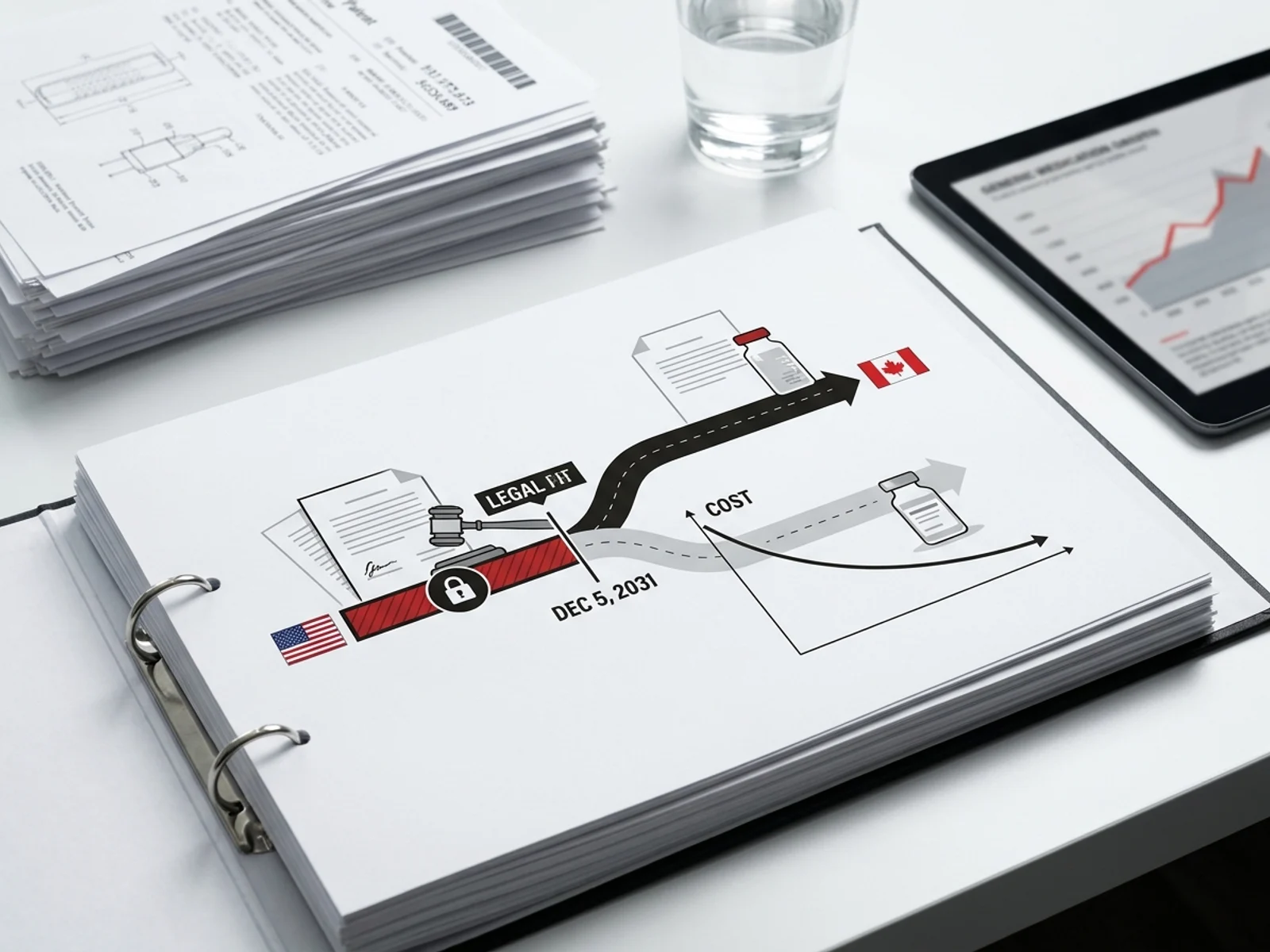
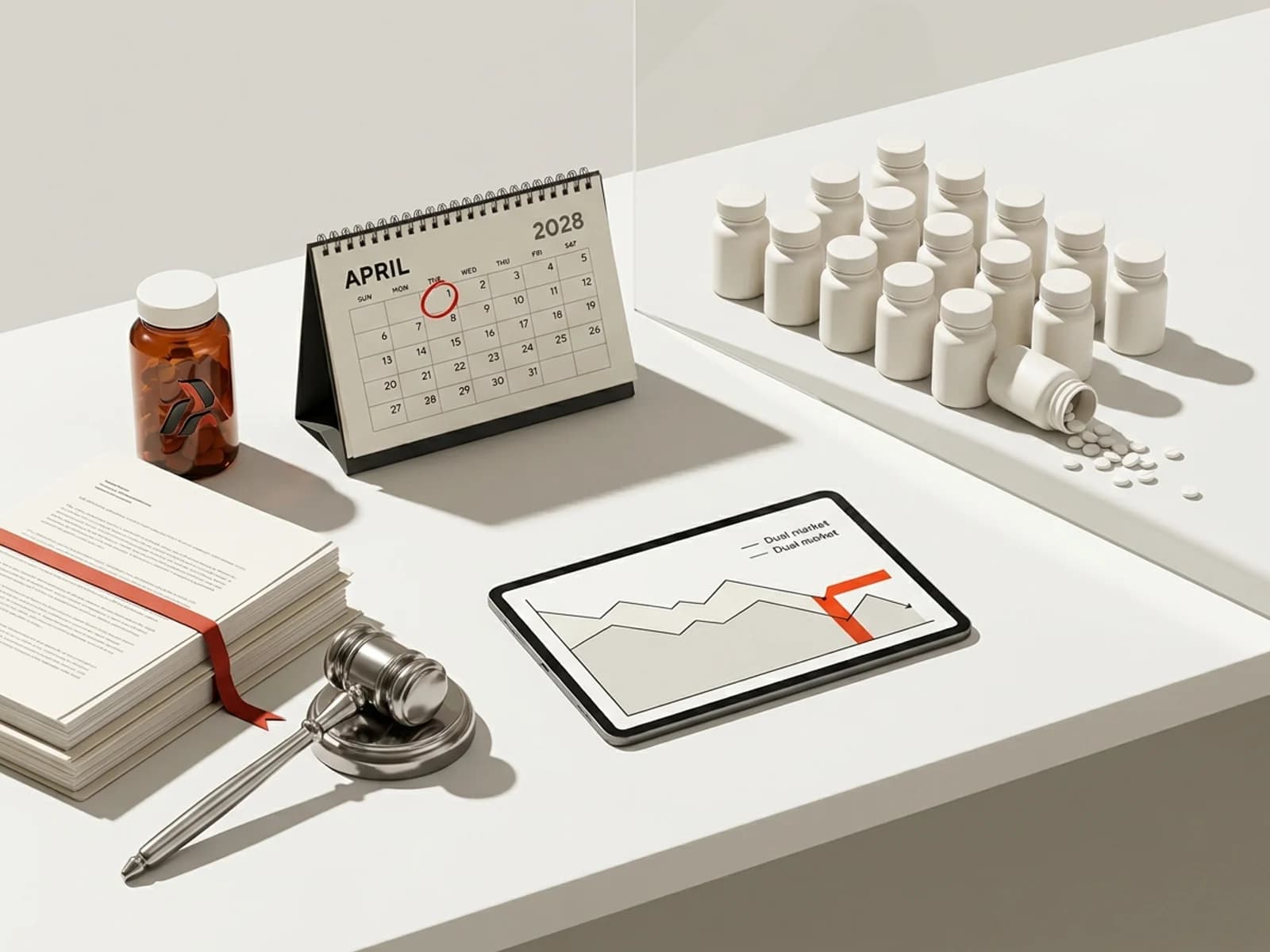
Although the FDA approved the first generic apixaban Abbreviated New Drug Applications (ANDAs) in December 2019, commercial launch in the United States is legally delayed until April 1, 2028. This delay is the result of patent litigation settlement agreements between the brand manufacturers (BMS and Pfizer) and generic developers. While the basic composition-of-matter patent (U.S. Patent No. 6,967,208) expires on November 21, 2026 (extended to May 21, 2027 by pediatric exclusivity, 6967208*PED), a secondary formulation patent (U.S. Patent No. 9,326,945), which expires on August 24, 2031 (due to pediatric exclusivity 9326945*PED), successfully blocked generic entry. Under the settlements, generic manufacturers are permitted to enter the market on April 1, 2028, bypassing the final three years of the formulation patent.
This launch timeline exists alongside the Inflation Reduction Act (IRA) drug price negotiation program. Eliquis was selected for the first cycle of the program, which established a Maximum Fair Price (MFP) of $231 per 30-day supply (60 tablets, or $3.85 per tablet) effective January 1, 2026. This Medicare price cap has created a dual-market structure: Medicare Part D plans benefit from the $231 MFP, whereas commercial and employer-sponsored plans pay a blended retail pharmacy acquisition cost (reflected in a CMS retail acquisition cost of $5.52374 per tablet for brand Eliquis 5mg as of June 10, 2026), compressing the brand's gross-to-net and establishing a lower baseline price ceiling before 13 approved generic ANDAs enter on April 1, 2028.
Who This Is For
This analysis is written for commercial health plan directors, pharmacy benefit managers (PBMs), generic product launch managers, and biopharma policy analysts who design formulary tiers and project oral anticoagulant price erosion.
1. The Apixaban Exclusivity Landscape: Composition vs. Formulation Patents
Apixaban is a direct oral anticoagulant (DOAC) that acts as a highly selective, reversible inhibitor of free and clot-bound factor Xa. Originally approved by the FDA under NDA 202155 on December 28, 2012, for the prevention of stroke and systemic embolism in patients with non-valvular atrial fibrillation, it has since become the dominant oral anticoagulant in the U.S. retail pharmacy market.
[Dec 2019: First ANDAs Approved] ──> [Nov 2026/May 2027: Compound Patent Expiries]
                                            │
                                            ▼
                                [April 1, 2028: Generic Launch Allowed] (Settlement Date)
                                            │
                                            ▼
                                [Aug 2031: Formulation Patent Expiry] (Original End)
The Delaware Patent Litigation and the Federal Circuit Appeal
BMS and Pfizer protected Eliquis through a patent estate consisting of two primary pillars:
U.S. Patent No. 6,967,208 (The '208 Patent): This is the basic composition-of-matter patent covering the apixaban molecule itself. Its term expires on November 21, 2026. With the addition of a six-month pediatric exclusivity extension (6967208*PED), its blocking effect extends to May 21, 2027.
U.S. Patent No. 9,326,945 (The '945 Patent): This is a formulation patent covering the specific solid oral dosage form of apixaban (crystalline apixaban particles of a specific size distribution co-formulated with excipients to ensure rapid dissolution and bioequivalence). The '945 patent naturally expires on February 24, 2031, and carries a pediatric exclusivity extension (9326945*PED) running to August 24, 2031.
In 2020, generic manufacturers led by Mylan (Viatris) and Micro Labs challenged the validity of both patents in the U.S. District Court for the District of Delaware. The generic applicants argued that:
The '208 Patent was Invalid due to Obviousness-Type Double Patenting: They asserted that apixaban was an obvious modification of earlier factor Xa inhibitors described in prior art patents.
The '945 Patent lacked Written Description and was Obvious: They argued that the specific particle size limitations (d50 less than 89 micrometers) listed in the claims were arbitrary and not sufficiently supported by the specification, or were obvious to a person of ordinary skill in the art seeking to optimize tablet dissolution.
In August 2020, District Judge Leonard P. Stark ruled in favor of BMS and Pfizer, declaring both patents valid and infringed. The court found that the brand manufacturers had successfully demonstrated that the specific crystalline particle size was critical to ensuring consistent bioavailability of a low-solubility drug like apixaban, and that this formulation was neither obvious nor lacking written description.
In September 2021, the U.S. Court of Appeals for the Federal Circuit affirmed the district court’s ruling, upholding the validity of the '945 formulation patent. This appellate victory was a critical commercial event:
Had the generic developers succeeded in invalidating the '945 formulation patent, generics could have launched on May 21, 2027, upon the expiration of the '208 compound patent.
By upholding the formulation patent, BMS and Pfizer secured the legal right to block generic competition until August 24, 2031.
Hatch-Waxman Settlement Terms
Rather than facing years of subsequent appeals, the generic applicants entered into patent litigation settlement agreements with BMS and Pfizer. Under the terms of these settlements, the brand manufacturers granted licenses to the generic developers permitting them to launch their apixaban ANDA products on April 1, 2028.
This compromise:
Allows BMS and Pfizer to maintain absolute exclusivity in the U.S. market for approximately 11 months after the compound patent's pediatric exclusivity expires (May 2027).
Allows generic developers to enter the market approximately 3 years and 4 months prior to the expiration of the formulation patent (August 2031).
2. Inventory of the 13 Approved Generic Apixaban ANDAs
Because apixaban is a small-molecule drug, follow-on versions are submitted as Abbreviated New Drug Applications (ANDAs) under Section 505(j) of the FD&CA. An ANDA must demonstrate that the generic product is bioequivalent, chemically identical, and therapeutically equivalent to the brand-name Reference Listed Drug (RLD), Eliquis.
As of June 10, 2026, the FDA Orange Book (June 10, 2026 snapshot) lists exactly 13 approved ANDAs for apixaban from 13 distinct applicants:
| ANDA Number | Generic Applicant | FDA Approval Date (Orange Book) |
|---|---|---|
| 210128 | Mylan (Viatris) | December 23, 2019 |
| 210013 | Micro Labs Ltd | December 23, 2019 |
| 209898 | Regcon Holdings | September 11, 2020 |
| 210180 | Accord Healthcare | July 28, 2020 |
| 210152 | Bionpharma Inc | April 8, 2020 |
| 209845 | Breckenridge Pharmaceutical | July 26, 2021 |
| 210185 | Zydus Pharmaceuticals | February 27, 2023 |
| 210026 | Aurobindo Pharma Ltd | May 26, 2023 |
| 210066 | Hetero Labs Ltd | November 21, 2023 |
| 210091 | Apotex Inc | February 16, 2024 |
| 210156 | Torrent Pharmaceuticals | December 17, 2024 |
| 209810 | Impax Laboratories (Amneal) | February 14, 2025 |
| 210067 | Macleods Pharmaceuticals | February 27, 2025 |
The first two ANDAs (Mylan and Micro Labs, both approved December 23, 2019) were the litigants in the original Delaware formulation-patent case. BMS and Pfizer publicly confirmed that the earliest permitted launch date for that first-wave, settled cohort is April 1, 2028. The remaining ANDAs are blocked at minimum by the formulation patent (U.S. Patent No. 9,326,945, with pediatric exclusivity to August 24, 2031) absent earlier settlement terms.
The Commercial Significance of 13 Competitors
The existence of 13 approved ANDA sponsors guarantees an immediate and aggressive generic price erosion curve on April 1, 2028. In the generic drug industry:
1-2 Competitors: A generic launch with only one or two players typically results in a modest price discount (10% to 30% below the brand price).
3-5 Competitors: Prices erode by 50% to 70% as sponsors compete for wholesale and pharmacy contracts.
10+ Competitors: A launch with 13 approved applicants triggers immediate, commodity-style price competition. Wholesalers and large retail pharmacy chains (such as CVS, Walgreens, and Walmart) can leverage the massive supply to drive generic prices down by 80% to 90% or more within the first 6 months of launch.
Commercial payer leads must incorporate this rapid price-drop expectation into their 2028 premium and budget projections, shifting apixaban to a mandatory generic-first tier immediately upon launch.
3. The Inflation Reduction Act (IRA): Medicare Price Cap Impact
While the commercial market remains locked in brand exclusivity until 2028, the Medicare landscape underwent a structural shift on January 1, 2026, with the implementation of the first negotiated Maximum Fair Prices (MFPs) under the Inflation Reduction Act.
The Negotiated Price for Eliquis
Eliquis (apixaban) was selected as one of the first 10 Medicare Part D drugs subject to price negotiation. The selection was driven by the massive volume of Medicare Part D spend on the drug, which CMS reported at nearly $18.3 billion across roughly 4 million beneficiaries in 2023.
Under the negotiated terms announced by CMS:
Maximum Fair Price (MFP): $231 per 30-day supply (which translates to a standard package of 60 tablets of 5mg or 2.5mg strengths).
Price Per Tablet: $3.85
Discount Level: This negotiated price represents a 56% discount off the 2023 baseline list price (Wholesale Acquisition Cost, or WAC) of $521 per month.
The Dual-Market Reality for Payer Leads
The implementation of the $231 MFP on January 1, 2026, has created a complex, bifurcated market for oral anticoagulants in the U.S.:
The Medicare Part D Channel: Eligible Medicare beneficiaries receive Eliquis at or below the $231 MFP. PBMs administering Medicare Part D plans must list Eliquis on their formularies, and the plan's net cost is anchored by the $231 cap.
The U.S. Commercial Channel: Commercial plans, self-insured employers, and individual marketplace plans are not eligible for the negotiated Medicare MFP. They must continue to pay standard commercial rates—paying list price (WAC) minus whatever confidential commercial rebates their PBM has negotiated with BMS and Pfizer.
+--------------------------------------------------------------------------+
|                  U.S. APIXABAN DUAL-MARKET PRICING MATRIX                 |
|                                                                          |
|  Medicare Part D Channel (IRA MFP)                                       |
|  - Price per 30-Day Supply:  $231.00                                     |
|  - Price per Tablet:         $3.85                                       |
|                                                                          |
|  U.S. Commercial / Retail Channel (CMS NADAC)                            |
|  - Price per 30-Day Supply:  Extra-rebate blended                        |
|  - Blended retail acquisition: ~$331.42 (as of June 10, 2026)            |
|  - Blended retail per tablet:  $5.52374                                  |
|                                                                          |
|  *Note: Generic launch on April 1, 2028, will collapse both markets,      |
|   driving the net cost per 30-day supply to an estimated $30-$50.        |
+--------------------------------------------------------------------------+
This dual-market structure creates a gross-to-net challenge for BMS and Pfizer, while placing commercial payers at a comparative disadvantage. Commercial health plan directors are demanding that PBMs leverage the Medicare MFP benchmark to negotiate steeper commercial rebates, compressing the brand's net margins across all books of business.
4. Retail Acquisition Pricing Analysis: CMS NADAC Trends
To understand the actual retail pharmacy acquisition costs for apixaban, we analyzed the CMS National Average Drug Acquisition Cost (NADAC) files. Unlike physician-administered drugs billed under the medical benefit (such as pembrolizumab, which has zero records in retail pricing files), retail oral anticoagulants are tracked weekly.
The CMS NADAC Methodology
CMS NADAC is based on weekly national surveys of retail community pharmacies. The database compiles actual invoice costs paid by pharmacies to purchase drugs from wholesalers, representing a realistic benchmark of pharmacy acquisition cost.
Survey Sample: Covers independent and chain community pharmacies.
Excluded Pricing: Excludes rebates paid directly by manufacturers to PBMs or plans, as well as 340B discounts, but captures standard wholesale discounts.
Significance: It serves as a baseline for state Medicaid program fee-for-service drug reimbursements.
The January 2026 Pricing Drop
A detailed read of the NADAC records for Eliquis 5 mg Tablets (NDC 00003089421) reveals a significant pricing shift corresponding to the start of the 2026 plan year:
January 7, 2026: NADAC was $9.69551 per tablet (representing an acquisition cost of $581.73 per 60-tablet bottle).
January 14, 2026: NADAC dropped sharply to $5.52654 per tablet (representing an acquisition cost of $331.59 per 60-tablet bottle).
June 10, 2026: NADAC stabilized at $5.52374 per tablet (representing an acquisition cost of $331.42 per 60-tablet bottle).
What Explains the 43% Drop in Retail Acquisition Cost?
The sudden drop in NADAC from $9.69 to $5.52 in mid-January 2026 is a direct market reaction to the implementation of the Inflation Reduction Act’s Medicare pricing rules and associated contract adjustments:
Medicare Contracting Flow-Through: Although the $231 MFP is a net price that applies to Medicare Part D plans, the physical transaction at the pharmacy wholesale level must accommodate these pricing changes. Wholesalers and pharmacies adjusted their inventory acquisition contracts, lowering the average baseline acquisition price captured by CMS.
Commercial Rebate Restructuring: In response to the Medicare price cap, PBMs restructured their commercial contracts with BMS and Pfizer. The brand manufacturers lowered their baseline commercial wholesale prices in exchange for adjusted rebate structures, seeking to maintain formulary placement across blended commercial/Medicare books of business.
Market Blending: Because NADAC measures actual pharmacy invoice costs across all retail patient channels, the $5.52 per tablet figure represents a blended average of the lower Medicare acquisition costs and the residual commercial list prices.
For commercial health plans, this means that as of June 2026, the retail pharmacy acquisition cost for brand Eliquis has stabilized at approximately $331.42 per 30-day supply. This represents the baseline cost that self-insured plans must pay before any commercial manufacturer rebates are collected.
5. Generic Rivaroxaban (Xarelto) Is Already on the Market
When formulating DOAC benefit designs, market access teams must look at Eliquis' primary competitor, Xarelto (rivaroxaban), co-marketed by Johnson & Johnson and Bayer. Critically for payer planning, generic rivaroxaban is not a future event — it is already on the U.S. market:
Composition-Patent Expiry and Pediatric Extension: Xarelto's core compound patent (U.S. Patent No. 7,157,456) expired in August 2024 and received a six-month pediatric exclusivity extension running to February 2025.
First Launch — March 2025: The Patent Trial and Appeal Board (PTAB) invalidated a key secondary patent, clearing the way for Lupin to launch the first generic rivaroxaban in March 2025, followed by Sun Pharma's Taro subsidiary and a wave of additional applicants (Aurobindo, Apotex, Alembic, Dr. Reddy's, Macleods, and others) approved in the spring of 2025.
Rapid Price Erosion: With multiple competitors, generic rivaroxaban prices fell roughly 90% off brand within months, with a 30-day supply of the 2.5 mg tablet reaching the low double digits at discount pharmacies by late 2025.
Payer Dynamic: Because a low-cost generic factor Xa inhibitor is already available, commercial plans can use generic rivaroxaban as a step-therapy gatekeeper today — requiring patients to trial generic rivaroxaban before authorizing branded Eliquis — which depresses brand Eliquis share in the run-up to its own April 2028 generic entry.
6. Commercial Payer and Formulary Strategies Through 2028
Because generic apixaban is blocked from launching until April 1, 2028, commercial payer leads cannot rely on automatic generic substitution to manage anticoagulant drug spend for the next two years. Plans must instead deploy active formulary management tools.
Step-Therapy and Preferred-Drug Tiering
Generic Warfarin Step-Therapy: While generic warfarin is significantly cheaper than branded DOACs, clinical practice guidelines strongly prefer DOACs for non-valvular atrial fibrillation due to their superior safety profile (lower risk of intracranial hemorrhage) and the elimination of routine INR monitoring. Mandatory warfarin first-step edits are increasingly rare, but can be maintained for specific patient cohorts where clinically appropriate.
Eliquis vs. Xarelto Duopoly Contracting: Commercial plans typically manage the oral anticoagulant class by preferring one of the two dominant brand-name DOACs: Eliquis (apixaban) or Xarelto (rivaroxaban). By contracting exclusively with one manufacturer (e.g., placing Eliquis on a preferred brand tier and excluding Xarelto, or vice versa), PBMs can secure substantial manufacturer rebates. Payer leads must verify that their PBM's rebate contract matches the current market dynamics, particularly in light of the 2026 NADAC price drop.
Preparing for the 2028 Generic Transition: In late 2027, payer leads must coordinate with their clinical pharmacy committees to prepare for the April 2028 generic launch. Because 13 approved ANDAs will enter the market simultaneously, plans should implement:
Mandatory Generic substitution: Eliminate brand Eliquis preferred status on day one of generic availability.
Prior Authorization for Brand Continuation: Require documentation of clinical necessity (e.g., documented allergy to generic excipients) to cover brand Eliquis.
Pharmacy Substitution Alerts: Work with EMR and pharmacy dispensing software vendors to ensure automatic substitution alerts are active.
Cardiovascular-focused payer leads should coordinate these plans with our Eliquis-vs-Xarelto label, access, and payer-coverage guide and our analysis of the downstream impact of the IRA Maximum Fair Price on generic entry to ensure consistent cardiovascular and metabolic class policies.
Frequently Asked Questions (FAQ)
Why is generic apixaban delayed until April 2028 despite FDA approvals?
Although the FDA approved generic ANDAs from Mylan and Micro Labs in December 2019, those approvals were subject to blocking patents. In patent litigation, BMS and Pfizer successfully defended their formulation patent (Patent 9,326,945) in court. The subsequent settlement agreements between the brand manufacturers and generic developers set April 1, 2028, as the compromise launch date, bypassing the remaining years of the formulation patent which runs to August 2031.
How does the Medicare Maximum Fair Price (MFP) affect commercial plans?
The Inflation Reduction Act’s $231 negotiated price only applies to Medicare Part D plans. Commercial and employer-sponsored plans are not eligible for the MFP and must continue to pay commercial rates. However, the Medicare benchmark has pressured brand manufacturers to lower their overall retail acquisition costs, resulting in a 43% drop in the blended CMS NADAC price in January 2026.
Which generic manufacturers will launch apixaban in April 2028?
At least 13 generic manufacturers hold approved ANDAs and are positioned to launch on April 1, 2028. These include Viatris (Mylan), Micro Labs, Amneal (Impax), Breckenridge, Regcon Holdings, Aurobindo, Hetero, Macleods, Apotex, Bionpharma, Torrent, Accord, and Zydus.
Will generic apixaban be automatically substitutable for brand Eliquis?
Yes. Because apixaban is a small-molecule drug approved under the Hatch-Waxman ANDA pathway, approved generic versions will receive an AB therapeutic equivalence rating in the FDA Orange Book. This rating enables pharmacists to automatically substitute the generic at the counter under standard state laws when a prescription is written for Eliquis.
Sources
FDA, Approved Drug Products with Therapeutic Equivalence Evaluations (Orange Book). NDA 202155 (Eliquis). https://www.accessdata.fda.gov/scripts/cder/ob/
U.S. Court of Appeals for the Federal Circuit, decision affirming the validity of the Eliquis composition-of-matter and formulation patents (U.S. Patent Nos. 6,967,208 and 9,326,945), announced September 3, 2021; Bristol-Myers Squibb Co., "The BMS–Pfizer Alliance ... upholding the Eliquis Patents," September 3, 2021 (confirming that the earliest permitted generic apixaban launch is April 1, 2028, subject to further appeals).
Centers for Medicare & Medicaid Services (CMS), "Medicare Drug Price Negotiation Program: Selected Drug Negotiated Prices for Initial Price Action Year 2026," August 2024. https://www.cms.gov/newsroom/fact-sheets/medicare-drug-price-negotiation-program-selected-drug-negotiated-prices-initial-price-action-year-2026
Centers for Medicare & Medicaid Services (CMS), National Average Drug Acquisition Cost (NADAC) Files, weekly snapshots dated January 7, 2026, January 14, 2026, and June 10, 2026. https://www.medicaid.gov/
Bristol Myers Squibb Company, Annual Report 2025 (Form 10-K), filed with the U.S. Securities and Exchange Commission on February 2026 (disclosing Eliquis litigation settlements, patent timelines, and IRA pricing impacts). https://www.sec.gov/
Disclaimer: This article provides independent regulatory and market access analysis for biopharma professionals and does not constitute clinical, legal, or medical advice.