With the clinical and commercial explosion of GLP-1 receptor agonists, the transition of older agents to generic competition represents a critical inflection point for market access, pricing, and formulary strategy. Liraglutide, the active ingredient in Novo Nordisk’s blockbuster type 2 diabetes treatment Victoza and weight-management therapy Saxenda, is the first major GLP-1 molecule to face generic entry.
A precise read of the FDA Orange Book reveals a complex therapeutic-equivalence landscape. Generics are split into two distinct ratings: AP1 (therapeutically equivalent to Victoza) and AP2 (therapeutically equivalent to Saxenda). This distinction is driven by indication-specific labeling, device design, and patent settlement timelines.
Short Answer
As of June 2026, the FDA has approved 9 generic liraglutide ANDAs from 7 distinct applicants. These approvals are split: 6 ANDAs carry an AP1 rating (substitutable for Victoza 18 mg/3 mL), and 3 ANDAs carry an AP2 rating (substitutable for Saxenda 18 mg/3 mL). The core compound patent (U.S. Patent No. 8,114,833) expired on August 13, 2025, and its six-month pediatric exclusivity (8114833*PED) ran to February 13, 2026. Early generic entry, however, began ahead of that schedule: Hikma Pharmaceuticals launched the first true ANDA generic Victoza (AP1) in December 2024, while Teva Pharmaceuticals launched the first generic Saxenda (AP2) in August 2025 (and had marketed an authorized generic of Victoza under Novo Nordisk's NDA from June 2024).
Who This Is For
This analysis is written for generic portfolio planners, pharmaceutical supply-chain directors, and commercial payer leads who design step-therapy protocols and project GLP-1 price-erosion curves.
The Liraglutide Generic Landscape in the Orange Book
Every generic liraglutide product is approved as an 18 mg/3 mL (6 mg/mL) injectable solution. However, their therapeutic equivalence (TE) codes separate their substitutability at the pharmacy counter:
| ANDA Number | Applicant | Strength | Approval Date | TE Code | Reference Standard (Brand) |
|---|---|---|---|---|---|
| 214568 | Teva Pharmaceuticals | 18 mg/3 mL (6 mg/mL) | August 28, 2025 | AP2 | Saxenda (obesity) |
| 217063 | Biocon Pharma | 18 mg/3 mL (6 mg/mL) | February 24, 2026 | AP2 | Saxenda (obesity) |
| 217234 | Orbicular | 18 mg/3 mL (6 mg/mL) | February 24, 2026 | AP2 | Saxenda (obesity) |
| 215503 | Hikma Pharmaceuticals | 18 mg/3 mL (6 mg/mL) | December 23, 2024 | AP1 | Victoza (diabetes) |
| 218115 | Nanjing King Friend | 18 mg/3 mL (6 mg/mL) | April 2, 2025 | AP1 | Victoza (diabetes) |
| 215421 | Lupin | 18 mg/3 mL (6 mg/mL) | July 22, 2025 | AP1 | Victoza (diabetes) |
| 217590 | Orbicular | 18 mg/3 mL (6 mg/mL) | January 14, 2026 | AP1 | Victoza (diabetes) |
| 215245 | Biocon Pharma | 18 mg/3 mL (6 mg/mL) | March 11, 2026 | AP1 | Victoza (diabetes) |
| 212552 | Fresenius Kabi USA | 18 mg/3 mL (6 mg/mL) | March 30, 2026 | AP1 | Victoza (diabetes) |
Key Findings & Strategic Analysis
1. The Exclusivity Gate: February 13, 2026
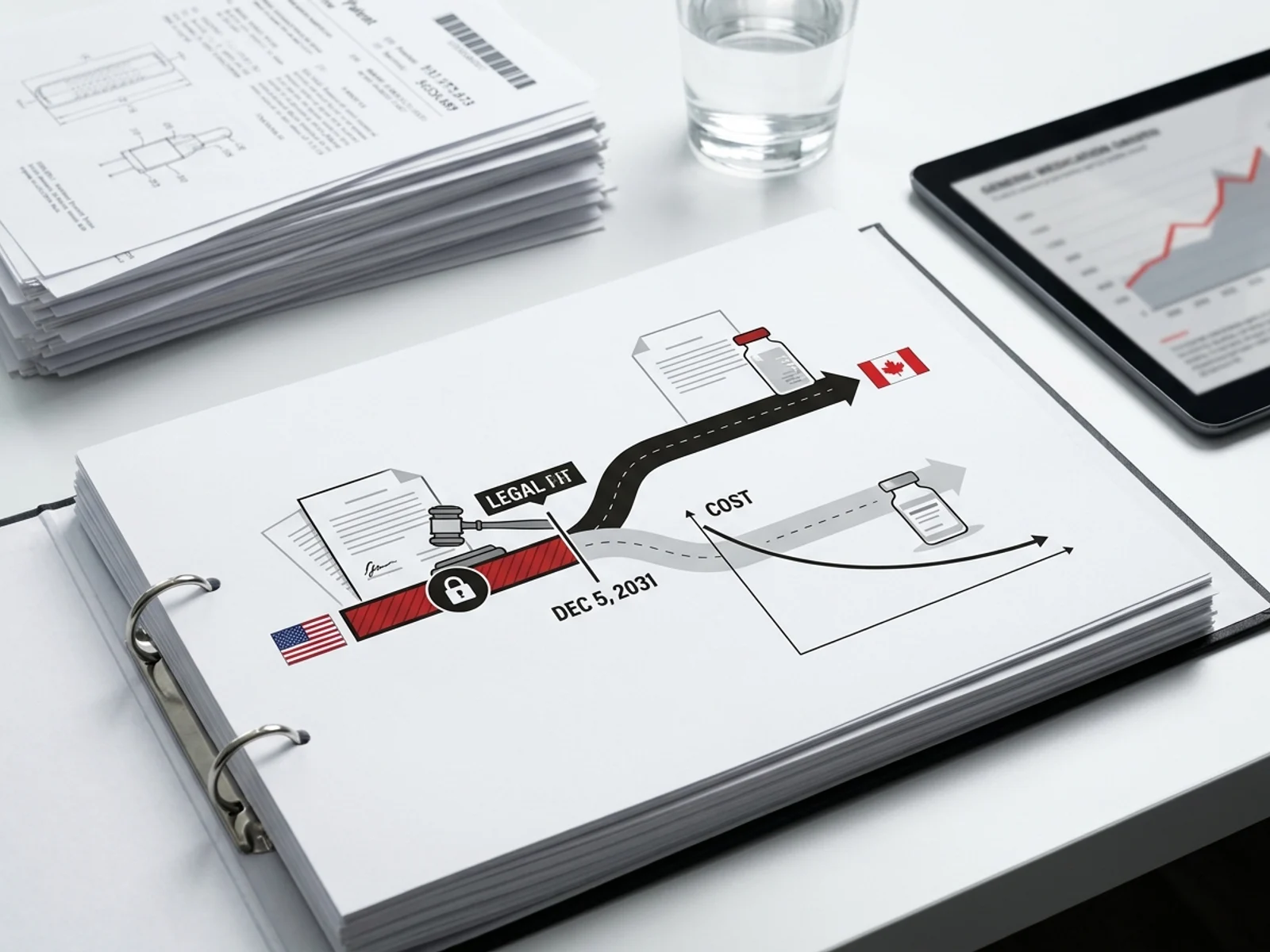
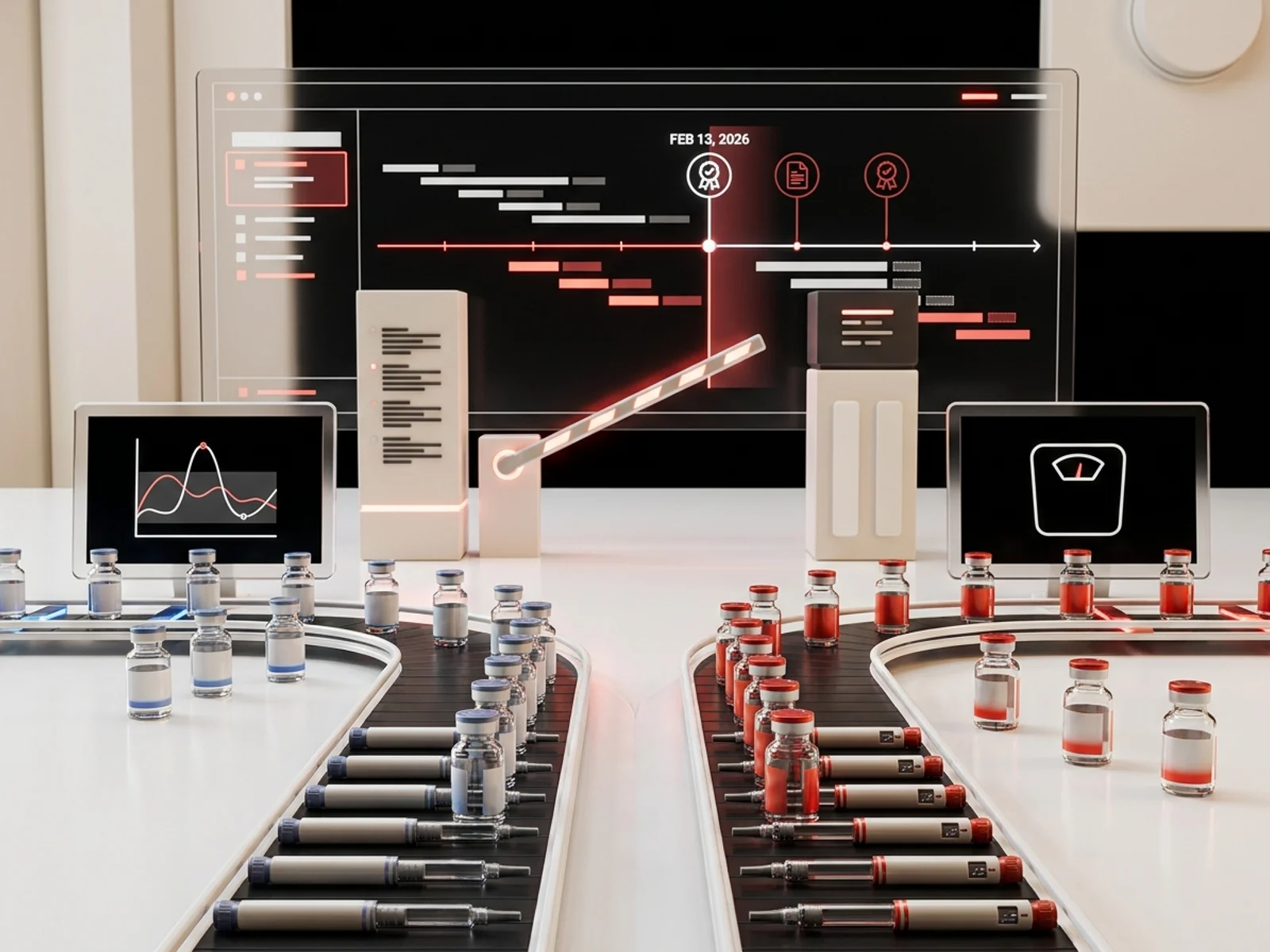
While several ANDA approvals occurred in late 2024 and 2025, commercial launch timelines were gated by patent litigation settlements and regulatory exclusivities. The core patent for Victoza and Saxenda is U.S. Patent No. 8,114,833, which covers the liraglutide compound itself. This patent expired on August 13, 2025. However, Novo Nordisk secured a six-month pediatric exclusivity extension (8114833*PED), which pushed the final compound exclusivity block to February 13, 2026.
Teva's June 2024 Victoza launch was an authorized generic marketed under Novo Nordisk's NDA, not an independent ANDA. Hikma Pharmaceuticals, by contrast, received the first true generic ANDA approval for Victoza (ANDA 215503, AP1) on December 23, 2024 and launched immediately — the FDA prioritized the application because liraglutide injection was on the drug-shortage list. Teva then secured the first generic Saxenda ANDA (214568, AP2), approved August 28, 2025. For the remaining generic sponsors, the expiration of the pediatric exclusivity on February 13, 2026, cleared the last compound-patent block, enabling a wave of additional approvals for Biocon, Orbicular, and Fresenius Kabi in early 2026.
2. Understanding the AP1 vs. AP2 Divide
The split between AP1 and AP2 codes is a critical operational detail for pharmacy benefit managers (PBMs). In the FDA's therapeutic equivalence coding system:
AP1 (Victoza Equivalent): Approved specifically for type 2 diabetes. Under state laws governing automatic generic substitution, an AP1 generic can only be automatically substituted by a pharmacist if the prescription is written for Victoza.
AP2 (Saxenda Equivalent): Approved specifically for chronic weight management. An AP2 generic can only be automatically substituted if the prescription is written for Saxenda.
This division exists because, although both products contain the exact same concentration of liraglutide (6 mg/mL), they are packaged in pre-filled pens with different dosing increments. The Victoza pen is designed to deliver doses of 0.6 mg, 1.2 mg, or 1.8 mg. The Saxenda pen is designed to deliver doses of 0.6 mg, 1.2 mg, 1.8 mg, 2.4 mg, or 3.0 mg.
A generic sponsor seeking approval for both indications must file separate ANDAs or secure labeling approvals that match the respective brand-name delivery systems. Only Teva, Biocon, and Orbicular have secured approvals in the AP2 (Saxenda) space, which carries significant commercial value given the high out-of-pocket costs and strict access controls for weight-loss medications.
3. Payer Formulary Integration & Step-Therapy Dynamics
As generic liraglutide supply stabilizes in 2026, commercial payers have a new lever for managing GLP-1 class cost. Because a once-daily injected generic (Victoza AP1 for type 2 diabetes, Saxenda AP2 for chronic weight management) is structurally cheaper than branded semaglutide and tirzepatide, it is a natural candidate for cost containment — but the AP1/AP2 split dictates where it can be inserted:
Diabetes Formularies: Generic Victoza (AP1) competes as a low-cost GLP-1 option in type 2 diabetes, and where a plan already prefers older GLP-1s over Ozempic or Mounjaro, it can anchor a preferred-tier or step-therapy rung. It cannot, however, substitute at the pharmacy for an Ozempic or Mounjaro prescription because those are different molecules with separate TE codes.
Weight Management Formularies: For plans that cover anti-obesity medication, generic Saxenda (AP2) offers a lower-cost injectable weight-loss option alongside branded Wegovy and Zepbound. Plans weighing step therapy should note the AP2 rating only supports substitution for a Saxenda prescription, not for the semaglutide or tirzepatide weight-loss brands.
4. Supply Chain and Shortage Mitigation
Branded GLP-1s have suffered from persistent shipping delays and shortages throughout 2024 and 2025. In the FDA Drug Shortages database, Novo Nordisk's brand liraglutide injection is listed with "Limited Availability" as of June 8, 2026, due to shipping delays.
The entry of generic competitors has provided a vital supply-chain buffer. Hikma's AP1 generic is listed as "Available," allowing pharmacies to triage patient access and substitute generic versions when branded Victoza or Saxenda are out of stock.
What to Monitor Next
Payer Step-Therapy Adoptions: Watch if more commercial plans implement mandatory generic-first policies for GLP-1 weight-loss benefits in late 2026.
Semaglutide Patent Landscapes: The generic liraglutide playbooks (authorized generics and settlement-date launches) are currently being adapted for the semaglutide patent challenges, where key patents begin expiring in 2031-2032.
Sources
FDA, Approved Drug Products with Therapeutic Equivalence Evaluations (Orange Book), current edition. Liraglutide products (NDA 022341, NDA 206321) and approved ANDA entries (214568, 217063, 217234, 215503, 218115, 215421, 217590, 215245, 212552). https://www.accessdata.fda.gov/scripts/cder/ob/
FDA, "FDA Approves First Generic of Once-Daily GLP-1 Injection to Lower Blood Sugar in Patients with Type 2 Diabetes" (first generic Victoza ANDA, Hikma Pharmaceuticals, approved December 23, 2024). https://www.fda.gov/news-events/press-announcements/fda-approves-first-generic-once-daily-glp-1-injection-lower-blood-sugar-patients-type-2-diabetes
Hikma Pharmaceuticals, "Hikma receives FDA approval and launches the generic version of Victoza, Liraglutide, in the US," December 26, 2024. https://www.hikma.com/news/hikma-receives-fda-approval-and-launches-the-generic-version-of-victoza-liraglutide-in-the-us
FDA Drug Shortages Database, Liraglutide Injection status (Victoza "Limited Availability" as of June 8, 2026; Hikma and Teva generics "Available"). https://www.accessdata.fda.gov/scripts/drugshortages/
Teva Pharmaceuticals, "Teva Announces Launch of First Generic GLP-1, Liraglutide Injection (Saxenda Equivalent) in the U.S.", Press Release, August 28, 2025. https://www.tevapharm.com/news-and-media/latest-news/teva-announces-launch-of-first-generic-glp-1-in-the-us/
Biocon Biologics, "Biocon Receives FDA Approval for Generic GLP-1 Formulations", Press Release, March 2026. https://www.biocon.com/news-media/press-releases/
Disclaimer: This article provides independent regulatory and market access analysis for biopharma professionals and does not constitute clinical or medical advice.