With the clinical and commercial explosion of GLP-1 receptor agonists, the transition of older agents to generic competition represents a critical inflection point for market access, pricing, and formulary strategy. Liraglutide was the first major GLP-1 molecule to face generic entry, but the biopharma industry's attention is now firmly fixed on semaglutide—the active pharmaceutical ingredient in Novo Nordisk’s blockbusters Ozempic, Wegovy, and Rybelsus. As payers, pharmacy benefit managers (PBMs), and generic portfolio managers seek to project GLP-1 price-erosion curves and formulate long-term formulary strategies, understanding the precise regulatory and patent hurdles blocking generic semaglutide in the United States is paramount.
Short Answer
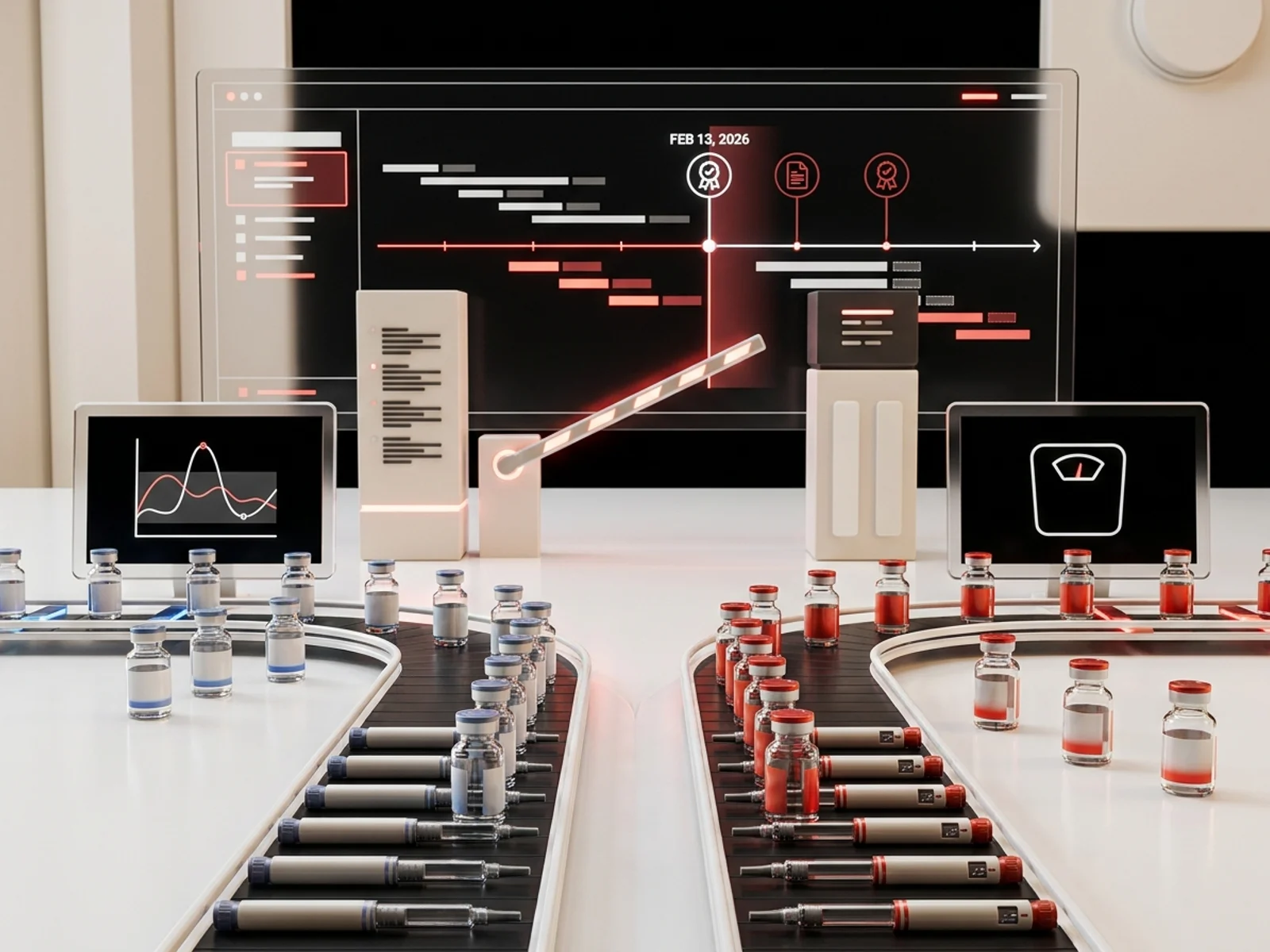
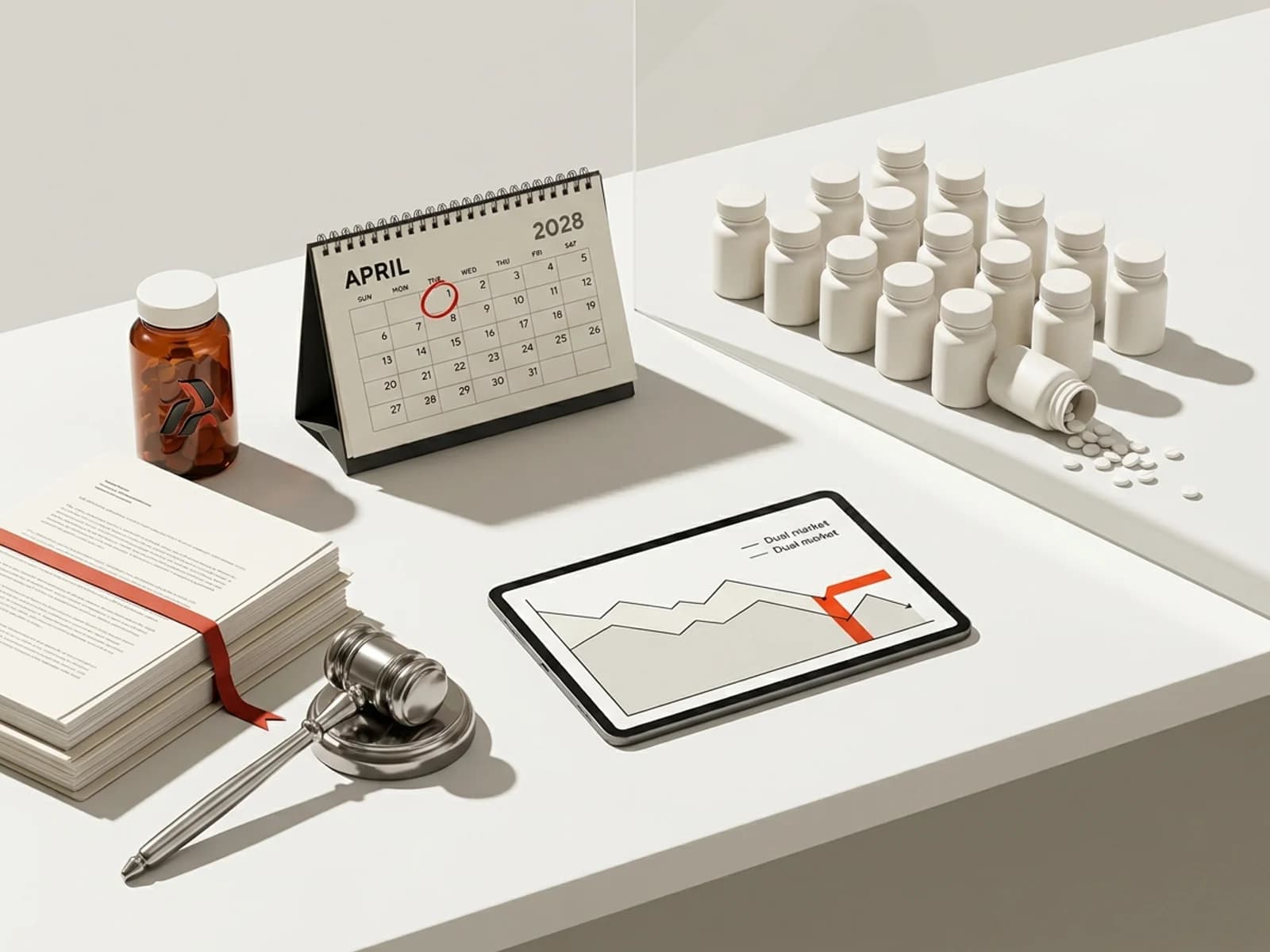
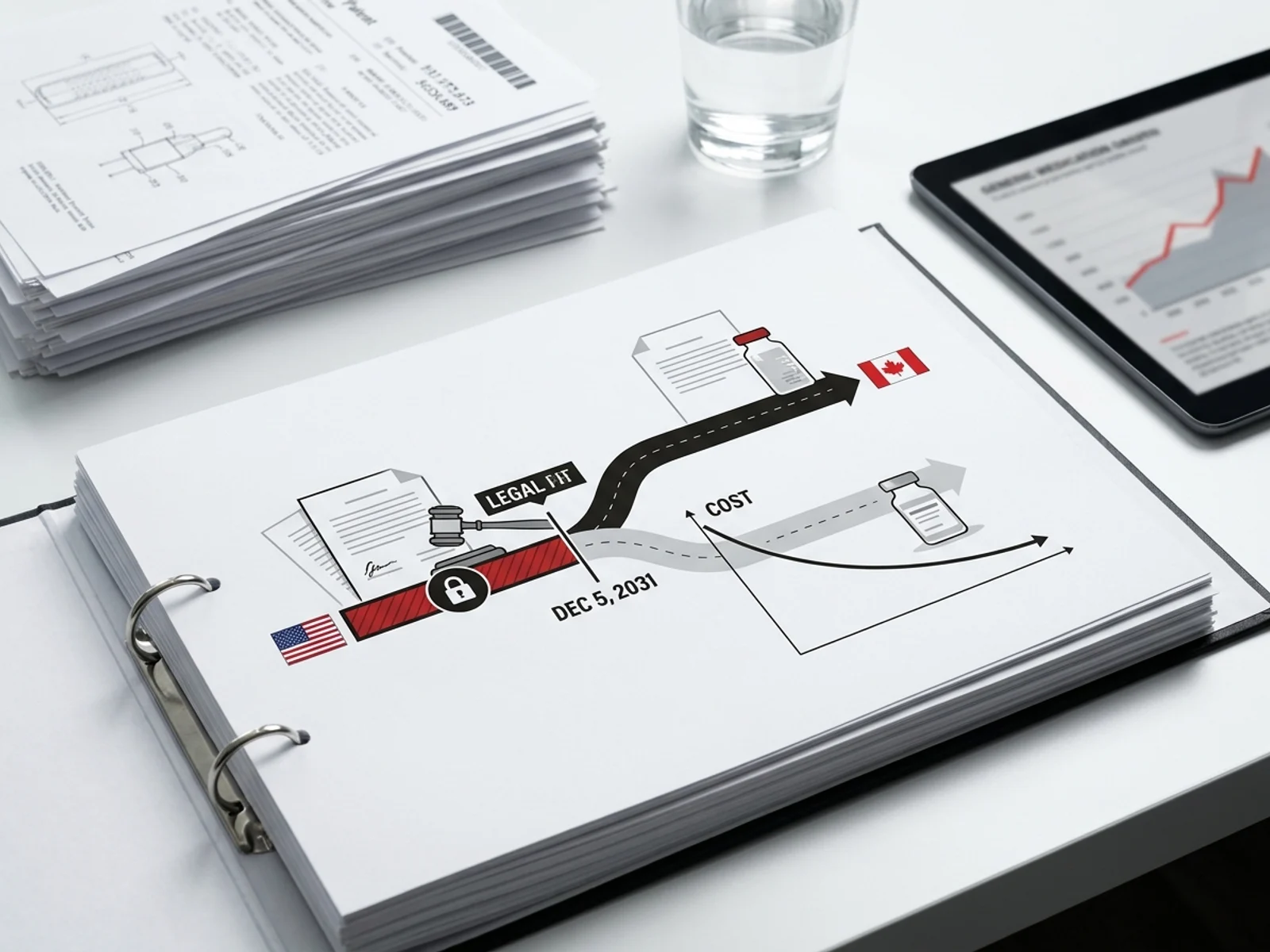
Generic semaglutide is not expected to launch in the United States until December 5, 2031, at the earliest. While Novo Nordisk's basic compound patent (U.S. Patent No. 8,536,122) expired on March 20, 2026, the core patent-term-extended (PTE) compound patent (U.S. Patent No. 8,129,343) blocks generic entry until December 5, 2031. Novo Nordisk has settled Paragraph IV patent litigation with at least seven generic manufacturers—including Alvogen, Sun Pharmaceutical Industries, Dr. Reddy's Laboratories, Mylan (Viatris), Zydus, and Apotex—but the launch dates permitted under these confidential settlements are highly unlikely to precede the December 2031 expiration of the PTE compound patent.
Furthermore, because semaglutide is a peptide consisting of 31 amino acids, it is regulated under the Hatch-Waxman Abbreviated New Drug Application (ANDA) pathway rather than the 351(k) biosimilar pathway. On April 10, 2026, the FDA granted the first tentative approval for a generic semaglutide ANDA to Apotex Corp. However, this tentative status does not permit commercial marketing in the U.S. due to the blocking patents. This U.S. delay contrasts with Canada, where Apotex commercially launched its generic version (Apo-Semaglutide) on May 14, 2026, under a distinct Canadian intellectual property framework. Meanwhile, brand Ozempic remains a highly priced retail pharmacy benefit, with its 2 mg/3 mL pen formulation carrying a National Average Drug Acquisition Cost (NADAC) of $332.00407 per mL as of June 10, 2026, representing a significant and ongoing cost containment challenge for commercial formularies.
Who This Is For
This analysis is written for generic drug portfolio planners, biopharma patent attorneys, commercial payer pharmacy directors, and pharmaceutical supply chain executives who project loss of exclusivity (LOE) timelines and design metabolic drug benefit strategies.
1. Hatch-Waxman vs. BPCIA: Why Semaglutide is an ANDA, Not a Biosimilar
A common point of confusion in the trade press is whether generic semaglutide will be approved as a "biosimilar." In the United States, the regulatory boundary between small-molecule generics and biologics is defined by the number of amino acids in the active ingredient's chain.
The Peptide Classification Rule
Under the Biologics Price Competition and Innovation Act (BPCIA) of 2009, as amended by the Further Consolidated Appropriations Act of 2020:
Biological Products: Any protein (except any chemically synthesized polypeptide) that is 40 or more amino acids in length is regulated as a biologic under Section 351 of the Public Health Service Act (PHSA). Alternative follow-on versions must follow the 351(k) biosimilar pathway, and are listed in the FDA's Purple Book.
Small-Molecule Drugs: Any polymer composed of 40 or fewer amino acids is classified as a peptide and is regulated as a drug under Section 505 of the Federal Food, Drug, and Cosmetic Act (FD&CA). Follow-on versions must submit an Abbreviated New Drug Application (ANDA) under Section 505(j) and are listed in the FDA's Orange Book.
Semaglutide is a synthetic GLP-1 receptor agonist peptide containing exactly 31 amino acids in its primary chain. Because its chain length falls below the 40-amino-acid threshold, semaglutide is regulated as a small-molecule drug. Thus, generic manufacturers do not seek a 351(k) biosimilar license; instead, they file an ANDA under Hatch-Waxman, targeting therapeutic equivalence (TE) ratings.
Operational Differences for Market Access Teams
The distinction between an ANDA small-molecule generic and a 351(k) biologic biosimilar is not merely academic. It dictates several commercial realities:
Therapeutic Equivalence (TE) Ratings: ANDAs receive TE codes (e.g., AP or AB ratings) in the Orange Book. If an ANDA is rated as therapeutically equivalent to the Reference Listed Drug (RLD), pharmacists can automatically substitute it at the counter under standard state generic substitution laws. For biologics, automatic substitution requires a separate, rigorous "interchangeability" designation in the Purple Book, though recent regulatory updates have streamlined this process (as detailed in our analysis of the FDA's streamlined biosimilar regulatory pathway).
Acquisition Pricing (NADAC vs. ASP): Because semaglutide is distributed via retail pharmacies and billed under the pharmacy benefit, its pricing is captured in CMS retail databases like the National Average Drug Acquisition Cost (NADAC). Biologics, particularly provider-administered oncology drugs, are billed under the medical benefit (buy-and-bill) and track Average Sales Price (ASP) instead.
Patent Resolution (Hatch-Waxman Litigation): Hatch-Waxman litigation involves a structured 30-month stay of FDA approval upon the filing of a Paragraph IV certification against Orange Book-listed patents. This contrasts with the "patent dance" mechanism established under the BPCIA for biologics.
2. The Semaglutide Patent Estate: Decoding the Expiration Dates
Novo Nordisk has constructed a formidable intellectual property fortress around semaglutide. To understand when generics can launch, one must analyze the specific patents listed in the FDA Orange Book for Novo Nordisk's active semaglutide NDAs:
NDA 209637: Ozempic (subcutaneous injection)
NDA 213051: Rybelsus (oral tablets)
NDA 215256: Wegovy (subcutaneous injection for chronic weight management)
NDA 218316: Wegovy (alternate strengths/presentations)
The Expiration of Patent 8,536,122 vs. the Expiration of Patent 8,129,343
A major source of media speculation was the expiration of U.S. Patent No. 8,536,122 on March 20, 2026. This patent covers the basic semaglutide compound. Many consumer-facing publications erroneously projected that this date would mark the arrival of cheap generic Ozempic.
However, Novo Nordisk holds another critical compound patent: U.S. Patent No. 8,129,343 (the '343 patent). The '343 patent also covers the semaglutide molecule and its therapeutic formulations. While its natural term was set to expire earlier, Novo Nordisk successfully applied for a Patent Term Extension (PTE) under 35 U.S.C. § 156 to compensate for regulatory delays during the FDA approval process.
Under Hatch-Waxman, a sponsor can extend the term of one patent per approved drug. Novo Nordisk applied the PTE to the '343 patent, extending its expiration to December 5, 2031. Because the '343 patent is a core compound patent that covers the semaglutide active ingredient itself, no generic manufacturer can market an ANDA containing semaglutide in the U.S. prior to this date without proving the patent invalid or non-infringed—a task that has proven exceedingly difficult.
The Orange Book Patent Landscape for Semaglutide
Beyond the core compound patents, Novo Nordisk has listed numerous drug-product, formulation, and combination/delivery patents in the Orange Book. The current listings for the Ozempic and Wegovy NDAs (June 10, 2026 snapshot) include:
| Patent Number | Orange Book Coverage | Expiration Date |
|---|---|---|
| US 8,129,343 | Drug substance (compound), PTE-extended | Dec 5, 2031 |
| US 8,536,122 | Drug substance (compound) | Expired Mar 20, 2026 |
| US 9,132,239 | Drug product (formulation/combination) | Feb 1, 2032 |
| US 10,335,462 | Drug product | Jun 21, 2033 |
| US 10,888,605 / 11,752,198 / 12,214,017 | Drug product (combination/delivery) | Aug 24, 2038 |
| US 12,551,536 / 12,029,779 / 12,295,988 | Drug product (combination) | Oct 10, 2038 |
| US 11,318,191 | Drug product | Feb 17, 2041 |
As shown in the table, even if generic developers bypass the 2031 compound patent, they face a secondary "patent wall" of drug-product and combination patents on the Ozempic and Wegovy NDAs that run into the late 2030s and early 2040s. Because Ozempic and Wegovy are drug-device combination products built around pre-filled pen injectors, an ANDA generic must also secure a delivery system that does not infringe this estate. This forces generic developers to either design around the listed patents or settle with Novo Nordisk to clear a launch path.
3. Paragraph IV Certification and Litigation Settlements
To obtain FDA approval for a generic drug before the brand's patents expire, an ANDA applicant must file a Paragraph IV certification under 21 U.S.C. § 355(j)(2)(A)(vii)(IV). This certification asserts that the listed patents are invalid, unenforceable, or will not be infringed by the manufacture, use, or sale of the generic drug.
Filing a Paragraph IV certification constitutes a technical act of patent infringement, which triggers a lawsuit by the brand sponsor. If the brand files suit within 45 days, the FDA is prohibited from granting final approval to the ANDA for 30 months (the 30-month stay), or until a court rules the patents invalid or non-infringed.
The Wave of Generic Settlements
Beginning in 2020, a succession of generic drug manufacturers filed ANDAs with Paragraph IV certifications for semaglutide. Novo Nordisk responded by filing patent infringement lawsuits in the U.S. District Court for the District of Delaware.
Rather than risk a court ruling that might invalidate its patents, Novo Nordisk chose to settle. In its 2025 Form 20-F, Novo Nordisk disclosed that it had settled U.S. Ozempic patent litigation with seven generic competitors:
Alvogen
Rio Biopharmaceuticals
Sun Pharmaceutical Industries
Dr. Reddy's Laboratories
Mylan (Viatris)
Zydus Pharmaceuticals
Apotex
The specific terms of these settlements—including the exact dates on which these generic manufacturers are permitted to enter the market—are confidential and subject to review by the Federal Trade Commission (FTC) for antitrust compliance. However, historical precedents in Hatch-Waxman settlements indicate that brand manufacturers rarely permit generic entry before their primary compound patent expires. Therefore, these settlements likely permit generic launches starting either on December 5, 2031 (upon the expiration of the PTE-extended '343 compound patent), or shortly thereafter, while resolving the downstream drug-product and combination-patent disputes.
April 10, 2026: The Tentative Approval of Apotex
A major milestone occurred on April 10, 2026, when the FDA granted tentative approval to Apotex Corp for its generic semaglutide injection ANDA.
[Generic ANDA Submission (Paragraph IV)] ──> [FDA Scientific Review]
                                                    │
                                                    ▼
                                            [Tentative Approval] (April 10, 2026)
                                                    │
                                         (Blocked by Patents)
                                                    │
                                                    ▼
                                             [December 2031] (Earliest U.S. Launch)
In the FDA's regulatory framework, a "tentative approval" means that the generic product has fully met all of the FDA's rigorous requirements for bioequivalence, active ingredient similarity, safety, and manufacturing quality. However, the generic cannot receive final approval (which is required to commercially ship the drug) because of the outstanding blocking patents. Apotex's tentative approval confirms that generic semaglutide is scientifically ready, but must wait out the legal exclusivity period.
4. The Canadian Pathway vs. U.S. Reality
While U.S. market access teams must prepare for another five years of branded exclusivity, the Canadian market presents a starkly different landscape. Health Canada became the first G7 regulator to authorize a generic semaglutide in late April 2026, and on May 14, 2026, Apotex commercially launched Apo-Semaglutide Injection in Canada, marking the first generic version of Ozempic to enter a major Western market.
Why is Generic Ozempic Available in Canada Now?
The divergence between the U.S. and Canadian launch timelines is driven by differences in patent law, regulatory pathways, and litigation structures:
Patent Utility and Expiry Differences: The Canadian counterparts to Novo Nordisk's U.S. patents were subject to different litigation outcomes. In Canada, patent challenges under the Patented Medicines (Notice of Compliance) Regulations follow a distinct path. Apotex successfully resolved or bypassed the Canadian patent estate for semaglutide, allowing Health Canada to issue a Notice of Compliance (NOC) and clear the drug for immediate sale.
No Equivalent to the U.S. 30-Month Stay: While Canada has regulations that link patent status to generic approvals, the timelines and procedural barriers are shorter than the Hatch-Waxman Paragraph IV 30-month stay and Patent Term Extension (PTE) rules.
Price Controls and Generic Substitution: Health Canada's approval enabled provincial drug formularies to immediately list generic semaglutide, triggering automatic substitution. In Canada, generic semaglutide launched at a significant discount (often 25% to 50% below the brand price), providing immediate relief to provincial healthcare budgets.
The Risk of Importation and Plan Design Vulnerability
The availability of generic semaglutide in Canada creates a unique challenge for U.S. commercial payers. Given the high cost of brand Ozempic in the U.S., some plan sponsors or individual patients may look to Canadian pharmacies for importation.
However, U.S. commercial health plans must exercise caution. Standard importation of prescription drugs by individuals remains technically illegal under federal law (with narrow exceptions), and commercial plan designs that facilitate Canadian drug sourcing face regulatory scrutiny. Payer leads must ensure their plan documents explicitly define coverage parameters to avoid unintended exposure to international sourcing schemes.
5. U.S. Commercial Acquisition Costs: A Look at CMS NADAC
In the U.S., semaglutide products are typically distributed through retail pharmacies and billed under the commercial pharmacy benefit. Unlike provider-administered oncology drugs that are billed under the medical benefit (such as pembrolizumab, which has zero entries in CMS NADAC), retail drug pricing is highly transparent.
CMS NADAC Pricing for Ozempic
The Centers for Medicare & Medicaid Services (CMS) publishes the National Average Drug Acquisition Cost (NADAC) weekly. NADAC represents the average price that retail community pharmacies pay to acquire a drug from wholesalers.
As of June 10, 2026, the NADAC price for brand Ozempic is tracked across several NDCs. For example, for the widely used Ozempic 0.25-0.5 MG/DOSE (2 MG/3 ML) PEN (NDC 00169418103), the NADAC price records:
NADAC Per Unit (Per mL): $332.00407
Total Pen Cost (3 mL Pen): $996.01221
This acquisition cost has remained highly stable throughout 2025 and early 2026. For pharmacy benefit managers and self-insured employers, this means the baseline cost of a single Ozempic pen remains close to $996 before rebates, fees, and pharmacy dispensing margins are applied.
+-------------------------------------------------------------------------+
|                  U.S. RETAIL ACQUISITION COST (CMS NADAC)               |
|                                                                         |
|  Brand Ozempic 2 mg/3 mL Pen (NDC 00169418103)                           |
|  - Per mL Acquisition Cost:   $332.00407                                |
|  - Total Cost per 3 mL Pen:   $996.01221                                |
|                                                                         |
|  *Note: Competing retail GLP-1 generics (like Hikma's AP1 liraglutide)  |
|   have triggered 30-50% price erosion, highlighting the savings U.S.    |
|   payers are missing due to semaglutide's patent extensions.            |
+-------------------------------------------------------------------------+
The Financial Strain on Self-Insured Employers
With millions of patients seeking GLP-1 therapies for diabetes and obesity, a cost of ~$996 per patient per month creates an unsustainable financial burden. Because generic semaglutide is blocked until late 2031, U.S. commercial payers cannot rely on generic substitution to bend the cost curve. This stands in contrast to the broader wave of blockbuster small-molecule and biologic patent cliffs through 2032 (as analyzed in our 2026-2032 patent-cliff-by-the-numbers overview). PBMs must instead deploy aggressive utilization management tools, such as prior authorization and step-therapy protocols.
6. Formulary and Market Access Strategies Through 2031
Because true generic semaglutide is delayed until the end of 2031, commercial plans must design robust formulary strategies to manage the GLP-1 class.
Step-Therapy Integration of Generic Liraglutide
With the entry of generic liraglutide (both AP1 diabetes-indicated and AP2 obesity-indicated versions), payers have a lower-cost GLP-1 option available.
Type 2 Diabetes: Formularies can mandate a step-therapy trial of generic liraglutide (AP1) before approving branded Ozempic. Because generic liraglutide represents a 30% to 50% discount compared to brand Victoza, this step-therapy requirement can redirect a subset of patients to a lower-cost therapy.
Obesity / Weight Management: For plans that cover anti-obesity medications, generic Saxenda (AP2) can serve as a preferred first-step agent before patients are escalated to branded Wegovy or Zepbound.
However, market access leads must note that liraglutide is a once-daily injection, whereas semaglutide is a once-weekly injection. The clinical difference in dosing frequency and efficacy (semaglutide generally demonstrates superior weight loss and A1c reduction) means that clinical exception pathways must be carefully managed to address patient and provider preferences. Payer teams should compare these dynamics with our generic liraglutide ANDA approvals and therapeutic-equivalence codes analysis to coordinate class-wide rules.
The Compounding Conundrum and Novo Nordisk's Legal Enforcement
The prolonged exclusivity of brand semaglutide has fueled a massive secondary market for "compounded semaglutide." Because semaglutide has been listed on the FDA's official drug shortages database due to supply-chain bottlenecks, compounding pharmacies are legally permitted under Section 503A and 503B of the FD&CA to manufacture compounded versions of the drug.
This compounding market has become a target for Novo Nordisk's legal enforcement:
Trademark and Safety Lawsuits: Novo Nordisk has filed dozens of lawsuits against compounding pharmacies, medical spas, and telehealth providers. The company alleges that these entities market unapproved, substandard, or counterfeit versions of semaglutide, often using salt formulations (like semaglutide sodium or semaglutide acetate) that have not been evaluated by the FDA.
The Hims & Hers Settlement (March 2026): In a high-profile action, Novo Nordisk settled its dispute with telehealth platform Hims & Hers Health in March 2026. Under the terms of the settlement, Hims & Hers agreed to cease advertising compounded GLP-1 offerings and transitioned to offering access to FDA-approved branded products.
From a market access perspective, commercial payers must enforce strict coverage exclusions for compounded drugs. Compounded formulations are not FDA-approved, are not rated in the Orange Book, and do not carry therapeutic equivalence codes. Covering compounded products exposes plans to significant patient safety risks and legal liabilities.
Frequently Asked Questions (FAQ)
Why is generic semaglutide already available in Canada but not the United States?
Health Canada and the Canadian legal system operate under different patent linkage and litigation rules than the U.S. Hatch-Waxman framework. Apotex successfully resolved or bypassed Novo Nordisk's Canadian patent estate, enabling the launch of Apo-Semaglutide in May 2026. In the U.S., the core compound patent (Patent 8,129,343) has been granted a Patent Term Extension (PTE) that legally blocks generic entry until December 5, 2031.
How do device and formulation patents delay generic semaglutide?
Semaglutide products like Ozempic and Wegovy are drug-device combination products. Even if generic manufacturers bypass the basic compound patent, they must design a pre-filled pen injector that does not infringe Novo Nordisk's numerous Orange Book-listed device patents (which extend as far as 2038). Generic developers must either challenge these patents or settle with Novo Nordisk to secure a license for the delivery system.
What is the significance of Apotex's tentative approval in April 2026?
Tentative approval indicates that the FDA has completed its scientific review and confirmed that Apotex's generic semaglutide ANDA is safe, effective, and bioequivalent to brand Ozempic. However, because of the U.S. patent blocks, the FDA cannot issue a final approval. Apotex cannot market or sell the drug in the U.S. until the patents expire or are resolved, which is not expected until late 2031.
Will generic semaglutide be interchangeable with brand Ozempic?
Yes. Because semaglutide is regulated as a small-molecule drug under the ANDA pathway, an approved generic ANDA that receives an AP therapeutic equivalence rating in the Orange Book will be automatically substitutable at the retail pharmacy counter under standard state laws. This is a key advantage over biosimilars, which require a separate interchangeability designation.
Sources
FDA, Approved Drug Products with Therapeutic Equivalence Evaluations (Orange Book). NDA 209637 (Ozempic), NDA 215256 (Wegovy), NDA 213051 (Rybelsus). https://www.accessdata.fda.gov/scripts/cder/ob/
U.S. Patent and Trademark Office (USPTO) Patent Term Extension Records for U.S. Patent No. 8,129,343.
FDA, "Tentative Approval" for Apotex Corp's ANDA for Semaglutide Injection (in partnership with Orbicular Pharmaceutical Technologies), announced April 10, 2026. https://www.accessdata.fda.gov/
Centers for Medicare & Medicaid Services (CMS), National Average Drug Acquisition Cost (NADAC) Files, weekly snapshot dated June 10, 2026. https://www.medicaid.gov/medicaid/prescription-drugs/state-medicaid-prescription-drug-programs-and-data/national-average-drug-acquisition-cost-nadac/index.html
Health Canada, Notice of Compliance (NOC) Database, Apo-Semaglutide approval date (May 2026). https://hres.ca/noc
Apotex Inc., "Apotex launches Apo-Semaglutide in Canada, offering the first generic alternative for patients," Press Release, May 2026. https://www.apotex.com/ca/en/about-us/news/
Novo Nordisk A/S, Annual Report 2025 (Form 20-F), filed with the U.S. Securities and Exchange Commission on February 2026 (disclosing Paragraph IV litigation settlements and brand IP strategy). https://www.sec.gov/
Disclaimer: This article provides independent regulatory and market access analysis for biopharma professionals and does not constitute clinical, legal, or medical advice.