The pharmaceutical market-access landscape for oncology drugs is heavily shaped by patent-settlement strategies and restricted distribution channels. Among the most financially significant small-molecule oncology therapies, Celgene’s (now Bristol-Myers Squibb’s) Revlimid (lenalidomide) stands as a landmark case. First approved by the FDA in 2005, Revlimid became the cornerstone treatment for multiple myeloma and myelodysplastic syndromes, achieving peak annual sales exceeding $12 billion globally. Managing lenalidomide costs and patient access is a major focus for commercial insurers, government payers, and specialty pharmacy operators.
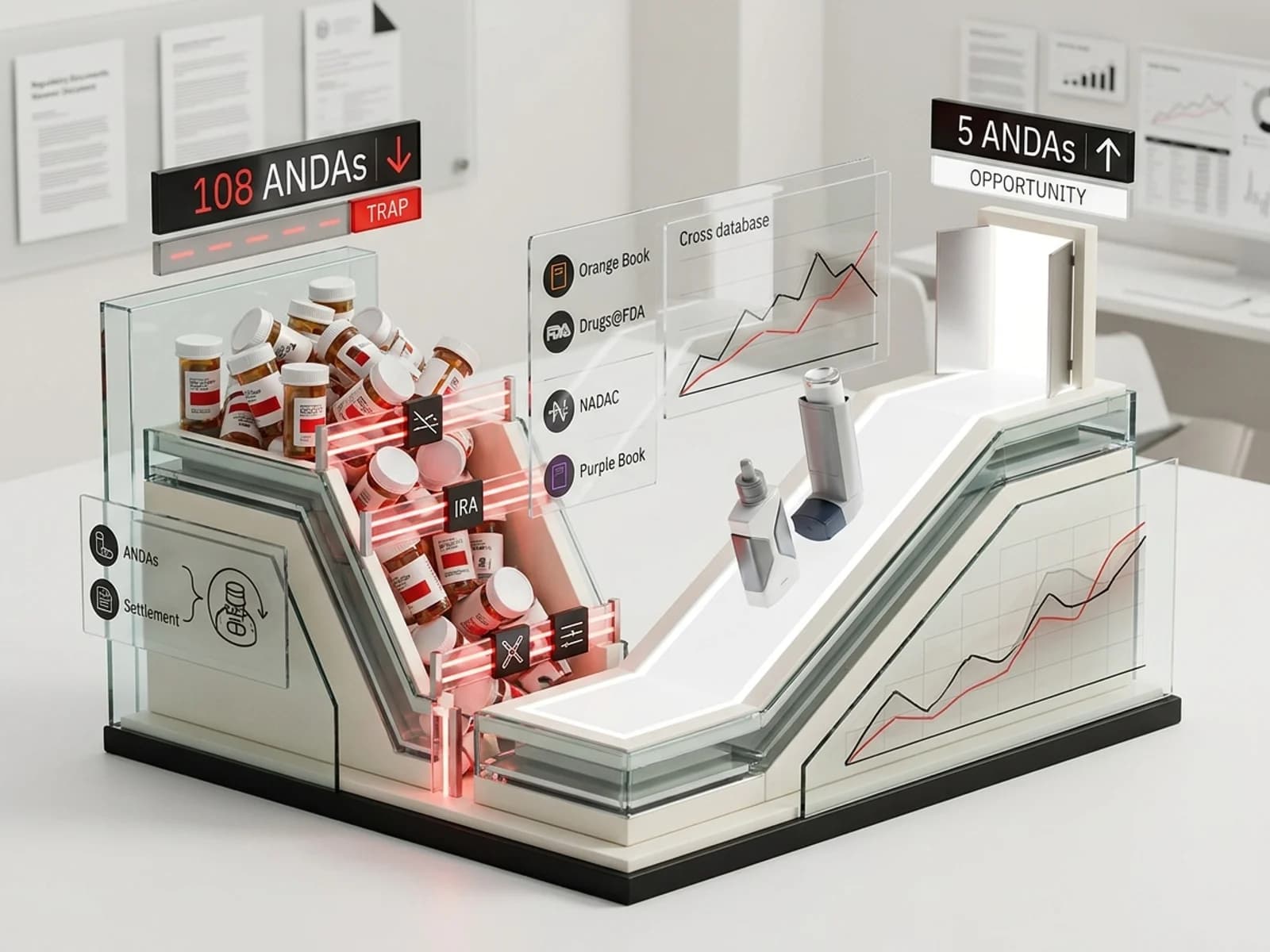
Unlike standard retail generic launches, the market entry of generic lenalidomide was highly controlled. Rather than a sudden shift to unrestricted competition, the transition was governed by volume-limited patent settlements and a restricted safety distribution program. The volume restrictions, which began in 2022, expired on January 31, 2026, marking a new phase of unrestricted generic competition. However, despite the presence of 20 approved generic Abbreviated New Drug Applications (ANDAs), lenalidomide is completely absent from retail pharmacy pricing databases.
This report provides a detailed analysis of the generic lenalidomide market. We examine the Celgene/BMS patent settlements that structured the market entry, map the approved ANDAs and applicants in the FDA Orange Book, analyze the pricing dynamics and the reasons behind lenalidomide's absence from CMS National Average Drug Acquisition Cost (NADAC) surveys, and explore the clinical requirements of the Revlimid REMS program.
Short Answer
Yes, generic Revlimid (lenalidomide) is widely available in the United States. Bristol-Myers Squibb’s brand Revlimid (NDA 021880) competes with 20 approved generic ANDAs held by 18 distinct generic manufacturers. The first commercial generic launched under a volume-limited settlement license in March 2022. FDA ANDA approvals began with Dr. Reddy's (October 14, 2021, holding 180-day exclusivity on the 2.5 mg and 20 mg strengths) and Cipla (September 6, 2022), followed by a major batch of seven ANDAs approved March 6–7, 2023 (Alvogen, Mylan, Zydus, Sun, Eugia, Arrow, and Apotex), with additional entrants clearing through 2024–2026. The volume restrictions expired on January 31, 2026, opening the market to unrestricted generic supply.
According to the FDA Orange Book (as of June 2026), there are 21 unique approved applications for lenalidomide: the brand NDA and 20 generic ANDAs. Despite this multi-source competition, lenalidomide and Revlimid are completely absent from the CMS NADAC dataset. A search of the June 10, 2026 CMS NADAC snapshot returns zero rows for these products. This absence occurs because generic lenalidomide is distributed exclusively through a restricted safety channel under the Revlimid REMS (Risk Evaluation and Mitigation Strategy). Because dispensing is restricted to certified specialty pharmacies rather than standard retail pharmacy networks, retail acquisition costs are not recorded in CMS retail surveys.
Who This Is For
This analysis is written for specialty pharmacy directors, oncology formulary managers, biopharma trade relations directors, and clinical program managers who need to understand restricted specialty drug distribution, REMS operational dynamics, and oncology generic access strategies.
For readers seeking a broader understanding of REMS program operations, see our guide on REMS distribution design and specialty-pharmacy bottlenecks. To compare abiraterone access with biologic oncology transitions in multiple myeloma, see the multiple-myeloma Darzalex biosimilar access tracker.
Staggered Entry: Celgene/BMS Patent-Settlement Architecture
To understand the lenalidomide market, it is necessary to examine the patent litigation and settlement strategy executed by Celgene (acquired by Bristol-Myers Squibb in 2019). The active ingredient—lenalidomide—is a derivative of thalidomide. Celgene protected Revlimid with a dense portfolio of patents covering its chemical structure, polymorphs, formulation, method-of-use, and the REMS system itself, extending protection to 2027 and beyond.
The Sample Access and "REMS-gate" Controversy
A major regulatory challenge in the generic lenalidomide timeline was the ability of generic sponsors to obtain physical samples of brand Revlimid to conduct necessary bioequivalence testing. Because Revlimid was distributed through a closed specialty pharmacy system under the FDA-mandated REMS program, generic manufacturers could not purchase the drug through standard wholesalers. Generic manufacturers, including Mylan and Dr. Reddy's, filed complaints with the FDA and initiated antitrust lawsuits, alleging that Celgene was using the REMS safety program as a shield to deny them access to samples, effectively blocking generic development. This tactic, referred to in the trade press as "REMS-gate," prompted the FDA to issue "safety determination letters" clarifying that providing samples would not violate the REMS, and later influenced provisions in the CREATES Act of 2019, which established a legal pathway for generic developers to obtain samples.
Congressional Drug Pricing Investigations
The high cost of Revlimid and Celgene's patent-extension strategies became a focal point of U.S. Congressional oversight. Between 2019 and 2021, the House Committee on Oversight and Reform investigated Revlimid pricing, releasing internal Celgene documents showing that the company repeatedly raised the price of Revlimid to meet corporate profit targets while actively exploiting the REMS program to block generic competition. These findings drew intense public scrutiny and ultimately fueled bipartisan support for drug price reform, contributing to the passage of the Inflation Reduction Act of 2022, which targeted high-spend specialty drugs for negotiation.
Rather than litigate these patents and antitrust claims to completion, Celgene entered into a series of settlements with generic manufacturers between 2015 and 2020. These settlements established a structured, staggered entry model.
+---------------------------------------------------------------------------------+
|                       Revlimid Staggered Entry Timeline                         |
+---------------------------------------------------------------------------------+
|                                                                                 |
|  2005: Brand Approval                                                           |
|  - FDA approves brand Revlimid (NDA 021880) for myelodysplastic syndromes.      |
|                                                                                 |
|  2015-2020: Settlements                                                         |
|  - Celgene settles patent litigation with Natco, Alvogen, Dr. Reddy's, etc.     |
|  - Creates a volume-limited generic entry framework starting in 2022.           |
|                                                                                 |
|  Oct 2021: First ANDA Approval                                                  |
|  - FDA approves Dr. Reddy's generic lenalidomide ANDA (180-day exclusivity      |
|    on the 2.5 mg and 20 mg strengths).                                          |
|                                                                                 |
|  Mar 2022: Initial Commercial Launch                                            |
|  - First generic lenalidomide launches under a volume-limited settlement license.|
|                                                                                 |
|  Mar 2023: The ANDA Approval Wave                                               |
|  - FDA approves a major batch of 7 generic ANDAs (Alvogen, Mylan, Zydus, Sun,   |
|    Eugia, Arrow, Apotex).                                                       |
|                                                                                 |
|  Jan 31, 2026: Expiration of Volume Limits                                      |
|  - Volume caps on generic lenalidomide expire. Unrestricted entry begins.        |
|                                                                                 |
|  Jun 2026: Unrestricted Market                                                  |
|  - 20 approved ANDAs compete on volume, but REMS keeps product off retail NADAC.|
|                                                                                 |
+---------------------------------------------------------------------------------+
The Volume-Limited Phase (March 2022 – January 2026)
The key feature of the Revlimid settlements was a volume-limited license prior to patent expiration. This strategy allowed BMS to manage the financial erosion of its largest asset while providing generic manufacturers a guaranteed path to market without the risk of an "at-risk" launch.
The Natco/Teva Pioneer Agreement (December 2015): Celgene's first settlement was with Natco Pharma and its marketing partner Teva Pharmaceuticals. This agreement set the template for all subsequent settlements. Under the terms, Teva was permitted to launch a generic version of lenalidomide in the United States on March 7, 2022. The license restricted Teva's sales volume to a low-single-digit percentage (initially under 5% of the total U.S. lenalidomide market volume) in the first year. The volume limit rose gradually each year, topping out at approximately one-third (33%) of the total U.S. market volume by early 2025.
The Alvogen Settlement (April 2019): Celgene subsequently settled with Alvogen, permitting them to launch generic lenalidomide in the U.S. at a later date, subject to their own volume cap. The volume limit was set as a fraction of Teva's cap, maintaining the overall limit on total generic market share.
The Dr. Reddy's and Subsequent Settlements (2020): In September 2020, Celgene/BMS settled with Dr. Reddy's Laboratories. Similar settlements followed in rapid succession with other generic filers, including Cipla, Zydus, Mylan (now Viatris), and Apotex. Each settlement granted a license to launch generic lenalidomide after March 2022, with individual volume caps that increased annually until the final expiration date.
Financial Impact for BMS: This staggered entry allowed BMS to maintain a significant portion of its Revlimid revenue, mitigating the sudden "generic cliff" typical of small-molecule drugs. From 2022 to 2025, brand Revlimid remained a multi-billion dollar asset for BMS, even as generic options were introduced. This structured entry model represents one of the most successful life-cycle management and patent defense strategies in biopharma history.
The Unrestricted Phase (Effective January 31, 2026)
The volume-limited licenses contained a hard expiration date: January 31, 2026.
Removal of Volume Restrictions: On this date, all volume limitations on the generic manufacturers expired. Generic sponsors are now permitted to manufacture and sell unlimited quantities of generic lenalidomide in the U.S.
Market Saturation: The transition to unrestricted volume has allowed 18 generic sponsors to compete on volume, driving down acquisition costs in the wholesale channel. Payers can now treat lenalidomide as a fully multi-source generic, although its unique distribution channel continues to impact pricing.
FDA Orange Book Landscape: Counting Approved Lenalidomide ANDAs
The resolution of the patent litigation allowed the FDA to approve multiple generic applications. An analysis of the FDA Orange Book (as of June 2026) shows 21 unique approved applications for lenalidomide: 1 brand NDA and 20 approved generic ANDAs. These 20 ANDAs are held by 18 distinct generic applicants.
| Application Number | Application Type | Sponsor | Strength | Approval Date | TE Code | Trade / Product Name |
|---|---|---|---|---|---|---|
| NDA 021880 | NDA (RLD/RS) | Bristol-Myers Squibb / Celgene | 2.5mg, 5mg, 10mg, 15mg, 20mg, 25mg | Dec 27, 2005 | RS | Revlimid |
| ANDA 209348 | ANDA | Dr. Reddy's | 2.5mg, 5mg, 10mg, 15mg, 20mg, 25mg | Oct 14, 2021 | AB | Lenalidomide |
| ANDA 210435 | ANDA | Cipla | 2.5mg, 5mg, 10mg, 15mg, 20mg, 25mg | Sep 6, 2022 | AB | Lenalidomide |
| ANDA 210154 | ANDA | Zydus | 2.5mg, 5mg, 10mg, 15mg, 20mg, 25mg | Mar 6, 2023 | AB | Lenalidomide |
| ANDA 210480 | ANDA | Alvogen | 2.5mg, 5mg, 10mg, 15mg, 20mg, 25mg | Mar 6, 2023 | AB | Lenalidomide |
| ANDA 211846 | ANDA | Sun Pharma | 2.5mg, 5mg, 10mg, 15mg, 20mg, 25mg | Mar 6, 2023 | AB | Lenalidomide |
| ANDA 213885 | ANDA | Eugia | 2.5mg, 5mg, 10mg, 15mg, 20mg, 25mg | Mar 6, 2023 | AB | Lenalidomide |
| ANDA 213912 | ANDA | Mylan | 2.5mg, 5mg, 10mg, 15mg, 20mg, 25mg | Mar 6, 2023 | AB | Lenalidomide |
| ANDA 214618 | ANDA | Cipla | 2.5mg, 5mg, 10mg, 15mg, 20mg, 25mg | Mar 6, 2023 | AB | Lenalidomide |
| ANDA 201452 | ANDA | Arrow International | 2.5mg, 5mg, 10mg, 15mg, 20mg, 25mg | Mar 6, 2023 | AB | Lenalidomide |
| ANDA 211022 | ANDA | Apotex | 2.5mg, 5mg, 10mg, 15mg, 20mg, 25mg | Mar 7, 2023 | AB | Lenalidomide |
| ANDA 212414 | ANDA | Hetero | 2.5mg, 5mg, 10mg, 15mg, 20mg, 25mg | May 11, 2023 | AB | Lenalidomide |
| ANDA 217265 | ANDA | Qilu | 2.5mg, 5mg, 10mg, 15mg, 20mg, 25mg | Feb 22, 2024 | AB | Lenalidomide |
| ANDA 217281 | ANDA | Novugen | 2.5mg, 5mg, 10mg, 15mg, 20mg, 25mg | Sep 11, 2024 | AB | Lenalidomide |
| ANDA 216213 | ANDA | Amneal | 2.5mg, 5mg, 10mg, 15mg, 20mg, 25mg | Jan 31, 2025 | AB | Lenalidomide |
| ANDA 215759 | ANDA | Biocon | 2.5mg, 5mg, 10mg, 15mg, 20mg, 25mg | Mar 3, 2025 | AB | Lenalidomide |
| ANDA 217554 | ANDA | Deva Holding | 2.5mg, 5mg, 10mg, 15mg, 20mg, 25mg | May 22, 2025 | AB | Lenalidomide |
| ANDA 214398 | ANDA | Lupin | 2.5mg, 5mg, 10mg, 15mg, 20mg, 25mg | Sep 16, 2025 | AB | Lenalidomide |
| ANDA 218872 | ANDA | Accord | 2.5mg, 5mg, 10mg, 15mg, 20mg, 25mg | Nov 14, 2025 | AB | Lenalidomide |
| ANDA 213165 | ANDA | Cipla | 2.5mg, 5mg, 10mg, 15mg, 20mg, 25mg | Feb 2, 2026 | AB | Lenalidomide |
| ANDA 213405 | ANDA | Torrent | 2.5mg, 5mg, 10mg, 15mg, 20mg, 25mg | Feb 10, 2026 | AB | Lenalidomide |
Source: FDA Orange Book, June 2026 snapshot. All 20 ANDAs hold active therapeutic equivalence ratings (AB) relative to the reference listed drug Revlimid (NDA 021880), confirming bioequivalence across all approved strengths. Cipla holds three distinct ANDA numbers (210435, 213165, 214618), reflecting separate application filings across different approval dates.
Payer Pricing Dynamics: The Complete Absence from NADAC
In retail pharmacy, drug pricing is heavily monitored through indices such as the National Average Drug Acquisition Cost (NADAC). For typical small-molecule generic drugs (such as generic Zytiga or generic Tecfidera), the entry of multiple manufacturers results in rapid price erosion that is tracked weekly in the NADAC database.
However, a query of the CMS NADAC dataset (as of June 2026) for the active ingredients "lenalidomide" or the trade name "Revlimid" returns zero active rows. This complete absence makes lenalidomide a unique case in oncology generic pricing.
+---------------------------------------------------------------------------------+
|                       Why Lenalidomide is Absent from NADAC                     |
+---------------------------------------------------------------------------------+
|                                                                                 |
|  [Standard Generic: Abiraterone]      [Specialty Generic: Lenalidomide]         |
|  - Distributed via retail wholesalers. - Distributed via restricted REMS.        |
|  - Purchased by retail pharmacies.    - Purchased only by certified specialty    |
|                                         pharmacies.                             |
|  - High retail survey volume.         - Low retail survey volume (off-survey).  |
|  - Active NADAC: $0.90 per tablet.     - Active NADAC: $0.00 (Zero Rows).        |
|                                                                                 |
|  Strategic Consequence for Payers                                               |
|  - Payers cannot use NADAC as a reimbursement benchmark for lenalidomide.       |
|  - Specialty pharmacy contracting must rely on ASP or direct WAC discounts.    |
|                                                                                 |
+---------------------------------------------------------------------------------+
The Mechanism Behind the Absence
The absence of lenalidomide from the NADAC database is directly related to its distribution channel:
Survey Scope Limits: CMS calculates NADAC by surveying standard retail community pharmacies. The survey does not capture acquisition costs from closed specialty pharmacy networks or hospital-inpatient pharmacies.
Restricted Safety Distribution: Due to the severe safety risks associated with lenalidomide, the drug is distributed through a restricted network under the Revlimid REMS. Standard retail community pharmacies are not certified to purchase or dispense lenalidomide.
Low Survey Volume: Because only certified specialty pharmacies dispense lenalidomide, CMS receives zero transaction records from its retail pharmacy survey sample. Without sufficient retail survey volume, CMS cannot calculate or publish a NADAC for the molecule.
Strategic Consequences for Payers
Because the NADAC benchmark is unavailable, health plans and PBMs must manage lenalidomide reimbursement through alternative strategies:
Wholesale Acquisition Cost (WAC) Discounting: Payers negotiate discounts off the WAC set by the generic manufacturers. Because the volume limits expired in January 2026, generic manufacturers have introduced competitive WAC pricing, allowing payers to secure deeper discounts through specialty pharmacy contracting.
Average Sales Price (ASP) Benchmarking: For doses administered under the medical benefit (such as in hospital outpatient clinics), Medicare and commercial payers rely on the ASP reported quarterly by manufacturers to the Office of Inspector General (OIG).
Risk Evaluation and Mitigation Strategy: The Revlimid REMS Program
The active ingredient—lenalidomide—is structurally related to thalidomide, a known teratogen that causes severe, life-threatening birth defects. To prevent embryo-fetal exposure, the FDA mandates a strict Risk Evaluation and Mitigation Strategy (REMS) program. The Lenalidomide REMS is a unified program that applies to both brand-name Revlimid and all 20 approved generic versions.
The REMS program places significant administrative requirements on prescribers, pharmacies, and patients:
+---------------------------------------------------------------------------------+
|                         Lenalidomide REMS Access Steps                          |
|                                                                                 |
|  [Prescribers]                                                                  |
|  - Register with the Lenalidomide REMS program.                                 |
|  - Complete patient risk counseling and document status.                        |
|  - Obtain a unique Authorization Number for each monthly prescription.          |
|                                                                                 |
|  [Patients]                                                                     |
|  - Enroll in the REMS program.                                                  |
|  - Comply with mandatory contraception requirements.                            |
|  - Complete a monthly safety survey prior to receiving each refill.             |
|                                                                                 |
|  [Pharmacies]                                                                   |
|  - Obtain certification with the Lenalidomide REMS.                             |
|  - Verify the prescriber's Authorization Number before dispensing.              |
|  - Limit dispensing to a maximum 28-day supply; no automatic refills.           |
+---------------------------------------------------------------------------------+
1. Requirements for Prescribers
Physicians who prescribe generic lenalidomide must be certified with the REMS program.
Registration: Prescribers must complete a one-time registration form.
Patient Counseling: Prescribers must counsel all patients regarding the risks of embryo-fetal exposure and the mandatory contraception requirements.
Risk Category Documentation: For each patient, the prescriber must submit a patient enrollment form identifying the patient's risk category (e.g., female of childbearing potential, female of non-childbearing potential, or male).
Prescription Gating: Before writing a prescription, the prescriber must complete a monthly survey and obtain an authorization number, which must be written on the prescription.
2. Requirements for Patients
All patients must be enrolled in the REMS program to receive lenalidomide.
Contraception Compliance: Females of childbearing potential must agree to use two active methods of contraception simultaneously or practice complete abstinence, and they must undergo regular pregnancy testing. Males must agree to use a condom during sexual contact with females of childbearing potential.
Monthly Safety Surveys: Patients must complete a monthly telephone or online survey verifying compliance with safety protocols before the pharmacy can dispense the medication.
3. Requirements for Specialty Pharmacies
Only certified specialty pharmacies are authorized to order, stock, or dispense generic lenalidomide.
REMS Verification: Before dispensing, the certified pharmacy must contact the REMS system to verify that the prescriber is certified, the patient is enrolled, and a monthly authorization number has been generated.
Dispensing Limits: Pharmacies are restricted to dispensing a maximum 28-day supply. No refills are permitted; a new prescription and authorization number are required for each monthly cycle.
Dispensing Windows: The pharmacy must dispense the medication within a narrow window following the pregnancy test (for females of childbearing potential) or the authorization date. If the window closes, the authorization must be re-requested.
Clinical Safety: Managing Myelosuppression, Thromboembolic Risk, and Secondary Malignancies
While the REMS program is focused on preventing embryo-fetal exposure, lenalidomide carries other serious clinical risks that require active medical management. Specialty pharmacies and oncology clinical teams utilize patient checklists to monitor these key toxicities.
1. Hematologic Toxicity (Myelosuppression)
Lenalidomide causes significant myelosuppression, which is a major dose-limiting toxicity in multiple myeloma patients.
Neutropenia and Thrombocytopenia: In clinical trials, Grade 3 or 4 neutropenia occurred in up to 50% of patients receiving lenalidomide/dexamethasone therapy, and Grade 3 or 4 thrombocytopenia occurred in up to 15%. This increases the risk of severe infections and spontaneous bleeding.
Monitoring Protocol: A Complete Blood Count (CBC), including differential, must be performed at baseline and monitored weekly for the first 8 weeks of therapy, and at least monthly thereafter.
Dose Modifications: If a patient's absolute neutrophil count (ANC) drops below 500 cells/microliter, or if platelets drop below 30,000 cells/microliter, lenalidomide dosing must be suspended. Once hematologic parameters recover, therapy can be resumed at a reduced dose (e.g., 15 mg instead of 25 mg, or 10 mg instead of 15 mg).
2. Venous and Arterial Thromboembolism
Lenalidomide is associated with a significantly increased risk of deep vein thrombosis (DVT), pulmonary embolism (PE), myocardial infarction, and stroke, particularly when combined with dexamethasone or other chemotherapy agents.
Prophylaxis Guidelines: Because of this risk, clinical guidelines mandate that almost all multiple myeloma patients receiving lenalidomide receive thromboprophylaxis.
Therapy Selection: For patients with low cardiovascular risk, low-dose aspirin (81 mg to 325 mg daily) is generally recommended. For patients with higher risk factors (such as prior history of DVT, obesity, or immobilization), therapeutic anticoagulation with low-molecular-weight heparin (LMWH) or oral anticoagulants (like warfarins or DOACs) is required.
Clinical Screening: Specialty pharmacists confirm that a patient has an active thromboprophylaxis regimen before dispensing each cycle.
3. Second Primary Malignancies (SPM)
Long-term follow-up clinical trials of multiple myeloma patients treated with lenalidomide (particularly as maintenance therapy post-autologous stem cell transplant) have revealed an increased risk of developing Second Primary Malignancies.
Malignancy Types: Patients have shown elevated rates of acute myelogenous leukemia (AML), myelodysplastic syndromes (MDS), and solid tumors (such as skin cancers).
Clinical Judgment: Oncology teams must weigh the clear progression-free survival benefits of lenalidomide therapy against the long-term risk of developing a secondary cancer. Regular screening for secondary malignancies is recommended as part of routine post-transplant follow-up.
Payer Management: Prior Authorization Criteria and Formulary Gating
The transition to unrestricted generic supply in January 2026 has allowed payers to manage lenalidomide spend through aggressive contracting and formulary gating. While the drug lacks a retail NADAC benchmark, payers use clinical policies to enforce cost-effective use.
1. Prior Authorization (PA) Checklist
Because lenalidomide is a high-cost specialty oncology medication, payers require a comprehensive PA review. A typical lenalidomide PA checklist includes:
Indication Verification: Documentation of an FDA-approved or compendia-supported indication:
Multiple Myeloma: Used in combination with dexamethasone (for newly diagnosed or relapsed/refractory disease), as maintenance therapy following autologous stem cell transplant, or in combination with other approved oncology agents.
Myelodysplastic Syndromes (MDS): Transfusion-dependent anemia associated with low- or intermediate-1-risk MDS with a deletion 5q cytogenetic abnormality, with or without additional cytogenetic abnormalities.
Mantle Cell Lymphoma (MCL): Relapsed or progressive disease following at least two prior therapies (one of which must have included bortezomib).
REMS Certification Confirmation: Verification that the prescribing oncologist and the dispensing specialty pharmacy are certified in the Lenalidomide REMS program.
Baseline Lab Thresholds: Clear lab results confirming adequate hematologic function: absolute neutrophil count (ANC) $\ge 1,000$ cells/microliter and platelet count $\ge 75,000$ cells/microliter (or lower if cytopenias are documented as disease-related).
Thromboprophylaxis Verification: Documentation of a concurrent venous thromboembolism prophylaxis plan (e.g., daily low-dose aspirin, low-molecular-weight heparin, or direct oral anticoagulant).
2. Step Therapy and Formulary Tiering
Commercial PBMs have positioned generic lenalidomide on Tier 4 or Tier 5 (specialty tiers) with preferred status.
Brand Exclusion: Brand-name Revlimid is widely excluded. Patients must transition to the generic version unless they have a documented medical contraindication to inactive ingredients in the generic capsules, which is rare.
POM/IMiD Sequencing: Before a payer will approve coverage for newer, more expensive branded immunomodulatory drugs (IMiDs) such as Celgene/BMS’s Pomalyst (pomalidomide), plans require that the patient first fail or demonstrate clinical progression on generic lenalidomide (except in cases where pomalidomide is indicated for patients who have already failed lenalidomide).
3. Copay and Funding Dynamics
Because lenalidomide is a specialty oncology drug, patients face significant financial cost-sharing (often 20% to 33% coinsurance) before reaching their out-of-pocket limits.
Commercial Co-pay Assistance: Generic lenalidomide manufacturers offer copay assistance cards for commercially insured patients, reducing their out-of-pocket cost to $0 or a nominal amount.
Government-Insured Support: Medicare Part D and Medicaid patients are prohibited by federal law from using manufacturer copay cards. Instead, specialty pharmacies coordinate with independent charitable oncology foundations (e.g., Patient Access Network Foundation, Leukemia & Lymphoma Society) to secure copay grants that offset the patient's cost-sharing burden.
FAQ
Why is generic lenalidomide not priced in CMS NADAC like other oral oncology generics?
Generic lenalidomide is absent from CMS NADAC because it is distributed through a restricted safety channel (the Revlimid REMS). Since only certified specialty pharmacies can purchase and dispense lenalidomide, CMS’s weekly surveys of retail community pharmacies receive zero transaction records for the drug. Without sufficient retail survey data, CMS cannot calculate a NADAC.
How did Celgene/BMS Hatch-Waxman settlements create volume-limited versus unrestricted generic entry dates?
To resolve patent disputes, Celgene/BMS granted generic manufacturers licenses to enter the U.S. market early. To protect brand revenue, the licenses restricted the generic companies to selling a limited volume of lenalidomide (a small percentage of the total market) starting in March 2022. The settlements specified that these volume limits would expire on January 31, 2026, after which generic sponsors could sell unlimited quantities.
Are generic lenalidomide capsules AB-rated and substitutable for brand Revlimid?
Yes. All 20 approved generic lenalidomide ANDAs listed in the Orange Book hold an AB rating relative to brand Revlimid (NDA 021880) across all strengths (2.5 mg, 5 mg, 10 mg, 15 mg, 20 mg, and 25 mg). This rating indicates that the generic capsules have demonstrated bioequivalence to the reference brand in clinical trials. Pharmacists can substitute the generic for the brand, provided both the prescriber and the pharmacy are certified in the Lenalidomide REMS.
Sources
U.S. Food and Drug Administration, Approved Drug Products with Therapeutic Equivalence Evaluations (Orange Book). Search criteria: "Lenalidomide" (NDA 021880; ANDAs 201452, 209348, 211022, 213912, 210480, 210435, 210154, 211846, 213885, 213405, 212414, 215759, 216213, 217265, 217281, 217554, 218872, 214398, 213165, 214618). https://www.accessdata.fda.gov/scripts/cder/ob/
Centers for Medicare & Medicaid Services (CMS), National Average Drug Acquisition Cost (NADAC) Files, June 10, 2026 snapshot. Query: "lenalidomide" and "Revlimid" across all NADAC NDC descriptions (returning zero matches, confirming absence from retail pharmacy acquisition-cost reporting). https://www.medicaid.gov/medicaid/prescription-drugs/pharmacy-pricing/index.html
U.S. Food and Drug Administration, Drugs@FDA Database. Product labels for Revlimid (NDA 021880) and approved generic lenalidomide applications. https://www.accessdata.fda.gov/scripts/cder/daf/
U.S. Food and Drug Administration, Lenalidomide REMS (Risk Evaluation and Mitigation Strategy) Portal. Program requirements and safety materials. https://www.accessdata.fda.gov/scripts/cder/drls/gettingARems.cfm
Bristol-Myers Squibb Company, Form 10-K Annual Report and SEC Filings. Disclosures on Revlimid patent litigation and settlement timelines. https://www.sec.gov/
Disclaimer: This article provides independent regulatory, clinical-pipeline, and market-access analysis for biopharma professionals and does not constitute clinical, legal, or investment advice.