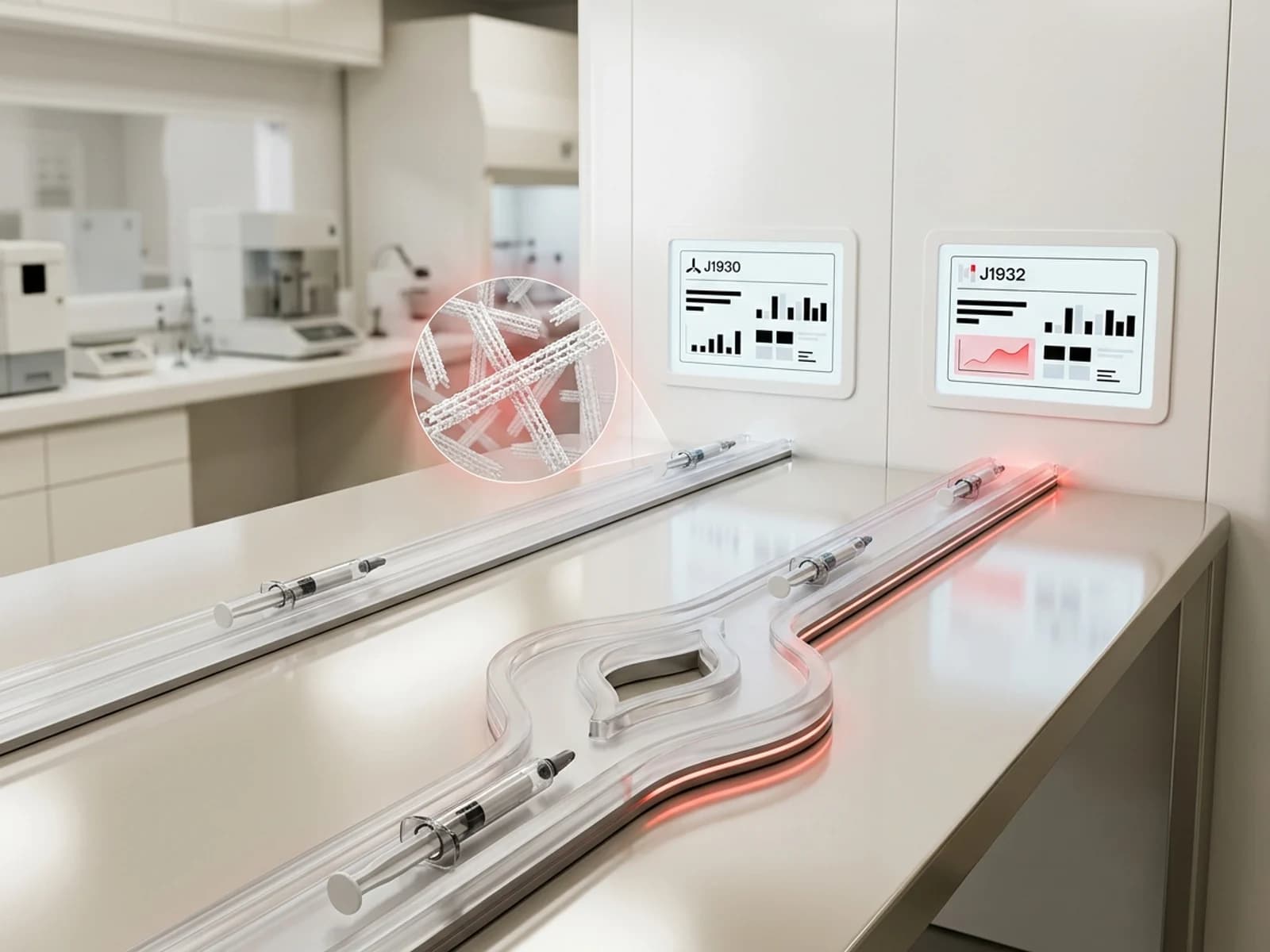
The market entry of generic versions of complex, long-acting depot formulations represents one of the most challenging frontiers in biopharmaceutical access. Unlike small-molecule oral solids, where generic substitution is swift and predictable, complex injectables utilizing PLGA (poly[lactic-co-glycolic acid]) microspheres face high manufacturing barriers, fragile supply chains, and complex medical-benefit reimbursement structures.
A prime case study is Sandostatin® LAR Depot (octreotide acetate for injectable suspension). While the brand-name product has long been patent-free, generic competition was delayed for years due to the formulation complexity of replicating monthly microparticle depot release. Now, with two FDA-approved generic versions on the market, commercial teams, hospital supply chains, and payer managers must navigate a volatile landscape of Competitive Generic Therapy (CGT) exclusivity, manufacturing supply shocks, and buy-and-bill economics.
Short Answer
As of June 2026, there are two approved AB-rated generic versions of Sandostatin LAR Depot (octreotide acetate for injectable suspension) in the United States:
Teva Pharmaceuticals (ANDA 210317, approved December 5, 2023; launched October 2024).
Viatris / Mylan (ANDA 216589, approved December 12, 2025; launched January 2026).
Viatris holds active Competitive Generic Therapy (CGT) exclusivity for its generic strengths, with exclusivity set to expire on July 27, 2026 for the 20mg and 30mg strengths, and on August 2, 2026 for the 10mg strength.
From a supply perspective, Teva’s generic version has experienced significant disruption in mid-2026, leading to a temporary discontinuation of its injectable kits. This has left Viatris’s generic and Novartis’s brand-name product as the primary sources of supply. Both brand and generic depot formulations are billed under the medical benefit using HCPCS code J2353 (billed per 1 mg), distinct from the non-depot subcutaneous code J2354.
Who This Is For
This analysis is structured for market access directors, hospital pharmacy procurement teams, specialty drug contractors, and clinical managers navigating the procurement and billing of provider-administered complex generics.
Who are the approved generic developers for Sandostatin LAR Depot?
The FDA has approved two Abbreviated New Drug Applications (ANDAs) that are therapeutically equivalent (AB-rated) to the Reference Listed Drug (RLD), brand-name Sandostatin LAR Depot (NDA 021008, held by Novartis):
| Manufacturer | ANDA Number | Approval Date | U.S. Commercial Launch | Strengths Approved |
|---|---|---|---|---|
| Teva Pharmaceuticals | ANDA 210317 | December 5, 2023 | October 1, 2024 | 10mg, 20mg, 30mg |
| Viatris (Mylan) | ANDA 216589 | December 12, 2025 | January 2026 | 10mg, 20mg, 30mg |
The barrier to entry for generic octreotide depot was never patent-related. Analysis of the FDA Orange Book confirms that Novartis's Sandostatin LAR Depot (NDA 021008) has zero active patents and zero active brand-name exclusivities listed. Instead, the delayed entry was entirely a function of formulation chemistry: octreotide acetate must be encapsulated in biodegradable PLGA microspheres that slowly degrade in gluteal muscle tissue to release the peptide drug over a 4-week period. Replicating this release profile while maintaining sterile syringe suspension properties requires substantial CDMO manufacturing precision.
Why did Viatris receive CGT exclusivity after Teva was already approved?
The Competitive Generic Therapy (CGT) pathway was established under the FDA Reauthorization Act (FDARA) of 2017 to incentivize developers to target drugs that lack robust generic competition. Under Section 505(j)(5)(B)(v) of the FD&C Act, a "first approved applicant" that receives a CGT designation and commercializes the product within a strict 75-day launch window is granted a 180-day block of marketing exclusivity.
This raises a key regulatory question: How did Viatris secure CGT exclusivity when Teva’s generic had already been approved two years earlier?
The explanation lies in the interaction between CGT designation rules, approval timelines, and the 75-day commercialization trigger:
The First Approved Applicant Requirement: A drug qualifies for CGT designation when it has "inadequate generic competition"—defined as no more than one approved ANDA actively marketed in the Orange Book. When Viatris submitted ANDA 216589, octreotide LAR depot still met that bar: only a single generic (Teva's, launched October 2024) was on the market alongside the brand. The 180-day exclusivity is awarded to the "first approved applicant" who both obtains a CGT designation and earns approval. Teva's ANDA 210317 carries no CGT exclusivity in the Orange Book, so Viatris's designated ANDA 216589 became the qualifying first approved applicant for octreotide LAR depot.
The 75-Day Commercialization Gate: Once approved, a CGT-eligible applicant must commercially market the drug within 75 days of its approval date. If they fail to do so, they forfeit their exclusivity eligibility.
Exclusivity Expiration Timelines: Because Viatris successfully commercialized its generic kits within the 75-day window following its December 2025 approval, the FDA granted the 180-day exclusivity blocks listed in the Orange Book:
10mg Strength (Product 001): Exclusivity expires August 2, 2026.
20mg Strength (Product 002): Exclusivity expires July 27, 2026.
30mg Strength (Product 003): Exclusivity expires July 27, 2026.
During this 180-day window, the FDA is blocked from approving subsequent ANDA applications for these designated CGT strengths, protecting Viatris's market share against any third-party generic entrants. For more details on this regulatory mechanism, readers can review how the FDA structures Competitive Generic Therapy (CGT) exclusivity pathways for complex generics.
How are generic Sandostatin LAR formulations billed under HCPCS?
Administered by healthcare professionals as a deep gluteal intramuscular injection, Sandostatin LAR is billed under the provider-administered medical benefit (buy-and-bill) rather than the retail pharmacy benefit.
Reimbursement teams must ensure precise HCPCS coding to avoid immediate claims denials:
HCPCS Code J2353: Injection, octreotide, depot form, 1 mg. This code is specific to the depot suspension formulations (both brand-name Sandostatin LAR Depot and its AB-rated generics). Because the code is billed per 1 mg, a standard 20 mg kit must be billed with 20 billing units, and a 30 mg kit must be billed with 30 billing units.
HCPCS Code J2354: Injection, octreotide, non-depot form, 25 mcg. This code is reserved for the immediate-release, short-acting subcutaneous injections (such as generic octreotide vials or prefilled syringes). Billed per 25 mcg, this code represents a completely different clinical utility and must not be used for depot kits.
The Buy-and-Bill Margin Equation
For provider clinics, the economics of adopting generic octreotide depot center on Average Sales Price (ASP) calculations. Under Medicare Part B, physician offices are reimbursed at a rate of ASP + 6%. Because ASP is calculated based on the weighted average of all manufacturer sales (minus rebates and discounts) from the prior quarter, the introduction of a lower-cost generic initiates a downward ASP curve:
Reimbursement limit = weighted ASP (brand + generics) + 6%
As Viatris and Teva compete on price, the ASP for HCPCS J2353 declines. If a physician clinic continues to purchase the brand-name product at WAC (Wholesale Acquisition Cost) while reimbursement is tied to a blended brand-generic ASP, the clinic will experience negative margins (a "underwater" drug). This reimbursement shift forces clinic administrators to transition rapidly to generic kits to align their acquisition cost with the declining Part B reimbursement ceiling.
FAQ: Specialty Distribution and Supply Constraints
Why is generic Sandostatin LAR not currently listed in retail pharmacy NADAC surveys?
The National Average Drug Acquisition Cost (NADAC) database, compiled by CMS, reflects the average prices paid by retail community pharmacies for outpatient drugs. In the June 10, 2026 NADAC pricing file, brand-name Sandostatin LAR Depot is listed at high retail benchmarks:
10 mg Kit (NDC 00078081181): $3,387.53 per unit
20 mg Kit (NDC 00078081881): $4,412.06 per unit
30 mg Kit (NDC 00078082581): $6,680.85 per unit
However, the NADAC database contains zero pricing records for generic octreotide depot kits (Teva or Viatris).
This absence is due to distribution design. As explained in our guide to Sandostatin LAR is listed among the most expensive brand-name injectables in retail drug acquisition cost surveys, these complex depot injectables are not stocked by community retail pharmacies. Instead, they are distributed exclusively through specialty distributors and specialty pharmacies directly to oncology clinics, endocrinology centers, and hospital outpatient departments. Because NADAC surveys focus on retail pharmacy acquisition data, the specialty buy-and-bill channel transactions for generic octreotide are completely bypassed by the survey methodology.
What happens to billing and reimbursement when Teva's generic is temporarily discontinued?
In March 2026, Teva Pharmaceuticals initiated a voluntary nationwide recall of 23 lots of octreotide acetate injectable suspension (10 mg, 20 mg, and 30 mg kits) to the retail level. Per the recall notice, the action followed an FDA inspection that identified current good manufacturing practice (CGMP) deficiencies at the contract manufacturer that produces octreotide for Teva, including observations related to potential microbiological contamination, foreign matter, and data integrity; Teva's health hazard assessment classified the overall patient risk as medium, with harm considered remote or unlikely. By mid-2026, the ASHP drug shortage registry reported that Teva's generic kits were temporarily discontinued, with no estimated release date for their return to the market.
When a generic supplier faces a sudden supply shock, market access teams must execute immediate triage:
Verify Sourcing Alternatives: Providers must immediately transition to Viatris's generic kits or revert to brand-name Sandostatin LAR Depot to ensure treatment continuity for acromegaly and carcinoid syndrome patients. Sourcing teams can consult our framework on interpreting FDA drug shortage records and supplier notices to monitor recovery timelines.
Payer Prior Authorization Adjustments: Many commercial payers implement "generic mandate" rules that block coverage for brand-name Sandostatin LAR. In the event of a documented shortage, clinic staff must submit prior authorization exception requests citing the generic shortage to secure coverage for the brand RLD without penalty.
ASP Protection: Because ASP calculations rely on historical data, the temporary exit of Teva and the shift back to brand/Viatris products will create a lag in the quarterly ASP reporting. Billing offices must verify that their contract pricing matches the current active NDCs and that they are not billing under a discontinued supplier code, which would trigger immediate claims rejection.
Sources
U.S. Food and Drug Administration. Approved Drug Products with Therapeutic Equivalence Evaluations (Orange Book). NDA 021008 (Sandostatin LAR Depot) and ANDA 216589 / ANDA 210317 patent and exclusivity database, updated June 2026. https://www.accessdata.fda.gov/scripts/cder/ob/
U.S. Food and Drug Administration. Competitive Generic Therapy Approvals List. CDER, updated June 2026. https://www.fda.gov/drugs/abbreviated-new-drug-application-anda/competitive-generic-therapy-approvals
American Society of Health-System Pharmacists (ASHP). Octreotide Acetate Injectable Suspension Current Shortages and Discontinuations. ASHP Drug Shortages Resource Center, updated June 2026. https://www.ashp.org/drug-shortages/
California State Board of Pharmacy. Recall Alert: Teva Pharmaceuticals USA, Inc. — Octreotide Acetate Injectable Suspension (23 lots recalled to retail level after FDA inspection identifying CGMP deficiencies), March 18, 2026. https://www.pharmacy.ca.gov/about/recall_alerts/
Centers for Medicare & Medicaid Services (CMS). National Average Drug Acquisition Cost (NADAC) survey data, June 10, 2026 pricing file. https://www.medicaid.gov/medicaid/prescription-drugs/pharmacy-pricing/
Viatris Inc. Viatris Announces FDA Approval of Generic Sandostatin® LAR Depot (Octreotide Acetate for Injectable Suspension), Pipeline and Regulatory Updates, December 18, 2025. https://www.viatris.com/news/
Disclaimer: This article provides independent regulatory, pricing, and market access analysis for biopharmaceutical and healthcare professionals. It does not constitute clinical, prescribing, medical, or investment advice.