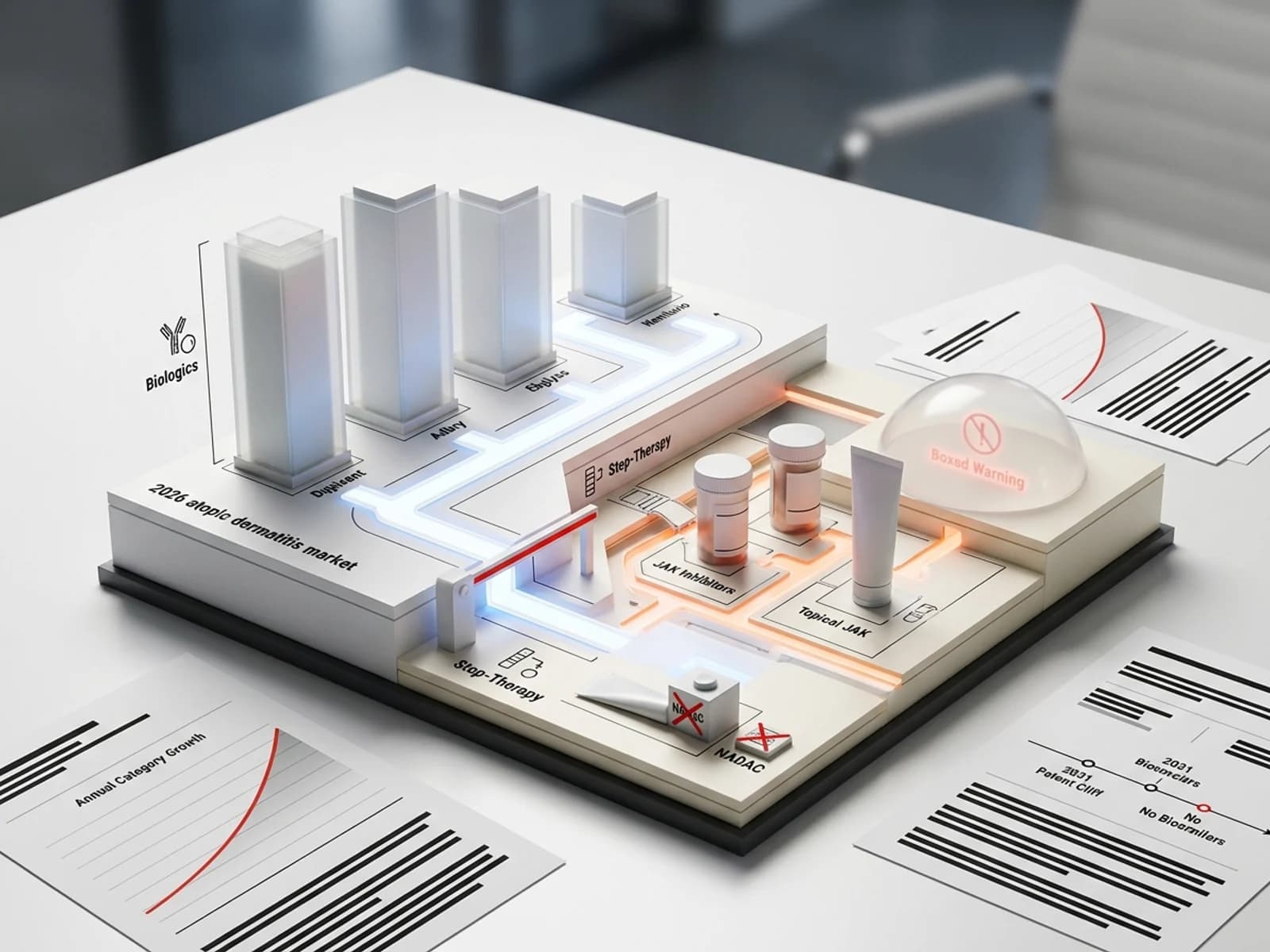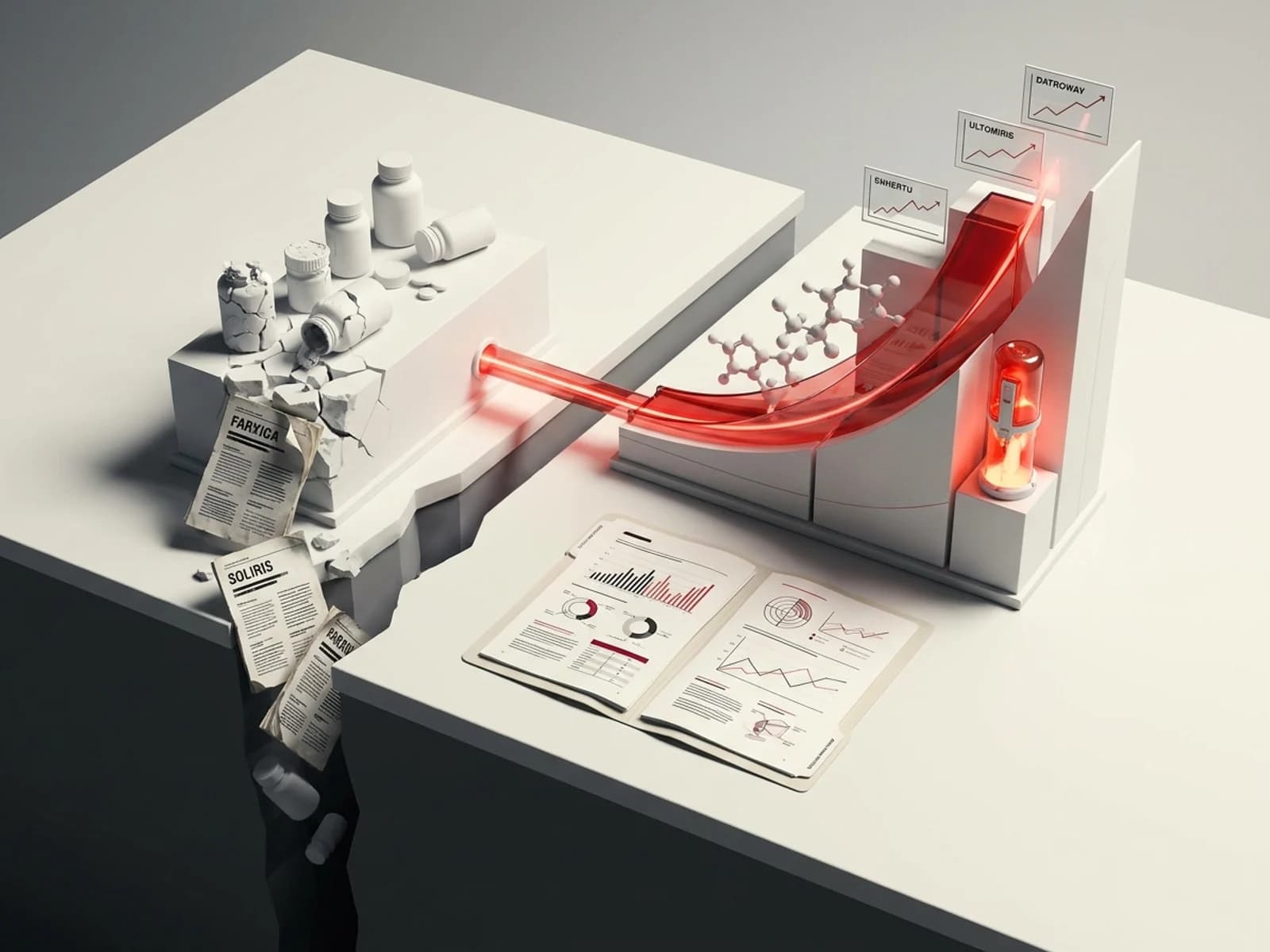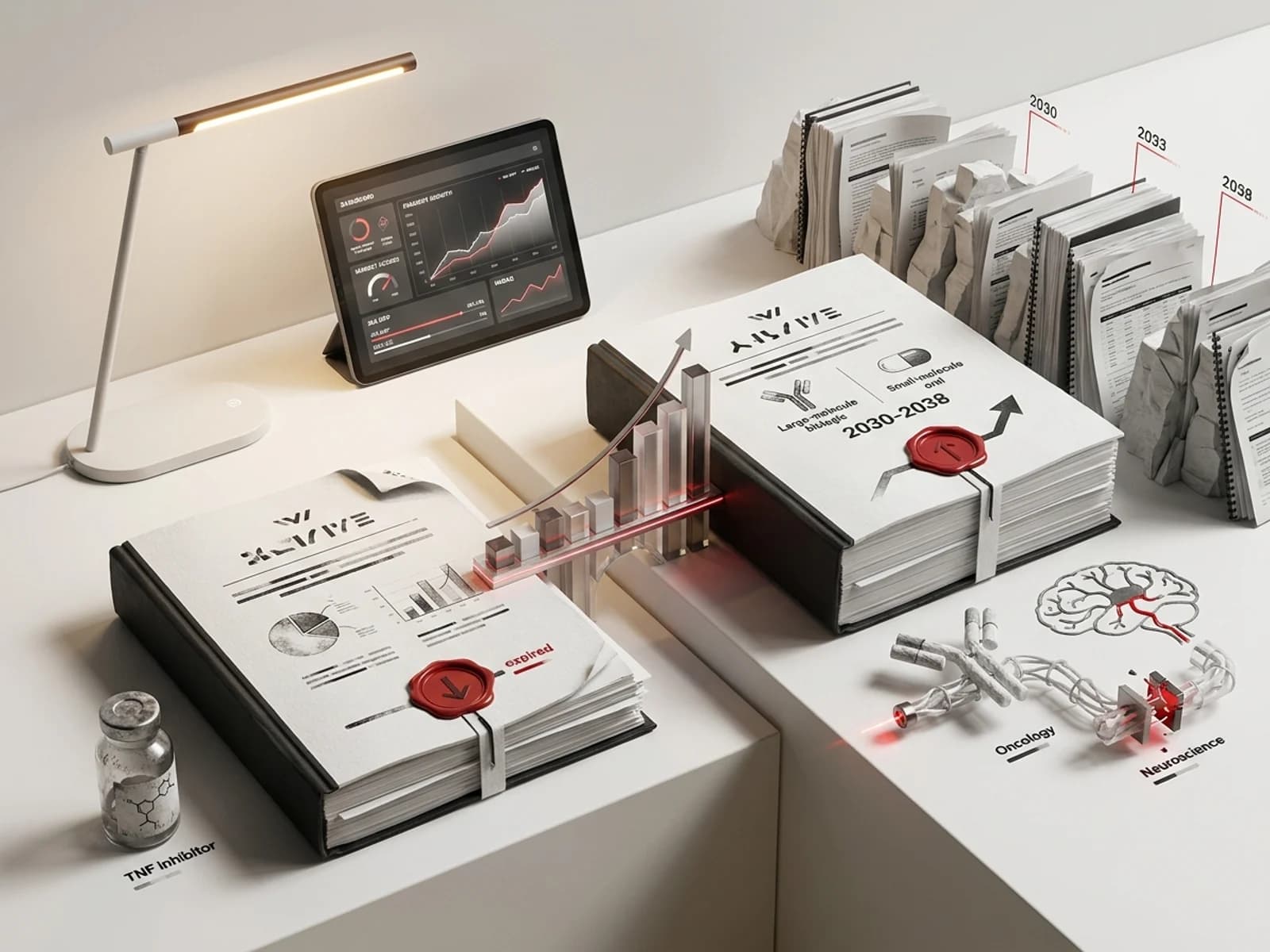
The commercial evolution of AbbVie Inc. represents one of the most closely watched franchises in biopharma history. Since its spinoff from Abbott Laboratories in 2013, AbbVie’s growth has been structurally anchored by Humira (adalimumab), a multi-indication tumor necrosis factor (TNF) inhibitor that grew into the world's best-selling medicine, peaking at $21.237 billion in global sales in 2022. However, the loss of U.S. exclusivity for Humira in 2023 triggered a massive market-access and biosimilar erosion cycle. As of mid-2026, the strategic question is no longer how AbbVie will survive the Humira patent cliff, but how completely its next-generation immunology assets—the interleukin-23 (IL-23) inhibitor Skyrizi (risankizumab) and the oral Janus kinase (JAK) inhibitor Rinvoq (upadacitinib)—have absorbed the impact and cleared the way for the company's 2030s expansion.
This portfolio dossier provides a comprehensive commercial and patent analysis of AbbVie's primary business units: Immunology, Neuroscience, Oncology, Aesthetics, and Eye Care. By integrating consolidated FY2025 financial disclosures, latest Orange Book and Purple Book data, and CMS Medicare drug negotiation values, we map the durability of AbbVie’s core assets, its biosimilar competition landscape, its 2030s patent-cliff exposure, and the neuroscience and oncology pipeline bets designed to offset mature portfolio declines.
Quick answer
What is the scenario question? If I am evaluating AbbVie's durability into the 2030s, how completely have Skyrizi and Rinvoq replaced Humira, what shields the immunology franchise through the next cliffs, and how real are the oncology and neuroscience bets?
Direct Answer: AbbVie enters 2026 with a record $61.160 billion in FY2025 net revenues (+8.6% reported), demonstrating that the Humira biosimilar erosion has been fully absorbed. Skyrizi ($17.562 billion, +49.7%) and Rinvoq ($8.304 billion, +38.8%) combined for $25.866 billion in net sales, comfortably exceeding Humira's peak annual revenues (~$21.2 billion in 2022) while Humira sales fell to $4.540 billion (-49.4%). The immunology moat remains highly durable: Rinvoq's latest U.S. Orange Book product patents (NDA 211675) expire on March 9, 2038 (with active orphan drug exclusivity), while Skyrizi (BLA 761105) carries biologic exclusivity from its 2019 first licensure. In the biosimilar channel, 10 adalimumab biosimilars are approved, of which 8 are licensed interchangeable, with Medicaid acquisition costs (NADAC) ranging from ~$493 (Yuflyma) to ~$1,588 per unit (Hyrimoz). In oncology, AbbVie is transitioning from the maturing Imbruvica ($2.869 billion, -14.3%; subject to an IRA MFP of $9,319/30-day starting Jan 1, 2026) to Elahere ($690 million, +43.4%). In neuroscience, while Vraylar ($3.621 billion) and Botox Therapeutic ($3.769B) drive growth, the high-profile 2024 emraclidine schizophrenia Phase II failure resulted in a $3.5 billion intangible-asset impairment.
| Financial Segment | FY2025 Revenue | YoY Growth | Key Products & Sales | Primary Patent Expiries (US Orange Book) |
|---|---|---|---|---|
| Immunology | $30.406 Billion | +14.0% | Skyrizi ($17.562B), Rinvoq ($8.304B), Humira ($4.540B) | Rinvoq: Mar 9, 2038 (NDA 211675); Skyrizi: Biologic exclusivity (BLA 761105) |
| Neuroscience | $10.767 Billion | +19.6% | Botox Therapeutic ($3.769B), Vraylar ($3.621B), Ubrelvy ($1.271B), Qulipta ($1.036B) | Vraylar: Mar 17, 2030; Ubrelvy: Dec 22, 2041; Qulipta: Feb 27, 2043 |
| Oncology | $6.655 Billion | +1.5% | Imbruvica ($2.869B), Venclexta ($2.792B), Elahere ($690M), Epkinly ($271M) | Venclexta: Sep 6, 2033; Imbruvica (shared NDA): Subject to IRA MFP Jan 1, 2026 |
| Aesthetics | $4.860 Billion | -6.1% | Botox Cosmetic ($2.617B), Juvederm ($1.270B) | Biologic/device barriers; no near-term small-molecule cliffs |
| Other / Eye Care | $8.472 Billion | Varies | Mavyret ($1.317B), Creon ($1.512B), Linzess ($907M), Eye Care ($2.109B) | Mavyret: Dec 24, 2036; Linzess: Feb 16, 2034; Creon: Biologic/enzymatic barriers |
Who this is for
Biopharma Business Development and Investor Relations Teams: Assessing AbbVie's revenue durability, segment growth rates, and capital allocation strategy following the Cerevel acquisition.
Payer Account Managers and PBM Formulary Directors: Tracking the multi-year biosimilar contracting strategies for Humira, pricing trends for Skyrizi and Rinvoq, and the specialty pharmacy channel setup.
Immunology and Oncology Commercial Leads: Analyzing competitor landscapes in JAK inhibitor access, IL-23 vs IL-17/IL-12/23 therapies, and ovarian cancer antibody-drug conjugate launches.
Regulatory Affairs and Legal Counsel: Reviewing Orange Book patent certifications, Paragraph IV filing dates, and Purple Book biosimilar interchangeability requirements.
Methodology, in one paragraph
The commercial data, product revenues, and segment performance in this dossier are extracted directly from AbbVie Inc.’s Q4 and Full-Year 2025 Consolidated Financial Statements and corresponding SEC Form 10-K filings. Patent expiries and exclusivity data are computed from the FDA Orange Book (snapshot dated July 8, 2026) using targeted SQL and pythonic parsing of the products (products.txt), patents (patent.txt), and exclusivity (exclusivity.txt) catalogs. Biosimilar approvals and interchangeability designations are verified against the FDA Purple Book database. Medicaid acquisition costs are drawn from the CMS National Average Drug Acquisition Cost (NADAC) weekly files (July 8, 2026 snapshot), reporting average pharmacy-level invoice acquisition costs. Medicare Maximum Fair Prices (MFP) for selected drugs are sourced from the CMS Inflation Reduction Act (IRA) Initial Price Applicability Year 2026 final guidance. For broader context on JAK inhibitor restrictions, see our JAK inhibitor regulatory divergence analysis; for general IL-23 access rules, see IL-23 inhibitor access landscape; for CGRP preventative therapies, see CGRP inhibitor access landscape; for TNF biosimilar switching, see TNF inhibitor access landscape; for antibody-drug conjugates, see antibody-drug conjugate access landscape; and for general patent-cliff volume analysis, see the 2026-2032 patent cliff by the numbers.
How completely have Skyrizi and Rinvoq replaced Humira?
The Humira patent cliff represented the largest single-product loss of exclusivity (LOE) event in pharmaceutical history. At its peak in 2022, Humira generated $21.237 billion in net revenues, representing approximately 37% of AbbVie's total business. The entry of adalimumab biosimilars in 2023 began a multi-phase erosion curve characterized by deep net price discounting and PBM formulary shifts.
However, AbbVie’s commercial defense strategy has succeeded in transitioning the immunology franchise to its next-generation assets:
The Handoff Metrics: In FY2025, AbbVie reported record consolidated net revenues of $61.160 billion, an increase of 8.6% on a reported basis (+8.7% operational). This growth was driven by the surge of Skyrizi and Rinvoq. Skyrizi net revenues reached $17.562 billion, growing by 49.7% operationally. Rinvoq net revenues rose to $8.304 billion, an increase of 38.8% operational.
Exceeding Peak Humira: Combined, Skyrizi and Rinvoq revenues reached $25.866 billion in FY2025, easily surpassing Humira's historical peak of $21.2 billion.
Humira's Erosion Curve: Humira net revenues fell to $4.540 billion in FY2025, representing a 49.4% operational decline. Of this total, U.S. Humira sales were $3.468 billion, down 50.8% as payers transitioned formulary positioning.
The commercial success of the transition relies on a "dual-molecule" therapeutic positioning. While Humira was a broad-label anti-TNF, AbbVie divided its clinical strategy: positioning Skyrizi (anti-IL-23 p19) as the preferred option in plaque psoriasis, Crohn's disease, and ulcerative colitis, and Rinvoq (oral JAK1 selective) as the preferred option in rheumatoid arthritis, psoriatic arthritis, atopic dermatitis, ankylosing spondylitis, Crohn's, and ulcerative colitis. This divided strategy expanded the targetable patient pools and allowed AbbVie to contract with payers using bundled commercial rebates across both assets to maintain preferred formulary status.
When do AbbVie's key immunology and neuroscience patents expire?
To evaluate the long-term commercial outlook of AbbVie, we must analyze its patent portfolios. The table below represents the latest product patent expiries and active exclusivity codes from the FDA Orange Book (as of July 8, 2026) for AbbVie's primary small-molecule NDAs, alongside Purple Book biologic exclusivity timelines.
Table 1: AbbVie Patent and Exclusivity Moats (FDA Orange Book & Purple Book)
| Brand Name (Active Ingredient) | NDA / BLA Number | Latest Product Patent Expiry | Key Patent Numbers | Exclusivity / Notes |
|---|---|---|---|---|
| Rinvoq (upadacitinib) | NDA 211675 | March 9, 2038 | 11,607,411; 11,564,922; 11,021,480 | ODE-481 (exclusivity for Crohn's disease through May 18, 2030); ODE-538 (ulcerative colitis). |
| Rinvoq LQ (upadacitinib) | NDA 218347 | October 17, 2036 | 10,981,923; 11,186,584; 11,661,425 | Approved for polyarticular juvenile idiopathic arthritis. |
| Vraylar (cariprazine) | NDA 204370 | March 17, 2030 | 7,737,142*PED; 7,928,113; 9,072,742 | Latest product patent includes pediatric extension (PED). |
| Venclexta (venetoclax) | NDA 208573 | September 6, 2033 | 11,413,282; 11,110,087; 10,993,942 | Jointly commercialized with Genentech/Roche. |
| Qulipta (atogepant) | NDA 215206 | February 27, 2043 | 12,350,259; 10,954,233 | NCE (New Chemical Entity) exclusivity expires September 2026. |
| Ubrelvy (ubrogepant) | NDA 211765 | December 22, 2041 | 11,717,515; 11,857,542; 12,070,450 | Gepant class acute migraine treatment. |
| Mavyret (glecaprevir/pibrentasvir) | NDA 209394 | December 24, 2036 | 11,246,866; 9,849,155 | Hepatitis C combination regimen. |
| Linzess (linaclotide) | NDA 202811 | February 16, 2034 | 9,708,371; 10,137,165 | Partnered with Ironwood. |
| Skyrizi (risankizumab-rzaa) | BLA 761105 | Biologic Exclusivity | BLA (No OB Patents) | U.S. reference product exclusivity (12-year) runs through April 23, 2031. |
| Humira (adalimumab) | BLA 125057 | Expired | Reference Biologic | First approved in 2002; biologic exclusivity expired. Biosimilar entry in 2023. |
The Rinvoq Expiry Horizon
Upadacitinib (Rinvoq) represents AbbVie's primary small-molecule immunology engine. Payer and BD teams must note that Rinvoq's patent shield extends significantly farther than its initial NCE (New Chemical Entity) exclusivity. The Orange Book lists active product patents (such as US Patent 11,607,411 and 11,564,922) that run until March 9, 2038. In addition, AbbVie has secured multiple Orphan Drug Exclusivity (ODE) blocks:
ODE-481: Covers the treatment of adult patients with moderately to severely active Crohn's disease, running through May 18, 2030.
ODE-538: Covers moderately to severely active ulcerative colitis.
These overlapping patents and therapeutic-indication exclusivities prevent generic manufacturers from launching "skinny-labeled" ANDAs, securing AbbVie's oral immunology franchise well into the late 2030s.
The Neuroscience Cliffs
In contrast to the distant immunology horizons, AbbVie's neuroscience franchise faces a mid-term transition challenge:
Vraylar (cariprazine) Cliff: Vraylar has become a major commercial success, posting $3.621 billion in FY2025 net sales. However, Vraylar’s core product patent (US Patent 7,737,142) is scheduled to expire on March 17, 2030 (after incorporating the 6-month pediatric exclusivity extension, *PED). This creates a sharp revenue risk at the turn of the decade.
CGRP Durability: The gepant migraine assets are structurally protected longer. Ubrelvy (acute migraine; NDA 211765) is protected by product patents expiring December 22, 2041, while Qulipta (preventative migraine; NDA 215206) is protected by patents extending to February 27, 2043.
How saturated is the Humira biosimilar market and what is real acquisition cost?
Although Humira net sales fell by approximately 49% in U.S. markets in 2025, it remains a multi-billion dollar product. PBMs have maintained Humira on co-preferred formulary tiers alongside biosimilars to capture deep manufacturer rebates. The biological biosimilar market is now highly saturated.
According to the FDA Purple Book (July 8, 2026 snapshot), there are 10 FDA-approved adalimumab 351(k) biosimilars. A critical competitive differentiator is the FDA interchangeability designation, which allows pharmacy-level substitution without the intervention of the prescribing clinician (subject to state laws). Of these 10 biosimilars, 8 are licensed interchangeable:
Amjevita (adalimumab-atto, Amgen) – First biosimilar approved (2016) and launched (Jan 2023).
Cyltezo (adalimumab-adbm, Boehringer Ingelheim) – The first designated interchangeable biosimilar.
Hadlima (adalimumab-bwwd, Organon/Samsung Bioepis).
Hyrimoz (adalimumab-adaz, Sandoz).
Abrilada (adalimumab-afzb, Pfizer) – Interchangeable.
Hulio (adalimumab-fkjp, Biocon) – Interchangeable.
Yuflyma (adalimumab-aaty, Celltrion) – Interchangeable.
Simlandi (adalimumab-ryvk, Alvotech/Teva) – The first interchangeable high-concentration (100mg/mL) citrate-free biosimilar.
The Pricing Divergence: WAC vs. NADAC
The market access landscape for adalimumab is divided into two pricing strategies:
High-List / High-Rebate Strategy: Payers and PBMs prefer high-list-price products (often priced only 5% to 7% below Humira’s list price of ~$6,922 per month) because they generate substantial rebate dollars that the PBM can share with employers.
Low-List-Price Strategy: Selected manufacturers have launched unbranded or low-list biosimilars (priced up to 85% below Humira’s list).
To evaluate the actual acquisition cost in the pharmacy channel, we analyze the weekly CMS National Average Drug Acquisition Cost (NADAC) data. NADAC reflects the average invoice price paid by retail pharmacies to wholesalers, offering a clear view of market dynamics:
Low-Cost Leader (Yuflyma): Adalimumab-aaty (Yuflyma, interchangeable) shows a retail pharmacy acquisition cost of approximately $493 to $495 per 40mg/0.4mL autoinjector.
High-Cost Leader (Hyrimoz): Adalimumab-adaz (Hyrimoz, Sandoz) has a retail pharmacy acquisition cost of approximately $1,588 to $1,593 per 0.4mL autoinjector, reflecting the high-list strategy.
This pricing spread demonstrates that while some biosimilars are highly competitive on a net-cost basis, PBM formulary preferences continue to shelter higher-cost products due to the structural incentives of the rebate system.
What is the oncology transition from Imbruvica to Elahere and Epkinly?
AbbVie’s oncology portfolio ($6.655 billion in FY2025 net revenues, +1.5%) is undergoing a transition. The franchise has historically relied on the blockbuster Bruton's tyrosine kinase (BTK) inhibitor Imbruvica (ibrutinib), commercialized in partnership with Janssen (J&J).
However, Imbruvica is in decline:
Revenue Contraction: Imbruvica net revenues fell to $2.869 billion in FY2025, a decrease of 14.3%. This decline is driven by competitive pressure from next-generation BTK inhibitors, such as AstraZeneca’s Calquence (acalabrutinib) and BeiGene’s Brukinsa (zanubrutinib), which carry superior safety profiles (lower rates of atrial fibrillation).
Venclexta Offset: Venclexta (venetoclax, BCL-2 inhibitor) continues to expand, posting $2.792 billion in FY2025 sales (+7.9%), supported by strong positioning in chronic lymphocytic leukemia (CLL) and acute myeloid leukemia (AML).
Next-Generation Assets: Elahere and Epkinly
To rebuild its oncology growth curve, AbbVie has invested in targeted therapeutic modalities:
Elahere (mirvetuximab soravtansine): Acquired via the $10.1 billion purchase of ImmunoGen, Elahere is a first-in-class antibody-drug conjugate (ADC) targeting folate receptor alpha (FRα) in platinum-resistant ovarian cancer. In FY2025, Elahere posted $690 million in net sales, an increase of 43.4% operational, establishing itself as a core growth driver.
Epkinly (epcoritamab): Commercialized in partnership with Genmab, Epkinly is a bispecific antibody targeting CD3 and CD20 approved for recurrent/refractory diffuse large B-cell lymphoma (DLBCL) and follicular lymphoma (FL). It recorded $271 million in FY2025 revenue, showing steady uptake in the specialty hematology channel.
Analysis of Aesthetics and Other Core Portfolios
While the headline growth is dominated by immunology and oncology, AbbVie's commercial stability relies heavily on cash-generative portfolios that face limited generic competition due to high barriers to entry:
Aesthetics Franchise: AbbVie's aesthetics portfolio reported $4.860 billion in FY2025 net revenues. Although this represented a 6.1% operational decline due to temporary macroeconomic headwinds in consumer discretionary spending, the franchise retains a highly defensible market position. Botox Cosmetic posted $2.617 billion in net sales, while the Juvederm collection of dermal fillers generated $1.270 billion. Unlike small-molecule drugs, botulinum toxins and hyaluronic acid fillers are complex biologics and medical devices that cannot be easily copied by generic manufacturers. The regulatory pathway for biosimilar toxins is complex, and the brand equity of Botox Cosmetic creates a powerful commercial moat.
Hepatitis C (Mavyret): AbbVie's HCV combination regimen Mavyret (glecaprevir/pibrentasvir) generated $1.317 billion in FY2025 net revenues. Although the HCV market is mature and shrinking due to high cure rates, Mavyret remains a key cash generator, protected by Orange Book patents that extend to December 24, 2036 (such as US Patent 11,246,866 on NDA 209394).
Gastrointestinal (Creon): The pancreatic enzyme replacement therapy Creon generated $1.512 billion in FY2025 net revenues. Creon is a complex biological product derived from porcine pancreatic glands, which shields it from standard generic substitution.
Irritable Bowel Syndrome (Linzess): Partnered with Ironwood, Linzess (linaclotide) generated $907 million in FY2025 net revenues, with its latest Orange Book product patent expiring on February 16, 2034 (US Patent 9,708,371).
Eye Care Segment: Reported $2.109 billion in FY2025 net revenues, driven by Restasis (cyclosporine ophthalmic emulsion) and Alphagan/Combigan, which have transitioned to generic competition but retain baseline residual sales.
What went wrong with emraclidine and the Cerevel neuroscience bet?
With the upcoming 2030 patent cliff for Vraylar, AbbVie sought to bolster its neuroscience portfolio ($10.767 billion in FY2025 net sales, +19.6%) by acquiring Cerevel Therapeutics for $8.7 billion. The centerpiece of this acquisition was emraclidine, a novel, M4 positive allosteric modulator (PAM) designed as a next-generation, non-D2-receptor-binding antipsychotic for schizophrenia, positioned to compete with Bristol Myers Squibb’s newly approved Cobenfy (xanomeline/trospium).
However, the Cerevel acquisition suffered a major clinical setback:
Phase II Clinical Failure: In late 2024, AbbVie announced that emraclidine failed to meet its primary endpoint of a statistically significant reduction in the Positive and Negative Syndrome Scale (PANSS) total score compared to placebo in the Phase II EMPOWER-1 and EMPOWER-2 trials.
Intangible-Asset Impairment: Because the primary clinical value of Cerevel was concentrated in emraclidine, AbbVie was forced to record a $3.5 billion intangible-asset impairment in Q4 2024. This write-down reduced the book value of the acquired pipeline and negatively impacted reported earnings.
Neuroscience Growth Preservation: Despite the emraclidine failure, AbbVie's commercial neuroscience portfolio remains strong in the near term:
Botox Therapeutic: Posted $3.769 billion in FY2025 net revenues (+5.8%).
Vraylar: Posted $3.621 billion (+10.5%).
Gepant Migraine (Ubrelvy + Qulipta): Combined for $2.307 billion in FY2025 (Ubrelvy $1.271B, +11.8%; Qulipta $1.036B, +44.7%), confirming their blockbuster status.
2026 EPS Guidance: AbbVie issued adjusted diluted EPS guidance of $14.37 to $14.57 for FY2026, indicating that near-term earnings power remains intact.
What IRA and political-pricing exposure should watchers track?
As a major provider of Medicare Part B and Part D drugs in the U.S. market, AbbVie carries significant exposure to the pricing provisions of the Inflation Reduction Act (IRA).
Imbruvica's Selected Status
Imbruvica (ibrutinib) was selected by CMS as one of the first 10 drugs subject to Medicare price negotiation under the IRA. The Medicare Maximum Fair Price (MFP) for Imbruvica is $9,319 per 30-day supply, effective January 1, 2026.
The Discount Spread: The $9,319 MFP represents a substantial discount from the historical list price of approximately $14,934 for a 30-day supply, compressing Medicare Part D revenues.
The Shared NDA Caveat: The Imbruvica NDA is legally held by Pharmacyclics LLC, an AbbVie subsidiary, but J&J's Janssen Biotech commercializes the drug globally. While J&J holds the primary commercial relationship in selected markets, AbbVie reports its share of Imbruvica profits. The MFP implementation directly reduces the gross-to-net margins reported in AbbVie's oncology business.
Future Selected Targets
Due to their high Medicare Part D spend, AbbVie's next-generation assets are highly vulnerable to future IRA selection cycles:
Skyrizi and Rinvoq Exposure: If Skyrizi and Rinvoq continue their growth trajectories, they are likely to be selected in upcoming negotiation cycles. Skyrizi's reference biologic status (BLA 761105) protects it from negotiation until 11 years post-launch (negotiated prices effective Year 13, roughly 2032). Rinvoq (NDA 211675), as a small-molecule drug, is eligible for selection 7 years post-launch (negotiated prices effective Year 9, roughly 2028). Payer teams must model potential MFP price caps for upadacitinib starting in 2028, which could restrict AbbVie’s long-term commercial margins.
FAQ
When does Rinvoq (upadacitinib) face US generic competition?
No earlier than March 9, 2038 per the latest Orange Book product patents on NDA 211675 (including patents US 11,607,411 and 11,564,922). AbbVie has also secured Orphan Drug Exclusivity (ODE) blocks that protect specific indications, such as Crohn's disease (ODE-481 through May 18, 2030) and ulcerative colitis, preventing generic skin-labeling. Additionally, Rinvoq LQ (NDA 218347) for pediatric polyarticular juvenile idiopathic arthritis has product patents extending through October 17, 2036.
How many Humira biosimilars are FDA-approved and interchangeable?
As of July 2026, the FDA Purple Book lists 10 approved adalimumab 351(k) biosimilars, of which 8 are licensed interchangeable: Amjevita, Cyltezo, Hadlima, Hyrimoz, Abrilada, Hulio, Yuflyma, and Simlandi. Simlandi is notable as the first interchangeable high-concentration (100mg/mL) citrate-free biosimilar. Yuflyma and other low-list options have entered the channel, but high-list/high-rebate contracting continues to dominate PBM preferences.
What is Imbruvica's IRA Medicare negotiated price?
Imbruvica's Inflation Reduction Act (IRA) Medicare Maximum Fair Price (MFP) is $9,319 per 30-day supply, effective January 1, 2026 (representing a significant reduction from the prior list price of ~$14,934). The financial impact is felt as a reduction in collaboration revenues, since J&J commercializes the product while AbbVie profit-shares.
Did AbbVie's emraclidine schizophrenia drug work?
No. In late 2024, AbbVie reported that emraclidine (acquired in the $8.7 billion Cerevel transaction) failed to demonstrate a statistically significant reduction in the PANSS total score compared to placebo in the Phase II EMPOWER-1 and EMPOWER-2 trials. Consequently, AbbVie recorded a $3.5 billion intangible-asset impairment in Q4 2024.
Sources
AbbVie Inc. FY2025 Financial Results: AbbVie Reports Full-Year and Fourth-Quarter 2025 Financial Results, AbbVie Press Release, February 4, 2026. AbbVie Investor Relations.
FDA Orange Book: Approved Drug Products with Therapeutic Equivalence Evaluations, U.S. Food and Drug Administration, Snapshot July 8, 2026. FDA Orange Book Database.
FDA Purple Book: Database of Licensed Biological Products, U.S. Food and Drug Administration, Snapshot July 8, 2026. FDA Purple Book Database.
CMS National Average Drug Acquisition Cost (NADAC): Weekly Price File, Centers for Medicare & Medicaid Services, July 8, 2026. Medicaid.gov.
CMS Medicare Drug Price Negotiation Program: Negotiated Prices for Initial Price Applicability Year 2026, Centers for Medicare & Medicaid Services, Fact Sheet. CMS.gov.
AbbVie Cerevel Acquisition and Impairment: SEC Form 10-K for the Fiscal Year Ended December 31, 2025, AbbVie Inc., Filed February 2026.