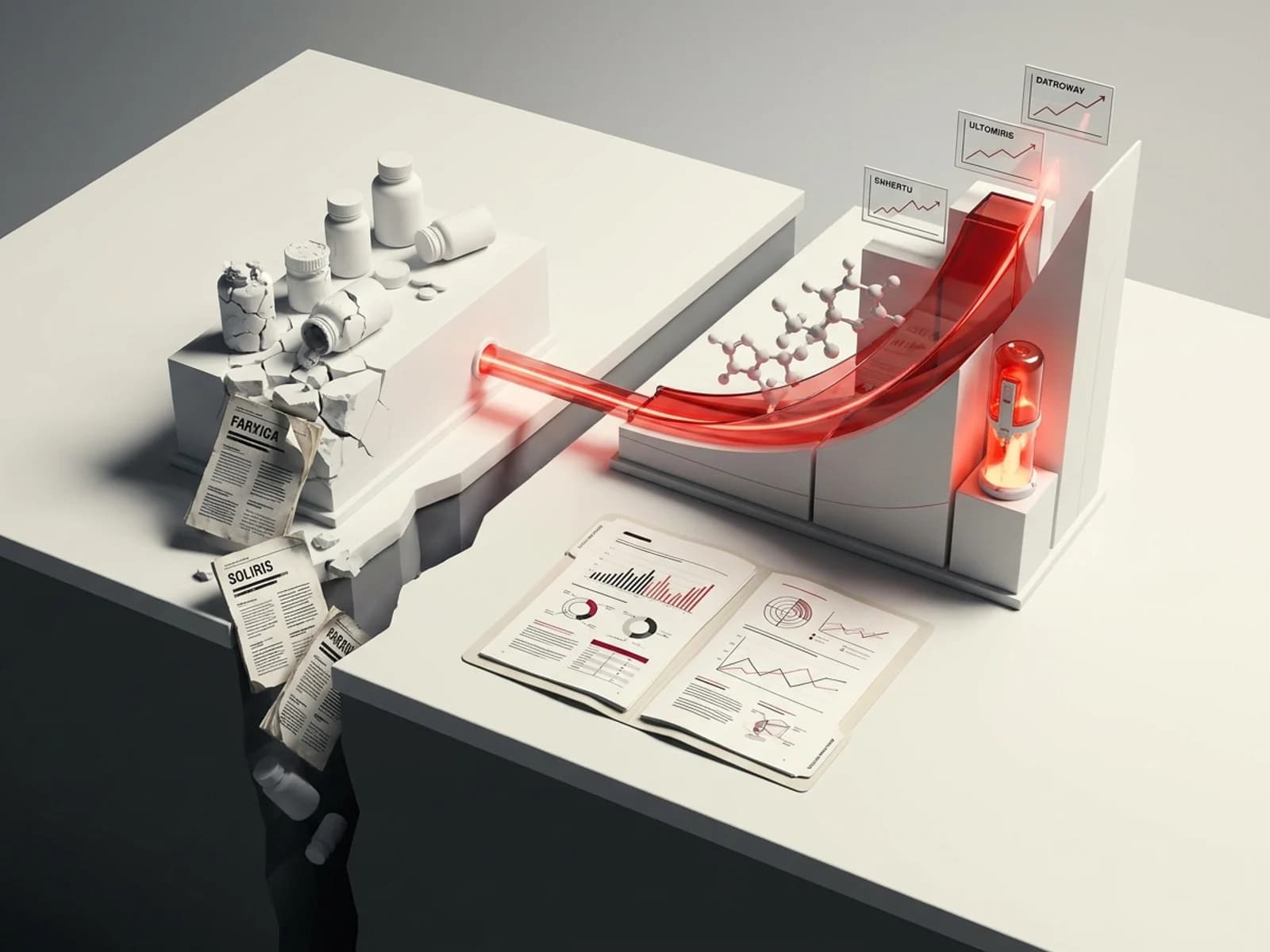
Bristol Myers Squibb (BMS) is navigating one of the most complex corporate transitions in the modern biopharmaceutical industry. As of mid-2026, the company is managing a looming double patent cliff for its two largest revenue-generating assets: Eliquis (apixaban) and Opdivo (nivolumab). Together, these two franchises generated over $24 billion in U.S. and global sales in FY2025, representing more than 50% of BMS’s total annual revenues of $48.2 billion. To prepare for the entry of multi-source generics and biosimilars starting in 2028, BMS is executing a multi-pronged commercial strategy. This includes aggressive pre-generic list-price reductions and cash channels for Eliquis to secure volume, a rapid transition of Opdivo to the subcutaneous Qvantig formulation, and a high-stakes commercial rollout of its Growth Portfolio, led by Reblozyl, Camzyos, Breyanzi, and the newly launched antipsychotic Cobenfy.
This commercial portfolio dossier analyzes BMS's therapeutic, financial, and regulatory positioning as of mid-2026. It is written for market-access managers, hospital pharmacists, P&T committees, and biopharma analysts who design formulary exclusion lists, specialty drug management programs, and reimbursement workflows. Every claim here is verified against primary sources, including the FDA Orange Book, FDA Purple Book, CMS National Average Drug Acquisition Cost (NADAC) datasets, CMS Medicare Drug Price Negotiation Program schedules, and BMS's Q1 2026 and FY2025 financial disclosures. For broader context on patent cliffs, see the 2026-2032 patent cliff by the numbers; for a look at sibling company transitions, see Merck portfolio dossier: Keytruda QLEX and the Januvia cliff and Johnson & Johnson Janssen portfolio dossier.
When does Eliquis actually go generic in the US — 2026 or 2028 — and how many ANDAs are already approved?
Eliquis (apixaban, NDA N202155, approved December 28, 2012) is the leading oral anticoagulant in the U.S. and global markets, generating $14.44 billion in global revenues in FY2025. Evaluating its U.S. patent exclusivity requires resolving a common industry misunderstanding. While many third-party trackers list 2026 as the Eliquis patent cliff year (reflecting the expiration of the core composition-of-matter patent, US 6,967,208, which extended to November 21, 2026, via Patent Term Extension), the actual generic entry date is April 1, 2028.
This delay is the result of a comprehensive patent litigation settlement between BMS/Pfizer (who co-market the drug under the Bristol-Myers Squibb Pfizer Alliance) and multiple generic developers. The litigation focused on US patent 9,326,945 (the formulation patent), which expires in 2031. Under the terms of the settlement, generic manufacturers are permitted to launch their approved generic apixaban products in the U.S. on or after April 1, 2028, in exchange for dismissing all pending patent challenges.
Approved apixaban Abbreviated New Drug Applications (ANDAs)
The FDA Orange Book (snapshot dated June 10, 2026) confirms that 13 generic apixaban monotherapy ANDAs have already received final FDA approval. The FDA originally approved the first two generics on December 23, 2019:
Micro Labs Limited: ANDA N210013
Mylan Pharmaceuticals (now Viatris): ANDA N210128
Subsequent final approvals have been granted to:
Accord Healthcare
Aurobindo Pharma
Breckenridge Pharmaceutical
Hetero Labs
Torrent Pharmaceuticals
Apotex
Macleods Pharmaceuticals
Impax Laboratories (Amneal)
Zydus Pharmaceuticals
Regcon
Bionpharma
Because these 13 generics have already secured final FDA approval and are simply waiting for the April 1, 2028 settlement date, the Eliquis cliff will not be a slow, single-source generic rollout. On April 1, 2028, a multi-source generic market will open immediately, resulting in rapid, double-digit price erosion and an immediate loss of brand market share.
How is BMS managing the pre-generic Eliquis window: list-price cut, IRA MFP, NADAC, Medicaid, and Cost Plus Drugs?
With a hard generic launch set for April 1, 2028, BMS is aggressively managing the pre-generic window. Rather than maintaining a high list price and conceding volume, BMS is executing a volume-preservation strategy through multiple pricing and access channels:
1. The 43% List-Price Reduction (Jan 1, 2026)
Effective January 1, 2026, BMS implemented a voluntary U.S. list-price reduction of 43% for Eliquis. This adjustment is clearly visible in pharmacy acquisition costs. According to the CMS National Average Drug Acquisition Cost (NADAC) dataset:
Eliquis 2.5 mg: The NADAC unit price fell from $9.68961 per unit (tablet) on December 17, 2025, to $5.52317 per unit on January 1, 2026.
Eliquis 5 mg: The NADAC unit price fell from $9.69551 per unit to $5.52654 per unit over the same period.
At a standard dosing of 60 tablets for a 30-day supply (taken twice daily), the post-cut pharmacy acquisition cost is approximately $331.40 per month, compared to over $580 per month pre-cut. This voluntary list-price reduction was designed to maintain formulary positioning and lower patient out-of-pocket costs, helping to insulate the brand from therapeutic switching pre-2028.
2. The Inflation Reduction Act (IRA) Maximum Fair Price
Eliquis was selected by CMS as one of the first ten drugs subject to the Medicare drug price negotiation program. The negotiated Maximum Fair Price (MFP) for apixaban is $231 per 30-day supply (representing a 56% discount from its 2023 list price of $521). This MFP went into effect on January 1, 2026. By lowering the list price to $331, BMS compressed the gap between the commercial list price and the Medicare MFP, reducing the administrative complexity of managing two disparate pricing structures.
Eliquis Pricing Landscape (2026):
- 2023 List Price (WAC): $521 per 30-day supply
- 2026 Commercial List Price (Post-Cut): ~$331 per 30-day supply
- 2026 CMS IRA Maximum Fair Price (MFP): $231 per 30-day supply
- 2026 Mark Cuban Cost Plus Cash Price: $345 per 30-day supply
3. Alternative Distribution: Cost Plus Drugs Cash Channel
In an unprecedented move for a blockbuster cardiovascular brand, BMS partnered with the Mark Cuban Cost Plus Drug Company to offer brand Eliquis directly to cash-paying patients. Effective April 27, 2026, patients can purchase Eliquis for $345 per 30-day supply (plus shipping and pharmacist fees). This cash channel bypasses traditional Pharmacy Benefit Managers (PBMs) and insurance restrictions, providing an access pathway for high-deductible or uninsured patients who would otherwise face high copays at the pharmacy counter.
Additionally, BMS has secured "free-to-Medicaid" access channels and maintains the Eliquis 360 Support program. This extensive pricing strategy ensures that BMS retains high patient volume and brand loyalty up to the very day generic competition begins in 2028.
When does Opdivo lose exclusivity, and what is the Opdivo Qvantig subcutaneous lifecycle extension?
Opdivo (nivolumab, BLA 125554) is BMS's flagship immuno-oncology asset, generating $10.05 billion in global revenues in FY2025. Like Merck's Keytruda, Opdivo's core U.S. patents expire in 2028, exposing the intravenous formulation to biosimilar competition under the 351(k) pathway.
To defend this franchise, BMS is executing a subcutaneous lifecycle transition. The centerpiece of this strategy is Opdivo Qvantig (nivolumab and hyaluronidase-nvhy, BLA 761381), which received FDA approval on December 27, 2024.
Opdivo Qvantig Clinical and Commercial Profile
Opdivo Qvantig combines the PD-1 inhibitor nivolumab with recombinant human hyaluronidase (Halozyme's ENHANZE technology). Hyaluronidase temporarily degrades hyaluronan in the subcutaneous extracellular matrix, allowing the rapid injection of large volumes of monoclonal antibodies.
Administration Advantage: Opdivo Qvantig can be administered subcutaneously in 3 to 5 minutes, compared to the 30-to-60-minute intravenous infusion required for standard Opdivo.
Uptake: In FY2025, Opdivo Qvantig recorded approximately $238 million in global sales, and was already running at a $163 million global pace in Q1 2026 alone, showing rapid early adoption in community oncology settings where chair time and clinic throughput are primary bottlenecks.
Coding: CMS assigned a permanent HCPCS code — J9289 (Injection, nivolumab, 2 mg and hyaluronidase-nvhy) — to Opdivo Qvantig under the medical benefit buy-and-bill channel, which has stabilized reimbursement.
Because the hyaluronidase co-formulation is protected by separate formulation patents extending into the 2030s, biosimilar developers who copy only the IV nivolumab molecule will not be able to substitute for Opdivo Qvantig. BMS's commercial strategy is to shift as much U.S. nivolumab volume as possible onto Qvantig ahead of the 2028 IV patent expiration, preserving a high-margin, patent-protected subcutaneous franchise.
Which Growth Portfolio assets (Reblozyl, Breyanzi, Camzyos, Cobenfy) are replacing the cliff?
To replace the revenues that will be lost to Eliquis and Opdivo generics after 2028, BMS has designated a specific Growth Portfolio. As BMS defines it, this portfolio generated $26.4 billion of the company's $48.2 billion in FY2025 sales and grew 12% in the first quarter of 2026; it is a broad bucket that also includes Opdivo, Orencia, Yervoy, and residual Revlimid/Pomalyst, so the newer post-cliff assets isolated in the table below represent only a subset of that $26.4 billion total.
The table below details the performance, U.S. Loss of Exclusivity (LOE) dates, and therapeutic areas for the primary growth assets:
| Product / Brand | Generic Name | FY2025 Revenue | U.S. LOE Year | Therapeutic Area & Indication |
|---|---|---|---|---|
| Reblozyl | luspatercept-aamt | $2.33B | 2031 | Erythroid maturation agent for anemia in MDS/Beta-thalassemia |
| Breyanzi | lisocabtagene maraleucel | $1.36B | 2033 | CAR-T cell therapy for B-cell lymphoma |
| Opdualag | nivolumab/relatlimab-rmbw | $1.19B | 2034 | Dual PD-1/LAG-3 checkpoint inhibitor for melanoma |
| Camzyos | mavacamten | $1.07B | 2036 | Cardiac myosin inhibitor for obstructive HCM |
| Zeposia | ozanimod | $577M | 2030 | S1P receptor modulator for Multiple Sclerosis/Ulcerative Colitis |
| Abecma | idecabtagene vicleucel | $427M | 2036 | CAR-T cell therapy for Multiple Myeloma |
| Sotyktu | deucravacitinib | $291M | 2033 | TYK2 inhibitor for moderate-to-severe plaque psoriasis |
| Krazati | adagrasib | $205M | 2037 | KRAS G12C inhibitor for KRAS-mutant NSCLC/CRC |
| Cobenfy | xanomeline/trospium chloride | $155M | 2036 | M1/M4 muscarinic receptor agonist for schizophrenia |
1. Reblozyl (luspatercept) — The Merck/Acceleron Alliance
Reblozyl is a first-in-class erythroid maturation agent that promotes late-stage red blood cell development. It is approved for the treatment of anemia in adult patients with lower-risk myelodysplastic syndromes (MDS) and beta-thalassemia.
Alliance Correction: A common error in industry reviews is misstating the ownership of Reblozyl. Reblozyl was originally developed by Acceleron Pharma. When Merck acquired Acceleron for $11.5 billion in 2021, it secured the rights to Acceleron's pipeline, including the cardiovascular blockbuster Winrevair (sotatercept). However, Acceleron had previously entered into a global collaboration agreement with Celgene (now a subsidiary of BMS) to develop and commercialize luspatercept. Consequently, BMS retains full commercialization rights and records all product revenue for Reblozyl, while Merck receives royalties and milestone payments. In contrast, Winrevair is owned and commercialized entirely by Merck. P&T committees and market-access teams must not conflate these two separate Acceleron-origin assets.
2. Camzyos (mavacamten)
Acquired through the $13.1 billion buyout of MyoKardia in 2020, Camzyos is the first FDA-approved cardiac myosin inhibitor. It targets the underlying pathophysiology of obstructive hypertrophic cardiomyopathy (HCM) by reducing myocardial hypercontractility. Camzyos entered blockbuster territory in FY2025, booking $1.07 billion. With U.S. patent protection extending to 2036, Camzyos represents a stable, long-term cardiovascular revenue pillar that will help offset the Eliquis decline.
3. Cobenfy (xanomeline and trospium chloride)
Acquired via the $14.0 billion purchase of Karuna Therapeutics in early 2024, Cobenfy (formerly KarXT) represents BMS's most critical high-growth bet in neuropsychiatry. Approved by the FDA on September 26, 2024, Cobenfy is the first antipsychotic with a novel mechanism of action approved for schizophrenia in over three decades.
Mechanism of Action: Unlike traditional atypical antipsychotics, which act primarily by blocking dopamine D2 receptors, Cobenfy acts as a dual M1 and M4 muscarinic acetylcholine receptor agonist. Xanomeline stimulates muscarinic receptors in the central nervous system to reduce positive, negative, and cognitive symptoms of schizophrenia, while trospium chloride (a peripheral muscarinic antagonist that does not cross the blood-brain barrier) blocks xanomeline's peripheral effects, mitigating the severe gastrointestinal side effects (nausea, vomiting) that historically limited xanomeline monotherapy.
Launch Momentum: Cobenfy recorded $155 million in revenue in FY2025, representing its initial commercial uptake. BMS is running the Phase III ADEPT program (ADEPT-1, ADEPT-2, ADEPT-4) to expand the label into Alzheimer's disease psychosis — a readout now expected by the end of 2026, after BMS identified site irregularities and re-enrolled patients in ADEPT-2 — with a separate Phase III program in bipolar disorder tracking toward a 2027 readout.
What is milvexian, and why is BMS betting on a Factor XI anticoagulant after Eliquis?
To maintain its leadership in the cardiovascular market after Eliquis faces generic entry in 2028, BMS is investing heavily in milvexian (partnered with Johnson & Johnson), an investigational, oral small-molecule inhibitor of activated Factor XI (Factor XIa).
The Factor XIa Scientific Hypothesis
While existing direct oral anticoagulants (DOACs) like Eliquis (apixaban) and Xarelto (rivaroxaban) target Factor Xa, and Pradaxa (dabigatran) targets Factor IIa (thrombin), they inhibit both pathological thrombosis (clot formation that causes stroke or heart attack) and physiological hemostasis (the body's natural clotting mechanism to stop bleeding). Consequently, all current DOACs carry a significant risk of major bleeding, particularly gastrointestinal and intracranial hemorrhage.
Factor XIa sits at the intersection of the intrinsic and extrinsic coagulation pathways. Data from epidemiologic studies and animal models demonstrate that Factor XIa is critical for the propagation of pathological thrombi (thrombosis) but plays a minimal role in normal hemostasis. Humans with congenital Factor XI deficiency (hemophilia C) experience rare spontaneous bleeding events but are highly protected against ischemic strokes and venous thromboembolism.
By selectively inhibiting Factor XIa, milvexian is designed to decouple antithrombotic efficacy from bleeding risk. If clinically proven, milvexian will allow clinicians to anticoagulate high-risk patients (such as elderly patients, those with severe renal impairment, or patients requiring dual antiplatelet therapy) without increasing the risk of life-threatening bleeding.
Coagulation Inhibition Split:
- Factor Xa Inhibitors (Eliquis/Xarelto): Block coagulation propagation; carry boxed warnings for bleeding risk.
- Factor XIa Inhibitors (Milvexian): Selectively block thrombosis propagation while preserving physiological hemostasis.
The LIBREXIA Phase III Clinical Trial Program
The commercial potential of milvexian depends on the readouts of its Phase III program. After an independent data monitoring committee concluded in 2025 that LIBREXIA-ACS was unlikely to meet its primary endpoint (major adverse cardiovascular events), BMS and J&J discontinued the acute coronary syndrome arm and redeployed behind the two remaining indication-seeking studies:
LIBREXIA-AF: Comparing milvexian to apixaban in patients with atrial fibrillation (NCT05757869). This is the high-stakes trial designed to prove lower bleeding rates with non-inferior stroke prevention.
LIBREXIA-STROKE: Evaluating milvexian alongside standard antiplatelet therapy for secondary stroke prevention in patients who have experienced an acute ischemic stroke or transient ischemic attack (TIA).
Readouts from the surviving LIBREXIA-AF and LIBREXIA-STROKE studies are expected in late 2026 and 2027. Because milvexian is co-developed with J&J, BMS will share commercialization costs and profits, making it the direct technological and commercial successor to the Eliquis franchise.
How should access teams read the per-product LOE table and the 2026 pivotal readouts (milvexian LIBREXIA-AF/STROKE, Cobenfy ADEPT)?
For formulary decision-makers, pharmacy directors, and market-access teams, managing the BMS portfolio transition requires preparing for several key milestones over the 2026–2028 horizon:
1. Preparing for the Eliquis Generic Transition (2028)
Access teams must not implement premature generic substitutions for apixaban in 2026 or 2027. U.S. generic entry remains locked to April 1, 2028.
However, teams should actively leverage the voluntary 43% list-price reduction and the Cost Plus Drugs cash channel ($345/month) to lower member cost-sharing and reduce the spend on the brand pre-2028. Health plans should verify that their PBM contracts reflect the lower Eliquis NADAC unit pricing ($5.52/tablet) to prevent PBMs from pocketing the spread.
2. Subcutaneous Oncology Conversions (Opdivo Qvantig)
Payer medical directors must establish distinct medical benefit policies for IV Opdivo versus subcutaneous Opdivo Qvantig. Under the buy-and-bill system, oncology practices will seek to utilize Qvantig to increase clinical efficiency.
Payers should evaluate the cost-effectiveness of this transition. While Qvantig improves patient convenience, the arrival of low-cost IV nivolumab biosimilars in 2028 will create a large cost differential. Payers may implement policies that mandate the use of the cheaper IV biosimilar for newly initiated patients while allowing Qvantig for established patients, or utilize preferred-step networks.
3. Cobenfy Utilization Management (Schizophrenia)
As Cobenfy ramps up (FY2025 $155M), commercial and Medicaid payers are implementing strict prior-authorization (PA) criteria to manage its budget impact. Since Cobenfy does not cause the metabolic side effects (weight gain, dyslipidemia, insulin resistance) or extrapyramidal symptoms (tardive dyskinesia) associated with atypical antipsychotics, clinical demand is high.
PA Gating: Payers typically require documentation of a schizophrenia diagnosis, age $\ge$ 18, and a documented trial and failure of at least two generic atypical antipsychotics (such as aripiprazole, risperidone, or olanzapine) unless contraindicated.
Expanding Labels: Access teams must monitor the Phase III ADEPT readouts in late 2026 for Alzheimer's disease psychosis. A positive readout will drive substantial off-label use and subsequent label expansions, significantly increasing the target population.
FAQs
When does Eliquis go generic, and is the U.S. launch in 2026 or 2028?
The U.S. generic launch date for apixaban is April 1, 2028. While the core composition patent expires in November 2026, BMS and Pfizer secured a settlement that blocks the 13 approved generic ANDAs from launching until April 2028.
What is the Eliquis IRA Maximum Fair Price and the 2026 list-price cut?
The Medicare IRA Maximum Fair Price for Eliquis is $231 per 30-day supply, effective January 1, 2026. Separately, BMS reduced the commercial list price of Eliquis by 43% on January 1, 2026, which is reflected in the CMS NADAC dataset, lowering the pharmacy acquisition cost to approximately $5.52 per tablet.
Who owns Reblozyl (luspatercept) — BMS or Merck?
Bristol Myers Squibb (BMS) owns the commercialization rights and records all product revenues for Reblozyl. Although Merck acquired the developer of the drug (Acceleron Pharma) in 2021, a pre-existing alliance contract Celgene (now BMS) means BMS retains full commercial rights, while Merck receives royalty payments.
What is Opdivo Qvantig and how is it billed?
Opdivo Qvantig is a subcutaneous formulation of the PD-1 inhibitor nivolumab co-formulated with hyaluronidase. It received FDA approval on December 27, 2024 and is billed under the medical benefit buy-and-bill system using the permanent HCPCS code J9289 (Injection, nivolumab, 2 mg and hyaluronidase-nvhy).
What is Cobenfy and why is it significant for schizophrenia?
Cobenfy (xanomeline and trospium chloride) is a first-in-class oral antipsychotic approved for schizophrenia. Unlike older drugs that block dopamine receptors, Cobenfy acts as an agonist at M1 and M4 muscarinic receptors. This provides antipsychotic efficacy without causing weight gain, metabolic syndrome, or movement disorders.
What is the Factor XIa pipeline asset milvexian and who is the partner?
Milvexian is an investigational oral Factor XIa inhibitor designed to prevent blood clots without increasing bleeding risk, representing the successor to the Eliquis franchise. BMS is developing milvexian in partnership with Johnson & Johnson, with the LIBREXIA-AF and LIBREXIA-STROKE Phase III trials reporting results in 2026 and 2027 (the LIBREXIA-ACS arm was discontinued in 2025 after a futility assessment).
Sources
U.S. Food and Drug Administration (FDA). FDA Orange Book: Approved Drug Products with Therapeutic Equivalence Evaluations (apixaban generic ANDAs and patents). https://www.accessdata.fda.gov/scripts/cder/ob/
U.S. Food and Drug Administration (FDA). FDA Purple Book Database (nivolumab biological products). https://purplebooksearch.fda.gov
Centers for Medicare & Medicaid Services (CMS). National Average Drug Acquisition Cost (NADAC) dataset (Eliquis unit pricing). https://data.medicaid.gov/dataset/nadac/
Centers for Medicare & Medicaid Services (CMS). Medicare Drug Price Negotiation Program: Selected Drugs for Initial Price Applicability Year 2026. https://www.cms.gov/information-on-medicare/medicare-drug-price-negotiation
Bristol Myers Squibb Company. (2026). Form 10-K for the Fiscal Year Ended December 31, 2025 (Product revenue, estimated LOE dates, and Growth Portfolio). SEC EDGAR. https://www.sec.gov/Archives/edgar/data/14272/000001427226000004/bmy-20251231.htm
Bristol Myers Squibb Company. (2026). Bristol Myers Squibb Presents Q1 2026 Financial Results and Growth Portfolio Momentum. https://www.bms.com/assets/bms/us/en-us/pdf/investor-info/doc_presentations/2026/BMY-2026-Q1-Results-Investor-Presentation-with-Appendix.pdf
Bristol Myers Squibb Company. (2026). BMS Presentation at the 44th Annual J.P. Morgan Healthcare Conference. https://www.bms.com/assets/bms/us/en-us/pdf/investor-info/doc_presentations/2026/BMS-JPM-2026-Presentation.pdf
Mark Cuban Cost Plus Drug Company. (2026). Bristol Myers Squibb and Cost Plus Drugs Partner to Expand Access to Brand Eliquis. https://www.costplusdrugs.com/press/eliquis-launch/
Initiative for Medicines, Access & Knowledge (I-MAK). Overpatented, Overpriced: How Eliquis Patents Block Generics and Extract Billions. https://www.i-mak.org/overpatented