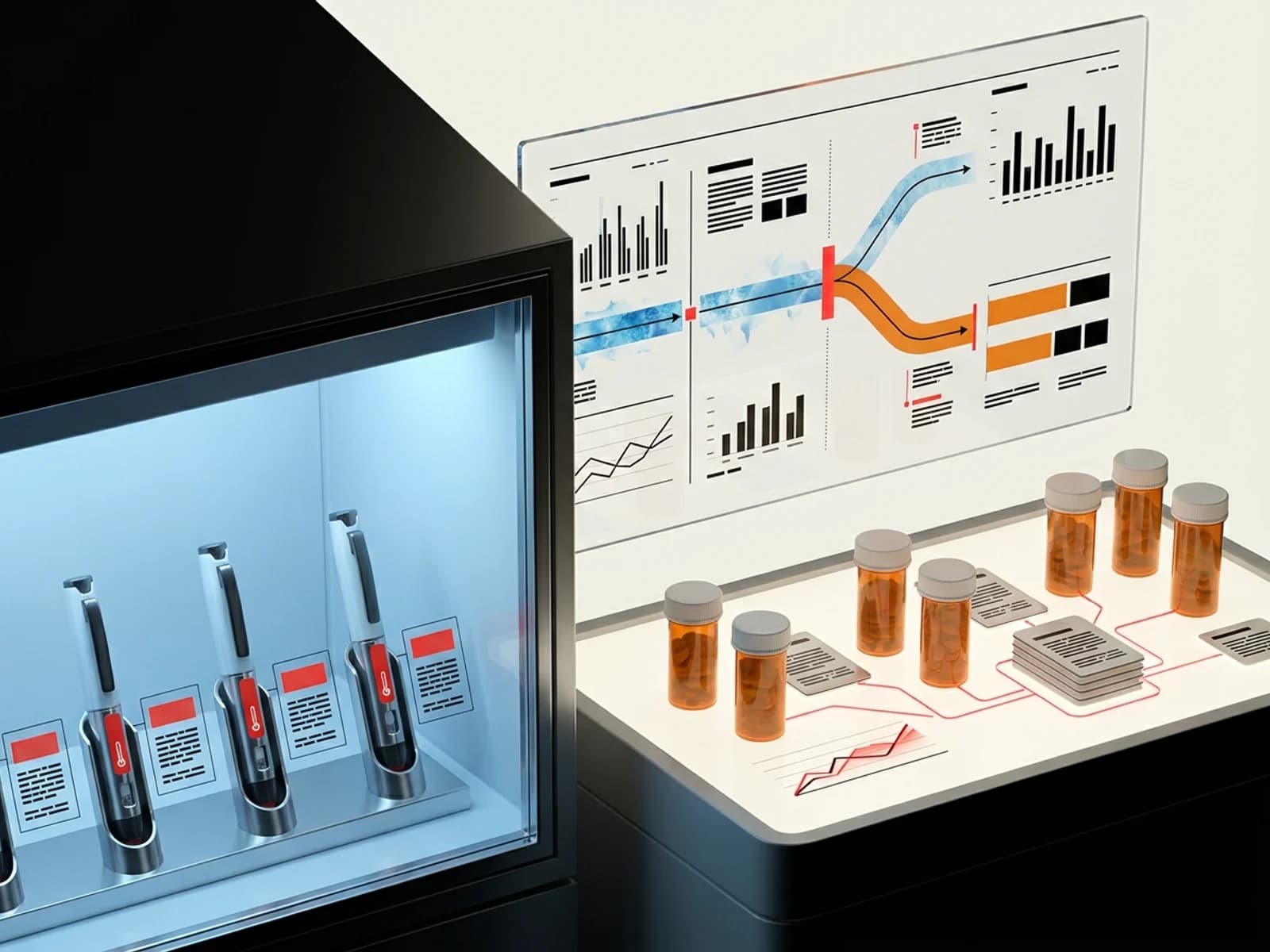
Merck & Co. is mid-transition, not at the cliff: as of the June 11, 2026 FDA Purple Book, no pembrolizumab 351(k) biosimilar is licensed in the U.S. and IV Keytruda does not lose US exclusivity until 2028, while the subcutaneous Keytruda QLEX (BLA 761467, approved Sept 19, 2025) received permanent HCPCS J9277 on April 1, 2026 and booked $128M in Q1 2026; meanwhile the Januvia cliff is already here — generic sitagliptin ANDAs were approved Dec 30, 2025 (Watson), Jan 14, 2026 (Sandoz) and Jan 20, 2026 (Apotex) — even as the IRA negotiated $113/30-day MFP runs for 2026, and Merck is spending tens of billions on ADC/immunology/MASH assets to build a post-Keytruda portfolio.
This commercial portfolio dossier analyzes Merck's therapeutic and financial positioning as of mid-2026. It is written for market-access managers, oncology pharmacists, P&T committees, and biopharma analysts who design formulary exclusion lists, specialty drug management programs, and reimbursement workflows. Every claim here is verified against primary sources, including the FDA Purple Book, FDA Orange Book, CMS HCPCS quarterly coding files, CMS National Average Drug Acquisition Cost (NADAC) datasets, and Merck's Q1 2026 and FY2025 financial filings. For broader context on patent cliffs, see the 2026-2032 patent cliff by the numbers; for a look at subcutaneous biologics conversions, see Darzalex SC vs IV biosimilar tracker; for Medicare negotiation rules, see IRA Medicare drug negotiation proposed rule 2026; and for sibling company analyses, see Eli Lilly portfolio dossier. For deep coverage of one of Merck's primary new assets, see Winrevair (sotatercept) PAH access landscape.
Does Keytruda have an FDA-approved biosimilar yet, and when does IV Keytruda lose US exclusivity?
Keytruda (pembrolizumab, BLA 125514) is the largest single oncology franchise in biopharma history. In FY2025, Keytruda generated $31.68 billion in global sales — nearly 49 percent of Merck’s total annual revenue of $65.0 billion. The commercial threat of its loss of exclusivity (LOE) represents the most significant patent cliff in the industry.
However, as of the June 11, 2026 FDA Purple Book update, there are no FDA-approved biosimilars for pembrolizumab under section 351(k) of the Public Health Service Act. Keytruda's core U.S. composition-of-matter patent for the intravenous formulation expires in 2028, with first U.S. biosimilar launches anticipated from September 2028.
Several biosimilar developers are in late-stage clinical trials. The front-runner is Formycon's FYB206, which is in active Phase III trials. Sandoz, Amgen, and Samsung Bioepis also have pembrolizumab biosimilars in clinical development. Payers and access teams should expect the first U.S. 351(k) BLA filings to occur in late 2026 or early 2027, setting up a multi-source biosimilar launch immediately upon patent expiration in late 2028. Until then, the IV Keytruda franchise retains 100 percent of its U.S. market share.
Clinical Mechanism of Pembrolizumab
Pembrolizumab is a humanized monoclonal antibody that binds to the Programmed Death receptor-1 (PD-1) on T-cells, blocking its interaction with Programmed Death-Ligand 1 (PD-L1) and Programmed Death-Ligand 2 (PD-L2) on tumor cells. By inhibiting the PD-1 pathway, pembrolizumab restores T-cell mediated anti-tumor immune responses. The drug's clinical utility spans over 30 indications, including melanoma, non-small cell lung cancer (NSCLC), head and neck squamous cell carcinoma, urothelial carcinoma, and triple-negative breast cancer. This broad clinical baseline makes pembrolizumab the therapeutic backbone of modern immuno-oncology, and any transition to biosimilars will have major formulary implications.
What is Keytruda QLEX, and why does the new J9277 J-code matter for buy-and-bill?
To defend its pembrolizumab franchise against the 2028 IV patent cliff, Merck is executing an intravenous-to-subcutaneous (IV-to-SC) lifecycle management strategy. The cornerstone of this strategy is Keytruda QLEX (pembrolizumab and berahyaluronidase alfa-pmph, BLA 761467), which was approved by the FDA on September 19, 2025.
Keytruda QLEX offers a major clinical advantage: it can be administered subcutaneously in roughly 1 to 2 minutes, compared to the 30-to-60-minute infusion required for IV Keytruda. This is analogous to J&J’s highly successful conversion of Darzalex to Darzalex Faspro (detailed in our Darzalex SC vs IV biosimilar tracker).
From a market-access perspective, the key milestone for Keytruda QLEX was the establishment of a permanent HCPCS code. Effective April 1, 2026, CMS implemented J9277 (Injection, pembrolizumab and berahyaluronidase alfa-pmph, 1 mg) to replace the temporary C-code used during the initial launch.
Keytruda Coding and Reimbursement Structure:
- IV Keytruda (BLA 125514): Billed under HCPCS code J9271 (Injection, pembrolizumab, 1 mg)
- SC Keytruda QLEX (BLA 761467): Billed under HCPCS code J9277 (Injection, pembrolizumab and berahyaluronidase alfa-pmph, 1 mg)
The permanent J-code is critical for buy-and-bill adoption. Community oncology clinics and hospital outpatient departments require permanent J-codes to ensure reliable, predictable reimbursement from commercial payers and Medicare. In Q1 2026, Keytruda QLEX booked $128 million in U.S. sales, demonstrating steady early uptake. Merck's commercial goal is to convert a substantial portion of the pembrolizumab volume to the subcutaneous QLEX formulation prior to 2028, creating a patent-protected barrier that biosimilars targeting only the IV formulation cannot easily breach.
Hyaluronidase Co-Formulation Technology
The transition to subcutaneous delivery is enabled by co-formulation with berahyaluronidase alfa, a recombinant variant of human hyaluronidase (developed and manufactured by Alteogen), which temporarily depolymerizes hyaluronan in the subcutaneous extracellular matrix. This action increases the permeability of the subcutaneous tissue, allowing the rapid absorption of large volumes of monoclonal antibodies. For Keytruda QLEX, this co-formulation allows the delivery of a therapeutic dose in a single injection. Because this co-formulation is protected by separate patents extending well into the 2030s, generic or biosimilar developers who focus solely on copying the IV pembrolizumab molecule will not be able to substitute for the subcutaneous QLEX formulation, preserving a high-margin franchise for Merck.
How is the Januvia franchise eroding — IRA negotiated price, ANDA approvals, and NADAC?
While the Keytruda cliff is a post-2028 event, Merck’s second largest historical franchise, the Januvia/Janumet (sitagliptin/metformin) type 2 diabetes portfolio, is actively eroding. This decline is driven by a combination of legislative pricing pressure and generic market entry.
The Inflation Reduction Act (IRA) Maximum Fair Price
Januvia was selected as one of the first ten drugs subject to the Medicare drug price negotiation program under the Inflation Reduction Act. The negotiated Maximum Fair Price (MFP) for Januvia is $113 per 30-day supply, representing a steep discount from its historical list price. This MFP went into effect on January 1, 2026.
Generic ANDA Approvals and Launch
However, the therapeutic class has been further disrupted by the entry of standard generics. The FDA Orange Book confirms that several generic sitagliptin Abbreviated New Drug Applications (ANDAs) have received final approval:
Watson Laboratories (Teva): Approved December 30, 2025.
Sandoz: Approved January 14, 2026.
Apotex: Approved January 20, 2026.
These generic entries have led to rapid price erosion. According to the CMS National Average Drug Acquisition Cost (NADAC) dataset, the average acquisition price for sitagliptin has fallen to $10.55 per unit (tablet) for the brand, with generic sitagliptin pricing falling significantly lower. This rapid generic erosion has diminished the impact of the $113 IRA negotiated price, as commercial and Medicare Part D formularies shift away from the brand to low-cost generic sitagliptin. Consequently, Merck’s Januvia franchise revenues are declining rapidly in 2026.
Financial Impact of Januvia Generic Erosion
The financial impact of sitagliptin generic erosion is substantial. Historically, Januvia and Janumet combined represented a multi-billion dollar franchise for Merck. In 2024, the franchise was already experiencing moderate declines due to international generic entry and U.S. pricing pressure. The arrival of multiple U.S. generics in early 2026 accelerated this decline. In Q1 2026, Merck reported a sharp double-digit drop in sitagliptin revenue. Payer strategies have moved rapidly to place brand Januvia on exclusion lists, substituting generic sitagliptin on low-tier copay levels, which has effectively deflated the brand's commercial market share.
Which pipeline assets is Merck betting on to replace Keytruda after 2028?
To diversify its revenue base ahead of the 2028 Keytruda LOE, Merck is investing heavily in a post-2028 pipeline. This strategy focuses on oncology lifecycle extensions, cardiovascular expansion, and vaccine portfolios.
The table below outlines Merck's primary growth assets and pending PDUFA milestones as of mid-2026:
| Product / Asset | Therapeutic Class | FY2025 Revenue | Q1 2026 Revenue | Key Regulatory Milestone / PDUFA Date |
|---|---|---|---|---|
| Winrevair (sotatercept) | Activin Signaling Inhibitor (PAH) | $1.44B | $525M | HYPERION PDUFA: September 21, 2026 |
| Welireg (belzutifan) | HIF-2α Inhibitor (VHL/RCC) | $716M | $199M | RCC Combination PDUFA: June 19, 2026 |
| Capvaxive (V116) | 21-Valent Pneumococcal Vaccine | $759M | $142M | Approved June 2024; active ACIP rollout |
| MK-0616 | Oral PCSK9 Inhibitor | Pipeline | Pipeline | Phase III CORAL-1 trials reporting late 2026 |
| MK-1022 (patritumab deruxtecan) | HER3-Directed ADC | Pipeline | Pipeline | Resubmitted BLA; PDUFA late 2026 |
Winrevair (sotatercept)
Winrevair is Merck's flagship cardiovascular asset, acquired via the $11.5 billion buyout of Acceleron Pharma in 2021. Note: A common competitor error is stating that Winrevair is owned by Bristol Myers Squibb; BMS held a minority share of Acceleron but sold its rights to Merck during the acquisition. Winrevair represents a major therapeutic advance in Pulmonary Arterial Hypertension (PAH), acting as a disease-modifying agent rather than a simple vasodilator. Its commercial launch has been highly successful, booking $1.44 billion in FY2025 and $525 million in Q1 2026. The upcoming HYPERION PDUFA on September 21, 2026, seeks to expand its label into early-stage PAH, which would significantly expand its target patient population.
Welireg (belzutifan)
Welireg is a first-in-class HIF-2α inhibitor. Originally approved for Von Hippel-Lindau (VHL) disease, it is expanding into renal cell carcinoma (RCC). The June 19, 2026, PDUFA date for the combination of Welireg and Keytruda in advanced RCC represents a major near-term oncology expansion.
Capvaxive
Capvaxive is Merck's 21-valent pneumococcal conjugate vaccine, specifically designed to target the serotypes responsible for the majority of adult invasive pneumococcal disease. Approved in June 2024, it generated $759 million in FY2025 and is competing directly with Pfizer's Prevnar 20 in the adult market.
Cardiorenal and Metabolic Pipeline Focus: MK-0616
Beyond oncology, Merck's cardiorenal pipeline is centered on MK-0616, an investigational oral macrocyclic peptide inhibitor of PCSK9. While existing PCSK9 inhibitors (such as Amgen’s Repatha and Sanofi/Regeneron’s Praluent) require subcutaneous injections and carry high costs, MK-0616 is designed as an oral tablet. The Phase III CORAL-1 clinical trials are expected to report initial readouts in late 2026. If successful, MK-0616 will represent a highly competitive option in the lipid-lowering market, providing a primary care blockbuster opportunity to help offset the post-2028 Keytruda revenue gap.
What does the 2023-2026 M&A program (Prometheus, Verona, SpringWorks, Terns, Kelun-Botai) buy?
Merck has deployed over $40 billion in capital across its 2021–2026 business-development program to acquire clinical-stage assets that will mature as Keytruda faces biosimilar competition after 2028.
1. Verona Pharma Acquisition
In July 2025, Merck agreed to acquire Verona Pharma for a total transaction value of approximately $10 billion, securing Ohtuvayre (ensifentrine), a first-in-class dual PDE3/PDE4 inhibitor for chronic obstructive pulmonary disease (COPD); the deal closed on October 7, 2025. Ohtuvayre's unique nebulized bronchodilator and anti-inflammatory mechanism provides a multi-billion dollar respiratory asset that slots into Merck's primary care and specialty respiratory sales channels.
2. Prometheus Biosciences
Acquired in 2023 for $10.8 billion, this transaction brought in tulisokibart (MK-7240), a novel anti-TL1A monoclonal antibody in Phase III development for ulcerative colitis and Crohn's disease. This is Merck's primary entry into the immunology market, positioning it to compete with Roche and Sanofi in the inflammatory bowel disease space.
3. SpringWorks Therapeutics and Terns Pharmaceuticals
Through targeted oncology and metabolic deals in 2025, Merck acquired SpringWorks Therapeutics, whose gamma-secretase inhibitor Ogsiveo (nirogacestat) — approved for desmoid tumors — broadens Merck's targeted solid-tumor portfolio; and Merck agreed to acquire Terns Pharmaceuticals to secure its oral GLP-1 receptor agonist program, ensuring Merck has a foot in the metabolic and MASH (NASH) markets.
4. Kelun-Botai and Daiichi Sankyo ADC Partnerships
Oncology M&A has centered on antibody-drug conjugates (ADCs). Merck partnered with Kelun-Botai (securing MK-2870, an anti-TROP2 ADC in Phase III) and entered into a massive $22 billion multi-asset partnership with Daiichi Sankyo for three clinical-stage ADCs, including patritumab deruxtecan (MK-1022, HER3-directed). This ensures Merck has a leading post-chemotherapy oncology platform to complement pembrolizumab.
The Role of ADCs in Merck's Post-Keytruda Strategy
Antibody-drug conjugates represent a major technological shift in oncology, linking a tumor-targeting monoclonal antibody to a cytotoxic payload via a chemical linker. Merck’s multi-billion dollar collaboration with Daiichi Sankyo and its partnership with Kelun-Botai are designed to establish an ADC platform that can be combined with pembrolizumab in the near term and serve as standalone therapy in the long term. By securing late-stage ADC candidates like MK-1022 (HER3-targeted) and MK-2870 (TROP2-targeted), Merck is building a transition pathway for its oncology sales force, ensuring they can transition from pembrolizumab-centric accounts to next-generation ADC-driven regimens as the IV biosimilar market develops.
How should payer and access teams position Winrevair, Welireg, and Capvaxive amid the transition?
For formulary decision-makers and payer medical directors, Merck's portfolio transition requires a re-evaluation of utilization management criteria across several areas:
1. PAH Management (Winrevair)
Winrevair’s disease-modifying mechanism has led to rapid clinical adoption. Payers should expect high demand. Prior-authorization criteria should confirm diagnosis via right-heart catheterization and require baseline evaluation of WHO functional class. Given its high cost, step therapy through generic phosphodiesterase-5 inhibitors (sildenafil, tadalafil) and endothelin receptor antagonists (ambrisentan) is standard, but reauthorization criteria must measure functional improvement (e.g., 6-minute walk distance) to justify continued coverage.
2. RCC Combination Therapies (Welireg)
With the Welireg + Keytruda PDUFA on June 19, 2026, oncology clinical pathways must be updated. Payers should monitor whether the combination is positioned as first-line therapy or restricted to second/third-line post-immunotherapy failure, as first-line positioning will significantly increase the budget impact of RCC regimens.
3. Adult Pneumococcal Vaccination (Capvaxive)
Capvaxive’s serotype coverage is specifically tailored to adult disease, covering serotypes not included in Pfizer's Prevnar 20. Payer coverage policies should align with ACIP recommendations, which support Capvaxive as an option for pneumococcal-naive adults aged 65 or older, or those aged 19-64 with immunocompromising conditions, ensuring zero-dollar patient cost-sharing under the Affordable Care Act.
4. Payer Management of Subcutaneous vs. Intravenous Formulations (Keytruda QLEX)
Payer medical directors must formulate distinct policies for IV pembrolizumab vs. subcutaneous Keytruda QLEX. Under the medical benefit (buy-and-bill), Keytruda QLEX's permanent J-code (J9277) allows clinics to submit claims for the subcutaneous formulation. Payers may implement utilization management that incentivizes the use of Keytruda QLEX to reduce clinical administration costs and improve patient throughput. However, as the 2028 cliff approaches, payers will need to balance the convenience of QLEX against the potential cost-savings of low-cost IV biosimilars, potentially creating preferred pathways for the IV route once biosimilars launch.
FAQs
When does Keytruda lose exclusivity, and is the cliff in 2026 or 2028?
IV Keytruda (BLA 125514) loses U.S. exclusivity in 2028, when its core composition-of-matter patent expires, with first biosimilar launches anticipated from September 2028. There is no Keytruda LOE cliff in 2026. The misconception arises from the generic erosion of Merck’s other major product, Januvia, which occurred in late 2025/early 2026.
What HCPCS codes bill Keytruda IV vs Keytruda QLEX, and what are the NDCs?
IV Keytruda is billed under HCPCS code J9271 (1 mg per unit). Subcutaneous Keytruda QLEX is billed under HCPCS code J9277 (1 mg per unit), which became effective April 1, 2026. The NDCs differ: IV Keytruda utilizes 00006-3026-02 (100 mg/4 mL vial), whereas Keytruda QLEX utilizes unique multi-pack NDCs corresponding to its co-formulated presentation.
Has generic Januvia (sitagliptin) launched, and how does that interact with the IRA $113 price?
Yes. Multiple generic sitagliptin ANDAs were approved between December 2025 and January 2026 (Watson, Sandoz, Apotex), with subsequent launches rolling out across 2026. While the brand Januvia carries a negotiated Medicare MFP of $113 for 2026, the availability of low-cost generics has shifted the market, leading payers to prioritize generic sitagliptin, which has a NADAC unit price of approximately $10.55 or lower.
Who owns Winrevair — Merck or BMS?
Winrevair is owned entirely by Merck & Co. Merck acquired the drug through its $11.5 billion acquisition of Acceleron Pharma in 2021. While Bristol Myers Squibb (BMS) owned a minority stake in Acceleron, it did not retain rights to sotatercept (Winrevair) post-acquisition.
Which pembrolizumab biosimilar is closest to a U.S. BLA filing?
Formycon's FYB206 is currently the furthest along in clinical development, with active Phase III trials. Sandoz and Amgen also have biosimilars in late-stage Phase III trials, with regulatory submissions expected to begin in late 2026 or early 2027.
What is Merck's strategy for the subcutaneous formulation (QLEX) if IV biosimilars launch at a steep discount?
Merck's strategy centers on clinical convenience and patient preference. Subcutaneous administration reduces chair time in infusion clinics from a roughly 30-minute IV infusion to a roughly 1-to-2-minute subcutaneous injection, which is highly valued by patients and clinics. To encourage transition, Merck will likely offer contracting and rebating strategies to make Keytruda QLEX financially attractive to providers. However, if IV biosimilars enter the market with discounts of 50 percent or more, payers may implement step-therapy requirements that mandate the use of the cheaper IV biosimilar first, particularly for newly diagnosed patients. Merck’s ability to convert and maintain QLEX market share will be a major determinant of its post-2028 financial stability.
What are the key clinical trials supporting Winrevair in PAH?
Winrevair's approval was primarily supported by the pivotal Phase III STELLAR trial, which demonstrated a statistically significant placebo-adjusted improvement in the 6-minute walk distance (6MWD) of 40.8 meters at week 24 and an 84 percent reduction in the risk of clinical worsening or death compared to placebo. The Phase III HYPERION trial (results reported in September 2025) showed a 76 percent reduction in clinical worsening events in newly diagnosed, low-/intermediate-risk PAH patients (WHO Functional Class II or III), and the FDA's PDUFA date for the corresponding label expansion is September 21, 2026, which could significantly expand the addressable patient population for Winrevair.
Sources
U.S. Food and Drug Administration (FDA). FDA Purple Book Database (licensed biological products). https://purplebooksearch.fda.gov
U.S. Food and Drug Administration (FDA). FDA Orange Book: Approved Drug Products with Therapeutic Equivalence Evaluations (sitagliptin generic ANDAs). https://www.accessdata.fda.gov/scripts/cder/ob/
Centers for Medicare & Medicaid Services (CMS). HCPCS Level II quarterly updates (April 2026 release). https://www.cms.gov/medicare/coding-billing/healthcare-common-procedure-system
Centers for Medicare & Medicaid Services (CMS). National Average Drug Acquisition Cost (NADAC) dataset. https://data.medicaid.gov/dataset/nadac/
Merck & Co., Inc. (2026). First Quarter 2026 Financial Results. https://www.merck.com/news/merck-co-inc-rahway-n-j-usa-announces-first-quarter-2026-financial-results
Merck & Co., Inc. (2026). Fourth Quarter and Full Year 2025 Financial Results. https://www.merck.com/news/merck-highlights-progress-advancing-broad-diverse-pipeline
Pearce IP. (2026). Pembrolizumab Biosimilar Development and Patent Landscape. https://www.pearceip.law/2026/05/11/update-on-pembrolizumab-biosimilar-clinical-trials-2