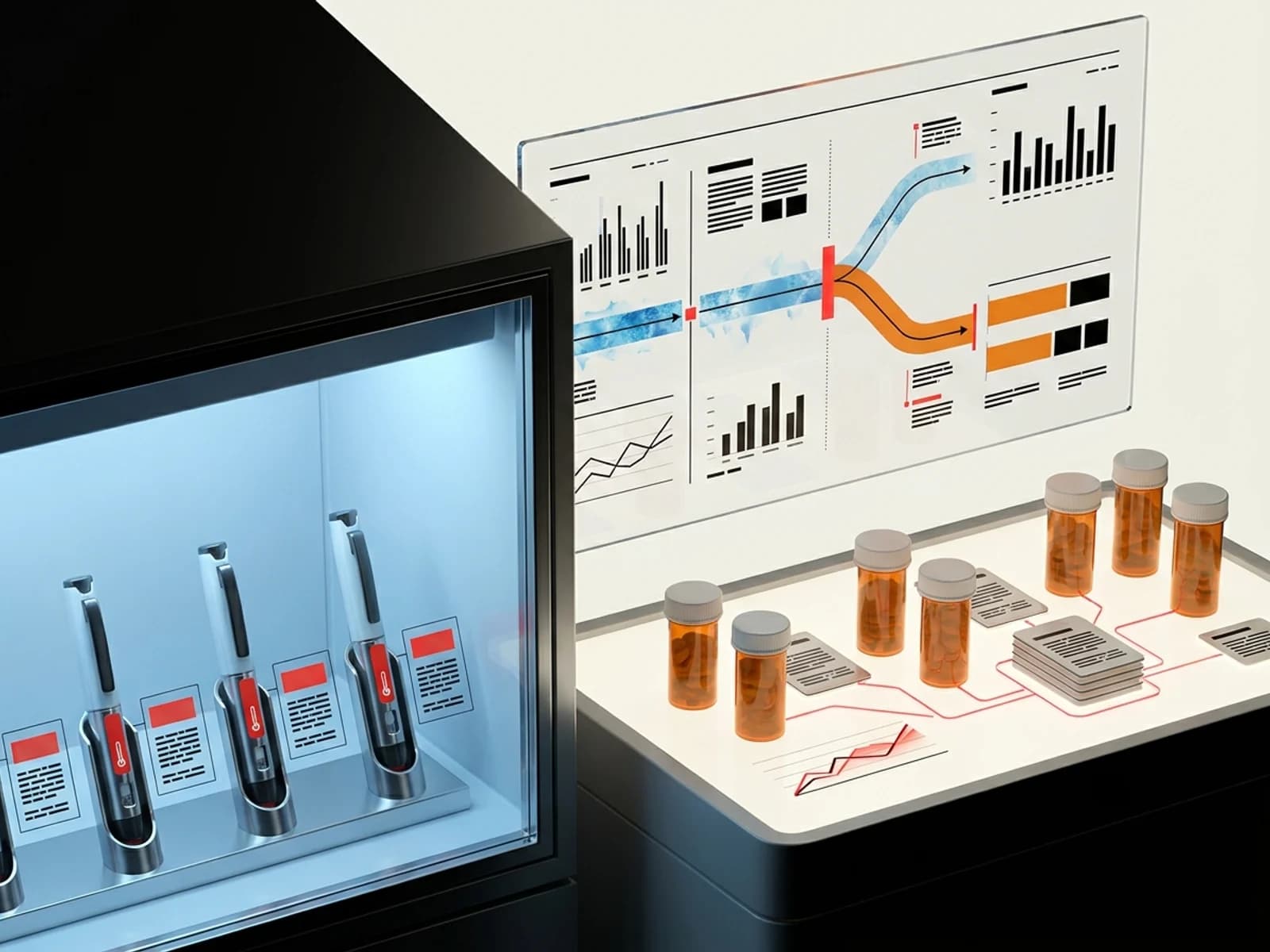
Eli Lilly and Company is currently executing the most significant commercial expansion in the history of the pharmaceutical industry. Historically known for its pioneering role in insulin manufacturing and neuropsychiatry brands, Lilly has pivoted to become a global powerhouse in cardiometabolic medicine, driven by its dual-GIP/GLP-1 receptor agonist tirzepatide (commercialized as Mounjaro and Zepbound).
This therapeutic dominance is accompanied by major structural and pricing shifts. Under political and legislative pressure—including the Inflation Reduction Act (IRA)—Lilly has implemented price caps and biosimilar positioning for its legacy insulin portfolio. Simultaneously, the company is preparing for the next wave of metabolic competition: transitioning from injectables to oral small molecules, highlighted by the April 2026 FDA approval of Foundayo (orforglipron).
For commercial payers, self-insured employers, and pharmacy benefit managers (PBMs), Lilly's portfolio represents the single largest segment of drug spend. Successfully managing this spend requires a deep understanding of Lilly's patent protections, clinical trial timelines, and pricing frameworks. Grounded in systematic queries of the FDA Purple Book, FDA Orange Book, CMS National Average Drug Acquisition Cost (NADAC) registry, FDA Enforcement Reports, and ClinicalTrials.gov registry, this portfolio dossier analyzes Lilly's key assets, maps out its metabolic pipeline, details retail pricing footprints, and provides access teams with concrete utilization management guidelines.
Executive Summary & Scenario Analysis
To align on the clinical and economic implications of Eli Lilly's biopharmaceutical portfolio, we must address the primary questions facing clinical pharmacy directors, health system purchasing teams, and benefit designers.
Scenario Question
What does public regulatory and pricing data reveal about Eli Lilly's cardiometabolic defense and insulin lifecycle, and how should payer formulary teams manage access?
Direct Answer
Eli Lilly is consolidating its lead in the diabetes/obesity space through the tirzepatide franchise (Mounjaro, Zepbound) and the April 2026 approval of the first oral small-molecule GLP-1 Foundayo (orforglipron), while managing retail pricing caps on its legacy insulin portfolio. The Purple Book shows 22 unique biological licenses (21 reference 351(a) BLAs, including Humulin, Humalog, Mounjaro's peptide component Basaglar, and the 2024 Alzheimer's approval Kisunla BLA 761248, and 1 biosimilar 351(k) Rezvoglar BLA 761215). In the Orange Book, Lilly holds 154 unique approved applications (85 NDAs and 69 ANDAs). Payers must establish value-based contracts for tirzepatide (priced at $526.32 per mL for Zepbound and $538.62 for Mounjaro in CMS NADAC), prepare for oral Foundayo integration, and capture legacy insulin savings ($6.36/mL for Humalog vials).
Cardiometabolic Leadership: Tirzepatide Pricing and Payer Benefit Rules
The growth of Eli Lilly's portfolio is driven by the peptide molecule tirzepatide, marketed as Mounjaro for type 2 diabetes and Zepbound for chronic weight management.
Mechanism of Action: Tirzepatide is a synthetic peptide containing 39 amino acids that acts as a dual glucose-dependent insulinotropic polypeptide (GIP) receptor and glucagon-like peptide-1 (GLP-1) receptor agonist. It is structurally based on the endogenous GIP sequence but modified to bind to both receptors with high affinity. Activation of these receptors synergistically enhances glucose-dependent insulin secretion, slows gastric emptying, and reduces food intake by targeting central satiety pathways, resulting in glycemic control and weight reduction.
Clinical Foundation (SURPASS and SURMOUNT Trials): The clinical profile was established through two extensive clinical development packages:
The SURPASS Trials (Type 2 Diabetes): In the SURPASS-2 trial (NCT03987919), which compared tirzepatide 15 mg against semaglutide 1 mg, tirzepatide demonstrated a superior mean reduction in HbA1c of -2.30% vs. -1.86% for semaglutide, and a mean weight loss of -11.2 kg vs. -5.7 kg.
The SURMOUNT Trials (Chronic Weight Management): In the SURMOUNT-1 trial (NCT04783298) evaluating 2,539 adults with obesity, the highest dose of tirzepatide (15 mg) achieved an extraordinary mean weight loss of 20.9% (approximately 52 lbs) at 72 weeks compared to just 3.1% in the placebo group.
CMS NADAC Pricing Footprint: An analysis of the June 10, 2026 CMS NADAC registry reveals the retail acquisition cost for these products (which are packaged in monthly cartons containing four single-dose autoinjector pens, totaling 2 mL):
Zepbound 5 MG/0.5 ML Pen: $526.31562 per mL ($1,052.63 per monthly carton)
Mounjaro 5 MG/0.5 ML Pen: $538.62274 per mL ($1,077.25 per monthly carton)
This pricing demonstrates that despite their distinct WAC brand labels and target indications, Lilly maintains a WAC equivalence between the two brands. However, for payers, the benefit routing is entirely separate.
SURPASS Clinical Trials Outcomes
The glycemic and metabolic performance of tirzepatide was validated against active comparator arms in a multi-stage clinical program:
| Study Registration | Active Comparator Arm | Key Efficacy Endpoint (HbA1c Mean Change) | Weight Loss Endpoint (Mean Change) | Clinical Context / Patient Cohort |
|---|---|---|---|---|
| SURPASS-1 (NCT03954834) | Placebo | -1.87% (5mg) to -2.07% (15mg) vs -0.04% (placebo) | -6.3 kg (5mg) to -9.5 kg (15mg) vs -1.0 kg (placebo) | Monotherapy in treatment-naive adult patients |
| SURPASS-2 (NCT03987919) | Semaglutide 1 mg | -2.01% (5mg) to -2.30% (15mg) vs -1.86% (semaglutide) | -7.6 kg (5mg) to -11.2 kg (15mg) vs -5.7 kg (semaglutide) | Add-on to metformin; head-to-head comparison |
| SURPASS-3 (NCT03887793) | Insulin Degludec | -1.93% (5mg) to -2.37% (15mg) vs -1.34% (degludec) | -7.0 kg (5mg) to -12.9 kg (15mg) vs +2.3 kg (degludec) | Insulin-naive patients on metformin with/without SGLT2i |
| SURPASS-4 (NCT03730662) | Insulin Glargine | -2.24% (5mg) to -2.58% (15mg) vs -1.44% (glargine) | -7.1 kg (5mg) to -11.7 kg (15mg) vs +1.9 kg (glargine) | High cardiovascular risk patients; baseline metformin/sulfonylurea |
| SURPASS-5 (NCT04039607) | Placebo (add-on to Glargine) | -2.11% (5mg) to -2.59% (15mg) vs -0.93% (placebo) | -5.4 kg (5mg) to -10.9 kg (15mg) vs +1.7 kg (placebo) | Inadequate glycemic control on insulin glargine |
SURMOUNT Obesity Program Clinical Benchmarks
For weight management, the SURMOUNT trials established tirzepatide's clinical superiority, establishing a new therapeutic threshold:
| Study Registration | Patient Population | Trial Duration | Tirzepatide Dosing Arms | Weight Loss Percentage (Mean Change) |
|---|---|---|---|---|
| SURMOUNT-1 (NCT04783298) | Obesity/overweight without diabetes | 72 Weeks | 5 mg / 10 mg / 15 mg once weekly | -15.0% (5mg), -19.5% (10mg), -20.9% (15mg) vs -3.1% (placebo) |
| SURMOUNT-2 (NCT04849689) | Obesity/overweight with Type 2 Diabetes | 72 Weeks | 10 mg / 15 mg once weekly | -12.8% (10mg), -14.7% (15mg) vs -3.2% (placebo) |
| SURMOUNT-3 (NCT05284682) | Obesity/overweight post intensive lifestyle | 72 Weeks | 15 mg once weekly (post 12-week run-in) | -18.4% additional loss in tirzepatide arm vs +2.5% regain in placebo arm |
| SURMOUNT-4 (NCT05285813) | Obesity/overweight (run-in maintenance) | 88 Weeks | 36-week open-label run-in; randomized at week 36 | -5.5% additional loss for continuous tirzepatide vs +14.0% weight regain for placebo switch |
Payer Benefit Rules & Formulary Management
To manage the high demand and budget impact of tirzepatide, payers must enforce strict coverage criteria:
Strict Indication Separation: Mounjaro must be billed under the pharmacy benefit with automated prior authorizations requiring diagnostic confirmation of type 2 diabetes (via ICD-10 codes and historical HbA1c levels $\ge 6.5%$). Zepbound should be routed to weight-loss benefits, which many self-insured employers choose to exclude or cap.
BMI and Comorbidity Gates: For plans that choose to cover Zepbound, prior authorizations must require a documented baseline Body Mass Index (BMI) of $\ge 30$ kg/m², or $\ge 27$ kg/m² with at least one weight-related comorbidity (hypertension, dyslipidemia, obstructive sleep apnea, or type 2 diabetes).
Enforce Reauthorization Thresholds: Reauthorization after the initial 6 months should be contingent on documentation of clinical efficacy, defined as a loss of at least 5% of baseline body weight. If the patient has not achieved this threshold, coverage should be discontinued. For detailed prior authorization templates and workflow guidelines, refer to our Mounjaro coverage guide and our Zepbound coverage guide.
Prior Authorization Decision Tree for Zepbound (tirzepatide)
To manage weight-loss benefit spending, payers should implement the following Clinical Authorization Tree:
[Prescriber Submits Zepbound Request]
                  |
                  v
[Is patient's baseline BMI >= 30, or >= 27 with comorbidity?]
                  |
                  +---> NO: Deny / Document current weight/comorbidities
                  |
                  +---> YES: Move to Statin / Lifestyle Check
                                 |
                                 v
[Is patient enrolled in structured lifestyle modification program?]
                                 |
                                 +---> NO: Deny / Require enrollment documentation
                                 +---> YES: Approve for 6 months / Limit to 2 mL (4 pens) per 28 days
Lifestyle Modification Verification: The patient must be actively enrolled in a structured, physician-supervised weight loss program (nutritional counseling, physical therapy, or behavioral counseling) for at least 6 months prior to initiation.
Reauthorization Requirements: Reauthorization at 6 months must require documentation of a minimum 5% weight loss from baseline, with no severe gastrointestinal side effects leading to dose interruptions.
Payer Prior Authorization and Appeals Checklist Table
Commercial benefit managers should reference this audit matrix when designing clinical check processes for metabolic claims:
| Specialty Audit Step | Specific Target Parameters | Documentation Requirements | Failure / Exclusion Boundaries |
|---|---|---|---|
| Indication Verification | Type 2 Diabetes (Mounjaro) vs Chronic Weight Management (Zepbound) | Chart notes, laboratory panel showing HbA1c $\ge 6.5%$ | Denial if Zepbound is requested with a Type 2 Diabetes ICD-10 code to bypass exclusions |
| Comorbidity Review | BMI $\ge 30$ or $\ge 27$ with comorbidity (hypertension, dyslipidemia, sleep apnea) | Clinical notes with documented height, weight, BMI, and ICD-10 for comorbidities | Exclusion if patient is seeking cosmetic weight loss with a BMI $< 27$ |
| Step-Therapy Protocol | Mandatory 90-day trial of generic metformin U-100 or SGLT2i | Prescription fill history showing $\ge 90$ days cumulative supply | Failure if patient attempts to skip step-therapy without documented clinical contraindications |
| Compliance & Renewal | $\ge 5%$ weight reduction at Month 6; lack of severe pancreatitis history | Office visit notes, follow-up weight measurement, pharmacy adherence logs | Non-renewal if patient fails to lose weight or has a history of medullary thyroid carcinoma |
Oral Innovation: The Impact of Orforglipron (Foundayo) and Retatrutide
To protect its market share from incoming generic peptide competitors and lower its manufacturing costs, Lilly is transitioning from injectable peptides to oral small molecules.
1. Foundayo (orforglipron, NDA approved April 1, 2026)
Clinical Significance: The FDA approved Lilly's Foundayo (orforglipron) on April 1, 2026, for chronic weight management. Orforglipron is a first-in-class, non-peptide, oral small-molecule GLP-1 receptor agonist. Unlike Novo Nordisk's oral semaglutide (Rybelsus), which is a peptide that requires co-formulation with an absorption enhancer (SNAC) and must be taken on an empty stomach with a limited amount of water, Foundayo is a small molecule. It does not require specific timing or food/water restrictions, representing a major improvement in patient adherence.
Clinical Foundation (ATTAIN Trials): Approved based on the Phase III ATTAIN-1 trial (NCT05674877) in adults with obesity. At 52 weeks, patients receiving orforglipron (dosed orally once daily) achieved a mean weight loss of 14.7% to 16.9% depending on the dose, compared to only 2.3% in the placebo group.
Molecular Profile: Orforglipron exhibits a long elimination half-life of 29 to 42 hours, facilitating once-daily dosing without pharmacokinetic accumulation. Because it binds non-covalently but with high receptor affinity to the GLP-1 receptor, it induces sustained receptor activation without the conformational restrictions typical of peptide drugs.
Payer Impact: As a small-molecule oral solid, Foundayo is significantly cheaper to manufacture and distribute than sterile injectable pens. Payers should prepare to negotiate lower net prices for Foundayo, positioning it as a preferred oral weight-loss agent and leveraging it to extract higher rebates from injectable competitors. For detailed coverage transition plans, refer to our oral GLP-1 launch access checklist.
2. Retatrutide (Phase III - The TRIUMPH Trials)
Mechanism of Action: Retatrutide is a single peptide containing 39 amino acids that acts as a triple agonist, targeting the GIP, GLP-1, and glucagon receptors.
Clinical Foundation: In Phase II clinical trials published in 2023, the highest dose of retatrutide (12 mg) achieved an extraordinary mean weight loss of 24.2% at 48 weeks. Phase III trials (the TRIUMPH-1 study, NCT05656521) are ongoing in 2025/2026. The triple agonism is designed to increase energy expenditure by activating glucagon receptors while simultaneously reducing appetite through GIP/GLP-1 activation, setting a new clinical baseline for weight loss. Payers must monitor these trial results to prepare for its launch in late 2026. For a detailed clinical trial review, refer to our retatrutide TRIUMPH-1 phase 3 evidence review.
Comparison Table: Oral vs Injectable GLP-1 and Multi-Agonist Profiles
The table below compares the clinical and logistical parameters of Lilly's new oral agent against established and pipeline formulations:
| Parameter | Foundayo (orforglipron) | Rybelsus (oral semaglutide) | Zepbound (injectable tirzepatide) | Retatrutide (Triple Agonist) |
|---|---|---|---|---|
| Molecule Class | Non-peptide small molecule | Peptide (GLP-1 analog) | Peptide (GIP/GLP-1 dual agonist) | Peptide (GIP/GLP-1/Glucagon) |
| Route / Frequency | Oral / Once Daily | Oral / Once Daily | Subcutaneous / Weekly | Subcutaneous / Weekly |
| Efficacy Profile | 14.7% to 16.9% weight loss | 10.0% to 15.1% weight loss | 20.9% weight loss | 24.2% weight loss (Phase II) |
| Dosing Restrictions | None (Any time, with/without food) | Strict (30 mins before food, $\le$ 4 oz water) | None (Any time, subcutaneous) | None (Any time, subcutaneous) |
| Manufacturing Cost | Low (Organic chemical synthesis) | High (Recombinant expression + SNAC) | High (Peptide synthesis + injector pen) | High (Peptide synthesis + injector pen) |
| Specialty Storage | Room Temperature | Room Temperature | Cold-Chain (2°C to 8°C) | Cold-Chain (2°C to 8°C) |
Detailed Clinical Profiling of Lilly Specialty and Neurology Assets
Beyond metabolic products, Lilly is expanding into neurology, oncology, and immunology. Below is a comprehensive analysis of the clinical trial foundations and molecular parameters of Lilly's primary biological BLA registrations:
1. Kisunla (donanemab-azbt, BLA 761248)
Indication: Treatment of Alzheimer's disease in patients with mild cognitive impairment or mild dementia stage with confirmed amyloid pathology.
Mechanism of Action: Donanemab is a humanized IgG1 monoclonal antibody directed against the N-truncated pyroglutamate amyloid-beta peptide at position 3 (N3pG-Ab). This specific epitope is present only in established amyloid plaques, allowing donanemab to bind selectively to brain plaques and initiate microglial-mediated clearance, without binding to soluble monomeric amyloid-beta.
Clinical Foundation (TRAILBLAZER-ALZ 2 Trial): Approved based on the Phase III TRAILBLAZER-ALZ 2 trial (NCT04437420) in 1,736 patients with early symptomatic Alzheimer's disease. Donanemab slowed clinical decline by 35% (on the integrated Alzheimer's Disease Rating Scale, iADRS) at 76 weeks compared to placebo in the low-to-medium tau population. Crucially, the trial implemented a limited-duration dosing protocol: patients were treated until brain amyloid plaques were cleared below a threshold (measured by amyloid PET scans), allowing 52% of patients to complete their treatment course and transition to drug-free observation within 12 months.
Centiloid Clearance Thresholds: The protocol specified stopping donanemab infusions if a patient's amyloid plaque level fell below 11 Centiloids on a single PET scan, or if it was between 11 and 25 Centiloids on two consecutive scans. This clinical endpoint offers a unique self-limiting cost model for commercial plans, contrasting with Leqembi's chronic indefinite dosing strategy.
Reimbursement Dynamics & Safety Titration: Billed under the medical benefit (HCPCS code assigned). Due to the high risk of Amyloid-Related Imaging Anomalies (ARIA, manifesting as brain edema [ARIA-E] or microhemorrhage [ARIA-H]), the FDA approved an updated label in July 2025 detailing a titration schedule to reduce ARIA-E risk. Payers must enforce safety monitoring protocols, requiring serial brain MRI scans before the 2nd, 3rd, 4th, and 6th infusions. For a clinical and coverage comparison between Kisunla and Eisai's Leqembi, refer to our Leqembi vs Kisunla anti-amyloid mAb access guide.
Genotype-Specific Safety Risk: Pre-treatment genetic testing is highly recommended because APOE-epsilon-4 carrier status dictates ARIA susceptibility. In the TRAILBLAZER-ALZ 2 trial, the overall incidence of ARIA-E was 24.0% in the donanemab cohort (vs 1.9% in placebo), but rose to 40.6% among APOE-epsilon-4 homozygous carriers. Symptomatic ARIA-E occurred in 6.1% of treated patients overall, highlighting why payers must verify that clinics have immediate access to emergency protocols for managing severe neurological symptoms.
2. Omvoh (mirikizumab-mrkz, BLA 761279)
Indication: Moderately to severely active ulcerative colitis (UC) and Crohn's disease in adults.
Mechanism of Action: Mirikizumab is a humanized IgG4 monoclonal antibody that binds to the p19 subunit of the interleukin-23 (IL-23) cytokine. By inhibiting IL-23, Omvoh prevents its interaction with the IL-23 receptor, down-regulating inflammatory cytokine production that drives mucosal damage.
Clinical Foundation (The LUCENT Trials): Approved based on the LUCENT-1 (induction) and LUCENT-2 (maintenance) trials. At Week 12 of induction, 24.2% of patients achieved clinical remission compared to 13.3% on placebo. In maintenance, 49.9% of patients achieved clinical remission at Week 52 compared to 25.1% in the placebo group.
Billing Logistics: Administered as an IV induction infusion, followed by subcutaneous maintenance injections every 4 weeks. Billed under HCPCS code J2267 (Injection, mirikizumab-mrkz, 1 mg).
3. Ebglyss (lebrikizumab-lbkz, BLA 761306)
Indication: Moderate-to-severe atopic dermatitis in adults and pediatric patients 12 years and older who weigh at least 40 kg.
Mechanism of Action: Lebrikizumab is a monoclonal antibody that binds with high affinity and slow dissociation rate to the interleukin-13 (IL-13) cytokine, preventing the formation of the IL-13R-alpha-1/IL-4R-alpha heterodimer complex and blocking downstream IL-13 signaling.
Clinical Foundation (ADvocate Trials): Approved based on the ADvocate 1 and ADvocate 2 Phase III trials. At Week 16, 53% and 51% of patients achieved a 75% or greater improvement in the Eczema Area and Severity Index (EASI 75) compared to 15% and 17% on placebo.
Billing Logistics: Administered subcutaneously once monthly after starter doses. Billed under HCPCS code J0122 (Injection, lebrikizumab-lbkz, 1 mg).
4. Taltz (ixekizumab, BLA 125521)
Indication: Moderate-to-severe plaque psoriasis, active psoriatic arthritis, active ankylosing spondylitis, and active non-radiographic axial spondyloarthritis.
Mechanism of Action: Ixekizumab is a humanized IgG4 monoclonal antibody that binds selectively to the IL-17A cytokine, neutralizing its pro-inflammatory activity and inhibiting its interaction with receptor complexes on immune cells.
Clinical Foundation (UNCOVER Trials): In the UNCOVER-1, 2, and 3 Phase III trials, Taltz demonstrated rapid skin clearance in moderate-to-severe plaque psoriasis. At Week 12, 89.1% of patients achieved a PASI 75 response, and 35.3% to 40.5% achieved complete skin clearance (PASI 100).
Billing Logistics: Administered subcutaneously. Managed under the pharmacy benefit using specialty autoinjector pens.
5. Erbitux (cetuximab, BLA 125084)
Indication: KRAS wild-type metastatic colorectal cancer (mCRC) and squamous cell carcinoma of the head and neck (SCCHN).
Mechanism of Action: Cetuximab is a chimeric IgG1 monoclonal antibody that targets the epidermal growth factor receptor (EGFR), blocking ligand binding and receptor dimerization, thereby inhibiting cell growth and directing ADCC.
Specialty Billing: Administered intravenously. Billed under the medical benefit using HCPCS code J9055 (Injection, cetuximab, 10 mg).
6. Basal and Legacy Insulins (Humulin R, Humulin N, Humalog, Basaglar)
Lilly holds 7 unique insulin BLA registrations in the Purple Book:
Humulin R U-100 (BLA 018780) and Humulin N (BLA 018781): Mature recombinant human insulins, serving as therapeutic baselines for decades.
Humalog (insulin lispro, BLA 020563 & BLA 205747): Rapid-acting insulin analogs modified at the B28-B29 positions to allow for rapid dissociation into monomers post-injection, accelerating absorption.
Basaglar (insulin glargine, BLA 205692): A long-acting basal insulin analog, serving as a lower-cost follow-on biologic to Lantus.
Detailed Clinical Profiling of Lilly Small-Molecule Assets in the Orange Book
Lilly's innovation in small molecules is documented across its 154 Orange Book applications, split between 85 NDAs and 69 ANDAs.
1. Jardiance (empagliflozin, NDA 204629, held by alliance partner Boehringer Ingelheim)
Indication: Glycemic control in type 2 diabetes; reduction of cardiovascular death in adults with type 2 diabetes and established cardiovascular disease; reduction of cardiovascular death and hospitalization for heart failure.
Mechanism of Action: Empagliflozin is an inhibitor of the sodium-glucose co-transporter 2 (SGLT2), the primary transporter responsible for renal glucose reabsorption in the proximal convoluted tubule. By inhibiting SGLT2, Jardiance reduces renal reabsorption of filtered glucose and lowers the renal threshold for glucose, promoting urinary glucose excretion (glycosuria) and lowering plasma glucose levels. It also promotes osmotic diuresis and natriuresis, lowering blood pressure and cardiac preload.
Clinical Foundation (EMPA-REG OUTCOME & EMPA-KIDNEY Trials):
EMPA-REG OUTCOME (Cardiovascular Protection): Evaluated 7,020 patients with type 2 diabetes and established cardiovascular disease. Jardiance demonstrated a 14% reduction in the primary composite endpoint of major adverse cardiovascular events (cardiovascular death, non-fatal MI, or non-fatal stroke) and a 38% reduction in cardiovascular death (Hazard Ratio: 0.62; p < 0.001) compared to placebo.
EMPA-KIDNEY (Renal Protection): Evaluated 6,609 patients with chronic kidney disease. Jardiance reduced the risk of kidney disease progression or cardiovascular death by 28% compared to placebo (Hazard Ratio: 0.72; p < 0.000001).
Market Impact: Jardiance is a highly successful oral solid, widely preferred on commercial formularies. It is protected by patents extending to 2029/2030.
2. Verzenio (abemaciclib, NDA 208716)
Indication: HR-positive, HER2-negative advanced or metastatic breast cancer, or as adjuvant treatment for patients with hormone receptor-positive, HER2-negative, node-positive early breast cancer at high risk of recurrence.
Mechanism of Action: Abemaciclib is a selective inhibitor of cyclin-dependent kinases 4 and 6 (CDK4 and CDK6). Sparing other kinases, it prevents the phosphorylation of retinoblastoma (Rb) protein, blocking G1-to-S phase cell cycle progression and arresting cell proliferation.
Clinical Foundation (The monarchE Trial): In the Phase III monarchE trial (NCT03155997) evaluating 5,637 patients with high-risk early breast cancer, the addition of Verzenio to standard endocrine therapy resulted in a 32% reduction in the risk of developing invasive disease recurrence (Hazard Ratio: 0.68; 95% CI: 0.57–0.81; p < 0.0001) at 4 years compared to endocrine therapy alone.
Payer Management: Managed under the specialty pharmacy benefit. High monthly cost (exceeding $14,000 WAC) requires prior authorizations verifying high-risk node-positive clinical staging.
3. Jaypirca (pirtobrutinib, NDA 216059)
Indication: Treatment of adult patients with relapsed or refractory mantle cell lymphoma (MCL) after at least two lines of systemic therapy, including a covalent BTK inhibitor, and relapsed/refractory CLL/SLL after a covalent BTK inhibitor and a BCL-2 inhibitor.
Mechanism of Action: Pirtobrutinib is a highly selective, non-covalent (reversible) BTK inhibitor. Unlike covalent BTK inhibitors (like ibrutinib) which require binding to the Cys481 residue and are subject to resistance mutations at this site, Jaypirca inhibits both wild-type and Cys481-mutant BTK with equivalent potency, bypassing resistance.
Clinical Foundation (The BRUIN Trial): Approved based on the Phase I/II BRUIN trial (NCT03740126), where Jaypirca achieved an objective response rate of 50% in patients with covalent BTK-refractory MCL and 72% in patients with BTK/BCL2-refractory CLL.
Specialty Billing: Managed under the pharmacy benefit. Prior authorization requires documented progress on covalent BTK inhibitors (like Imbruvica or Calquence).
GLP-1 Supply Chain: Cold-Chain Logistics and Pen Sourcing
The massive volume of tirzepatide distribution has created unique supply chain and clinical risks. Because tirzepatide is a peptide solution packaged in single-dose autoinjector pens, it requires continuous cold-chain management:
Temperature Constraints: The drug must be stored at 2°C to 8°C (36°F to 46°F) during transport and wholesale storage. If exposed to freezing temperatures or temperatures exceeding 30°C, the peptide molecule denatures, rendering it clinically ineffective and increasing the risk of immunogenicity.
Logistics Audits: Health-system pharmacy procurement teams and specialty pharmacies must utilize temperature-monitoring logs (using RFID tags or digital dataloggers) to verify that shipments have not suffered temperature excursions during transit. Payers should mandate that dispensing pharmacies have processes to replace excursion-damaged pens at the pharmacy's expense.
Insulin Lifecycle and Biosimilars: Rezvoglar vs Basaglar Footprints
Lilly's legacy portfolio is built upon insulin biologics. In response to legislative changes (such as the Inflation Reduction Act's $35 monthly copay cap on Medicare insulin) and market competition, Lilly has adapted its insulin pricing and biosimilar strategies.
An analysis of the June 10, 2026 FDA Purple Book snapshot shows how Lilly manages these products:
Basaglar (insulin glargine, BLA 205692): Approved under the 351(a) pathway as a follow-on biologic referencing Sanofi's Lantus. It has served as a major brand revenue driver in the basal insulin market.
Rezvoglar (insulin glargine-aglr, BLA 761215): Approved under the 351(k) pathway as an interchangeable biosimilar to Lantus. Rezvoglar is the first interchangeable insulin glargine biosimilar owned by Lilly.
Clinical Foundations of Rezvoglar (insulin glargine-aglr)
The FDA approval of Rezvoglar as an interchangeable biosimilar was supported by the INSTRUMENT clinical trial program:
INSTRUMENT-1 (Type 1 Diabetes): A randomized, open-label Phase III study comparing the efficacy, safety, and immunogenicity of Rezvoglar against reference Lantus in 507 patients with type 1 diabetes. At 26 weeks, Rezvoglar demonstrated non-inferiority in HbA1c reduction (difference of 0.05%), with equivalent daily insulin doses and similar rates of hypoglycemia.
INSTRUMENT-2 (Type 2 Diabetes): Evaluated 503 patients with type 2 diabetes, demonstrating that switching patients from Lantus to Rezvoglar resulted in equivalent glycemic control with no safety deviations or increase in insulin antibodies.
Payer Strategy under IRA Copay Caps: Under the Inflation Reduction Act, Medicare beneficiaries face a capped copay of $35 per month for insulins. To compete on commercial formularies, Lilly capped the patient out-of-pocket cost at $35 for its retail insulins (Humalog and Humulin) and positioned Rezvoglar as a high-value, lower-list-price alternative to capture high-deductible plan share.
Operational Safety and Quality Recalls
Quality control and sterile manufacturing are critical for large-scale biologic distribution. Because diabetes and obesity therapies are distributed to millions of patients, any packaging or sterility defect can cause a nationwide shortage.
An analysis of the June 10, 2026 FDA Enforcement database snapshot details Lilly's manufacturing safety track record:
Eli Lilly Quality Recalls: 5 records
Eli Lilly Active Shortages: 0 records (The FDA Drug Shortages database lists 14 historical records, all flagged as 'To Be Discontinued' mature lines, indicating that tirzepatide active shortages have been successfully resolved by June 2026).
Clinical Development Focus
To sustain its growth, Lilly is maintaining a massive R&D footprint. An analysis of the ClinicalTrials.gov registry from June 10, 2026 details Lilly's sponsored trial volume:
78 Clinical Trials starting in 2024
103 Clinical Trials starting in 2025
51 Clinical Trials starting in the first half of 2026
This developmental pipeline (totaling 232 trials over 2.5 years) is the largest in the studied cohort and is focused on expanding metabolic and neurological indications:
Alzheimer's Disease Prevention (TRAILBLAZER-ALZ 3): Lilly is sponsoring the Phase III TRAILBLAZER-ALZ 3 study (NCT05083988) to evaluate the safety and efficacy of donanemab (Kisunla) in preventing cognitive decline in cognitively unimpaired adults who have high risk of Alzheimer's disease (defined by plasma p-tau217 presence). This represents a preventative therapeutic model.
Tirzepatide in Obstructive Sleep Apnea (SURMOUNT-OSA): Evaluated under the SURMOUNT-OSA trial (NCT05412004), evaluating tirzepatide in patients with moderate-to-severe obstructive sleep apnea and obesity. Efficacy results demonstrated a significant reduction in the Apnea-Hypopnea Index (AHI), supporting label expansion into respiratory-adjacent metabolic comorbidities.
Tirzepatide in NASH/MASH (SYNERGY-NASH): The Phase II SYNERGY-NASH trial (NCT04370860) evaluated tirzepatide in patients with biopsy-confirmed non-alcoholic steatohepatitis (NASH), showing that a high proportion of patients achieved NASH resolution without worsening of fibrosis, feeding into Phase III registries.
Triple Agonism Expansion (TRIUMPH Trials): Lilly is actively enrolling patients in the TRIUMPH-1 (NCT05656521) and TRIUMPH-2 (NCT05656534) Phase III trials for retatrutide, evaluating cardiovascular outcomes, osteoarthritis weight management, and obstructive sleep apnea. This pipeline represents a significant growth segment for the next decade.
FAQ Section
What is the pricing profile of Mounjaro and Zepbound under CMS NADAC?
As of June 10, 2026, the retail pharmacy acquisition cost (NADAC) for Zepbound 5 MG/0.5 ML Pen is $526.31562 per mL ($1,052.63 per monthly carton), and Mounjaro 5 MG/0.5 ML Pen is $538.62274 per mL ($1,077.25 per monthly carton). Both products require monthly administration via single-dose autoinjector pens.
How did the 2026 approval of Foundayo alter the GLP-1 payer landscape?
Approved on April 1, 2026, Foundayo (orforglipron) is the first oral small-molecule GLP-1 receptor agonist for obesity. Unlike peptide GLP-1 pills, it does not require food or water restrictions. Because it is cheaper to manufacture than sterile injectables, payers can negotiate lower net costs and leverage Foundayo as a preferred agent to manage obesity class spend.
Sources
FDA Purple Book: Database of Licensed Biological Products. U.S. Food and Drug Administration. June 10, 2026 snapshot. https://purplebooksearch.fda.gov/
FDA Orange Book: Approved Drug Products with Therapeutic Equivalence Evaluations. U.S. Food and Drug Administration. June 10, 2026 snapshot. https://www.accessdata.fda.gov/scripts/cder/ob/index.cfm
Centers for Medicare & Medicaid Services (CMS). National Average Drug Acquisition Cost (NADAC) Files, database update dated June 10, 2026. https://www.medicaid.gov/medicaid/prescription-drugs/pharmacy-pricing/index.html
FDA Enforcement Reports: Recalls and Market Withdrawals. U.S. Food and Drug Administration. June 10, 2026 snapshot. https://www.fda.gov/safety/recalls-market-withdrawals-safety-alerts
ClinicalTrials.gov Registry Database. National Institutes of Health / National Library of Medicine. June 10, 2026 snapshot. https://clinicaltrials.gov/
Eli Lilly and Company. 2025 Annual Report (Form 10-K). Filed with the U.S. Securities and Exchange Commission on February 20, 2026. Financial statements, product sales, and pipeline updates. https://www.sec.gov/edgar/searchedgar/companysearch.html
Jastreboff, A., et al. "Tirzepatide Once Weekly for the Treatment of Obesity: SURMOUNT-1 Phase III Randomized Trial." New England Journal of Medicine, vol. 387, no. 3, 2022, pp. 205-217. https://pubmed.ncbi.nlm.nih.gov/