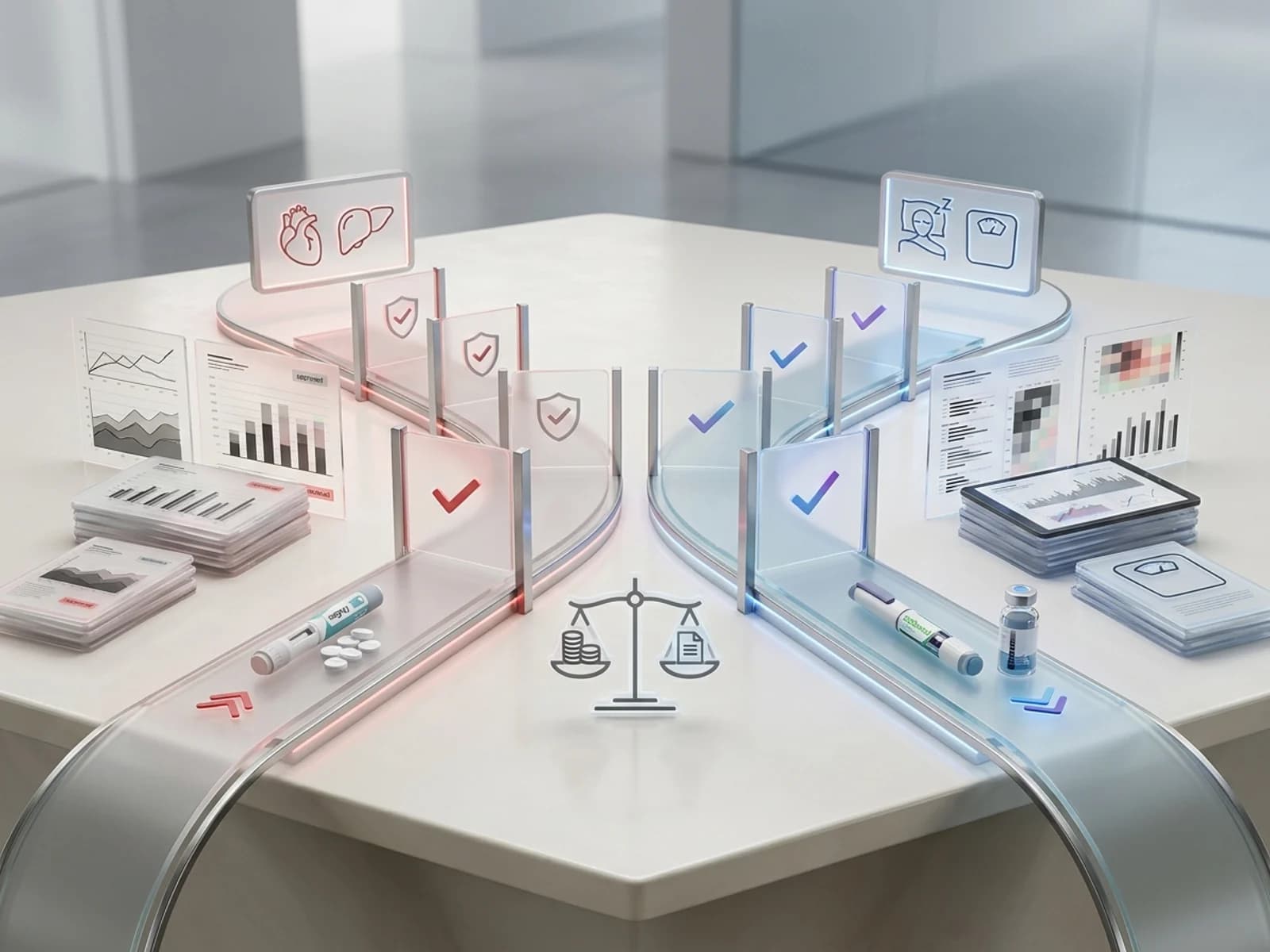
Zepbound (tirzepatide injection) is a dual GIP and GLP-1 receptor agonist marketed by Eli Lilly. It is FDA-approved for two indications: chronic weight management in adults with obesity (BMI ≥30) or overweight (BMI ≥27) with at least one weight-related comorbid condition, and treatment of moderate-to-severe obstructive sleep apnea (OSA) in adults with obesity (approved December 2024). These indications are supported by the SURMOUNT clinical trial program, including SURMOUNT-1, SURMOUNT-2, SURMOUNT-3, SURMOUNT-4, and SURMOUNT-OSA.
Coverage is significantly more restricted than for its diabetes counterpart Mounjaro. CVS Caremark removed Zepbound from its standard commercial formulary effective July 1, 2025, affecting an estimated 25–30 million individuals. Other PBMs may follow similar moves at plan-year renewal. Where Zepbound remains covered, plans require prior authorization and enforce strict BMI documentation, comorbidity requirements, and step-therapy criteria.
This guide explains the coverage structure, prior authorization requirements, the obstructive sleep apnea pathway, cost-sharing, and savings programs that access teams and prescribers need to understand.
Who this is for
Pharmacy access teams, managed care liaisons, prior authorization coordinators, and healthcare providers who prescribe Zepbound and need to understand payer coverage, documentation requirements, and appeal pathways.
FDA-approved indications that drive coverage
Zepbound has two FDA-approved indications. Coverage depends on which indication is documented and whether the plan covers weight management medications.
| Indication | Key trial | Approval year |
|---|---|---|
| Chronic weight management in adults with BMI ≥30, or BMI ≥27 with at least one weight-related comorbidity | SURMOUNT-1, SURMOUNT-2 | 2023 |
| Moderate-to-severe OSA in adults with obesity (BMI ≥30) | SURMOUNT-OSA | 2024 |
Zepbound contains tirzepatide, the same active ingredient as Mounjaro. It should not be used with other tirzepatide-containing products or any GLP-1 receptor agonist.
Key label information
Mechanism: Dual GIP receptor and GLP-1 receptor agonist
Dosing: Start 2.5 mg weekly for 4 weeks, titrate by 2.5 mg every 4 weeks as tolerated; maintenance dose 5, 10, or 15 mg weekly
Boxed warning: Risk of thyroid C-cell tumors; contraindicated in patients with personal or family history of MTC or MEN 2
Formulations: Single-dose prefilled pen and single-dose vial (2.5, 5, 7.5, 10, 12.5, 15 mg/0.5 mL)
The OSA indication and its coverage implications
The December 2024 FDA approval of Zepbound for moderate-to-severe OSA in adults with obesity created a new coverage pathway distinct from weight management alone. The OSA indication requires:
BMI ≥30 kg/m²
Moderate-to-severe OSA confirmed by sleep study (AHI ≥15 events per hour)
Used in combination with reduced-calorie diet and increased physical activity
Some insurers, including UnitedHealthcare, have established separate PA criteria for the OSA indication. UHC's program (effective March 1, 2026) covers Zepbound for OSA when the patient is ≥18 years old, has BMI ≥30, has documented moderate-to-severe OSA with AHI >15, and does not have a diagnosis of diabetes or HbA1c >6.5%. Initial authorization is 6 months; after 52 weeks of continuous therapy, 12-month authorizations are available.
FEP Blue (Federal Employee Program) covers Zepbound under its pharmacy benefit with prior authorization requiring documented BMI ≥30, at least one comorbidity for BMI 27–29.9, and trial of preferred products.
Commercial insurance coverage
Formulary placement
Zepbound's formulary position is more precarious than Mounjaro's. Several major PBMs have either removed or restricted access.
| PBM / Insurer | Formulary status (2026) | Key details |
|---|---|---|
| CVS Caremark | Removed from standard formulary (July 2025) | Wegovy became preferred GLP-1; formulary exception possible with clinical justification |
| Express Scripts | Coverage depends on employer/plan sponsor | Sponsor-driven coverage decisions; PA required |
| OptumRx | Varies by plan | PA required; step therapy may apply |
| Cigna | Varies by plan | PA required; favors OSA indication for approval |
| Blue Cross Blue Shield | Varies widely by state affiliate | Many BCBS plans exclude weight-loss GLP-1s, though some employer-sponsored plans include coverage |
| Humana | Generally excludes weight-loss GLP-1s | Including for OSA in standard plans |
| UnitedHealthcare | Covered for OSA pathway | Non-formulary for weight management; OSA-specific PA criteria (Program 2025 P 1475-2) |
Typical commercial cost-sharing where covered:
| Tier | Typical monthly copay | Notes |
|---|---|---|
| Preferred specialty (Tier 3) | $25–$75 | Rare for weight management indication |
| Non-preferred specialty (Tier 4) | $100–$300+ | Coinsurance may apply; percentage of list price |
Prior authorization
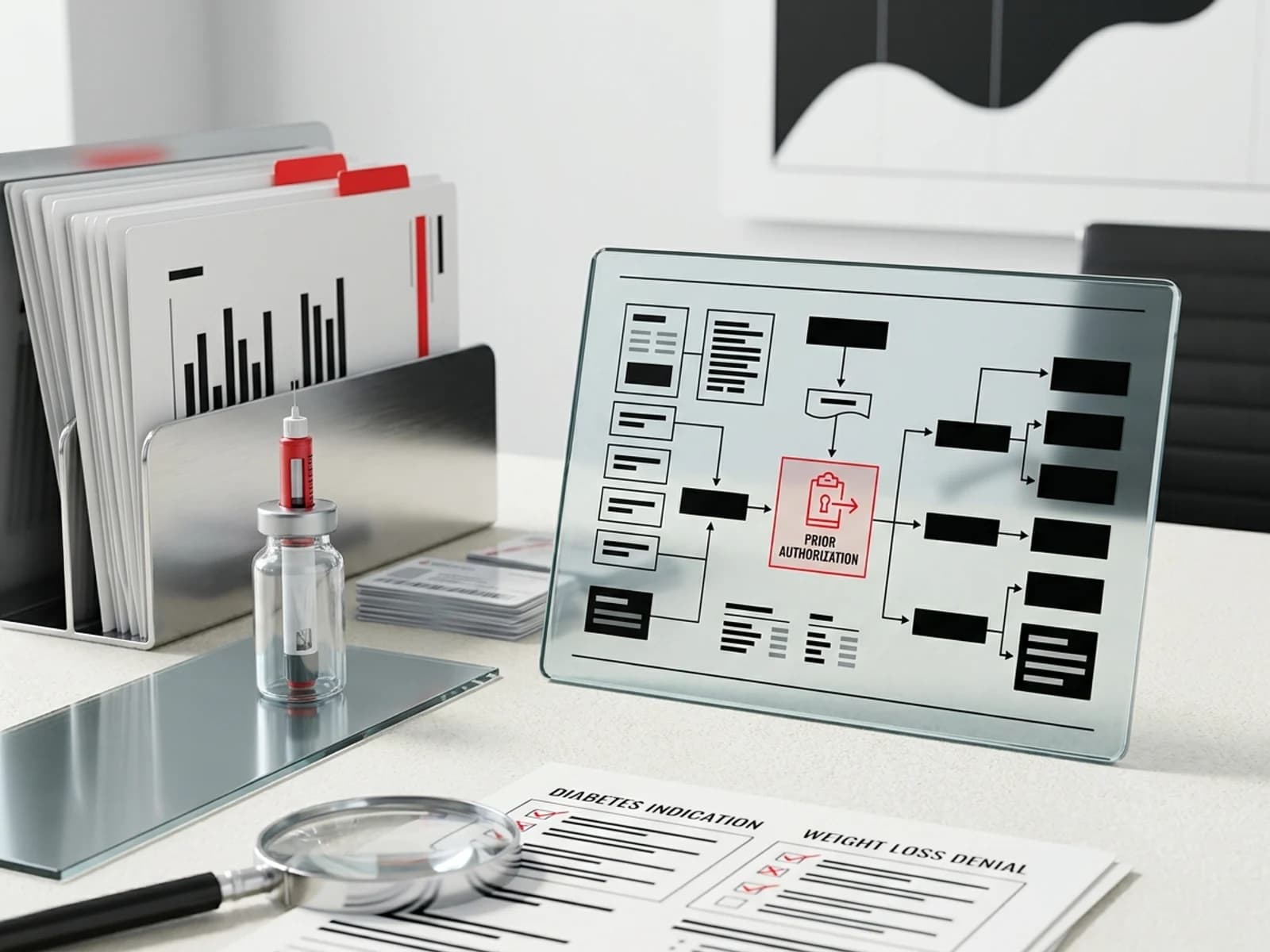
Where Zepbound is covered, prior authorization is required. Typical PA criteria include:
BMI documentation — recent height/weight with calculated BMI ≥30, or BMI ≥27 with documented comorbidity (hypertension, type 2 diabetes, dyslipidemia, OSA, cardiovascular disease).
Comorbidity documentation — for BMI 27–29.9, at least one qualifying comorbidity must be documented with ICD-10 codes.
Structured lifestyle modification — evidence of 3–6 months of documented diet, exercise, and behavioral effort before initiating medication.
Step therapy — many plans require trial and failure of preferred products before covering Zepbound. Pennsylvania Medicaid (effective January 2026) requires documented failure of Ozempic, Wegovy, and Mounjaro before Zepbound is approved.
OSA-specific pathway — for the sleep apnea indication, plans typically require a sleep study confirming AHI ≥15 events per hour, BMI ≥30, and no concurrent diabetes diagnosis.
Quantity limits — one pen per month (four weekly doses).
The CVS Caremark removal
CVS Caremark's removal of Zepbound from its standard commercial formulary effective July 1, 2025 was a significant coverage shift. Patients with CVS Caremark-administered plans have three options:
Switch to Wegovy (semaglutide) — a different molecule with GLP-1-only mechanism, but a real option many patients tolerate.
Request a formulary exception for Zepbound with clinical justification (documented Wegovy failure, contraindication to semaglutide, or documented superior tirzepatide response).
Use a self-pay or cash-pay route outside insurance.
Other PBMs may follow similar formulary moves at their next renewal cycle.
Medicare Part D coverage
Medicare Part D excludes drugs used for weight loss. Zepbound is not covered for its weight management indication under standard Part D rules.
However, the OSA indication creates a potential coverage pathway:
OSA coverage: Some Part D plans may cover Zepbound when prescribed for moderate-to-severe OSA in adults with obesity, as this is not purely a "weight loss" indication. Coverage depends on the specific plan's formulary and PA criteria.
Weight management: Not covered under current CMS rules.
Key points for Medicare beneficiaries:
IRA negotiation: Zepbound was not selected for IRA price negotiations in the first two rounds.
Part D cost-sharing: Under the Inflation Reduction Act, the annual out-of-pocket cap is $2,100 in 2026.
Medicaid coverage
Medicaid coverage for Zepbound varies significantly by state:
| State category | Coverage status |
|---|---|
| Covers Zepbound for weight loss with PA | Approximately 13 states as of January 2026 (e.g., New York, California, Massachusetts, Minnesota) |
| Covers for OSA pathway | Some states cover for OSA with sleep study documentation and BMI criteria (e.g., Kentucky) |
| Covers with strict step therapy | Many states require failure of all other GLP-1s first (e.g., Pennsylvania) |
| No weight loss medication coverage | Texas, Florida, Georgia, Tennessee, Alabama, and others exclude all drugs prescribed primarily for weight loss |
Texas Medicaid developed a mandatory clinical PA criteria proposal for Zepbound for OSA, presented to the Drug Utilization Review Board in April 2025.
Savings and assistance programs
| Program | Monthly cost | Eligibility |
|---|---|---|
| Zepbound Savings Card (commercial) | As little as $25/month | Commercially insured patients; not available for government beneficiaries |
| LillyDirect Self-Pay Pharmacy | Starting at $349/month (2.5 mg), $499/month (5–15 mg) | Uninsured or cash-pay patients ordering through LillyDirect |
| Zepbound KwikPen (self-pay) | Lower-cost option available | Patients accessing through the single-use pen format |
The Zepbound savings card can be activated by visiting Zepbound.lilly.com/savings or asking your healthcare provider.
The Medicare GLP-1 Bridge (July 2026)
On May 7, 2026, CMS announced the Medicare GLP-1 Bridge, a temporary program running from July 1, 2026 through December 31, 2027. The program provides eligible Medicare Part D beneficiaries access to GLP-1 medications for a $50 monthly copay. Zepbound KwikPen is an eligible drug under the Bridge program.
Eligibility criteria require a diagnosis of obesity or overweight with qualifying conditions (heart failure, chronic kidney disease, prediabetes, prior heart attack, prior stroke, or symptomatic peripheral artery disease). Coverage requires a provider prescription, prior authorization, and CMS eligibility verification.
What to monitor
Formulary shifts: CVS Caremark's removal of Zepbound may signal broader PBM moves. Monitor plan formulary updates during open enrollment.
OSA coverage expansion: The OSA indication is creating new coverage pathways as insurers develop specific PA criteria. Monitor individual plan policy updates.
Medicare GLP-1 Bridge rollout: Zepbound KwikPen is included in the Bridge program starting July 2026. Monitor CMS guidance on eligible populations and participating plans.
BALANCE Model: Both Novo Nordisk and Lilly have agreed to participate in the CMS BALANCE Model, with a $245 net price per 30-day supply for all model drugs. The Medicaid portion is proceeding; the Medicare Part D portion has been indefinitely delayed (announced April 2026), and the Medicare GLP-1 Bridge has been extended through December 31, 2027.
IRA price negotiation: Semaglutide (Ozempic, Wegovy) was selected for the second round of Medicare drug price negotiations with prices effective 2027. Tirzepatide may be selected in future rounds.
State Medicaid policy changes: Several states have coverage pending or under review (Virginia, North Carolina, Arizona, Colorado as of early 2026).
Sources
FDA, Zepbound prescribing information: https://www.accessdata.fda.gov/drugsatfda_docs/label/2026/217806s002lbl.pdf
FDA, Zepbound approval for OSA (press release, December 20, 2024): https://www.fda.gov/news-events/press-announcements/fda-approves-first-medication-obstructive-sleep-apnea
Eli Lilly, Zepbound OSA approval announcement: https://www.prnewswire.com/news-releases/fda-approves-zepbound-tirzepatide-as-the-first-and-only-prescription-medicine-for-moderate-to-severe-obstructive-sleep-apnea-in-adults-with-obesity-302337722.html
AASM, Zepbound provider fact sheet: https://aasm.org/wp-content/uploads/2026/04/ProviderFS_Zepbound_2026-DIGITAL-2.pdf
UHC, Zepbound OSA PA criteria (Program 2025 P 1475-2): https://www.uhcprovider.com/content/dam/provider/docs/public/prior-auth/drugs-pharmacy/commercial/r-z/PA-Non-Formulary-Zepbound.pdf
FEP Blue, Zepbound pharmacy policy (effective January 1, 2026): https://www.fepblue.org/-/media/PDFs/Medical-Policies/2026/January/Pharmacy-Policies/Add-New/599031-Zepbound-tirzepatide.pdf
Pennsylvania DHS, Medical Assistance Bulletin (GLP-1 PA criteria, January 2026): https://www.pa.gov/content/dam/copapwp-pagov/en/dhs/documents/docs/publications/documents/forms-and-pubs-omap/mab2025112403.pdf
KFF, BALANCE Model for GLP-1s: https://www.kff.org/medicare/what-to-know-about-the-balance-model-for-glp-1s-in-medicare-and-medicaid/
CMS, Medicare GLP-1 Bridge: https://www.cms.gov/medicare/coverage/prescription-drug-coverage/medicare-glp-1-bridge
Drugs.com, Tirzepatide prescribing information: https://www.drugs.com/tirzepatide.html
Noom, Does insurance cover tirzepatide (2026): https://www.noom.com/blog/weight-management/does-insurance-cover-tirzepatide/