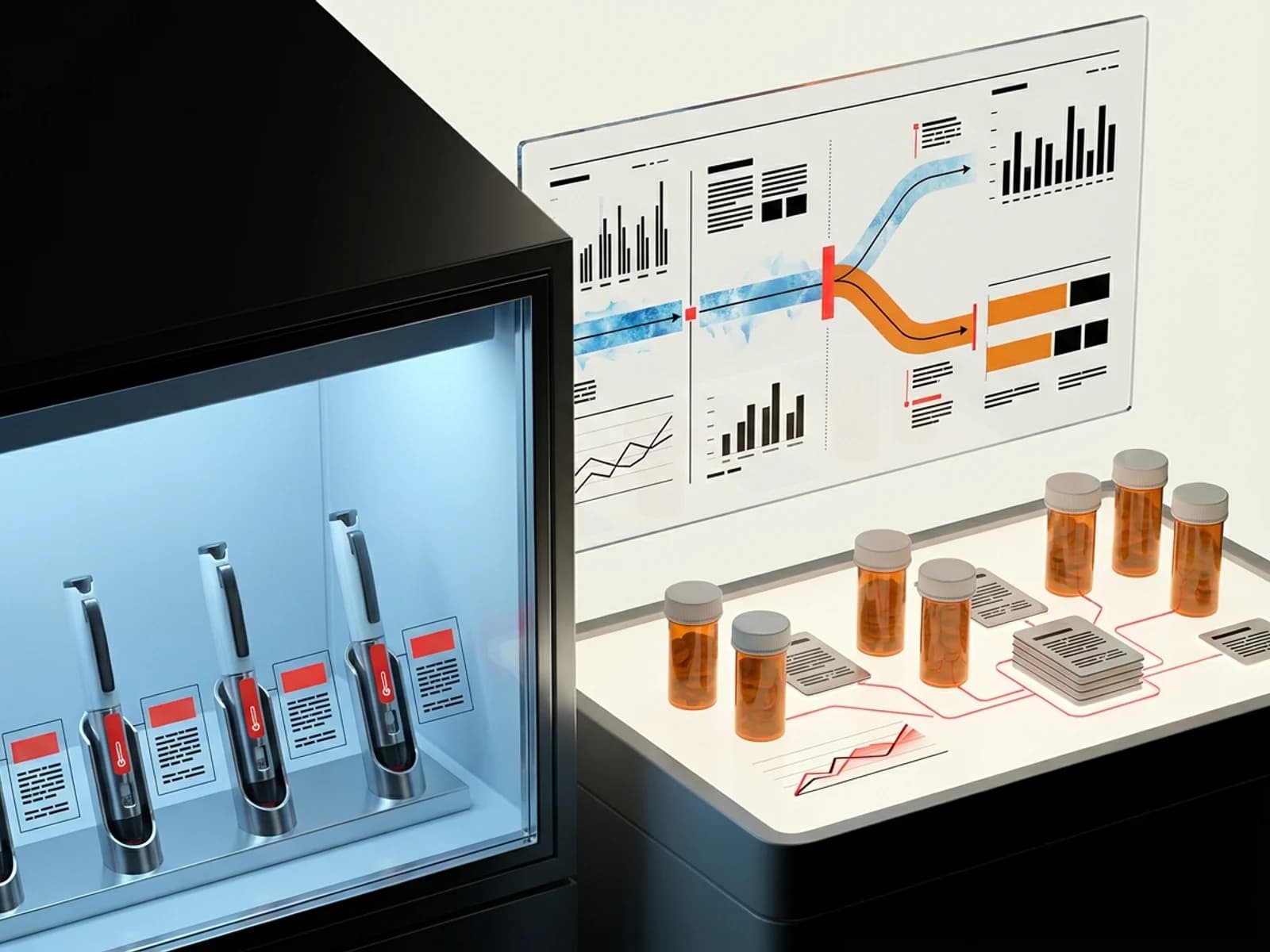
AstraZeneca (AZ) is navigating one of the most critical inflection points in its modern corporate history. As of mid-2026, the company is experiencing active U.S. generic erosion for its largest revenue-generating asset, the cardiovascular-renal-metabolic (CVRM) blockbuster Farxiga (dapagliflozin), which achieved global sales exceeding $8.4 billion in FY2025. This loss of exclusivity represents a substantial threat, but it is not occurring in a vacuum. Under a deliberate, multi-year commercial strategy, AstraZeneca is attempting to offset Farxiga's decline by shifting volume onto its high-margin oncology franchise—anchored by the antibody-drug conjugate (ADC) Enhertu and the PD-L1 inhibitor Imfinzi—and by converting patients from the rare-disease blockbuster Soliris to the longer-acting, patent-protected Ultomiris.
This portfolio dossier provides an in-depth commercial, financial, and regulatory analysis of AstraZeneca's product positioning as of July 2026. Written for market-access managers, pharmacy directors, P&T committees, and biopharma analysts, this document details how the company's patent cliffs, pricing strategies, and pipeline assets intersect with payer formulary designs, prior-authorization (PA) criteria, and specialty drug management workflows. Every claim and metric cited is verified against primary sources, including the FDA Orange Book, the FDA Purple Book, the CMS National Average Drug Acquisition Cost (NADAC) database, and AstraZeneca's official FY2025 and Q1 2026 financial disclosures. For broader context on patent expiration timelines, see the 2026-2032 patent cliff by the numbers. For comparisons with peer portfolios, see the BMS portfolio dossier and the Merck portfolio dossier.
How big is AstraZeneca's FY2025 portfolio and which 16 drugs are blockbusters?
AstraZeneca's commercial engine is highly diversified, spanning oncology, CVRM, respiratory and immunology (R&I), vaccines and immune therapies (V&I), and rare disease. In FY2025, AstraZeneca's total revenue reached $58.74 billion, representing a 9% increase (8% in Constant Exchange Rate, or CER) compared to the previous year. Product sales accounted for $55.57 billion of this total, with core earnings per share (EPS) reported at $9.16.
A key strength of the AstraZeneca portfolio is its high density of blockbuster assets. In the FY2025 results, AstraZeneca reported 16 blockbuster medicines (products generating over $1 billion in annual global sales). The table below lists the flagship franchise anchors by therapeutic area, showing their FY2025 revenues (growth at constant exchange rates, CER) and exclusivity posture:
| Brand Name | Generic/Proper Name | FY2025 Global Revenue | Therapeutic Area | Primary Exclusivity Mechanism |
|---|---|---|---|---|
| Farxiga / Forxiga | dapagliflozin | $8,405M (+9% CER) | CVRM | Active U.S. generic entry (April 2026); HF/CKD method patents to 2029–2037 |
| Tagrisso | osimertinib | $7,254M (+10% CER) | Oncology (NSCLC) | 34 Orange Book patents (method patents to 2042) |
| Imfinzi | durvalumab | $6,063M (+28% CER) | Oncology (PD-L1) | Biologic exclusivity (BLA 761069) |
| Ultomiris | ravulizumab-cwvz | $4,718M (+19% CER) | Rare Disease | Biologic exclusivity (BLA 761108); no biosimilar |
| Calquence | acalabrutinib | $3,518M (+12% CER) | Oncology (BTK) | Orange Book patent wall (to July 2036) |
| Lynparza | olaparib | $3,279M (+6% CER) | Oncology (PARP) | Composition patents expire 2028–2031 |
| Symbicort | budesonide/formoterol | $2,885M (flat CER) | Respiratory (R&I) | Generic competition; authorized-generic channel |
| Enhertu (AZ share)* | fam-trastuzumab deruxtecan-nxki | $2,775M (+40% CER) | Oncology (HER2 ADC) | Biologic exclusivity (BLA 761139); RPE to 2031 |
| Fasenra | benralizumab | $1,981M (+16% CER) | Respiratory (R&I) | Biologic exclusivity (BLA 761070) |
| Tezspire (combined)** | tezepelumab-ekko | ~$1,936M combined (+64% CER) | Respiratory (R&I) | Biologic exclusivity; Amgen alliance |
| Soliris | eculizumab | $1,837M (−28% CER) | Rare Disease | Active biosimilar competition (Bkemv/Epysqli) |
| Strensiq | asfotase alfa | $1,678M (+18% CER) | Rare Disease | Biologic exclusivity |
| Crestor | rosuvastatin calcium | $1,218M (+6% CER) | CVRM | Mature multi-source generic market |
| Breztri | budesonide/glycopyrronium/formoterol | $1,199M (+22% CER) | Respiratory (R&I) | Biologic exclusivity |
| Zoladex | goserelin | $1,150M (+6% CER) | Oncology (Prostate) | Mature; nearing loss of exclusivity |
*Note: Combined Enhertu alliance sales (Daiichi Sankyo and AstraZeneca) reached $4,982 million in FY2025 (FY2024: $3,754 million). The table reflects the AstraZeneca-reported share ($2,775 million, +40% CER).
**Note: Combined Tezspire alliance sales (Amgen and AstraZeneca) reached approximately $1,936 million in FY2025 (FY2024: ~$1,182 million), with AstraZeneca recording $673 million of alliance revenue plus ex-U.S. product sales. Tezspire grew 64% at CER in FY2025.
This franchise baseline shows the concentration of risk within CVRM and Rare Disease. Farxiga and Soliris together represented about $10.2 billion in FY2025 sales (roughly 17% of AstraZeneca's total revenue), and both are in active erosion—Farxiga to U.S. generics and Soliris to biosimilars plus conversion to Ultomiris. The simultaneous decline of these two franchises demands rapid growth from the oncology portfolio (Tagrisso, Imfinzi, Calquence, and Enhertu) and the successful defense of the rare-disease segment via Ultomiris.
Why did US generic Farxiga launch in April 2026 and what is the NADAC brand-vs-generic spread?
Farxiga (dapagliflozin, NDA 202293, approved January 8, 2014) is a sodium-glucose cotransporter 2 (SGLT2) inhibitor indicated to improve glycemic control in adults with type 2 diabetes (T2D), and to reduce the risk of cardiovascular death and hospitalization in patients with heart failure (HF) and chronic kidney disease (CKD).
The U.S. patent exclusivity for Farxiga reached a critical milestone on April 4, 2026, when the base compound patent (US 6,515,117) and its associated pediatric exclusivity (PED) extension expired. Following this expiration, the FDA approved the first generic dapagliflozin tablets on April 6–7, 2026, and by the July 8, 2026 Orange Book snapshot 27 generic applications (ANDAs spanning roughly 211156–211595) had received final approval.
Approved Generic Dapagliflozin Applicants
The July 8, 2026 Orange Book snapshot lists approved generic dapagliflozin applications from major global manufacturers, including Sandoz, Teva, Lupin, Aurobindo, Sun Pharma, Zydus, Cipla, Ajanta, Alkem, Glenmark, Macleods, Micro Labs, MSN, and Aizant, alongside an authorized generic. This multi-source approval triggered immediate and deep price erosion, typical of a highly competitive generic launch wave.
NADAC Price Spread Analysis
According to the CMS National Average Drug Acquisition Cost (NADAC) database (snapshot dated July 8, 2026), the pricing spread between the brand and the generic alternatives is stark:
Brand Farxiga 10 mg: The WAC and retail pharmacy acquisition cost remains high, averaging $11.49736 per unit (tablet), or approximately $344.92 for a standard 30-day supply (30 tablets).
Generic Dapagliflozin 10 mg: The generic average unit price has dropped to a floor of $0.20494 per unit, or approximately $6.15 for a 30-day supply.
This represents a 98.2% discount relative to the brand-name drug within three months of the generic launch. For commercial insurers and PBMs, this price spread makes generic substitution immediate and mandatory for standard type 2 diabetes patient profiles.
The Indication-Moat: Heart Failure, CKD, and the Carve-Out
Although generic dapagliflozin launched quickly, AstraZeneca retains a partial legal and clinical defense around its dedicated heart-failure and kidney-disease franchises. The FDA-approved generic labels mirror the brand's original type-2-diabetes (T2D) label—glycemic control, plus reduction of the risk of hospitalization for heart failure in adults with T2D and established cardiovascular disease or multiple cardiovascular risk factors. The generic labels do not carry the standalone heart-failure indication (the DAPA-HF population, adults with heart failure regardless of diabetes) or the chronic kidney-disease indication (DAPA-CKD), nor the pediatric T2D indication, all of which remain brand-only.
This carve-out exists because the base composition patent expired in April 2026, but the FDA Orange Book lists method-of-use patents and exclusivities for Farxiga that extend much further:
Heart Failure Method Patent (US 8,791,077): listed with expiry into October 2029 (including PED).
Chronic Kidney Disease Method Patent (US 9,757,404): listed into 2035.
Cardiovascular / Heart Failure Method Patent (US 10,973,836): listed into 2040.
Under the Hatch-Waxman Act, a Section viii "carve-out" lets generic developers omit these still-protected indications. This leaves a genuine, if narrower, administrative seam for payers:
Prior Authorization (PA) and Diagnosis Alignment: Because the generic label is silent on dedicated heart-failure and CKD treatment, payers managing patients whose primary diagnosis is HF or CKD (rather than T2D with cardiovascular risk) often continue to route those claims to brand Farxiga, where the indication is explicitly labeled. ePA logic keyed to a primary HF or CKD diagnosis can therefore continue to favor the brand in the cardiorenal segment.
Substitution and Liability Rules: In states where pharmacy auto-substitution rules are tied to labeled indications, a prescription written explicitly for HF or CKD may not be auto-substitutable to the generic, reinforcing brand retention in those disease states.
This carved-out cardiorenal franchise—protected by method patents into the late 2020s and 2030s—lets AstraZeneca preserve a meaningful share of brand Farxiga revenue in heart failure and CKD, even as the broader type-2-diabetes segment undergoes rapid generic erosion.
Which AstraZeneca drugs still have deep US Orange Book patent walls (Tagrisso, Calquence, Enhertu, Datroway)?
To defend its overall revenue, AstraZeneca relies on deep patent walls around its flagship oncology assets. The FDA Orange Book highlights how these oncology drugs are protected against biosimilar or generic entry:
1. Tagrisso (osimertinib) — NSCLC Blockbuster
Tagrisso (NDA 208065) generated $7,254 million in FY2025. It is protected by 34 patents in the U.S. Orange Book:
Core Molecule Exclusivity: The basic compound patent (US 8,946,235) expired in 2025, but AstraZeneca has built a defensive wall using formulation, crystalline form, and method-of-use patents.
Method Exclusivity: US patent 11,219,622 (covering the treatment of EGFR mutation-positive NSCLC with osimertinib) does not expire until November 26, 2042 (with PED).
Orphan Drug Exclusivity (ODE-337): Grants exclusive marketing rights for the adjuvant treatment of adult patients after tumor resection in EGFRm NSCLC until December 18, 2027.
Clinical Barrier: Any generic manufacturer attempting to launch osimertinib before 2042 must litigate or settle around these 34 patents.
2. Calquence (acalabrutinib) — BTK Inhibitor
Calquence (NDA 210259) achieved global sales of $3,518 million in FY2025. Its patent wall is robust, consisting of formulation and method patents that extend to July 1, 2036 (including US patents 9,796,721 and 11,059,829, which cover the treatment of mantle cell lymphoma and chronic lymphocytic leukemia). Generic entry is unlikely before mid-2036.
3. Enhertu (fam-trastuzumab deruxtecan) — HER2 ADC Platform
Enhertu (BLA 761139) is co-developed with Daiichi Sankyo. As a complex biologic (an antibody-drug conjugate), Enhertu is not listed in the Orange Book; instead, it is listed in the FDA Purple Book. Under the Biologics Price Competition and Innovation Act (BPCIA), Enhertu is protected by:
Reference Product Exclusivity: 12 years of regulatory exclusivity in the U.S. from its initial approval date, protecting it from biosimilar competition under the 351(k) pathway until December 20, 2031.
Manufacturing Complexity: Replicating the monoclonal antibody, the cleavable linker, and the topoisomerase I inhibitor payload requires complex CMC (Chemistry, Manufacturing, and Controls) processes, creating a high barrier to entry for biosimilars.
4. Datroway (datopotamab deruxtecan-dlnk) — TROP2 ADC
Datroway (BLA 761394) is a TROP2-directed ADC co-developed with Daiichi Sankyo. The FDA first approved Datroway on January 17, 2025, for adults with unresectable or metastatic hormone receptor (HR)-positive, HER2-negative breast cancer previously treated with endocrine-based therapy and chemotherapy (TROPION-Breast01); subsequent approvals have since extended its use into previously treated EGFR-mutated non-small cell lung cancer (2025) and first-line metastatic triple-negative breast cancer (2026). Datroway is protected by U.S. biologic reference product exclusivity for 12 years from first licensure (through January 17, 2037), establishing a long-term oncology growth engine insulated from biosimilar competition.
Orange Book Patent and Exclusivity Timelines (U.S.)
| Drug Brand | NDA/BLA | Active OB Patents | Latest Exclusivity / Patent Expiry | Exclusivity Type |
|---|---|---|---|---|
| Farxiga | NDA 202293 | 62 | October 24, 2041 | PED (Method of Use) |
| Tagrisso | NDA 208065 | 34 | November 26, 2042 | PED (Method of Use) |
| Calquence | NDA 210259 | 15 | July 1, 2036 | Patent (CLL Treatment) |
| Lynparza | NDA 206162 | 22 | March 12, 2031 | Patent (BRCA Treatment) |
| Lokelma | NDA 207078 | 8 | March 10, 2032 | Patent (Formulation) |
| Truqap | NDA 218197 | 6 | November 16, 2038 | Patent (PIK3CA/AKT) |
| Baxfendy | NDA (approved 2026) | Formulation / method | NCE to May 2031; patent to Feb 2033 | NCE + Patent |
How is AstraZeneca defending the Soliris biosimilar cliff with Ultomiris?
Soliris (eculizumab, BLA 125166, approved March 16, 2007) is a humanized monoclonal antibody targeting complement protein C5, indicated for paroxysmal nocturnal hemoglobinuria (PNH), atypical hemolytic uremic syndrome (aHUS), generalized myasthenia gravis (gMG), and neuromyelitis optica spectrum disorder (NMOSD). In FY2025, Soliris generated $1,837 million in global sales, down 28% at CER—a decline AstraZeneca attributes to conversion of patients to Ultomiris across all indications, plus biosimilar and competitive pressure in gMG, PNH, and aHUS.
Because Soliris is a mature biologic, its core patents have expired, and it now faces active biosimilar competition in the U.S. under the 351(k) biologic pathway.
Soliris Biosimilar Competitors (Purple Book)
The FDA Purple Book (snapshot dated July 8, 2026) lists two approved biosimilars for eculizumab:
Bkemv (eculizumab-aeeb, BLA 761333): Developed by Amgen, approved on May 28, 2024, as the first 351(k) Interchangeable biologic for Soliris. Interchangeability allows pharmacists to substitute Bkemv for Soliris without the intervention of the prescribing healthcare provider, subject to state-level laws.
Epysqli (eculizumab-aagh, BLA 761340): Developed by Samsung Bioepis, approved on July 19, 2024, as a 351(k) biosimilar.
The Conversion Strategy: Soliris to Ultomiris
To protect its complement franchise, AstraZeneca has executed a rare-disease lifecycle transition. The centerpiece of this strategy is Ultomiris (ravulizumab-cwvz, BLA 761108), a second-generation C5 inhibitor designed to replace Soliris.
AstraZeneca's defense relies on three primary pillars:
Dosing Convenience: While Soliris requires intravenous infusions every 2 weeks, Ultomiris is formulated with an engineered Fc region that extends its half-life, requiring maintenance infusions only once every 8 weeks. This reduces the patient's infusion burden from 26 clinic visits per year to just 6, creating a strong clinical preference for Ultomiris.
Payer Contracting and Conversion: AstraZeneca has partnered with specialty pharmacies and payers to transition patients from Soliris to Ultomiris. Payers are incentivized to approve Ultomiris because the total cost of administration (including clinic fees, infusion chair time, and nursing hours) is significantly lower than that of Soliris.
Indication Expansion: AstraZeneca has systematically secured FDA approvals for Ultomiris across all of Soliris's key indications (PNH, aHUS, gMG, and NMOSD). This prevents Soliris from retaining a clinical monopoly in niche rare-disease segments.
Ultomiris Protection and Moat
According to the FDA Purple Book, Ultomiris is protected by biologic reference product exclusivity, and its formulation and method patents run into the mid-2030s. Currently, there are no biosimilar applications (351(k)) pending or approved for ravulizumab. By driving ongoing conversion of Soliris patients onto Ultomiris—combined with treatment-naïve uptake in PNH, aHUS, gMG, and NMOSD—AstraZeneca has insulated the bulk of its rare-disease revenue from biosimilar erosion. In FY2025, Ultomiris sales reached $4,718 million (+19% CER), now more than double Soliris ($1,837 million), establishing a durable complement franchise that also includes the add-on factor-D inhibitor Voydeya for the subset of PNH patients with clinically significant extravascular hemolysis.
What does the Q1 2026 revenue trend show about the cliff and the growth engine?
The financial reports for the first quarter of 2026 (released by AstraZeneca on April 29, 2026) show that the patent cliffs and the growth engines are actively reshaping the company's revenue profile. The table below compares the Q1 2026 revenues of key products against their historical performance, demonstrating the impact of generic and biosimilar competition:
| Brand Name | Q1 2026 Revenue | Q1 2026 Growth (CER) | FY2025 Revenue | FY2025 Growth (CER) | Commercial Analysis & Trend |
|---|---|---|---|---|---|
| Farxiga | $2,193M | −2% | $8,405M | +9% | Q1 2026 was pre-generic; the dip reflects the IRA Medicare-negotiated price effective January 2026, ahead of the April 6, 2026 generic launch. |
| Brilinta | $105M | −67% | $823M | −38% | Generic ticagrelor (entry from Q2 2025) has reduced the franchise to a residual revenue stream. |
| Soliris | $389M | −14% | $1,837M | −28% | Conversion to Ultomiris plus biosimilar pressure (Bkemv, Epysqli) driving declines. |
| Ultomiris | $1,270M | +18% | $4,718M | +19% | Treatment-naïve uptake plus Soliris conversion across PNH, aHUS, gMG, and NMOSD. |
| Imfinzi | $1,694M | +30% | $6,063M | +28% | Oncology growth from expansion in lung, biliary tract, and other indications. |
| Enhertu (AZ)* | $831M | +34% | $2,775M | +40% | Rapid uptake in HER2-low and ultralow breast cancer; a primary growth engine. |
| Tezspire (AZ)** | $303M | +34% | $1,131M | +64% | Severe-asthma biologic expanding into chronic rhinosinusitis with nasal polyps. |
| Tagrisso | $1,833M | +5% | $7,254M | +10% | Steady EGFR NSCLC franchise protected by 34 Orange Book patents. |
*Note: Enhertu combined alliance sales (Daiichi Sankyo + AstraZeneca) reached $1,422 million in Q1 2026 (+34% CER; Q1 2025: $1,086m); full-year FY2025 combined sales were $4,982 million. The table shows the AstraZeneca-reported share.
**Note: Tezspire combined alliance sales (Amgen + AstraZeneca) reached $493 million in Q1 2026 (Q1 2025: $371m); FY2025 combined sales were approximately $1,936 million. The table shows AstraZeneca's ex-U.S. product revenue.
Key Financial Insights from Q1 2026
The CVRM Cliff Is Real: Brilinta fell 67% at CER in Q1 2026, and the 2% Farxiga decline was driven by the IRA Medicare-negotiated price (effective January 2026) since the quarter ended before the April 6 generic launch—generic erosion hits from Q2 2026 onward. AstraZeneca's traditional cardiovascular base is contracting on schedule.
Oncology Is the Engine: Oncology product revenue grew by double digits in Q1 2026, led by Enhertu (+34%) and Imfinzi (+30%). Together, Tagrisso, Imfinzi, and Enhertu generated $4,358 million in Q1 2026, comfortably exceeding the combined revenue of the eroding CVRM and rare-disease assets (Farxiga, Brilinta, and Soliris totaled $2,687 million).
Rare Disease Defense Is Working: The 18% growth of Ultomiris ($1,270 million) more than offset the 14% decline in Soliris ($389 million), demonstrating that the complement-conversion strategy is holding segment revenue even as biosimilars take share from Soliris.
What is the late-stage pipeline replacing Farxiga/Brilinta (Datroway, Truqap, Baxfendy, Wainua)?
AstraZeneca's pipeline contains 186 active projects, including 21 new molecular entities (NMEs) in late-stage development (Phase III or under regulatory review) and 4 NMEs currently under active FDA review. To replace the revenue lost to the Farxiga and Brilinta cliffs, AstraZeneca is counting on several newly approved or near-launch assets:
1. Datroway (datopotamab deruxtecan) — TROP2 ADC
Approved by the FDA on January 17, 2025, for patients with unresectable or metastatic hormone receptor-positive, HER2-negative (HR+/HER2-) breast cancer who have received prior endocrine therapy. As a targeted therapy, Datroway is designed to capture market share in oncology settings, building on the success of Enhertu. Payers are managing Datroway under the medical benefit (buy-and-bill), requiring prior authorization to confirm TROP2 expression and HER2-negative status.
2. Truqap (capivasertib) — AKT Inhibitor
Truqap (NDA 218197, approved November 17, 2023) is a first-in-class AKT inhibitor indicated in combination with fulvestrant for adult patients with HR+/HER2- locally advanced or metastatic breast cancer harboring one or more PIK3CA, AKT1, or PTEN alterations.
Access Control: Payers require genetic testing (NGS or PCR) to confirm the PIK3CA/AKT1/PTEN mutation before approving coverage.
Exclusivity: Truqap is protected by 6 Orange Book patents extending to November 16, 2038, providing a long-term oncology revenue stream.
3. Baxfendy (baxdrostat) — Aldosterone Synthase Inhibitor
Baxfendy (baxdrostat) was approved by the FDA on May 18, 2026 as the first-in-class aldosterone synthase inhibitor (ASI), indicated as an add-on to other antihypertensives to lower blood pressure in adults whose hypertension is not adequately controlled. Approval was based on the Phase III BaxHTN trial (published in the New England Journal of Medicine), which showed a placebo-adjusted systolic blood-pressure reduction of 9.8 mmHg at the 2 mg dose in uncontrolled and resistant hypertension. Pharmacy availability began around June 2026, and AstraZeneca has guided a peak-sales potential above $5 billion.
Target Audience: Baxfendy addresses a major unmet need in CVRM—the substantial share of U.S. hypertension patients whose blood pressure remains uncontrolled on two or more antihypertensives—positioning it as a primary-care cardiovascular growth asset as Farxiga erodes.
Exclusivity Moat: Acquired through the 2023 purchase of CinCor Pharma, Baxfendy carries U.S. New Chemical Entity (NCE) exclusivity to May 2031 (five years from approval) and patent protection extending to February 2033, with ongoing Phase III programs in chronic kidney disease and heart failure that could expand the label and extend the franchise.
4. Wainua (eplontersen) — ATTR Polyneuropathy
Wainua (NDA 217388, approved December 21, 2023) is a ligand-conjugated antisense oligonucleotide indicated for the treatment of the polyneuropathy of hereditary transthyretin-mediated amyloidosis (hATTR-PN).
Administration Advantage: Unlike Alnylam's Onpattro (which requires intravenous infusions every 3 weeks), Wainua is administered via an autoinjector for subcutaneous injection once monthly, allowing for convenient self-administration at home.
Specialty Routing: Payers route Wainua through the pharmacy benefit via designated specialty pharmacies, requiring prior authorization to confirm hATTR diagnosis and baseline polyneuropathy staging.
FAQs
When did generic Farxiga (dapagliflozin) launch in the US and how many ANDAs were approved?
Generic dapagliflozin launched in the U.S. on April 6, 2026, following the expiration of Farxiga's base compound patent (US 6,515,117, with pediatric exclusivity) on April 4, 2026. The FDA approved multiple generic applications on April 6–7, 2026, and by the July 8, 2026 Orange Book snapshot 27 generic applications had received final approval, from manufacturers including Sandoz, Teva, Lupin, Aurobindo, Sun Pharma, Cipla, Zydus, and others.
Does the Farxiga generic have the heart failure and CKD indications, or is it a carved-out label?
The generic dapagliflozin labels mirror the brand's original type-2-diabetes-based label—glycemic control, plus reduction of the risk of hospitalization for heart failure in adults with type 2 diabetes and cardiovascular disease or risk factors. The generics do not carry the standalone heart-failure indication (DAPA-HF) or the chronic kidney-disease indication (DAPA-CKD), which remain brand-only behind method-of-use patents in the Orange Book: heart failure (US 8,791,077, into 2029; US 10,973,836, into 2040) and chronic kidney disease (US 9,757,404, into 2035). Patients whose primary diagnosis is dedicated HF or CKD are therefore often still routed to brand Farxiga.
Is Brilinta (ticagrelor) generic in the US and how fast is it eroding?
Yes, Brilinta faces multi-source generic competition in the U.S. (ticagrelor entry began in 2025). Following generic entry, Brilinta sales declined by 38% in FY2025 and fell a further 67% at CER in Q1 2026 to $105 million, demonstrating rapid erosion.
Is there an Ultomiris (ravulizumab) biosimilar?
No, there are currently no approved or pending biosimilar applications (351(k)) for ravulizumab (Ultomiris) in the U.S. Ultomiris is protected by biologic reference product exclusivity, and its formulation and method patents run into the mid-2030s, providing a secure complement-inhibitor franchise for AstraZeneca.
What is AstraZeneca's biggest oncology growth driver after Farxiga?
Enhertu (fam-trastuzumab deruxtecan) is the primary oncology growth driver. Combined alliance sales (Daiichi Sankyo + AstraZeneca) reached $4,982 million in FY2025 and $1,422 million in Q1 2026 (+34% CER), driven by clinical expansion into HER2-low and HER2-ultralow breast cancers.
Sources
AstraZeneca PLC. Full-year and Q4 2025 results announcement. February 10, 2026. AstraZeneca FY2025 Results PDF
AstraZeneca PLC. First quarter 2026 results announcement. April 29, 2026. AstraZeneca Q1 2026 Results PDF
AstraZeneca PLC. Patent Expiries of Key Marketed Products. February 10, 2026. AstraZeneca Patent Expiries PDF
U.S. Food and Drug Administration. Approved Drug Products with Therapeutic Equivalence Evaluations (Orange Book) — dapagliflozin, ticagrelor, and AstraZeneca oncology NDA patent and exclusivity records. Data reviewed July 8, 2026. FDA Orange Book Database
U.S. Food and Drug Administration. Lists of Licensed Biological Products (Purple Book) — Soliris, Bkemv, Epysqli, Ultomiris, Enhertu, and Datroway reference-product exclusivity. Data reviewed July 8, 2026. FDA Purple Book Database
Centers for Medicare & Medicaid Services. National Average Drug Acquisition Cost (NADAC) — brand Farxiga 10 mg versus generic dapagliflozin 10 mg. Data reviewed July 8, 2026. CMS NADAC Pharmacy Pricing
U.S. Food and Drug Administration. FDA Approves First Generic Dapagliflozin Tablets. April 7, 2026. FDA Drug Safety Communication
AstraZeneca PLC. Baxfendy approved in the US as the first and only aldosterone synthase inhibitor treatment for adults with hypertension. May 18, 2026. AstraZeneca Press Release