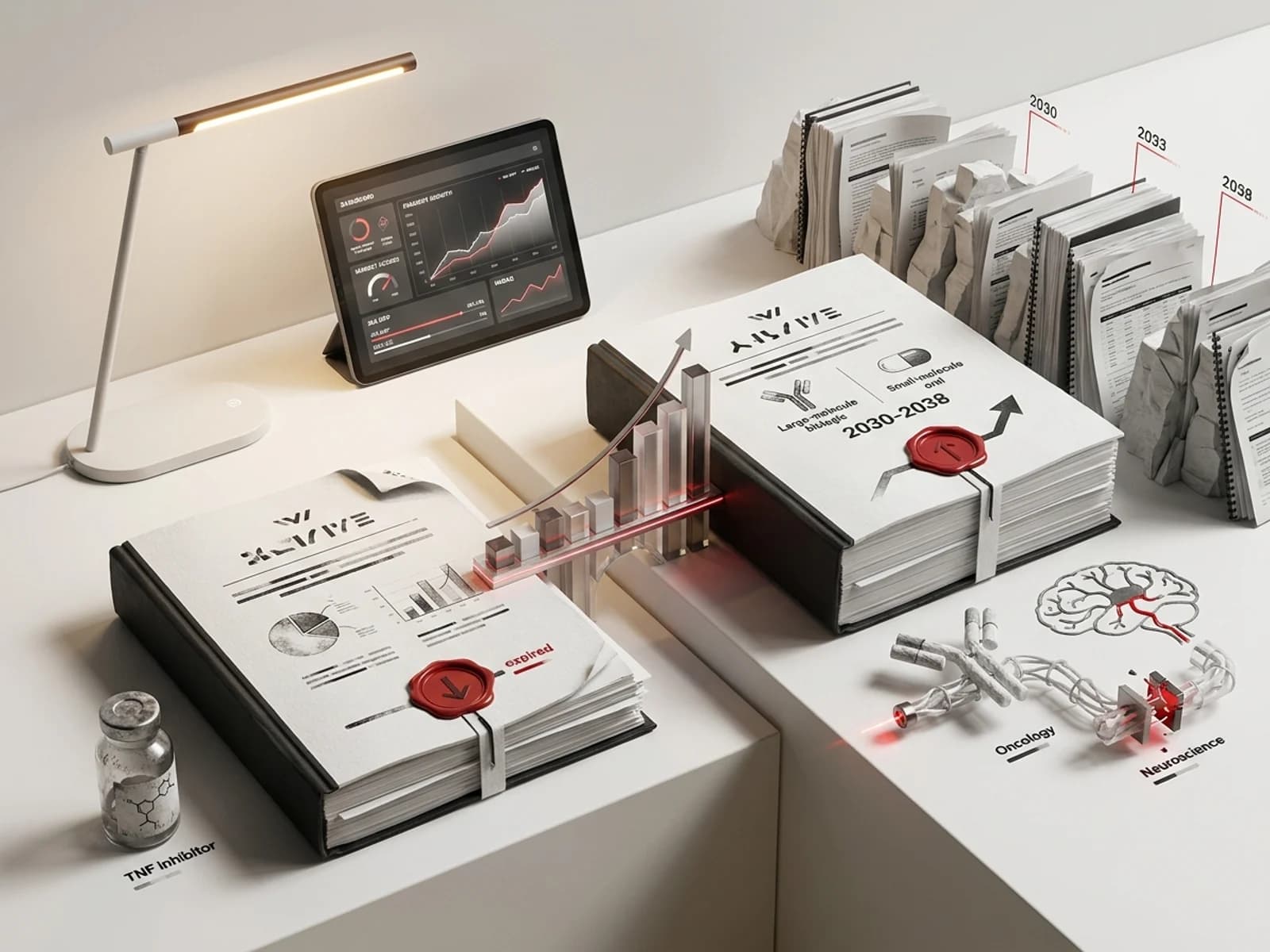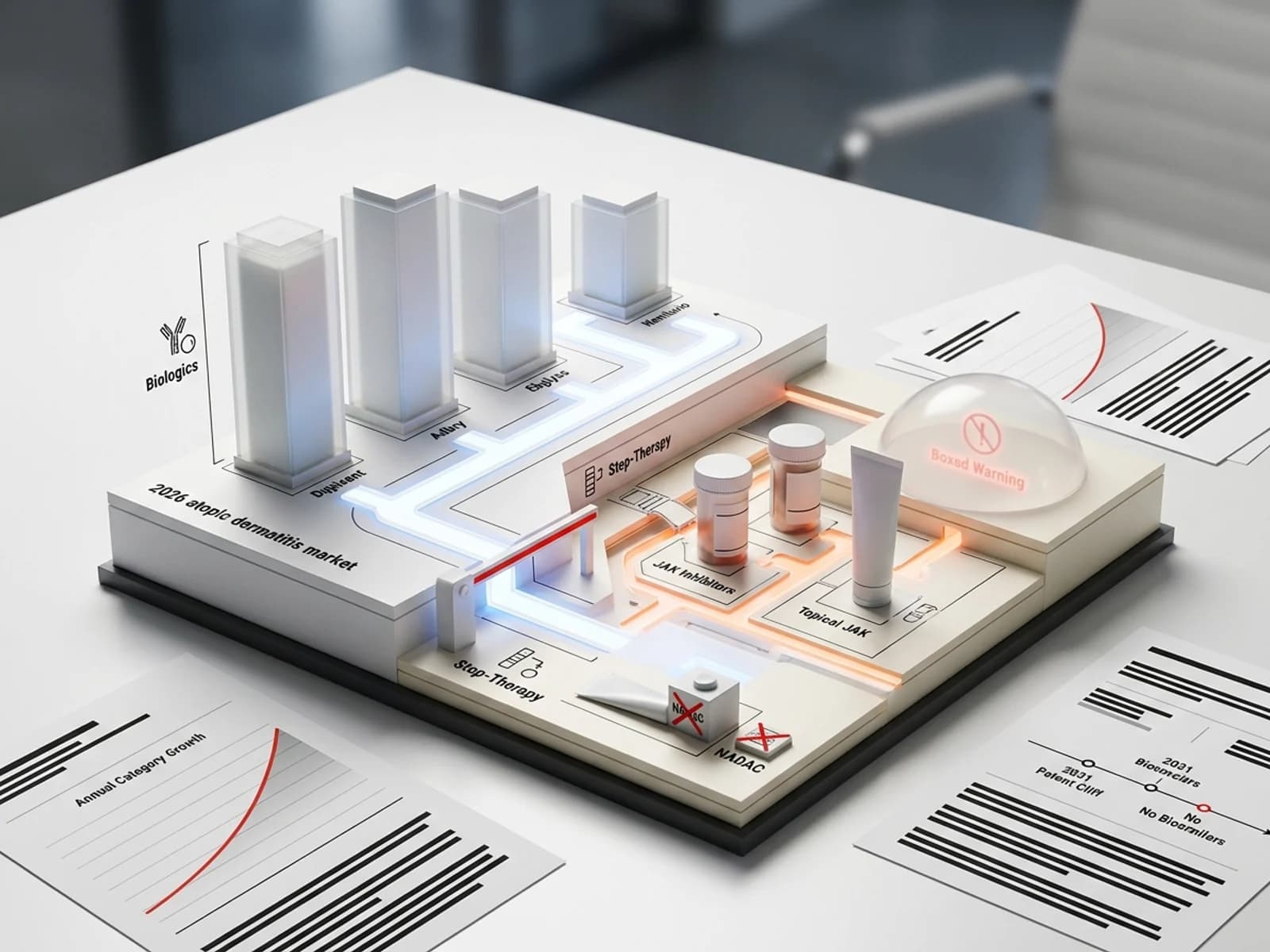
The strategic trajectory of Sanofi in 2026 represents a classic biopharma balancing act: defending a highly profitable base of mature products against active biosimilar and generic erosion while rapidly expanding high-margin specialty biologics and rare-disease franchises. Since finalizing the spinoff of its Opella consumer-health business in early 2025, Sanofi has transformed into a focused biopharmaceutical enterprise. Its commercial performance is heavily anchored by the multi-indication immunology blockbuster Dupixent (dupilumab), which continues to deliver double-digit growth. However, payer teams and biopharma analysts are increasingly focused on the mid-term horizon, specifically the impending Dupixent loss of exclusivity (LOE) wall in 2031, ongoing interchangeable biosimilar competition for the insulin glargine franchise (Lantus/Toujeo), and the launch dynamics of next-generation hematology assets like Altuviiio and Qfitlia.
This portfolio dossier provides an exhaustive commercial, pricing, and regulatory analysis of Sanofi’s major drug franchises. Drawing on Sanofi's FY2025 and Q1 2026 financial reports, the latest FDA Orange Book and Purple Book databases, and CMS National Average Drug Acquisition Cost (NADAC) pricing schedules, we detail the revenue contribution, patent moats, biosimilar exposure, and clinical-access mechanics shaping Sanofi's market position.
Quick Answer
What is the scenario question? If a P&T or market-access team needs to understand Sanofi's 2026 portfolio—revenue mix, near-term generic/biosimilar cliffs, and where Altuviiio/Dupixent sit—what does the primary evidence show?
Direct Answer: Sanofi enters 2026 as a streamlined biopharma company, having recorded €43.626 billion in FY2025 net sales (+9.9% at constant exchange rates, CER), led by the immunology blockbuster Dupixent, which generated €15.714 billion (+25.2% CER). The company’s rare-disease franchise has successfully scaled, spearheaded by the hemophilia-A growth driver Altuviiio, which achieved €1.160 billion (+77.6% CER). However, Sanofi is managing significant mature-brand erosion. The insulin glargine franchise (Lantus, a declining U.S. base under sustained biosimilar pressure) now faces three FDA-approved biosimilars, including the interchangeable biosimilar Langlara (insulin glargine-aldy), approved in April 2026. In the small-molecule segment, the oral multiple sclerosis drug Aubagio (teriflunomide) is fully genericized with 19 active ANDA competitors, driving the retail pharmacy acquisition cost (NADAC) down to $0.73 per 14mg tablet (compared to historical brand costs of over $300 per tablet). Sanofi's long-term commercial moat depends on the defense of Dupixent (BLA 761055, co-developed with Regeneron), whose composition-of-matter patents and surrounding estate protect the molecule from U.S. biosimilar entry into the early 2030s, alongside the expansion of rare-disease biologics and the launch of the anti-antithrombin siRNA Qfitlia (fitusiran).
| Financial Segment / Franchise | FY2025 Revenue (EUR) | YoY Growth (CER) | Key Products & Commercial Performance | Primary Patent / Biologic Moat (U.S.) |
|---|---|---|---|---|
| Immunology (Dupixent) | €15.714 Billion | +25.2% | Dupixent U.S. sales reached €11.538B; Q1 2026 sales rose to €4.170B (+30.8% CER). | BLA 761055 reference biologic; primary patents and orphan exclusivity run to January 25, 2031. |
| General Medicines (Diabetes/CV) | €12.380 Billion | -3.5% | Lantus sales erodes under biosimilar pressure; Toujeo and Multaq provide residual value. | Lantus: Biologic (no OB patents), erodes via interchangeable biosimilars. Multaq: Patent expires Jun 30, 2031. |
| Rare Diseases & Specialty | €5.450 Billion | +12.4% | Fabrazyme (€1.019B), Altuviiio (€1.160B, +77.6% CER), Kevzara (€507M). | Altuviiio: BLA 125771 reference biologic. Fabrazyme: complex enzyme replacement therapy. |
| Vaccines | €7.240 Billion | +4.1% | Influenza, Meningitis, and Beyfortus (nirsevimab, co-developed with AstraZeneca). | Beyfortus: BLA 761328 (AZ applicant). RSV vaccine franchise expansion. |
| Opella (Consumer Health) | Spun Off | N/A | Spinoff closed April 30, 2025. Sanofi retains a 48.2% equity stake. | Net proceeds of €10.7B cash used to deleverage and fund pipeline BD. |
Who this is for
Payer Account Managers and PBM Formulary Directors: Tracking commercial rebate structures, biosimilar substitution pathways for insulin glargine, and specialty pharmacy access criteria for orphan biologics.
Biopharma Business Development and Equity Analysts: Evaluating Sanofi’s capital allocation strategy post-Opella spinoff, the financial implications of the tolebrutinib clinical write-down, and the revenue projection curves for Altuviiio and Qfitlia.
Hematology and Specialty Pharmacy Leads: Designing clinical protocols for hemophilia A prophylaxis and monitoring the clinical-access transition from factor replacement to siRNA and bispecific therapies.
Regulatory and Legal Counsel: Reviewing Orange Book patent listings for mature small molecules, Paragraph IV generic certifications, and Purple Book reference product exclusivity periods.
Methodology
The financial metrics, product sales figures, and corporate growth rates cited in this dossier are obtained directly from Sanofi S.A.’s Q4/FY2025 and Q1 2026 financial disclosures, SEC Form 6-K filings, and Regeneron Pharmaceuticals Inc.’s FY2025 SEC Form 10-K (detailing Dupixent global collaboration revenues). Small-molecule patent expiries, exclusivity codes, and abbreviated new drug application (ANDA) approval counts are derived from the July 8, 2026 snapshot of the FDA Orange Book. Biological product licensing details, reference product exclusivity periods, and biosimilar designations are compiled from the FDA Purple Book. Retail pharmacy invoice pricing is analyzed using the CMS National Average Drug Acquisition Cost (NADAC) database weekly file (dated July 8, 2026). Part B billing codes and average sales prices (ASP) are sourced from the CMS Part B Drug Average Sales Price quarterly files.
For peer top-pharma comparative analyses, see the AstraZeneca portfolio dossier; for single-product payer-access criteria, see the Dupixent coverage guide; and for cross-industry patent timelines, see the 2026-2032 patent cliff by the numbers.
How big is Sanofi's FY2025 portfolio and which drugs are blockbusters?
Following the structural carve-out of its consumer healthcare division, Opella, which closed on April 30, 2025 (resulting in a joint venture where private equity firm CD&R holds a 50% controlling interest, Sanofi retains 48.2%, and Bpifrance holds 1.8%), Sanofi has re-established itself as a pure-play specialty biopharmaceutical company. For the full year 2025, Sanofi reported net sales of €43.626 billion, representing an increase of 6.2% on a reported basis and 9.9% at constant exchange rates (CER). Business EPS reached €7.83, up 15.0% CER, bolstered by a €10.7 billion net cash inflow from the Opella transaction that was partially deployed toward debt reduction and pipeline acquisition.
The commercial core of Sanofi is heavily dominated by a single asset, Dupixent. Co-developed and commercialized under a global profit-share agreement with Regeneron Pharmaceuticals, Dupixent has established itself as the premier immunology biologic in the industry:
Dupixent Performance: In FY2025, Dupixent net sales reached €15.714 billion (+25.2% CER), accounting for 36.0% of Sanofi's total corporate revenue. In the United States, Dupixent net sales rose to €11.538 billion (+26.7% CER), driven by sustained patient acquisition in moderate-to-severe atopic dermatitis, asthma, chronic rhinosinusitis with nasal polyps, eosinophilic esophagitis, and prurigo nodularis. The asset's momentum carried directly into Q1 2026, with Sanofi reporting quarterly Dupixent sales of €4.170 billion (+30.8% CER). This growth was driven by the expansion of the patient base in newer indications, including prurigo nodularis and eosinophilic esophagitis, alongside steady penetration in the moderate-to-severe atopic dermatitis market, which remains highly robust and is clinically anchored by the pivotal LIBERTY clinical development program.
Altuviiio's Breakout Year: Altuviiio (efanesoctocog alfa), a recombinant factor VIII therapy for hemophilia A, has officially achieved blockbuster status. In FY2025, Altuviiio sales reached €1.160 billion, growing by 77.6% CER compared to the prior year. This rapid uptake in the specialty pharmacy channel reflects a successful transition of patients from older, daily or multi-weekly factor VIII products to Altuviiio's once-weekly dosing schedule, capturing a significant share of the U.S. hemophilia A market.
Orphan and Specialty Biologics: Beyond Altuviiio and Dupixent, Sanofi maintains a highly profitable rare-disease portfolio. The lysosomal storage disorder franchise remains durable: Fabrazyme (agalsidase beta) generated €1.019 billion in FY2025 sales, while Kevzara (sarilumab, an IL-6 receptor antagonist co-developed with Regeneron) posted €507 million (+21.4% CER), capitalizing on steady payer access and label expansions.
Beyfortus (Nirsevimab) Vaccine Engine: Beyfortus (nirsevimab) has emerged as a key growth driver within Sanofi's vaccine segment. Co-developed and co-commercialized with AstraZeneca (under BLA 761328, held by AstraZeneca), Beyfortus is a long-acting monoclonal antibody designed for the prevention of respiratory syncytial virus (RSV) lower respiratory tract disease in infants. Sanofi leads the commercialization in the United States and other major global regions, booking substantial revenue during winter RSV seasons, which helped push vaccine segment revenues to €7.240 billion (+4.1% CER).
What generic/biosimilar erosion is hitting Lantus, Aubagio, and other mature assets in 2026?
Sanofi’s top-line growth is continuously offset by the erosion of its mature general medicines and small-molecule portfolios. PBM formulary exclusions and pharmacy-level generic substitutions have heavily compressed margins for historical blockbusters:
The Lantus Interchangeable Wave: Lantus (insulin glargine, 100 U/mL), which historically anchored Sanofi's diabetes business, faces intensive biosimilar erosion in the U.S. retail channel. U.S. Lantus net sales have contracted steadily under biosimilar pressure and now sit inside Sanofi's General Medicines (diabetes/cardiovascular) segment, which declined 3.5% at constant exchange rates in FY2025. Payer and pharmacy teams track three approved biosimilars, of which two are designated as interchangeable:
Semglee (insulin glargine-yfgn, Viatris/Biocon): Approved as interchangeable in July 2021, driving significant automatic substitution at the retail pharmacy counter.
Rezvoglar (insulin glargine-aglr, Eli Lilly): Approved in 2021 but not designated interchangeable; launched in April 2023.
Langlara (insulin glargine-aldy, Gan & Lee/Sandoz): Approved by the FDA on April 29, 2026 (launched May 4, 2026) as the first interchangeable insulin glargine biosimilar from a Chinese developer, introducing another low-cost competitor into the commercial channel.
Aubagio's Generic Squeeze: The oral multiple sclerosis therapy Aubagio (teriflunomide) represents one of Sanofi's sharpest small-molecule patent cliffs. Following the loss of U.S. patent exclusivity, the FDA Orange Book lists 19 approved ANDA applicants actively marketing generic teriflunomide. This intense competition has decimated the brand's commercial revenue, with generic retail pharmacy acquisition costs (NADAC) falling to a fraction of the brand's price.
Other Small-Molecule Erosion: Sanofi’s legacy small-molecule portfolio is almost entirely genericized. Plaquenil (hydroxychloroquine sulfate) faces 15 active ANDA competitors, Eloxatin (oxaliplatin) has 28 approved generic competitors, and the oncology specialty product Jevtana (cabazitaxel) is actively contested by 5 approved ANDA generic applicants.
How does Altuviiio (and Qfitlia) extend Sanofi's hemophilia and rare-disease franchise?
To maintain its leadership in hematology, Sanofi is pivoting from legacy factor replacement therapies to next-generation prophylactic modalities. The centerpieces of this transition are Altuviiio (efanesoctocog alfa) and Qfitlia (fitusiran):
Altuviiio’s Clinical & Access Advantage: Altuviiio (BLA 125771, licensed to Bioverivativ, a Sanofi subsidiary) is a first-in-class, high-sustained recombinant factor VIII therapy. By structurally decoupling the factor protein from endogenous von Willebrand factor (VWF) using a unique Fc-fusion and XTEN polypeptide design, Altuviiio overcomes the half-life ceiling of traditional factor VIII products. In the pivotal XTEND-1 Phase III trial, weekly prophylaxis with Altuviiio delivered a mean annualized bleed rate (ABR) of 0.70 (median 0.0), representing a 77% reduction in ABR compared to patients' prior factor prophylaxis regimens.
Payer Access Profile: Altuviiio is billed under the medical benefit using HCPCS code J7214 ("Injection, factor VIII/von Willebrand factor complex, recombinant (altuviiio), per FVIII IU"). Payers gate access using prior authorization (PA) criteria that require a documented diagnosis of severe Hemophilia A (factor VIII level <1%) and care coordination through a Comprehensive Hemophilia Treatment Center (HTC).
Qfitlia (Fitusiran) siRNA Launch: Approved in late 2025 as one of Sanofi's three major launches of the year (alongside Wayrilz and Nuvaxovid), Qfitlia (NDA N219019, held by Genzyme Corp) represents an anti-antithrombin small interfering RNA (siRNA). Designed to lower antithrombin levels, Qfitlia promotes sufficient thrombin generation to restore hemostasis in patients with both Hemophilia A and Hemophilia B, with or without inhibitors. Administered as a low-volume subcutaneous injection once monthly or once every two months, Qfitlia bypasses the need for weekly factor infusions, presenting a direct threat to Roche’s subcutaneous bispecific antibody Hemlibra (emicizumab).
When does Dupixent lose US exclusivity, and how is Sanofi managing the 2031 LOE wall?
Because Dupixent accounts for over one-third of Sanofi's net revenues, its loss of exclusivity (LOE) timeline represents the single most critical risk factor for the company's valuation.
The Exclusivity Timeline: Dupixent is licensed under BLA 761055 (held by Regeneron). In the United States, 12-year reference product exclusivity runs from the biologic's March 28, 2017 approval through roughly March 2029. The operative barrier to biosimilars, however, is the dense patent estate Sanofi and Regeneron have built around the molecule's composition, formulation, dosing regimens, and manufacturing methods; under the prevailing patent-settlement landscape, that estate is widely tracked as protecting Dupixent from U.S. biosimilar entry into the early 2030s. The FDA Purple Book's orphan exclusivity record for Dupixent (BLA 761055) carries a January 25, 2031 date, consistent with that early-2030s horizon.
Managing the Cliff: Sanofi is employing a three-part defense strategy to mitigate the 2031 LOE wall:
Indication Expansion: Sanofi continues to seek approvals for Dupixent in younger patient populations and adjacent type-2 inflammatory conditions, such as chronic obstructive pulmonary disease (COPD), which expands the pre-biosimilar revenue base. Sanofi has stated a commercial ambition for Dupixent to achieve ~€22 billion in annual sales by 2030.
Formulation Lifecycle Management: The companies are actively developing a subcutaneous autoinjector formulation and high-dose regimens designed to transition patients to more convenient dosing formats prior to 2031, attempting to create a "patent bridge" that extends exclusivity.
Pipeline Diversification: Sanofi is aggressively investing its cash reserves to acquire immunology and rare-disease pipeline assets. However, this strategy faced a setback in Q4 2025 when the company took a significant intangible-asset impairment charge on its brain-penetrant BTK inhibitor tolebrutinib for multiple sclerosis, following a regulatory split where European regulators accepted the filing for non-active secondary progressive MS (spMS) while U.S. FDA filing discussions required additional clinical safety data.
What do Orange Book patents and NADAC pricing reveal about Sanofi's moats and cliffs?
Integrating FDA Orange Book patent listings and CMS retail acquisition cost data reveals the stark economic contrast between protected brand monopolies and post-cliff generic markets.
Table 2: Sanofi Small-Molecule Moats & Generic Erosion (FDA Orange Book & CMS NADAC)
| Brand Name (Active Ingredient) | NDA Number | Active U.S. Patents & Expiries | ANDA Competitors | Brand vs. Generic Retail Cost (CMS NADAC) |
|---|---|---|---|---|
| Aubagio (teriflunomide) | NDA 202992 | US 8,802,735 (Expires Sep 14, 2030); US 6,794,410 (Expires Sep 12, 2026) | 19 Applicants | Generic teriflunomide 7mg: $0.62671 / tab Generic teriflunomide 14mg: $0.72774 / tab |
| Multaq (dronedarone) | NDA 022425 | US 8,602,215 (Expires Jun 30, 2031); US 9,107,900 (Expires Apr 16, 2029) | Brand Only | Brand Multaq 400mg: $13.19422 / EA ($791.65 per 60-tablet / 30-day supply) |
| Jevtana (cabazitaxel) | NDA 201023 | US 8,927,592 (Expires Oct 27, 2030); US 10,716,777 (Expires Oct 27, 2030) | 5 Applicants | Brand Jevtana kit: $10,240 / vial (administered via medical benefit) |
| Plaquenil (hydroxychloroquine) | NDA 009519 | Expired | 15 Applicants | Generic HCQ 200mg: $0.16076 / tab |
| Eloxatin (oxaliplatin) | NDA 021492 | Expired | 28 Applicants | Generic oxaliplatin 100mg/20mL: $23.15 / vial |
| Lantus (insulin glargine) | BLA 125057 | Biologic (No OB Patents) | 3 Biosimilars | Brand Lantus 100U/mL vial: $6.15903 / mL Insulin glargine-yfgn vial: $6.12221 / mL (pen: $5.92075 / mL) |
Patent and Pricing Analysis:
The Aubagio Patent Shield Failure: While the Orange Book lists US Patent 8,802,735 (covering methods of treating multiple sclerosis with teriflunomide) as expiring in September 2030, generic manufacturers successfully settled litigation to enter the market earlier. The entry of 19 generic competitors resulted in immediate price deflation. At a retail pharmacy acquisition cost of $0.73 per 14mg tablet, generic teriflunomide represents a 99.8% discount from the brand's pre-generic WAC (Wholesale Acquisition Cost) of approximately $360 per tablet, representing a complete commercial collapse of the brand.
The Multaq Runway: In contrast to Aubagio, Multaq (dronedarone, used for cardiovascular arrhythmia management) remains protected from generic entry. The Orange Book lists US Patent 8,602,215 (covering pharmaceutical compositions containing dronedarone) as expiring on June 30, 2031. With no approved generics, Multaq maintains a stable pharmacy acquisition price of $13.19 per tablet ($791.65 per 30-day supply of 60 tablets), representing a durable, mid-tier cash generator for Sanofi’s general medicines business.
Insulin Glargine Price Sticky Dynamics: Analyzing the CMS NADAC price file for insulin glargine reveals the impact of PBM formulary rebate structures. The pharmacy invoice cost for brand Lantus (100 U/mL vial) stands at $6.15903 per mL, while the interchangeable biosimilar insulin glargine-yfgn vial (Semglee) stands at $6.12221 per mL — a negligible 0.6% invoice-price discount (the pen formulation runs lower, near $5.92/mL). This near-parity in invoice pricing indicates that biosimilar developers are choosing to maintain high list prices and offer deep retroactive rebates to PBMs to secure formulary tiering, rather than competing on low invoice prices.
FAQ
Is Lantus still Sanofi's, and how many insulin glargine biosimilars are interchangeable?
Yes, Lantus remains a Sanofi brand product, though its revenue is severely eroded. In the United States, there are three approved biosimilars for Lantus: Semglee (insulin glargine-yfgn), Rezvoglar (insulin glargine-aglr), and Langlara (insulin glargine-aldy). Of these three, Semglee and Langlara are designated as interchangeable by the FDA, allowing retail pharmacies to substitute them automatically for a Lantus prescription without clinician intervention.
Did Sanofi's Qfitlia (fitusiran) launch in 2025, and what is its role in hemophilia?
Yes. Qfitlia (fitusiran sodium, developed under Genzyme Corp’s NDA N219019) was approved by the FDA and launched in late 2025. It is an investigational once-monthly or once-every-two-months subcutaneous siRNA that targets antithrombin. By knocking down antithrombin levels, Qfitlia restores thrombin generation, providing prophylactic bleed protection for patients with Hemophilia A or B, regardless of their inhibitor status.
How does the Opella spinoff change Sanofi's reported revenue mix?
The Opella spinoff (completed on April 30, 2025, in partnership with CD&R) removed Sanofi’s consumer healthcare division (which marketed brands like Allegra, Gold Bond, and Dulcolax) from its consolidated financial reporting. Consequently, Sanofi’s reported sales mix is now 100% concentrated in prescription biopharmaceuticals and vaccines. While this transaction reduced reported gross revenue by approximately €5.2 billion annually, it increased Sanofi’s corporate operating margins and provided €10.7 billion in net cash, which is being deployed to expand the immunology and rare-disease pipeline.
Sources
Sanofi S.A. H1/FY2025 and Q1 2026 Financial Reports: Sanofi Reports Fourth-Quarter and Full-Year 2025 Financial Results, Sanofi Investor Relations, January 29, 2026. Sanofi IR.
Regeneron Pharmaceuticals Inc. FY2025 Form 10-K: Fourth-Quarter and Full-Year 2025 Financial Results, Regeneron Press Release, February 5, 2026. Regeneron Investor Relations.
FDA Orange Book: Approved Drug Products with Therapeutic Equivalence Evaluations, U.S. Food and Drug Administration, Snapshot July 8, 2026. Drugs@FDA.
FDA Purple Book: Database of Licensed Biological Products, U.S. Food and Drug Administration, Snapshot July 8, 2026. Purple Book Search.
CMS National Average Drug Acquisition Cost (NADAC): Weekly Price File, Centers for Medicare & Medicaid Services, July 8, 2026. Medicaid.gov.
Sandoz & Gan & Lee Langlara Approval Announcement: FDA Approves Interchangeable Insulin Glargine Biosimilar Langlara, Sandoz Press Release, April 29, 2026.
XTEND-1 Altuviiio Phase III Trial Publications: Efficacy, Safety, and Pharmacokinetics of Once-Weekly Efanesoctocog Alfa in Severe Hemophilia A, New England Journal of Medicine, February 2023. NEJM.