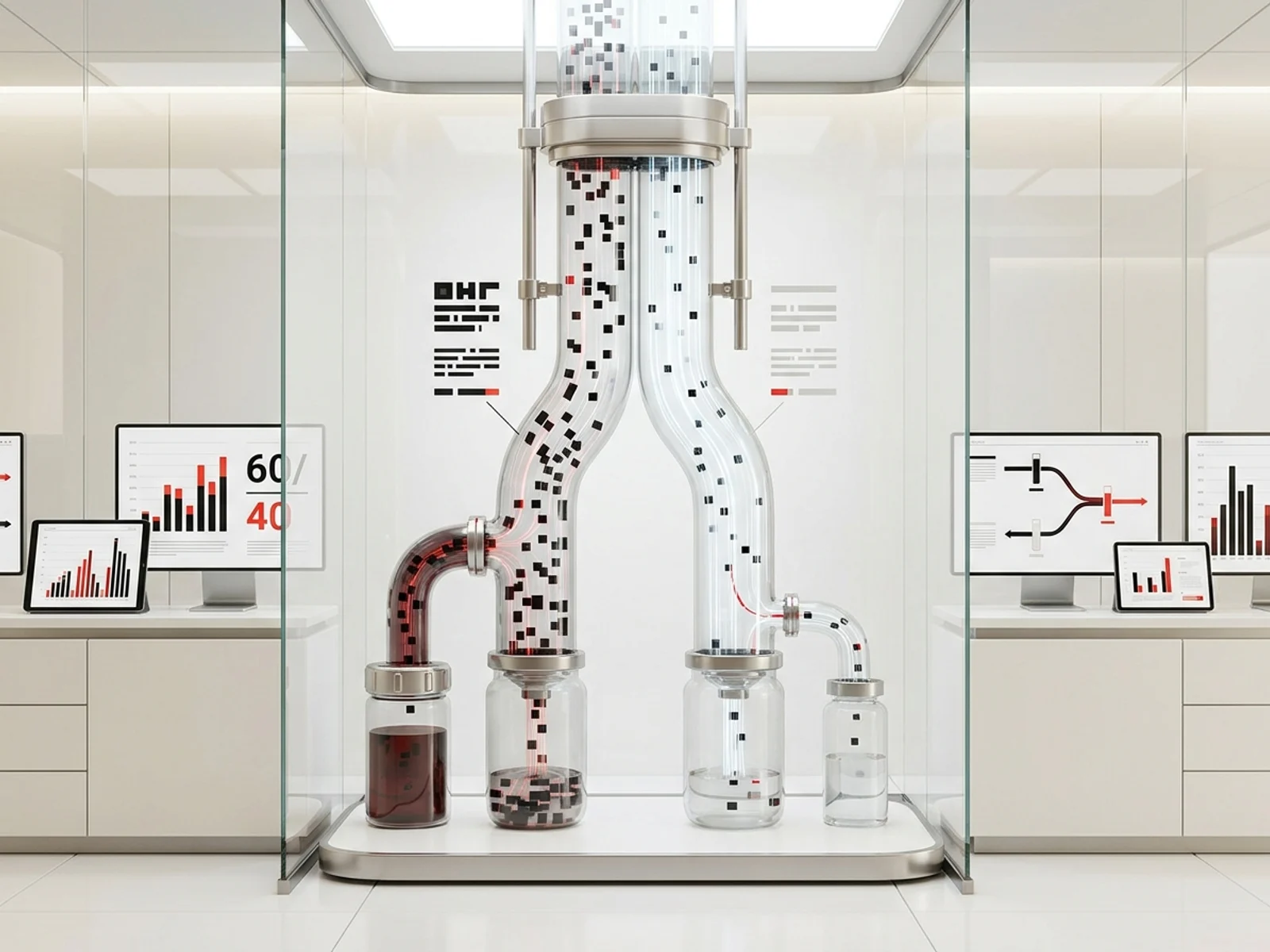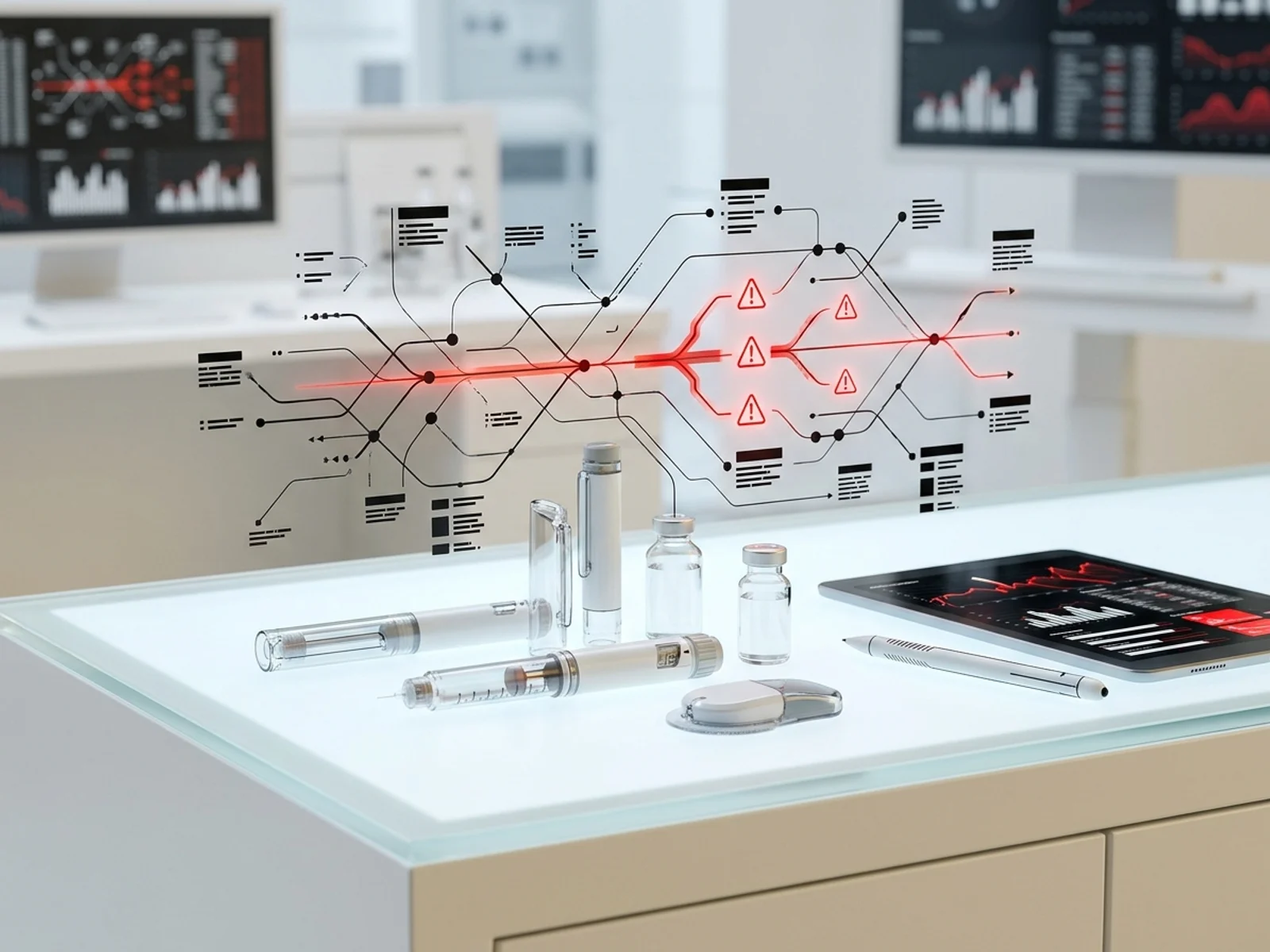
The FDA Adverse Event Reporting System (FAERS) holds 454,039 individual safety reports that name at least one of six marketed insulin analogues — insulin glargine (Lantus, Basaglar, Semglee, Toujeo), insulin lispro (Humalog), insulin aspart (Novolog), insulin detemir (Levemir), insulin degludec (Tresiba), and insulin glulisine (Apidra) — in any role, filed between 2004 and early 2026. Insulin glargine dominates the class with 286,515 reports (63.1 percent), reflecting two decades as the dominant basal insulin and the largest biosimilar franchise in the insulin category; insulin lispro follows at 136,428 (30.0 percent) and insulin aspart at 73,759 (16.2 percent). More than half of every class-level report — 246,381, or 54.3 percent — carries an FDA seriousness flag, and 27,217 reports (5.99 percent) record a fatal outcome. The reaction list is a glucose-dysregulation registry: "blood glucose increased" is the single most coded term at 69,091 reports, with hypoglycaemia (10,806) and the broader hyperglycaemia and DKA family (112,999 reports) defining the class's safety footprint — alongside a remarkably large administration- and device-error burden (73,827 reports).
This article is a class-level descriptive read of insulin reporting in FAERS, written for pharmacovigilance, medical-affairs, diabetes market-access, and formulary teams who encounter insulin safety numbers in labeling reviews, biosimilar substitution policy, the $35 cost-sharing cap, and hypoglycaemia-prevention programs. Every figure here is computed from the public openFDA FAERS extract (20,328,575 total reports, export dated 2026-06-08). It is not a disproportionality signal analysis, it is not a safety claim, and it is not incidence data. FAERS is a spontaneous-reporting system: it captures what was reported, never what was caused, and it has no exposure denominator. Insulin is used by tens of millions of people in the United States alone — the reporting volume here is a small, skewed slice of real-world exposure, and the death-flag rate is driven by an older, multi-morbid diabetic population in which cardiovascular events, renal failure, and severe hypoglycaemia are common regardless of attribution. Those caveats shape every number below. For the class-wide FAERS methodology and the database aggregate picture, see the companion analysis of 20 million FAERS reports; for adjacent cardiometabolic class cuts, see GLP-1 receptor agonists and SGLT2 inhibitors in FAERS. For the access picture, see the Lantus / insulin glargine interchangeability guide, the Langlara insulin glargine biosimilar access guide, and the insulin icodec (Awiqli) coverage guide. This article stays on the six marketed analogues.
Methodology, in one paragraph
A report is counted for an insulin when the agent's generic or brand name appears anywhere in that report's drug list — as a suspect, concomitant, or interacting drug — using a case-insensitive substring match across the drug_substances and drug_brands fields. Insulin glargine is matched across its brand set (Lantus, Toujeo, Basaglar, Semglee, Rezvoglar) and the generic, so that interchangeable biosimilars and the reference product aggregate together; the same brand-plus-generic approach is applied to lispro (Humalog, Admelog, Lyumjev), aspart (Novolog, Fiasp), detemir (Levemir), degludec (Tresiba), and glulisine (Apidra). Because a single report can name several drugs, the per-substance totals sum to more than the 454,039 class-level (union, deduplicated) reports: roughly 68,000 reports name more than one insulin, typically a patient on a basal-plus-bolus regimen or documented across products. A "serious" report is any report the FDA coded as serious. A report counts toward death when the seriousness field carries a death flag; the resolved-Fatal-outcome field sits lower (19,210 reports) because not every death-flagged report carries a resolved outcome. Reactions are coded to MedDRA Preferred Terms; reaction counts are case-normalized to avoid splitting the same concept across "Blood glucose increased" and "BLOOD GLUCOSE INCREASED." The adverse-event families aggregate related Preferred Terms (for example, "hypoglycaemia" combines hypoglycaemia, blood glucose decreased, neuroglycopenia, and related terms; "hyperglycaemia / DKA" combines blood glucose increased, hyperglycaemia, diabetic ketoacidosis, and glycosylated haemoglobin increased), and a report contributes once to a family if any term in the family appears. The "any role" counts reported here are intentionally inclusive, so they will exceed suspect-only or differently normalized counts cited elsewhere for the same agent.
The reporting-volume picture, by drug
| Insulin (brand, type, first US approval) | Reports (any role) | Share of class | Serious | Death |
|---|---|---|---|---|
| Insulin glargine (Lantus, long-acting, 2000) | 286,515 | 63.1% | 157,356 (54.9%) | 18,623 (6.50%) |
| Insulin lispro (Humalog, rapid-acting, 1996) | 136,428 | 30.0% | 62,682 (45.9%) | 5,442 (3.99%) |
| Insulin aspart (Novolog, rapid-acting, 2000) | 73,759 | 16.2% | 50,531 (68.5%) | 4,707 (6.38%) |
| Insulin detemir (Levemir, long-acting, 2005) | 37,003 | 8.1% | 22,280 (60.2%) | 2,201 (5.95%) |
| Insulin degludec (Tresiba, long-acting, 2015) | 25,080 | 5.5% | 14,340 (57.2%) | 1,042 (4.15%) |
| Insulin glulisine (Apidra, rapid-acting, 2004) | 9,992 | 2.2% | 7,520 (75.3%) | 769 (7.70%) |
| Class (union, deduplicated) | 454,039 | 246,381 (54.3%) | 27,217 (5.99%) |
Three patterns matter for access and medical-affairs teams. First, volume tracks market penetration and time on market, not intrinsic risk: insulin glargine carries nearly two-thirds of class reporting because Lantus was, for most of the 2000s and 2010s, the dominant basal insulin worldwide and remains the highest-volume insulin after its biosimilar cohort (Semglee, Rezvoglar, Basaglar) took share. Second, the serious-share band runs from lispro's 45.9 percent to glulisine's 75.3 percent, and that range reflects patient-population and channel mix more than any safety differential — the long-acting basal insulins (glargine, detemir, degludec) skew toward an older, type-2 population with more comorbidity, while the rapid-acting prandial insulins report more symptomatic, self-managed hypoglycaemia. Third, the death-flag percentages cluster between 4.0 and 6.5 percent for the volume agents and move with population age and comorbidity, not with a clean drug-safety ranking; insulin glulisine's 7.70 percent death-flag rate is a small-denominator artifact (9,992 reports), not evidence that glulisine is more dangerous than glargine. The class's elevated overall death-flag rate (5.99 percent) is the central caveat of this read: it describes a sicker, older diabetic population in which cardiovascular, renal, and severe-hypoglycaemia events are common, not a drug class that is uniquely lethal. Quoting the class death rate without that caveat is quoting a population-confounded number.
The class-level outcome profile
| Outcome (report-level) | Reports | Share of class |
|---|---|---|
| Unknown outcome | 264,822 | 58.3% |
| Recovered | 90,132 | 19.9% |
| Not recovered | 74,982 | 16.5% |
| Recovering | 39,018 | 8.6% |
| Fatal | 19,210 | 4.2% |
| Recovered with sequelae | 2,729 | 0.6% |
A report can carry more than one outcome, so these shares sum to more than 100 percent. The Fatal outcome count (19,210) sits below the death-flag measure (27,217) because not every death-flagged report carries a resolved Fatal outcome field. At the report level, 127,375 reports (28.1 percent) flag a hospitalization, 14,431 (3.2 percent) flag a life-threatening event, and 9,551 flag a disabling outcome. The high hospitalization share — among the highest of the class cuts in this series that report this flag — is the FAERS signature of severe hypoglycaemia and hyperglycaemia events that land patients in the emergency department. None of these percentages is incidence — the denominator is reports, not exposed patients.
The hypoglycaemia, hyperglycaemia, and administration-error footprint
Stripping out the non-specific terms (fatigue, malaise, dyspnoea, dizziness, nausea) that dominate the raw reaction list for any high-volume outpatient class, the families that define the insulin safety profile leave a clear footprint:
| AE family (aggregated MedDRA terms) | Class reports | Share of class |
|---|---|---|
| Hyperglycaemia / DKA (incl. glucose increased) | 112,999 | 24.9% |
| Administration and device error | 73,827 | 16.3% |
| Hypoglycaemia | 38,395 | 8.5% |
| Injection-site reactions | 30,030 | 6.6% |
| Diabetic complications (neuropathy, retinopathy, coma) | 10,782 | 2.4% |
| Hypersensitivity (incl. anaphylaxis) | 7,871 | 1.7% |
The glucose-dysregulation footprint dominates the class. The hyperglycaemia and DKA family (112,999 reports) — blood glucose increased (69,091 on its own), hyperglycaemia, diabetic ketoacidosis, glycosylated haemoglobin increased, blood glucose abnormal — is the largest single family and reflects both undertreatment (missed doses, inadequate titration, pump failures) and the natural history of poorly controlled diabetes. The hypoglycaemia family (38,395 reports) — hypoglycaemia (10,806), blood glucose decreased (16,130), neuroglycopenia, hypoglycaemic unconsciousness — is the family every insulin label warns about and the single most safety-relevant event in the class, because severe hypoglycaemia is the proximate cause of most insulin-related hospitalization and the FDA has issued multiple drug-safety communications on the contribution of insulin products to hypoglycaemia-related events.
The administration- and device-error family (73,827 reports) is unusually large and access-relevant. It aggregates incorrect dose administered (13,776), product dose omission (6,965), product storage error (10,962), inappropriate schedule of product administration (10,786), accidental exposure to product, device issue, and incorrect-product-administered terms. This burden reflects the reality of a self-administered injectable class used by tens of millions of patients across pen devices, vials, syringes, and insulin pumps: dosing confusion (especially the long-standing units-versus-millilitre syringe error that drove FDA syringe-safety guidance), storage and excursion errors, and pen and pump device failures are a meaningful share of the postmarketing record. For specialty-pharmacy and manufacturer support teams, this family is the actionable signal — it is where patient education, device training, and cold-chain guidance move the reporting needle.
Who is reporting
| Reporter type | Reports | Share of class |
|---|---|---|
| Consumer / patient | 291,314 | 64.2% |
| Physician | 64,764 | 14.3% |
| Other health professional | 53,470 | 11.8% |
| Pharmacist | 27,001 | 5.9% |
| Lawyer | 3,199 | 0.7% |
Consumers file nearly two-thirds of the class's reports — among the highest consumer shares of any class cut in this series — reflecting the self-administered, ambulatory, patient-managed nature of insulin therapy and the manufacturer and patient-assistance channels that surround it. The consumer-dominated mix is one reason the symptomatic glucose terms (blood glucose increased, fatigue, dizziness, fall) sit high in the reaction list and the most serious resolved outcomes sit under-reported. Notably, lawyers file 3,199 reports (0.7 percent) — a small but unusually elevated lawyer share relative to other drug classes, consistent with the insulin-pricing and product-liability litigation environment of the past decade. The HCP share (26.1 percent physician plus pharmacist plus other HCP) is where the severe-hypoglycaemia and hospitalization reports concentrate.
The indication mix, and why it matters for the population caveat
The reaction list reads as a diabetes complication map rather than an indication map: visual impairment (12,984 reports), glycosylated haemoglobin increased (7,369), fall (8,250), asthenia (7,280), and death (7,311) all reflect the microvascular, macrovascular, and frailty complications of long-standing diabetes that co-occur in this older population. This is the population that drives the class's elevated death-flag and hospitalization rates: insulin-treated patients are disproportionately older, longer-duration, multi-morbid type-2 patients and type-1 patients with decades of disease, in whom cardiovascular events, renal failure, and severe hypoglycaemia are common regardless of drug attribution. The complication footprint is the reason the population caveat on every death and hospitalization number in this article is non-negotiable.
The year-over-year accumulation curve
| Receive year | Class reports (any role) |
|---|---|
| 2004 | 3,571 |
| 2007 | 7,700 |
| 2010 | 10,154 |
| 2013 | 14,532 |
| 2014 | 20,681 |
| 2015 | 48,751 |
| 2016 | 29,847 |
| 2018 | 38,203 |
| 2020 | 32,389 |
| 2022 | 23,643 |
| 2023 | 21,308 |
| 2024 | 23,483 |
| 2025 | 28,660 |
| 2026 (partial) | 5,647 |
Two features stand out. The 2015 spike (48,751 reports, from 20,681 the year before) tracks the Lantus franchise's peak and a post-launch reporting surge around biosimilar insulin glargine entry (Basaglar had launched and the first interchangeable biosimilar pipeline was advancing). The post-2015 decline in raw class volume reflects the broader shift in type-2 diabetes treatment toward GLP-1 receptor agonists and SGLT2 inhibitors as earlier-line injectable and oral therapies, which has displaced some insulin prescribing — but insulin use remains massive in absolute terms, and the class is still climbing back in 2024–2025. The reporting curve is a leading indicator of prescribing mix, not of falling insulin safety.
What the labels and policy actually say, and how they reach the formulary
Insulin labels share a warnings-and-precautions framework centered on hypoglycaemia, hypokalaemia, and administration errors, with the long-acting and rapid-acting agents each carrying class-specific dosing and titration guidance. The access picture, however, is now dominated less by the label and more by two policy forces. First, the Inflation Reduction Act's $35-per-month cost-sharing cap on each Medicare-covered insulin product — effective for Part D insulins on January 1, 2023, and for Part B insulin used in traditional durable-medical-equipment pumps on July 1, 2023 — applies regardless of formulary tier, deductible, or benefit phase, and was extended in 2026 to continue capping cost-sharing at the lesser of $35, 25 percent of the contracted price, or 25 percent of the Medicare-negotiated Maximum Fair Price for any negotiated insulin. That cap has materially limited Part D plans' ability to steer beneficiaries toward preferred insulins using tiering and cost-sharing, compressing the formulary lever for this class. Second, the insulin glargine biosimilar cohort — Semglee (the first interchangeable insulin biosimilar, 2021), Rezvoglar, Basaglar, and the newer Langlara (approved April 2026) — allows pharmacy-level substitution of interchangeable biosimilars for Lantus without a new prescription in most states, restructuring the cost basis of the basal-insulin category. Insulin is now regulated as a biologic, and the interchangeable framework is the central live access question for the class. For the cost-side reference, see the CMS NADAC drug acquisition costs read.
How to read these numbers (and how not to)
The death-flag rate is population-confounded. The 5.99 percent class death-flag rate is real in the data but driven by an older, multi-morbid insulin-treated population. It is not a measure of insulin-attributable mortality and is not comparable to lower rates in classes treating healthier populations.
Volume is market penetration, not risk. Insulin glargine's 286,515 reports reflect two decades of dominant basal-insulin use; insulin degludec's 25,080 reflect a 2015 launch. Rank reports per patient-year of exposure — which FAERS cannot compute — and the ordering changes.
Administration error is actionable, not incidental. The 73,827-report administration- and device-error family is where patient education, pen and pump training, and storage guidance move the needle — and where manufacturer and specialty-pharmacy support programs have the clearest reporting-level return.
FAERS has no denominator. None of these numbers is an incidence rate, a relative risk, or a causal estimate. A 454,039-report class total says the surveillance system is watching the largest injectable-chronic-therapy class in medicine; it does not say the class caused 454,039 events.
Sources
US FDA, FDA Adverse Event Reporting System (FAERS) / openFDA drug adverse event data, public extract (20,328,575 reports, export dated 2026-06-08). Aggregates computed by PharmaDossier from the openFDA FAERS full extract. https://open.fda.gov/data/faers/
US Centers for Medicare & Medicaid Services, "Insulin" — Medicare Part B and Part D insulin coverage, including the $35 per-month cost-sharing cap under the Inflation Reduction Act. https://www.medicare.gov/coverage/insulin
American Diabetes Association, "Insulin Cost & Affordability" — Part D $35 cap (IRA 2022, effective January 2023); Part B cap effective July 1, 2023; manufacturer savings programs and interchangeable biosimilars. https://diabetes.org/tools-resources/affordable-insulin
PMC11959358, "Medicare Part D insulin coverage: formulary strategies amid policy headwinds" — the $35 cap's effect on Part D formulary tiering and steering. https://pmc.ncbi.nlm.nih.gov/articles/PMC11959358
Express Scripts Pharmacy, "Lower-cost insulin available" — Semglee and Rezvoglar interchangeable biosimilar substitution for Lantus. https://www.express-scripts.com/pharmacy/blog/lower-cost-insulin-now-available
US FDA, Biosimilar Product Information (insulin glargine biosimilars incl. Semglee, Rezvoglar, Basaglar, and Langlara approved April 2026). https://www.fda.gov/drugs/biosimilars/biosimilar-product-information
US FDA, MedWatch adverse-event reporting program. https://www.fda.gov/safety/medwatch-fda-safety-information-and-adverse-event-reporting-program