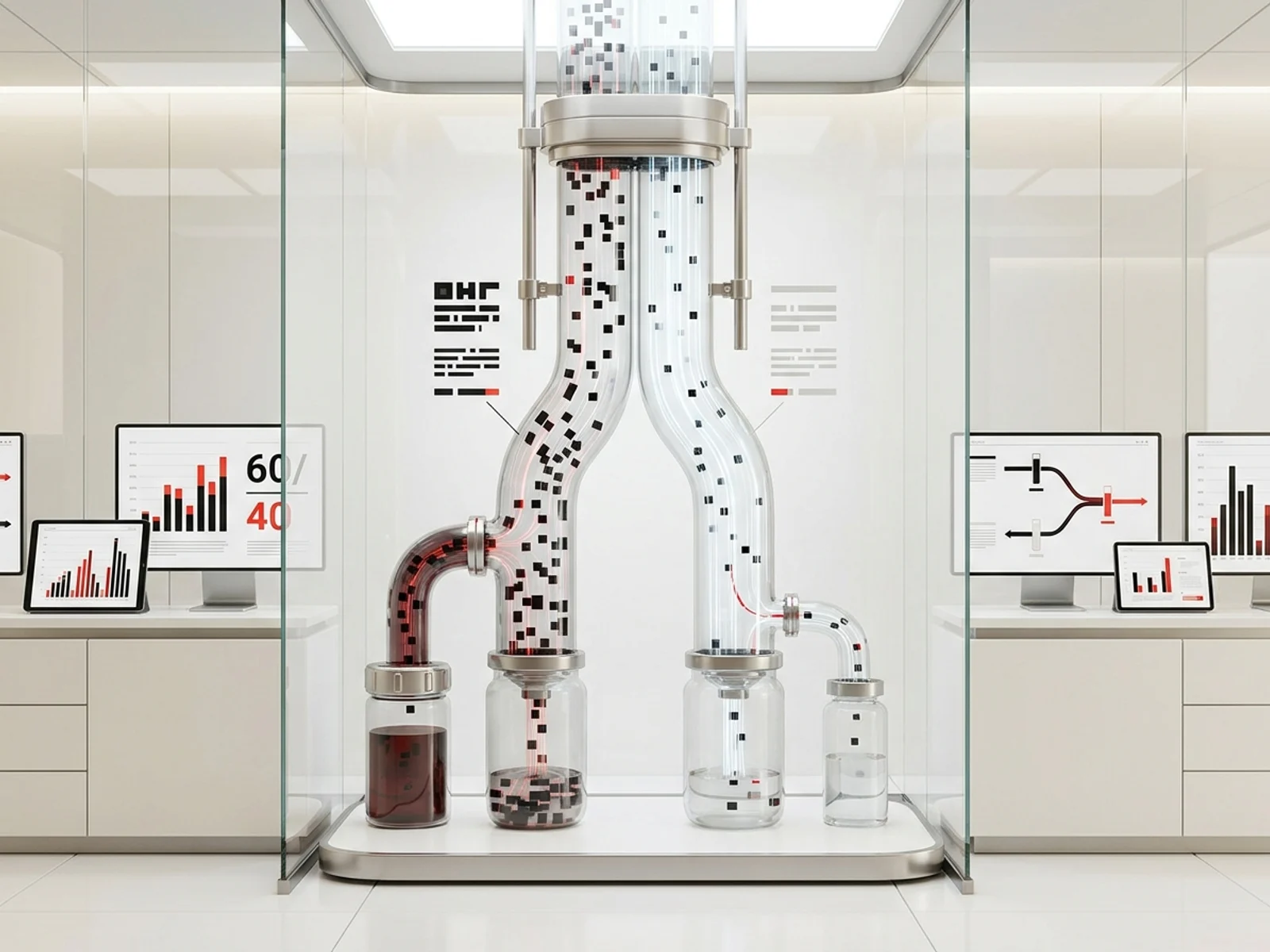
The FDA Adverse Event Reporting System (FAERS) holds 154,476 individual safety reports that name at least one of the five marketed sodium-glucose cotransporter-2 (SGLT2) inhibitors — empagliflozin (Jardiance), dapagliflozin (Farxiga), canagliflozin (Invokana), ertugliflozin (Steglatro), or bexagliflozin (Brenzavvy) — in any role, filed between 2013 and early 2026. Empagliflozin and dapagliflozin together anchor the class, with 67,594 and 55,929 reports respectively, reflecting their 2014 launches and broad cardiorenal uptake; canagliflozin, the 2013 first-in-class agent, contributes 30,881. Two-thirds of the class-level reports — 102,173, or 66.1% — carry an FDA seriousness flag, and 13,310 reports (8.6%) record a fatal outcome. The most coded reaction term across the entire class is "death" (9,342 reports), immediately ahead of the metabolic-safety signal the class is best known for: 9,278 reports of diabetic ketoacidosis and a further 3,108 of euglycaemic ketoacidosis.
This article is a class-level descriptive read of SGLT2 inhibitor reporting in FAERS, written for pharmacovigilance, medical-affairs, market-access, and payer-policy teams who encounter SGLT2 safety numbers in label negotiations, prior-authorization rationale, and formulary committee briefings. Every figure here is computed from the public openFDA FAERS extract (20,328,575 total reports, export dated 2026-06-08). It is not a disproportionality signal analysis, it is not a safety claim, and it is not incidence data. FAERS is a spontaneous-reporting system: it captures what was reported, never what was caused, and it has no exposure denominator. Those caveats shape every number below. For the class-wide FAERS methodology and the database aggregate picture, see the companion analysis of 20 million FAERS reports; for the GLP-1 class cut, see GLP-1 receptor agonists in FAERS; for the JAK inhibitor cut, see JAK inhibitors in FAERS. This article stays on the five SGLT2 inhibitors.
Methodology, in one paragraph
A report is counted for a substance when the substance's generic name appears anywhere in that report's drug list — as a suspect, concomitant, or interacting drug — using a substring match so that "empagliflozin," "empagliflozin and metformin," and "empagliflozin linagliptin" all count toward empagliflozin. Because a single report can name several drugs, the per-substance totals sum to slightly more than the 154,476 class-level (union) reports. A "serious" report is any report the FDA coded as serious. A report counts toward death when either the seriousness field carries a death flag or the outcome field carries a Fatal outcome. Reactions are coded to MedDRA Preferred Terms; the openFDA extract carries mixed casing for some terms, so reaction counts are case-normalized. The "any role" counts reported here are intentionally inclusive, so they will exceed suspect-only or differently normalized counts cited elsewhere for the same agent; they are not directly comparable to single-substance figures in the companion database-wide analysis.
The reporting-volume picture, by drug
| SGLT2 inhibitor (brand, approval year) | Reports (any role) | Share of class | Serious | Death |
|---|---|---|---|---|
| Empagliflozin (Jardiance, 2014) | 67,594 | 43.8% | 40,378 (59.7%) | 3,283 (4.86%) |
| Dapagliflozin (Farxiga, 2014) | 55,929 | 36.2% | 42,336 (75.7%) | 9,350 (16.72%) |
| Canagliflozin (Invokana, 2013) | 30,881 | 20.0% | 19,717 (63.8%) | 701 (2.27%) |
| Ertugliflozin (Steglatro, 2017) | 1,227 | 0.8% | 548 (44.7%) | 18 (1.47%) |
| Bexagliflozin (Brenzavvy, 2023) | 25 | <0.1% | 8 (32.0%) | 0 (0.00%) |
| Class (union, deduplicated) | 154,476 | 102,173 (66.1%) | 13,310 (8.6%) |
Two patterns matter for access teams. First, volume is market tenure and uptake, not risk: empagliflozin and dapagliflozin lead the count because they launched in 2014 and have since expanded across type 2 diabetes, heart failure, and chronic kidney disease, accumulating more than a decade of reports. Canagliflozin, the 2013 first-in-class agent, has fewer reports than empagliflozin despite its head start, consistent with the prescriber shift toward empagliflozin and dapagliflozin after cardiovascular- and kidney-outcomes trials broadened their labels. Bexagliflozin, approved January 20, 2023, has only 25 reports — a launch cohort still early in its surveillance footprint.
Second, the per-drug serious and death percentages move in the opposite direction from what a naive risk reading would suggest, and the movement is a reporting-mix artifact worth understanding. Dapagliflozin's 16.72% death-flag rate is roughly triple empagliflozin's 4.86% and more than seven times canagliflozin's 2.27% — a gap too wide to read as a drug-safety differential. The more plausible explanation is reporting mix and indication mix: dapagliflozin was the first SGLT2 inhibitor to win a heart-failure indication (DAPA-HF, 2019) and a chronic-kidney-disease indication (DAPA-CKD, 2021), populations with high baseline mortality, and any-role counting pulls in concomitant drugs filed alongside fatal cardiorenal events. Access teams quoting dapagliflozin's 16.72% figure without that caveat are quoting an indication-confounded number; it does not establish that dapagliflozin is more dangerous than empagliflozin.
The class-level outcome profile
| Outcome (report-level) | Reports | Share of class |
|---|---|---|
| Unknown outcome | 73,098 | 47.3% |
| Recovered | 35,084 | 22.7% |
| Not recovered | 22,262 | 14.4% |
| Recovering | 17,452 | 11.3% |
| Fatal | 8,859 | 5.7% |
| Recovered with sequelae | 1,501 | 1.0% |
The high "unknown outcome" share is typical of FAERS, where follow-up is incomplete, and is one reason outcome percentages should never be read as incidence. The single most coded reaction term across the class is "death" at 9,342 reports — an unusually prominent non-specific term that reflects the sicker cardiorenal population now taking these drugs as much as anything drug-specific.
The ketoacidosis signal — the class-defining FAERS story
The metabolic-safety signal that distinguishes SGLT2 inhibitors from other glucose-lowering classes is ketoacidosis, and it dominates the reaction list:
| Ketoacidosis reaction (MedDRA Preferred Term) | Reports |
|---|---|
| Diabetic ketoacidosis | 9,278 |
| Euglycaemic diabetic ketoacidosis | 3,108 |
| Ketoacidosis | 2,902 |
| Ketoacidosis family (combined) | 15,288 |
The FDA first flagged this signal in a December 2015 Drug Safety Communication warning of ketoacidosis and serious urinary tract infections across the class, and required strengthened label warnings. The clinically distinctive feature — and the reason the euglycaemic variant has its own MedDRA term and 3,108 reports — is that SGLT2-inhibitor-associated ketoacidosis frequently presents with near-normal blood glucose, delaying recognition. FDA continued to act on the signal: diabetic ketoacidosis appeared on the agency's July–September 2023 FAERS potential-signals list, and in September 2023 the Warnings and Precautions section was updated across the class to include prolonged diabetic ketoacidosis and glucosuria. The access consequence is concrete: prior-authorization criteria and patient counseling across the class now flag perioperative holds, acute illness "sick-day" rules, and low-carbohydrate-diet risk as ketoacidosis triggers, and the label contraindicates these agents in type 1 diabetes.
Amputation, Fournier's gangrene, and the canagliflozin label history
The two safety signals that have driven the most consequential SGLT2 label actions — lower-limb amputation and necrotizing fasciitis of the perineum (Fournier's gangrene) — both leave clear footprints in the FAERS data, though they sit well below the ketoacidosis volume.
| Safety signal (aggregated terms) | Reports |
|---|---|
| Lower-limb amputation (any) | 4,819 |
| Genital mycotic / fungal infection | 5,385 |
| Volume depletion / acute kidney injury | 9,162 |
| Fournier's gangrene / necrotizing fasciitis | 630 |
| Bone fracture (any) | 1,612 |
The amputation signal is historically tied to canagliflozin. The CANVAS and CANVAS-R trials showed roughly twice the lower-limb amputation rate with canagliflozin versus placebo (6.3 vs 3.4 per 1,000 patient-years), and in July 2017 the FDA added a Boxed Warning for amputation to canagliflozin-containing products. The agency removed that Boxed Warning in 2020 after new cardiovascular- and kidney-outcomes data shifted the benefit-risk balance, but amputation risk remains in the Warnings and Precautions section of the canagliflozin label. FAERS reflects that trajectory: toe amputation is the single largest amputation subtype at 2,503 reports, followed by leg (915) and foot (668), mirroring the toe-and-mid-foot predominance the CANVAS program reported. A 2026 FAERS disproportionality analysis (2003 Q4–2024 Q4) of 3,540 deduplicated amputation-or-gangrene reports found canagliflozin carried by far the strongest signals — toe amputation reporting odds ratio ~636 and Fournier's gangrene ~596 — with dapagliflozin and empagliflozin far lower, corroborating the canagliflozin-driven footprint the descriptive counts here show. Fournier's gangrene is far rarer in raw count — 630 reports across the necrotizing-fasciitis family — but it drove the August 29, 2018 FDA Drug Safety Communication that identified 12 cases between March 2013 and May 2018; published FAERS reviews have since counted hundreds of additional cases, and the warning now sits on every SGLT2 inhibitor label including bexagliflozin.
The reporting trajectory, by year
| Receive year | Reports |
|---|---|
| 2013 | 264 |
| 2014 | 2,002 |
| 2015 | 10,706 |
| 2016 | 7,961 |
| 2017 | 8,684 |
| 2018 | 10,745 |
| 2019 | 10,509 |
| 2020 | 9,283 |
| 2021 | 10,648 |
| 2022 | 14,160 |
| 2023 | 19,163 |
| 2024 | 22,100 |
| 2025 | 22,871 |
| 2026 (partial) | 5,347 |
Two inflection points are visible. The 2015 jump (10,706 reports) tracks the December 2015 FDA ketoacidosis safety communication, which both raised awareness and seeded reporting. The sustained acceleration from 2022 onward — from 14,160 reports in 2022 to 22,871 in 2025 — tracks the heart-failure and chronic-kidney-disease label expansions that moved SGLT2 inhibitors out of a purely diabetes prescriber base and into cardiology and nephrology, materially enlarging both the exposed population and the specialist reporting channel.
How to read these numbers (and how not to)
Volume is market tenure and uptake, not risk. Empagliflozin and dapagliflozin lead the count because of a 2014 launch and a diabetes-to-cardiology-to-nephrology label expansion. Rank reports per patient-year of exposure — which FAERS cannot compute — and the ordering changes.
Dapagliflozin's death-flag rate is indication-confounded. The 16.72% figure is real in the data but concentrated in heart-failure and chronic-kidney-disease populations with high baseline mortality, and inflated by any-role concomitant-drug counting. Do not quote it as a head-to-head safety differential against empagliflozin.
The label-warning events are dispersed and under-coded. Amputation, Fournier's gangrene, and fracture are real in the data but do not sit near the top of the raw reaction list, because they are dispersed across many MedDRA terms and under-reported relative to the metabolic events that drive admissions.
FAERS has no denominator. None of these numbers is an incidence rate, a relative risk, or a causal estimate. A 154,476-report class total says the surveillance system is watching this class closely across an expanding cardiorenal population; it does not say the class caused 154,476 events.
Sources
US FDA, FDA Adverse Event Reporting System (FAERS) / openFDA drug adverse event data, public extract (20,328,575 reports, export dated 2026-06-08). Aggregates computed by PharmaDossier from the openFDA FAERS full extract. https://open.fda.gov/data/faers/
US FDA, "FDA Warns About Serious Urinary Tract Infections with SGLT2 Inhibitors for Diabetes," Drug Safety Communication on ketoacidosis and serious UTIs across the class, 2015. https://www.fda.gov/drugs/drug-safety-and-availability/fda-drug-safety-communication-fda-warns-serious-urinary-tract-infections-sglt2
US FDA, "FDA Adds Boxed Warning for Increased Risk of Leg and Foot Amputations with the Diabetes Medicine Canagliflozin (Invokana, Invokamet, Invokamet XR)," July 2017. https://www.fda.gov/drugs/drug-safety-and-availability/fda-drug-safety-communication-fda-adds-boxed-warning-increased-risk-leg-and-foot-amputations
US FDA, "FDA Removes Boxed Warning about Risk of Leg and Foot Amputations for the Diabetes Medicine Canagliflozin (Invokana, Invokamet, Invokamet XR)," 2020. https://www.fda.gov/drugs/drug-safety-and-availability/fda-removes-boxed-warning-about-risk-leg-and-foot-amputations-diabetes-medicine-canagliflozin
US FDA, "FDA Warns About Rare Occurrences of a Serious Infection of the Genital Area with SGLT2 Inhibitors for Diabetes," Drug Safety Communication on necrotizing fasciitis of the perineum (Fournier's gangrene), August 29, 2018. https://www.fda.gov/drugs/drug-safety-and-availability/fda-warns-about-rare-occurrences-serious-infection-genital-area-sglt2-inhibitors-diabetes
Neal B, Perkovic V, Mahaffey KW, et al., for the CANVAS Program Collaborative Group. "Canagliflozin and Cardiovascular and Renal Events in Type 2 Diabetes." New England Journal of Medicine, 2017;377:644–657 (amputation rates 5.9 vs 2.8 per 1,000 patient-years; CANVAS and CANVAS-R). https://www.nejm.org/doi/full/10.1056/NEJMoa1611925
Bersoff-Matcha SJ, Chamberlain C, Cao C, et al. "Fournier Gangrene Associated with Sodium–Glucose Cotransporter-2 Inhibitors: A Review of Spontaneous Postmarketing Cases." Annals of Internal Medicine, 2019;170(11):764–769 (55 unique FAERS/literature cases, March 2013–January 2019). https://www.acpjournals.org/doi/10.7326/M19-0085
"Amputation and gangrene associated with SGLT2 inhibitors: pharmacovigilance analysis of the FDA adverse event reporting system (FAERS) database," Journal of Endocrinological Investigation, 2026 (3,540 deduplicated amputation/gangrene reports 2003 Q4–2024 Q4; canagliflozin toe-amputation ROR ~636 and Fournier's ROR ~596; dapagliflozin and empagliflozin far lower). https://link.springer.com/article/10.1007/s40618-026-02809-3
US FDA, "Potential Signals of Serious Risks/New Safety Information Identified by the FAERS," July–September 2023 (SGLT2 inhibitors — diabetic ketoacidosis; September 2023 label update for prolonged DKA and glucosuria). https://www.fda.gov/drugs/fda-adverse-event-monitoring-system-aems/july-september-2023-potential-signals-serious-risksnew-safety-information-identified-fda-adverse
TheracosBio, "FDA Approves Brenzavvy (bexagliflozin) for the Treatment of Adults with Type 2 Diabetes," press release dated January 23, 2023 (FDA approval date January 20, 2023 per Drugs@FDA; Steglatro initial approval December 2017; Farxiga and Jardiance initial approvals 2014; Invokana first-in-class approval March 29, 2013). https://www.drugs.com/history/brenzavvy.html
US FDA, MedWatch adverse-event reporting program. https://www.fda.gov/safety/medwatch-fda-safety-information-and-adverse-event-reporting-program