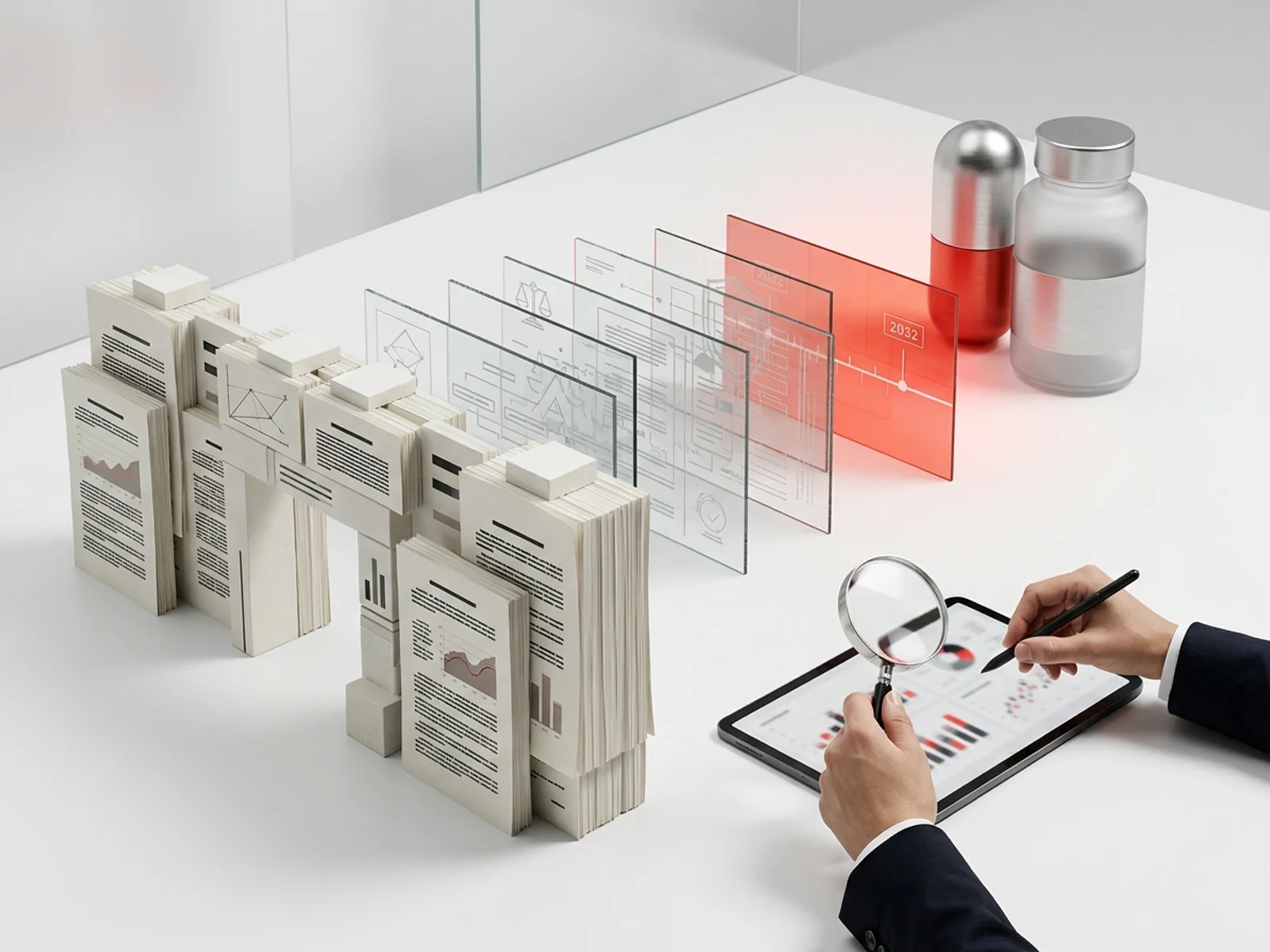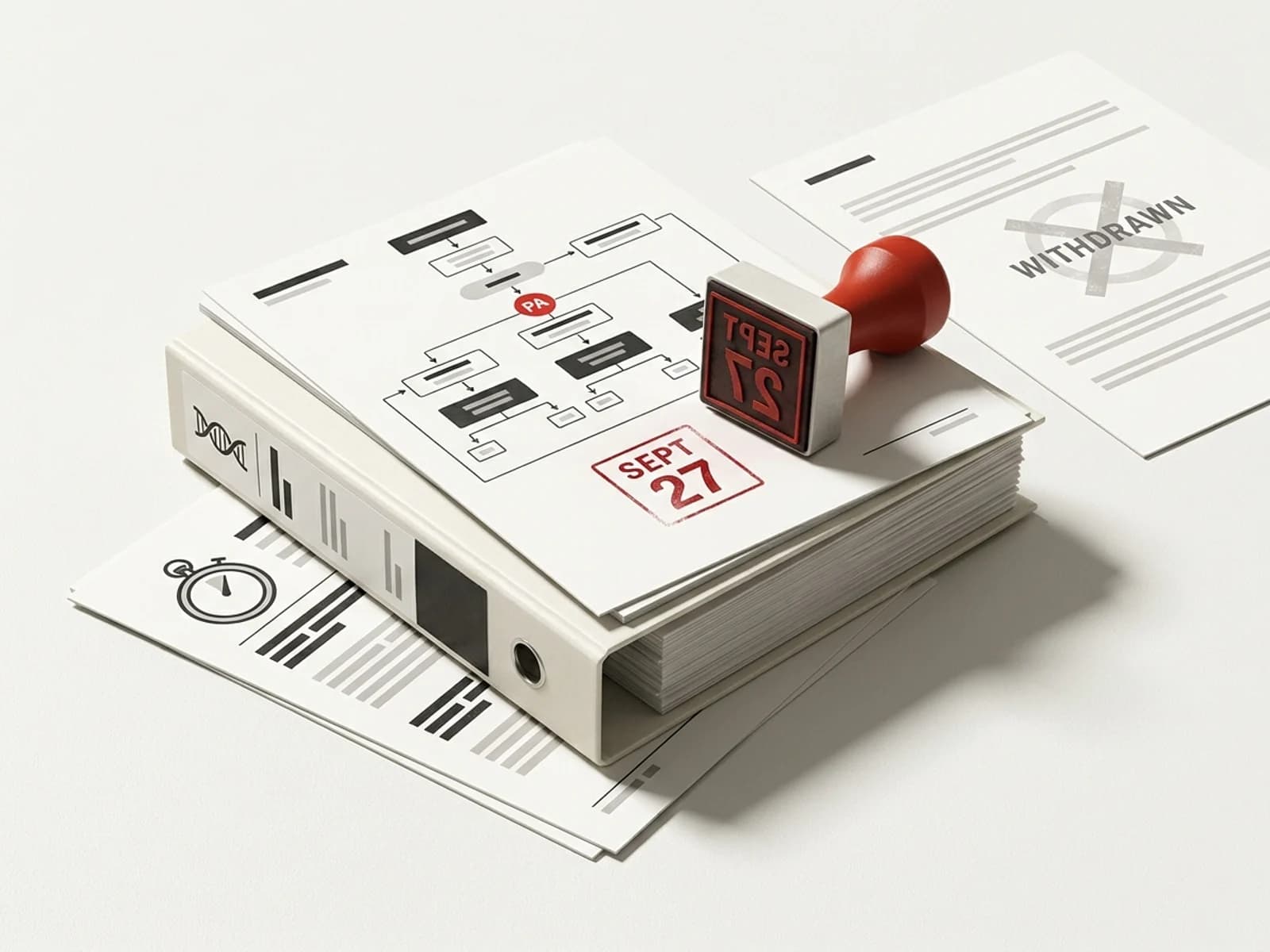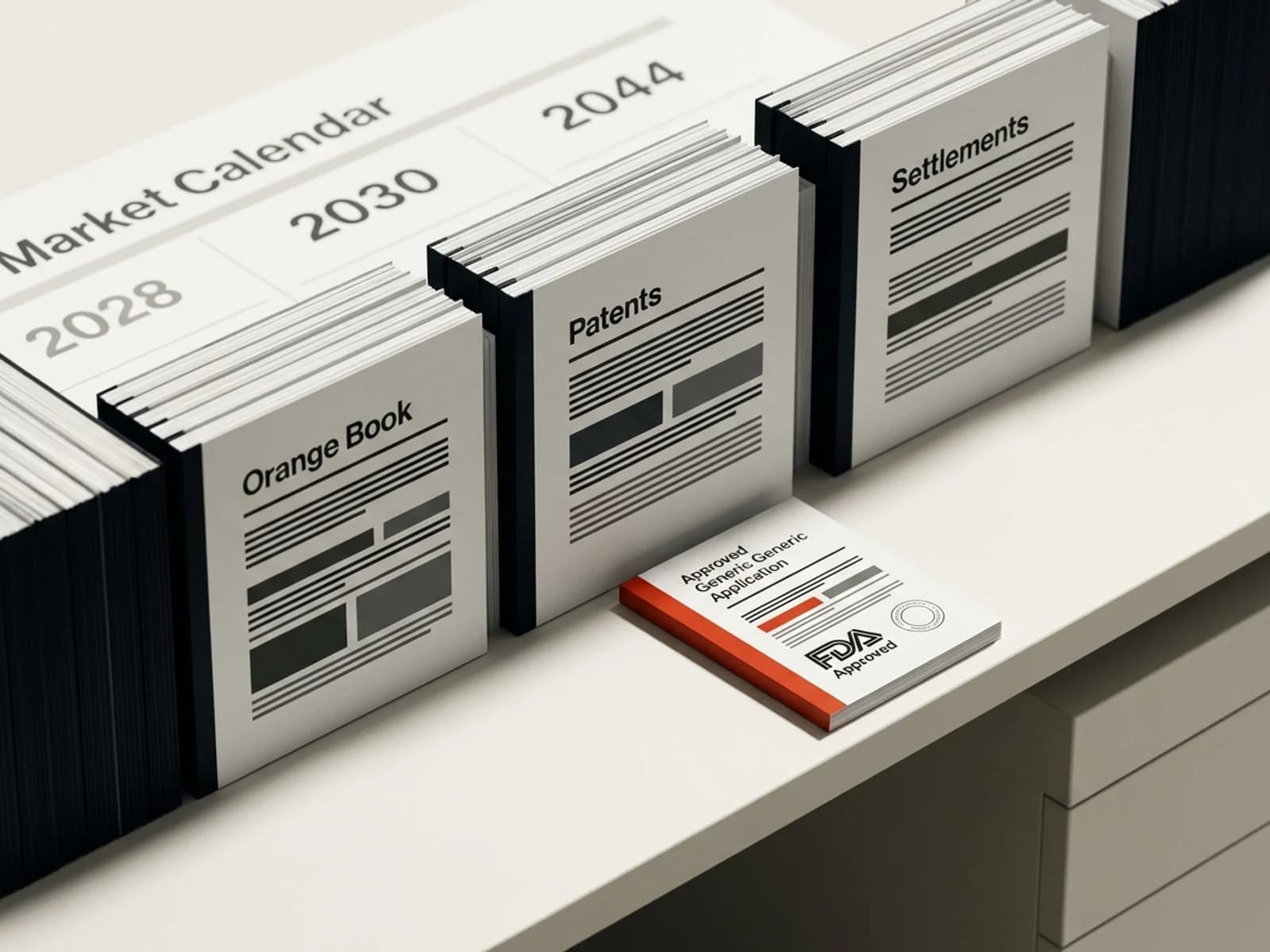
On August 17, 2026, Lupin Limited announced that the U.S. Food and Drug Administration (FDA) granted final approval for its Abbreviated New Drug Application (ANDA 218846) for pitolisant tablets in 4.45 mg and 17.8 mg strengths, bioequivalent to the reference listed drug (RLD) Wakix (NDA 211150, held by Harmony Biosciences). The announcement triggered immediate market speculation across managed care and sleep-medicine networks regarding when commercial generic supply will reach retail and specialty pharmacy dispensing counters.
The short answer for pharmacy and therapeutics (P&T) committees, specialty pharmacy directors, and commercial payer formulary leads is clear: no generic pitolisant tablet will enter commercial distribution in the United States before 2030.
While Lupin’s regulatory submission has cleared every scientific, chemical, manufacturing, and bioequivalence hurdle to earn full final approval—converting from its prior tentative approval dated March 23, 2026 in the Drugs@FDA database—the actual commercial launch is strictly gated by a binding patent litigation settlement executed on June 5, 2025. That private contract is further buttressed by an underlying Orange Book patent and orphan drug exclusivity (ODE) fence that shields the brand from uncoordinated generic erosion well into the next decade.
Understanding why a fully approved generic is parked off-market for nearly four years requires examining the intersection of Hatch-Waxman patent listings, multi-layered orphan exclusivity protections, Paragraph IV litigation dynamics, and brand lifecycle defense.
What exactly did FDA approve on August 17, 2026, and how does it differ from tentative approval?
To understand Lupin's regulatory milestone, one must distinguish between an FDA tentative approval and a final approval under Section 505(j) of the Federal Food, Drug, and Cosmetic Act (FD&C Act; 21 U.S.C. 355(j)).
On March 23, 2026, FDA granted tentative approval to Lupin's ANDA 218846 for pitolisant tablets (manufactured at Lupin's facility in Nagpur, India; announced by Lupin on March 25). A tentative approval indicates that an ANDA meets all technical, chemical, manufacturing, controls (CMC), and bioequivalence standards required for approval, but is legally blocked from commercial marketing by unexpired patents or regulatory exclusivities listed in the FDA Orange Book (Approved Drug Products with Therapeutic Equivalence Evaluations).
Lupin's conversion to final approval, announced August 17, 2026, came three days after the August 14, 2026 expiration of Wakix's original 7-year Orphan Drug Exclusivity (ODE-255) for the treatment of excessive daytime sleepiness (EDS) in adult patients with narcolepsy—timing that strongly suggests the lapse of that orphan barrier was the gating event for this filer's approval. The public record is not quite that clean, however: Drugs@FDA shows Novitium's ANDA 218495 converting to final approval earlier, on July 21, 2026, indicating that filer-specific patent certifications and label carve-outs—not a single calendar gate—drive each approval date.
However, final FDA approval only satisfies statutory safety and efficacy clearance under federal drug law. It does not override patent infringement remedies, court injunctions, or private settlement agreements governed by contract law.
The Orange Book patent fence: three patents protecting pitolisant
According to the FDA Orange Book relational dataset for NDA 211150, Harmony Biosciences listed three patents across the 4.45 mg and 17.8 mg tablet presentations (producing 10 total patent listing rows across strengths and use codes):
| Patent Number | Expiration Date | Orange Book Flags / Use Codes | Scope & Functional Role |
|---|---|---|---|
| US 8,354,430 | February 6, 2026 (expired) | U-1101 (treatment of excessive daytime sleepiness in adult patients with narcolepsy) U-1102 (treatment of cataplexy in adult patients with narcolepsy) | Method-of-use patent on the adult narcolepsy indications; no longer a barrier |
| US 8,486,947 | September 26, 2029 | U-1101 U-1102 | Method-of-use patent covering both adult narcolepsy indications; carve-out ("skinny label") territory |
| US 8,207,197 | March 7, 2030 | Drug Substance (DS) Drug Product (DP) | Pitolisant monohydrochloride salt—covers the molecule itself and the tablet (the binding barrier) |
The definitive statutory anchor is US Patent No. 8,207,197 (the '197 patent), titled "Monohydrochloride salt of 1-[3-[3-(4-chlorophenyl) propoxy] propyl]-piperidine." Because the '197 patent covers both the active pharmaceutical ingredient (API drug substance) and the pharmaceutical dosage form (drug product), an ANDA applicant cannot design around or "skinny label" carve out this patent. Any generic tablet containing pitolisant hydrochloride inherently infringes the '197 patent unless the patent is successfully invalidated or proven unenforceable through formal Paragraph IV litigation.
The '197 patent expires on March 7, 2030. This date forms the hard structural ceiling of Harmony's primary small-molecule exclusivity window in the United States.
Why does Wakix have five exclusivity rows in the Orange Book?
In addition to patent listings, Wakix is fortified by one of the most intricate orphan-drug exclusivity stacks in the central nervous system (CNS) specialty market.
Under Section 527 of the FD&C Act (21 U.S.C. 360cc), designated orphan drugs enjoy a 7-year period of market exclusivity for the approved indication, during which FDA may not approve another sponsor's NDA or ANDA for the same drug and same disease indication unless clinical superiority is demonstrated.
The Orange Book exclusivity table records five exclusivity rows per strength — four orphan-drug exclusivity (ODE) rows plus one New Patient Population (NPP) row:
| Exclusivity Code | Expiration Date | What It Protects |
|---|---|---|
| NPP | June 21, 2027 | New patient population from the June 21, 2024 pediatric EDS supplement (3-year protection) |
| ODE-255 | August 14, 2026 (expired) | Adult EDS in narcolepsy (original August 14, 2019 approval) |
| ODE-331 | October 13, 2027 | Adult cataplexy in narcolepsy (October 13, 2020 approval) |
| ODE-489 | June 21, 2031 | Pediatric EDS in narcolepsy (June 21, 2024 approval) |
| ODE-519 | February 13, 2033 | Pediatric cataplexy in narcolepsy (February 13, 2026 approval) |
This tiered exclusivity structure demonstrates how a brand sponsor can systematically expand its labeled indications over time to build consecutive waves of orphan protection:
Adult EDS (ODE-255): Expired August 14, 2026—days before the Lupin final approval announcement.
Adult Cataplexy (ODE-331): Protects the adult cataplexy indication through October 13, 2027.
Pediatric Expansion (ODE-489 & ODE-519): In June 2024, FDA approved Wakix for pediatric EDS, granting ODE-489 through June 21, 2031. On February 13, 2026, FDA approved the pediatric cataplexy supplemental NDA (sNDA), securing ODE-519 through February 13, 2033.
Skinny labeling vs uncarveable patent barriers
When Lupin launches in 2030, ODE-489 (pediatric EDS to 2031) and ODE-519 (pediatric cataplexy to 2033) will still be legally active. Under Hatch-Waxman section 505(j)(2)(A)(viii), generic filers routinely "carve out" orphan-protected pediatric indications from their package inserts, marketing a "skinny label" restricted solely to adult indications.
However, because the '197 substance patent runs through March 2030, a generic sponsor cannot use a skinny label to launch early against adult indications—the patent blocks the physical molecule itself.
What the June 5, 2025 Lupin settlement actually allows
On June 5, 2025, Harmony Biosciences Holdings, Inc. announced a definitive confidential settlement agreement resolving patent infringement litigation with Lupin in the U.S. District Court for the District of Delaware.
As disclosed in Harmony's Form 8-K and subsequent SEC filings (Exhibit 99.1 to Form 10-Q for Q2 2025), the settlement established the following key commercial terms:
Licensed Entry Date: Harmony granted Lupin a non-exclusive license to market and commercialize generic pitolisant tablets in the United States starting no earlier than January 2030.
Pediatric Exclusivity Extension: If Harmony secures pediatric exclusivity (a 6-month statutory extension under Section 505A of the FD&C Act attached to listed patents), Lupin's licensed entry date shifts outward to July 2030.
Early-Entry Acceleration Clauses ("Certain Circumstances"): The agreement contains customary acceleration provisions permitting Lupin to launch prior to January 2030 under specific contingent events. Although the precise operational triggers remain confidential, standard industry Hatch-Waxman acceleration clauses include:
A final, unappealable court decision in litigation with another ANDA filer holding that all asserted claims of the '197 patent are invalid or unenforceable.
An unlicensed generic competitor launching "at risk" without Harmony obtaining an immediate preliminary injunction.
Harmony launching or licensing an authorized generic (AG) through another partner ahead of the settlement date.
Litigation Dismissal: All pending claims and counterclaims between Harmony and Lupin in Delaware district court were dismissed with prejudice.
This settlement effectively guarantees Lupin a front-row seat for generic market entry in early 2030, closely synchronized with the March 2030 expiration of the '197 patent, while insulating Harmony from further litigation risk from Lupin.
The competitive field: four pitolisant ANDA filers
Lupin is not the sole generic challenger seeking to market pitolisant. An analysis of the FDA Drugs@FDA relational database identifies four distinct ANDA sponsors that have submitted applications referencing Wakix:
| ANDA Number | Sponsor | Status in Drugs@FDA |
|---|---|---|
| 218495 | Novitium Pharma | Final approval July 21, 2026 |
| 218832 | Annora Pharma | Tentative approval September 2, 2025 |
| 218846 | Lupin Limited | Tentative approval March 23, 2026; final approval announced August 17, 2026 |
| 218873 | MSN Laboratories | Tentative approval May 6, 2025 |
Novitium's July 21, 2026 final approval makes it the first generic pitolisant applicant to hold full approval—not Lupin. Neither approval translates into market entry: both filers' launch dates are governed by their own litigation outcomes or settlement licenses, which are not disclosed row-by-row in FDA records.
In its Q2 2025 earnings disclosures, Harmony characterized the Lupin agreement as the third settlement achieved in its consolidated ANDA litigation, confirming that multiple ANDA filers had already reached negotiated resolutions.
For any remaining unsettled filer, the path to an early launch is steep. To enter before 2030 without a license, a challenger must litigate the '197 substance patent to final judgment in the Delaware district court and defend against a subsequent appeal at the U.S. Court of Appeals for the Federal Circuit (CAFC). Given the robust presumption of patent validity and the composition-of-matter nature of the '197 patent, an early generic launch triggered by patent invalidation remains an improbable outlier.
For background on how statutory exclusivity periods govern first-filer advantages and potential forfeitures, see our analysis of 180-day exclusivity forfeiture mechanics.
What the brand is doing: billion-dollar franchise defense to 2044
Harmony Biosciences is executing a classic biopharma lifecycle management strategy to transition its patient base before the 2030 generic cliff. The scale of the asset justifies aggressive capital deployment:
Net Revenue Growth: Wakix generated $714.73 million in net product revenue in FY2024 and $868.45 million in FY2025.
2026 Guidance: Harmony's FY2026 financial guidance projects net revenues of $1.00 billion to $1.04 billion, cementing Wakix's blockbuster status.
Dispensing Channel Economics: Wakix is distributed exclusively through a closed specialty pharmacy network. A query of the CMS National Average Drug Acquisition Cost (NADAC) database confirms zero rows for pitolisant, reflecting the absence of traditional retail pharmacy wholesale acquisition benchmarks.
Lifecycle expansion pillars
To insulate the franchise against the 2030 generic entry, Harmony is advancing three strategic initiatives:
Idiopathic Hypersomnia (IH) Indication: Harmony is pursuing supplemental filings for idiopathic hypersomnia, seeking to expand its addressable sleep-disorder population beyond narcolepsy.
Next-Generation Pitolisant Formulations: Harmony has developed modified-release, extended-release, and high-bioavailability formulations of pitolisant (including gastroretentive and alternative salt technologies). The company has filed new patent applications covering these proprietary formulations, establishing potential patent exclusivity extending out to 2044.
Franchise Diversification: Through strategic business development, Harmony has expanded into adjacent rare neurological conditions to reduce revenue concentration risk ahead of 2030.
To compare this market structure with broader central hypersomnolence treatment protocols, review our comprehensive narcolepsy and idiopathic hypersomnia access landscape. For competitive context on novel mechanisms entering the sleep space, see our analysis of Orzeyful (oveporexton) orexin-2 agonist approval.
Strategic roadmap for payers, P&T committees, and specialty pharmacies
With generic pitolisant fully approved on paper but legally constrained until 2030, managed care organizations and specialty pharmacy networks should organize their operating assumptions around four clear principles:
1. Maintain Wakix on specialty tiering through 2029
Health plans should not adjust actuarial models or anticipate generic deflation for pitolisant prior to 2030. Wakix will remain a brand-only, single-source specialty product. Prior authorization (PA) criteria requiring polysomnography (PSG), Multiple Sleep Latency Tests (MSLT), and documentation of excessive daytime sleepiness will remain standard utilization management tools.
2. Monitor patent litigation dockets for early-entry triggers
Market access and trade-relations teams should monitor the District of Delaware docket for ongoing litigation involving Novitium, Annora, or MSN Laboratories. While an early invalidation of the '197 patent is unlikely, any court decision invalidating the substance patent could trigger Lupin's early-entry acceleration clause.
3. Anticipate brand product-hopping and formulation switches
Between 2027 and 2029, Harmony will likely launch its next-generation pitolisant formulations. P&T committees should prepare for intense brand-driven conversion campaigns designed to shift patients to extended-release formulations before generic immediate-release pitolisant launches in 2030. Payers should establish clear step-therapy rules requiring trials of generic immediate-release pitolisant once available in 2030 before approving next-generation brand line extensions.
4. Evaluate portfolio-level generic patent cliffs
For broader market context on how generic drug pipelines and settlement dates intersect with commercial formulary planning across therapeutic classes, see our 2026–2027 generic launch opportunity scorecard, our analysis of when generic Ozempic (semaglutide) becomes available, and the industry-wide overview of FDA market exclusivity in the Orange Book by the numbers.
Frequently Asked Questions
Is generic Wakix available at pharmacies right now?
No. Although Lupin received final FDA approval for ANDA 218846 on August 17, 2026, a binding patent settlement agreement with Harmony Biosciences prevents commercial launch before January 2030 (or July 2030 if pediatric exclusivity attaches).
Why did FDA grant final approval if the generic cannot launch?
FDA approval evaluates only whether an ANDA is bioequivalent, safe, and chemically sound, and whether statutory FDA-administered exclusivities (such as ODE-255, which expired August 14, 2026) have lapsed. FDA does not enforce private patent settlement agreements; launch timing is governed by the settlement contract between the parties.
Which patents protect Wakix in the FDA Orange Book?
Wakix (NDA 211150) lists three patents: US 8,354,430 (expired February 2026), US 8,486,947 (method of use, expiring September 2029), and US 8,207,197 (drug substance and drug product, expiring March 7, 2030). The '197 patent is the primary barrier to generic entry.
Does orphan-drug exclusivity block generic pitolisant?
The initial adult EDS orphan exclusivity (ODE-255) expired on August 14, 2026, enabling Lupin's final approval. While subsequent orphan exclusivities for adult cataplexy (ODE-331 to 2027), pediatric EDS (ODE-489 to 2031), and pediatric cataplexy (ODE-519 to 2033) remain active, generic filers can carve out protected indications via skinny labeling once the '197 patent expires in 2030.
Could another generic filer launch before Lupin?
Novitium already holds an earlier final approval (July 21, 2026), so an earlier launch is legally possible if its own settlement or litigation posture allows. Otherwise, an unsettled filer would need to invalidate the '197 patent in federal court or win a non-infringement ruling. Harmony disclosed that Lupin was its third settlement, indicating most filers have agreed to coordinated entry timelines.
How much revenue does Wakix generate annually?
Wakix generated $714.73 million in 2024 and $868.45 million in 2025, with Harmony's FY2026 guidance projecting net product revenues between $1.00 billion and $1.04 billion.
Sources
FDA Orange Book: Approved Drug Products with Therapeutic Equivalence Evaluations. NDA 211150 (Wakix / Pitolisant Tablets). Patent and Exclusivity Data.
https://www.accessdata.fda.gov/scripts/cder/ob/Lupin Limited. Lupin Announces Approval from U.S. FDA for Pitolisant Tablets. PR Newswire / BioSpace, August 17, 2026.
https://www.biospace.com/press-releases/lupin-announces-approval-from-u-s-fda-for-pitolisant-tabletsLupin Limited. Lupin Receives Tentative Approval from U.S. FDA for Pitolisant Tablets. Corporate Press Release, March 25, 2026.
https://www.lupin.com/media/press-releases/lupin-receives-tentative-approval-from-u-s-fda-for-pitolisant-tabletsHarmony Biosciences Holdings, Inc. Harmony Biosciences Strengthens Patent Position With Favorable Settlement in ANDA Litigation. Business Wire, June 5, 2025.
https://ir.harmonybiosciences.com/news-releases/news-release-details/harmony-biosciences-strengthens-patent-position-favorableU.S. Securities and Exchange Commission (SEC). Harmony Biosciences Holdings, Inc. Form 10-Q for the Quarterly Period Ended June 30, 2025 (Exhibit 99.1). Filed August 5, 2025.
https://www.sec.gov/Archives/edgar/data/1802665/000155837025010182/hrmy-20250805xex99d1.htmFDA Office of Orphan Products Development (OOPD). Orphan Drug Designations and Approvals Database: Pitolisant (Designation & Approval Records).
https://www.accessdata.fda.gov/scripts/opdlisting/oopd/detailedIndex.cfm?cfgridkey=307210Drugs@FDA: FDA-Approved Drugs Database. Application Search: Pitolisant (NDA 211150, ANDA 218495, ANDA 218832, ANDA 218846, ANDA 218873).
https://www.accessdata.fda.gov/scripts/cder/daf/Centers for Medicare & Medicaid Services (CMS). National Average Drug Acquisition Cost (NADAC) Database (2026-07-24 snapshot).
https://data.medicaid.gov/dataset/4f4a1c1a-65b1-4cf8-9156-3725662f1d5dUnited States Patent and Trademark Office (USPTO). US Patent No. 8,207,197 B2: Monohydrochloride salt of 1-[3-[3-(4-chlorophenyl) propoxy] propyl]-piperidine. Issued June 26, 2012; expires March 7, 2030 (per Orange Book listing).
https://patents.google.com/patent/US8207197B2/en