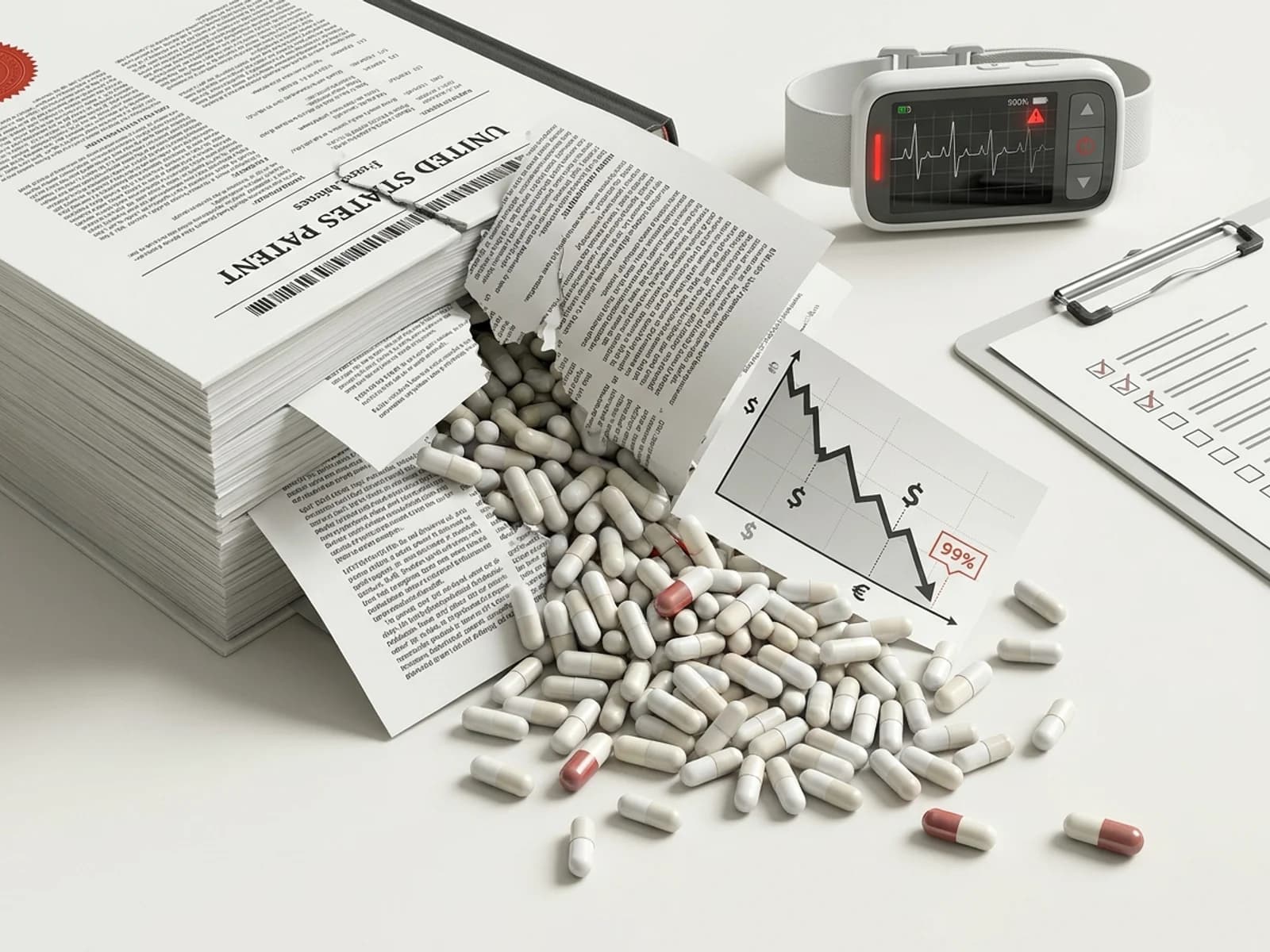
For commercial payers and pharmacy benefit managers (PBMs), blockbuster small-molecule generic launches represent the single largest opportunity to capture immediate savings and reallocate pharmacy spend. In the cardiovascular therapeutic space, few events in recent years have matched the scale of the loss of exclusivity (LOE) for Entresto (sacubitril/valsartan), Novartis’s blockbuster heart failure medication.
For a decade, Entresto served as a foundational therapy for patients with heart failure with reduced ejection fraction (HFrEF) and heart failure with preserved ejection fraction (HFpEF). With a high volume of patients and a retail price exceeding $350 per month, Entresto was a multi-billion-dollar driver of cardiovascular drug spend.
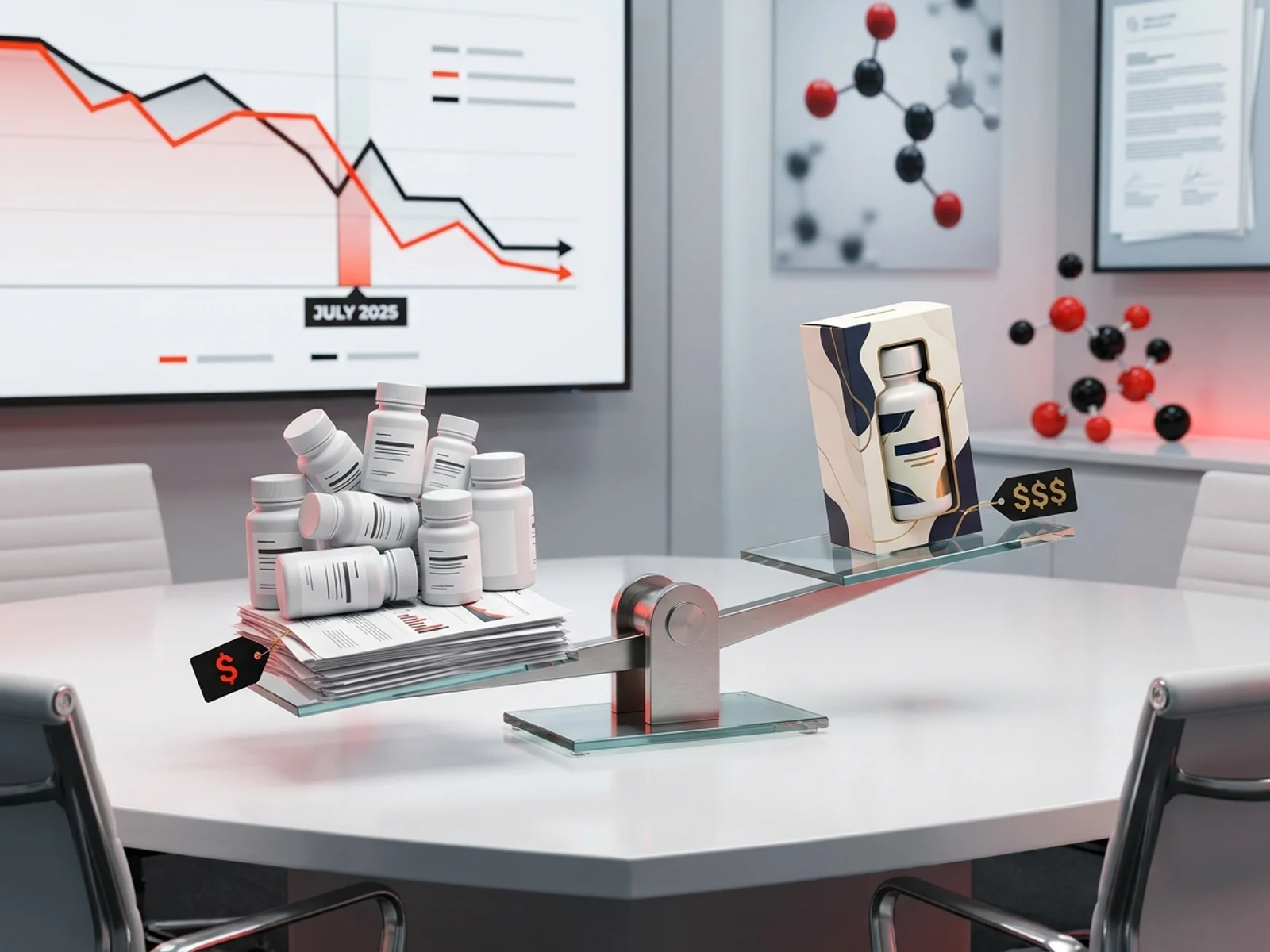
However, the launch of generic alternatives in July 2025 sparked a rapid and dramatic price erosion. Under the retail pharmacy lens, this launch serves as a classic case study of how a multi-source generic wave can dismantle a branded pharmaceutical monopoly within a matter of months.
This analysis reviews the patent litigation and regulatory exclusivity dates that deferred the generic launch to mid-2025, analyzes the actual price erosion across all three therapeutic strengths using the CMS National Average Drug Acquisition Cost (NADAC) database, and details the formulary transition strategies PBMs are using to shift volume.
Executive Summary & Scenario Analysis
To align on the pricing and access dynamics for generic sacubitril/valsartan, we must address the primary questions facing clinical pharmacy directors and benefit designers.
Scenario Question
How has the launch of generic sacubitril/valsartan (Entresto) impacted pricing and payer formulary coverage?
Direct Answer
Generic sacubitril/valsartan entered the U.S. market in July 2025 following the expiration of the pediatric exclusivity period on the core combination patent (US Patent No. 8,101,659) on July 15, 2025. As of June 10, 2026, the retail pharmacy acquisition cost (CMS NADAC) for generic sacubitril/valsartan 97-103 MG is $0.60839 per tablet, representing a 94.7% price erosion from the brand Entresto price of $11.58677 per tablet. The other strengths—24-26 MG (generic at $0.53757 vs. brand at $11.59154) and 49-51 MG (generic at $0.54985 vs. brand at $11.54554)—show discounts of 95.3% and 95.2% respectively. Consequently, payers and PBMs are rapidly implementing formulary exclusions for brand Entresto, routing patient volume to generic sacubitril/valsartan to capture significant savings.
Clinical Foundation: Why Entresto Became the Preferred Therapy
To understand the volume of cardiovascular drug spend at stake during the Entresto generic wave, we must review the clinical trials that established sacubitril/valsartan as standard therapy in heart failure guidelines.
Prior to Entresto's approval in 2015, the pharmacological management of chronic heart failure relied on Angiotensin-Converting Enzyme (ACE) inhibitors (such as lisinopril or enalapril) or Angiotensin II Receptor Blockers (ARBs) (such as valsartan or candesartan) combined with beta-blockers and mineralocorticoid receptor antagonists (MRAs).
The PARADIGM-HF Trial
Novartis established the clinical superiority of Entresto through the landmark PARADIGM-HF trial (NCT01035255). This randomized, double-blind, active-controlled Phase III trial compared sacubitril/valsartan (target dose 97/103 mg twice daily) against the ACE inhibitor enalapril (10 mg twice daily) in 8,442 patients with HFrEF (ejection fraction ≤ 40%).
The trial was stopped early due to evidence of clinical efficacy. Key results included:
Primary Endpoint: A 20% reduction in the risk of the composite endpoint of cardiovascular death or hospitalization for heart failure (HR: 0.80; 95% CI: 0.73–0.87; $p < 0.0001$).
Cardiovascular Death: A 20% reduction in cardiovascular mortality alone.
Heart Failure Hospitalizations: A 21% reduction in first hospitalizations.
All-Cause Mortality: A 16% reduction in overall risk of death.
By demonstrating that sacubitril/valsartan was significantly more effective than standard ACE inhibition, the PARADIGM-HF results led to revisions of the American College of Cardiology/American Heart Association (ACC/AHA) and European Society of Cardiology (ESC) clinical guidelines. Sacubitril/valsartan (classified as an ARNI, or Angiotensin Receptor-Neprilysin Inhibitor) was elevated to a Class I recommendation for HFrEF patients, displacing standard ACE inhibitors and ARBs as the preferred first-line guideline-recommended therapy.
This clinical positioning translated into rapid commercial growth. By 2024, millions of U.S. patients were taking Entresto daily, creating a massive cardiovascular drug spend footprint for commercial plans and Medicare Part D sponsors.
The Chemistry & Patent Defense: Novartis's '659 Crystalline Complex
The key to Entresto's commercial monopoly—and the subsequent legal battles—lies in its unique molecular chemistry.
Unlike simple combination drugs that package two distinct molecules into a single tablet, Entresto is a co-crystal complex. The active moiety, known chemically as sacubitril valsartan sodium hydrate complex, is a single supramolecular complex containing:
6 anionic molecules of sacubitril (a neprilysin inhibitor prodrug)
6 anionic molecules of valsartan (an angiotensin II receptor blocker)
18 sodium cations
15 water molecules
This complex co-crystal structure provides physical stability, solubility, and bioavailability compared to a physical mixture of separate sacubitril and valsartan salts.
The '659 Patent Wall
Novartis secured broad patent coverage for this co-crystal complex under US Patent No. 8,101,659 (the '659 patent), which claimed the specific crystalline complex of sacubitril and valsartan. Because the '659 patent claimed the very substance of the co-crystal, it formed an absolute barrier to generic alternatives.
The '659 patent was originally set to expire in January 2025. However, Novartis conducted pediatric clinical studies evaluating sacubitril/valsartan in pediatric heart failure patients (the PANORAMA-HF trial), leading to the FDA granting a six-month pediatric exclusivity extension. This extension moved the effective expiration date and the earliest FDA approval gate to July 15, 2025.
Paragraph IV Litigation: Clear Runway for Generic Launch
Under the Hatch-Waxman Act, generic manufacturers sought to challenge Novartis's secondary patents (covering specific amorphous forms, methods of dosing, and manufacturing methods) by filing Paragraph IV certifications. For a broader explanation of these patent certification mechanics, refer to the Hatch-Waxman regulatory and patent certification playbook.
Novartis filed patent infringement lawsuits in the U.S. District Court for the District of Delaware to defend its market exclusivity. The critical legal confrontation occurred in early July 2025, centering on US Patent No. 11,096,918 (the '918 patent) which covered methods of treating heart failure with specific dosing titrations.
On July 11, 2025, the U.S. District Court ruled that Novartis had not proven that MSN's generic product infringed the '918 patent. This ruling, combined with the expiration of pediatric exclusivity on the '659 patent on July 15, 2025, opened the market for immediate generic entry:
Novadoz/MSN Launch: MSN launched its generic sacubitril/valsartan tablets on July 22, 2025.
Torrent Launch: Torrent Pharmaceuticals launched its generic version on July 24, 2025.
Approved ANDA Inventory
Following these initial launches, a wave of generic developers received final approval for their ANDAs. The presence of 14 separate approved generic developers ensured a rapid commodity transition.
The table below lists the approved ANDA holders for sacubitril/valsartan tablets as recorded in the FDA database:
| Generic Applicant | ANDA Number | FDA Approval Date | Available Strengths |
|---|---|---|---|
| Crystal Pharmaceutical | ANDA 213605 | May 28, 2024 | 24/26 mg, 49/51 mg, 97/103 mg |
| Laurus Labs | ANDA 213676 | May 28, 2024 | 24/26 mg, 49/51 mg, 97/103 mg |
| Alembic Pharmaceuticals | ANDA 213682 | May 28, 2024 | 24/26 mg, 49/51 mg, 97/103 mg |
| Zydus Pharmaceuticals | ANDA 213719 | July 9, 2024 | 24/26 mg, 49/51 mg, 97/103 mg |
| Torrent Pharmaceuticals | ANDA 213604 | August 22, 2024 | 24/26 mg, 49/51 mg, 97/103 mg |
| Biocon Pharma | ANDA 213680 | August 30, 2024 | 24/26 mg, 49/51 mg, 97/103 mg |
| Alkem Laboratories | ANDA 213764 | September 16, 2024 | 24/26 mg, 49/51 mg, 97/103 mg |
| Macleods Pharmaceuticals | ANDA 213728 | October 16, 2024 | 24/26 mg, 49/51 mg, 97/103 mg |
| Lupin Ltd. | ANDA 213808 | January 8, 2025 | 24/26 mg, 49/51 mg, 97/103 mg |
| Dr. Reddy's Laboratories | ANDA 213627 | January 13, 2025 | 24/26 mg, 49/51 mg, 97/103 mg |
| Novugen Pharma | ANDA 213611 | July 16, 2025 | 24/26 mg, 49/51 mg, 97/103 mg |
| MSN Laboratories | ANDA 213748 | July 16, 2025 | 24/26 mg, 49/51 mg, 97/103 mg |
| Hetero Labs Ltd. | ANDA 213668 | July 17, 2025 | 24/26 mg, 49/51 mg, 97/103 mg |
| Somerset Therapeutics | ANDA 219983 | January 20, 2026 | 24/26 mg, 49/51 mg, 97/103 mg |
This large field of competitors launched products between July 2025 and January 2026, driving down prices as they competed for retail pharmacy accounts.
Pharmacy Acquisition Costs: Analyzing the CMS NADAC Data
To quantify the financial impact of this generic wave, we analyzed retail pharmacy drug acquisition costs using the CMS National Average Drug Acquisition Cost (NADAC) database.
NADAC represents the average price retail pharmacies pay to acquire drugs from wholesalers, serving as a primary benchmark for Medicaid and commercial pharmacy reimbursement schedules. For background on how this pricing index is compiled, see our analysis of CMS NADAC pharmacy acquisition cost benchmarks.
Price Erosion Across Therapeutic Strengths
Our analysis of the June 10, 2026 CMS NADAC database reveals that the price of generic sacubitril/valsartan has collapsed by 94.7% to 95.3% relative to brand Entresto.
Below is the comparative pricing structure for all three standard tablet strengths:
| Strength | Brand Product | Brand NDC | Brand NADAC (per unit) | Generic Product | Generic NDC | Generic NADAC (per unit) | Percentage Discount |
|---|---|---|---|---|---|---|---|
| 24-26 MG | Entresto Tablet | 00078-0659-20 | $11.59154 | Sacubitril-Valsartan | 00904-7580-04 | $0.53757 | 95.36% |
| 49-51 MG | Entresto Tablet | 00078-0777-20 | $11.54554 | Sacubitril-Valsartan | 00904-7582-04 | $0.54985 | 95.24% |
| 97-103 MG | Entresto Tablet | 00078-0696-20 | $11.58677 | Sacubitril-Valsartan | 70377-0033-13 | $0.60839 | 94.75% |
Note: All data points are extracted from the CMS NADAC database snapshot dated June 10, 2026. The NDCs listed represent typical packaging configurations for brand and generic products.
This pricing profile demonstrates the rapid commodity-price transition that occurs when more than a dozen generic competitors target the same molecule. In a single-source or dual-source generic market, the discount to brand is typically limited to 20% to 40%. However, with 14 active ANDA holders competing for wholesaler inventory and retail shelf space, the price has fallen to near the cost of manufacturing.
Payer Formulary Transitions: PBM Strategies
With retail pharmacy acquisition costs for generic sacubitril/valsartan dropping below $0.61 per tablet (translating to less than $37 for a 30-day supply of 60 tablets, compared to over $690 for brand Entresto), payers and PBMs have adjusted their formularies to capture these savings.
1. Brand Exclusions and Preferred Generic Routing
Prior to July 2025, PBMs typically placed brand Entresto on Tier 2 (Preferred Brand) of their commercial formularies, backed by rebate agreements with Novartis.
Following the generic price erosion in late 2025 and early 2026:
Formulary Exclusion: Major PBMs (such as Express Scripts, Caremark, and OptumRx) have moved brand Entresto to "Excluded" status on their national standard formularies.
Preferred Generic Status: Generic sacubitril/valsartan has been positioned on Tier 1 (Preferred Generic), with a low copay to incentivize patient adoption.
Prior Authorization for Brand: If a patient or provider requests brand Entresto, the PBM requires a prior authorization demonstrating clinical necessity, such as a documented therapeutic failure or adverse reaction to the generic excipients.
2. Auto-Substitution at the Pharmacy Counter
Because generic sacubitril/valsartan is rated as therapeutic equivalent (A-rated) to brand Entresto tablets in the Orange Book, retail pharmacists can automatically substitute the generic version when a prescription for "Entresto" is presented, unless the physician writes "Dispense as Written" (DAW) or "Brand Medically Necessary."
This auto-substitution has driven rapid volume conversion, with generic penetration rates exceeding 90% within the first 180 days of launch.
3. The Entresto Sprinkle Exception
Payer clinical teams must monitor one important exception to generic substitution: Entresto Sprinkle.
Entresto Sprinkle BLA 218591: Approved by the FDA on April 12, 2024, Entresto Sprinkle represents an oral pellet formulation designed for patients (typically pediatric or geriatric) who have difficulty swallowing whole tablets.
Orange Book Rating: Because Entresto Sprinkle uses a different delivery mechanism and has unique pharmacokinetic properties compared to standard tablets, it is not therapeutically equivalent (not A-rated) to standard sacubitril/valsartan tablets.
Generic Exemption: Generic manufacturers have not yet launched a generic equivalent for Entresto Sprinkle, and standard generic substitution laws do not apply.
Formulary Management: Payers must implement separate medical policies for Entresto Sprinkle. This includes placing it on a non-preferred brand tier (Tier 3) or requiring a prior authorization demonstrating that the patient is unable to use standard sacubitril/valsartan tablets (even when crushed or mixed with soft food) before approving the brand-only Sprinkle formulation.
Payer Utilization Management and Step-Therapy Frameworks
As PBMs exclude brand Entresto from standard commercial formularies, clinical pharmacy teams have restructured prior authorization (PA) and utilization management (UM) templates to manage heart failure therapeutic spending.
Prior Authorization Criteria for Generic Sacubitril/Valsartan
For generic sacubitril/valsartan, payers are removing restrictive step-therapy rules that formerly required trials of ACE inhibitors or ARBs, given that ARNIs are now preferred under clinical guidelines. However, a baseline clinical PA is often maintained to verify clinical eligibility:
Diagnosis Verification: A documented diagnosis of chronic heart failure (NYHA Class II, III, or IV).
Left Ventricular Ejection Fraction (LVEF): Documentation of reduced ejection fraction (typically LVEF ≤ 40%) for HFrEF patients, or preserved ejection fraction supporting chronic therapy.
Prescriber Specialty: The prescription must be written by, or in consultation with, a cardiologist.
Contraindications Check: Verification that the patient is not taking concurrent ACE inhibitors (requiring a 36-hour washout period to prevent angioedema) or has a history of hereditary angioedema.
By converting these PA templates to a "generic-preferred" structure, payers ensure that the plan net cost remains aligned with the $0.60 per tablet benchmark, minimizing plan leakage to higher-cost branded therapeutic alternatives.
Retail Dispensing and the Role of State Generic Substitution Laws
The velocity of the transition from brand Entresto to generic sacubitril/valsartan was accelerated by state-level generic substitution regulations.
Permissive vs. Mandatory Substitution States
U.S. states manage pharmacy dispensing under two primary statutory frameworks:
Mandatory Substitution States: In states like Massachusetts, Florida, and New York, pharmacists are legally required to substitute a less expensive, A-rated generic equivalent for a brand-name drug unless the prescriber explicitly documents a DAW or "brand medically necessary" directive. This mandatory framework drives generic conversion rates to over 95% within the first 30 days of generic availability.
Permissive Substitution States: In states like California and Texas, pharmacists are permitted, but not required, to substitute the generic equivalent. However, because commercial insurance plans impose high co-pay penalties (such as DAW penalties where the patient pays the generic copay plus the full difference in WAC between the brand and the generic) on patients who choose the brand, the financial pressure on the consumer results in equivalent transition rates.
This statutory infrastructure ensures that once generic competition enters the market with multiple ANDAs, the branded manufacturer's volume collapses almost immediately, shifting the market to a low-cost, commodity pricing model.
Economic Implications for Benefit Design
The success of the sacubitril/valsartan generic transition highlights several best practices for pharmacy benefit design:
Eliminate Brand Rebate Dependency: Branded drug manufacturers often offer retroactive rebates to secure preferred formulary positioning. PBMs must verify that the net cost of the brand-name drug (after rebates) is not used to delay generic transition once the generic price has eroded by more than 80%. A WAC-to-WAC comparison shows the generic is significantly more cost-effective.
Generic Co-Pay Incentives: Payers should set the generic copay to $0 or a minimal amount (e.g., $5) to encourage patients to transition immediately, offsetting any remaining brand-name preferences.
Active Therapeutic Class Reviews: Clinical committees should review entire therapeutic classes (such as heart failure medications, including ACE inhibitors, ARBs, and beta-blockers) to ensure that clinical protocols align with the new availability of cheap, highly effective generic ARNI (Angiotensin Receptor-Neprilysin Inhibitor) therapy.
FAQ Section
Why is Entresto Sprinkle excluded from generic substitution lists?
Entresto Sprinkle is an oral pellet formulation approved under a separate NDA with a different administration pathway. The FDA has not rated generic sacubitril/valsartan tablets as therapeutically equivalent to the Sprinkle formulation, meaning pharmacists cannot automatically substitute generic tablets for Entresto Sprinkle prescriptions. It remains a brand-only product subject to separate formulary criteria.
How many generic developers have approved ANDAs for sacubitril/valsartan?
At least 14 generic developers have approved ANDAs for sacubitril/valsartan tablets in the FDA Orange Book. Key approved ANDA holders include MSN (Novadoz), Torrent, Dr. Reddy's, Lupin, Zydus, Alembic, Laurus, Biocon, Crystal, Novugen, Alkem, Somerset, Macleods, and Hetero. This high level of competition is the primary driver of the 95% price erosion.
What was the significance of the July 2025 court ruling in the MSN Pharmaceuticals litigation?
On July 11, 2025, the U.S. District Court ruled that Novartis had not proven that MSN's generic product infringed its '918 patent. This decision cleared the final legal hurdle, allowing MSN and subsequent generic developers to launch their products immediately after the pediatric exclusivity on the '659 patent expired on July 15, 2025.
How does the CMS NADAC price reflect the real cost paid by pharmacies?
The CMS NADAC (National Average Drug Acquisition Cost) is compiled through weekly surveys of retail pharmacies across the United States. It measures the actual invoice price pharmacies pay to purchase drugs from wholesalers, excluding retroactive rebates or discounts. It represents the most accurate benchmark for actual pharmacy acquisition costs available.
What are the standard strengths available for brand Entresto and its generics?
Both brand Entresto and its generic sacubitril/valsartan equivalents are available in three standard strengths (expressed as sacubitril/valsartan mg content):
24/26 mg (total 50 mg)
49/51 mg (total 100 mg)
97/103 mg (total 200 mg)
What clinical endpoints were measured in the PARADIGM-HF trial to support Entresto?
The PARADIGM-HF trial measured a primary composite endpoint of cardiovascular death or hospitalization for heart failure. The sacubitril/valsartan arm achieved a statistically significant 20% reduction in this endpoint compared to the enalapril control group, establishing ARNI therapy as preferred first-line therapy.
Are there any generic versions of sacubitril/valsartan oral suspension available?
No. Entresto Sprinkle oral pellets remain the only swallow-friendly formulation available. Standard generic sacubitril/valsartan is approved only in oral tablet form. Payer clinical protocols typically require clinical justification for Sprinkle formulation use over crushed generic tablets.
Sources
FDA Orange Book: Approved Drug Products with Therapeutic Equivalence Evaluations, NDA 207620. U.S. Food and Drug Administration. Accessed June 2026. https://www.accessdata.fda.gov/scripts/cder/ob/results_patent.cfm?Appl_No=207620&Appl_Type=N
Centers for Medicare & Medicaid Services (CMS). National Average Drug Acquisition Cost (NADAC) Files, database update dated June 10, 2026. Medicaid Prescription Drug Pricing Resources. https://www.medicaid.gov/medicaid/prescription-drugs/pharmacy-pricing/index.html
Novartis AG. Annual Report 2025 (Form 20-F). Filed with the U.S. Securities and Exchange Commission on February 24, 2026. Legal Proceedings and Cardiovascular franchise disclosures. https://www.sec.gov/ix?doc=/Archives/edgar/data/0001114448/000111444826000015/nvs-20251231.htm
Novartis Pharmaceuticals Corp. v. MSN Laboratories K.A., No. 1:22-cv-01431 (D. Del. 2025). U.S. District Court for the District of Delaware.
OptumRx. Professional Resource Updates: "First-Time Generic Launch: Entresto (sacubitril/valsartan) tablets." Published July 30, 2025. https://business.optum.com/en/support/professionalrx-resources/newgeneric-entresto-073025.html
Fitzpatrick, C. & O'Connor, K. "MSN Prevails in Entresto Patent Battle, Clearing Path for Generic Launch." IP Litigation Reports, Fish & Richardson PC. Published July 2025. https://www.fr.com/insights/court-denies-injunction-on-entresto-generic
McMurray, J. J., et al. "Angiotensin-neprilysin inhibition versus enalapril in heart failure." New England Journal of Medicine, 2014. https://www.nejm.org/doi/full/10.1056/nejmoa1409077