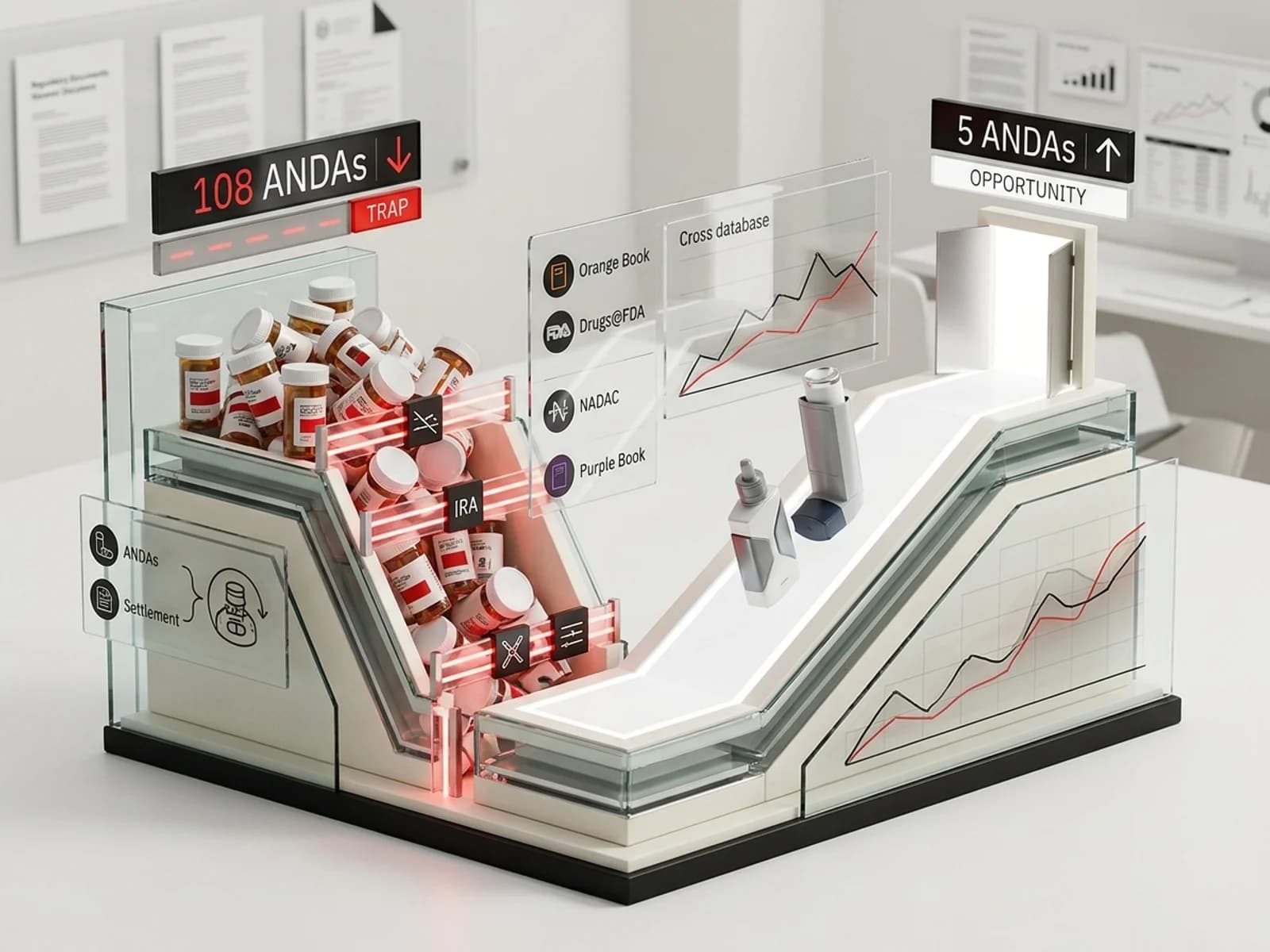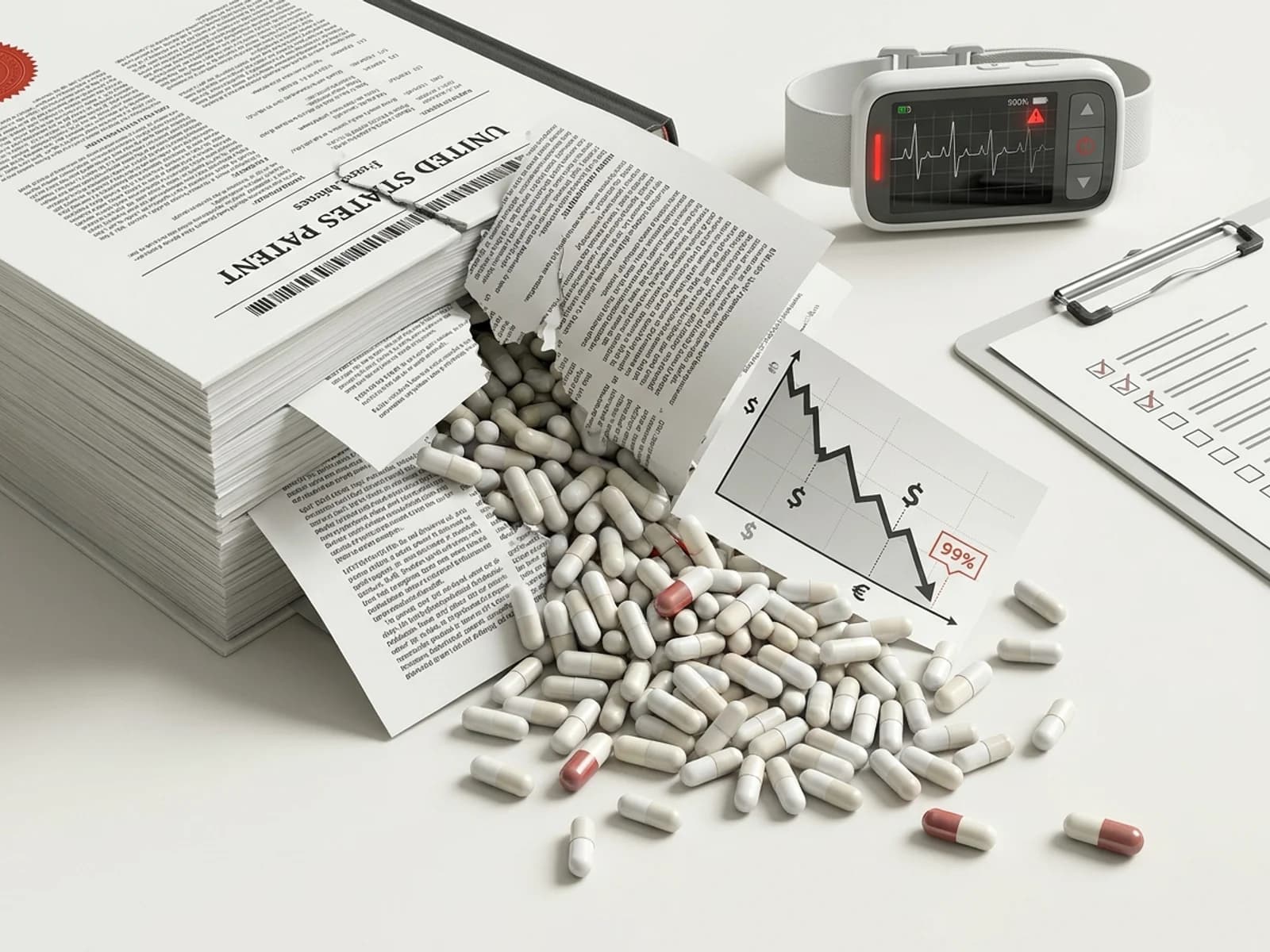
The transition of blockbuster specialty therapeutics to multi-source generic competition represents one of the most critical inflection points in healthcare economics. In the neurology sector, and specifically within the multiple sclerosis (MS) disease-modifying therapy (DMT) class, Novartis’s Gilenya (fingolimod) has served as a primary case study of this dynamic. Approved by the FDA in 2010 as the first oral DMT for relapsing forms of MS, Gilenya achieved massive commercial success, peaking at billions of dollars in annual sales. Because oral administration offered a major quality-of-life improvement over older injectable interferon and glatiramer acetate therapies, Gilenya was a highly defended asset in Novartis’s portfolio.
However, the legal and regulatory defense of Gilenya eventually collapsed. The invalidation of Novartis's key dosing regimen patent by the Federal Circuit in 2022 opened the gates to a wave of at-risk generic launches and subsequent FDA approvals. Today, the fingolimod market represents one of the most extreme examples of generic price erosion in specialty retail pharmacy. This analysis provides a deep dive into the Hatch-Waxman litigation history of Gilenya, the Orange Book landscape of approved Abbreviated New Drug Applications (ANDAs), the quantitative pricing dynamics from the CMS National Average Drug Acquisition Cost (NADAC) database, and the manufacturing recalls and clinical policies that govern its post-generic distribution.
Short Answer
Yes, generic Gilenya (fingolimod) is widely available in the United States in the 0.5 mg capsule dosage form. Novartis’s original brand-name Gilenya (approved under NDA 022527) faces direct competition from 19 approved generic ANDAs held by 18 generic manufacturers, including HEC Pharm, Hetero Labs, Alembic, Biocon, Aurobindo, Glenmark, Zydus, Teva, Dr. Reddy’s, Sun Pharma, and Apotex. Generic fingolimod reached the U.S. market in December 2022, after the Federal Circuit invalidated Novartis’s dosing-regimen patent and the Supreme Court declined to stay the mandate.
Across all manufacturers, the FDA Orange Book tracks 21 unique approved applications for fingolimod products: 2 NDAs (Novartis’s Gilenya 022527 and Cycle Pharmaceuticals’ oral-disintegrizing-tablet Tascenso ODT 214962) and 19 generic ANDAs held by 18 distinct sponsors. The entry of multiple competitors has resulted in a near-total collapse of the drug's price. According to CMS NADAC pricing data from June 2026, brand Gilenya 0.5 mg carries a last-reported NADAC of $414.7110 per capsule ($12,441.33 for a 30-day supply), while generic fingolimod has a NADAC of $3.5631 per capsule ($106.89 for a 30-day supply). This represents an extreme pricing discount of 99.14%, virtually eliminating brand-name spend in this therapeutic class.
Who This Is For
This report is written for pharmacy directors, specialty formulary managers, biopharmaceutical commercial strategy directors, patent litigation analysts, and PBM contract negotiators who need to understand Hatch-Waxman dosing patent precedents, evaluate multi-source generic price-erosion curves, and manage formulary step-therapy structures in neurology. For Novartis's company-wide portfolio context after the Sandoz spin-off, see our Novartis portfolio dossier; for the NDC registry backdrop these fingolimod generics sit inside, see our analysis of the U.S. drug product landscape through NDC data.
The Gilenya Dosing Patent Battle: Novartis's Hatch-Waxman Defense of US Patent 9,187,405
The primary compound patent for the active ingredient (fingolimod hydrochloride) expired in the United States in 2019. Under normal circumstances, generic manufacturers would have launched their products immediately. However, Novartis had established a second layer of patent protection: U.S. Patent No. 9,187,405 (the '405 patent), which claimed a method of treating relapsing multiple sclerosis by administering a daily oral dose of 0.5 mg of fingolimod.
+---------------------------------------------------------------------------------+
|                       Fingolimod Patent Litigation Timeline                     |
+---------------------------------------------------------------------------------+
|                                                                                 |
|  2019: Compound Patent Expiry                                                   |
|  - Novartis's core molecule patent expires, but generic launch remains blocked  |
|    by the '405 dosing patent (claiming 0.5 mg daily dose).                      |
|                                                                                 |
|  Jan 2022: Initial Federal Circuit Decision                                      |
|  - Court rules in favor of Novartis, upholding the validity of the '405 patent.  |
|                                                                                 |
|  Jun 2022: Petition for Rehearing & Invalidation                                 |
|  - Federal Circuit reverses itself, ruling that the '405 patent is INVALID       |
|    due to lack of written description (specifically, the "no-load-dose" silence).|
|                                                                                 |
|  Late 2022 - 2023: Generic Launches                                              |
|  - Generic manufacturers initiate "at-risk" launches, leading to rapid market    |
|    conversion and price erosion.                                                |
|                                                                                 |
+---------------------------------------------------------------------------------+
The "No-Load-Dose" Written Description Dispute
The '405 patent was set to expire in December 2027. Novartis sued multiple generic applicants, asserting that their ANDAs infringed the '405 patent. The generic applicants, led by HEC Pharm, argued that the patent was invalid because it lacked a sufficient "written description" as required by 35 U.S.C. § 112.
The core of the legal dispute centered on a single scientific detail: the absence of a loading dose.
The Patent's Description: The specification of the '405 patent described the daily administration of 0.5 mg of fingolimod. However, it did not explicitly state that a "loading dose" (a larger initial dose often used in pharmacology to quickly achieve therapeutic drug levels) should not be administered.
The Generics' Argument: HEC Pharm argued that because the patent specification was silent on the exclusion of a loading dose, it did not demonstrate that the inventor was in possession of a "no-load-dose" dosing regimen at the time of filing.
The Initial Ruling (January 2022): A three-judge panel of the Court of Appeals for the Federal Circuit initially ruled in favor of Novartis, holding that a patent specification does not need to explicitly describe negative limitations (such as the exclusion of a loading dose) if a skilled artisan would understand that a daily 0.5 mg dose meant starting with 0.5 mg without a prior loading dose.
The Federal Circuit's Reversal (June 2022)
HEC Pharm petitioned for a panel rehearing. In a rare and dramatic turn of events, the Federal Circuit panel reversed its previous decision in June 2022 (Novartis Pharmaceuticals Corp. v. Accord Healthcare, Inc.).
The New Consensus: The court ruled that the '405 patent was invalid for lack of written description. The majority held that the patent’s text provided no description, positive or negative, that would lead a skilled reader to conclude that a loading dose was intentionally excluded from the treatment protocol. Under the written description requirement, silence cannot be used to support a negative limitation unless the specification describes a reason for that exclusion (e.g., that loading doses were toxic or ineffective).
Supreme Court Denial: Novartis appealed the ruling and petitioned the U.S. Supreme Court to stay the mandate, warning of immediate generic market entry. The Supreme Court denied the application, and the Federal Circuit's invalidation stood, clearing the regulatory path for generic sponsors.
FDA Orange Book Landscape: Counting Approved Fingolimod ANDAs and Applicants
Although the FDA began approving generic fingolimod ANDAs as early as December 2019 (HEC Pharm, Biocon, and Sun Pharmaceutical were the first), the district-court injunction shielding the '405 patent blocked any commercial launch for nearly three years. Once the Federal Circuit invalidated the '405 patent in June 2022 and the U.S. Supreme Court declined to stay the mandate in late 2022, generic manufacturers launched in December 2022 and the backlog of approved ANDAs reached the market.
An analysis of the FDA Orange Book (as of June 2026) shows 21 unique approved applications for fingolimod products: 2 NDAs (Novartis Gilenya 022527 and Cycle's Tascenso ODT 214962, an oral-disintegrizing-tablet brand) and 19 generic ANDAs across 18 distinct sponsors.
| Application Number | Application Type | Sponsor | Strength | Approval Date | TE Code | Trade / Product Name |
|---|---|---|---|---|---|---|
| NDA 022527 | NDA (RLD/RS) | Novartis | 0.5 mg base | Sep 21, 2010 (0.25 mg pediatric May 11, 2018) | RS | Gilenya |
| NDA 214962 | NDA (RLD/RS) | Cycle Pharmaceuticals | 0.5 mg base | Dec 9, 2022 (0.25 mg Dec 23, 2021) | RS | Tascenso ODT |
| ANDA 207979 | ANDA | Biocon | 0.5 mg base | Dec 4, 2019 | AB | Fingolimod |
| ANDA 208014 | ANDA | Sun Pharma | 0.5 mg base | Dec 4, 2019 | — | Fingolimod |
| ANDA 207933 | ANDA | Hetero Labs | 0.5 mg base | May 18, 2020 | AB | Fingolimod |
| ANDA 207985 | ANDA | Glenmark | 0.5 mg base | Jun 18, 2020 | AB | Fingolimod |
| ANDA 207971 | ANDA | Chartwell RX | 0.5 mg base | Jun 29, 2020 | — | Fingolimod |
| ANDA 208008 | ANDA | Teva | 0.5 mg base | Jul 2, 2020 | AB | Fingolimod |
| ANDA 207991 | ANDA | Accord Healthcare | 0.5 mg base | Oct 28, 2020 | AB | Fingolimod |
| ANDA 207994 | ANDA | Zydus | 0.5 mg base | Oct 14, 2020 | AB | Fingolimod |
| ANDA 207993 | ANDA | Apotex | 0.5 mg base | Dec 18, 2020 | AB | Fingolimod |
| ANDA 208004 | ANDA | Alkem | 0.5 mg base | Dec 30, 2020 | AB | Fingolimod |
| ANDA 208005 | ANDA | Mylan (Viatris) | 0.5 mg base | Jan 19, 2021 | — | Fingolimod |
| ANDA 208000 | ANDA | Dr. Reddy's | 0.5 mg base | Mar 5, 2021 | AB | Fingolimod |
| ANDA 207939 | ANDA | HEC Pharm | 0.5 mg base | Nov 10, 2021 | AB | Fingolimod |
| ANDA 212152 | ANDA | Teva | 0.25 mg base | Nov 12, 2021 | — | Fingolimod |
| ANDA 208003 | ANDA | Prinston | 0.5 mg base | Sep 7, 2022 | AB | Fingolimod |
| ANDA 210252 | ANDA | Bionpharma | 0.5 mg base | May 24, 2023 | AB | Fingolimod |
| ANDA 207945 | ANDA | Ezra Ventures | 0.5 mg base | Dec 6, 2023 | AB | Fingolimod |
| ANDA 207983 | ANDA | Aurobindo | 0.5 mg base | Feb 28, 2024 | AB | Fingolimod |
| ANDA 207974 | ANDA | Alembic | 0.5 mg base | Apr 24, 2026 | AB | Fingolimod |
Source: FDA Orange Book, June 2026 snapshot. "Approval Date" is the FDA approval of record; commercial launch was blocked by the injunction until December 2022, so approval and launch dates diverge. Blank TE codes indicate applications not assigned a therapeutic-equivalence rating in this snapshot.
Extreme Price Erosion: Assessing the 99% Drop in Fingolimod NADAC Costs
In standard small-molecule generic markets, the introduction of a single generic competitor results in a modest price drop (typically 20% to 30%). However, when the number of approved generic manufacturers exceeds ten, price competition becomes aggressive, driving the market price down close to the marginal cost of manufacture. Fingolimod represents the extreme end of this economic curve.
Quantitative NADAC Pricing Comparison
Using the CMS NADAC dataset from June 2026, we compare the pharmacy acquisition costs for brand Gilenya and generic fingolimod.
Brand Gilenya 0.5 mg Capsule (NDA 022527): The NADAC is $414.7110 per capsule. For a standard monthly supply of 30 capsules, the pharmacy acquisition cost is $12,441.33.
Generic Fingolimod 0.5 mg Capsule (ANDAs): The NADAC is $3.5631 per capsule. For the equivalent 30-day supply, the pharmacy acquisition cost is $106.89.
Calculated Cost Reduction: $$\text{Savings %} = 1 - \left( \frac{3.5631}{414.7110} \right) = 99.1408% \approx 99.14%$$ This represents an absolute savings of $12,334.44 per patient per month for the healthcare system.
+---------------------------------------------------------------------------------+
|                       Fingolimod Price Erosion (2019-2026)                      |
+---------------------------------------------------------------------------------+
|                                                                                 |
|  Monthly Cost (30-day supply)                                                   |
|  [Brand Gilenya]  ========================================> $12,441.33          |
|  [Generic]         => $106.89  (99.14% Price Erosion)                           |
|                                                                                 |
|  Impact on Payers                                                               |
|  - Net specialty drug cost falls from a major plan driver to a low-cost oral.   |
|  - Sweeping formulary exclusions of brand Gilenya by all major PBMs.            |
|                                                                                 |
+---------------------------------------------------------------------------------+
Strategic Implications for Payer Formularies
For PBMs and plan sponsors, a 99.14% drop in acquisition cost turns a high-cost specialty drug into a low-cost oral therapy.
Formulary Exclusion of Gilenya: Major PBMs (CVS Caremark, Express Scripts, OptumRx) have placed brand Gilenya on their exclusion lists. They mandate the use of generic fingolimod for all Relapsing-Remitting Multiple Sclerosis (RRMS) patients.
Mandatory Generic Substitution: Plans enforce hard generic-first rules, requiring patients to use generic fingolimod before they can receive coverage for newer, branded oral agents (such as Mayzent, Ponvory, or Zeposia) in the sphingosine 1-phosphate (S1P) receptor modulator class.
Specialty Pharmacy Triage Inversion: Because generic fingolimod costs only $106.89 per month, some plans have transitioned the product from specialty pharmacy fulfillment to standard mail-order or retail pharmacy networks. This reduces the administrative and dispensing fees associated with specialty handlers.
Class II Recalls: Quality Monitoring in a Commodity Market
When a specialty drug's price falls by 99%, the product is treated as a commodity. In such highly competitive markets, manufacturers face tight margins, which can sometimes impact manufacturing quality controls.
A review of the FDA Enforcement Reports database reveals a major quality signal for generic fingolimod in 2023.
Ascend Laboratories Recall D-0925-2023
Classification: Class II
Reason for Recall: Failed dissolution specifications. Routine stability testing of generic fingolimod capsules manufactured by Ascend Laboratories revealed that the product failed to dissolve and release the active drug substance within the required time limits.
Clinical Implications: If an oral capsule fails to dissolve properly in the gastrointestinal tract, the drug cannot be absorbed, leading to sub-therapeutic blood levels. In MS patients, sub-therapeutic dosing increases the risk of disease relapse and active demyelinating brain lesions.
Pharmacy Triage Workflow: Specialty and retail pharmacies had to halt dispensing of affected lots, retrieve recalled batches from inventory, and contact patients to coordinate replacements. Payers monitored compliance files to ensure patients did not experience treatment interruptions.
This recall illustrates why health systems and PBMs must maintain active quality monitoring and safety screening protocols, even for low-cost generic products.
Pediatric Exclusivity and Skinny Labeling
While adult indications for relapsing forms of MS are fully open to generic competition, pediatric exclusivity has created a complex regulatory challenge.
1. Pediatric Exclusivity for Gilenya
In 2018, the FDA approved Gilenya for the treatment of relapsing multiple sclerosis in pediatric patients aged 10 years and older. This approval was backed by the Phase III PARADIGMS trial, which demonstrated a 82% reduction in annualized relapse rates compared to interferon beta-1a. Novartis secured a 7-year orphan drug exclusivity block for this pediatric indication, extending its market exclusivity for pediatric RRMS through May 2025.
2. Skinny Labeling under Section 505(j)(2)(A)(viii)
To secure FDA approval despite Novartis’s pediatric exclusivity, generic applicants utilized "skinny labeling." Under section 505(j)(2)(A)(viii) of the Food, Drug, and Cosmetic Act, a generic manufacturer can submit a statement explaining that their proposed labeling carves out the patented or exclusivity-protected indication.
Label Scope: Approved generic fingolimod ANDAs carry labeling that is restricted to the treatment of relapsing forms of multiple sclerosis in adults only. The pediatric treatment indication is omitted from the generic package insert.
Clinical Substitution Dynamics: Because the generic lacks the pediatric indication on its label, prescribers treating patients under 18 years of age must technically write for brand Gilenya if they require strict alignment with FDA labeling. However, in practice, many payers utilize off-label generic substitution policies to capture the 99% cost savings for pediatric patients as well, compounding the brand's volume loss.
Specialty Pharmacy & Patient Monitoring Protocols
Despite the low cost of the generic drug, fingolimod cannot be dispensed like a standard commodity oral generic. Because of its pharmacological mechanism as a sphingosine 1-phosphate (S1P) receptor modulator, it requires active clinical management and strict patient monitoring protocols. Specialty pharmacies must coordinate a multi-step onboarding and monitoring process.
1. First-Dose Observation (FDO) and Cardiovascular Risks
Fingolimod is a non-selective S1P receptor modulator. When initiated, it causes a transient reduction in heart rate and slows atrioventricular conduction.
The Protocol: The FDA-approved label mandates that all patients (initiating brand Gilenya or generic fingolimod) undergo a minimum 6-hour first-dose observation (FDO) period. This observation is also required if a patient interrupts therapy for more than 14 days and restarts.
Monitoring Parameters: Prior to the first dose, the patient must receive a baseline electrocardiogram (ECG) to screen for pre-existing conduction abnormalities. During the 6-hour observation period, the patient's pulse and blood pressure must be measured hourly. At the 6-hour mark, a second ECG must be performed.
Extended Observation Triggers: The observation must be extended beyond 6 hours if the patient's heart rate falls below 45 beats per minute, if the 6-hour ECG shows new-onset second-degree or higher AV block, or if the patient experiences symptomatic bradycardia. The patient must be monitored until these findings resolve.
Operational Execution: Specialty pharmacies coordinate this FDO by dispatching a home health nurse to the patient's residence or arranging for the first dose to be administered in a physician's clinic, infusion center, or specialty pharmacy day room.
2. Serious Infection Risks and Progressive Multifocal Leukoencephalopathy (PML)
S1P receptor modulation sequesters lymphocytes in lymph nodes, preventing them from crossing the blood-brain barrier to cause neuroinflammation. However, this systemic lymphocyte depletion increases the risk of serious opportunistic infections.
Progressive Multifocal Leukoencephalopathy (PML): Fingolimod therapy has been linked to cases of PML, a rare, opportunistic, and often fatal brain infection caused by the John Cunningham virus (JCV). Specialty pharmacies and prescribers must educate patients to report any new or worsening neurological symptoms (e.g., unilateral weakness, cognitive changes, visual disturbances, or ataxia) immediately. If PML is suspected, fingolimod must be suspended, and an MRI must be performed.
Cryptococcal Meningitis: Cases of life-threatening cryptococcal meningitis have occurred during fingolimod therapy. Patients presenting with symptoms such as severe headache, fever, and neck stiffness must undergo immediate diagnostic lumbar puncture.
Herpes Viral Infections: Patients are at increased risk of disseminated varicella-zoster and herpes simplex infections. If a patient develops a shingles outbreak, antiviral therapy must be initiated, and S1P therapy may need to be temporarily suspended.
3. Safety Screening and Monitoring Checklists
Specialty pharmacies utilize clinical protocols to confirm the completion of several pre-treatment and ongoing tests:
Varicella Zoster Virus (VZV) Antibody Status: Patients must be tested for VZV antibodies before starting therapy. If they are antibody-negative, they must receive the VZV vaccine and delay fingolimod initiation for at least one month.
Macular Edema Screening: Fingolimod increases the risk of macular edema (fluid accumulation in the macula). Patients must undergo a baseline ophthalmic examination before starting treatment. A follow-up examination is required 3 to 4 months after starting therapy, and regular visual checks are recommended for patients with pre-existing diabetes or uveitis.
Liver Function Tests (LFTs): S1P modulators can cause transaminase elevations. LFTs (bilirubin and transaminases) must be checked prior to treatment initiation and monitored periodically thereafter.
Complete Blood Count (CBC): S1P modulators reduce peripheral blood lymphocyte counts to approximately 20% to 30% of baseline values. A recent CBC (within 6 months or prior to initiation) must be reviewed, and lymphocyte counts should be monitored to ensure they do not drop below critical thresholds (e.g., <200 cells/microliter).
FAQ
How did the invalidation of Novartis's dosing patent affect generic fingolimod launch timelines?
The invalidation of the '405 patent in June 2022 by the Federal Circuit was the pivotal event that cleared the regulatory path for generic competition. Because the primary compound patent had already expired in 2019, the dosing patent was the sole remaining legal barrier blocking generic market entry. Once the court declared the patent invalid for lack of written description, generic sponsors immediately initiated at-risk launches, and the FDA began approving the backlog of ANDA files.
Are there pediatric indications for which branded Gilenya retains marketing exclusivity?
Yes. Novartis secured a 7-year orphan drug exclusivity block for the treatment of relapsing multiple sclerosis in pediatric patients aged 10 years and older, which extended through May 2025. Generic manufacturers circumvented this exclusivity by using "skinny labeling" under Section 505(j)(2)(A)(viii), carving out the pediatric indication from their generic labels and securing approval restricted to adult Relapsing-Remitting Multiple Sclerosis.
How quickly did commercial payers enforce generic substitution for fingolimod after generic launch?
Commercial payers and PBMs enforced generic substitution almost immediately, often within the first 30 to 90 days following generic launch. Because fingolimod is a small-molecule oral capsule with multiple approved ANDAs, the market saw immediate price erosion and stable supply. This allowed PBMs to implement hard exclusions of brand Gilenya and transition patient volume to the 99% cheaper generic equivalents without risking clinical disruption.
Sources
FDA, Approved Drug Products with Therapeutic Equivalence Evaluations (Orange Book). Search criteria: "Fingolimod" (NDAs 022527, 214962; ANDAs 207933, 207939, 207945, 207971, 207974, 207979, 207985, 207991, 207993, 207994, 208000, 208003, 208004, 208005, 208008, 208014, 210252, 212152). https://www.accessdata.fda.gov/scripts/cder/ob/
Centers for Medicare & Medicaid Services (CMS), National Average Drug Acquisition Cost (NADAC) Files, June 10, 2026 snapshot (prices effective May 20, 2026). NDCs compared: Brand Gilenya 0.5 mg (00078-0607-15, last reported as of March 2026), Generic Fingolimod 0.5 mg (Teva 00480-7820-56). https://www.medicaid.gov/medicaid/prescription-drugs/pharmacy-pricing/index.html
U.S. Court of Appeals for the Federal Circuit, Novartis Pharmaceuticals Corp. v. Accord Healthcare, Inc., No. 2021-1070 (June 21, 2022) (granting panel rehearing and holding U.S. Patent No. 9,187,405 invalid for inadequate written description). https://www.cafc.uscourts.gov/opinions-orders/
Supreme Court of the United States, Novartis Pharms. Corp. v. HEC Pharm Co., No. 22-671, cert. denied, 143 S. Ct. 1748 (2023); emergency application for stay (No. 22A272) denied in 2022. https://www.supremecourt.gov/
FDA, "FDA approves first generics of Gilenya" (HEC Pharm Co., Biocon Ltd., Sun Pharmaceutical Industries Ltd.), December 2019. https://www.fda.gov/news-events/press-announcements
Novartis AG, "Novartis plans to petition the U.S. Supreme Court to uphold validity of the Gilenya® (fingolimod) dosing regimen patent," September 21, 2022. https://www.novartis.com/news/media-releases/
FDA Enforcement Reports and Recalls Database. Recall tracked: Ascend Laboratories (distributed; manufactured by Alkem) generic fingolimod capsules due to failed dissolution specifications (Recall Number D-0925-2023). https://www.fda.gov/safety/recalls-market-withdrawals-safety-alerts
Disclaimer: This article provides independent regulatory, clinical-pipeline, and market-access analysis for biopharma professionals and does not constitute clinical, legal, or investment advice.