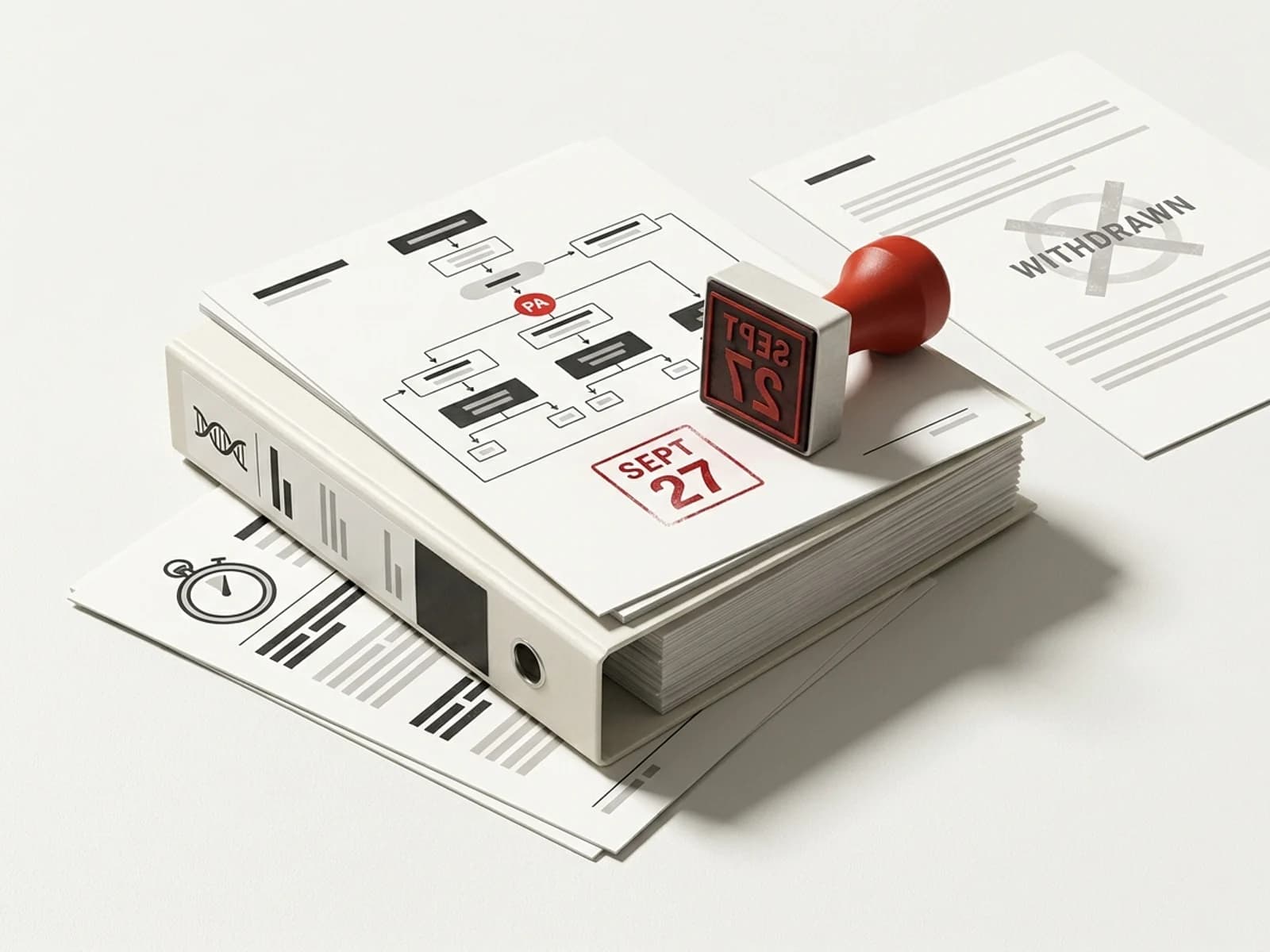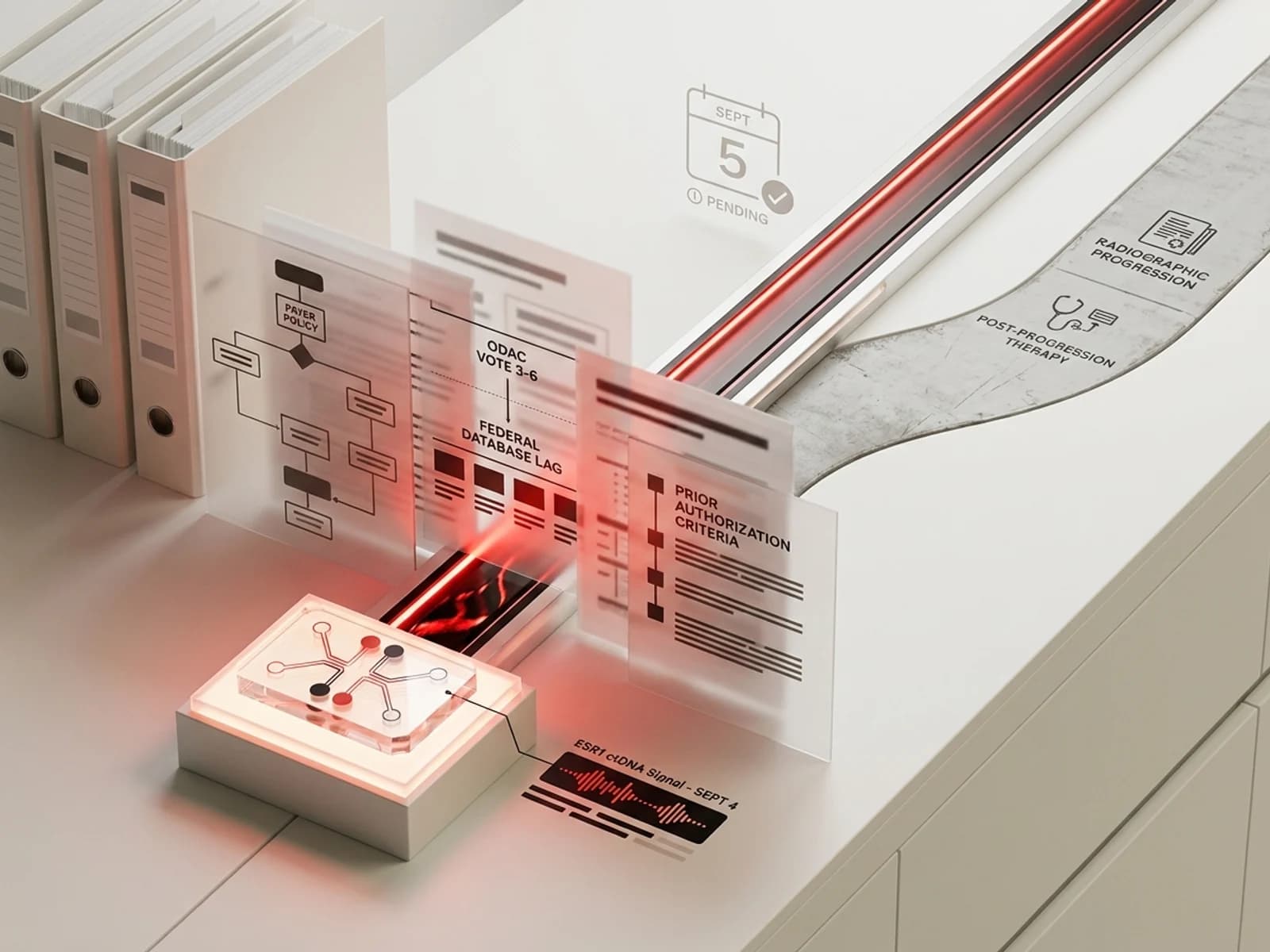
On May 29, 2026, Bristol Myers Squibb announced that the U.S. Food and Drug Administration (FDA) accepted for Priority Review its supplemental New Drug Application (sNDA) for Camzyos (mavacamten oral capsules; NDA 214998) to treat adolescents aged 12 years to under 18 years with symptomatic obstructive hypertrophic cardiomyopathy (oHCM).[1] The agency established a Prescription Drug User Fee Act (PDUFA) target action date of September 30, 2026.[1]
For pediatric cardiologists, health plan pharmacy and therapeutics (P&T) committees, pharmacy benefit managers (PBMs), specialty pharmacies, and utilization management teams navigating cardiovascular access, this regulatory milestone creates a critical operational question:
Can a health plan or specialty pharmacy treat the SCOUT-HCM readout and sNDA acceptance as pediatric authorization today, how do age-18 prior authorization (PA) gates function while federal labeling lags, and what operational adjustments are required across REMS certification, echocardiographic monitoring, and competitive class dynamics if FDA licenses the pediatric indication?
The direct operational answers govern coverage, pharmacy adjudication, and prescriber workflows:
sNDA acceptance is not approval: September 30, 2026 is a regulatory action goal date, not a commercial license or an amended label. Camzyos cannot be dispensed or reimbursed under an approved pediatric indication prior to formal FDA action.
Federal labeling remains adult-only: As of September 2026, the live openFDA and DailyMed Structured Product Labeling (SPL) for Camzyos (setid
669c936b-3ee6-4e36-8a22-79dd11b1255b,effective_time20250417) restricts Section 1 (Indications and Usage) strictly to adults with symptomatic New York Heart Association (NYHA) class II–III obstructive HCM, while Section 8.4 (Pediatric Use) explicitly states that safety and effectiveness in pediatric patients have not been established.[2]Payer policies can still enforce age-18 gates: The live adult label is what public PA documents currently quote. FEP Blue Pharmacy Policy 5.40.033, last reviewed June 11, 2026 and effective July 1, 2026 (after the sNDA-acceptance announcement), still requires "18 years of age or older" and cites the absence of established pediatric safety and efficacy.[7] That is one public plan, not a national mandate.
REMS certification does not automatically rewrite for pediatrics: Camzyos is available only through the CAMZYOS REMS because of heart failure due to systolic dysfunction (Boxed Warning).[2][8] An adolescent indication would still require the treating prescriber, the patient, and the pharmacy to meet the live REMS rules, and it would not automatically import adult maintenance-echo relief into ages 12 to 17.
No class-wide pediatric substitution for aficamten: Cytokinetics's second-in-class cardiac myosin inhibitor (CMI) Myqorzo (aficamten) was approved on December 19, 2025 for adults only, with an independent MYQORZO REMS.[9][10] A Camzyos adolescent license would not, by itself, make aficamten a pediatric substitute.
CAMZYOS ADOLESCENT sNDA & ACCESS OPERATIONAL SCORECARD
| Regulatory Parameter | Current Status / Documented Value |
|---|---|
| Target Drug / Molecule | Camzyos (mavacamten) oral capsules (2.5 mg, 5 mg, 10 mg, 15 mg) |
| Application / Sponsor | NDA 214998 / Bristol Myers Squibb (BMS) |
| Regulatory Milestone | sNDA Accepted for Priority Review; PDUFA Date: September 30, 2026 |
| Proposed Indication | Symptomatic obstructive HCM in adolescents aged 12 to <18 years |
| Pivotal Trial Support | SCOUT-HCM (NCT06253221): Phase 3, 28-week double-blind, N=44 enrolled |
| Primary Efficacy Delta | ACC.26 arm-level Valsalva LVOT: -48.5 mm Hg vs -0.5 mm Hg (p<0.001) |
| Live DailyMed SPL Status | Adults only (NYHA II–III oHCM); Sec 8.4: pediatric use not established |
| Drugs@FDA AP Record | 7 indexed submissions; latest Efficacy AP SUPPL 10 (20250417); sNDA lag |
| FEP Blue PA Rule 5.40.033 | Reviewed June 11, 2026 (eff July 1, 2026): Age ≥18 years mandatory |
| REMS Distribution Status | ETASU restricted; certified prescribers, enrolled patients & pharmacies |
| Class Comparator | Myqorzo (aficamten, NDA 219083): Adult-only label; separate REMS |
| Orange Book Exclusivity | NCE 04/28/2027; ODE-398 04/28/2029 (adults oHCM); patents to 04/28/2036 |
What Did FDA Actually Accept, and How Does September 30 Differ from a Licensed Pediatric Indication?
Understanding the distinction between an sNDA acceptance under Priority Review and an executed FDA approval is critical for access, pharmacy operations, and clinical leadership.
The Regulatory Mechanics of Priority Review
When FDA accepted BMS's supplemental New Drug Application on May 29, 2026 (with trade media and secondary publications reporting the milestone on June 1, 2026), the agency granted Priority Review designation.[1] Under the Prescription Drug User Fee Act (PDUFA) framework, Priority Review is reserved for drug applications that, if approved, would offer significant improvements in the safety or effectiveness of the treatment, diagnosis, or prevention of serious conditions compared to standard applications.[1] The designation shortens the targeted review timeline from the standard 10 months down to 6 months from the formal filing date.
In the case of mavacamten, the Priority Review clock sets a PDUFA target action date of September 30, 2026.[1] However, clinical and managed care stakeholders must not conflate filing acceptance with commercial licensure:
Filing acceptance represents procedural completeness: An sNDA acceptance indicates that FDA found the application sufficiently complete to file for multidisciplinary review. It is not an agency endorsement of safety, efficacy, or pediatric dosing algorithms.
No interim commercial or legal authorization: Under Section 505 of the Federal Food, Drug, and Cosmetic Act (FD&C Act), a manufacturer is legally prohibited from marketing, distributing, or promoting a drug product for an unapproved indication prior to the issuance of a formal Approval Letter signed by the Center for Drug Evaluation and Research (CDER).
Potential regulatory outcomes on September 30: On or before the PDUFA target date, FDA may take one of three distinct regulatory actions:
Full Approval: The agency issues an approval letter alongside an authorized, revised Package Insert (PI) and any necessary REMS modifications, establishing the legal pediatric indication.
Complete Response Letter (CRL): The agency determines that the application cannot be approved in its current form, specifying deficiencies related to clinical efficacy, safety monitoring, pediatric pharmacokinetics, or chemistry, manufacturing, and controls (CMC).
Review Clock Extension: If the sponsor submits substantial new data or analyses during the final stages of review, FDA may invoke a standard 3-month PDUFA extension to thoroughly evaluate the amendment.
Until an approval action is formally executed and published, Camzyos remains an adult-only prescription pharmaceutical across federal and state jurisdictions.
┌──────────────────────────────────────────────────────────────────────────────────────────────────┐
│                       REGULATORY TIMELINE: MAVACAMTEN ADOLESCENT LIFECYCLE                       │
├──────────────────────────────────────────────────────────────────────────────────────────────────┤
│  April 28, 2022     FDA Approves Camzyos NME (NDA 214998) for Adult NYHA II–III oHCM             │
│        │                                                                                         │
│  June 15, 2023      FDA Approves SUPPL 1 (Efficacy Supplement: clinical label updates)           │
│        │                                                                                         │
│  April 17, 2025     FDA Approves SUPPL 10 (Efficacy Supplement modifying adult echo schedule)   │
│        │                                                                                         │
│  Nov 25, 2025       SCOUT-HCM Phase 3 Primary Completion (Actual, N=44 enrolled)                 │
│        │                                                                                         │
│  March 29, 2026     ACC.26 Presentation & Simultaneous NEJM Publication of SCOUT-HCM Results    │
│        │                                                                                         │
│  May 29, 2026       BMS Announces FDA Acceptance of sNDA with Priority Review (PDUFA Sept 30)   │
│        │                                                                                         │
│  June 11, 2026      FEP Blue P&T Annual Review retains Age ≥18 Requirement (eff July 1, 2026)    │
│        │                                                                                         │
│  Sept 30, 2026      FDA PDUFA Target Action Date for Adolescent Indication (12 to <18 years)     │
└──────────────────────────────────────────────────────────────────────────────────────────────────┘
Why Do Live DailyMed and FEP Blue Still Show Adults Only, and Which Document Should a PA Team Follow This Month?
For utilization management teams, prior authorization specialists, and specialty pharmacy hub coordinators, electronic adjudication engines rely on structured drug databases. A major operational point of friction is the temporal disconnect between clinical trial announcements and federal repository updates.
DailyMed, openFDA, and Drugs@FDA Indexing Lag
Electronic health records (EHRs), pharmacy dispensing software, and electronic prior authorization (ePA) portals routinely query structured data feeds maintained by the National Library of Medicine (NLM) and FDA. As of September 2026, all primary federal repositories reflect the pre-existing adult regulatory status:
DailyMed Structured Product Labeling (SPL): The active SPL for Camzyos (
setid: 669c936b-3ee6-4e36-8a22-79dd11b1255b,effective_time: 20250417) remains explicitly confined to adult patients:Section 1 (Indications and Usage): "CAMZYOS is indicated for the treatment of adults with symptomatic New York Heart Association (NYHA) class II–III obstructive hypertrophic cardiomyopathy (oHCM) to improve functional capacity and symptoms."[2]
Section 8.4 (Pediatric Use): "The safety and effectiveness of CAMZYOS have not been established in pediatric patients."[2]
Drugs@FDA Application Tracking: A live Drugs@FDA / openFDA pull for NDA 214998 on September 2, 2026 returns 7 indexed submissions. The most recent approved efficacy supplement remains SUPPL 10 (April 17, 2025), the adult echocardiography-monitoring label update.[3][16] The other indexed rows are original NME approval (April 28, 2022), Efficacy Supplement 1 (June 15, 2023), REMS supplements 3, 4, and 8 (November 22, 2022; January 13, 2023; December 19, 2023), and Labeling Supplement 9 (April 30, 2024).[3] The adolescent sNDA is not among those seven rows and will not appear until FDA posts an action.
DRUGS@FDA SUBMISSION PROFILE: NDA 214998 (CAMZYOS)
| Submission / Type | Action Date | Action Type | Regulatory Scope & Description |
|---|---|---|---|
| ORIG-1 (NME) | Apr 28, 2022 | Approval | Original NDA: Adult NYHA II–III oHCM, REMS |
| SUPPL-1 (Efficacy) | Jun 15, 2023 | Approval | Labeling & clinical efficacy update |
| SUPPL-3 (REMS) | Nov 22, 2022 | Approval | REMS program operational modification |
| SUPPL-4 (REMS) | Jan 13, 2023 | Approval | REMS system update |
| SUPPL-8 (REMS) | Dec 19, 2023 | Approval | REMS modification |
| SUPPL-9 (Labeling) | Apr 30, 2024 | Approval | Labeling supplement |
| SUPPL-10 (Efficacy) | Apr 17, 2025 | Approval | Adult maintenance echo: 12 weeks → 6 months |
| Adolescent sNDA | Not indexed | Acceptance | Priority Review sNDA (PDUFA Sept 30, 2026) |
Payer Policy Reality: FEP Blue Policy 5.40.033
Payer coverage guidelines systematically mirror the approved Package Insert rather than press announcements or conference abstracts. A prominent national example is the Blue Cross and Blue Shield Association Federal Employee Program (FEP Blue) Pharmacy Policy 5.40.033 for Camzyos (mavacamten):[7]
Review Date Post-Dates sNDA Acceptance: FEP Blue conducted its regular clinical policy review on June 11, 2026—nearly two weeks after BMS announced FDA's acceptance of the adolescent sNDA—with an effective date of July 1, 2026.[7]
Mandatory Age Requirement: Under Prior-Approval Requirements, the very first clinical mandate specifies that the patient must be "18 years of age or older".[7]
Documented Regulatory Justification: In the Regulatory Status section, FEP Blue incorporates Section 8.4 of the FDA label, stating that "The safety and effectiveness of Camzyos in pediatric patients less than 18 year of age have not been established."[7]
Operational Policy Criteria (quoted from the current PDF, not expanded):
Diagnosis of obstructive hypertrophic cardiomyopathy with NYHA class II–III;
Inadequate treatment response, intolerance, or contraindication to a beta blocker or a calcium channel blocker;
Prescribed by or recommended by a cardiologist;
Baseline LVEF ≥55%;
Prescriber agrees to monitor echocardiogram, EKG, LVEF, and Valsalva LVOT gradient;
Patient and prescriber enrolled in the CAMZYOS REMS Program on initial authorization;
For females of reproductive potential, absence of pregnancy confirmed and effective contraception during therapy and for 4 months after the last dose;
Quantity limit of 90 capsules per 90 days; authorization duration of 12 months.[7]
Notably, FEP Blue's May 2026 policy revision removed the requirement to verify cytochrome P450 drug interactions on PA forms and eliminated REMS re-verification on reauthorizations to reduce administrative friction, while preserving mandatory REMS enrollment on initial PA.[7]
Operational Guidance for PA Reviewers: This is one public plan, not a national mandate. Under an FEP-style age-18 gate, a request for a patient aged 12 to 17 will fail the first PA criterion. Other plans may still use medical-exception processes. Until FDA posts a pediatric indication, the documents to follow this month are the live adult SPL, the current REMS portal, and each plan's written PA—not the sNDA-acceptance press.
What Did SCOUT-HCM Enroll, and Why Is the 44-Versus-43 Count a Quoting Rule Rather than a Rounding Choice?
The clinical evidence underpinning the adolescent sNDA derives from the Phase 3 SCOUT-HCM trial (NCT06253221). Because clinical trial registries, medical journals, and society presentations describe study cohorts using slightly different metrics, regulatory dossiers and market access analyses must handle these figures with precision.
SCOUT-HCM (NCT06253221) TRIAL DESIGN & REPORTED COHORTS
| Study Metric | Published Clinical & Regulatory Value |
|---|---|
| Study Design | Phase 3, randomized, double-blind, placebo-controlled, multi-center |
| Target Population | Adolescents aged 12 to 17 years with symptomatic obstructive HCM |
| ClinicalTrials.gov Status | ACTIVE_NOT_RECRUITING; 47 global study locations |
| Actual Total Enrollment | 44 subjects (ClinicalTrials.gov API v2 actual enrollment record) |
| ACC.26 / NEJM Randomized | 43 subjects randomized: 23 mavacamten vs. 20 placebo |
| Trade Media Assigned | 44 assigned as 23 vs 21 in some trade recaps (e.g. Contemp. Peds) |
| Baseline Gradient Gate | ACC.26: peak LVOT gradient >50 mm Hg |
| Baseline LVEF Threshold | ACC.26: LVEF >60% (stricter than adult initiation, LVEF <55% not used) |
| Primary Endpoint | Change from baseline to Week 28 in Valsalva LVOT gradient |
| Study Dates | Primary Completion: Nov 25, 2025; Study Completion (est): Mar 28, 2031 |
The 44 Enrolled vs. 43 Randomized Data Lineage
When examining primary literature and regulatory submissions for SCOUT-HCM, three distinct population metrics appear across authoritative documents:
ClinicalTrials.gov Primary Registration (N=44): The primary registration for NCT06253221 lists an actual total enrollment of 44 adolescent subjects across 47 investigative sites.[4]
ACC.26 / NEJM Randomized Cohort (N=43): In the Late-Breaking Clinical Trial presentation at ACC.26 and the simultaneous New England Journal of Medicine publication (Rossano JW et al., March 29, 2026, doi:10.1056/NEJMoa2601103), investigators randomized 43 symptomatic patients aged 12–17 years: 23 to mavacamten and 20 to placebo.[5][11] Mean baseline Valsalva LVOT gradients were 78.4 mm Hg and 80.8 mm Hg.[5] The public record does not, by itself, explain the one-patient gap between CT.gov enrollment and the randomized count; do not invent a CONSORT reason.
Trade Media Assignment Reporting (N=44 as 23 vs. 21): Early secondary reporting, including Contemporary Pediatrics's sNDA-acceptance recap, described 44 assigned patients as 23 vs. 21.[6] That split is a reprinting discrepancy, not a third trial.
To preserve scientific rigor, quote the 44 enrolled / 43 randomized (23 vs. 20) breakdown beside any 23-vs-21 trade figure and do not average the counts.
Efficacy Outcomes and Hemodynamic Response
SCOUT-HCM demonstrated substantial clinical and hemodynamic efficacy across primary and secondary endpoints:
Primary Endpoint (Valsalva LVOT Gradient): At Week 28, the ACC.26 recap reported an average drop of 48.5 mm Hg in the mavacamten arm versus 0.5 mm Hg with placebo (p<0.001).[5] Resting LVOT change was –39.0 vs. +8.1 mm Hg.[5]
Sponsor-Reported Treatment Difference: BMS's March 29, 2026 SCOUT-HCM results press reported an LS mean difference of -48.0 mm Hg (95% CI -67.7 to -28.3; P<0.0001) for the Valsalva primary, with resting and post-exercise LVOT LS mean differences of -47.0 and -41.7 mm Hg (nominal p<0.0001).[15] Post-exercise LVOT is a secondary endpoint, not the primary.[4][15]
Symptoms, biomarkers, and structure: ACC.26 also reported improvements in peak oxygen consumption and symptoms such as fatigue and shortness of breath, with troponin and peptide levels decreasing on mavacamten and increasing on placebo.[5] BMS separately listed NYHA class among the 28-week improvements.[15]
Safety and systolic preservation: Both the ACC recap and the BMS results press state that no patient had an LVEF decline below 50% during the 28-week period.[1][5][15] ACC reported two patients in each group with adverse events (syncope and an inappropriate ICD shock on treatment; chest pain and suicidal ideation on placebo).[5] BMS reported TEAEs in 18 vs. 17 participants.[15] Those safety sentences are 28-week trial observations, not a license to drop pediatric echo monitoring.
SCOUT-HCM PRIMARY ENDPOINT: VALSALVA LVOT GRADIENT AT WEEK 28
| Trial Arm | Baseline Gradient | Week 28 change | Statistical Sign. |
|---|---|---|---|
| Mavacamten (N=23 randomized) | 78.4 mm Hg (ACC mean) | -48.5 mm Hg (ACC avg drop) | p<0.001 vs. |
| Placebo (N=20 randomized) | 80.8 mm Hg (ACC mean) | -0.5 mm Hg | placebo |
BMS LS mean treatment difference: -48.0 mm Hg (95% CI -67.7 to -28.3); P<0.0001
Does an Adolescent Camzyos License Enroll Pediatric Cardiologists into Adult REMS, and Does It Open Myqorzo for Children?
A widespread assumption in specialty market access is that expanding a drug's label automatically integrates new prescribers into existing distribution channels. In reality, cardiac myosin inhibitors are subject to rigorous Risk Evaluation and Mitigation Strategies (REMS) with Elements to Assure Safe Use (ETASU) that create distinct operational boundaries.
REMS ETASU Requirements for Pediatric Prescribers
Because mavacamten reversibly inhibits cardiac myosin cross-bridging to reduce hypercontractility, excessive dosing or drug accumulation can cause severe systolic dysfunction, left ventricular ejection fraction reduction, and acute heart failure. To mitigate this risk, FDA mandated the restricted CAMZYOS REMS Program (Boxed Warning):[2][8]
Mandatory Prescriber Certification: CAMZYOS REMS certification is individual, not institutional. A pediatric cardiologist who is not enrolled cannot prescribe under another clinician's certification. The current portal requires healthcare-provider certification, patient enrollment, and pharmacy certification; it still states the adult indication.[8] Do not assume a posted pediatric knowledge-assessment module exists until the REMS document changes.
Restricted Pharmacy Network: Pharmacies must be certified and must only dispense to patients who are authorized to receive CAMZYOS.[2][8] REMS objectives remain periodic echocardiograms for systolic heart failure and drug-interaction screening before each dispense.[8]
Echocardiographic Monitoring Cadence: Adult initiation still follows the labeled titration-phase echo schedule in the April 17, 2025 PI (Figures 1–3). Efficacy Supplement 10 reduced maintenance-phase echo frequency from every 12 weeks to every 6 months for eligible adults who have reached maintenance at Week 12 or later, with LVEF ≥55% and Valsalva LVOT <30 mm Hg (or ≥30 mm Hg without up-titration).[16] That adult maintenance relief is not a posted pediatric monitoring schedule.[2][3]
Embryo-Fetal Toxicity and Contraception Controls: The live adult label requires confirming absence of pregnancy in females of reproductive potential and effective contraception during treatment and for 4 months after the last dose.[2][7] An adolescent indication, if granted, would still have to specify how those rules apply to adolescents. Do not invent a pediatric contraception protocol beyond the posted PI.
┌──────────────────────────────────────────────────────────────────────────────────────────────────┐
│                      CAMZYOS REMS ETASU OPERATIONAL COMPLIANCE WORKFLOW                          │
├──────────────────────────────────────────────────────────────────────────────────────────────────┤
│  STEP 1: PRESCRIBER CERTIFICATION                                                                │
│  Pediatric cardiologist enrolls in CAMZYOS REMS, completes training module, attests to echo rules│
│                                │                                                                 │
│  STEP 2: PATIENT COUNSELING & ENROLLMENT                                                         │
│  Patient/guardian signs REMS agreement; baseline LVEF confirmed ≥55% (trial used ≥60%)           │
│  Pregnancy test verified for females of reproductive potential; contraception counseling logged  │
│                                │                                                                 │
│  STEP 3: DRUG-INTERACTION (DDI) SCREENING BEFORE EACH DISPENSE                                   │
│  Prescriber and certified pharmacy screen CYP2C19/CYP3A4 inhibitors and inducers (REMS objective)│
│                                │                                                                 │
│  STEP 4: AUTHORIZED DISPENSE                                                                     │
│  Certified pharmacy verifies prescriber certification, patient enrollment, and current echo      │
│                                │                                                                 │
│  STEP 5: ONGOING ECHO SURVEILLANCE                                                               │
│  Adult PI: interrupt if LVEF <50%; adolescent cadence is unposted until FDA revises the REMS     │
└──────────────────────────────────────────────────────────────────────────────────────────────────┘
The Myqorzo (Aficamten) Non-Equivalence Firewall
On December 19, 2025, FDA approved Cytokinetics's Myqorzo (aficamten oral tablets; NDA 219083) as the second cardiac myosin inhibitor for adult obstructive HCM.[9]
Payers should not treat Myqorzo as a pediatric alternative or as interchangeable with Camzyos in adolescents:
Adult-Only Regulatory Indication: FDA approved aficamten for adults with symptomatic obstructive HCM.[9] DailyMed/openFDA section 8.4 states that safety and effectiveness in pediatric patients have not been established.
Patient-site exclusion: Cytokinetics's patient site states: "It is not known if MYQORZO is safe and effective in children. MYQORZO is not indicated for people under 18 years."[10]
Independent REMS Infrastructure: Myqorzo is distributed through a separate MYQORZO REMS. A Camzyos adolescent license would not enroll anyone into that program.[9]
Step therapy is a coverage design, not a labeled pediatric alternative: If a plan prefers Myqorzo for adults, that preference does not create a labeled adolescent step. Requiring a child to "fail" an adult-only CMI would not be following either PI. State pharmacy substitution laws address generic therapeutic equivalence, not brand-to-brand CMI swaps.
CARDIAC MYOSIN INHIBITOR (CMI) CLASS COMPARISON MATRIX
| Dimension / Feature | Camzyos (mavacamten) | Myqorzo (aficamten) |
|---|---|---|
| Sponsor | Bristol Myers Squibb (NDA 214998) | Cytokinetics (NDA 219083) |
| Initial FDA Approval | April 28, 2022 (Adult oHCM) | December 19, 2025 (Adult oHCM) |
| Pediatric sNDA Status | Priority Review (PDUFA 9/30/26) | No labeled pediatric indication |
| Pediatric Labeled Status | Section 8.4: Not Established | Section 8.4: Not Established |
| REMS Architecture | CAMZYOS REMS (Separate ETASU) | MYQORZO REMS (Separate ETASU) |
| Elimination half-life | ~6–9 days (CYP2C19 NM); 23 d PM | Median t½ ~80 hours (~3 days) |
| Available Formulations | 2.5, 5, 10, 15 mg capsules | Oral tablets (adult titration) |
| Pivotal Adolescent Trial | SCOUT-HCM (NCT06253221, N=44) | None labeled in pediatrics |
| Off-Label Substitution | Originator REMS capsule | Separate adult REMS; not TE-rated |
Half-lives in that table are adult Package Insert values—Camzyos 6 to 9 days in CYP2C19 normal metabolizers and 23 days in poor metabolizers; Myqorzo median terminal t½ about 80 hours—and are not adolescent dosing instructions.[2][10]
How Should Plans Rewrite an Age-18 Obstructive-HCM PA If Section 1 Changes, and What Stays Adult-Only?
When FDA posts a pediatric section 1, written PA language that still says "18 years of age or older" will be out of date relative to the label. The rewrite should follow the posted PI and REMS, not the sNDA-acceptance press.
Prior Authorization Policy Revision Roadmap
To prevent denials that no longer match a posted pediatric indication—if FDA licenses one—plans would need to align written PA language with the new PI rather than with today's adult SPL:
Split age eligibility to match section 1: Replace a flat ≥18-year criterion with whatever age band FDA actually posts (the sNDA seeks 12 to <18 years). Hemodynamic gates should follow the labeled initiation criteria, not a hybrid of the adult PI and the SCOUT-HCM >50 mm Hg / LVEF >60% trial entry rules.
Prescriber specialty: Keep a cardiologist requirement; if the PI or REMS specifies pediatric cardiology certification, write that. Do not invent a "board-certified pediatric electrophysiologist" mandate that is not in the current REMS.
Conventional therapy step: FEP's current step is inadequate response, intolerance, or contraindication to a beta blocker or a calcium channel blocker—not a maximally tolerated non-dihydropyridine requirement.[7] Rewrite from the posted PI and the plan's existing step, not from adult titration folklore.
Initial REMS enrollment: Keep prescriber and patient enrollment on initial authorization. FEP already dropped REMS re-verification on renewal in May 2026.[7]
┌──────────────────────────────────────────────────────────────────────────────────────────────────┐
│                   RECOMMENDED PAYER PRIOR AUTHORIZATION (PA) POLICY REWRITE                      │
├──────────────────────────────────────────────────────────────────────────────────────────────────┤
│  CRITERION 1: DIAGNOSIS & AGE SPECIFICATION                                                      │
│  - Adults (≥18 years): Symptomatic NYHA Class II–III obstructive HCM                             │
│  - Adolescents (12 to <18 years): Symptomatic obstructive HCM with peak LVOT gradient ≥50 mm Hg  │
│                                                                                                  │
│  CRITERION 2: PRESCRIBER SPECIALTY QUALIFICATION                                                 │
│  - Prescribed by or in consultation with a cardiologist (adult) or pediatric cardiologist (peds) │
│                                                                                                  │
│  CRITERION 3: BASELINE HEMODYNAMIC SAFETY PARAMETERS                                             │
│  - Adults: follow the posted PI initiation LVEF gate (currently ≥55%)                            │
│  - Adolescents: use the posted pediatric PI; do not mix SCOUT LVEF >60% into adult PA language   │
│                                                                                                  │
│  CRITERION 4: CONVENTIONAL THERAPY PREREQUISITES                                                 │
│  - Align with the posted PI and the plan's current step (FEP: BB or CCB inadequate response,    │
│    intolerance, or contraindication—not a fabricated non-DHP "max dose" rule)                   │
│                                                                                                  │
│  CRITERION 5: RISK EVALUATION & MITIGATION STRATEGY (REMS) COMPLIANCE                            │
│  - Confirmed prescriber and patient enrollment in CAMZYOS REMS Program on initial authorization  │
│  - Documented negative pregnancy test and effective contraception counseling for females of      │
│    reproductive potential                                                                        │
│                                                                                                  │
│  CRITERION 6: REAUTHORIZATION CRITERIA (12-MONTH RENEWAL)                                        │
│  - Documentation of clinical benefit (symptom reduction, improved NYHA class, or LVOT gradient) │
│  - Ongoing echo monitoring demonstrating LVEF ≥50% (no systolic dysfunction)                     │
└──────────────────────────────────────────────────────────────────────────────────────────────────┘
Critical Boundaries: Non-Obstructive HCM and Unapproved Dosing
Even following an adolescent sNDA approval, access teams must maintain strict clinical firewalls:
Non-Obstructive HCM (nHCM) remains unlabeled: Cardiac myosin inhibitors are labeled for obstructive disease. In 2025, BMS reported that Phase 3 ODYSSEY-HCM (NCT05582395) in 580 adults with symptomatic NYHA II–III nHCM did not meet its dual primary endpoints of KCCQ-23 CSS and peak oxygen consumption (pVO2) at Week 48.[12] SCOUT-HCM does not reopen nHCM coverage.
Do not extrapolate adult dosing: Adult Camzyos starts at 5 mg once daily with allowable 2.5/5/10/15 mg steps guided by LVEF and Valsalva gradients.[2] That adult algorithm is not an adolescent dosing table. Do not copy it into ages 12 to 17 until FDA posts pediatric Dosage and Administration.
Orange Book Patents, Exclusivity, and Long-Term Lifecycle Strategy
From a lifecycle and loss-of-exclusivity (LOE) perspective, Camzyos represents a core revenue pillar within Bristol Myers Squibb's Growth Portfolio.[13] FDA Orange Book records for NDA 214998 detail substantial patent and regulatory protections:
ORANGE BOOK PROFILE: CAMZYOS (MAVACAMTEN) NDA 214998 Product listing independently re-opened September 2, 2026
| Strength | Dosage Form | RLD / RS | TE Code | Notes |
|---|---|---|---|---|
| 2.5 mg | Capsule | Yes / No | (blank) | Product 001 |
| 5 mg | Capsule | Yes / Yes | (blank) | Product 002; reference standard |
| 10 mg | Capsule | Yes / No | (blank) | Product 003 |
| 15 mg | Capsule | Yes / No | (blank) | Product 004 |
Patents listed on product 002 (5 mg); do not assign one patent to one strength: - 9585883 expires 06/19/2034; use code U-3373 - RE50050 expires 04/28/2036; DS/DP; submission date 08/20/2024 Exclusivity on product 002: - NCE expires 04/28/2027 - ODE-398 expires 04/28/2029 U-3373 and ODE-398 full FDA strings (both include ADULTS): "TREATMENT OF ADULTS WITH SYMPTOMATIC NEW YORK HEART ASSOCIATION (NYHA) CLASS II-III OBSTRUCTIVE HYPERTROPHIC CARDIOMYOPATHY (HCM) TO IMPROVE FUNCTIONAL CAPACITY AND SYMPTOMS"
Patent estate: On the product-002 (5 mg) Orange Book page, US 9,585,883 expires June 19, 2034 with use code U-3373, and reissued patent RE50,050 (drug substance and drug product) expires April 28, 2036, with a listing submission date of August 20, 2024—not June 15, 2026.[14]
U-3373 and ODE-398 name adults: Independently re-opened FDA HTML shows both the U-3373 use-code text and ODE-398 exclusivity text as "TREATMENT OF ADULTS WITH SYMPTOMATIC NEW YORK HEART ASSOCIATION (NYHA) CLASS II-III OBSTRUCTIVE HYPERTROPHIC CARDIOMYOPATHY (HCM) TO IMPROVE FUNCTIONAL CAPACITY AND SYMPTOMS."[14] The Orange Book strings therefore match the live adult SPL; they are not a pediatric use code.
Pediatric exclusivity is not automatic: ODE-398 runs through April 28, 2029.[14] A pediatric indication, if licensed, would be a new labeled use. It would not by itself rewrite U-3373 or ODE-398. Six-month pediatric exclusivity under FD&C Act section 505A requires an FDA Written Request; sNDA approval alone does not confer it.
NADAC absence: A live 2026 Medicaid NADAC query returned 0 rows for CAMZYOS or MAVACAMTEN. That is consistent with REMS specialty dispensing, not a unit price of zero.
Which Existing PharmaDossier Pages Own Adjacent Access Topics?
To maintain sharp editorial focus and avoid duplicating analytical territory, adjacent regulatory and market access mechanics are explored across dedicated PharmaDossier analyses:
For an analysis of how Risk Evaluation and Mitigation Strategies with Elements to Assure Safe Use create post-CREATES commercial moats and generic entry friction, see our dossier on post-CREATES REMS ETASU barriers.
For an evaluation of Bristol Myers Squibb's commercial growth portfolio, loss of exclusivity on Eliquis and Opdivo, and revenue replacement from Camzyos and Cobenfy, see our BMS portfolio commercial dossier.
For broader guideline-directed medical therapy (GDMT), utilization management, and benefit design across heart failure with reduced and preserved ejection fraction, see our 2026 heart failure access landscape.
For nearby September 2026 rare-disease regulatory action dates, see our analysis of zilganersen's September 22 PDUFA for Alexander disease.
Frequently Asked Questions
Did FDA approve Camzyos for adolescents with obstructive HCM?
No. As of September 2026, FDA has accepted Bristol Myers Squibb's supplemental New Drug Application (sNDA) under Priority Review with a PDUFA target action date of September 30, 2026. Acceptance under Priority Review is a regulatory milestone that initiates substantive review, but it is not an approval. Camzyos remains an adult-only therapy under federal labeling until FDA issues a formal Approval Letter.
Can a pharmacy dispense Camzyos to a 16-year-old under the current REMS and FEP-style age-18 PA?
Not under an FEP-style age-18 PA. FEP Blue policy 5.40.033 still requires age 18 years or older.[7] CAMZYOS REMS still requires a certified prescriber, an enrolled patient, and a certified pharmacy authorized to dispense.[8] That is not a pediatric indication, and it is not a license to copy adult titration into a 16-year-old.
Is the current DailyMed Camzyos SPL the adolescent SCOUT-HCM label?
No. The active DailyMed Structured Product Labeling (SPL) for Camzyos (setid: 669c936b-3ee6-4e36-8a22-79dd11b1255b, effective_time 20250417) reflects adult indications only. Section 8.4 explicitly notes that safety and effectiveness have not been established in pediatric patients. The adolescent Package Insert will only be published by FDA following formal sNDA approval.
If Camzyos is licensed in adolescents, can aficamten (Myqorzo) be substituted?
No. Cytokinetics's Myqorzo (aficamten; NDA 219083) is approved for adults with symptomatic obstructive HCM, has a separate MYQORZO REMS, and its patient labeling states that it is not known if Myqorzo is safe and effective in children. Brand-to-brand substitution is not Orange Book therapeutic equivalence. A Camzyos adolescent license would not convert Myqorzo into a pediatric alternative.
Evidence & Methodological Limitations
Regulatory Scope: Public FDA databases (Drugs@FDA, openFDA, Orange Book HTML), ClinicalTrials.gov, ACC.26, the FEP Blue PDF, and sponsor presses available through September 2, 2026. Orange Book use-code strings were re-opened on FDA HTML this review; they include the word ADULTS.
Trial Population Nuances: SCOUT-HCM enrolled 44 patients on ClinicalTrials.gov; ACC.26/NEJM randomized 43 (23 vs 20). Some trade recaps used 23 vs 21. Full NEJM tables were not re-keyed line by line.
Repository Indexing Lag: DailyMed and Drugs@FDA still show the April 17, 2025 adult SPL. The latest indexed efficacy supplement remains SUPPL 10; the December 19, 2023 REMS row is SUPPL 8, not SUPPL 7.
Pricing Limitations: Live Medicaid NADAC 2026 queries yield 0 rows for mavacamten. That is not a price of zero.
No Clinical or Investment Advice: This dossier maps labeled indication, REMS operations, and public PA age gates. It does not dose adolescents, tell a plan to cover or deny a named patient, or offer investment advice.
Sources
1. Bristol Myers Squibb, U.S. Food and Drug Administration Accepts for Priority Review Bristol Myers Squibb’s Supplemental New Drug Application for Camzyos (mavacamten) to Treat Adolescents with Symptomatic Obstructive Hypertrophic Cardiomyopathy, BusinessWire newsitem 20260529154810, trade reprints June 1, 2026.
2. U.S. Food and Drug Administration / National Library of Medicine, CAMZYOS (mavacamten) Prescribing Information, DailyMed SPL setid 669c936b-3ee6-4e36-8a22-79dd11b1255b, effective_time 20250417.
3. U.S. Food and Drug Administration, Drugs@FDA Application Details: CAMZYOS (mavacamten) NDA 214998, original approval April 28, 2022; seven indexed submissions as of September 2, 2026, including REMS SUPPL 8 (December 19, 2023), labeling SUPPL 9 (April 30, 2024), and latest efficacy approval SUPPL 10 (April 17, 2025). Cross-checked via the openFDA Drugs@FDA API.
4. ClinicalTrials.gov, A Study to Evaluate Mavacamten in Adolescents With Symptomatic Obstructive Hypertrophic Cardiomyopathy (SCOUT-HCM), identifier NCT06253221, actual enrollment 44.
5. American College of Cardiology, SCOUT-HCM: Mavacamten Benefits Adolescents With oHCM, ACC.26 Late-Breaking Clinical Trial recap, March 29, 2026.
6. Contemporary Pediatrics, FDA Accepts Mavacamten (Camzyos) Application for Adolescent Obstructive Hypertrophic Cardiomyopathy, June 1, 2026.
7. Blue Cross Blue Shield Association / Federal Employee Program, FEP Blue Pharmacy Policy 5.40.033: Camzyos (mavacamten), last reviewed June 11, 2026, effective July 1, 2026.
8. Bristol Myers Squibb, CAMZYOS REMS Program, official FDA-mandated risk evaluation and mitigation strategy portal.
9. U.S. Food and Drug Administration, FDA Approves Drug to Improve Functional Capacity and Symptoms in Adults with Rare Inherited Heart Condition (Myqorzo), December 19, 2025.
10. Cytokinetics, Inc., MYQORZO (aficamten) Official Patient & Product Information, adult indication and the sentence that it is not known if MYQORZO is safe and effective in children. Adult openFDA/DailyMed SPL (setid fd778507-1274-4d1a-a659-5431d55c543a, effective_time 20251216; DailyMed): section 8.4 pediatric use not established; median terminal half-life approximately 80 hours.
11. Rossano JW, et al., Mavacamten in Adolescents with Obstructive Hypertrophic Cardiomyopathy, New England Journal of Medicine, published online March 29, 2026, doi:10.1056/NEJMoa2601103.
12. Bristol Myers Squibb, Bristol Myers Squibb Provides Update on Phase 3 ODYSSEY-HCM Trial, adult non-obstructive HCM study announcement.
13. Bristol Myers Squibb, Bristol Myers Squibb Reports Q2 2026 Financial Results, Growth Portfolio revenue and commercial disclosures. See also this site's BMS portfolio commercial dossier.
14. U.S. Food and Drug Administration, Orange Book patent and exclusivity listing for NDA 214998, product 002 (CAMZYOS 5 mg), independently extracted September 2, 2026; U-3373 and ODE-398 strings include "TREATMENT OF ADULTS…"; RE50050 submission date August 20, 2024. Product table: results_product.cfm Appl_No=214998.
15. Bristol Myers Squibb, Bristol Myers Squibb Presents Positive Results from Phase 3 SCOUT-HCM Trial, March 29, 2026; LS mean Valsalva difference -48.0 mm Hg (95% CI -67.7 to -28.3); 44 enrolled; post-exercise LVOT is secondary.
16. Bristol Myers Squibb, U.S. Food and Drug Administration Updates CAMZYOS (mavacamten) Label to Reduce Echocardiography Monitoring Requirements and Contraindications, April 17, 2025; adult maintenance echo from every 12 weeks to every 6 months for eligible patients.