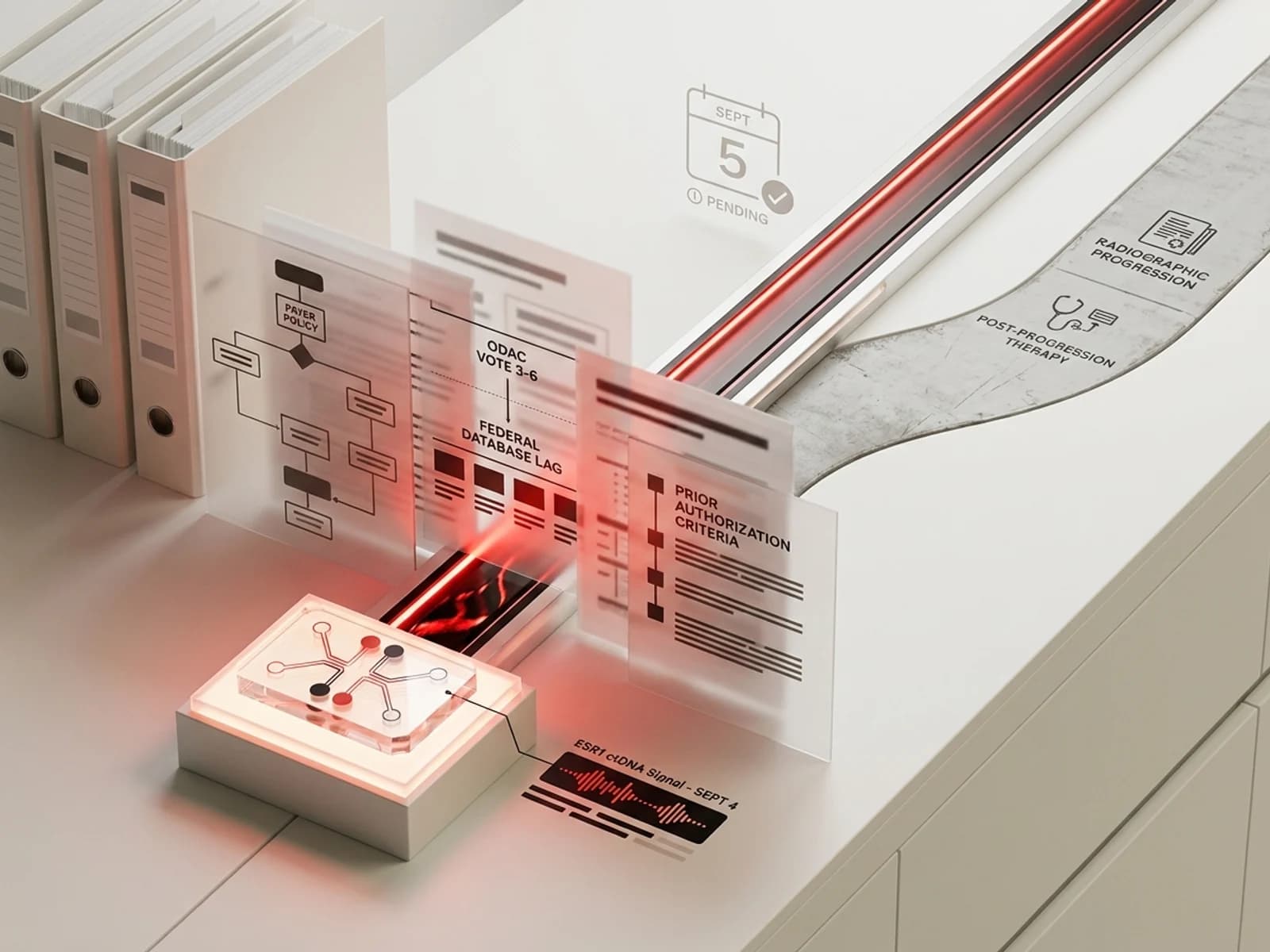
On May 19, 2026, IntraBio Inc. announced that the U.S. Food and Drug Administration (FDA) accepted for Priority Review its supplemental New Drug Application (sNDA) for Aqneursa (levacetylleucine oral suspension / oral packets; NDA 219132) for the treatment of ataxia-telangiectasia (A-T) in adult and pediatric patients and assigned a Prescription Drug User Fee Act (PDUFA) target action date of September 19, 2026.[1][15]
For health plan pharmacy and therapeutics (P&T) committees, medical directors, specialty pharmacies, hospital genetics clinics, and rare-neurology access leads, this regulatory clock arrives with immediate operational tension. Ataxia-telangiectasia is an autosomal-recessive neurodegenerative disease caused by biallelic mutations in the ATM gene, characterized by progressive cerebellar ataxia, oculocutaneous telangiectasias, variable immunodeficiency, and heightened sensitivity to ionizing radiation. No FDA-approved therapy is specifically indicated for A-T.
However, the pending September 19 regulatory action date must not be conflated with commercial authorization, clinical policy transformation, or immediate formulary access:
Can a commercial payer or Medicaid program treat the IB1001-303 trial readout or expanded-access listings as A-T coverage today, what happens to claims under prevailing Niemann-Pick disease type C (NPC) prior authorization (PA) criteria, and will an FDA approval automatically lift combination restrictions or rewrite the 15 kg weight floor?
The direct operational answers across regulatory, clinical, and pharmacy benefit dimensions are unambiguous:
sNDA acceptance is not approval: September 19, 2026 is a PDUFA target action date, not an executed license or an amended label. IntraBio cannot market Aqneursa for A-T until FDA issues an Approval Letter. Off-label prescribing and individual medical-exception coverage can still occur; they are not an A-T indication.
Federal labeling remains strictly NPC-specific: As of September 2026, the active openFDA and DailyMed Structured Product Labeling (SPL) for Aqneursa (setid
0f248e55-d1bb-13f9-e063-6294a90a05ce,effective_time20250123) restricts Section 1 (Indications and Usage) strictly to the neurological manifestations of Niemann-Pick disease type C (NPC) in adults and pediatric patients weighing at least 15 kg.[2] Section 8.4 confirms safety and effectiveness were established in only 23 pediatric patients with NPC weighing at least 15 kg and have not been established in patients weighing less than 15 kg.[2]Quoted public PAs still require NPC: FEP Blue Pharmacy Policy 5.60.065 (last reviewed March 6, 2026; effective April 1, 2026) requires a genetically confirmed NPC diagnosis (disease-causing variants in NPC1 or NPC2) and states that "Aqneursa may be considered investigational for all other indications."[10] That sentence is the A-T failure case under this FEHB snapshot until the PDF is rewritten. It is not a national mandate.
UnitedHealthcare still bars Miplyffa combination in its NPC PA: UnitedHealthcare Pharmacy Program 2026 P 1461-3 (effective April 1, 2026) requires an NPC diagnosis and that the patient is not receiving Aqneursa with Zevra's Miplyffa (arimoclomol).[11] Because Miplyffa is FDA-approved only in combination with miglustat for NPC, an Aqneursa A-T license would not create arimoclomol A-T substitution.[12]
The 15 kg weight floor carries forward from trial eligibility: The pivotal IB1001-303 crossover trial (NCT06673056) required patients to be at least 4 years of age and weigh at least 15 kg at screening.[5] Prescribers and payers cannot assume infants or small toddlers under 15 kg will be covered or labeled, nor can NPC packet dosing tables be ported into A-T without a posted Package Insert.
Expanded access is not commercial coverage: ClinicalTrials.gov lists an expanded access protocol (NCT07380165, status AVAILABLE) for levacetylleucine in A-T.[6] Expanded access / compassionate use provides investigational supply under IND mechanisms; it is not a commercial pharmacy benefit pathway and does not generate third-party payer reimbursement.
AQNEURSA ATAXIA-TELANGIECTASIA sNDA & ACCESS SCORECARD
| Operational Parameter | Documented Regulatory & Market Access Status (2026-09-02) |
|---|---|
| Brand / Generic Name | Aqneursa (levacetylleucine) oral suspension / oral packets (1 g/pkt) |
| Application / Sponsor | NDA 219132 / IntraBio Inc. |
| Regulatory Milestone | sNDA Accepted for Priority Review; PDUFA Target Date: Sept 19, 2026 |
| Proposed Indication | Ataxia-telangiectasia (A-T) in adult and pediatric patients |
| Pivotal Trial Support | IB1001-303 (NCT06673056): Phase 3 double-blind crossover trial |
| Primary Efficacy Delta | SARA change: -1.92 on drug vs -0.14 on placebo (diff -1.88, p<0.001) |
| Live DailyMed SPL Status | NPC only (neurological manifestations, wt ≥15 kg; SPL eff 20250123) |
| Drugs@FDA Index Status | Single ORIG-1 AP (20240924); sNDA not indexed as of September 2026 |
| FEP Blue Policy 5.60.065 | Requires NPC1/NPC2 variants; "investigational for all other uses" |
| UHC Program 2026 P 1461-3 | Requires NPC diagnosis; excludes combination with Miplyffa |
| Weight Floor Requirement | ≥15 kg mandatory on live label and IB1001-303 screening eligibility |
| Orange Book Exclusivity | NCE to 09/24/2029; ODE-498 to 09/24/2031 (NPC only); blank TE code |
| Expanded Access Status | NCT07380165 AVAILABLE; compassionate IND, not commercial coverage |
What Did FDA Actually Accept, and How Does September 19 Differ from a Licensed A-T Indication?
To evaluate the operational impact of the upcoming PDUFA date, clinical teams and market access strategists must distinguish between procedural application acceptance and regulatory approval.
The Mechanics of Priority Review for an sNDA
When IntraBio announced FDA acceptance of the Aqneursa sNDA on May 19, 2026, the company also reported that the agency granted Priority Review and assigned a PDUFA target action date of September 19, 2026.[1][15] Priority Review is reserved for applications that, if approved, would provide a significant improvement in safety or effectiveness for a serious condition compared with available therapy. The assigned date is an agency performance goal, not a guarantee of approval:
Procedural acceptance vs. a license: An acceptance-to-file notice means CDER found the submission complete enough to review. It is not a preliminary endorsement of efficacy, dosing, or Section 1 language.
Promotion of an unapproved use: A sponsor may not promote Aqneursa for A-T until FDA issues an Approval Letter and authorized labeling. Prescribers may still use professional discretion; pharmacy benefit engines still adjudicate against the live NPC label and adopted PA criteria.
Possible actions on or before September 19: FDA may approve with a revised Package Insert, issue a Complete Response Letter, or extend the clock if a major amendment is submitted late in the cycle.
Until an official Approval Letter is signed and released, Aqneursa remains solely an approved medication for Niemann-Pick disease type C.
┌──────────────────────────────────────────────────────────────────────────────────────────────────┐
│                        REGULATORY TIMELINE: LEVACETYLLEUCINE (NDA 219132)                        │
├──────────────────────────────────────────────────────────────────────────────────────────────────┤
│  Sept 08, 2021      FDA Grants Orphan Drug Designation for Niemann-Pick Disease Type C           │
│        │                                                                                         │
│  Sept 24, 2024      FDA Approves Aqneursa NME (NDA 219132 ORIG-1) for NPC (wt ≥15 kg)            │
│        │                                                                                         │
│  Oct 11, 2024       FEP Blue Establishes Policy 5.60.065 (NPC-only; all others investigational)  │
│        │                                                                                         │
│  Jan 23, 2025       DailyMed SPL Update (effective_time 20250123; Section 1 remains NPC-only)    │
│        │                                                                                         │
│  Jan 21, 2026       IntraBio Announces Positive Topline Results for IB1001-303 in A-T (SARA -1.88)│
│        │                                                                                         │
│  March 6, 2026      FEP Blue Last Review of Policy 5.60.065 (still NPC-only)                     │
│        │                                                                                         │
│  April 01, 2026     FEP Blue Policy 5.60.065 and UHC 2026 P 1461-3 Effective Dates                │
│        │                                                                                         │
│  May 19, 2026       IntraBio Announces FDA Acceptance of sNDA with Priority Review (PDUFA Sept 19)│
│        │                                                                                         │
│  Sept 19, 2026      FDA PDUFA Target Action Date for Ataxia-Telangiectasia Indication            │
└──────────────────────────────────────────────────────────────────────────────────────────────────┘
Why Do Live DailyMed, FEP Blue, and UHC Still Show NPC Only, and Which Document Should a PA Team Follow This Month?
For utilization management teams, prior authorization intake coordinators, and specialty pharmacy hub case managers, electronic processing engines rely on structured medical databases and formal coverage guidelines. During the pre-PDUFA window, a wide gap exists between clinical excitement in academic neurology centers and claims adjudication mechanics.
Federal Repository Indexing Lag
Electronic health records (EHRs), e-prescribing platforms, and pharmacy claim adjudication engines query national databases maintained by the National Library of Medicine (NLM) and FDA. As of September 2026, all official primary sources reflect the original September 2024 NPC approval:
DailyMed Structured Product Labeling (SPL): The active SPL for Aqneursa (
setid: 0f248e55-d1bb-13f9-e063-6294a90a05ce,effective_time: 20250123) is strictly limited to NPC:Section 1 (Indications and Usage): "AQNEURSA is indicated for the treatment of neurological manifestations of Niemann-Pick disease type C (NPC) in adults and pediatric patients weighing at least 15 kg."[2]
Section 8.4 (Pediatric Use): "The safety and effectiveness of AQNEURSA for the treatment of NPC have been established in 23 pediatric patients weighing ≥15 kg in Trial 1. Use of AQNEURSA for this indication is supported by evidence from one adequate and well-controlled study in adults and pediatric patients weighing ≥15 kg... The safety and effectiveness of AQNEURSA have not been established in pediatric patients weighing <15 kg."[2]
Drugs@FDA Application Records: Querying the openFDA Drugs@FDA endpoint for NDA 219132 confirms that only a single submission has been approved:
ORIG-1, approved September 24, 2024, as a Type 1 New Molecular Entity (NME) with Priority Review, Orphan Drug, and Rare Pediatric Disease designations.[3] The pending A-T efficacy supplement has not been indexed.
Prescribing Aqneursa with an ICD-10 diagnosis code for ataxia-telangiectasia (such as G11.3 - Cerebellar ataxia with defective DNA repair) results in an immediate mismatch against federal label files in automated claims clearinghouses. For a broader breakdown of how electronic systems lag behind clinical filings, see our guide on how to read a DailyMed label.
Payer Policy Reality: FEP Blue, UnitedHealthcare, and Medicaid
Health plans and PBMs have established rigorous utilization management criteria for Aqneursa, reflecting its status as an ultra-rare orphan drug with significant specialty pharmacy distribution requirements.
REPRESENTATIVE COMMERCIAL & PUBLIC PAYER CRITERIA MATRIX
| Payer Organization | Policy ID & Effective Date | Mandatory Diagnosis | Key Exclusion Gate |
|---|---|---|---|
| FEP Blue (Caremark Admin) | Policy 5.60.065 Effective April 1, 2026 | Genetically verified NPC (NPC1 or NPC2) | Investigational for all other uses |
| UnitedHealthcare Commercial | Program 2026 P 1461-3 Effective April 1, 2026 | NPC diagnosis; Neurological sx | Combination with Miplyffa excluded |
| Louisiana Medicaid Fee-For-Service | JanDUR (Implemented Mar 2025) Created November 2024 | Documented NPC1/NPC2; Mild neuro symptoms | Patient weight under 15 kg |
| CareSource Georgia Medicaid | Policy 20260201 Dated Feb 1, 2026 | NPC genetic or biomarker confirm; | Combination with Miplyffa combo excl |
FEP Blue Policy 5.60.065 Analysis
The Blue Cross Blue Shield Association Federal Employee Program (FEP Blue) criteria, administered via CVS Caremark, represent one of the most transparent public prior authorization benchmarks. Under policy 5.60.065 (original October 11, 2024; last reviewed March 6, 2026; effective April 1, 2026), initial approval for Aqneursa requires ALL of the following documentation:[10]
Confirmed diagnosis of Niemann-Pick disease type C (NPC) supported by genetic testing documenting disease-causing variants in either the NPC1 or NPC2 gene.
Presence of neurological manifestations associated with NPC.
Patient weight must be at least 15 kg.
For females of reproductive potential: pregnancy will be excluded before initiation, and the patient will be advised to use effective contraception during treatment and for 1 week after the last dose.
FEP's initial PA list does not add a named-specialist requirement. CareSource Georgia does require prescribing by or in consultation with a neurologist, metabolic specialist, or geneticist; that credential is a Medicaid-plan rule, not an FEP 5.60.065 field.[14]
Crucially, Section III of the policy includes the standard exclusionary statement:
"Aqneursa may be considered investigational for all other indications."[10]
If a specialty pharmacy or clinician submits a prior authorization request for an A-T patient today, the adjudicator must deny the claim based on the failure to establish an NPC1 or NPC2 mutation and the explicit categorization of non-NPC indications as investigational.
UnitedHealthcare Commercial Policy 2026 P 1461-3
UnitedHealthcare's Pharmacy Clinical Pharmacy Programs document 2026 P 1461-3 underwent annual P&T review in November 2024, January 2025, and January 2026, remaining effective April 1, 2026.[11] The January 2026 annual review maintained existing criteria without expansion. Approval mandates:
Diagnosis of Niemann-Pick disease type C (NPC).
Documented neurological manifestations of NPC.
Explicit confirmation that the patient is not receiving Aqneursa in combination with Miplyffa (arimoclomol).[11]
Authorization is granted for a 12-month period, requiring reauthorization documentation demonstrating positive clinical response (stabilization or slowing of disease progression). Under this policy, any claim lacking an NPC diagnosis is rejected at the initial clinical review step.
State Medicaid Programs: Louisiana and Georgia
State Medicaid programs have established similar NPC-only structures, not identical ones. Louisiana Medicaid's fee-for-service policy (created November 2024; implemented March 2025) requires documented genetic verification of disease-causing alleles in NPC1 or NPC2, at least mild neurological symptoms, and weight ≥15 kg, granting approval for 12 months.[13] CareSource Georgia Medicaid's policy (dated February 1, 2026) requires weight ≥15 kg; prescribing by or in consultation with a neurologist, metabolic specialist, or geneticist; NPC confirmation by biallelic NPC1/NPC2 mutations or a single-allele mutation plus listed biomarkers or filipin testing; no combination with Miplyffa; 6-month initial authorization; and a quantity limit of 112 packets per 28 days.[14] That 112/28-day edit matches the live NPC maximum of 4 grams/day; it is not an A-T dosing table.
Which Document Must a PA Team Follow This Month?
Prior to official FDA action, prior authorization review teams and independent review organizations (IROs) are legally and contractually bound to evaluate claims against currently adopted payer criteria and the approved FDA label.[10][11] A press release reporting positive Phase 3 results or sNDA acceptance does not constitute compendia-supported evidence or an FDA-approved indication under commercial plan certificates of coverage. Any off-label approval would require formal individual medical exception pathways supported by peer-reviewed evidence, which commercial health plans rarely grant when investigational clauses are active.
What Did IB1001-303 Enroll, and Why Must SARA -1.88 Not Be Mixed with the NPC fSARA -0.4?
The clinical dossier supporting the A-T supplemental application centers on the pivotal IB1001-303 trial. Analyzing its design, population constraints, and endpoint metrics reveals critical clinical details that directly inform future utilization management criteria.
Trial Design and Discrepancies in Public Registries
On ClinicalTrials.gov, study NCT06673056 ("Effects of N-Acetyl-L-Leucine on Ataxia-Telangiectasia") is registered as a Phase 3, double-blind, randomized, placebo-controlled crossover study.[5] Key trial parameters documented on the federal registry include:
Trial Status:
ACTIVE_NOT_RECRUITING.Registry Enrollment:
60patients (listed as ESTIMATED on ClinicalTrials.gov).Target Population: Adult and pediatric patients aged 4 years and older with a genetically confirmed diagnosis of ataxia-telangiectasia (ATM gene mutations).
Weight Requirement: Body weight of at least 15 kg at screening.
Severity Baseline: Baseline Scale for the Assessment and Rating of Ataxia (SARA) score between 7 and 34 (inclusive).
Study Structure: Two treatment periods (Period I and Period II) of 12 weeks each, separated by a washout period, followed by an optional open-label extension phase.
Primary Endpoint: Absolute change in SARA total score at the end of Period I (week 12) versus Period II (week 24).
Study Locations: 11 listed sites: 3 in the United States, 2 in Germany, 2 in Slovakia, 2 in the United Kingdom, 1 in Spain, and 1 in Switzerland.
Registry Update Lag: The ClinicalTrials.gov record was last updated on July 3, 2025, and still displays an ESTIMATED primary completion date of December 31, 2027, and a study completion date of June 1, 2028.[5]
This registry lag creates an important operational reporting consideration. While ClinicalTrials.gov reflects an estimated enrollment of 60 and an estimated 2027 completion date, IntraBio publicly reported topline results from the completed double-blind phase in a corporate release dated January 21, 2026.[7] Writers, clinical evaluators, and reviewers must quote both the public registry parameters and the sponsor's reported data without inventing an unverified randomized sample size until the formal CONSORT diagram and peer-reviewed manuscript are published.
PIVOTAL EVIDENCE PROFILE: IB1001-303 (ATAXIA-TELANGIECTASIA)
| Clinical Parameter | Documented Clinical & Statistical Value |
|---|---|
| Protocol / Identifier | IB1001-303 / ClinicalTrials.gov NCT06673056 (Phase 3 Crossover) |
| Study Population | Genetically confirmed A-T; age ≥4 years; weight ≥15 kg; SARA 7–34 |
| Listed Registry Status | ACTIVE_NOT_RECRUITING; estimated N=60; last updated 2025-07-03 |
| Sponsor Topline Date | January 21, 2026 (IntraBio Corporate Announcement) |
| Primary Endpoint | SARA Total Score change (Week 12 active vs Week 12 placebo) |
| SARA Result (Sponsor) | -1.92 (levacetylleucine) vs -0.14 (placebo); Diff: -1.88 (p < 0.001) |
| Secondary: ICARS Score | -4.22 (levacetylleucine) vs -1.69 (placebo); Diff: -2.53 (p = 0.003) |
| Secondary: CGI-I Score | -0.6 (levacetylleucine) vs -0.2 (placebo); Diff: -0.4 (p = 0.02) |
| Safety & Tolerability | No drug-related serious adverse events (SAEs) reported by sponsor |
| Registry Completion Clock | CT.gov lists estimated primary completion Dec 31, 2027 (registry lag) |
Topline Efficacy Results
In its January 21, 2026 announcement, IntraBio reported that the IB1001-303 trial met its primary efficacy endpoint and key secondary functional endpoints with high statistical significance:[7]
Scale for the Assessment and Rating of Ataxia (SARA): IntraBio reported a least-squares mean change in total SARA score of -1.92 points during active treatment compared to -0.14 points during placebo treatment.[7] The treatment difference was -1.88 points (p < 0.001). The sponsor described that difference as clinically meaningful; no independent minimally clinically important difference citation is attached to that phrase in the January 21 release, and the full peer-reviewed tables were not posted as of this review.
International Cooperative Ataxia Rating Scale (ICARS): IntraBio reported an LS mean reduction of -4.22 points on levacetylleucine versus -1.69 points on placebo (p = 0.003).[7]
Clinical Global Impression of Improvement (CGI-I): IntraBio reported Investigator CGI-I LS means of -0.6 points on active treatment versus -0.2 points on placebo (p = 0.02).[7] ClinicalTrials.gov still describes CGI as a 1-to-7 Likert scale; quote the sponsor numbers as published rather than re-scoring them.
Safety Profile: IntraBio reported no drug-related serious adverse events during the randomized crossover phase.[7]
Critical Distinction: Full SARA (-1.88) vs. NPC Functional SARA (-0.4)
A major source of confusion in secondary literature is the failure to distinguish between the clinical endpoints utilized in the two rare-disease programs. Prescribing and reviewing clinicians must never conflate these two measures:
Ataxia-Telangiectasia (IB1001-303): The primary endpoint evaluated the full 8-item SARA total score, which ranges from 0 (no ataxia) to 40 (severe ataxia), encompassing gait, stance, sitting, speech disturbance, finger chase, nose-finger test, fast alternating hand movements, and heel-shin slide. IntraBio reported a treatment difference of -1.88 points (p < 0.001).[7]
Niemann-Pick Disease Type C (IB1001-301): The pivotal trial that supported the original September 2024 NPC approval (NCT05163288; N=60) used a modified outcome: the functional SARA (fSARA) total score.[2][4] The approved Package Insert states that fSARA uses only the gait, sitting, stance, and speech-disturbance domains, each rescored from 0 to 4, for a total range of 0 to 16. The estimated treatment difference in fSARA was -0.4 points (95% CI: -0.7 to -0.2; two-sided p < 0.001).[2]
Mixing these endpoints leads to severe analytical error. Stating that Aqneursa improved SARA by "-0.4 points in A-T" underestimates the observed trial effect, while attributing a "-1.88 point improvement in fSARA" erroneously inflates the NPC label data.
Does an A-T License Lift UHC's Miplyffa Combination Ban, Convert Expanded Access into Coverage, or Rewrite the 15 kg Floor?
If the FDA issues an approval for Aqneursa in ataxia-telangiectasia on or before September 19, 2026, market access teams will face immediate policy interpretation questions. Examining three critical operational issues illustrates why an sNDA approval does not resolve downstream formulary barriers.
Issue 1: UnitedHealthcare's Miplyffa Combination Ban
Under UnitedHealthcare commercial policy 2026 P 1461-3, authorization of Aqneursa is explicitly contingent upon the patient NOT receiving combination therapy with Zevra's Miplyffa (arimoclomol).[11]
To understand why this ban exists and whether an A-T license would change it, one must examine Miplyffa's FDA-approved indication:
Miplyffa FDA Approval Scope: Approved on September 20, 2024 (NDA 214927), Miplyffa is indicated in combination with miglustat for neurological manifestations of Niemann-Pick disease type C in adults and pediatric patients 2 years of age and older.[12] The live SPL states that the mechanism by which arimoclomol exerts its clinical effects in NPC is unknown.
Formulary stacking in NPC: Aqneursa and Miplyffa were approved four days apart in September 2024 for the same ultra-rare disease. UnitedHealthcare added the Miplyffa combination exclusion in its January 2025 P&T update, and the January 2026 annual review left that criterion unchanged.[11] Do not invent a WAC or annual cost to explain that edit.
Application to Ataxia-Telangiectasia: No posted Miplyffa A-T trial, sNDA, or OOPD A-T designation for arimoclomol turned up in the FDA and ClinicalTrials.gov records checked for this article. An Aqneursa A-T license would not, by itself, rewrite Miplyffa's NPC-plus-miglustat label or create arimoclomol A-T substitution. If a patient with A-T were prescribed Aqneursa, UHC's combination sentence is an NPC-label construct; it remains in the PDF until P&T splits the criteria by disease.
For additional insight into how commercial health plans construct utilization barriers during initial commercial availability, see our analysis of new-to-market payer blocks.
Issue 2: Expanded Access Programs vs. Commercial Health Insurance
On ClinicalTrials.gov, study record NCT07380165 details an "Expanded Access Program of Levacetylleucine for Patients With Ataxia-Telangiectasia."[6] The program status is listed as AVAILABLE, with a verification date of February 2026.
Families, advocacy organizations, and specialty pharmacy intake coordinators frequently confuse expanded access listings with commercial coverage:
Regulatory Mechanism: Expanded access (also known as compassionate use) is authorized under 21 CFR Part 312, Subpart I. It provides an Investigational New Drug (IND) regulatory pathway for patients with immediately life-threatening conditions or serious diseases to receive an investigational drug outside of clinical trials when no comparable or satisfactory alternative therapy exists.
Drug Supply and Cost: In an expanded access protocol, the investigational product is provided by the manufacturer under FDA and Institutional Review Board (IRB) oversight. The manufacturer may charge only for direct manufacturing and distribution costs if explicitly permitted by the FDA under 21 CFR 312.8, but commercial health plans, Medicare Part D, and Medicaid do not provide pharmacy benefit reimbursement for drugs distributed under an expanded access protocol.
Post-Approval Transition: If Aqneursa is approved for A-T on or about September 19, commercial supply would move from investigational IND channels to the labeled pharmacy-benefit specialty distribution pathway. Patients leaving NCT07380165 would still need plan PA against whatever criteria are in force; expanded-access enrollment is not a coverage guarantee.
Issue 3: The 15 kg Body Weight Floor
In pediatric rare diseases, body weight requirements represent a hard barrier in automated pharmacy dispensing systems. The live Aqneursa NPC label restricts use to patients weighing at least 15 kg.[2]
Will an sNDA approval for A-T remove this weight limitation?
Trial Inclusion Criteria: Protocol IB1001-303 (NCT06673056) explicitly required all enrolled pediatric participants to weigh at least 15 kg at screening.[5] The trial did not evaluate pharmacokinetics, tolerability, or efficacy in children weighing less than 15 kg.
Section 8.4 Label Language: If FDA approves an A-T supplement, Section 8.4 should be read from the posted PI, not inferred. IB1001-303 enrolled only patients ≥15 kg, so a residual "not established under 15 kg" statement is the default expectation until FDA publishes different pediatric-use language.
Do Not Extrapolate Dosing: On the live NPC label, dosing is tiered across three weight bands (Table 1: 15 kg to <25 kg, 25 kg to <35 kg, and ≥35 kg).[2] Prescribers must not treat those packet quantities as an A-T dosing table until FDA posts the revised Package Insert. ClinicalTrials.gov describes IB1001-303 intervention doses as a total daily 2–4 g/day weight-tiered schedule; that protocol text is not labeled A-T dosing.
OPERATIONAL REALITY CHECK: WHAT CHANGES VS. WHAT PERSISTS
| Operational Domain | Pre-September 19 Status | Post-Approval Operational Reality |
|---|---|---|
| FDA Approved Indication | NPC neurological sx only | NPC + A-T only if FDA posts both |
| DailyMed / openFDA SPL | NPC-specific text (eff 2025) | Updates only after a posted A-T PI |
| FEP Blue PA Diagnosis Gate | Mandates NPC1/NPC2 mutation | Requires P&T update to add ATM gene |
| FEP Investigational Clause | Bars all non-NPC requests | Denials persist until policy revision |
| UHC Combination Ban | Excludes Miplyffa co-use | Remains in the NPC PA until rewritten |
| Weight Floor Requirement | ≥15 kg on live NPC label | Expect to re-read the posted A-T PI |
| Expanded Access (NCT07380) | Investigational IND supply | Transition to commercial PA required |
| Pharmacy Distribution | Pharmacy-benefit packets | Still a packet product, not Part B |
| NADAC / Retail Pricing | 0 rows in 2026 NADAC query | Absence is not a fabricated WAC |
How Should Plans Rewrite an NPC-Gene PA If Section 1 Adds Ataxia-Telangiectasia, and What Stays NPC-Only?
When an FDA approval expands a rare-disease orphan drug into a second, genetically distinct therapeutic indication, health plan medical policy departments and PBM clinical development teams must restructure their prior authorization rubrics.
A failure to rapidly update policy criteria creates administrative gridlock: automated engines will issue immediate denials for A-T claims due to missing NPC genetic markers, forcing clinical teams into extensive appeal and external review workflows.
Structuring a Dual-Track Prior Authorization Policy
To accommodate an A-T indication while preserving appropriate utilization controls for NPC, payer clinical criteria should be divided into two independent diagnostic branches:
                                  AQNEURSA PA INTAKE
                                           │
                    ┌──────────────────────┴──────────────────────┐
                    ▼                                             ▼
          BRANCH A: NIEMANN-PICK                      BRANCH B: ATAXIA-TELANGIECTASIA
                    │                                             │
      ┌─────────────┴─────────────┐                 ┌─────────────┴─────────────┐
      ▼                           ▼                 ▼                           ▼
Genetic Confirmation:       Clinical Presentation: Genetic Confirmation:       Clinical Presentation:
Bi-allelic mutations in     Neurological symptoms  Bi-allelic disease-causing  Progressive cerebellar
NPC1 or NPC2 genes          (ataxia, dysphagia,    mutations in ATM gene       ataxia, motor deficits,
                            vertical gaze palsy)   documented by testing       or speech impairment
      │                           │                 │                           │
      └─────────────┬─────────────┘                 └─────────────┬─────────────┘
                    │                                             │
      ┌─────────────┴─────────────┐                 ┌─────────────┴─────────────┐
      ▼                           ▼                 ▼                           ▼
Exclusion Criteria:         Weight & Admin:        Exclusion Criteria:         Weight & Admin:
Patient is NOT receiving    Body weight ≥15 kg;    Investigational clauses     Body weight ≥15 kg;
concomitant Miplyffa        Contraception req.     removed for A-T;            Prescribed by or with
(arimoclomol) therapy       met for females        No Miplyffa combination     neurologist / geneticist
Policy Specifications: What Transfers vs. What Stays NPC-Only
Diagnostic and Genetic Verification:
NPC Pathway: Must continue to require documented genetic confirmation of pathogenic or likely pathogenic variants in the NPC1 or NPC2 genes (or validated biochemical filipin staining / oxysterol biomarkers).
A-T Pathway: Must establish an entirely new criterion requiring molecular genetic confirmation of bi-allelic pathogenic mutations in the ATM gene (or documented absence/severe deficiency of ATM protein kinase via immunoblotting or radiosensitivity testing). Applying an NPC1 gene requirement to an A-T patient is a fatal operational error.
Clinical Severity and Prescriber Credentials:
Prescriber Specialty: Both branches should require prescribing by or in consultation with a board-certified pediatric neurologist, medical geneticist, or neuro-developmental specialist.
Baseline Severity: For A-T, plans may incorporate a baseline functional assessment, such as a documented baseline SARA score (matching the 7 to 34 entry range from IB1001-303) or documented functional motor disability, to establish a measurable benchmark for renewal.
Weight Floor and Pediatric Age Limitations:
Pediatric Floor: Both branches should keep the ≥15 kg floor unless the posted A-T label authorizes a lower cohort.
Age Restrictions: NPC is labeled by weight, not by a named age cutoff, for patients ≥15 kg. Plans should read whether any A-T label uses the trial's age-4-and-older eligibility, weight alone, or a different pediatric statement.
Exclusionary Stacking Rules:
Miplyffa (arimoclomol): Keep the Miplyffa combination exclusion inside the NPC branch. Do not import it as an A-T attestation; Miplyffa's live label is NPC plus miglustat only.
Reproductive Potential and Contraception Attestations:
Labeling Precaution: Section 5 and Section 8.3 of the live Aqneursa label advise that based on animal studies, levacetylleucine may cause embryo-fetal harm.[2] FEP Blue policy 5.60.065 requires confirmation that female patients of reproductive potential will use effective contraception during treatment and for 1 week after the last dose.[10] This safety attestation should carry over to both diagnostic branches.
Quantity Limits and Benefit Channel:
Benefit Routing: Aqneursa is 1-gram oral packets for suspension and is managed on the pharmacy benefit, not as a medical-benefit buy-and-bill product.
Medicaid NADAC Absence: A 2026 Medicaid NADAC query for
AQNEURSAandLEVACETYLreturned 0 rows. A follow-up query on September 2, 2026 did not complete because the Medicaid data API returned a technical-difficulties page. Zero NADAC rows are not a price of zero and are not a WAC.Quantity Limits: On the live NPC label, maximum dosing for patients ≥35 kg is 4 grams/day (4 packets/day), matching FEP Blue's 336 packets per 84 days and CareSource's 112 packets per 28 days.[10][14] Recalibrate quantity edits only after an A-T dosing table is posted.
Orange Book Exclusivities, Patent Walls, and Lifecycle Context
Beyond clinical and prior authorization mechanics, pharmaceutical commercial teams must evaluate the intellectual property and regulatory exclusivity landscape governing levacetylleucine.
Exclusivity Architecture: NCE, ODE-498, and Potential A-T Protections
Checking the FDA Orange Book for NDA 219132 (Aqneursa, Product 001: 1 g/packet oral suspension) details the baseline regulatory exclusivities established at initial approval:[8]
Therapeutic Equivalence (TE) Code: Blank. As a single-source New Molecular Entity, no generic equivalents exist, and no therapeutic equivalence rating is assigned.[8]
New Chemical Entity (NCE) Exclusivity: Granted under Section 505(c)(3)(E)(ii) of the FD&C Act, running for 5 years from original approval through September 24, 2029.[8] During this window, no generic applicant may submit an Abbreviated New Drug Application (ANDA) referencing Aqneursa, unless containing a Paragraph IV patent certification submitted after year four.
Orphan Drug Exclusivity (ODE-498): Granted under Section 527 of the FD&C Act, expiring September 24, 2031.[8] Confirming the protected indication string in the FDA Office of Orphan Products Development (OOPD) database reveals the exact scope of protection:
"Treatment of neurological manifestations of Niemann-Pick disease type C in adults and pediatric patients weighing greater than or equal to 15 kg."[9]
Crucially, ODE-498 protects only the NPC indication.[8][9] Orphan exclusivity is indication-specific. An A-T approval would not rewrite ODE-498. A second 7-year orphan exclusivity for A-T would attach only if IntraBio holds an active A-T orphan designation and FDA approves that labeled use; the end date would run from the A-T approval date, not from an assumed September 2033 calendar. This page quotes the NPC OOPD row (designation 09/08/2021, exclusivity through 09/24/2031) and does not treat IntraBio marketing copy as a substitute for an extracted A-T orphan-designation record.
Patent Listings in the Orange Book
The Orange Book patent page for NDA 219132 Product 001 lists three method-of-use patents, all expiring April 19, 2037:[8]
U.S. Patent No. 11,400,067, use code U-4170: "USE OF LEVACETYLLEUCINE FOR TREATMENT OF NEUROLOGICAL MANIFESTATIONS OF NIEMANN-PICK DISEASE TYPE-C (NPC)."
U.S. Patent No. 12,433,862, use code U-4284: "TREATMENT OF NEUROLOGICAL MANIFESTATIONS OF NIEMANN-PICK DISEASE TYPE-C (NPC) FOR A DURATION OF GREATER THAN 3 MONTHS."
U.S. Patent No. 12,433,863, use code U-4285: "TREATMENT OF NEUROLOGICAL MANIFESTATIONS OF NIEMANN-PICK DISEASE TYPE-C (NPC) FOR A DURATION OF AT LEAST ABOUT 3 MONTHS."
Those listed use codes are NPC-specific. They are not an A-T patent wall, and they do not guarantee "no generic exposure across either indication until 2037." NCE still blocks ANDA submission through September 24, 2029 (with the usual year-four Paragraph IV window). Method-of-use listings can be carved out, challenged, or supplemented after an A-T license.
Which Existing PharmaDossier Pages Own Adjacent Access Topics?
To preserve analytical rigor and avoid duplicating research territory, related regulatory frameworks and market access dynamics are examined across dedicated PharmaDossier dossiers:
For a structural analysis of how payers utilize commercial blocks and coverage delays during the first 180 days following an orphan or specialty drug launch (including early NPC coverage patterns), see our analysis of new-to-market payer blocks.
For a sibling analysis of how an sNDA Priority Review decision date interacts with lagging federal product labeling and public plan age criteria, see our dossier on the Camzyos adolescent oHCM sNDA.
For an evaluation of another major rare-neurology PDUFA milestone scheduled for September 2026, see our analysis of zilganersen's September 22 PDUFA for Alexander disease.
For a step-by-step workflow on navigating DailyMed Structured Product Labeling, evaluating Section 1 indications, and tracking Section 8.4 pediatric data lags, see our operational guide on how to read a DailyMed label.
Frequently Asked Questions
Did FDA approve Aqneursa for ataxia-telangiectasia?
No. As of September 2026, the FDA has accepted IntraBio's supplemental New Drug Application (sNDA) for Priority Review with a PDUFA target action date of September 19, 2026. Acceptance for Priority Review confirms that the application is under active multidisciplinary evaluation, but it does not constitute an approval. Aqneursa remains approved solely for the neurological manifestations of Niemann-Pick disease type C (NPC) until the FDA issues an official Approval Letter and authorized labeling.
Can a pharmacy fill Aqneursa for a child with ATM-related A-T under current FEP or UHC criteria?
Not under the quoted standard PA criteria. FEP Blue Policy 5.60.065 requires genetically confirmed NPC (NPC1 or NPC2) and states that Aqneursa may be considered investigational for all other indications.[10] UnitedHealthcare Program 2026 P 1461-3 requires a diagnosis of NPC and neurological manifestations of NPC; it does not quote an NPC1/NPC2 gene test in the coverage criteria.[11] An A-T claim can still go through medical exception or independent review; those pathways are not the same as meeting the NPC PA.
Is the current DailyMed Aqneursa SPL the IB1001-303 A-T label?
No. The active Structured Product Labeling (SPL) for Aqneursa on DailyMed (setid 0f248e55-d1bb-13f9-e063-6294a90a05ce, effective_time: 20250123) reflects only the original September 2024 NPC approval. Section 1 is confined to neurological manifestations of NPC in patients weighing ≥15 kg, and Section 8.4 documents pediatric data from 23 pediatric NPC patients. If approved, FDA would post a revised Package Insert; that document does not exist yet.
If Aqneursa is licensed in A-T, can Miplyffa be used or combined for that indication?
No on the current labels. Miplyffa (arimoclomol; NDA 214927) is indicated in combination with miglustat for neurological manifestations of NPC in patients 2 years and older.[12] An Aqneursa A-T license would not, by itself, create arimoclomol A-T substitution or combination coverage.
Evidence & Methodological Limitations
Regulatory Scope: Analysis is based on primary documents available as of September 2, 2026, including Drugs@FDA, openFDA, DailyMed SPL, the Orange Book product and patent pages for NDA 219132, and the OOPD NPC designation/approval record for levacetylleucine.
Clinical Trial Data Bounds: IB1001-303 efficacy figures are IntraBio's January 21, 2026 topline, not a posted PI or peer-reviewed CONSORT diagram. ClinicalTrials.gov still lists estimated enrollment 60 and estimated primary completion December 31, 2027.
Endpoint Integrity: Full SARA (-1.88) from IB1001-303 is kept separate from labeled fSARA (-0.4; 0 to 16 scale) from IB1001-301.
Payer Policy Scope: FEP 5.60.065, UHC 2026 P 1461-3, Louisiana Medicaid, and CareSource Georgia are public snapshots, not a national coverage map. FEP last review is March 6, 2026; UHC's January 2026 review made no criteria changes.
Exclusivity and Patents: Listed Orange Book use codes U-4170, U-4284, and U-4285 are NPC method-of-use strings. This page does not invent an A-T ODE end date.
Pricing and Acquisition: A 2026 NADAC query returned 0 rows. A September 2 follow-up query did not complete (Medicaid API technical-difficulties page). No WAC or ASP is fabricated.
No Clinical or Investment Advice: This dossier is for managed-care, regulatory, and pharmacy-access evaluation. It does not provide dosing, emergency treatment, or securities valuation.
Sources
1. IntraBio Inc., FDA Accepts sNDA and Grants Priority Review to AQNEURSA for Ataxia-Telangiectasia, BusinessWire announcement reprinted on BioSpace, dated May 19, 2026; Priority Review; PDUFA target action date 19 September 2026.
2. U.S. Food and Drug Administration / National Library of Medicine, AQNEURSA (levacetylleucine) Prescribing Information, DailyMed SPL setid 0f248e55-d1bb-13f9-e063-6294a90a05ce, effective_time 20250123.
3. U.S. Food and Drug Administration, Drugs@FDA Application Details: AQNEURSA (levacetylleucine) NDA 219132, original approval September 24, 2024; single ORIG-1 submission indexed as of September 2, 2026.
4. U.S. Food and Drug Administration, FDA Approves New Drug to Treat Niemann-Pick Disease, Type C, FDA Press Announcement, content current September 24, 2024.
5. ClinicalTrials.gov, Effects of N-Acetyl-L-Leucine on Ataxia-Telangiectasia (IB1001-303), identifier NCT06673056, listed estimated enrollment 60, last updated July 3, 2025.
6. ClinicalTrials.gov, Expanded Access Program of Levacetylleucine for Patients With Ataxia-Telangiectasia, identifier NCT07380165, status AVAILABLE, last updated February 24, 2026.
7. IntraBio Inc., IntraBio Announces Positive Pivotal Trial Results of Levacetylleucine for Ataxia-Telangiectasia, BusinessWire press release, January 21, 2026; SARA -1.92 versus -0.14 (difference -1.88, p<0.001); ICARS -4.22 versus -1.69 (p=0.003); Investigator CGI-I -0.6 versus -0.2 (p=0.02).
8. U.S. Food and Drug Administration, Orange Book product listing for NDA 219132 and patent/exclusivity page for Product 001; blank TE code; NCE 09/24/2029; ODE-498 09/24/2031; patents 11400067 (U-4170), 12433862 (U-4284), and 12433863 (U-4285) expire 04/19/2037.
9. U.S. Food and Drug Administration, Orphan Drug Designations and Approvals: Levacetylleucine, FDA Office of Orphan Products Development (OOPD), designation September 8, 2021; approval September 24, 2024; protected NPC indication through September 24, 2031.
10. Blue Cross Blue Shield Association / Federal Employee Program, FEP Blue Pharmacy Policy 5.60.065: Aqneursa (levacetylleucine), original October 11, 2024, last review March 6, 2026, effective April 1, 2026; NPC1/NPC2 genetic variants; investigational for all other indications; 336 packets/84 days; duration 2 years.
11. UnitedHealthcare, Pharmacy Clinical Pharmacy Programs: Aqneursa (levacetylleucine) 2026 P 1461-3, P&T dates November 2024, January 2025, January 2026; effective April 1, 2026; NPC diagnosis; excludes combination with Miplyffa; 12-month authorization.
12. U.S. Food and Drug Administration / National Library of Medicine, MIPLYFFA (arimoclomol) Prescribing Information, DailyMed SPL setid 5feffc0e-453d-47fa-91dd-38d4952309bc, effective_time 20260318; indicated in combination with miglustat for NPC in patients ≥2 years; NDA 214927 approved September 20, 2024.
13. Louisiana Department of Health, Louisiana Medicaid Prior Authorization: Levacetylleucine (Aqneursa), Pharmacy and Therapeutics / DUR Committee criteria, created November 2024, implemented March 2025.
14. CareSource, Georgia Medicaid Pharmacy Policy: Aqneursa (levacetylleucine), policy document dated February 1, 2026; weight ≥15 kg; specialist prescriber; Miplyffa combination exclusion; quantity limit 112 packets per 28 days.
15. Contemporary Pediatrics, Levacetylleucine sNDA for ataxia-telangiectasia receives FDA Priority Review, dating the IntraBio BusinessWire announcement May 19, 2026.