For corporate development directors, business development (BD) executives, and investment analysts, the first half of 2026 has been a historic period in biopharma deal-making. After several years of relative capital discipline and regulatory headwinds from the Federal Trade Commission (FTC), the biopharma industry has unleashed a massive wave of capital deployment, searching for late-stage clinical assets to refill depleted drug pipelines.
For a BD or corp-dev leader calibrating 2026 deal strategy, the aggregate numbers confirm a record-breaking cycle. Pharmaceutical companies struck 33 biotech acquisitions valued at $1 billion or more in roughly the first six months of 2026, spending approximately $134 billion. This half-year total has already eclipsed the transaction value of the entire prior year: all of 2025 recorded 26 blockbuster deals ($1.0 billion or more) totaling $112 billion.
However, corporate analysts must reconcile conflicting league-table figures: while STAT news tracks $134 billion across 33 blockbuster deals, J.P. Morgan's midyear report lists H1 2026 biopharma M&A at $96 billion across 80 deals (with a massive $55.1 billion across 48 transactions in Q2 alone), and PwC's midyear outlook highlights that Q1 2026 was one of the strongest opening quarters in a decade, recording over 20 transactions valued above $1 billion.
This M&A wave is led by several massive transactions, including AbbVie's ~$10.9 billion acquisition of Apogee Therapeutics to capture its late-stage immunology pipeline (zumilokibart), GSK's $10.6 billion acquisition of Nuvalent for non-small cell lung cancer (NSCLC) candidates, and Gilead Sciences' ~$7.8 billion acquisition of Arcellx to secure its clinical-stage CAR-T oncology pipeline. Therapeutic concentration is heavily clustered in oncology, immunology, rare diseases, and infectious diseases, driven by two structural forces: the looming 2026–2032 patent cliff wall — which exposes hundreds of billions of dollars in cumulative brand sales to generic/biosimilar erosion — and Medicare price negotiation pressures under the Inflation Reduction Act (IRA).
How much has pharma spent on M&A in 2026, and how many deals?
Understanding the scale of the 2026 biopharma M&A boom requires navigating the differing methodologies of major deal trackers. In financial reporting, transaction counts and dollar volumes can vary significantly depending on whether a tracker includes mid-market deals, counts contingent value rights (CVRs) and milestone payments alongside upfront cash, or focuses exclusively on completed versus announced transactions.
To provide a clear, consolidated view of the H1 2026 deal landscape, we compare three primary industry sources below. Reconciling these figures is essential for any competitive-intelligence team presenting deal flow trends to executive boards.
Comparison of H1 2026 Biopharma M&A Industry Estimates
| Deal Tracker / Source | H1 2026 Total Value ($ Billion) | H1 2026 Deal Count | Inclusion Criteria & Methodology | Key Findings & Insights |
|---|---|---|---|---|
| STAT News (M&A Boom Review) | $134.0 B | 33 | Blockbuster biotech acquisitions valued at $1.0 billion or more announced in H1 2026; counts total transaction value including standard milestones. | 2026 has already surpassed the entire 2025 full-year baseline of 26 blockbuster deals ($112B) in about half the time. |
| J.P. Morgan (Deal Reports) | $96.0 B | 80 | All announced biopharma M&A transactions across all deal sizes in H1 2026; focuses primarily on upfront consideration and near-term payments. | Q2 2026 was the primary accelerator, delivering $55.1 billion across 48 deals compared to Q1. Medtech is tracked separately. |
| PwC (US Deals Midyear Outlook) | Reconciled via ranges | 20+ (blockbusters) | Focuses on U.S. and multi-national pharmaceutical and life sciences transactions, tracking blockbusters ($1B+) as the core metric. | Q1 2026 was one of the strongest M&A quarters in recent years, driven by a rapid release of accumulated cash reserves. |
| BioBucks Tracker | Reconciled via ranges | 52 | All announced acquisitions of therapeutic developers, excluding service providers (CROs/CDMOs) and diagnostics. | Confirms a broad mid-market support base beneath the headlining $1B+ megadeals. |
Data Source: Compiled from STAT News (June 22, 2026), J.P. Morgan Q2 2026 Biopharma & Medtech Deal Report, and PwC Pharma & Life Sciences US Deals 2026 Midyear Outlook.
The core takeaway is that the biopharma industry is experiencing a severe concentration of value. While J.P. Morgan tracks 80 deals, the top 33 transactions (those over $1.0 billion tracked by STAT) represent the overwhelming majority of the total value ($134 billion when accounting for total milestone packages). This indicates that large pharmaceutical companies are bypassing small discovery-stage platforms and concentrating their capital on late-stage clinical assets (Phase IIb and Phase III) that can yield commercial products within 24 to 36 months.
This deployment rate has put the industry on track to challenge the sector's biggest recent years. The last true megamerger cycle peaked around 2019, headlined by Bristol Myers Squibb–Celgene ($74B) and AbbVie–Allergan ($63B); 2023 then cleared roughly $152 billion in aggregate biopharma M&A value (IQVIA), the highest full-year total since 2019, driven by Pfizer–Seagen ($43B). What sets 2026 apart is not a single megamerger — there has been no $50B+ transaction — but the breadth of $5B to $15B acquisitions compressing into a single half-year. For a look at how this deal environment affects regional biopharma hubs and global partnership conferences, see our comparison of BIO 2026 vs. ASGCT 2026 exhibitor activity.
How does 2026 compare to 2025 and prior years?
The cleanest apples-to-apples comparison is STAT's blockbuster cohort (announced acquisitions valued at $1 billion or more), because STAT applies that same threshold every year. On that consistent basis, the first half of 2026 already exceeds the whole of 2025:
Blockbuster ($1B+) Biopharma Acquisitions — 2025 vs. H1 2026 (STAT cohort)
| Period | Deals ($1B+) | Total Value | Pace |
|---|---|---|---|
| Full year 2025 | 26 | ~$112 billion | Full 12 months |
| H1 2026 | 33 | ~$134 billion | ~6 months (through Jun 22, 2026) |
Source: STAT News (June 22, 2026). Figures use STAT's blockbuster definition and include total transaction value with standard milestones; they are not directly comparable to J.P. Morgan's all-deal upfront-value totals ($96B across 80 H1 deals) or to trackers that count different deal-size thresholds.
The primary distinction of the 2026 wave is its speed of deployment. In prior cycles, pharmaceutical companies paced their acquisitions across the fiscal year. In 2026, companies compressed roughly a full year's worth of blockbuster deal volume into the first six months. Read against recent history, the cycle is a rebound from the 2022–2023 slowdown: aggregate biopharma M&A value fell sharply in 2022 (DealForma put global life-sciences M&A near $87 billion) before rebounding in 2023 (IQVIA: ~$152 billion, led by Pfizer–Seagen at $43B, BMS–Karuna at $14B, Merck–Prometheus at $10.2B, and AbbVie–ImmunoGen at $10.1B) and holding strong through 2024–2025.
This compression was enabled by the correction in biotech valuations that occurred between 2022 and late 2024. During the pandemic bubble, early-stage biotech companies commanded inflated valuations, making acquisitions prohibitively expensive. When the bubble burst and interest rates rose, public biotech valuations declined sharply and the IPO window narrowed. By 2026, many public biotech firms had burned through their pandemic-era cash reserves, pushing them toward acquisition offers rather than dilutive capital raises.
At the same time, large pharmaceutical companies entered 2026 carrying unusually large cash and debt-capacity positions — the kind of "firepower" EY's annual M&A report tracks across the largest issuers — making it an urgent strategic priority to convert that balance-sheet capacity into late-stage pipeline assets before the major patent expirations hit.
What are the biggest acquisitions of 2026 so far?
The H1 2026 M&A boom is anchored by several multibillion-dollar acquisitions that reshape their respective therapeutic categories. When corporate development teams analyze these transactions, they evaluate not only the headline deal value, but the balance of upfront cash versus milestones, the clinical stage of the target assets, and the competitive landscape surrounding the drug class.
Below, we detail the top four biopharma acquisitions announced in the first half of 2026:
1. AbbVie acquires Apogee Therapeutics (~$10.9 Billion)
Announced on June 22, 2026, AbbVie's agreement to acquire Apogee for ~$10.9 billion in all cash ($135.11 per share) represents the largest single transaction of the 2026 cycle. Apogee's primary clinical asset is zumilokibart (APG777), a subcutaneous, half-life-extended monoclonal antibody targeting IL-13 that is now in late-stage (Phase 3) development for atopic dermatitis, with earlier-line programs in asthma and eosinophilic esophagitis.
Strategic Fit: This acquisition is a direct defensive play to support AbbVie's immunology franchise. With the legacy blockbuster Humira facing biosimilar competition, AbbVie is relying on Skyrizi and Rinvoq to maintain its immunology leadership. Zumilokibart offers a next-generation, long-acting mechanism that could require dosing only once every two or three months, potentially leapfrogging Dupixent's biweekly dosing schedule. For a detailed breakdown of AbbVie's portfolio exposure and pipeline replacement strategy, read our AbbVie portfolio dossier: Skyrizi, Rinvoq, and the Humira cliff.
2. GSK acquires Nuvalent ($10.6 Billion)
GSK's $10.6 billion acquisition of Nuvalent represents a major expansion of its oncology footprint. Nuvalent's portfolio is anchored by two precisely targeted tyrosine kinase inhibitors (TKIs): zidesamtinib (NVL-520), a ROS1-selective inhibitor, and NVL-655, an ALK-selective inhibitor, both designed for brain penetrance in non-small cell lung cancer (NSCLC).
Strategic Fit: Zidesamtinib is the most advanced asset — the FDA accepted Nuvalent's NDA with a PDUFA target action date of September 18, 2026. This acquisition gives GSK an immediate, high-margin oncology launch in the second half of 2026, bypassing the tail end of clinical development risk. To explore the clinical trial data, target patient populations, and market opportunity of this specific transaction, see our deep-dive analysis on the GSK-Nuvalent $10.6 billion acquisition and lung cancer pipeline.
3. Gilead Sciences acquires Arcellx (~$7.8 Billion)
Gilead Sciences expanded its cell therapy franchise via the acquisition of its partner Arcellx for ~$7.8 billion in implied equity value ($115 per share in cash plus a $5 contingent value right), announced February 23, 2026 and completed April 28, 2026. The acquisition consolidates Gilead's ownership of anitocabtagene autoleucel (anito-cel), a BCMA-targeted CAR-T therapy whose BLA the FDA has accepted for relapsed or refractory multiple myeloma, with a December 2026 target action date.
Strategic Fit: Gilead's Kite division is already a leader in CAR-T therapy with Yescarta and Tecartus, but those products target CD19 in lymphoma. Anito-cel gives Gilead a highly competitive asset in multiple myeloma to challenge Johnson & Johnson/Legend's Carvykti and Bristol Myers Squibb's Abecma. By acquiring Arcellx outright, Gilead eliminates future royalty obligations and secures full control over manufacturing and commercialization.
4. Eli Lilly's three-company infectious-disease build-out (~$3.8 Billion)
On May 26, 2026, Eli Lilly announced three simultaneous acquisitions to build a vaccines and infectious-disease platform, together valued at roughly $3.8 billion: Curevo (up to $1.5B; lead asset amezosvatein, a Phase 3-ready adjuvanted shingles vaccine), LimmaTech Biologics (up to $780M; lead asset LTB-SA7, a Phase 1 Staphylococcus aureus vaccine, with earlier programs in shigellosis and gonorrhea), and Vaccine Company, Inc. (~$1.55B; a Vivo Nanoparticle platform targeting Epstein-Barr virus).
Strategic Fit: While Lilly is primarily associated with its GLP-1 megabrands (Mounjaro and Zepbound), this triple acquisition is a deliberate diversification into preventive biologics, leveraging Lilly's substantial cash flow to build a long-term specialty vaccines pipeline aimed at pathogens linked to downstream neurological, oncologic, and fertility risk.
For corp-dev analysts, these deals illustrate a critical rule: contingent value rights (CVRs) are back. Several mid-market transactions in the $1B to $3B range have utilized CVRs to bridge the valuation gap between cautious buyers and optimistic biotech boards. CVRs tie a portion of the deal value to specific regulatory milestones (such as FDA approval by a certain date) or commercial sales thresholds, shifting clinical development risk back onto the seller.
Which therapeutic areas and strategic logics are driving the deals?
The record-breaking M&A activity of 2026 is not a random distribution of capital; it is highly concentrated within four therapeutic areas that command premium pricing, favorable reimbursement structures, and substantial market opportunities:
Oncology: Led by GSK-Nuvalent and Gilead-Arcellx, cancer therapies remain the largest target segment. Acquirers are focusing on targeted small molecules (TKIs), next-generation cell therapies, and antibody-drug conjugates (ADCs) to capture premium oncology market share.
Immunology / Inflammation (I&I): Capped by AbbVie-Apogee, immunology is a primary target. Acquirers are searching for assets that can address atopic dermatitis, inflammatory bowel disease (IBD), and rheumatoid arthritis with improved dosing convenience or novel mechanisms that bypass standard biologic blockades.
Rare Diseases: Large caps are buying rare-disease assets because they offer fast regulatory pathways (Orphan Drug designation, priority review vouchers), lower clinical trial enrollment requirements, and highly insulated pricing models.
Specialty Infectious Diseases / Vaccines: Driven by Lilly's acquisitions and Pfizer's pipeline expansion, vaccines and specialty anti-infectives are securing mid-market deals.
The Structural Drivers: The Patent Cliff and the IRA
Beneath the therapeutic selections lie two powerful structural forces that are reshaping the biopharma industry structure:
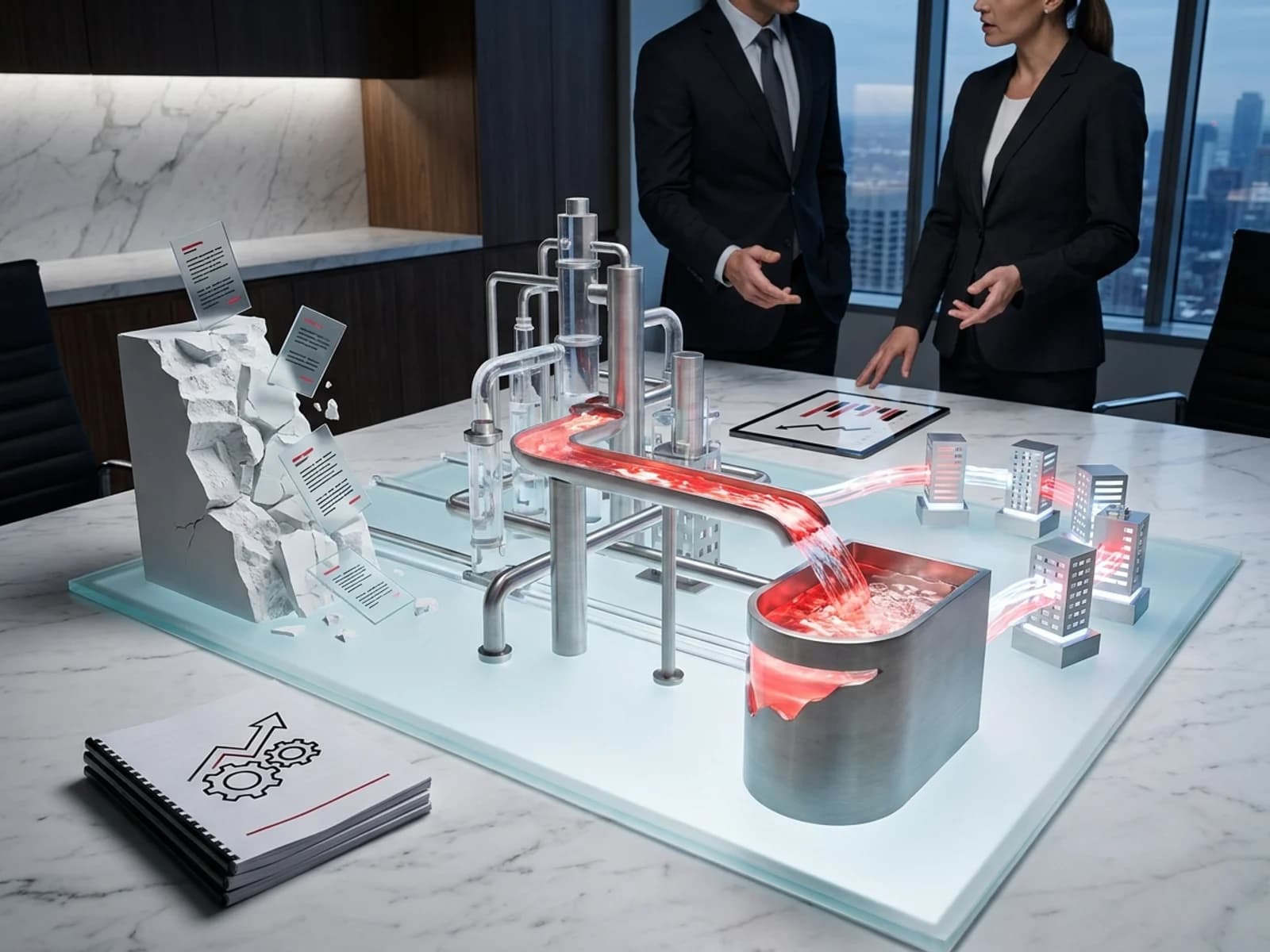
The Pharma M&A Accelerator Model (2026–2032):
Two structural pressures converge — the Looming Patent Cliff (a large wall of brand sales exposed to generic/biosimilar entry) and the Inflation Reduction Act (Medicare Maximum Fair Price controls on selected top-spend drugs).
Both produce immediate cash-flow pressure on the largest issuers, shrinking the terminal value of mature franchises.
That pressure becomes a BD/corp-dev pipeline-rebuilding mandate — organic R&D alone cannot replace the revenue fast enough.
The mandate is executed by acquiring late-stage clinical assets — concentrated in oncology, immunology, rare disease, and infectious disease — exactly the clusters dominating the 2026 deal table.
The first driver is the 2026–2032 Patent Cliff. The biopharma industry is entering the most severe Loss of Exclusivity (LOE) cycle in its history. Between 2026 and 2032, some of the world's largest blockbusters will lose patent protection and face biosimilar or generic competition. Key exposures include Merck's Keytruda (IV patent expires 2028), Bristol Myers Squibb/Pfizer's Eliquis (2028), Johnson & Johnson's Stelara (biosimilars launching 2025–2026), and AbbVie's legacy Humira franchise.
Faced with the loss of billions of dollars in high-margin revenue, large caps cannot rely on organic research and development alone—the timelines are too long and the failure rates too high. They must buy revenue-generating or near-approval assets. For a full analysis of the patent exposures across the top 15 global manufacturers, see our generic launch opportunity scorecard (2026–2027) and patent cliff register.
The second driver is the Inflation Reduction Act (IRA). The IRA's Medicare Drug Price Negotiation Program allows CMS to set a Maximum Fair Price (MFP) for high-spend single-source drugs. This negotiation takes effect 9 years after FDA approval for small molecules, but 13 years after approval for large-molecule biologics.
This policy change has altered the financial modeling of drug development:
Small Molecule Discounting: The 9-year negotiation window for small molecules reduces the long-term terminal value of oral drugs, driving acquirers to prioritize large-molecule biologics (monoclonal antibodies, cell therapies) that enjoy a 13-year window.
Defensive Pipeline Diversification: Price controls on mature blockbusters (such as Eliquis, Jardiance, and Stelara, which were selected in the first cycles of negotiation) force companies to diversify their pipelines earlier, using M&A to secure newer, innovative assets that are exempt from negotiation in their initial launch years.
Why are the headline totals ($134B vs $96B vs $84B) different, and which methodology should you use?
For corporate development teams preparing reports for executive leadership, the variance in published 2026 M&A totals can be a source of confusion. Citing $134 billion in one slide and $96 billion in another without explaining the methodology compromises the credibility of the analysis.
The discrepancies among trackers are driven by three distinct methodological variables:
Transaction Size Thresholds:
Blockbuster Trackers: Trackers like STAT focus exclusively on transactions valued at $1.0 billion or more. They capture the primary deployment of large-cap capital but omit the dense baseline of mid-market deals.
All-Deal Trackers: J.P. Morgan and PwC track all announced transactions, including mid-market deals down to $50 million. This results in higher deal counts (80 deals for JPM vs. 33 for STAT) but often lower overall dollar volumes if they exclude certain milestone structures.
Upfront Cash versus Milestone Inclusions:
Upfront Focus: Conservative financial analysts (like J.P. Morgan) count only the upfront cash consideration guaranteed at deal announcement. They exclude CVRs and future regulatory/commercial milestone payments because those payments are contingent on future events and may never be paid.
Total Consideration Focus: Strategic trackers often cite the total potential transaction value, which includes both upfront cash and all potential milestone payments. In a CVR-heavy market, this can inflate the reported total value of a deal by 30% to 50%.
Cohort Windowing (Rolling 6-Month versus Fixed Calendar H1):
A tracker publishing in late June may use a rolling 6-month window (e.g., December 22 to June 22) that captures late-December megadeals, while an investment bank uses a strict calendar H1 window (January 1 to June 30).
Recommendations for Corporate Reporting
When building corporate M&A presentations, we recommend implementing the following methodology rules:
Rule 1: Define the Cohort Explicitly. Always state the transaction size threshold (e.g., "deals ≥ $1.0 billion"), the timeframe (e.g., "announced H1 2026"), and the target segment (e.g., "therapeutic biopharma developers, excluding services/tools").
Rule 2: Disclose the Valuation Basis. Specify whether the dollar volume represents upfront consideration only or total potential consideration (including milestones/CVRs). If citing total consideration, include a footnote indicating the share represented by contingent milestones.
Rule 3: Reconcile Conflicting Sources. If presenting bank data alongside trade press, use a table or note to explain that J.P. Morgan's $96 billion figure reflects upfront values across 80 deals, while STAT's $134 billion figure captures total potential enterprise values for the 33 deals valued above $1.0 billion.
By implementing these standards, corp-dev and BD teams can provide executive boards with a rigorous, transparent analysis of the deal environment, steering clear of the methodology traps that compromise generic industry reporting.
Frequently Asked Questions
How many biopharma M&A deals happened in 2026?
According to J.P. Morgan's deal reports, there were 80 announced biopharma M&A deals in the first half of 2026. Within this cohort, STAT tracked 33 blockbuster acquisitions valued at $1.0 billion or more.
What is the largest pharma acquisition of 2026?
The largest acquisition announced in the first half of 2026 is AbbVie's ~$10.9 billion cash acquisition of Apogee Therapeutics, aimed at capturing its late-stage subcutaneous immunology candidate zumilokibart (APG777).
Is 2026 a record year for biopharma M&A?
Yes, H1 2026 has set a half-year record for transaction volume and velocity, with $134 billion spent on blockbuster deals, already exceeding the $112 billion spent during the entire 12 months of 2025. If the current pace continues, 2026 could challenge the historic megamerger M&A records of 2019.
Why is pharma M&A accelerating in 2026?
The acceleration is driven by three main factors: first, the looming 2026–2032 patent cliff wall, which exposes major blockbusters (like Keytruda and Stelara) to biosimilar competition; second, Medicare price negotiation pressures under the IRA, which reduce the long-term value of legacy drugs; and third, the correction in biotech valuations, which has made late-stage clinical targets significantly cheaper to acquire.
How does the 2026 deal total compare to 2025?
In the first six months of 2026, the industry announced 33 blockbuster deals ($1B+) totaling $134 billion. This exceeds all of 2025, which saw 26 blockbuster deals totaling $112 billion, representing a significant acceleration in deal value and capital velocity.
Sources
STAT News. Pharma M&A boom: 2026 deal-making tops 2025 total. STAT M&A Analysis
J.P. Morgan. Biopharma & Medtech Deal Reports: H1 and Q2 2026 Outlook. J.P. Morgan Insights
PwC US. Pharma & Life Sciences US Deals 2026 Midyear Outlook. PwC Deals Library
BioPharma Dive. Biotech M&A is accelerating: 2026 tracker. BioPharma Dive Tracker
U.S. Securities and Exchange Commission (SEC). AbbVie Inc. Form 8-K: Agreement to Acquire Apogee Therapeutics (June 22, 2026). SEC EDGAR
GSK plc. GSK enters agreement to acquire Nuvalent. GSK Press Office
Gilead Sciences, Inc. Gilead to acquire Arcellx to consolidate cell therapy leadership. Gilead Investors
U.S. Inflation Reduction Act of 2022 (IRA). Medicare Drug Price Negotiation Program. CMS Gov