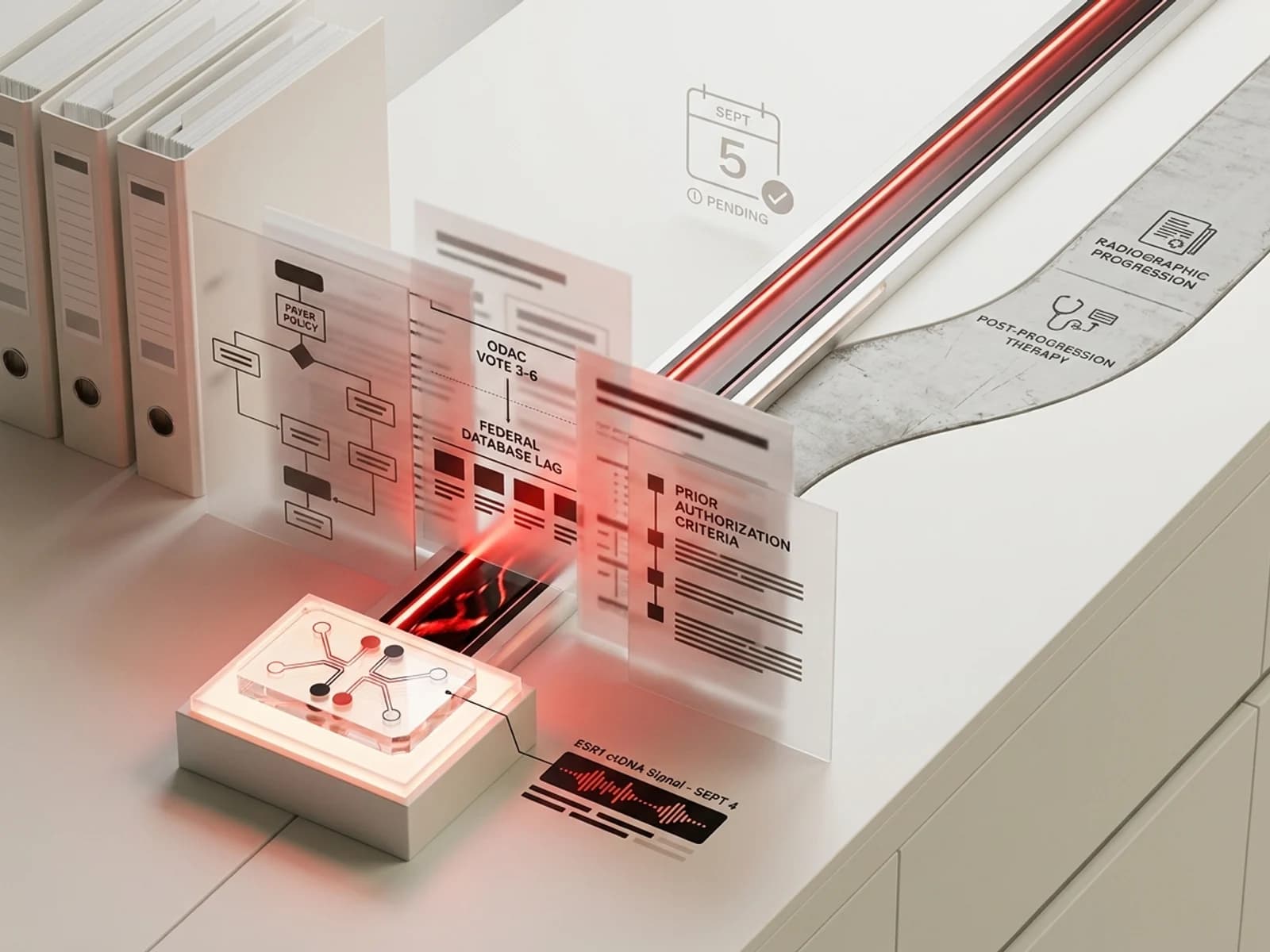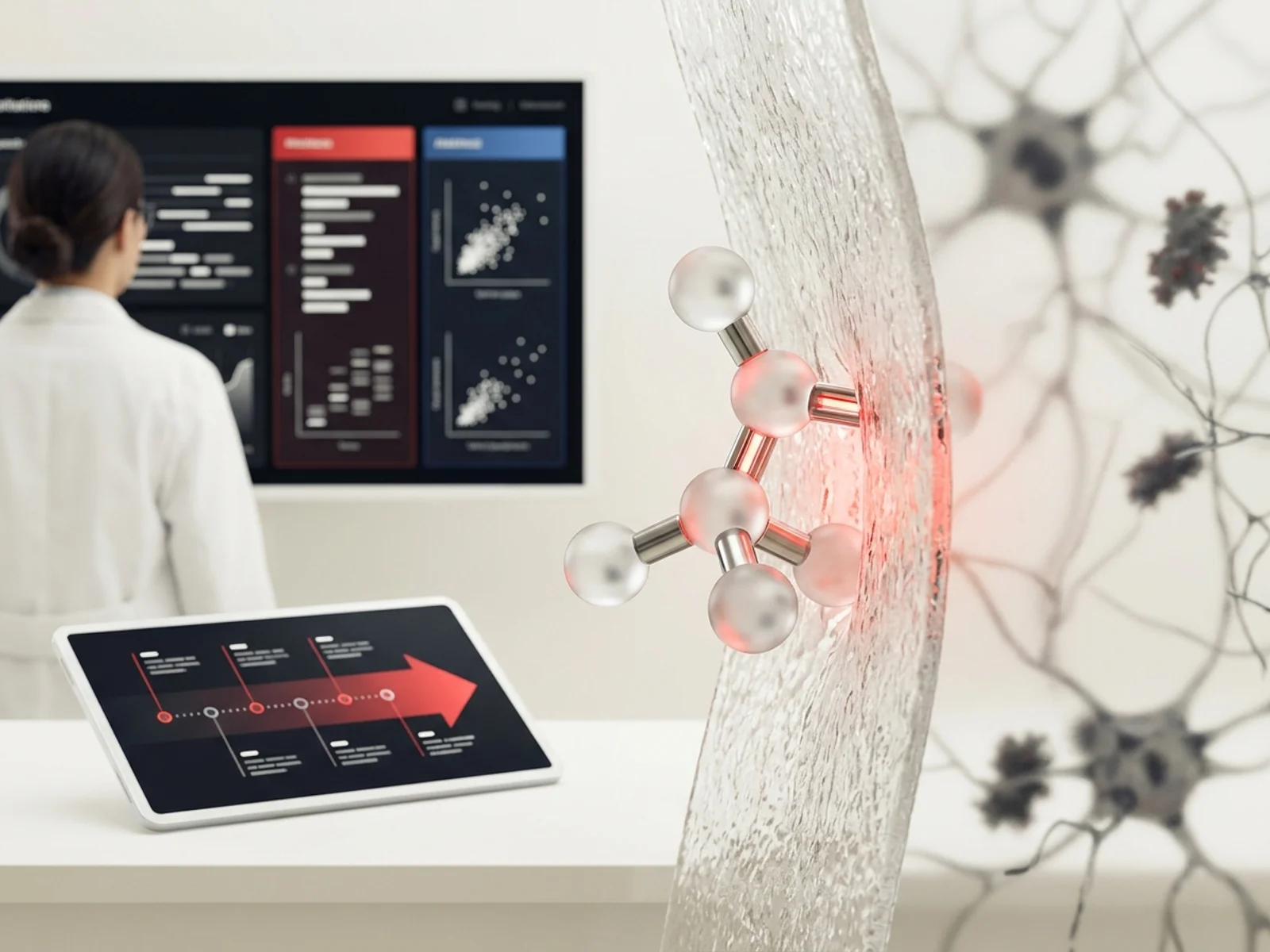
On June 9, 2026, GSK announced it would acquire Nuvalent for $10.6 billion in an all-cash transaction at $124 per share — a 40% premium to Nuvalent's unaffected stock price. The deal is expected to close in Q3 2026 and represents the first major strategic move by GSK CEO Luke Miels since he succeeded Emma Walmsley. It brings two late-stage, Breakthrough Therapy–designated lung cancer drugs into GSK's oncology portfolio, each with a PDUFA date in the second half of 2026.
The acquisition is structured around Nuvalent's two lead programs: zidesamtinib (NVL-520) for ROS1-positive non-small cell lung cancer (NSCLC) and neladalkib (NVL-655) for ALK-positive NSCLC. Both target patient populations defined by oncogenic driver mutations that primarily affect non-smoking adults aged 40–50, and both are designed to overcome resistance mutations and CNS penetration limitations that constrain the current standard of care.
Zidesamtinib (NVL-520): the ROS1 franchise
Clinical profile
Zidesamtinib is a ROS1-selective kinase inhibitor with activity against the ROS1 G2032R resistance mutation — the most common resistance mutation that emerges after treatment with first-generation ROS1 inhibitors. It is also designed to spare TRK kinases, reducing the neurological side effects seen with older multi-kinase ROS1 inhibitors.
The ARROS-1 trial has produced the following efficacy data:
| Population | Objective response rate (ORR) | Intracranial ORR |
|---|---|---|
| TKI-naïve | 89% | 83% (67% complete response) |
| TKI-pre-treated | 54% | — |
The 89% ORR in TKI-naïve patients is the highest reported for any ROS1 inhibitor in a first-line setting. The 54% ORR in previously treated patients — including those who progressed on crizotinib, entrectinib, or repotrectinib — demonstrates clinically meaningful activity against acquired resistance.
Regulatory timeline
PDUFA date: September 18, 2026 (for TKI-pre-treated ROS1+ NSCLC)
Breakthrough Therapy Designation: granted
Orphan Drug Designation: granted
A supplemental NDA for the TKI-naïve indication is planned for H2 2026
If approved in September, zidesamtinib would compete directly with Roche's repotrectinib (Augtyro), which received FDA approval for ROS1+ NSCLC in November 2023, and indirectly with Pfizer's lorlatinib (Lorbrena), which targets ALK but has some ROS1 activity.
Neladalkib (NVL-655): the ALK franchise
Neladalkib is an ALK-selective inhibitor designed for high CNS penetration and activity against known ALK resistance mutations. The ALK+ NSCLC market is larger and more competitive than ROS1, with established products including alectinib (Alecensa), brigatinib (Alunbrig), lorlatinib (Lorbrena), and ensartinib.
PDUFA date: November 27, 2026
Breakthrough Therapy Designation: granted
Orphan Drug Designation: granted
Being evaluated in the ALKOVE-1 trial for ALK+ NSCLC
The ALK franchise gives GSK a second lung cancer driver-mutation franchise alongside ROS1, with a combined addressable population of patients whose tumors harbor ALK or ROS1 rearrangements — approximately 3–7% of NSCLC cases, or roughly 7,000–15,000 new patients per year in the US.
The pipeline: NVL-330 and beyond
Beyond the two lead programs, Nuvalent has NVL-330, a HER2-selective inhibitor in Phase I development for HER2-altered NSCLC. HER2 alterations occur in approximately 2–4% of NSCLC cases, and the competitive landscape includes trastuzumab deruxtecan (Enhertu), which received accelerated approval for HER2-mutant NSCLC in 2024.
GSK also has its own existing oncology pipeline, including risvutatug rezetecan, a B7-H3 antibody-drug conjugate in Phase 3 for small cell lung cancer (SCLC). The Nuvalent acquisition creates a three-franchise lung cancer portfolio: ROS1, ALK, and B7-H3/SCLC.
Deal structure and financials
| Term | Detail |
|---|---|
| Transaction value | $10.6 billion |
| Consideration | All cash |
| Per-share price | $124 |
| Premium to unaffected price | ~40% |
| Expected close | Q3 2026 |
| Accretive to sales/operating profit | 2027 |
| Accretive to EPS | 2029 |
The $10.6B price tag values Nuvalent at approximately 80× its current revenue base (the company has no approved products yet). This is a classic late-stage pipeline acquisition premium: GSK is paying for two near-certain FDA approvals (both have Breakthrough Therapy Designation and PDUFA dates), a third early-stage program, and the platform capability to design selective kinase inhibitors that overcome resistance mutations.
The all-cash structure is notable. GSK is not using stock, which suggests management confidence in the acquired assets' value and avoids dilution. GSK has guided that the deal is accretive to sales and operating profit starting in 2027 and accretive to earnings per share by 2029.
Competitive landscape: the precision oncology race
The ROS1 and ALK lung cancer markets are part of a broader shift in precision oncology toward next-generation kinase inhibitors that address resistance and CNS penetration:
| Target | Market leader | Competitor | Nuvalent product |
|---|---|---|---|
| ROS1+ NSCLC | Roche (repotrectinib/Augtyro) | Pfizer (lorlatinib/Lorbrena, off-label) | Zidesamtinib (NVL-520) |
| ALK+ NSCLC | Roche (alectinib/Alecensa), Pfizer (lorlatinib/Lorbrena) | Takeda (brigatinib/Alunbrig), Xcovery (ensartinib) | Neladalkib (NVL-655) |
| HER2-altered NSCLC | Daiichi Sankyo/AstraZeneca (trastuzumab deruxtecan/Enhertu) | — | NVL-330 (Phase I) |
Roche is the primary competitor across both the ROS1 and ALK spaces. The repotrectinib-alectinib-lorlatinib axis represents the current standard of care, and GSK/Nuvalent's differentiation rests on superior resistance-mutation coverage (particularly ROS1 G2032R) and CNS penetration.
What this means for GSK, competitors, and the NSCLC market
1. This is Luke Miels's first move as GSK CEO, and it signals a commitment to precision oncology. GSK's oncology portfolio has been relatively thin since the divestiture of its rare disease unit and the underperformance of earlier oncology bets. Acquiring two Breakthrough Therapy–designated assets with PDUFA dates in 2026 is a low-regret way to enter the precision oncology market. The risk is execution: GSK must commercialize these products against Roche and Pfizer, both of which have established lung cancer sales forces and broader oncology portfolios.
2. The ROS1 market is small but strategically important. ROS1 rearrangements occur in only 1–2% of NSCLC cases, making it an ultra-orphan indication within lung cancer. But ROS1 patients are typically young, non-smoking, and have aggressive disease — a population where effective targeted therapy generates strong patient and physician loyalty. The orphan drug designation also provides seven years of market exclusivity and Medicaid rebate exemptions.
3. The ALK market is where the revenue upside lives. ALK+ NSCLC is 3–5× the size of ROS1+ NSCLC and is one of the most competitive targeted therapy spaces in oncology. Alectinib and lorlatinib are entrenched, and neladalkib will need to demonstrate a clear advantage — either in CNS penetration, resistance-mutation coverage, or tolerability — to displace them. GSK has not released detailed ALKOVE-1 efficacy data yet.
4. The $10.6B price is defensible but aggressive. Two near-term approvals with Breakthrough Therapy Designation, an established competitive advantage against resistance mutations, and a third pipeline asset justify a significant premium. But the deal values Nuvalent at roughly 80× projected revenue, which leaves little margin for clinical or commercial setbacks. If either product fails to gain market share against Roche, the acquisition will be criticized as overpayment — a pattern familiar from previous biotech acquisitions that looked smart on paper but underperformed commercially.
5. The broader implication: kinase inhibitor next-generation design is a validated platform. Nuvalent's approach — designing highly selective kinase inhibitors that target resistance mutations while sparing off-target kinases — is the same approach that turned larotrectinib and entrectinib into successful tumor-agnostic therapies. The Nuvalent acquisition validates this design philosophy as a platform that can generate successive generations of targeted therapies as resistance inevitably emerges to current standards of care.
Sources
GSK, "GSK to Acquire Nuvalent, Strengthening Oncology Portfolio," press release, June 9, 2026. https://www.gsk.com/en-gb/media/press-releases/
Nuvalent, Inc., investor relations materials and SEC filings, June 2026. https://ir.nuvalent.com
Nuvalent, "Zidesamtinib ARROS-1 Clinical Data," presented at medical conference, 2025–2026. https://ir.nuvalent.com/news-releases
Pharm Exec, "GSK to Buy Nuvalent for $10.6B in Lung Cancer Push." https://www.pharmexec.com/view/gsk-to-buy-nuvalent-for-10-6b-in-lung-cancer-push
Fierce Biotech, "GSK Snaps Up Nuvalent in $10.6B Deal, Adding Two Late-Stage Cancer Drugs." https://www.fiercebiotech.com/biotech/gsk-nuvalent-10-6b-acquisition
MedCity News, "GSK's $10.6B Nuvalent Deal: What It Means for Lung Cancer." https://medcitynews.com/gsk-nuvalent-acquisition-lung-cancer
FDA, "Repotrectinib (Augtyro) Approval for ROS1-Positive NSCLC," November 2023. https://www.fda.gov/drugs/resources-information-approved-drugs
ClinicalTrials.gov. NCT identifiers for ARROS-1 and ALKOVE-1. https://clinicaltrials.gov