On July 9, 2026, the FDA approved subcutaneous isatuximab-irfc (brand name: Sarclisa Escena, Sanofi) as a 1,400 mg fixed-dose injection across all three of the drug's existing multiple myeloma indications. Delivered via the CirCLIQ on-body delivery system (OBDS) or a manual subcutaneous syringe, Sarclisa Escena is the first anticancer treatment administered through an on-body injector, and the only anti-CD38 biologic to offer both an on-body-injector and a manual subcutaneous administration pathway.
For myeloma treaters, oncology pharmacy directors, and buy-and-bill revenue cycle teams, the launch of Sarclisa Escena represents a major shift in the administration and economics of anti-CD38 therapy. The approval is backed by the Phase 3 IRAKLIA trial, which demonstrated non-inferior efficacy (71.1% ORR for SC vs. 70.5% for IV) and a significant reduction in infusion-related reactions.
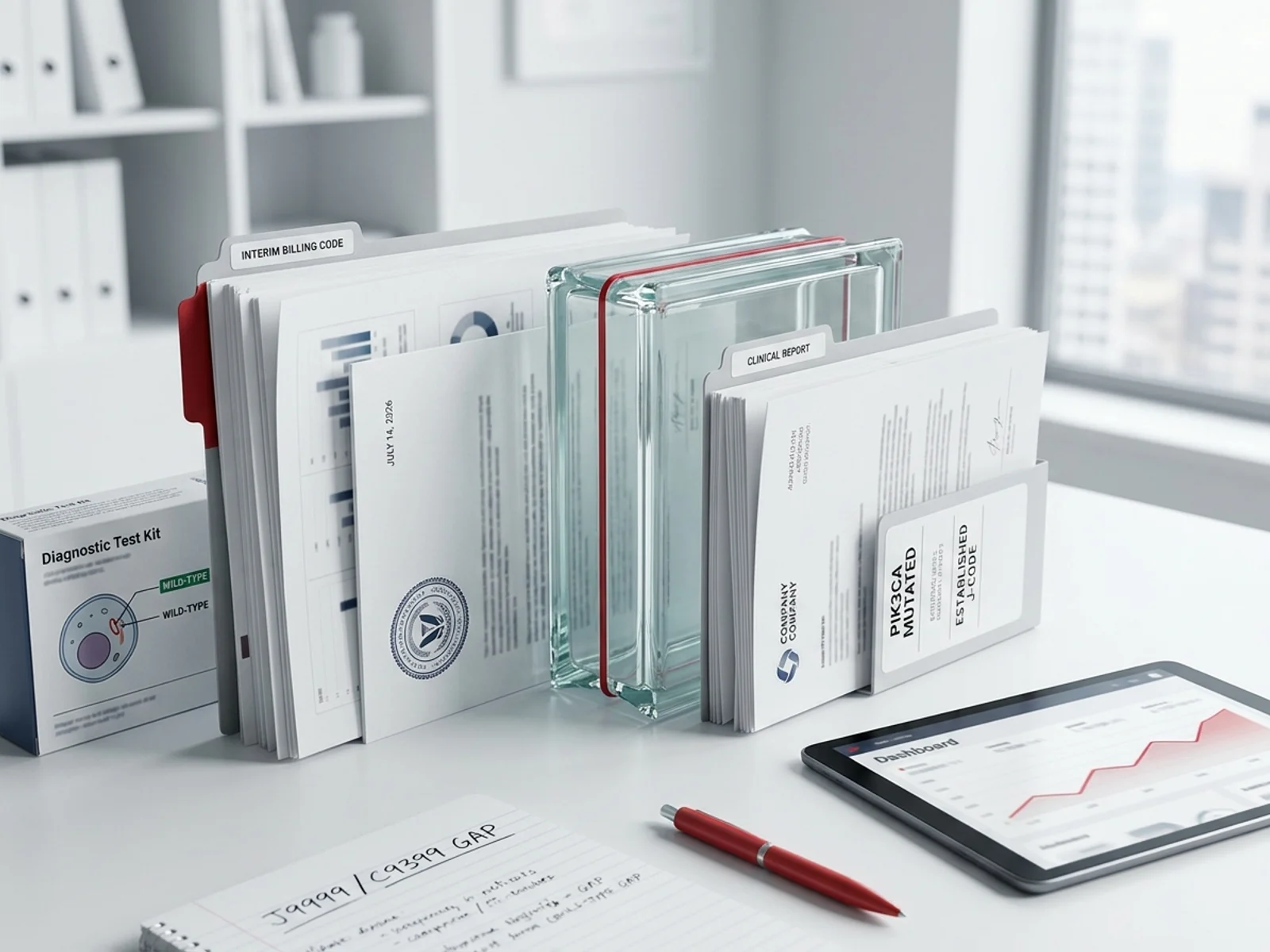
However, translating this clinical advancement into practice requires navigating complex US medical billing infrastructure. While intravenous Sarclisa is billed under HCPCS code J9227 (10 mg), the subcutaneous BLA is a separate product that requires a new HCPCS code. Until a permanent J-code is assigned in a future CMS coding cycle, providers must utilize temporary unclassified billing codes (such as J3490, J3590, or C9399) and manage prior authorization transitions.
This guide provides a detailed analysis of the clinical conversion, administration workflow, billing codes, and payer landscape for Sarclisa Escena.
What did the FDA approve on July 9, 2026, and for which myeloma regimens?
The FDA's approval of subcutaneous isatuximab-irfc (Sarclisa Escena) on July 9, 2026, extends the clinical utility of Sanofi's oncology franchise cornerstone. Rather than approving a new molecular entity, the FDA approved a new subcutaneous formulation and delivery route for the established anti-CD38 antibody, isatuximab-irfc.
Importantly, the FDA approved Sarclisa Escena for all three multiple myeloma indications currently held by the intravenous formulation:
In Combination with Pomalidomide and Dexamethasone (Isa-Pd): For the treatment of adult patients with multiple myeloma who have received at least one prior line of therapy including lenalidomide and a proteasome inhibitor (PI).
In Combination with Carfilzomib and Dexamethasone (Isa-Kd): For the treatment of adult patients with relapsed or refractory multiple myeloma (RRMM) who have received one to three prior lines of therapy.
In Combination with Bortezomib, Lenalidomide, and Dexamethasone (Isa-VRd): For newly diagnosed multiple myeloma (NDMM) patients who are not eligible for autologous stem cell transplant (ASCT).
By approving the subcutaneous formulation across all three regimens, the FDA has enabled a complete transition from IV to SC administration within clinical practices, avoiding the logistical complexity of maintaining patients on different administration pathways based on their specific combination regimen.
How is Sarclisa Escena dosed, and what is the CirCLIQ on-body delivery system?
Unlike the intravenous formulation, which is dosed weight-dependently at 10 mg per kg, Sarclisa Escena is administered as a fixed dose of 1,400 mg regardless of patient weight. This flat-dosing approach simplifies oncology pharmacy operations by eliminating the need to compound patient-specific bags, reducing drug waste, and accelerating preparation times.
Dosing Schedule and Regimen Mechanics
The dosing frequency of Sarclisa Escena matches that of the IV formulation and varies by regimen:
With Pomalidomide/Dex (Isa-Pd) and Carfilzomib/Dex (Isa-Kd): 1,400 mg weekly for Cycle 1 (Weeks 1 to 4), followed by 1,400 mg every two weeks starting in Cycle 2.
With Bortezomib/Len/Dex (Isa-VRd): 1,400 mg weekly for Cycles 1 and 2, followed by 1,400 mg every two weeks for Cycles 3 to 18 (28-day cycles).
From a clinical workflow perspective, weight-based compounding represents a major source of operational friction. IV Sarclisa is supplied in 100 mg/5 mL and 500 mg/25 mL single-dose vials, and the 10 mg/kg dose is patient-specific. For an 80 kg patient, the 800 mg IV dose is built from one 500 mg vial plus three 100 mg vials, each compounded individually. For an 85 kg patient, the 850 mg dose forces the pharmacy to crack a fourth 100 mg vial and discard roughly 50 mg—direct drug waste that many payer contracts do not reimburse. Flat-dosing eliminates this waste entirely: every patient receives the same 1,400 mg dose.
The CirCLIQ On-Body Delivery System platform
The most innovative element of the Sarclisa Escena launch is the delivery hardware. The drug is administered via the CirCLIQ on-body delivery system (OBDS).
CirCLIQ is built on the enFuse wearable on-body platform developed by Enable Injections. The system utilizes a mechanical, elastomeric spring-driven reservoir that is adhered to the patient’s abdomen or thigh. The device is pre-loaded or filled in the pharmacy and then placed on the patient, delivering the 1,400 mg dose subcutaneously over approximately 10 to 15 minutes.
The CirCLIQ platform represents a major technological step:
Constant Flow Rate: The mechanical drive ensures a controlled flow rate, preventing the discomfort associated with rapid manual subcutaneous push injections of high-volume biologics.
Hands-Free Administration: Once the device is applied and activated, the clinical staff is freed up, allowing the patient to sit comfortably in a chair while the drug is delivered.
Alternative Manual Injection: For clinics that prefer not to utilize the on-body injector, or in cases where the patient prefers a traditional injection, Sarclisa Escena can also be administered via manual subcutaneous syringe and infusion set over approximately 15 minutes.
The design of the CirCLIQ system incorporates extensive human factors considerations. The device utilizes a gentle adhesive backing that keeps the injector stable during delivery, allowing patients to move their arms, read, or use mobile devices during administration. Nurses can apply the device in less than a minute, and the mechanical indicator provides clear visual confirmation when the full dose has been delivered. This dual-delivery option provides significant flexibility, making it the only anti-CD38 biologic on the market to offer both wearable on-body and manual syringe administration pathways.
How does subcutaneous isatuximab compare to IV in the IRAKLIA and IZALCO trials?
The regulatory approval of Sarclisa Escena was supported by the Phase 3 IRAKLIA trial (NCT05405166), which evaluated the efficacy, safety, and pharmacokinetics of subcutaneous isatuximab against the IV formulation in combination with pomalidomide and dexamethasone. The carfilzomib/dexamethasone (Isa-Kd) and bortezomib/lenalidomide/dexamethasone (Isa-VRd) indications were each supported by a single-arm Phase 2 study: IZALCO (NCT05704049) in 74 patients with relapsed/refractory multiple myeloma (ORR 79.7%, 95% CI 68.8–88.2) and IsaSocut (NCT05889221) in 74 patients with newly diagnosed, transplant-ineligible multiple myeloma (ORR 97.3%, 95% CI 90.6–99.7).
IRAKLIA Trial Study Design
IRAKLIA was a randomized, open-label, non-inferiority study that enrolled 531 patients with relapsed or refractory multiple myeloma who had received at least one prior line of therapy. Patients were randomized 1:1 to receive either:
Subcutaneous Isatuximab (1,400 mg fixed dose) + Pomalidomide and Dexamethasone (Isa-Pd)
Intravenous Isatuximab (10 mg per kg weight-based dose) + Pomalidomide and Dexamethasone (Isa-Pd)
The trial used two co-primary non-inferiority endpoints: ORR (assessed by an independent review committee, with a non-inferiority margin of 0.839 on the ORR relative risk) and the steady-state Isa Ctrough (Cycle 6 Day 1 predose, with a non-inferiority margin of 0.8 on the geometric mean ratio). Non-inferiority was declared only if both co-primary endpoints met their margins.
Efficacy Findings
The primary endpoint of the trial was the Objective Response Rate (ORR). The trial successfully demonstrated the non-inferiority of the subcutaneous formulation:
| Co-primary Endpoint | Subcutaneous via on-body injector (n=263) | Intravenous (n=268) | Comparison |
|---|---|---|---|
| Objective Response Rate (ORR, IRC) | 71.1% (95% CI: 65.2 – 76.5) | 70.5% (95% CI: 64.7 – 75.9) | Relative risk 1.008 (95% CI: 0.903 – 1.126) |
| Steady-state Ctrough, C6D1 predose (mean) | 499 μg/mL (SD 259) | 340 μg/mL (SD 169) | Geometric mean ratio 1.532 (90% CI: 1.316 – 1.784) |
Source: IRAKLIA (NCT05405166), Ailawadhi et al., Journal of Clinical Oncology (2025); FDA approval notice (July 9, 2026). After a median follow-up of 12 months.
Because the lower bound of the ORR relative-risk confidence interval (0.903) cleared the pre-specified non-inferiority margin of 0.839, and the Ctrough geometric-mean-ratio lower bound (1.316) cleared its 0.8 margin, both co-primary endpoints were met, establishing therapeutic non-inferiority of the subcutaneous route. Notably, the SC arm actually achieved a higher mean Ctrough than IV (499 vs 340 μg/mL), because the slower SC absorption phase avoids the rapid post-infusion clearance peak-and-trough swing of IV dosing.
Pharmacokinetics and Tolerability Profiles
PK Ctrough Concordance: The study demonstrated that the fixed 1,400 mg SC dose achieved a mean trough concentration ($C_{\text{trough}}$) at the end of Cycle 1 that was non-inferior to the weight-based IV dose, ensuring consistent therapeutic drug levels. The subcutaneous administration resulted in a slower absorption phase, leading to a lower maximum serum concentration ($C_{\text{max}}$) and avoiding the transient post-infusion peaks seen with IV administration, which are often associated with systemic side effects.
Reduction in Infusion-Related Reactions (IRRs): Intravenous anti-CD38 monoclonal antibodies are notorious for high rates of IRRs, which often require extensive premedication and slow initial infusion speeds. In IRAKLIA, infusion/administration-related reactions occurred in 1.5% of the on-body-injector arm versus 25.0% of the IV arm—a roughly 17-fold reduction. Injection-site reactions occurred in only 0.4% of SC injections (all Grade 1–2), and 99.9% of SC injections were completed without interruption.
Comparable Overall Safety, Shared Warning Profile: The overall Grade ≥3 treatment-emergent adverse-event rate was 81.7% in the SC arm versus 76.1% in the IV arm (comparable, with no unexpected safety signal relative to IV isatuximab). Sarclisa Escena carries the same labeled warnings and precautions as IV Sarclisa: hypersensitivity and other administration reactions, neutropenia, infections, secondary primary malignancies, laboratory-test interference (including interference with indirect Coombs / blood-typing tests), and embryo-fetal toxicity.
For a broader perspective on the clinical development of subcutaneous oncology formulations, see our report on the Sanofi specialty-care portfolio, which tracks the transition of biologics from IV to SC routes.
How do you bill Sarclisa Escena — J9227, a new J-code, or a temporary code?
For hospital outpatient departments (HOPDs) and physician-office oncology practices, the primary challenge of launching a new oncology biologic is securing reimbursement under the "buy-and-bill" model. If the billing team submits the wrong HCPCS code, the claim will be denied, creating massive financial liability for the clinic.
The Coding Separation: IV vs. SC
A common mistake in revenue cycle management is assuming that a new formulation of an existing drug can be billed under the parent drug's HCPCS code.
IV Sarclisa J-Code: J9227 (Injection, isatuximab-irfc, 10 mg)
Subcutaneous Sarclisa Escena J-Code: Pending CMS Assignment
Because Sarclisa Escena was approved under a separate Biologics License Application (BLA) and has a distinct dosage form (subcutaneous injection vs. intravenous infusion) and strength (1,400 mg flat), J9227 cannot be used to bill for Sarclisa Escena. Submitting a claim for a 1,400 mg subcutaneous injection under J9227 will result in an immediate denial or audit, as the Medicare National Correct Coding Initiative (NCCI) edits do not align weight-based J-codes with subcutaneous flat doses.
Interim Coding Strategy
Until CMS assigns a permanent HCPCS code for Sarclisa Escena (typically during the next quarterly update cycle), billing teams must use temporary, unclassified codes:
| Payer Class | Temporary Code | Description |
|---|---|---|
| Commercial / Medicare Part B | J3490 | Unclassified drugs |
| Commercial / Miscellaneous | J3590 | Unclassified biologicals |
| Medicare Hospital Outpatient (OPPS) | C9399 | Unclassified drugs or biologicals |
When billing under temporary codes, the revenue cycle team must manually append the NDC (National Drug Code), the drug name, the exact dose administered (1,400 mg), and the medical necessity documentation to the box 80 of the UB-04 or box 19 of the CMS-1500 claim form. For a detailed guide on managing these interim periods, refer to our explainer on J-code timing and interim billing risk.
The Financial Risk of Unclassified Billing
Unclassified billing is one of the highest-risk operations in oncology revenue cycles. Because claims under J3490 or J3590 do not map to a standard fee schedule, they must be manually reviewed by payer claims examiners. This manual step introduces significant delays and increases the risk of denial.
To mitigate this risk, clinics must implement a strict pre-administration verification protocol:
Payer-Specific Requirements: Check whether the specific commercial payer requires the unclassified code to be billed in 1 mg units or as a single unit representing the entire 1,400 mg dose.
NDC Matching: Ensure the NDC on the vial matches the NDC submitted on the claim form exactly. Even minor differences in hyphenation or leading zeros (e.g., 11-digit vs. 10-digit formats) can trigger automatic system rejections.
Claim Appeals Preparedness: If a claim is denied, the clinic must be prepared to submit an immediate appeal. The appeal package should include the FDA approval letter, the Sarclisa Escena package insert, the patient's medical records detailing the diagnosis of multiple myeloma, and proof of the drug's purchase.
What are the site-of-care, prior-authorization, and buy-and-bill implications?
The shift from weight-based IV compounding to a flat-dose, on-body subcutaneous injector alters the operational and financial profile of anti-CD38 therapy.
1. Site-of-Care Shifts
Payer policies have increasingly restricted the administration of specialty biologics in high-cost hospital outpatient departments, pushing patients toward lower-cost community oncology offices or home infusion settings.
The launch of Sarclisa Escena accelerates this trend. Because the CirCLIQ system is hands-free and does not require complex IV setup, it is highly suited for:
Community Oncology Clinics: Reducing chair-time bottlenecks and allowing clinics to treat more patients per day. An IV isatuximab infusion requires dedicated IV access and nurse monitoring for infusion-reaction risk (especially during the first cycle, which is run slowly); converting a patient to a 10-to-15-minute, hands-free subcutaneous injection frees up infusion chairs for patients receiving multi-drug chemotherapy regimens that cannot be simplified.
Home Infusion: Enabling home health nurses to administer the therapy, or eventually allowing self-administration under clinical supervision. The mechanical design of the CirCLIQ injector eliminates the need for intravenous access, allowing patients to avoid the discomfort and infection risks of ports or peripherally inserted central catheters (PICCs).
Payers are likely to implement mandatory site-of-care edits, redirecting patients away from hospital settings for their subcutaneous maintenance doses. For more on this policy landscape, see our analysis of site-of-care edits for IV and subcutaneous drugs.
2. Prior Authorization and Transition Management
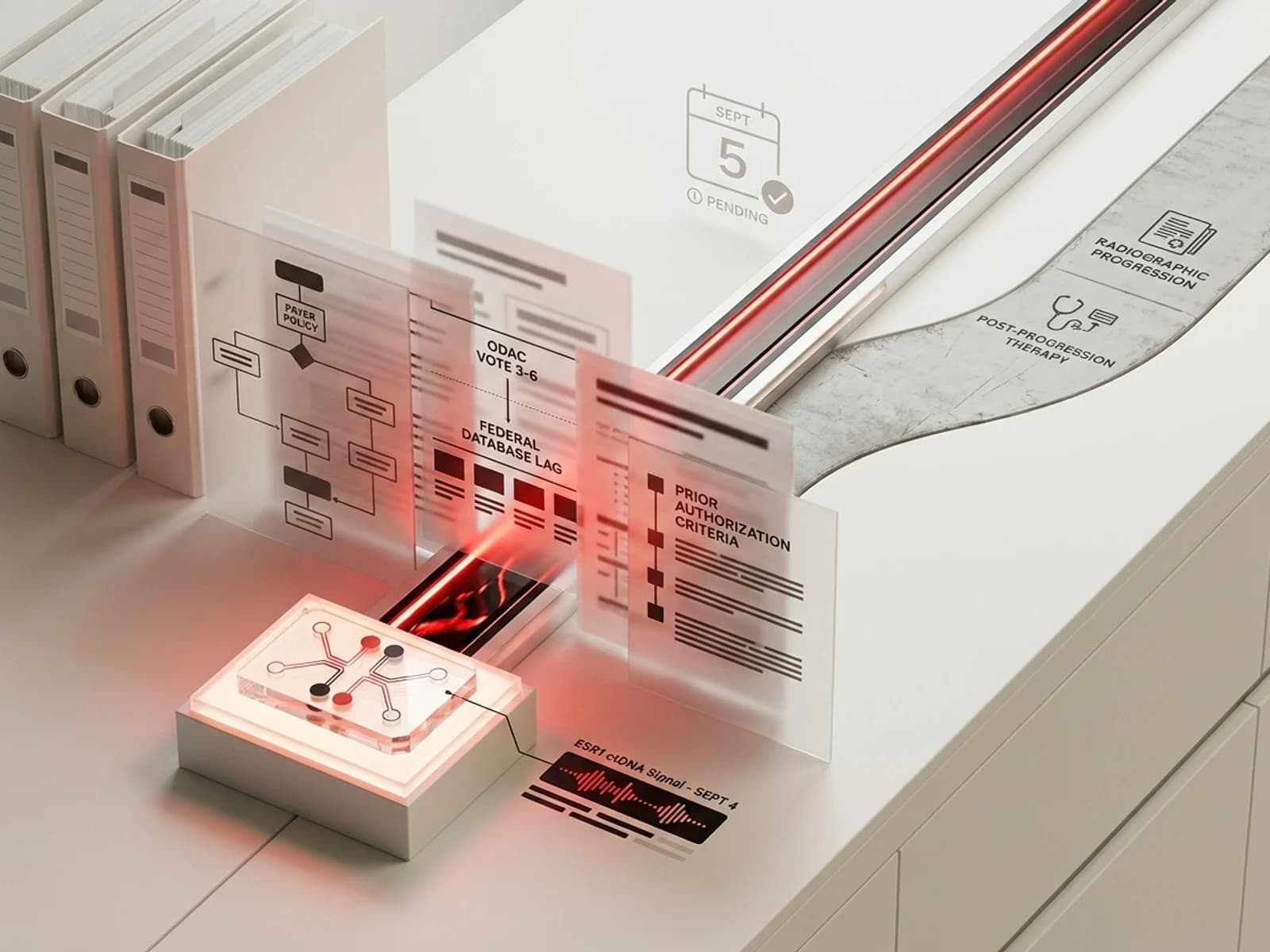
Clinics must manage the transition of patients currently receiving IV Sarclisa to Sarclisa Escena. Payers will not automatically transfer a prior authorization (PA) from the IV formulation to the SC formulation.
To prevent treatment delays, the clinic must:
Submit a new PA request for Sarclisa Escena.
Document the clinical rationale for the transition (e.g., patient preference, reduced risk of infusion reactions, clinical efficiency).
Obtain written approval and a verified PA number before the patient's first subcutaneous dose.
3. Buy-and-Bill Economics
For oncology practices operating on the buy-and-bill model, the transition to flat dosing changes the average sales price (ASP) calculation and the practice's profit margins. Because weight-based dosing often results in drug wastage (paying for partial vials that must be discarded), flat-dosing eliminates waste but also eliminates the potential reimbursement markup on wasted drug. Practice managers must model the financial impact of this transition, factoring in the lower administration cost of a 15-minute subcutaneous injection versus a multi-hour IV infusion.
Where does SC isatuximab fit in the anti-CD38 and daratumumab-SC landscape?
The multiple myeloma therapeutic market is highly competitive, dominated by Johnson & Johnson’s blockbuster anti-CD38 antibody, daratumumab (Darzalex). Darzalex Faspro (daratumumab and hyaluronidase-fihj) was approved in 2020 as a subcutaneous injection, rapidly capturing the vast majority of the anti-CD38 market due to its 3-to-5 minute administration time compared to the 3-to-7 hour Darzalex IV infusion.
Sarclisa Escena vs. Darzalex Faspro
The introduction of Sarclisa Escena provides a direct competitor to Darzalex Faspro in the subcutaneous anti-CD38 space.
| Feature | Sarclisa Escena (isatuximab-irfc) | Darzalex Faspro (daratumumab/hyaluronidase) |
|---|---|---|
| Manufacturer | Sanofi | Janssen / Genmab |
| Dose Form | Subcutaneous (with CirCLIQ OBDS or manual) | Subcutaneous (manual injection only) |
| Active Ingredient | Isatuximab-irfc (1,400 mg flat) | Daratumumab (1,800 mg) + Hyaluronidase |
| Delivery Device | Wearable on-body injector or syringe | Manual subcutaneous syringe push |
| Administration Time | 10 to 15 minutes | 3 to 5 minutes |
| HCPCS Code | Pending CMS Assignment | J9144 (eff. Jan 1, 2021) |
The key differentiator for Sarclisa Escena is the CirCLIQ on-body injector. While Darzalex Faspro must be manually injected by a clinician holding a syringe and pushing the fluid slowly over 3 to 5 minutes to manage tissue pressure (which can cause significant patient discomfort due to the localized volume), Sarclisa Escena's CirCLIQ system is applied and runs hands-free. This reduces clinical labor, as nurses do not need to stand by the patient for the duration of the injection.
Molecular Differences and Receptor Dynamics
At the molecular level, isatuximab and daratumumab bind to different epitopes on the CD38 receptor, leading to distinct biological mechanisms:
Epitope Binding: Isatuximab binds to a specific amino acid sequence on the CD38 enzyme that directly inhibits its enzymatic activity. This enzymatic inhibition is more pronounced than that observed with daratumumab.
Direct Apoptosis: Isatuximab is capable of inducing direct apoptosis (programmed cell death) in multiple myeloma cells without the need for cross-linking or effector cell recruitment. In contrast, daratumumab relies more heavily on antibody-dependent cellular cytotoxicity (ADCC) and complement-dependent cytotoxicity (CDC).
Receptor Internalization and Shedding: Clinical studies have shown that treatment with daratumumab leads to rapid internalization or shedding of the CD38 receptor from the surface of myeloma cells, which can contribute to drug resistance. Isatuximab appears to induce less receptor shedding, potentially maintaining target density on the tumor cell surface for longer periods.
In patients who have developed resistance or experienced disease progression on daratumumab, these molecular differences suggest that isatuximab may still show activity, although this remains an area of active clinical investigation and is not a formal label claim. For a detailed review of the subcutaneous CD38 landscape and the biosimilar tracker, refer to our article on the Darzalex biosimilar tracker and SC-vs-IV dynamics.
Frequently Asked Questions
Is Sarclisa Escena a new drug or a new formulation of existing Sarclisa?
Sarclisa Escena is a new subcutaneous formulation of the existing oncology drug isatuximab-irfc. It contains the same active antibody but is formulated at a higher concentration to enable subcutaneous delivery, and is administered at a fixed flat dose of 1,400 mg rather than the weight-based dosing used for the IV formulation.
Is the CirCLIQ on-body injector required, or can it be given by manual SC injection?
The CirCLIQ on-body injector is not strictly required. While the system is designed to provide hands-free administration, Sarclisa Escena can also be administered via a manual subcutaneous injection using a standard syringe and infusion set over approximately 15 minutes.
Does subcutaneous isatuximab cost the same as IV Sarclisa?
WAC (Wholesale Acquisition Cost) pricing is set by Sanofi, and while the flat-dose pricing is designed to align with the average weight-based IV cost, the overall billing impact will vary. Because the SC version eliminates drug waste (no partial vial discarding), the net cost per administration may be more predictable for payers and clinics.
What HCPCS code do I use to bill Sarclisa Escena in 2026?
Because a permanent J-code is pending, you must bill using temporary unclassified HCPCS codes: J3490 (unclassified drugs), J3590 (unclassified biologics), or C9399 (hospital outpatient OPPS). Ensure the NDC, exact drug name, and 1,400 mg dose are documented on the claim. Do not use J9227, which is reserved for the IV formulation.
Does Sarclisa Escena carry the same warnings as IV Sarclisa?
Yes, Sarclisa Escena carries the same core warnings and precautions as IV Sarclisa, including risk of neutropenia, thrombocytopenia, serious infections, second primary malignancies, and interference with blood typing tests (such as direct Coombs tests). The rate of administration-related infusion reactions, however, is significantly lower with the subcutaneous version.
Sources
U.S. Food and Drug Administration (FDA). FDA Approves Isatuximab-irfc Subcutaneous Injection for Multiple Myeloma. FDA Drug Approvals. FDA Approval Notice
Sanofi Aventis. Sanofi's Subcutaneous Sarclisa Escena Approved in the US as First Anticancer Treatment Administered via On-Body Injector. Sanofi Press Room. Sanofi Press Release
ClinicalTrials.gov. IRAKLIA — Study of Subcutaneous vs. Intravenous Isatuximab in Combination with Pomalidomide and Dexamethasone in Relapsed or Refractory Multiple Myeloma. Identifier: NCT05405166
Centers for Medicare & Medicaid Services (CMS). HCPCS Level II Coding Updates and Procedures. CMS HCPCS Portal
The ASCO Post. FDA Approves Subcutaneous Isatuximab-irfc for Multiple Myeloma Indications. ASCO Post News
CancerNetwork. FDA Approves Subcutaneous Isatuximab in Multiple Myeloma. CancerNetwork Approval Coverage