On August 25, 2026, the U.S. Food and Drug Administration (FDA) issued a combined supplemental approval letter for Tivicay (dolutegravir; NDA 204790/S-034) and Tivicay PD (dolutegravir tablets for oral suspension; NDA 213983/S-007), submitted by ViiV Healthcare Company. The regulatory action expands the approved indication for Tivicay PD to include the treatment of HIV-1 infection in combination with other antiretroviral agents in term neonates from birth up to four weeks of age weighing at least 2 kg.
The decision represents a major milestone in pediatric infectious disease, extending the availability of an integrase strand transfer inhibitor (INSTI) to the earliest days of life. However, for pediatric hospital pharmacists, neonatal intensive care unit (NICU) clinical specialists, Medicaid formulary managers, and market-access teams, several critical clinical, pharmacologic, and regulatory boundaries govern this approval:
Does the August 25 expansion allow hospitals to substitute standard Tivicay 50 mg film-coated tablets for Tivicay PD in newborns, does the supporting IMPAACT 2023 trial prove clinical efficacy in infants with confirmed HIV, and why is the approved labeling still unposted on Drugs@FDA?
The direct answer to all three questions requires strict regulatory precision:
Film-coated Tivicay tablets cannot substitute for Tivicay PD on a milligram-per-milligram basis. The FDA approval explicitly warns that Tivicay film-coated tablets and Tivicay PD dispersible tablets for oral suspension exhibit different pharmacokinetic bioavailability profiles and are not bioequivalent or interchangeable mg-for-mg. Cutting, crushing, or dissolving adult 50 mg tablets for neonatal administration is unsafe and clinically non-compliant.
The clinical evidence is pharmacokinetic bridging in HIV-exposed infants, not a powered efficacy trial in confirmed neonatal HIV. The approval is supported by the Phase 1/2 IMPAACT 2023 study (NCT05406583), which evaluated 48 HIV-1-exposed newborns weighing at least 2 kg receiving Tivicay PD alongside standard prevention of mother-to-child transmission (PMTCT) antiretroviral prophylaxis. FDA approved the expansion because neonatal plasma drug exposures matched exposures proven safe and effective in adults and older children.
The labeled expansion is restricted to term neonates weighing at least 2 kg. Under the terms of the FDA approval letter, the label covers term infants weighing at least 2 kg. Preterm neonates and infants below 2 kg remain outside the labeled population.
The S-007 prescribing information is pending on Drugs@FDA under the 14-day SPL clock. As of August 27, 2026, Drugs@FDA lists S-007 as approved under the classification Efficacy-New Patient Population, with the notation "Label is not available on this site." Under 21 CFR 314.50(l), the sponsor has 14 calendar days from the approval letter (until September 8, 2026) to transmit final Structured Product Labeling (SPL) to DailyMed.
TIVICAY VS. TIVICAY PD REGULATORY & FORMULATION MATRIX
| Regulatory Parameter | Tivicay (Film-Coated Tablet) | Tivicay PD (Dispersible Tablet) |
|---|---|---|
| Application Number | NDA 204790 | NDA 213983 |
| Approval History | Original: August 12, 2013 | Original: June 12, 2020 |
| S-034: August 25, 2026 | S-007: August 25, 2026 | |
| Dosage Form | Film-Coated Tablet (Oral) | Tablet for Oral Suspension (PD) |
| Active Strengths | 50 mg (RLD / RS) | EQ 5 mg base (RLD / RS) |
| Discontinued Strengths | 10 mg & 25 mg (314.161 disc.) | None |
| Approved Age Population | Adults & Children ≥20 kg | Term Neonates (≥2 kg) to Children |
| Bioavailability Profile | Standard systemic absorption | Enhanced absorption (~1.6x higher) |
| Mg-for-Mg Substitution | ✖ PROHIBITED (Not mg-for-mg) | ✖ PROHIBITED (Must use PD SKU) |
| Orange Book Exclusivity | None listed as of 2026-08-14 | None listed as of 2026-08-14 |
| Patent Expiration (PED) | US 8129385*PED (Apr 5, 2028) | US 8129385*PED (Apr 5, 2028) |
| US 9242986*PED (Jun 8, 2030) | US 9242986*PED (Jun 8, 2030) |
Below, we dissect the combined approval letter, parse the IMPAACT 2023 pharmacokinetic bridging dataset, audit the dolutegravir listings in the FDA Orange Book, and provide operational guidance for hospital P&T committees, Medicaid programs, and Ryan White clinics updating neonatal access workflows.
The Regulatory Foundation: Term Neonates, 2 kg Floor, and BPCA Mandate
The regulatory action taken on August 25, 2026 involves two parallel supplemental New Drug Applications:
NDA 204790/S-034: Tivicay (dolutegravir) film-coated tablets; and
NDA 213983/S-007: Tivicay PD (dolutegravir) tablets for oral suspension.
Both supplements were submitted and received by the FDA on February 25, 2026, undergoing a 6-month Priority Review cycle. In the combined approval letter issued by the Division of Antivirals in the Center for Drug Evaluation and Research (CDER), the agency established several structural regulatory boundaries:
┌──────────────────────────────────────────────────────────────────────────────────────────────┐
│                        STATUTORY & REGULATORY APPROVAL ARCHITECTURE                          │
├──────────────────────────────────────────────────────────────────────────────────────────────┤
│                                                                                              │
│   [ FDA Combined Approval Letter: NDA 204790/S-034 & NDA 213983/S-007 (Aug 25, 2026) ]       │
│                                              │                                               │
│        ┌─────────────────────────────────────┴─────────────────────────────────────┐         │
│        ▼                                                                           ▼         │
│   [ BPCA Pediatric Labeling ]                                                 [ PREA Scope ] │
│   • Fulfills Written Request - Amendment 4                                    • Supplements  │
│     (Issued August 28, 2024)                                                    are exempt   │
│   • Covers term neonates (birth to <4 wks)                                      under PREA   │
│     weighing ≥2 kg                                                              because none │
│   • Letter does not itself list new Orange Book                                 of the PREA  │
│     exclusivity rows                                                            triggers apply│
│                                              │                                               │
│                                              ▼                                               │
│                          [ Critical Population Eligibility Gates ]                           │
│                          ✔ Term neonates (approval-letter language)                          │
│                          ✔ Weight Floor: Must weigh at least 2.0 kg                          │
│                          ✖ Preterm infants remain outside the labeled cohort                 │
│                          ✖ Infants <2.0 kg remain outside the labeled cohort                 │
│                                                                                              │
└──────────────────────────────────────────────────────────────────────────────────────────────┘
Best Pharmaceuticals for Children Act (BPCA): The approval letter states that the supplements provide pediatric labeling pursuant to BPCA and fulfill Written Request—Amendment 4, issued August 28, 2024. That is a labeling-fulfillment finding. It is not itself an Orange Book exclusivity listing. Pediatric patent-extension rows already appeared on both NDAs in the August 14, 2026 Orange Book files, before this sNDA.
Exemption from PREA Requirements: The approval letter states the supplements are exempt from Pediatric Research Equity Act (PREA) assessments because none of the PREA trigger criteria apply to these supplements.
The Term Neonate Restriction: The FDA public page says Tivicay PD is approved for babies from birth up to four weeks weighing at least 2 kg. The approval letter defines the added cohort as term neonates weighing at least 2 kg. Premature infants and infants under 2 kg remain outside the labeled indication.
The Formulation Trap: Why 50 mg Tablets Cannot Be Substituted
For inpatient hospital pharmacies, neonatal ICUs, and pediatric clinics, the most dangerous medication-error trap associated with this approval is the potential attempt to substitute adult Tivicay 50 mg tablets for Tivicay PD.
Pharmacokinetic Bioavailability Discrepancy
Under FDA labeling and biopharmaceutics evaluations, Tivicay film-coated tablets and Tivicay PD dispersible tablets for oral suspension are not bioequivalent on a milligram-for-milligram basis:
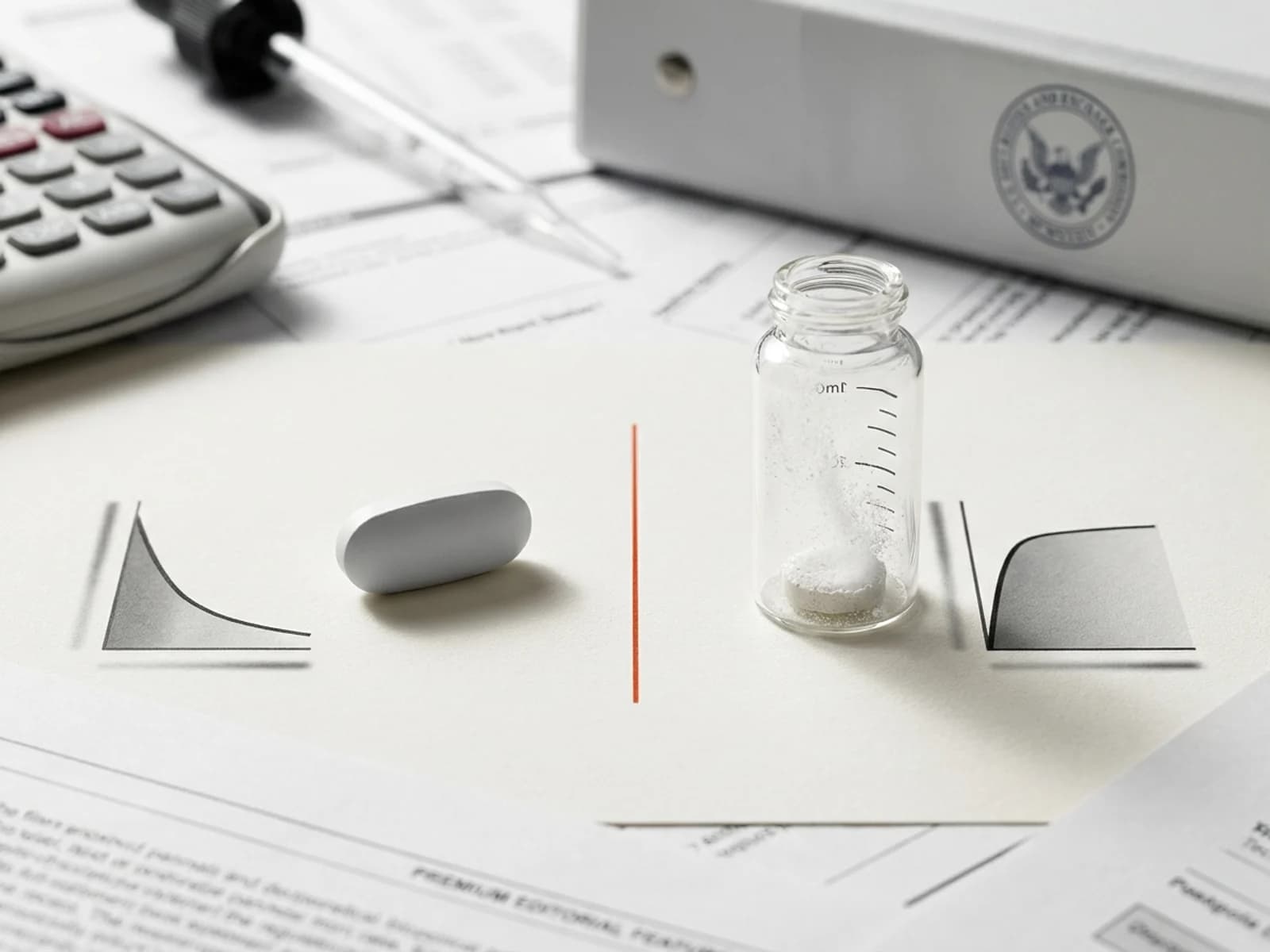
Tivicay PD tablets are formulated for rapid dispersion in water, producing a micro-suspension that yields approximately 1.6-fold higher systemic bioavailability compared to the film-coated tablet formulation at identical milligram doses.
Because of this higher relative bioavailability, dosing recommendations for Tivicay PD use lower milligram amounts than would be required if adult tablets were bioequivalent.
If a clinician or compounding pharmacy attempts to crush a fraction of an adult 50 mg film-coated tablet to approximate a neonatal Tivicay PD milligram amount, the infant will not receive the labeled dispersible-tablet exposure. The two SKUs are different products; hospitals should stock Tivicay PD rather than improvise from 50 mg tablets.
NEONATAL FORMULATION & MEDICATION-SAFETY COMPARISON
| Formulation Dimension | Clinical & Operational Impact |
|---|---|
| Physical Dosage Form | Dispersible tablet (5 mg) vs. Film-coated tablet (50mg) |
| Vehicle for Administration | Dispersed in potable water using supplied oral syringe |
| Relative Bioavailability | Dispersible tablet exhibits ~60% higher bioavailability |
| Splitting / Crushing Practice | ✖ STRICTLY PROHIBITED: Do not crush 50 mg film tablets |
| Dosing Tool | Calibrated oral dosing syringe for accurate micro-dosing |
| Inpatient Stocking Requirement | Pharmacy MUST stock NDC for Tivicay PD 5 mg dispersible |
Discontinued Strengths in the Orange Book
An audit of the FDA Orange Book product file (August 14, 2026 dataset; 48,664 product rows) provides vital context regarding the historical formulation evolution of Tivicay:
NDA 213983 (Tivicay PD): Contains exactly 1 product row: EQ 5 MG BASE, tablet for oral suspension, Prescription (RX), Reference Listed Drug (RLD) Yes, Reference Standard (RS) Yes, approved June 12, 2020.
NDA 204790 (Tivicay): Contains 3 product rows:
50 MG: RX, RLD Yes, RS Yes, approved August 12, 2013.
10 MG: Discontinued (DISCN), RLD Yes, RS No, with existing 21 CFR 314.161 Federal Register footnotes on the strength field.
25 MG: Discontinued (DISCN), RLD Yes, RS No, with existing 21 CFR 314.161 Federal Register footnotes on the strength field.
As explained in our foundational analysis of discontinued RLDs and reference standard workflows, ViiV discontinued the lower-strength 10 mg and 25 mg film-coated tablets after the successful development and approval of the 5 mg dispersible Tivicay PD formulation. The 5 mg dispersible tablet is the only approved low-dose presentation of dolutegravir on the U.S. market.
Clinical Evidence: IMPAACT 2023 as Pharmacokinetic Bridging
To understand the evidence underlying the approval, access teams must distinguish between clinical efficacy trials and pediatric pharmacokinetic bridging studies.
IMPAACT 2023 Trial Architecture
The supplemental approval is based on clinical and pharmacokinetics data generated in the IMPAACT 2023 study (NCT05406583), a Phase 1/2, open-label, non-randomized trial conducted by the International Maternal Pediatric Adolescent AIDS Clinical Trials (IMPAACT) Network:
IMPAACT 2023 (NCT05406583) CLINICAL BRIDGING TRIAL
| Study Dimension | Protocol Parameters & Findings |
|---|---|
| Enrolled Population | 48 term newborns exposed to HIV-1, weighing ≥2.0 kg |
| Intervention | Tivicay PD (5 mg dispersible) administered from birth |
| Concomitant Regimen | Usual PMTCT antiretroviral prophylaxis |
| Duration of Exposure | Daily dosing from birth for up to 6 weeks |
| Total Follow-Up Period | 16 weeks of safety and pharmacokinetic monitoring |
| Primary PK Finding | Plasma AUC and Ctrough matched target adult efficacy |
| Safety Profile | Comparable to older pediatric cohorts; no new signals |
| Study Classification | PK bridging / safety in exposed infants, NOT a |
| powered efficacy trial in diagnosed neonatal HIV. |
Patient Population: The trial enrolled 48 term newborns born to mothers living with HIV-1 who were at risk of perinatal transmission (HIV-exposed). All infants weighed at least 2 kg at the time of initial dosing.
Treatment Regimen: Infants initiated Tivicay PD within days of birth, continuing daily therapy for up to 6 weeks in combination with antiretroviral medications used to prevent mother-to-child transmission.
Follow-Up and Exposure Matching: Infants were followed for 16 weeks. FDA states that Tivicay PD drug levels in these newborns were similar to those associated with efficacy in adults. The public FDA summary does not publish neonatal AUC or trough point estimates.
Why PK Bridging Is the Regulatory Standard: Because vertical transmission rates are below 1% in resource-rich settings where mothers receive antenatal antiretroviral therapy, conducting a randomized, placebo-controlled efficacy trial in infants with confirmed in-utero HIV infection is statistically infeasible and ethically impermissible. Under FDA pediatric regulations, establishing equivalent systemic drug exposures in exposed infants provides statutory evidence of efficacy.
Sponsor Framing vs. Regulatory Language
In its August 26 commercial release, sponsor ViiV Healthcare framed the approval as "closing a critical HIV treatment gap" and designated Tivicay PD as the "first second-generation INSTI approved for children living with HIV weighing at least 2 kg, including eligible newborns."
Access committees must note the distinction: while the FDA label establishes an indication for the treatment of HIV-1 infection, the supporting trial was conducted in HIV-exposed newborns receiving prophylactic regimens. This distinction is vital for clinical documentation: Tivicay PD is indicated as part of a complete multi-drug treatment regimen when neonatal HIV infection is confirmed or suspected under high-risk transmission protocols.
Drugs@FDA Status and the 14-Day SPL Publishing Clock
A frequent point of friction following FDA supplemental approvals is the lag between the approval announcement and the public availability of the updated package insert.
As of August 27, 2026, the live Drugs@FDA entry for NDA 213983 (TIVICAY PD) displays the following record:
Supplement: SUPPL-7 (Efficacy-New Patient Population)
Approval Date: 08/25/2026
Regulatory Action: Approved
Document Link: Label is not available on this site
┌──────────────────────────────────────────────────────────────────────────────────────────────┐
│                       21 CFR 314.50 STRUCTURED PRODUCT LABELING (SPL) CLOCK                  │
├──────────────────────────────────────────────────────────────────────────────────────────────┤
│                                                                                              │
│   [ August 25, 2026: FDA Approves NDA 204790/S-034 & NDA 213983/S-007 ]                      │
│                                              │                                               │
│                                              ▼                                               │
│   [ Statutory 14-Day SPL Clock Starts ]                                                      │
│   • Governed by 21 CFR 314.50(l) / FDA eLIST electronic standards                           │
│   • Sponsor prepares finalized XML Structured Product Labeling (SPL)                         │
│                                              │                                               │
│                                              ▼                                               │
│   [ September 8, 2026: Statutory Publishing Deadline ]                                       │
│   • Sponsor transmits SPL to FDA Electronic Submissions Gateway (ESG)                        │
│   • DailyMed (National Library of Medicine) processes and publishes full PI                  │
│   • Drugs@FDA updates link from "Not Available" to final PDF (213983s007lbl.pdf)             │
│                                              │                                               │
│                                              ▼                                               │
│   [ Operational Bridge for P&T Committees (Aug 25 – Sep 8, 2026) ]                           │
│   • Formularies should reference FDA Approval Letter (204790Orig1s034,213983Orig1s007ltr)   │
│   • Apply core labeled boundaries: Term neonates, weight ≥2.0 kg, Tivicay PD dispersible SKU │
│                                                                                              │
└──────────────────────────────────────────────────────────────────────────────────────────────┘
Under FDA electronic labeling regulations, applicants must submit final Structured Product Labeling (SPL) in electronic format within 14 calendar days of the approval date, as the letter cites 21 CFR 314.50(l). For S-007, that deadline is September 8, 2026. Until DailyMed and Drugs@FDA render the final PDF, hospital P&T committees and electronic health record (EHR) build teams should rely on the specific terms set forth in the FDA approval letter and official agency briefing documents.
Orange Book Patent Landscape and Generic Market Exclusivity
To evaluate long-term formulary sustainability and generic entry timing, access analysts must examine the patent listings attached to Tivicay and Tivicay PD in the FDA Orange Book.
An audit of the Orange Book patent and exclusivity files (August 14, 2026 data file) reveals the following structural parameters:
Listed Patents on NDA 204790 and NDA 213983:
US Patent 8,129,385: Composition of matter. Expiration date: October 5, 2027. With pediatric exclusivity (8129385*PED), patent protection extends to April 5, 2028.
US Patent 9,242,986: Formulation and crystalline form. Expiration date: December 8, 2029. With pediatric exclusivity (9242986*PED), patent protection extends to June 8, 2030.
Active Exclusivity Records: The Orange Book exclusivity file dated August 14, 2026 contains 0 exclusivity codes for NDA 204790 and NDA 213983. This August 25 neonatal labeling action therefore cannot be read off that pre-approval exclusivity file as a new 3-year exclusivity barrier. The 6-month pediatric patent-extension rows (8129385PED to April 5, 2028 and 9242986PED to June 8, 2030) were already listed on both applications in that August 14 file, so they predate this sNDA.
Generic Entry Horizon: No generic dolutegravir product (film-coated or dispersible) can enter the U.S. market prior to April 5, 2028 without successfully invalidating or bypassing the '385 patent in Paragraph IV Hatch-Waxman litigation.
DOLUTEGRAVIR ORANGE BOOK PATENT & EXCLUSIVITY TIMELINE
| Patent No. | Patent Type | Base Expiration | Pediatric Ext. | Generic Market Impact |
|---|---|---|---|---|
| US 8129385 | Molecule / Composition | October 5, 2027 | April 5, 2028 (8129385*PED) | Earliest lawful generic entry date across all SKUs |
| US 9242986 | Formulation / Method | December 8, 2029 | June 8, 2030 (9242986*PED) | Secondary formulation barrier protecting dispersible PD SKU |
(Note: In adjacent HIV pipeline tracking, the site previously examined Gilead's BIC/LEN adult-switch PDUFA date. Market-access teams must maintain strict separation between these two assets: BIC/LEN is an investigational once-daily adult switch regimen, whereas Tivicay PD is a weight-tiered dispersible mono-INSTI for pediatric and neonatal populations.)
Medicaid, Ryan White, 340B, and Hospital Formulary Access
Unlike adult HIV therapies, which flow extensively through commercial pharmacy benefits, pediatric and neonatal HIV access in the United States is overwhelmingly concentrated in public programs:
┌──────────────────────────────────────────────────────────────────────────────────────────────┐
│                      NEONATAL HIV COVERAGE & REIMBURSEMENT CHANNELS                          │
├──────────────────────────────────────────────────────────────────────────────────────────────┤
│                                                                                              │
│   [ Term Neonate Born to Mother Living with HIV (Day of Life 0) ]                            │
│                                  │                                                           │
│        ┌─────────────────────────┼─────────────────────────┐                                 │
│        ▼                         ▼                         ▼                                 │
│   [ Inpatient NICU / Nursery ] [ State Medicaid (Fee/MCO)] [ Ryan White ADAP / Part D ]      │
│   • Bundled DRG Reimbursement  • Check PA/PDL age-weight   • Secondary Payer of Last Resort  │
│   • Dispersible 5 mg Stocking    edits built on 4 wk/3 kg  • Direct Medication Assistance     │
│   • EHR Order Set: Term, ≥2kg    prior labeled population  • Uninsured/Underinsured Safety Net│
│                                                                                              │
│   [ IMMEDIATE ACCESS ACTION ITEMS ]                                                          │
│   1. State Medicaid: audit whether claim edits still use the prior 4-week / 3 kg label.      │
│   2. 340B Covered Entities: stock Tivicay PD 5 mg tablets for oral suspension.               │
│   3. Health Systems: build nursery order sets that block film-coated tablet substitution.    │
│                                                                                              │
└──────────────────────────────────────────────────────────────────────────────────────────────┘
State Medicaid Prior Authorization Updates: The last posted Tivicay PD label (October 2025 DailyMed set) covered pediatric patients from 4 weeks of age weighing at least 3 kg. Claim edits and PDL age/weight floors built on that labeled population will not match the new term-neonate, ≥2 kg indication. Pharmacy directors should check whether automated edits still reject Day-of-Life 0 claims before assuming coverage follows the August 25 letter.
Ryan White HIV/AIDS Program (Part D / ADAP): State AIDS Drug Assistance Programs (ADAPs) serve as the vital payer of last resort for HIV-affected families. ADAP formularies must incorporate Tivicay PD under its expanded neonatal indication without requiring complex medical-necessity appeals.
340B Covered Entity Dynamics: Specialized pediatric infectious disease clinics operating under 340B statutory pricing can access Tivicay PD at statutory ceiling prices, ensuring immediate post-discharge medication access for neonates completing 6-week PMTCT courses.
Long-Term Safety Surveillance: As documented in our class review of antiretroviral adverse events in FAERS, dolutegravir exhibits a favorable long-term safety profile. Extending therapy to the neonatal period requires continued pediatric registry surveillance, particularly regarding hepatic transaminase monitoring and neurodevelopmental milestones.
For broader commercial perspective on ViiV Healthcare's overarching antiretroviral strategy, see our GSK and ViiV portfolio dossier.
Frequently Asked Questions
Can a pharmacist substitute Tivicay 50 mg tablets for Tivicay PD in a neonate?
No. Tivicay film-coated tablets and Tivicay PD tablets for oral suspension are not bioequivalent or substitutable on a milligram-per-milligram basis. Tivicay PD has higher bioavailability, and adult tablets cannot be accurately cut, crushed, or dosed for a neonate weighing 2 kg. Inpatient and outpatient pharmacies must dispense the specific Tivicay PD 5 mg dispersible tablet SKU.
Did the IMPAACT 2023 trial enroll newborns with confirmed HIV infection?
No. The supporting IMPAACT 2023 study enrolled 48 term newborns who were exposed to HIV-1 and received Tivicay PD alongside standard antiretroviral prophylaxis to prevent mother-to-child transmission. FDA approval was based on pharmacokinetic bridging, demonstrating that neonatal plasma drug levels matched exposures known to be effective in adults and older children.
Is the new prescribing information posted on Drugs@FDA?
As of August 27, 2026, the S-007 label is listed as approved on Drugs@FDA but displays "Label is not available on this site." The approval letter requires SPL submission under 21 CFR 314.50(l) within 14 calendar days of the August 25 letter (until September 8, 2026).
Does this approval create a generic dolutegravir path before 2027?
No. The fulfillment of Written Request-Amendment 4 is BPCA pediatric labeling. Composition-of-matter patent US 8,129,385, with the already-listed pediatric extension 8129385*PED in the August 14, 2026 Orange Book, runs to April 5, 2028. This week's sNDA does not, by itself, create a new exclusivity row in that pre-approval file.
Sources
U.S. Food and Drug Administration. FDA Approves Drug to Treat HIV Infection in Newborns. FDA News & Events. Content current as of August 25, 2026. https://www.fda.gov/drugs/news-events-human-drugs/fda-approves-drug-treat-hiv-infection-newborns.
U.S. Food and Drug Administration. NDA 204790/S-034 and NDA 213983/S-007 Supplement Approval Letter. Center for Drug Evaluation and Research. August 25, 2026. https://www.accessdata.fda.gov/drugsatfda_docs/appletter/2026/204790Orig1s034,213983Orig1s007ltr.pdf.
U.S. Food and Drug Administration. Drugs@FDA: NDA 213983 (TIVICAY PD). Application Tracking and Supplement History. https://www.accessdata.fda.gov/scripts/cder/daf/index.cfm?event=overview.process&ApplNo=213983.
ViiV Healthcare. U.S. FDA approves ViiV Healthcare's Tivicay PD, helping close a critical HIV treatment gap for young children. Regulatory Press Release. August 26, 2026. https://viivhealthcare.com/hiv-news-and-media/news/press-releases/2026/august/helping-close-a-critical-hiv-treatment-gap/.
National Institutes of Health / ClinicalTrials.gov. IMPAACT 2023: Phase I/II Study of Dolutegravir in HIV-1-Exposed Neonates at High Risk of Perinatal HIV-1 Infection. Identifier: NCT05406583. https://clinicaltrials.gov/study/NCT05406583.
U.S. Food and Drug Administration. Approved Drug Products with Therapeutic Equivalence Evaluations (Orange Book Data Files). Data files current through August 14, 2026. https://www.fda.gov/media/76860/download.