What can the release packet say?
A batch passes visual inspection and a USP <788> subvisible particle count. Those results support separate, qualified statements about visible inspection and subvisible counts. They do not support an unqualified claim that the product is particle-free. Keep the visible qualifier in any statement that a lot is essentially free of visible particulates, and identify the method and acceptance basis behind the subvisible result. USP <790> public preview; 2024 visible-particle safety review.
For a sponsor reviewing a CDMO certificate of analysis, the decision is whether the evidence supports the wording used in the release summary. Visual inspection addresses detectable visible particulates under defined conditions. Subvisible testing addresses counts obtained using a specified analytical method. Neither result establishes sterility or pyrogen conformity; the applicable evidence for those attributes remains separate. 21 CFR 211.167.
A useful summary therefore names both evidence streams: the lot met the applicable visible-particulate inspection criteria, and the sampled product met the applicable subvisible-particle criteria using the stated method. That wording still depends on the sampling, suitability and batch review records. It is a description of documented conformance, rather than a guarantee about every particle in every container.
Visibility is a detection question, not a fixed size boundary
The boundary between visible and subvisible matter is not a universal particle diameter. Detection depends on particle size, shape and optical properties, as well as the product, container and viewing conditions. A 2024 review describes visual detection as probabilistic and discusses 150 µm as a proposed best-case identification threshold. That estimate does not establish a guaranteed cutoff or a detection probability for a particular inspection line. 2024 visible-particle safety review.
This matters when a supplier uses a size label to dismiss an observation. A particle does not become irrelevant merely because its measured diameter falls below a convenient definition of visible. Equally, a visual-inspection pass cannot establish a quantitative count in a smaller size range. Ask what the method could detect in the actual product and container, then compare that capability with the attribute being claimed.
Particle source and particle size are also different questions. Research on therapeutic protein products distinguishes foreign environmental material, material associated with the manufacturing process, and particles arising from the product or its formulation. A count alone does not identify which population is present. Protein-related material still needs appropriate assessment; calling a particle inherent does not by itself establish that it is acceptable. 2025 particle-characterization study.
What the visible-particle result supports
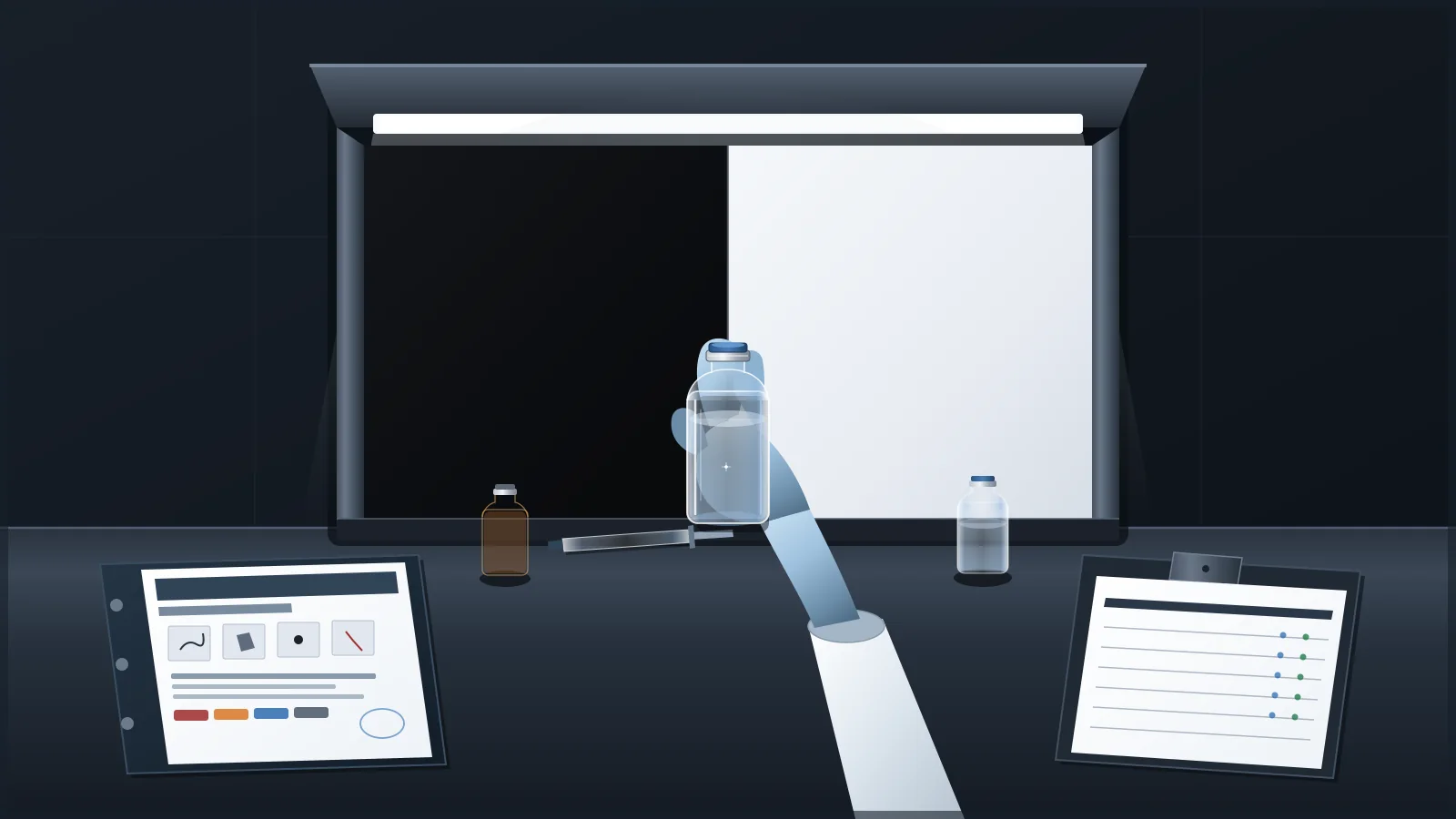
The public USP <790> introduction requires visual inspection of products intended for parenteral administration and ties its essentially-free concept to the number of inspected units observed to contain visible particulates. The unit of assessment is therefore important: a sampled container with a visible defect is different from an instrumental count of individual subvisible particles. The preview does not expose the full acceptance procedure. USP <790> public preview.
FDA’s December 2021 document remains draft guidance, marked not for implementation. Its linked text recommends inspection of each unit followed by statistically sound acceptance-quality-limit, or AQL, sampling. It also explains that a product can raise CGMP concerns despite meeting statistical sampling criteria. These are draft recommendations within a wider control program, not a newly binding numerical tolerance created by FDA. FDA visible-particulate draft guidance.
An AQL is part of a sampling plan. It is not a measured percentage of contaminated containers in the released lot, a count of particles per container, or a universal residual-defect allowance. The sample size, defect classification and accept/reject rule determine how the outcome is interpreted. A release summary should point to the applicable plan instead of presenting an AQL number as proof of absolute absence.
For the packet reviewer, the useful visible-inspection record identifies the inspected population, rejected units, subsequent acceptance sample and disposition. If a summary says only that inspection passed, request the acceptance basis before expanding the claim. Detailed inspector qualification is a separate assessment; this article’s question is which conclusion the recorded inspection supports.
What a subvisible count supports
Subvisible testing produces numerical evidence rather than a visual-defect classification. The familiar reporting thresholds are particles at least 10 µm and at least 25 µm. They are cumulative thresholds: particles counted in the larger category also meet the smaller size threshold. A report needs to identify the channels and reporting convention so the reviewer does not treat them as independent, non-overlapping size bins. 2024 visible-particle safety review.
The result must also identify its denominator. Particles per milliliter and particles per container answer different numerical questions. A report can look low or high simply because its basis changed. Locate the container volume, sampled units, any pooling and dilution, the measured volume, and the calculation used to obtain the final reported value. Those details connect the analytical observation to the acceptance criterion.
For illustration only, suppose a homogeneous hypothetical sample from a 2 mL container has a reported concentration of 100 particles per milliliter at one size threshold, with no dilution or volume loss. Multiplying concentration by represented volume gives 200 particles per container. This arithmetic is not a USP sampling procedure, an acceptance limit, or a statement about a real batch. It shows why a bare result of 100 cannot be interpreted without units.
Pooling adds another limitation. An average result from pooled units does not reveal the distribution of particles among the individual containers. A reviewer should be able to see which units were combined and what inference the prescribed plan permits. Do not silently turn a pooled average into a claim that every original container was individually measured and passed.
Light obscuration and microscopy need their own acceptance rules
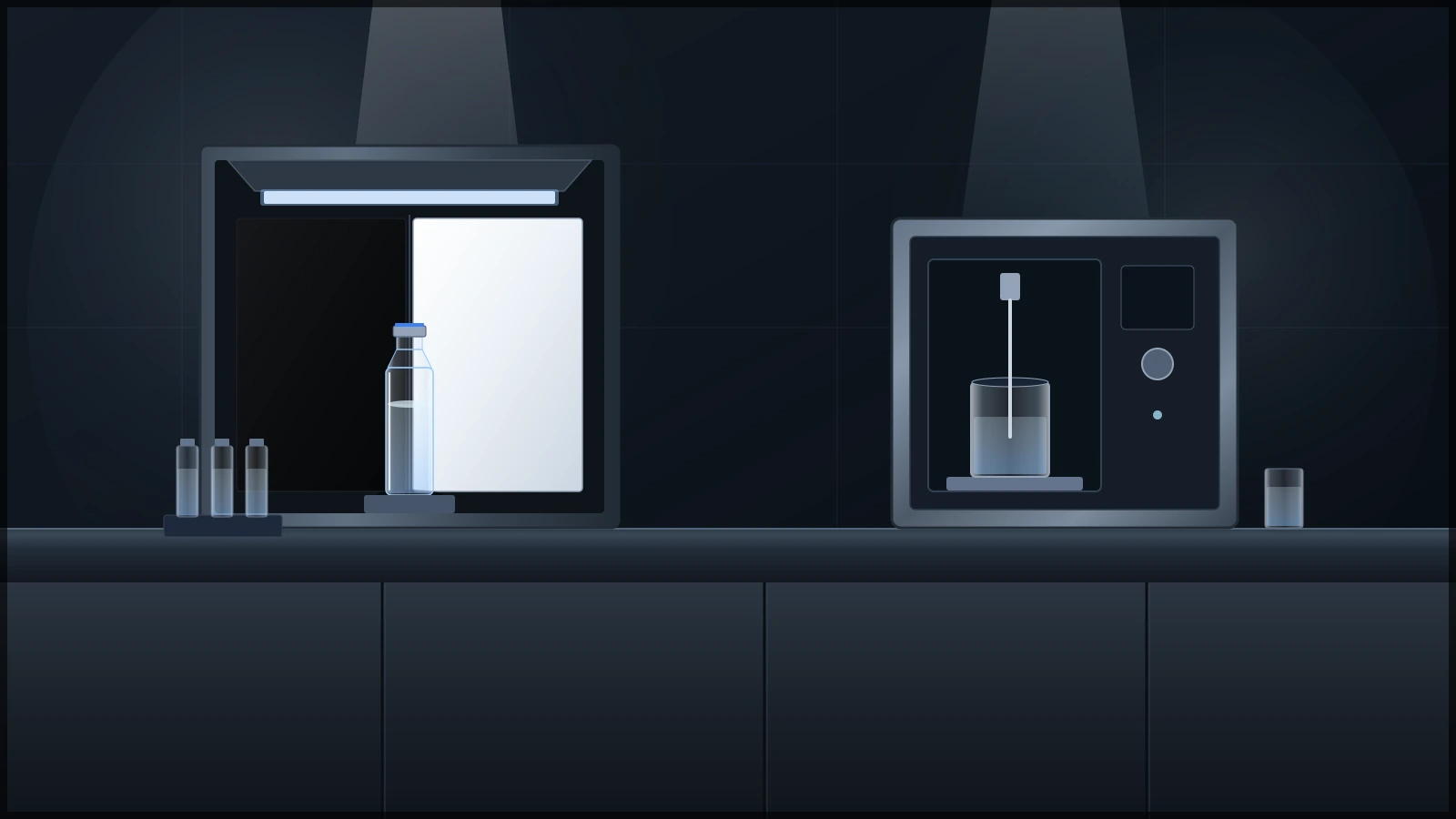
USP <788> is associated with two compendial approaches: light-obscuration counting and microscopic particle counting. Light obscuration measures changes in transmitted light as material passes a sensor. Microscopic counting examines particles retained on a membrane after filtration. These are different measurement processes, so the method name belongs beside the result rather than being left implicit in an instrument brand. Manufacturer technical explanation of the two methods.
A therapeutic-protein study discusses the limitations of optical counting and the value of combining techniques when investigating particle populations. Low optical contrast and irregular morphology complicate interpretation. Its experiments concern characterization of selected reference materials and stressed protein products; they do not establish one correction factor that can convert every laboratory’s counts between methods. 2025 particle-characterization study.
Use each method’s prescribed acceptance criteria. A difference between published numerical ceilings is not a conversion equation for results. In particular, multiplying or dividing a microscopic result by two does not demonstrate equivalence to light obscuration. Sample preparation, particle properties and sizing conventions can all affect the comparison. A method change needs its own assessment of suitability and the applicable regulatory commitments.
| Evidence stream | Measurement and size basis | Acceptance basis to locate | Claim that exceeds the result |
|---|---|---|---|
| Visible inspection: USP <790> | Detectability in the product and container under qualified inspection conditions; no universal size cutoff | Applicable inspection and sampling procedure, observed defective units and accept/reject rule | No particles anywhere in the lot |
| Subvisible: USP <788> light obscuration | Optical particle counting at the specified size thresholds | Current Method 1 criteria, sample plan and required container or volume basis | Visible-particle conformity or chemical identity of every counted object |
| Subvisible: USP <788> microscopy | Count and sizing of particles recovered on the membrane | Current Method 2 criteria and preparation, recovery and sample basis | A numerically converted light-obscuration result |
| Therapeutic protein alternative: USP <787> | Protein-focused subvisible assessment with appropriate handling | Current applicable chapter, method, sample volume and product commitments | Exemption from particle control because the product is a protein |
The matrix organizes questions for document review. It deliberately does not reproduce a release-limit table or a laboratory procedure: the public USP <788> link available here is a proposal briefing rather than the complete official chapter. The laboratory must establish the current numerical criteria, relevant volume category and any product-specific requirements from its controlled compendial and approved product records.
The 2026 update makes edition control part of the evidence
The public USP <788> briefing says its proposal is based on a chapter version with an August 1, 2026 official date. It proposes a title change to Subvisible Particulate Matter in Injections and minor editorial changes. That wording distinguishes the baseline chapter from the proposal. It does not establish the proposed title’s official adoption date or supply the final sampling instructions. USP <788> proposal briefing.
When a laboratory cites a recent revision to justify testing fewer units or consuming less product, ask for the official edition, effective date and procedure change record. The evidence should explain the actual sample arrangement used and why it is suitable. A technical summary of increased flexibility cannot establish which instructions applied to a particular batch.
Smaller analytical volumes also deserve a clear interpretation. At a fixed concentration, examining less liquid generally means observing fewer particles. That can change the uncertainty of a count and the influence of an isolated event. This is a measurement consideration, not permission to disregard an unfavorable result. The laboratory should explain how its sampling and calculation support the intended batch inference.
Protein products and the role of USP <787>
The public USP <787> preview describes an alternative to <788> for therapeutic protein injections and related preparations. It permits smaller test-product volumes and aliquots, with handling considerations for these materials. It also recognizes regulatory-acceptable alternative analytical methods with adequately developed limits. That does not mean that any small-volume instrument or imaging technique is automatically an authorized release method. USP <787> public preview.
For an existing protein product, start with the method and specification actually committed to for that product. Ask whether a proposed chapter update has become official and whether the controlled procedure and relevant filings have been assessed. A proposal to omit or revise a chapter is different from an effective change. Do not describe a chapter as permanently available or already withdrawn on the strength of a service-provider summary.
Keep release testing distinct from particle characterization. Images can help explain morphology; chemical analysis can help identify material. Neither automatically replaces a required compendial result. The release packet should identify whether a technique supplied the reportable acceptance result, supplementary characterization, or an investigation finding, and preserve the basis for any alternative method.
What to request from the CDMO or contract laboratory
US CGMP requires written sampling and testing plans, adequate acceptance criteria, and documented method accuracy, sensitivity, specificity and reproducibility. The following requests translate that framework into particle-result review. They are practical evidence questions, rather than additional universal laboratory requirements. 21 CFR 211.165.
| Request | Evidence that resolves the question |
|---|---|
| Which chapter and method were used? | Official edition and effective date, controlled procedure revision, method designation and relevant product specification. |
| What did the reported number represent? | Container volume, sampled unit identities, pooling or individual testing, analyzed volume, dilution and calculation basis. |
| Was the method suitable for this formulation? | Documented assessment of optical or physical interference, sample preparation, system checks and method performance under actual use conditions. |
| How was acceptance determined? | Applicable criteria for the chosen method and volume category, numerical results or defect findings, and the documented decision rule. |
| What happened to atypical findings? | Investigation record, particle-characterization evidence where relevant, assessment of affected results and quality-unit disposition. |
A request for raw results should have a defined purpose. For example, if the certificate reports particles per container while the instrument export uses particles per milliliter, the reviewer needs the calculation and represented volume. If the procedure changed, the reviewer needs the version actually used for that batch. Requesting every available record without identifying the question can obscure the evidence that resolves it.
Method suitability and instrument calibration answer different questions. Calibration supports the instrument’s performance against a reference; suitability addresses whether the method works for the actual product under its conditions of use. A current calibration certificate cannot, by itself, establish that a difficult formulation was measured without interference. The packet needs the relevant evidence for both questions.
Similarly, an acceptable final count does not identify the origin of an unexpected particle population. When an investigation is needed, connect its characterization findings to the affected batch and method. Avoid treating an attractive particle image or a material match as a release decision in itself; the quality assessment still needs to address the observation and the applicable specification.
Keep the release statement within the documented result
| Record | Qualified wording, when supported | Evidence still needed |
|---|---|---|
| Visible inspection | The lot met the applicable visible-particulate inspection and acceptance criteria. | Inspection findings, sampling outcome and relevant investigations. |
| Subvisible result | The sampled product met the applicable USP <788> criteria by the stated method and reporting basis. | Method, size thresholds, units, sample plan, current limits and suitability records. |
| Separate microbiological attributes | Sterility and pyrogen conformance were assessed through their applicable evidence routes. | The specified testing and any applicable release arrangement; particle counts supply neither conclusion. |
| Overall disposition | The quality unit assessed the required evidence against the product’s release specifications. | The complete applicable batch assessment, including unresolved deviations and investigations. |
These examples describe the scope of a claim; they are not suggested wording for an unreviewed certificate. If the laboratory record is incomplete, the answer is to identify the missing evidence before broadening the summary. Replacing particle-free with essentially free is not enough if the visible qualifier, inspection basis or subvisible method remains unclear.
For batches purporting to be sterile and/or pyrogen-free, 21 CFR 211.167(a) requires appropriate laboratory testing against those requirements using written procedures. It does not specify that a particle count can stand in for either attribute, nor does it prescribe bacterial endotoxin testing as the sole universal pyrogen method. Keep the product’s actual testing and release arrangement explicit. 21 CFR 211.167.
Jurisdiction and product scope can change the interpretation
ICH Q4B Annex 3 addresses recognition of pharmacopoeial subvisible-particle texts across regions. It is conditional method and criteria recognition, not unrestricted product release. The FDA-linked annex includes regional GMP conditions for calibration and system suitability and a qualification concerning nominal 100 mL products. An unqualified statement that all criteria are identical everywhere would miss that boundary. FDA Q4B Annex 3; EMA Q4B Annex 3.
The European Commission lists EU GMP Annex 1 as fully applicable since August 25, 2024. EU GMP, US CGMP and USP chapters have different roles. Identify the relevant market, product commitments and controlling text before attributing a particular requirement to one of them. A general statement about harmonization cannot settle every local implementation question. European Commission EudraLex Volume 4.
Product-specific context also matters. The USP <790> preview recognizes that inherent visible particles or agglomerates can have requirements in an individual monograph or approved application, while extraneous-particle controls still apply. Do not generalize one product’s acceptance arrangement to all injections, ophthalmic products or other special preparations. USP <790> public preview.
Reassess the interpretation when the official chapter changes, the product formulation or container changes, the laboratory changes its method or sample plan, or an investigation identifies a particle population the existing method does not adequately address. Preserve the link between the result, the method and the claim each time. That link is the evidence a sponsor needs when deciding whether a release summary says more than the tests established.
Sources
Sources checked November 10, 2026. The USP links below are public previews; the <788> link is specifically a proposal briefing. They do not supply the complete current official laboratory instructions. FDA’s visible-particulate document is draft; Q4B is final guidance. The research papers provide scientific context and do not authorize product disposition.
USP <790> Visible Particulates in Injections — public preview
USP <788> Particulate Matter in Injections — Pharmacopeial Forum proposal briefing
USP <787> Subvisible Particulate Matter in Therapeutic Protein Injections — public preview
FDA: Inspection of Injectable Products for Visible Particulates — draft guidance, December 2021
Visible particles in parenteral drug products: A review of current safety assessment practice (2024)
EMA: ICH Q4B Annex 3 — Test for particulate contamination: sub-visible particles
European Commission: EudraLex Volume 4 — EU GMP Annex 1 status
Yokogawa Fluid Imaging Technologies: What are the USP <787>, USP <788>, and USP <789> Standards? — manufacturer technical overview — Manufacturer explanation of counting methods and characterization; not the official USP text.