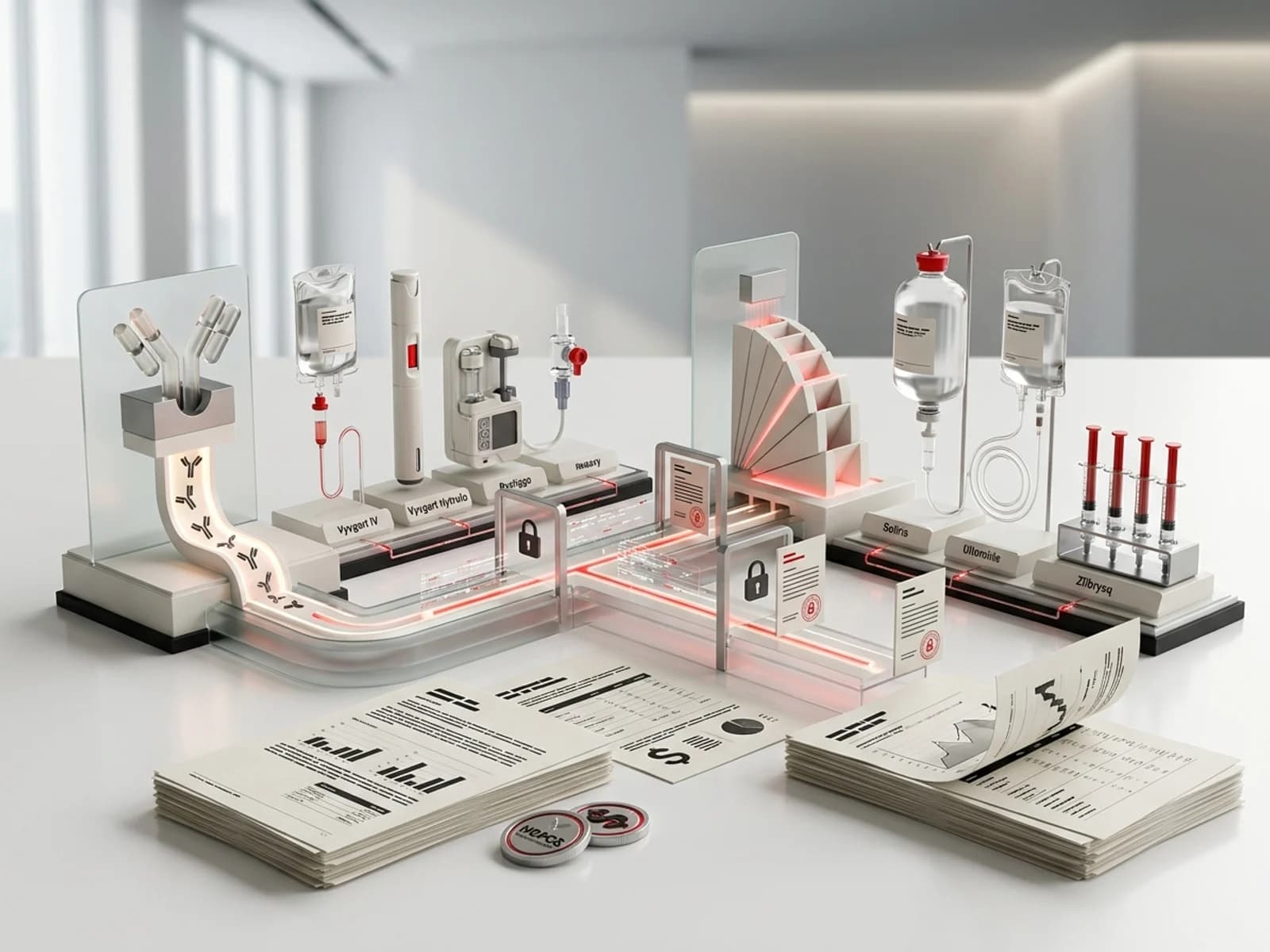
Paroxysmal nocturnal hemoglobinuria (PNH) is a rare, life-threatening clonal hematopoietic stem cell disorder characterized by complement-mediated intravascular hemolysis, variable degrees of bone marrow failure, and a high risk of systemic thrombosis. The clinical presentation is driven by somatic mutations in the phosphatidylinositol glycan class A (PIGA) gene in hematopoietic stem cells, which leads to a deficiency of glycosylphosphatidylinositol (GPI)-anchored proteins on the cell membrane. Most notably, the lack of two key GPI-linked complement regulatory proteins—CD55 (decay-accelerating factor) and CD59 (membrane attack complex inhibitor)—leaves red blood cells highly vulnerable to uncontrolled, autologous complement-mediated destruction.
For nearly two decades, the therapeutic management of PNH was defined by a single molecule: the intravenous C5 inhibitor eculizumab (Soliris). However, between 2018 and 2024, a rapid wave of drug approvals revolutionized the PNH landscape. Clinicians, specialty pharmacies, and payers now navigate an armamentarium of six complement inhibitors spanning three distinct mechanisms of action: terminal C5 pathway blockers, proximal C3 inhibitors, and oral alternative-pathway factor B and factor D inhibitors.
While this expansion represents a massive clinical leap, it introduces complex administrative, financial, and reimbursement challenges for specialty pharmacies, hospital acquisition teams, and payer clinical-review staff. Navigating this multi-agent landscape requires a precise understanding of route-of-administration logistics, annual wholesale acquisition costs (WAC), Healthcare Common Procedure Coding System (HCPCS) codes, utilization-management (UM) criteria, and Safety Risk Evaluation and Mitigation Strategies (REMS) burdens.
Furthermore, the PNH market is in the middle of its most significant structural shift: the eculizumab biosimilar transition is already live. Eculizumab's PNH orphan exclusivity (granted with the March 2007 approval) expired years ago, and after patent litigation settled, two FDA-licensed eculizumab biosimilars—Bkemv (interchangeable, Q5152) and Epysqli (Q5151)—launched in early 2025 for PNH at 10% and 30% WAC discounts. The remaining June 27, 2026 regulatory event is Soliris's NMOSD orphan-exclusivity lapse, the last indication carved out of the biosimilar labels; for PNH, the formulary fight is happening now. This guide provides a comprehensive decision-and-access map of the six complement inhibitors approved for PNH, drawing from primary FDA Orange Book and Purple Book files, payer policies, and computed real-world safety data from the FDA Adverse Event Reporting System (FAERS).
Quick answer
Scenario question: For a newly diagnosed PNH patient in 2026, which complement inhibitor is appropriate, what does it cost and bill under, what prior-authorization rules apply, and how does the eculizumab biosimilar cliff change formulary strategy?
Direct answer: Payers and clinicians must choose among six complement inhibitors. The three terminal C5 inhibitors are eculizumab (Soliris, IV every two weeks, J1299, ~509,000 dollars/year), ravulizumab (Ultomiris, IV every eight weeks, J1303, ~493,000 dollars/year), and crovalimab (Piasky, monthly subcutaneous self-administered, J1307, orphan protected to June 20, 2031). The proximal C3 inhibitor is pegcetacoplan (Empaveli, twice-weekly subcutaneous self-administered, billed under unclassified codes J3490/J3590/C9399, ~458,000–522,000 dollars/year). The two oral proximal inhibitors are iptacopan (Fabhalta, factor B blocker, oral monotherapy) and danicopan (Voydeya, factor D blocker, approved only as an add-on to C5 therapy for extravascular hemolysis). All C5 inhibitors and pegcetacoplan require meningococcal vaccination under a restrictive REMS. Prior authorization requires flow-cytometry confirmation of a PNH clone and active hemolysis (LDH ≥ 1.5x ULN). The defining PNH access story in 2026 is a biosimilar transition that is already underway, not a future cliff: eculizumab's PNH orphan exclusivity expired years ago, and after patent settlements two eculizumab biosimilars—interchangeable Bkemv (Q5152) and Epysqli (Q5151)—launched in early 2025 for PNH at roughly 10% and 30% WAC discounts. (The June 27, 2026 eculizumab exclusivity date that gets headlines is Soliris's NMOSD indication lapse, the last carved-out indication; it does not gate PNH access.) Ultomiris has no biosimilar and its later-indication orphan exclusivities (gMG through 2029, NMOSD into the early 2030s) plus its patent estate keep it protected. Payers are layering biosimilar-first step edits for eculizumab on top of the AstraZeneca lifecycle shift of stable patients onto long-acting ravulizumab to minimize medical-benefit administration costs.
Which complement inhibitors are FDA-approved for PNH, and how do C5, C3, and oral alternative-pathway agents differ?
Complement inhibition is highly effective in PNH because it blocks the terminal cascade that leads to the assembly of the membrane attack complex (MAC), which destroys glycosylphosphatidylinositol (GPI)-anchor-deficient red blood cells. The six FDA-approved complement inhibitors are categorized by their target in the complement cascade and their route of administration:
1. Terminal C5 Pathway Inhibitors (Intravenous/Subcutaneous)
Terminal C5 inhibitors block the cleavage of C5 into C5a and C5b, preventing MAC assembly and stopping intravascular hemolysis (IVH). However, they do not prevent C3 deposition on red blood cells, which can lead to progressive C3b-mediated extravascular hemolysis (EVH) in the spleen and liver.
Eculizumab (Soliris): The pioneer monoclonal antibody, first licensed by the FDA on March 16, 2007. It requires a high-frequency dosing schedule: an intravenous (IV) loading phase followed by maintenance infusions of 1,200 mg every two weeks (14 days ± 2 days).
Ravulizumab-cwvz (Ultomiris): A long-acting, recycled monoclonal antibody engineered from eculizumab to increase half-life. Approved on December 21, 2018, it requires IV maintenance infusions only once every eight weeks (56 days) for adults, significantly reducing patient administration burden.
Crovalimab-akkz (Piasky): A recycling monoclonal antibody targeting C5 that binds to a different epitope, enabling low-volume subcutaneous (SC) administration. Approved on June 20, 2024, it is administered monthly (every four weeks) via subcutaneous injection following an IV loading dose, allowing for at-home self-administration after provider training.
2. Proximal C3 Pathway Inhibitors (Subcutaneous Infusion)
Proximal C3 inhibitors block the complement cascade higher up at the level of C3, thereby preventing both MAC-mediated intravascular hemolysis and C3b-mediated opsonization, which drives extravascular hemolysis.
Pegcetacoplan (Empaveli): A pegylated peptide inhibitor approved on May 14, 2021. It is self-administered subcutaneously twice weekly (every three to four days) via a wearable infusion pump (1,080 mg dose). It is particularly positioned for patients who experience persistent anemia or breakthrough hemolysis on C5 inhibitors due to active extravascular hemolysis.
3. Oral Alternative-Pathway Proximal Inhibitors (Daily Tablets)
Oral agents target the alternative pathway of complement, blocking upstream amplification loops.
Iptacopan (Fabhalta): A small-molecule factor B inhibitor approved on December 5, 2023, as the first oral monotherapy for PNH. Administered twice daily (200 mg capsules), it blocks alternative pathway activation, controlling both intravascular and extravascular hemolysis without requiring regular intravenous or subcutaneous access.
Danicopan (Voydeya): A small-molecule factor D inhibitor approved on March 29, 2024. Unlike Fabhalta, Voydeya is not approved as monotherapy. It is indicated solely as an add-on therapy to eculizumab or ravulizumab for patients who experience clinically significant extravascular hemolysis (affecting roughly 10% to 20% of patients on C5 therapy), which manifests as persistent anemia despite C5 treatment (the ALPHA trial enrolled patients with hemoglobin $\le 9.5$ g/dL).
Pivotal Clinical Trials and Efficacy Benchmarks
Payers and pharmacy directors utilize efficacy endpoints from registrational clinical trials to evaluate the value proposition of these high-cost agents:
Iptacopan (APPLY-PNH and APPOINT-PNH Trials)
APPLY-PNH Trial: This study randomized PNH patients with residual anemia (hemoglobin < 10 g/dL) despite stable C5 inhibitor (eculizumab or ravulizumab) therapy to either switch to oral iptacopan (Fabhalta) or remain on their C5 inhibitor. At 24 weeks, 82.3% of iptacopan-treated patients achieved a hemoglobin increase of $\ge 2$ g/dL without red blood cell transfusions, versus 2.0% who continued on a C5 inhibitor — an ~80 percentage-point difference that established oral monotherapy as a high-value switch option for residual anemia.
APPOINT-PNH Trial: This single-arm study evaluated complement-inhibitor-naive PNH patients. In this cohort, 92.2% (95% CI 82.5–100) of iptacopan-treated patients achieved a hemoglobin rise of $\ge 2$ g/dL without transfusion at 24 weeks, establishing oral monotherapy as a highly effective first-line option.
Danicopan (ALPHA Trial)
The oral factor D inhibitor danicopan (Voydeya) was evaluated in the Phase 3 ALPHA study as an add-on to C5 inhibitors (eculizumab or ravulizumab) in adults with clinically significant extravascular hemolysis (entry hemoglobin $\le 9.5$ g/dL).
Hemoglobin Improvement: At week 12, the addition of danicopan produced a least-squares mean hemoglobin increase of 2.94 g/dL (95% CI 2.52–3.36) versus 0.50 g/dL for placebo add-on — a 2.44 g/dL difference (P < 0.0001).
Transfusion Avoidance: The danicopan group showed high rates of transfusion avoidance, and long-term extension data confirmed that clinical improvements and control of markers like bilirubin and lactate dehydrogenase (LDH) were maintained through 72 weeks of therapy.
Pegcetacoplan (PEGASUS Trial)
The PEGASUS trial compared pegcetacoplan (Empaveli) head-to-head with eculizumab in patients who were anemic despite C5 therapy.
Hemoglobin Superiority: At week 16, pegcetacoplan was superior to eculizumab by an adjusted-mean treatment difference of 3.8 g/dL (pegcetacoplan +2.37 g/dL versus eculizumab −1.47 g/dL; P < 0.001), and 85% of pegcetacoplan patients were transfusion-free versus 15% of eculizumab patients.
Extravascular Control: By blocking complement at the C3 level, pegcetacoplan successfully controlled both the intravascular hemolysis and the C3b-mediated opsonization that drives extravascular clearance in the spleen.
What do the PNH agents cost, and how are they billed?
Reimbursement and coding represent the primary operational gate for rare-disease specialty access. Because complement inhibitors are exceptionally high-cost biologics and small molecules, they are split across the medical benefit (for provider-administered IV and SC infusions) and the pharmacy benefit (for self-administered oral and subcutaneous products).
The following table details the route of administration, annual WAC pricing, and HCPCS codes for billing provider-administered formulations:
| Product Name | Active Ingredient | Route & Dosing | Annual WAC Price (Est.) | HCPCS Code | Billing Unit |
|---|---|---|---|---|---|
| Soliris | Eculizumab | IV every 2 weeks | ~$509,000 | J1299 | Injection, eculizumab, 2 mg |
| Bkemv | Eculizumab-aeeb | IV every 2 weeks | Biosimilar (10% discount) | Q5152 | Injection, eculizumab-aeeb (Bkemv), biosimilar, 2 mg |
| Epysqli | Eculizumab-aagh | IV every 2 weeks | Biosimilar (30% discount) | Q5151 | Injection, eculizumab-aagh (Epysqli), biosimilar, 2 mg |
| Ultomiris | Ravulizumab-cwvz | IV every 8 weeks | ~$493,000 | J1303 | Injection, ravulizumab-cwvz, 10 mg |
| Piasky | Crovalimab-akkz | SC monthly (monthly) | Premium specialty | J1307 | Injection, crovalimab-akkz, 10 mg |
| Empaveli | Pegcetacoplan | SC twice weekly | ~$458,000–$522,000 | J3490/J3590 | Unclassified codes (no permanent J-code) |
| Fabhalta | Iptacopan | Oral twice daily | Specialty oral WAC | Pharmacy Benefit | N/A (NDC-based) |
| Voydeya | Danicopan | Oral three times daily | Specialty oral WAC | Pharmacy Benefit | N/A (add-on to C5) |
Key Coding and Reimbursement Nuances
Reimbursement teams must pay close attention to several coding pitfalls:
The Empaveli J-Code Gap: Uniquely, pegcetacoplan (Empaveli) does not have a permanent J-code. While its intravitreal sibling pegcetacoplan (Syfovre, indicated for geographic atrophy) has a dedicated code, Empaveli SC for PNH must be billed under the unclassified drug codes J3490 (unclassified drug), J3590 (unclassified biologic), or C9399 (unclassified drug/biologic, hospital outpatient). This requires manual claim reviews and attachment of NDC numbers, which can delay reimbursement.
Piasky Billing Code (J1307): Crovalimab (Piasky) was assigned a permanent HCPCS code, J1307 (Injection, crovalimab-akkz, 10 mg), which became effective on January 1, 2025. This enables streamlined buy-and-bill processing for clinics administering the loading dose.
The April 1, 2025 Eculizumab HCPCS Restructure: Effective for dates of service on or after April 1, 2025, CMS restructured the eculizumab billing codes. The legacy J1300 (eculizumab, 10 mg) was deleted and replaced by J1299 at a 2 mg billing-unit basis; the legacy Bkemv code Q5139 (10 mg) was deleted and replaced by Q5152 (2 mg); and Q5151 (2 mg) was added for Epysqli. Billing teams that still carry the old 10 mg J1300/Q5139 codes will see claim denials; all eculizumab products now bill at 1 unit per 2 mg.
Buy-and-Bill Math for Soliris (J1299): Because J1299 is now defined as "2 mg" per billing unit, a standard 1,200 mg maintenance dose of eculizumab equals 600 units per claim (and a 900 mg maintenance dose equals 450 units). On the legacy 10 mg J1300 basis that was 120 units — the single most common reason for eculizumab claim rejections in 2025 was continuing to bill the old 10 mg unit math under the new 2 mg code.
What prior-authorization criteria and meningococcal-REMS requirements do payers apply?
Due to the extreme specialty spend of complement inhibitors, payers enforce strict prior-authorization (PA) criteria. Across commercial insurers and state Medicaid programs, PA policies are highly standardized to ensure clinical necessity.
Standard Payer Prior-Authorization Criteria
To secure approval for a complement inhibitor, the clinical documentation must prove:
Prescribing Specialist: The prescription must be written by, or in consultation with, a hematologist.
Definitive Diagnosis: Flow cytometry must confirm a PNH clone (measuring GPI-deficient red blood cells, granulocytes, or monocytes).
Clinical Severity: Payers require evidence of active disease, typically defined as:
Lactate dehydrogenase (LDH) activity ≥ 1.5 times the upper limit of normal (ULN), indicating significant hemolysis, OR
History of a PNH-related thrombotic event, OR
Transfusion dependence (unresolved anemia).
Meningococcal Vaccination: Documented administration of meningococcal vaccines (covering serogroups A, C, Y, W-135, and B) at least two weeks prior to starting therapy, or receipt of prophylactic antibiotics if vaccination is delayed.
No Combination Therapy: Payers explicitly deny concurrent use of multiple targeted PNH agents, with the sole exception of danicopan (Voydeya) when added to an active C5 maintenance regimen for documented extravascular hemolysis.
Sibling Commercial Payer Criteria Comparison
Prior authorization rules vary slightly across major payers. The following table summarizes the requirements for three leading commercial insurers:
| Payer | PNH Clone Threshold | Severity / LDH | Failed Prior Therapy | Reauthorization Rule |
|---|---|---|---|---|
| Aetna | Flow cytometry confirms PNH clone | LDH $\ge 1.5$ times ULN or transfusion-dependent | Pyridostigmine/supportive care or failure of standard C5 (if requesting proximal/orals) | Re-review at 12 months; requires documented reduction in LDH or transfusion needs |
| Cigna | Flow cytometry PNH clone size $\ge 10%$ (granulocytes or monocytes) | LDH $\ge 1.5$ times ULN or documented thrombosis | Failure of conventional therapy or documented clinical trial enrollment | Re-review at 12 months; requires sustained hemolysis control (LDH < 1.5x ULN) |
| UnitedHealthcare (UHC) | Flow cytometry PNH clone size $\ge 10%$ | LDH $\ge 1.5$ times ULN, or anemia, or organ damage | Clinical justification for specific agent pathway; no concurrent use of targeted therapies | Re-review at 12 months; requires clinical stability or improvement |
What does the FAERS post-marketing profile show for the six PNH agents?
To evaluate the real-world safety performance of the PNH complement inhibitors, we computed the safety profile across the public openFDA FAERS database. The PNH agent cohort (eculizumab, ravulizumab, pegcetacoplan, iptacopan, danicopan, crovalimab) yielded a total of 67,844 any-role-named reports.
| Metric | Computed Value | Clinical Interpretation |
|---|---|---|
| Total PNH Cohort Reports | 67,844 | Large registry footprint, heavily eculizumab-dominant |
| Serious Reports | 39,236 (57.8%) | High baseline severity, typical for a rare hematologic cohort |
| Death Outcomes | 6,471 (9.5%) | Reflects advanced underlying disease and thrombosis risk |
| Lawyer-Reporter Cases | 2 (0.00%) | 100% clinical-use profile with zero litigation noise |
Substance-Level Reporting Volume
Reporting is heavily concentrated on the oldest agent, reflecting Soliris's 19-year market presence compared to the newly approved agents:
Eculizumab (Soliris): 52,907 reports (78.0% of the cohort)
Ravulizumab (Ultomiris): 11,859 reports (17.5% of the cohort)
Pegcetacoplan (Empaveli): 1,523 reports (2.2% of the cohort)
Iptacopan (Fabhalta): 653 reports
Danicopan (Voydeya): 229 reports
Crovalimab (Piasky): 81 reports
Safety Signal Families
The top computed signal families in the PNH cohort correspond closely with labeled warnings and the disease pathophysiology:
Infection (4,794 reports): The leading safety signal family. This captures respiratory tract infections, sepsis, and meningococcal infections (confirming the real-world manifestation of the Boxed Warning).
Heme_PNH / Breakthrough Hemolysis (6,024 reports): A massive signal family containing "haemolysis" (2,203 reports), "haemoglobin decreased" (4,377 reports), and "blood lactate dehydrogenase increased" (1,783 reports). This represents clinical breakthrough hemolysis (the return of complement-mediated RBC destruction), which can occur due to missed doses, concurrent infections, or suboptimal drug levels.
Neurological / Muscle Weakness (14,017 reports): This represents a significant cohort overlap. Eculizumab and ravulizumab are also FDA-approved for the treatment of generalized myasthenia gravis (gMG) and neuromyelitis optica spectrum disorder (NMOSD). Because FAERS searches are substance-level, reports for these neuromuscular indications are captured in the PNH-agent footprint (with 10,182 reports listing myasthenia gravis as the indication).
When does Soliris lose exclusivity, and how do eculizumab biosimilars reshape access?
The defining economic story in the PNH space is the eculizumab biosimilar transition. As a high-cost biological product, Soliris has generated billions of dollars in specialty revenue for Alexion (now AstraZeneca). Under the Biologics Price Competition and Innovation Act (BPCIA), competitors have sought to launch biosimilars to capture that share.
The Exclusivity Timeline
A common misconception is that a single "Soliris exclusivity cliff" gates PNH biosimilar access. In practice, eculizumab's orphan drug exclusivity (ODE) runs per indication, and most of those windows expired years ago:
PNH (approved March 16, 2007): 7-year ODE expired in 2014.
aHUS (approved 2011): ODE expired in 2018.
gMG (approved 2017): ODE expired in October 2024.
NMOSD (approved June 27, 2019): ODE expires June 27, 2026 — the last indication still carved out of biosimilar labels.
In other words, the PNH orphan-exclusivity barrier has been gone for roughly a decade. What actually delayed eculizumab biosimilar entry through 2023 was patent litigation and the resulting settlement timetable, not orphan exclusivity. Once those settlements cleared, the FDA licensed two biosimilars in 2024:
Bkemv (Eculizumab-aeeb / BLA 761333): Developed by Amgen and licensed on May 28, 2024, as the first interchangeable eculizumab biosimilar (interchangeability exclusivity expired November 28, 2025). It launched in March 2025 at roughly a 10% WAC discount (~$5,870.70 per 300 mg vial vs. Soliris ~$6,523). Interchangeable status lets pharmacists substitute Bkemv for Soliris without prescriber intervention, subject to state law. Billed under HCPCS Q5152.
Epysqli (Eculizumab-aagh / BLA 761340): Developed by Samsung Bioepis (partnered with Teva) and licensed on July 19, 2024 as a (non-interchangeable) biosimilar. It launched in April 2025 at roughly a 30% WAC discount (~$4,566 per vial). Billed under HCPCS Q5151.
Both launched under "skinny labels" that carved out NMOSD (the only still-protected indication). The June 27, 2026 NMOSD ODE lapse lets Amgen and Samsung Bioepis file labeling supplements to add NMOSD — useful for neurology volume, but it does not change PNH access, where the biosimilars are already on-market. For a deeper regulatory read on the NMOSD lapse and the shared SOLIRIS/ULTOMIRIS REMS, see our Soliris NMOSD exclusivity expiration analysis and the eculizumab biosimilar payer-switching breakdown.
[2007] Soliris (Eculizumab) Approved — PNH orphan exclusivity expires 2014
  │
  ├───[2018] Ultomiris (Ravulizumab) Approved (Long-acting IV C5; no biosimilar)
  │
  ├───[2021] Empaveli (Pegcetacoplan) Approved (Proximal SC C3, no permanent J-code)
  │
  ├───[2023] Fabhalta (Iptacopan) Approved (First oral factor B monotherapy)
  │
  ├───[2024] Bkemv (Q5152) & Epysqli (Q5151) Licensed → launched early 2025 for PNH
  │
  └───[June 27, 2026] Soliris NMOSD Orphan Exclusivity Lapses (last carved-out indication)
        └──► Biosimilar label supplements can add NMOSD (PNH access already open)
The AstraZeneca Defense: The Ultomiris Switch
To blunt biosimilar erosion of Soliris, AstraZeneca executed a lifecycle-management transition onto ravulizumab (Ultomiris), whose eight-week maintenance interval beats Soliris's two-week schedule on administration burden. By the time Bkemv launched in March 2025, AstraZeneca had already converted more than 60% of PNH and aHUS patients to Ultomiris.
Because ravulizumab (BLA 761108) has no licensed biosimilar, and its own indication-by-indication orphan exclusivities (gMG through 2029; NMOSD, approved March 2024, into the early 2030s) plus a deep patent estate run well into the next decade, the Ultomiris franchise remains insulated even as eculizumab biosimilars erode Soliris.
Payers are responding with two parallel strategies:
Biosimilar-First Eculizumab Mandates: For patients remaining on eculizumab, payers are enforcing step therapy requiring Bkemv (Q5152) or Epysqli (Q5151) before branded Soliris is approved — for example, Blue Shield of California requires an eculizumab biosimilar trial before Soliris for NMOSD (effective February 1, 2026).
Ultomiris Preference: For new patients and many stable switchers, payers approve long-acting ravulizumab first-line to minimize medical-benefit infusion frequency and overall administration cost, accepting the higher acquisition price in exchange for six infusions a year instead of twenty-six.
Frequently Asked Questions
Is Ultomiris better than Soliris for PNH, and why does it have no biosimilar?
Ultomiris (ravulizumab) offers a significant convenience advantage over Soliris (eculizumab), requiring IV infusions once every eight weeks rather than once every two weeks. Clinically, Ultomiris demonstrated non-inferiority to Soliris in major Phase 3 trials, showing similar control of hemolysis and transfusion avoidance. Ultomiris currently has no biosimilar because its newer molecule (BLA 761108) is shielded by its own patent estate and by later-indication orphan exclusivities (gMG through 2029; NMOSD into the early 2030s), so biosimilar sponsors have so far targeted the older, settlement-cleared eculizumab reference product instead.
Does pegcetacoplan (Empaveli) have a permanent J-code, and how is it billed?
No, pegcetacoplan (Empaveli) does not have a permanent HCPCS J-code for PNH billing. It must be billed under the unclassified drug codes J3490 (unclassified drug), J3590 (unclassified biologic), or C9399 (unclassified drug/biologic, hospital outpatient). In contrast, its sibling product pegcetacoplan (Syfovre) has a dedicated code for intravitreal injection in geographic atrophy. Prior-authorization and billing teams must ensure that claims are submitted with the correct National Drug Code (NDC) and detailed administration documentation to prevent administrative rejections.
Are Fabhalta and Voydeya add-ons to a C5 inhibitor, or do they replace it?
Fabhalta (iptacopan) is approved as monotherapy and can replace C5 inhibitors (eculizumab or ravulizumab) or be used in treatment-naive patients, offering a twice-daily oral regimen that blocks factor B. Voydeya (danicopan) is approved only as an add-on therapy to ravulizumab or eculizumab. It cannot be used as monotherapy. Voydeya is specifically indicated to treat clinically significant extravascular hemolysis (EVH) in patients who are already stable on a C5 inhibitor but continue to experience anemia due to splenic clearance of C3-coated red blood cells.
Sources
Genentech PiaSky (crovalimab-akkz) Prescribing Information and Billing Guide
Aetna Clinical Policy Bulletin 1002: Eculizumab (Soliris) and Ravulizumab (Ultomiris) Criteria
ICER: Treatment of Paroxysmal Nocturnal Hemoglobinuria - Evidence Report
AstraZeneca / Alexion Press Release: Long-Term ALPHA Phase 3 Data for Voydeya Add-on