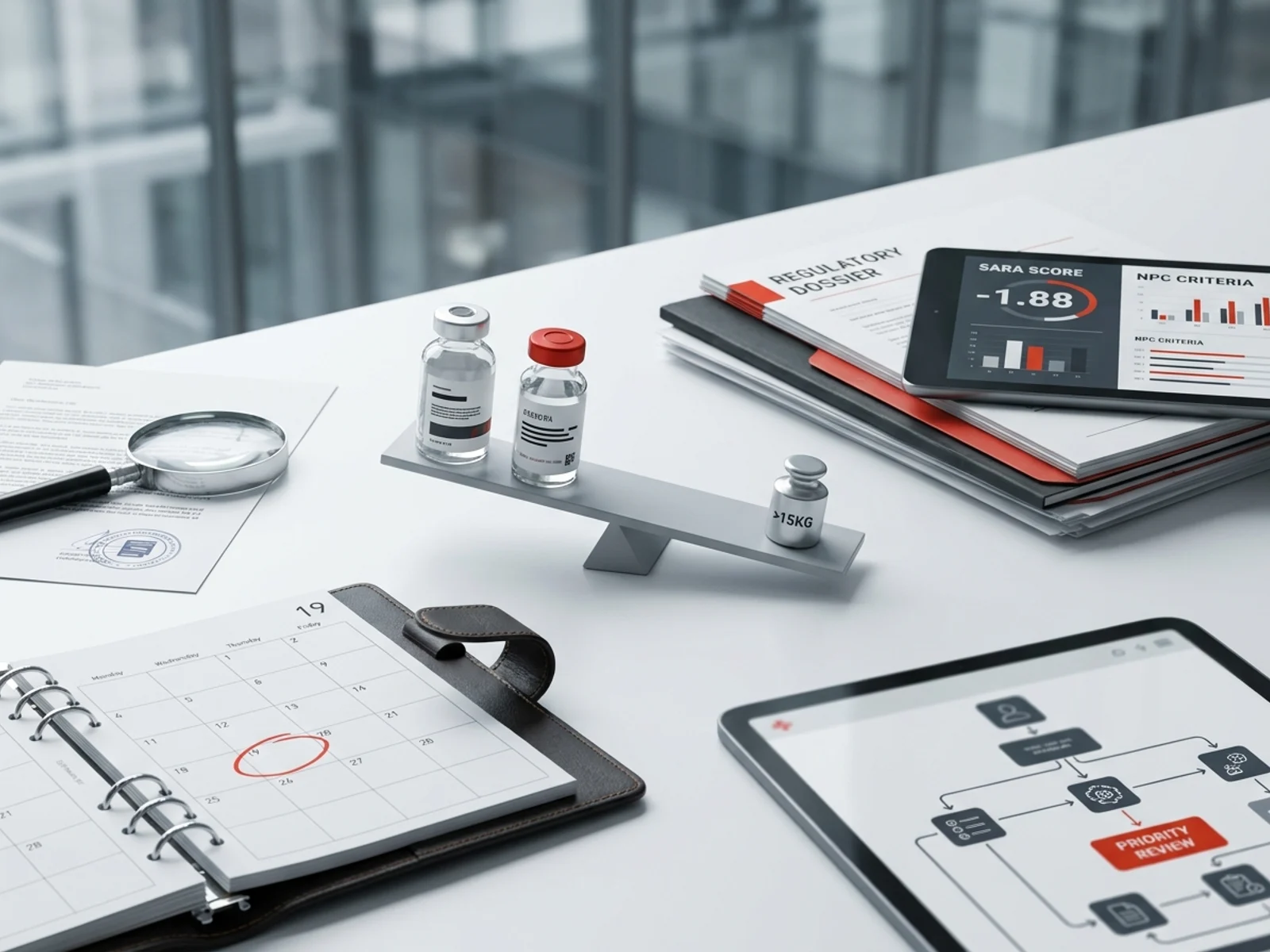
Biopharma M&A in 2026 has increasingly gravitated toward de-risked, commercial-stage rare disease assets with multi-year market exclusivity. A prime example is Neurocrine Biosciences' acquisition of Soleno Therapeutics, a transaction that significantly expands Neurocrine’s rare disease and endocrinology footprint beyond its core VMAT2 inhibitor franchise.
The deal centers on Vykat XR (diazoxide choline extended-release tablets), the first and only FDA-approved medication indicated for hyperphagia in Prader-Willi syndrome (PWS).
Why did Neurocrine pay $2.9 billion for Soleno, and does Vykat XR justify the price?
On April 6, 2026, Neurocrine Biosciences entered into a definitive merger agreement to acquire Soleno Therapeutics for $53.00 per share in cash, representing an equity value of approximately $2.9 billion.
================================================================================
NEUROCRINE / SOLENO ACQUISITION SUMMARY
================================================================================
Target:                         Soleno Therapeutics, Inc. (NASDAQ: SLNO)
Acquirer:                       Neurocrine Biosciences, Inc. (NASDAQ: NBIX)
Offer Price:                    $53.00 per share in cash
Equity Value:                   ~$2.9 Billion
Premium at Announcement:        34% over April 2, 2026 close ($39.55)
                                51% over 30-day Volume-Weighted Average Price (VWAP)
Transaction Structure:          Two-step cash tender offer + Section 251(h) merger
Definitive Agreement Date:       April 5, 2026 (Announced April 6, 2026)
Transaction Close Date:         May 18, 2026
Lead Asset:                     Vykat XR (diazoxide choline ER, NDA 216665)
================================================================================
The purchase price represented a 34% premium over Soleno’s closing stock price of $39.55 on April 2, 2026, and a 51% premium over its 30-day volume-weighted average price (VWAP). The transaction was structured as a two-step tender offer followed by a merger under Section 251(h) of the Delaware General Corporation Law, completing on May 18, 2026.
To evaluate whether the $2.9 billion price tag is justified, biopharma corporate development and market-access teams must examine core deal parameters, addressable patient population dynamics, clinical evidence, and regulatory patent/exclusivity barriers.
| Deal Parameter | Value / Metric | Strategic Context |
|---|---|---|
| Offer Price | $53.00 / share cash | Unanimously approved by both boards of directors |
| Implied Equity Value | ~$2.9 Billion | Financed via existing cash balance + pre-payable debt facility |
| Key Asset | Vykat XR (NDA 216665) | Approved March 26, 2025 for PWS hyperphagia (age ≥4) |
| Target Population | ~10,000 U.S. patients | Rare genetic disorder with zero prior approved treatments |
| Q2 2026 Pro-Forma Net Sales | $94 Million ($54M post-close) | Immediate top-line accretion to Neurocrine's rare disease segment |
| Exclusivity Protection | Orphan Exclusivity to 2032 | 6 Orange Book patents providing method protection to Nov 2035 |
The acquisition fits within a broader wave of strategic biopharma consolidations, as documented in our tracking of biopharma M&A by the numbers (2026). Similar to the Angelini-Catalyst $4.1B deal anatomy, acquirers are willing to pay significant premiums for specialty drugs that possess clear regulatory protection and high patient adherence.
Comparative Rare Disease M&A Valuation Benchmarks
To contextualize Soleno’s $2.9 billion valuation, we compare recent commercial-stage rare disease transactions:
| Target Company | Lead Asset | Indication / Target Class | Transaction Value | Stage / Valuation |
|---|---|---|---|---|
| Soleno Therapeutics | Vykat XR (diazoxide ER) | PWS Hyperphagia (Endocrine) | $2.9 Billion | ~7.7x annualized pro-forma run-rate |
| Catalyst Pharmaceuticals (Angelini Pharma) | Firdapse / Agamree | LEMS / DMD (Neuromuscular) | $4.1 Billion | ~8x trailing revenue |
| Crinetics (Acq. by Vertex) | Palsonify (paltusotine) + atumelnant | Acromegaly / CAH | $10.0 Billion | Approved (Sept 2025) + Phase 3 pipeline |
| Forte Bio (Acq. by argenx) | FB102 | Autoimmune — Vitiligo, Celiac | $2.2 Billion | Phase 1b clinical stage |
Soleno's ~7.7x annualized pro-forma run-rate multiple (based on the $94M full-quarter Q2 2026 pro-forma figure) sits in the band of recent commercial rare-disease benchmarks, reflecting the high gross margins (>90%), long duration of therapy, and low patient churn typical of genetic rare disorders. Soleno's verified Orange Book exclusivity runway — ODE to 2032 and patents to 2035 — is detailed in the next section; comparator exclusivity terms are not uniformly disclosed and are omitted here to avoid overstating them.
What is Vykat XR and how large is the Prader-Willi market?
Prader-Willi syndrome (PWS) is a complex, non-inherited genetic disorder caused by a lack of expression of active paternal genes on chromosome 15q11-q13. It occurs in approximately 1 in 15,000 to 1 in 25,000 live births, resulting in an estimated U.S. prevalence of ~10,000 individuals.
The hallmark symptom of PWS is hyperphagia—a relentless, insatiable hunger driven by hypothalamic dysfunction. Left unmanaged, hyperphagia leads to severe hyperphagic behavior (food stealing, foraging, consuming inedible items), life-threatening morbid obesity, type 2 diabetes, and respiratory compromise. Prior to Vykat XR, management was limited to strict environmental containment (locking pantries and refrigerators) and supportive care.
--------------------------------------------------------------------------------
DILEMMAS IN PRADER-WILLI SYNDROME & VYKAT XR MECHANISM
--------------------------------------------------------------------------------
Disease Pathology:   PWS 15q11-q13 genetic defect → Hypothalamic dysfunction
                     ↳ Continuous, unsuppressible hyperphagic drive

Vykat XR Mechanism:  Diazoxide choline ER → Activates ATP-sensitive K+ (KATP)
                     channels in NPY/AgRP neurons in the hypothalamus
                     ↳ Reduces appetite stimulation & improves lipid metabolism

Regulatory Status:   FDA Approved March 26, 2025 (Breakthrough & Orphan Drug)
                     Indicated for PWS hyperphagia in patients aged ≥4 years
--------------------------------------------------------------------------------
Vykat XR is a once-daily, extended-release formulation of diazoxide choline (a choline salt of diazoxide). By activating ATP-sensitive potassium ($\text{K}_{\text{ATP}}$) channels in neuropeptide Y (NPY) and agouti-related protein (AgRP) expressing neurons within the arcuate nucleus of the hypothalamus, Vykat XR downregulates hyperphagic signals and normalizes insulin/lipid metabolic pathways.
FDA granted approval for NDA 216665 on March 26, 2025, for patients aged 4 years and older, with Breakthrough, Fast Track, and Orphan Drug designations. The evidence base is more nuanced than a single positive pivotal readout. In the 13-week, placebo-controlled Phase 3 DESTINY PWS trial (C601; NCT03440814, 127 patients randomized 2:1), the primary endpoint — change from baseline in the Hyperphagia Questionnaire for Clinical Trials (HQ-CT) at week 13 — was not met in the overall population (least-squares mean $-5.94$ for diazoxide choline vs $-4.27$ for placebo; $p = 0.198$). Diazoxide choline did separate from placebo in the pre-specified severe-hyperphagia subgroup ($-9.67$ vs $-4.26$; $p = 0.012$) and in a pre-COVID sensitivity analysis ($p = 0.037$). In the 52-week open-label extension (C602), in which all participants received active drug, HQ-CT improved by $-9.9$ points from baseline ($p < 0.0001$). The approval therefore rested on the totality of this evidence — the severe-subgroup and open-label signals, the secondary-endpoint improvements (fat-mass reduction, $p = 0.023$; Clinical Global Impression–Improvement, $p = 0.029$), and the favorable benefit–risk balance in a disorder with no prior approved therapy — rather than on a statistically significant primary endpoint in the full randomized cohort.
Clinical Evidence Baseline (DESTINY PWS C601 + C602)
| Analysis | Population / Design | HQ-CT or Endpoint Result | Statistical Significance |
|---|---|---|---|
| C601 Primary (all comers) | 127 pts, 13-wk DCCR vs placebo | $-5.94$ vs $-4.27$ | $p = 0.198$ — primary endpoint not met |
| C601 Severe-Hyperphagia Subgroup | Baseline HQ-CT above median | $-9.67$ vs $-4.26$ | $p = 0.012$ (pre-specified) |
| C601 Fat-Mass Reduction | Body-composition secondary | Significant reduction | $p = 0.023$ |
| C601 CGI-Improvement | Global impression secondary | Improved vs placebo | $p = 0.029$ |
| C602 Open-Label Extension | All on drug, 52 weeks | $-9.9$ (within-group) | $p < 0.0001$ (no placebo arm) |
Treatment-emergent adverse events in C601 occurred at a comparable rate between arms (83.3% DCCR vs 73.8% placebo, not significant); consistent with the diazoxide drug class, monitoring focuses on edema, hyperglycemia, and hypertrichosis rather than on a novel safety signal.
Competitive Landscape: Vykat XR vs. Emerging PWS Pipeline Candidates
While Vykat XR holds a first-mover advantage as the only approved pharmacotherapy for PWS hyperphagia, several developmental assets are navigating clinical trials:
| Candidate / Drug | Sponsor | Mechanism of Action | Status | Key Differentiation vs. Vykat XR |
|---|---|---|---|---|
| Vykat XR (diazoxide ER) | Neurocrine / Soleno | $\text{K}_{\text{ATP}}$ Channel Agonist | FDA Approved (Mar 2025) | First-in-class; once-daily oral tablet; only approved PWS hyperphagia therapy |
| Pitolisant (Wakix) | Harmony Biosciences | Histamine $\text{H}_3$ Receptor Antagonist | Phase 3 (TEMPO study; topline expected H2 2026) | Targets excessive daytime sleepiness and behavioral symptoms; hyperphagia is a secondary endpoint |
| ACP-101 (intranasal carbetocin) | Acadia Pharmaceuticals (acquired Levo Therapeutics, 2022) | Oxytocin Receptor Agonist | Discontinued — Phase 3 COMPASS PWS failed primary endpoint (Sept 2025) | Failed to beat placebo on hyperphagia; program scrapped, narrowing near-term competition |
Vykat XR's established FDA approval, combined with its 2032 orphan exclusivity window, insulates Neurocrine from immediate competitive disruption. With Acadia's ACP-101 discontinued and Harmony's pitolisant still in Phase 3, no competing PWS hyperphagia pharmacotherapy is likely to reach the U.S. market before Vykat XR's orphan exclusivity expires.
How long is Vykat XR protected from generic competition?
A critical component of Neurocrine’s valuation model is Vykat XR’s multi-layered Orange Book exclusivity and patent moat. An analysis of the official FDA Orange Book database (NDA 216665) reveals the precise regulatory barriers protecting the asset:
================================================================================
VYKAT XR (NDA 216665) ORANGE BOOK EXCLUSIVITY & PATENT TIMELINE
================================================================================
Approval Date: March 26, 2025

EXCLUSIVITY:
  ├── New Product (NP):                   Expires March 26, 2028
  └── Orphan Drug Exclusivity (ODE-532):  Expires March 26, 2032

PATENT EXPIRATIONS:
  ├── US 7,572,789 (Drug Substance & Product): Expires December 20, 2026
  ├── US 7,799,777 (Drug Substance):           Expires March 5, 2029
  ├── US 9,757,384 (Method of Use - U-4167):   Expires November 12, 2035
  ├── US 12,178,823 (Method of Use - U-4167):  Expires November 12, 2035
  ├── US 12,343,348 (Method of Use - U-4211):  Expires November 12, 2035
  └── US 12,419,895 (Method of Use - U-4275):  Expires November 12, 2035
================================================================================
1. Product Strengths and Reference Standard
Vykat XR is listed in three dosage strengths: 25 mg, 75 mg, and 150 mg extended-release tablets. The 150 mg tablet serves as the Reference Standard (RS) for bioequivalence testing.
2. Statutory Exclusivity Periods
New Product (NP) Exclusivity: 3-year exclusivity expiring March 26, 2028.
Orphan Drug Exclusivity (ODE-532): 7-year orphan exclusivity covering the treatment of hyperphagia in PWS, expiring March 26, 2032 across all three strength presentations.
3. Patent Protection Ladder (6 Distinct Patents)
While the earliest composition-of-matter patent (US 7,572,789, covering drug substance and product) expires on December 20, 2026, generic entry is strictly blocked past 2026 by statutory Orphan Exclusivity (to March 2032) and five subsequent method/use patents:
| Patent Number | Patent Type | Claim Code / Use Code | Expiration Date | Generic Barrier Function |
|---|---|---|---|---|
| US 7,572,789 | DS + DP | Composition of Matter | Dec 20, 2026 | Initial drug substance protection |
| US 7,799,777 | DS | Drug Substance Polymorph | Mar 5, 2029 | Chemical synthesis barrier |
| US 9,757,384 | Use | U-4167 (Hyperphagia in PWS) | Nov 12, 2035 | Method of treatment protection |
| US 12,178,823 | Use | U-4167 (Dosage titration) | Nov 12, 2035 | Clinical administration protection |
| US 12,343,348 | Use | U-4211 (Hypothalamic modulation) | Nov 12, 2035 | Pathway-specific treatment claim |
| US 12,419,895 | Use | U-4275 (Long-term management) | Nov 12, 2035 | Extended clinical regimen claim |
As of mid-2026, zero ANDAs have been filed for diazoxide choline extended-release, giving Neurocrine a clean 9-year orphan exclusivity window and nearly 10 years of patent runway through late 2035.
How does Vykat XR fit Neurocrine's endocrinology portfolio?
Prior to the Soleno transaction, Neurocrine's revenues were heavily reliant on Ingrezza (valbenazine), a VMAT2 inhibitor indicated for tardive dyskinesia and chorea associated with Huntington's disease. While Ingrezza remains a blockbuster asset—generating $716 million in Q2 2026 alone—Neurocrine actively sought diversification into rare pediatric endocrinology.
NEUROCRINE PRODUCT REVENUE DIVERSIFICATION (Q2 2026)
--------------------------------------------------------------------------------
Ingrezza (Neuroscience / VMAT2):       █████████████████████████████████ $716M
Crenessity (Endocrinology / CAH):      █████████ $184M
Vykat XR (Soleno / PWS Hyperphagia):   ███ $54M ($94M Pro-Forma Full Q2)
Other / Collaboration Revenues:        █ $5M
--------------------------------------------------------------------------------
Total Q2 2026 Net Revenues:            $959 Million (+39% YoY Growth)
--------------------------------------------------------------------------------
The addition of Vykat XR complements Neurocrine’s launch of Crenessity (crinecerfont), an oral CRF1 receptor antagonist for congenital adrenal hyperplasia (CAH) approved in late 2024. Both products target pediatric and adult endocrinologists, allowing Neurocrine to leverage a single specialized commercial sales force across two high-unmet-need rare endocrine conditions.
This strategic alignment mirrors recent biopharma rare disease deals, such as the argenx-Forte $2.2B acquisition, where acquirers seek complementary call-point synergies to optimize commercial infrastructure.
Sales Force Call-Point Synergies
================================================================================
NEUROCRINE RARE ENDOCRINE COMMERCIAL SYNERGY
================================================================================
Specialist Call-Point: Pediatric & Adult Endocrinologists (~1,500 target prescribers)
  ├── Product 1: Crenessity (crinecerfont)  → Congenital Adrenal Hyperplasia (CAH)
  └── Product 2: Vykat XR (diazoxide ER)     → Prader-Willi Syndrome (PWS) Hyperphagia

Shared Infrastructure:
  ├── Dedicated Rare Disease Field Account Managers
  ├── Unified Hub Services (Patient Assistance & PA Navigation)
  └── Closed Specialty Pharmacy Network (Accredo, Caremark Specialty, Orsini)
================================================================================
What did Neurocrine's Q2 2026 earnings reveal about the Vykat XR ramp?
Neurocrine reported its Q2 2026 financial results on July 30, 2026, offering the first quarterly look at Soleno’s financial integration:
Total Q2 Net Product Revenues: $959 million, representing a 39% year-over-year increase.
Vykat XR Revenue Contribution: Vykat XR generated $54 million in net revenue during the partial post-closing period (May 18 to June 30, 2026). On a pro-forma full-quarter basis, Vykat XR generated $94 million, signaling rapid commercial adoption among PWS centers of excellence.
Accounting Intangible Asset: Neurocrine recorded ~$2.2 billion in finite-lived intangible assets related to Vykat XR, which will be amortized over a 16-year useful life (~$137 million annually).
Raised 2026 Guidance: Buoyed by strong Ingrezza execution ($716M in Q2) and the Vykat XR addition, Neurocrine raised its full-year 2026 Ingrezza sales guidance to $2.825B – $2.875B.
Payer Access Dynamics & Prior Authorization Workflow
Commercial insurer coverage for Vykat XR has coalesced around strict prior authorization (PA) criteria. For example, under the Federal Employee Program (FEP) Pharmacy Policy (effective late 2025/2026), coverage requires:
Confirmed genetic diagnosis of Prader-Willi syndrome (15q11-q13 deletion or maternal uniparental disomy).
Prescribing by or in consultation with a pediatric endocrinologist or medical geneticist.
Documentation of baseline moderate-to-severe hyperphagia behavior (HQ-CT score ≥10).
Maximum daily dosing capped at 525 mg/day.
Because Vykat XR is distributed exclusively through a closed specialty pharmacy network, generic substitution risks are zero, and reimbursement compliance remains tightly controlled.
Frequently Asked Questions
Was Vykat XR already on the market when Neurocrine bought Soleno?
Yes. FDA approved Vykat XR on March 26, 2025. Soleno launched the product commercially in Q2 2025, meaning Neurocrine acquired an active, revenue-generating commercial asset with established payer coverage rather than a clinical-stage developmental drug.
What premium did Neurocrine pay, and how was the deal funded?
Neurocrine paid $53.00 per share in cash, a 34% premium to Soleno's closing price prior to announcement ($39.55) and a 51% premium to its 30-day VWAP. The ~$2.9 billion purchase was funded using Neurocrine's existing cash on hand plus a modest draw on its pre-payable debt facility.
When does Vykat XR lose exclusivity, and are any generic ANDAs filed?
Vykat XR holds statutory Orphan Drug Exclusivity (ODE-532) through March 26, 2032, and five method/use patents extending protection through November 12, 2035. As of mid-2026, no generic ANDA applications have been filed with the FDA.
How does diazoxide choline differ from traditional generic diazoxide oral suspension?
Generic diazoxide oral suspension (Proglycem) is indicated for hypoglycemia due to hyperinsulinism. It requires three-times-daily dosing and causes severe gastrointestinal side effects and fluid retention. Vykat XR uses a salt formulation (diazoxide choline) in a controlled-release tablet matrix that allows once-daily administration with significantly improved GI tolerability.
What are the main commercial risks for Neurocrine in integrating Soleno?
The primary operational risks include managing specialty pharmacy hub transition without disruption to pediatric patients, maintaining high compliance/adherence rates across PWS families, and expanding commercial payer coverage as the hub-and-specialty-pharmacy infrastructure scales.
Sources
Neurocrine Biosciences & Soleno Therapeutics. Neurocrine Biosciences to Acquire Soleno Therapeutics. PR Newswire (April 6, 2026). https://www.prnewswire.com/news-releases/neurocrine-to-acquire-soleno-therapeutics-expanding-its-endocrinology-and-rare-disease-portfolio-302734531.html
Neurocrine Biosciences Investor Relations. Neurocrine Biosciences Completes Acquisition of Soleno Therapeutics (May 18, 2026). https://neurocrine.gcs-web.com/news-releases/news-release-details/neurocrine-biosciences-completes-acquisition-soleno-therapeutics
Neurocrine Biosciences. Neurocrine Biosciences Reports Second Quarter 2026 Financial Results. PR Newswire (July 30, 2026). https://www.prnewswire.com/news-releases/neurocrine-biosciences-reports-second-quarter-2026-financial-results-302839431.html
Soleno Therapeutics Investor Relations. Soleno Therapeutics Announces U.S. FDA Approval of Vykat XR (March 26, 2025). https://investors.soleno.life/news-releases/news-release-details/soleno-therapeutics-announces-us-fda-approval-vykattm-xr-treat
U.S. Food and Drug Administration (FDA). Approved Drug Products with Therapeutic Equivalence Evaluations (Orange Book) — NDA 216665. https://www.accessdata.fda.gov/scripts/cder/ob/results_product.cfm?Appl_Type=N&Appl_No=216665
Blue Cross Blue Shield Federal Employee Program (FEP). Pharmacy Policy: Vykat XR (diazoxide choline). Policy 5.30.096 (Effective 2025/2026). https://www2.fepblue.org/-/media/PDFs/Medical-Policies/2026/March/Pharmacy-Policies/New-Policies/530096-Vykat-XR-diazoxide.pdf
Wall Street Journal. Neurocrine to Buy Soleno for $2.9 Billion (April 6, 2026). https://www.wsj.com/business/deals/neurocrine-to-buy-soleno-for-2-9-billion-53004b37
ClinicalTrials.gov (U.S. NIH / NLM). DESTINY PWS: Study of Diazoxide Choline Controlled-Release Tablets in Patients With Prader-Willi Syndrome. NCT03440814. https://clinicaltrials.gov/study/NCT03440814