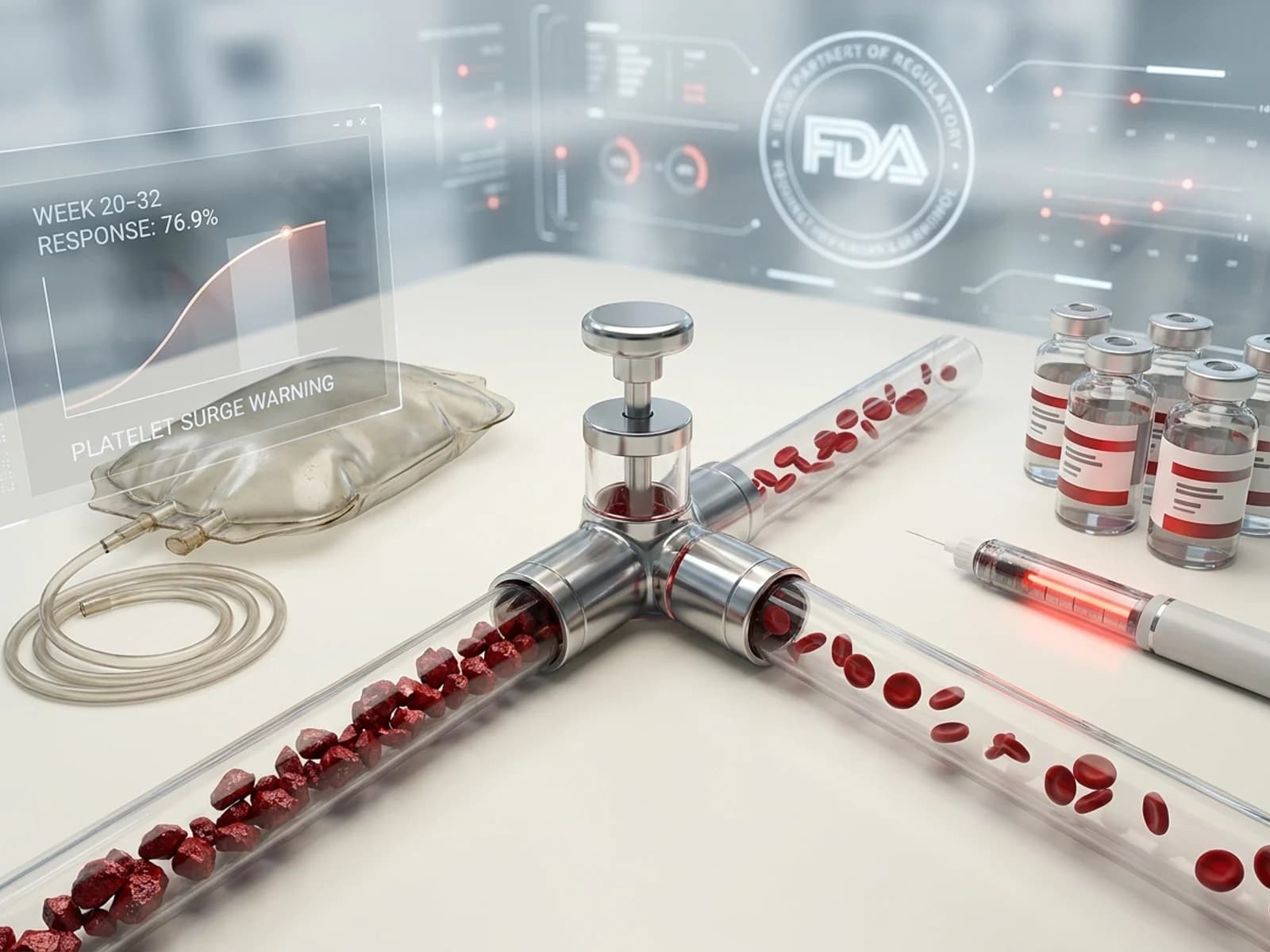
On August 28, 2026, the U.S. Food and Drug Administration (FDA) approved Mimrylo (rusfertide) for the treatment of erythrocytosis in adult patients with polycythemia vera (PV). Licensed to Takeda Pharmaceuticals America, rusfertide represents a first-in-class synthetic injectable hepcidin mimetic that selectively restricts iron availability to red blood cell precursors, suppressing pathological erythropoiesis without causing the broad cytotoxic myelosuppression associated with non-specific cytoreductive therapies.
In hematology practice, maintaining hematocrit (HCT) strictly below 45% is the clinical cornerstone of thrombotic risk reduction in polycythemia vera, as established by the landmark European CYTO-PV trial. Historically, achieving this target has required recurrent therapeutic phlebotomies (bloodletting) and non-selective cytoreductive agents such as generic hydroxyurea, recombinant interferons, or ruxolitinib. However, for pharmacy and therapeutics (P&T) committees, hematology practice managers, and specialty pharmacy access teams, headline characterizations of Mimrylo as an unconditional "phlebotomy eliminator" require careful examination of the approved label:
Does the FDA approval establish Mimrylo as a disease-modifying cure that replaces hydroxyurea, Besremi, or Jakafi, did 76.9% of patients achieve zero phlebotomies across the entire 32 weeks, and how should access teams manage the labeled warning regarding reactive thrombocytosis and multi-vial reconstitution?
The official FDA label (Revised August 2026) and the Phase 3 VERIFY trial dataset establish essential clinical, regulatory, and reimbursement boundaries:
Mimrylo is approved for erythrocytosis control, not clone-modifying disease reduction. Under Section 1 of the Prescribing Information, Mimrylo is indicated specifically for the treatment of erythrocytosis in adults with polycythemia vera. It is not indicated for the reduction of JAK2 V617F allele burden, control of splenomegaly, or suppression of leukocytosis. It regulates red cell mass through iron restriction, leaving the underlying neoplastic stem-cell clone intact.
The headline 76.9% response rate is a Week 20 to Week 32 maintenance endpoint, not a 32-week zero-phlebotomy guarantee. In the pivotal Phase 3 VERIFY trial (NCT05210790, Table 5), 76.9% (113/147) of patients randomized to Mimrylo achieved the primary endpoint (absence of phlebotomy eligibility between Week 20 and Week 32), compared to 32.9% (48/146) on placebo, yielding a statistically significant common risk difference of 43.8% (95% CI: 33.5, 54.2; p < 0.0001). Across the entire 32-week treatment period, patients receiving Mimrylo still required a mean of 0.53 phlebotomies (compared to 1.82 on placebo).
VERIFY evaluated Mimrylo as add-on on ongoing standard-of-care. Enrolled patients needed frequent phlebotomies (≥3 in 28 weeks or ≥5 in 1 year) despite stable therapy: 44.7% phlebotomy only, 38.9% plus hydroxyurea, 13.3% plus interferon, 2.4% plus ruxolitinib, and 0.6% plus combination cytoreductive therapy. That mix is not a replacement claim.
Thrombocytosis is a labeled warning requiring proactive platelet monitoring. Restricting iron bioavailability to erythroid precursors diverts bone marrow resources, causing a transient or sustained rise in platelet counts. Platelet counts increased by approximately 31% by Week 4; 36% of treated patients developed thrombocytosis exceeding 600 × 10^9/L, and 6% exceeded 1,000 × 10^9/L. Section 5.1 warns that managing thrombocytosis may require dose adjustments or initiating/intensifying cytoreductive therapy.
Multi-strength lyophilized vials shift treatment from the infusion suite to home subcutaneous injection. Supplied across five single-dose vial strengths (9.5 mg, 19 mg, 28 mg, 41 mg, and 54 mg; NDC prefix 63020), Mimrylo requires reconstitution with sterile water for injection and administration within 4 hours. Doses above 54 mg require two injections, and doses above 82 mg must be split across separate days.
MIMRYLO (RUSFERTIDE) REGULATORY & ACCESS SCORECARD
| Metric / Dimension | Labeled Fact / Operational Specification |
|---|---|
| FDA Action Date | August 28, 2026 (New Molecular Entity, Priority Review) |
| Therapeutic Modality | Injectable synthetic peptide hepcidin mimetic (iron restrictor) |
| Labeled Indication | Treatment of erythrocytosis in adults with polycythemia vera |
| Starting Dosage & Range | 19 mg SC once weekly; titrated in range of 9.5 mg to 108 mg weekly |
| Supply Strengths (Vials) | 9.5 mg, 19 mg, 28 mg, 41 mg, 54 mg single-dose lyophilized vials |
| Injection Complexity | Reconstitute w/ SWFI (use in 4h); >54mg = 2 inj; >82mg = 2 days |
| Pivotal Trial | Phase 3 VERIFY (NCT05210790); 293 randomized adults (1:1) |
| Primary Endpoint | Week 20 to Week 32 Absence of Phlebotomy Eligibility (Table 5): |
| (Table 5 Efficacy) | Mimrylo: 76.9% (113/147) vs. Placebo: 32.9% (48/146) |
| Common Risk Difference | +43.8% (95% CI: 33.5, 54.2); p < 0.0001 |
| Mean Phlebotomies (W0-32) | LSM 0.53 (Mimrylo) vs. 1.82 (Placebo); Difference = -1.29 |
| Maintaining HCT < 45% | Week 0 to Week 32: 62.6% (92/147) vs. 14.4% (21/146) |
| Key Warnings | Thrombocytosis (36% >600k, 6% >1000k), Injection-Site Rx (47–56%) |
| Boxed Warning / REMS | No Boxed Warning; No REMS Program; No Contraindications |
Below, we dissect Table 5 of the approved Prescribing Information, analyze the biological mechanism of hepcidin mimetics versus clone-directed therapies, evaluate the clinical sequencing of Mimrylo alongside Besremi and Jakafi, examine iron biology and ferritin dynamics, and outline specialty pharmacy fulfillment and prior authorization workflows.
The Clinical Challenge: Phlebotomy Dependence and the CYTO-PV Threshold
Polycythemia vera is a chronic myeloproliferative neoplasm (MPN) characterized by clonal proliferation of hematopoietic stem cells driven almost universally by gain-of-function somatic mutations in the Janus kinase 2 gene (JAK2), predominantly the JAK2 V617F mutation in exon 14 or exon 12 mutations. Unregulated erythropoiesis markedly expands total red blood cell mass, elevating whole-blood viscosity and predisposing patients to life-threatening thrombotic complications, including ischemic stroke, transient ischemic attacks, myocardial infarction, pulmonary embolism, deep vein thrombosis, and splanchnic or portal vein thrombosis.
The landmark Italian CYTO-PV study (Cytoreductive Therapy in Polycythemia Vera) definitively established the therapeutic target for disease management: maintaining hematocrit strictly below 45% reduces cardiovascular deaths and major thrombotic events by four-fold compared to a less intensive hematocrit target of 45% to 50%. Consequently, clinical practice guidelines from the National Comprehensive Cancer Network (NCCN) and the European LeukemiaNet (ELN) mandate strict hematocrit control below 45% across all risk categories.
However, achieving sustained hematocrit control presents a persistent clinical dilemma in routine practice. In low-risk patients (defined as individuals under 60 years of age without a history of thrombosis), therapeutic phlebotomy combined with low-dose aspirin is the standard frontline intervention. In high-risk patients (those 60 years or older or with prior thrombotic events), cytoreductive therapy with hydroxyurea or pegylated interferon is initiated, but supplemental phlebotomies are frequently required to control hematocrit spikes during disease flares or dose adjustments.
The Debilitating Burden of Chronic Phlebotomy
While therapeutic phlebotomy rapidly lowers intravascular red cell volume, repeated venesection extracts vital iron stores from the body. Each standard 450 to 500 mL therapeutic phlebotomy removes approximately 200 to 250 mg of elemental iron. Over months and years of recurrent phlebotomies, patients develop severe, uncompensated systemic iron deficiency:
Profound Microcytosis and Hypochromia: Serum ferritin concentrations routinely fall below 10 ng/mL, and mean corpuscular volume (MCV) frequently drops below 70 fL.
Debilitating Non-Anemic Iron Deficiency Symptoms: Even with normal or elevated hemoglobin levels, severe tissue iron depletion causes persistent chronic fatigue, cognitive impairment ("brain fog"), restless legs syndrome, diffuse pruritus, hair loss, brittle nails, angular cheilitis, and marked exercise intolerance.
Hematocrit Volatility: Episodic phlebotomies produce a "sawtooth" pattern in hematocrit levels, causing rapid shifts between hyperviscosity and post-phlebotomy fatigue.
Reactive Bone Marrow Drive: Severe iron deficiency stimulates erythropoietin and thrombopoietin pathways, paradoxically exacerbating reactive thrombocytosis and increasing platelet stickiness.
Mimrylo directly targets this pathophysiological cycle. Rather than removing iron from the body through venesection, rusfertide mimics the body's natural master iron-regulatory hormone, redistributing iron into intracellular storage macrophages and hepatocytes. By selectively withholding iron from proliferating erythroblasts, Mimrylo halts excessive red blood cell production while avoiding the systemic tissue iron depletion caused by repeated blood draws.
Efficacy Architecture: Table 5 Primary Endpoint and Phlebotomy Definitions
The registrational basis for Mimrylo is the Phase 3 VERIFY study (NCT05210790), an international, double-blind, randomized, placebo-controlled trial that enrolled 293 adult patients with polycythemia vera who had a high phlebotomy burden (requiring ≥3 phlebotomies in the 28 weeks prior to screening or ≥5 phlebotomies in the 52 weeks prior to screening) despite ongoing stable background therapy.
Patients were randomized 1:1 to receive either:
Mimrylo: Starting dose of 19 mg subcutaneously once weekly, then titrated using the labeled weekly-dose table (9.5 → 19 → 28 → 41 → 54 → 69 → 82 → 95 → 108 mg) to keep HCT below 45%; or
Placebo: Matching weekly subcutaneous placebo injections alongside their ongoing baseline therapy.
The Primary Efficacy Endpoint: Weeks 20 to 32 Response
The primary efficacy endpoint in Table 5 of the Prescribing Information was the proportion of patients achieving response, defined strictly as the absence of phlebotomy eligibility from Week 20 through Week 32.
Under the VERIFY protocol, a patient was deemed phlebotomy eligible if either of the following criteria was confirmed:
A confirmed hematocrit level ≥ 45% that was at least 3 percentage points higher than their baseline hematocrit; or
A confirmed hematocrit level ≥ 48%, regardless of baseline.
In Table 5, the primary endpoint was met with overwhelming statistical significance: 76.9% (113/147) of Mimrylo-treated patients maintained response during the 12-week evaluation window compared to 32.9% (48/146) of placebo-treated patients, representing an absolute common risk difference of 43.8% (95% CI: 33.5, 54.2; p < 0.0001).
Continuous Hematocrit Control and Mean Phlebotomy Reduction
Continuous hematocrit control: Over the 32-week randomized period, 62.6% (92/147) on Mimrylo versus 14.4% (21/146) on placebo maintained HCT below 45% (common risk difference 48.2%; 95% CI 38.4, 57.9). Table 5 footnote: a single HCT ≥ 45% was permitted. That is not a claim of zero phlebotomies across 32 weeks.
Mean number of phlebotomies: From baseline through Week 32, LSM phlebotomies were 0.53 ± 0.224 on Mimrylo versus 1.82 ± 0.227 on placebo (difference -1.29 ± 0.152; 95% CI -1.59, -1.00; p < 0.0001). A mean of 0.53 is not zero phlebotomies.
PROMIS fatigue: Table 5 also reports mean change from baseline in PROMIS Short Form 8a Total Fatigue score at Week 32: -1.79 ± 1.04 versus +0.19 ± 1.05 (difference -1.98 ± 0.88; 95% CI -3.71, -0.25; p = 0.0252; n = 120 Mimrylo / 115 placebo for this endpoint).
VERIFY's labeled add-on mix was 44.7% phlebotomy only, 38.9% plus hydroxyurea, 13.3% plus interferon, 2.4% plus ruxolitinib, and 0.6% plus combination cytoreductive therapy. 53.2% were low-risk (age < 60 and no prior thrombosis). The PI does not publish the invented per-subgroup response rates that sometimes circulate with the 76.9% headline. Quote Table 5, not reconstructed risk-stratum percentages.
Mechanism of Action: Hepcidin Mimetic Biology and Iron Homeostasis
To appropriately position Mimrylo in hematology practice, clinical teams must understand the biological distinction between iron-mediated erythrocytosis control and direct neoplastic clone suppression.
The Physiological Role of Ferroportin and Hepcidin
In human iron homeostasis, dietary iron absorption in the duodenum and iron recycling from senescent erythrocytes in the reticuloendothelial system depend entirely on ferroportin (SLC40A1), the sole known transmembrane iron exporter protein found on duodenal enterocytes, hepatocytes, and splenic/hepatic macrophages.
Under normal physiological conditions, the liver produces hepcidin, a 25-amino-acid peptide hormone that binds directly to the extracellular loop of ferroportin. Hepcidin binding induces the rapid internalization, ubiquitination, and lysosomal degradation of ferroportin. When ferroportin is degraded, iron cannot exit enterocytes or macrophages, causing systemic circulating iron concentrations and transferrin saturation to decline.
In polycythemia vera, constitutive JAK2 pathway activation drives excessive, uncontrolled erythroblast proliferation in the bone marrow. Proliferating erythroblasts consume massive amounts of transferrin-bound iron to synthesize hemoglobin. In response to this immense iron demand, the body down-regulates endogenous hepcidin production, maximizing ferroportin expression and iron mobilization. When patients undergo recurrent phlebotomies, the body becomes progressively iron-depleted, yet erythroblasts continue to scavenge every available iron atom to produce abnormal red blood cells.
Rusfertide: Molecular Design and Selective Action
Rusfertide is a stable, rationally designed synthetic peptide hepcidin mimetic that incorporates non-natural amino acids to protect against rapid proteolytic cleavage. When administered subcutaneously, rusfertide binds ferroportin with high nanomolar affinity, mimicking endogenous hepcidin by inducing ferroportin degradation.
This molecular action results in rapid, dose-dependent iron compartmentalization:
Macrophage Iron Sequestration: Iron recycled from broken-down red blood cells is trapped inside tissue macrophages rather than released into circulation.
Erythroblast Starvation: Serum transferrin saturation drops, depriving rapidly dividing bone-marrow erythroblasts of the iron essential for heme synthesis.
Selective Red Cell Suppression: Because red blood cell production requires far greater iron flux than other cell lines, erythropoiesis is selectively suppressed, rapidly normalizing hematocrit levels.
Preservation of Systemic Iron: Unlike phlebotomy, which discards hundreds of milligrams of elemental iron, rusfertide keeps iron safely stored within the patient's reticuloendothelial system.
Clinical Sequencing: Positioning Alongside Hydroxyurea, Besremi, and Jakafi
P&T committees need a sequencing map: Mimrylo is labeled for erythrocytosis, while hydroxyurea, Besremi, and Jakafi address different parts of PV care. VERIFY was add-on on those backgrounds, not a head-to-head replacement trial.
1. Hydroxyurea: The Generic Cytoreductive Baseline
Generic oral hydroxyurea remains the usual first-line cytoreductive option for high-risk polycythemia vera. FDA Orange Book records as of August 14, 2026 list 16 product rows across 10 application numbers, including five AB-rated generic 500 mg capsule formulations. This site's Besremi PV/ET access note reports hydroxyurea NADAC $0.18676 per 500 mg capsule as of August 19, 2026. That figure was not re-downloaded for this article; reuse it only with that as-of date.
VERIFY already included hydroxyurea as background in 38.9% of patients. That is add-on evidence, not a reason to call Mimrylo a phlebotomy eliminator or a hydroxyurea replacement.
2. Besremi (Ropeginterferon alfa-2b): Clonal Modification
Approved under BLA 761166, Besremi is an extended-duration mono-pegylated proline interferon indicated for adult polycythemia vera regardless of prior treatment history. Unlike hepcidin mimetics, interferon can reduce JAK2 V617F allele burden over long treatment. Hematocrit control on interferon can be slow. VERIFY included a 13.3% interferon background cohort; that is add-on evidence, not a sequencing mandate.
3. Jakafi (Ruxolitinib): Second-Line JAK Inhibition
Jakafi (ruxolitinib; NDA 202192) is approved for polycythemia vera after inadequate response to or intolerance of hydroxyurea. Orange Book listings as of August 14, 2026 include 16 unique patents, with the latest listed pediatric exclusivity date June 24, 2028, and ODE-373 expiring September 22, 2028. Patent listing is not a litigation conclusion.
Jakafi is used when splenomegaly and cytokine-driven symptoms dominate. Mimrylo's labeled claim is erythrocytosis, not spleen or constitutional-symptom control. VERIFY included only a 2.4% ruxolitinib background slice.
4. Contrasting Hepcidin Directions: Mimrylo vs. Ojjaara
The clinical role of hepcidin modulation is clearer when Mimrylo is contrasted with Ojjaara (momelotinib) in the myelofibrosis access landscape. Mimrylo is a hepcidin mimetic that restricts iron for PV erythrocytosis. Ojjaara inhibits ACVR1/ALK2 and lowers hepcidin in myelofibrosis anemia. Opposite hepcidin direction, different disease, not interchangeable products.
Safety Profile, Reactive Thrombocytosis, and Clinical Monitoring
In the randomized VERIFY period (145 Mimrylo / 146 placebo), the safety dataset did not carry a boxed warning. The clinically important labeled risks are new or worsening thrombocytosis and injection-site reactions. Embryo-fetal toxicity is also warned.
The Reactive Thrombocytosis Warning
The most significant clinical safety signal identified in Section 5.1 of the prescribing information is reactive thrombocytosis:
Mechanism of Platelet Elevation: When iron availability to erythroid precursors is acutely restricted, the bone marrow diverts shared multipotent progenitor cells away from erythropoiesis toward megakaryopoiesis. Concurrently, iron deficiency stimulates thrombopoietin production, resulting in elevated platelet counts.
Trial Incidence: In the VERIFY study, mean platelet counts increased by approximately 31% by Week 4 of therapy. Overall, 36.0% of Mimrylo-treated patients developed platelet counts exceeding 600 × 10^9/L, and 6.0% developed severe thrombocytosis exceeding 1,000 × 10^9/L.
Clinical Risks: While mild-to-moderate thrombocytosis is common in polycythemia vera, extreme platelet elevations (>1,000 × 10^9/L) increase the risk of acquired von Willebrand syndrome due to excessive adsorption of large von Willebrand factor multimers onto expanded platelet surfaces, paradoxically creating a risk of serious mucosal bleeding in addition to microvascular thrombosis.
Discontinuation: Approximately 1.0% of patients in clinical trials permanently discontinued Mimrylo due to refractory thrombocytosis.
Clinical Monitoring and Action Algorithm
To manage Mimrylo, follow the labeled monitoring language rather than an invented clinic protocol:
CBC cadence: After initiating Mimrylo and during dose modifications, monitor CBC every 2 to 4 weeks, or as clinically indicated (Section 5.1).
Platelet elevations: The label states that platelet elevations may require cytoreductive therapy initiation or modification, or Mimrylo dose modification or discontinuation. It does not publish a 1,000 × 10^9/L hold rule or a resume-below-600 algorithm.
Anemia: Highlights list anemia in 16%. Dose decreases for Grade ≥2 anemia follow Table 3 (step down the labeled weekly-dose ladder; discontinue if already at 9.5 mg). Do not invent an HCT < 40% stop rule.
Injection-Site Reactions and General Tolerability
No Boxed Warning: Mimrylo does not carry a boxed warning, statutory REMS requirement, or labeled contraindications.
Embryo-fetal toxicity: Section 5.3 warns of fetal harm from animal data. Advise effective contraception during treatment and for at least 30 days after the final dose (Section 8.3). There are no human pregnancy data.
Injection-site reactions: Highlights list ISRs in 56% (incidence >15% list). Section 5.2 reports ISRs in 135 (47%) VERIFY-treated patients, mostly Grade 1 or 2. Quote both denominators; do not collapse them.
Anemia: 16% in the randomized period (Table 4 also lists anemia 16% versus 4.1% placebo; 0% Grade 3 in both arms).
Table 4 (Week 0 to 32, n = 145 versus 146): injection-site reactions 56% versus 33% (Grade 3: 0.7% versus 0); thrombocytosis 8% versus 0.7%; dyspnea 8% versus 1.4%. Those are the labeled Mimrylo-minus-placebo differences of at least 5 percentage points, not a reconstructed AE laundry list.
Dose changes and discontinuations: Dosage reductions for adverse reactions occurred in 30 (11%) patients, including anemia in 28 (10%). Permanent discontinuation included injection-site reactions in 2 (0.7%), thrombocytosis in 2 (0.7%), and anemia in 1 (0.4%). Safety during the randomized period used 145 Mimrylo and 146 placebo patients; 285 patients were later exposed after placebo crossover. Median Mimrylo exposure in the study was 61 weeks (range 2 to 133), with 65% exposed for at least 52 weeks.
VERIFY demographics that belong in a P&T packet, because they bound external validity: mean age 57 years (range 27 to 86); 73% male; 89.4% White; 4.8% Hispanic or Latino; 91.2% completed through Week 32 of the randomized period. Patients who finished 32 weeks could continue open-label Mimrylo through Week 52 and a long-term extension through Week 156. Baseline mean hematocrit was already 42.2% (Mimrylo) and 42.4% (placebo), so a PA edit that requires HCT ≥ 45% at the moment of the first claim does not match the trial population.
Anti-drug antibodies were detected in 34% (97 of 282) of assayed VERIFY patients over a median 61-week exposure, including neutralizing antibodies in 35 of those 97 and hepcidin cross-reactivity in 12 of 97. The PI states there was no apparent correlation of ADA with pharmacokinetics, effectiveness, or safety in VERIFY; titers were low and often declined. That is immunogenicity surveillance, not a coverage criterion.
Formulation, Packaging, and Specialty Pharmacy Fulfillment Logistics
Mimrylo is formulated as a sterile, preservative-free lyophilized white-to-off-white cake in single-dose glass vials, co-packaged with prefilled diluent syringes containing Sterile Water for Injection (SWFI), vial adapters, transfer needles, and administration syringes.
Dose Presentations and Administration Guidance
Mimrylo is supplied across five vial strengths. Posted vial NDCs (prefix 63020, Takeda) are:
9.5 mg: NDC 63020-710-10 (carton 63020-715-10)
19 mg: NDC 63020-720-20 (carton 63020-725-20)
28 mg: NDC 63020-730-30 (carton 63020-735-30)
41 mg: NDC 63020-740-40 (carton 63020-745-40)
54 mg: NDC 63020-760-60 (carton 63020-765-60)
Diluent syringe: NDC 63020-600-05
Critical Handling and Administration Rules
Specialty pharmacies need the operational constraints; this is not a patient reconstitution protocol:
Titration interval: After a minimum of 2 weeks at the current weekly dose, increases follow Table 2 of the PI (9.5 to 19 to 28 to 41 to 54 to 69 to 82 to 95 to 108 mg). Allow at least 2 weeks between increases.
Reconstitution window: After reconstitution, administer within 4 hours; discard unused solution.
Two injections above 54 mg: Same-day split sites for 69 mg and 82 mg (28+41 mg; 41+41 mg).
Split days above 82 mg: Label Table 1 places 95 mg and 108 mg on Day 1 and Day 4 or 5, not as a single same-day pair.
Missed doses: Section 2.3 of the PI has separate once-weekly versus twice-weekly catch-up rules. Specialty pharmacies should counsel from the labeled IFU rather than a reconstructed consumer algorithm.
Benefit Channel Crosswalk and Prior Authorization Architecture
The introduction of Mimrylo creates an immediate operational shift in reimbursement channels for hematology clinics and health plans:
Medical Benefit Therapeutic Phlebotomy: In-office therapeutic phlebotomy is billed under the medical benefit using CPT code 99195 (Therapeutic phlebotomy). While the direct procedure cost is modest ($100 to $250 per visit), frequent phlebotomy generates substantial cumulative indirect costs, including clinic chair-time utilization, lost patient work productivity, and recurring transportation expenses.
Pharmacy Benefit Specialty Fulfillment: Mimrylo is fulfilled through limited-distribution specialty pharmacies under the prescription drug benefit (Medicare Part D specialty tier or commercial pharmacy benefit), subject to monthly cost-sharing, copay accumulator rules, and formal prior authorization criteria.
Standardized Prior Authorization Coverage Checklist
Commercial payers may build Mimrylo criteria around the VERIFY population. These are documentation themes, not a published national policy:
Confirmed PV (WHO criteria, including JAK2 testing as used in practice).
Documented phlebotomy burden in the range VERIFY used (≥3 in 28 weeks or ≥5 in 1 year) or a stated reason venesection is not tolerated.
Background therapy: ongoing HU, interferon, or ruxolitinib, or phlebotomy-only low-risk status, matching the trial mix rather than a forced HU-fail step.
Platelet monitoring plan, because Section 5.1 warns that counts can rise and may require cytoreductive changes.
Do not treat a baseline HCT ≥ 45% gate as labeled: VERIFY baseline mean HCT was already about 42%.
Labeled Patient-Reported Fatigue: PROMIS, Not MPN-SAF
Table 5's patient-reported endpoint is PROMIS Short Form 8a Total Fatigue at Week 32, not an MPN-SAF total symptom score. LSM change was -1.79 on Mimrylo versus +0.19 on placebo (difference -1.98; 95% CI -3.71, -0.25; p = 0.0252), with Week 32 scores in 120 Mimrylo and 115 placebo patients. That is a labeled fatigue instrument. It does not support claims about brain fog, aquagenic pruritus rates, or MPN-SAF domain wins.
Pharmacokinetics and In Vitro Drug-Interaction Data
Posted Section 12.3, not inferred peptide lore:
Absorption: After 19 mg subcutaneously in healthy participants, median Tmax was 24 hours (range 4 to 48). Absolute bioavailability was about 51%. Exposures were similar for abdomen, thigh, or upper arm.
Distribution: Plasma protein binding >99%. Apparent volume of distribution 38.4 ± 19.1 L.
Elimination: Apparent clearance 0.930 ± 0.233 L/h; plasma half-life 28.6 ± 11.3 hours. Catabolism is proteolytic (metabolites M1, M4, M9); M4 and M9 are active at lower potency.
In vitro CYP and transporters: Rusfertide does not inhibit CYP1A2, CYP2B6, CYP2C8, CYP2C9, CYP2C19, CYP2D6, or CYP3A at clinically relevant concentrations, does not induce CYP1A2, CYP2B6, or CYP3A, and is not a substrate or inhibitor of the listed transporters including P-gp and BCRP. That is in vitro evidence, not a clinical DDI waiver for every cardiovascular co-medication.
Organ impairment: No clinically meaningful AUC difference in severe renal impairment (eGFR <30) versus normal kidney function, or in moderate hepatic impairment (Child-Pugh B) versus normal liver function. Severe (Child-Pugh C) hepatic impairment has not been studied.
Specialty Access Playbook: Prior Authorization Appeals and Peer-to-Peer Review Guide
Because Mimrylo carries a specialty pharmacy acquisition cost substantially higher than generic oral hydroxyurea or in-office phlebotomy, hematology clinics and hospital access navigators will encounter automated payer step-edits and initial claim rejections. Access teams should utilize a standardized evidence packet for prior authorization submissions and medical-necessity appeals:
┌──────────────────────────────────────────────────────────────────────────────────────────────┐
│                    MIMRYLO PRIOR AUTHORIZATION APPEAL ROADMAP                                │
├──────────────────────────────────────────────────────────────────────────────────────────────┤
│                                                                                              │
│   [ Initial Claim Submission ]                                                               │
│   • Document WHO Polycythemia Vera Criteria + JAK2 Mutation                                  │
│   • Provide 12-Month Phlebotomy History (Date & Volume for ≥3–5 Venesections)               │
│   • Document Stable Concomitant Therapy (HU, IFN, or Low-Risk Monotherapy Status)            │
│                 │                                                                            │
│                 ▼                                                                            │
│   ┌───────────────────────────┐                                                              │
│   │ Initial Payer Decision    │                                                              │
│   └─────────────┬─────────────┘                                                              │
│                 ├────────────────────────────────────────────┐                               │
│                 ▼                                            ▼                               │
│         [ Claim Approved ]                           [ Claim Denied ]                        │
│         • Route to LDN Specialty Pharmacy            • Typical Reason: "Fail Hydroxyurea"    │
│         • Enroll in Copay / PAP Support              • Typical Reason: "Phlebotomy Is Cheaper│
│                                                              │                               │
│                                                              ▼                               │
│                                              [ Level 1 Appeal / Peer-to-Peer ]               │
│                                              • Cite CYTO-PV Strict HCT < 45% Mandate         │
│                                              • Cite VERIFY Table 5 Add-On Evidence           │
│                                              • Document Severe Iron Deficiency / Toxicity    │
│                                              • Document Resistance / Intolerance to Max HU   │
│                                                                                              │
└──────────────────────────────────────────────────────────────────────────────────────────────┘
Core Appeal Arguments for Clinical Navigators
Documenting Phlebotomy Failure Under CYTO-PV Criteria: Emphasize to the medical director that continuing phlebotomy monotherapy in a patient requiring ≥3 venesections per 6 months fails to achieve stable CYTO-PV hematocrit suppression (<45%), exposing the patient to unacceptably high risks of stroke and thrombosis during intervals between clinic visits.
Add-on design: VERIFY mixed phlebotomy-only (44.7%) with hydroxyurea (38.9%), interferon (13.3%), ruxolitinib (2.4%), and combination cytoreductive therapy (0.6%). That mix is not evidence that 55% of patients "achieved superior control because Mimrylo was added." It is the randomization background.
Symptom burden from repeated venesection: If a plan treats office phlebotomy as clinically sufficient, the appeal still has to be patient-specific. Do not paste ferritin or MCV cutoffs as if they were in Table 5.
Frequently Asked Questions
Does Mimrylo replace hydroxyurea, Besremi, or Jakafi?
No. Mimrylo is indicated for erythrocytosis in adults with PV, not clone reduction or spleen control. VERIFY background therapy was 44.7% phlebotomy only; the rest were already on hydroxyurea, interferon, ruxolitinib, or a combination. That is add-on design, not replacement.
Did 76.9 percent of Mimrylo patients have zero phlebotomies for 32 weeks?
No. The 76.9% figure is absence of phlebotomy eligibility from Week 20 to Week 32 (113/147 versus 48/146). Across baseline to Week 32, LSM phlebotomies were 0.53 versus 1.82. A mean of 0.53 is not a 32-week holiday. Prefer Table 5 over the FDA consumer sentence that recasts 76.9% as no phlebotomies during the 32-week period.
Is there a boxed warning?
No. Mimrylo does not carry a boxed warning, contraindications, or a REMS program. The primary labeled warnings involve reactive thrombocytosis (platelet elevation) and injection-site reactions.
Can Mimrylo be used in patients who are not phlebotomy-dependent?
The FDA indication does not restrict use by phlebotomy frequency, but health plan prior authorization criteria will require documented phlebotomy dependence (typically ≥3 phlebotomies in the prior 6 months or intolerance to venesection) and baseline HCT elevation before approving coverage.
Sources
U.S. Food and Drug Administration: FDA Approves First Drug of Its Kind for Polycythemia Vera, a Rare Blood Disorder (Approval press release, trial overview, and priority review summary; August 28, 2026).
Takeda Pharmaceuticals America: MIMRYLO (rusfertide) Prescribing Information (Full prescribing information, Table 5 efficacy, dosing titration, thrombocytosis warning, and NDCs; Revised August 2026).
Takeda Pharmaceutical Company: Takeda Receives U.S. FDA Approval of MIMRYLO (rusfertide) (Commercial approval announcement, mechanism of action, and launch plans; August 28, 2026).
National Institutes of Health / ClinicalTrials.gov: Study of Rusfertide (PTG-300) in Patients With Polycythemia Vera (VERIFY) (Registrational Phase 3 trial protocol, NCT05210790).
U.S. Food and Drug Administration: Orange Book: Approved Drug Products with Therapeutic Equivalence Evaluations (Data files products.txt, patent.txt, and exclusivity.txt; Hydroxyurea and Jakafi listings; August 2026).