For biopharma business development (BD) leads, competitive-intelligence analysts, market-access directors, and regulatory strategists, understanding the global biosimilar pipeline is a core commercial requirement. When estimating commercial opportunity, tracking competitor density, or planning geographic expansion, teams must look beyond general market-report summaries and work directly with primary regulatory registries.
However, comparing the biosimilar landscape in the European Union (EU) with that of the United States (US) presents a major challenge. The European Medicines Agency (EMA) and the U.S. Food and Drug Administration (FDA) operate under different regulatory frameworks, catalog their approvals using distinct terminology, and maintain registries that count different units of measure. A simple, aggregate count of "approved biosimilars" is structurally misleading because the EMA counts distinct licensed medicinal products (which often share active substances and even clinical data package dossiers), whereas the FDA Purple Book counts individual product entries (NDCs, packaging configurations, and BLA license holders).
To establish a clean, registry-quantified comparison, this analysis runs a side-by-side query of the EMA Centrally Authorised Medicines Catalogue and the FDA Purple Book database. By deconstructing both registries, this article quantifies the exact biosimilar volume in both jurisdictions, ranks the leading substances and marketing authorization holders (MAHs), traces the historical growth trajectory of both pipelines, and outlines the policy differences—namely the U.S. Interchangeable designation versus European member-state substitution laws—that shape commercial market access.
The Registry Numbers at a Glance
A query of the active registries reveals that while the United States has licensed a larger absolute number of biosimilar products, the European Union has authorized biosimilars across a significantly wider range of active substances.
The table below compiles the headline metrics comparing the EMA medicines register against the FDA Purple Book registry.
Registry Comparison Table: EMA vs. FDA Biosimilars (July 2026)
| Metric | European Medicines Agency (EMA) | U.S. Food and Drug Administration (FDA) |
|---|---|---|
| Primary Registry Source | EMA Centrally Authorised Medicines Catalogue | FDA Purple Book Database (351(k) BLA cohort) |
| Cumulative Authorizations (Any Status) | 191 biosimilar medicines | 229 biosimilar products |
| Currently Active (Authorised / Marketed) | 151 biosimilar medicines | 229 biosimilar products |
| Distinct Active Substances / Reference Products | 30 active substances | 20 reference products |
| Earliest Biosimilar Authorization Year | 2006 (Omnitrope / somatropin) | 2015 (Zarxio / filgrastim) |
| Pipeline Growth Peak (First-Authorised by Year) | 45 medicines in 2025 | N/A (Product-entry packaging basis) |
| Lead Substance / Reference Product | Denosumab (30 medicines) | Adalimumab (53 products) |
| Top Marketing Authorization Holder (MAH) | Sandoz (17 medicines) | N/A (Registries count BLAs differently) |
| Interchangeability Designation | None (Substitution governed at member-state level) | Yes (127 Interchangeable, 102 Biosimilar) |
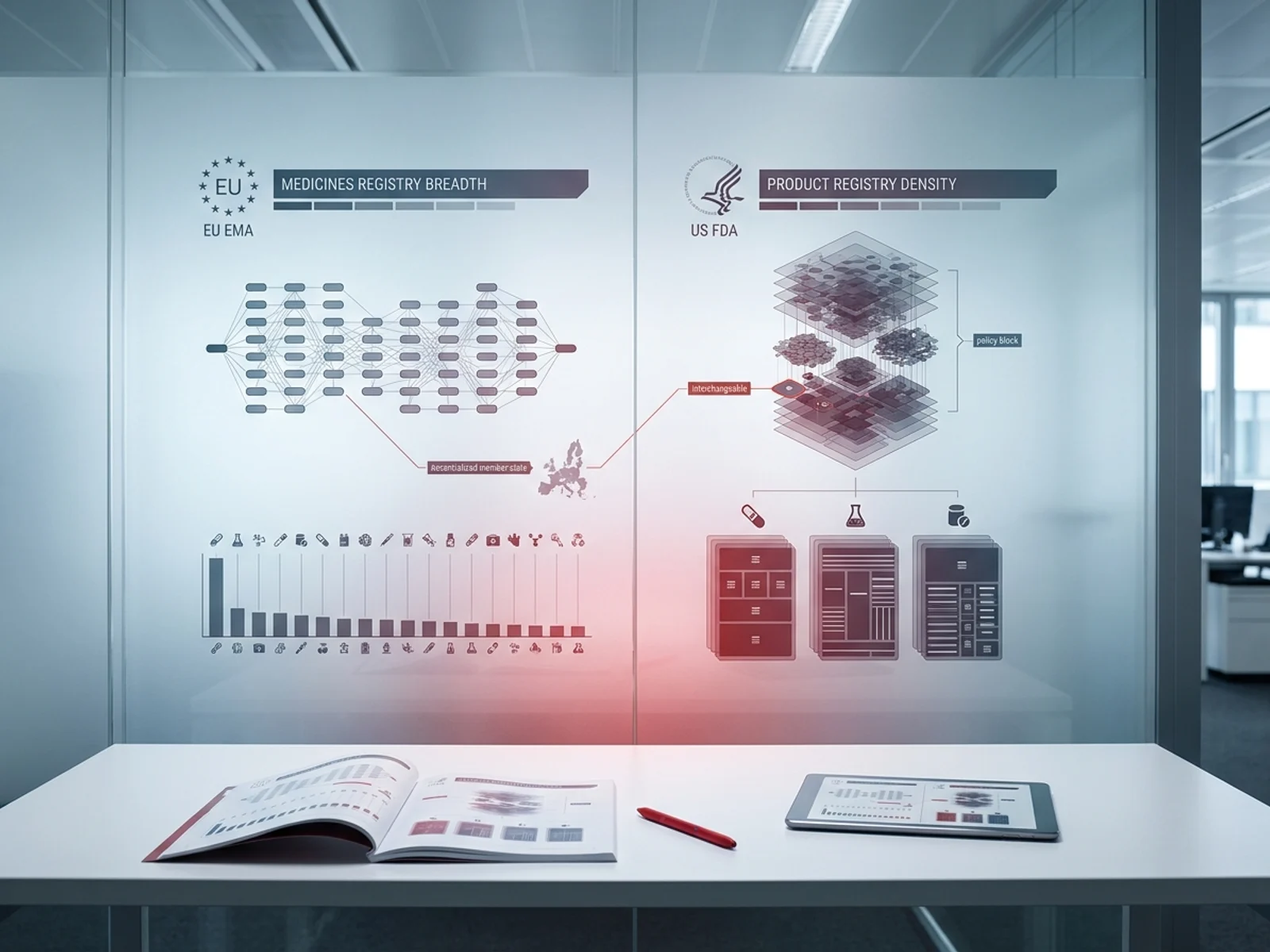
This comparison highlights a structural asymmetry: the EU covers 50% more substances (30 vs. 20), whereas the U.S. has a higher density of product licenses per reference substance (such as 53 adalimumab product entries in the U.S. versus 14 adalimumab medicines in the EU).
The EU Biosimilar Registry: Deconstructing the EMA Medicines Catalogue
To understand the European biosimilar landscape, we must examine the structure of the EMA medicines catalogue. The EMA maintains a master list of all centrally authorised medicines, which includes small molecules, chemical generics, orphan drugs, advanced therapies, and biologics.
An inspection of the EMA's human medicines catalogue reveals a database containing 2,321 centrally authorised human medicine records. Of these, 1,562 currently hold an active "Authorised" status. The remainder of the database consists of historical entries that have been withdrawn (357), applications that were withdrawn during review (265), applications refused by the CHMP (62), lapsed licenses (27), positive scientific opinions (20), expired registrations (17), or revoked authorizations (8).
Within this catalogue, the EMA identifies specific drug cohorts using metadata flags. For example, there are 360 generics, 249 orphan medicines, and 46 priority medicines (PRIME) flagged across the human medicines database. The biosimilar cohort represents a distinct segment:
Cumulative Biosimilars (Any Status): The registry contains 191 biosimilar medicines that have received central marketing authorization since the pathway's inception.
Active Biosimilars (Authorised): Of the cumulative cohort, 151 biosimilar medicines currently maintain active "Authorised" status, meaning they are legally cleared for sale across the EU. The remaining 40 records represent biosimilars that were either withdrawn by the manufacturer for commercial reasons, lapsed, or experienced regulatory expiration.
The EMA registry lists these biosimilars across 30 distinct active substances. This represents a broad geographic and clinical footprint. Because the EU centrally authorizes medicines, a single marketing authorization covers all member states, though actual launch timing and pricing negotiations occur at the individual national level.
The US Biosimilar Registry: Deconstructing the FDA Purple Book
In the United States, biological products are regulated under the Public Health Service Act (PHSA). Standard biologics are licensed under Section 351(a) via a Biologics License Application (BLA), while biosimilars route through Section 351(k), a dedicated abbreviated pathway established by the Biologics Price Competition and Innovation Act (BPCIA) of 2009.
The FDA's primary registry for biological products is the Purple Book. A scan of the Purple Book database identifies 2,175 total biological products (including both 351(a) originator products and 351(k) biosimilars).
Filtering this database specifically for products licensed under the 351(k) biosimilar pathway yields the following registry cuts:
US 351(k) Biosimilar Products: The FDA Purple Book contains 229 biosimilar products.
Distinct Reference Products: These 229 biosimilar products are licensed against just 20 distinct reference products (active originator substances).
Interchangeability Status: A major feature of the U.S. registry is the division of biosimilars based on their substitution status. Of the 229 product entries, 127 are designated as Interchangeable, while 102 are designated as Biosimilar (non-interchangeable). Note that these 229 figures count licensed product entries across strengths and presentations; deduplicated to distinct branded biosimilars, the U.S. has roughly 92 distinct biosimilar products (about 46 of them interchangeable) across those 20 reference products — see our breakdown of interchangeable biosimilars by the numbers.
Comparing this to our companion Purple Book biosimilar analysis, we see that the U.S. market has experienced intense product density around a small number of blockbusters. Rather than introducing biosimilars for a wide range of niche biologics, U.S. developers have focused their pipelines on high-volume oncology, immunology, and ophthalmology assets.
EMA vs. FDA: Structural Asymmetries of the Two Registries
When market-access teams compare the EU count of 191 biosimilars against the U.S. count of 229, they are often comparing apples to oranges. Understanding the structural differences between these two registries is critical to avoiding commercial miscalculations.
1. Distinct Licenses vs. Package-Level Entries
The EMA registry counts "medicines," which represent individual marketing authorizations granted to a specific company for a specific brand name. If a manufacturer registers the same biosimilar substance under two different brand names (a common practice in Europe to serve different co-marketing agreements or parallel trade channels), the EMA registry generates two distinct entries.
Conversely, the FDA Purple Book database is product-centric and maps closer to the National Drug Code (NDC) level. If a manufacturer licenses a biosimilar in multiple strengths, configurations (prefilled syringes vs. autoinjectors), or packaging types, the U.S. registry lists these as separate product rows. This inflates the U.S. count relative to the European medicine count.
2. Reference Product vs. Active Substance
The registries also group active ingredients differently:
The EMA groups medicines by Active Substance (using international nonproprietary names, or INNs). The EMA registry contains biosimilars across 30 distinct active substances.
The FDA groups products by Reference Product Proper Name (which includes the originator's four-letter suffix, such as adalimumab-adbm). The Purple Book lists biosimilars against 20 distinct reference products.
This substance gap is commercial evidence of a broader European pipeline. The EMA has authorized biosimilars for active substances that have no biosimilar competition in the United States, including enoxaparin sodium, follitropin alfa, and teriparatide (which is regulated as a drug in the U.S. rather than a biologic, meaning its competitors route through the Orange Book rather than the Purple Book).
Chronological Trajectory: The Nine-Year Lead and the 2025–2026 Wave
The European Union was the global pioneer in establishing a biosimilar regulatory pathway. The EMA finalized its overarching biosimilar guidelines in 2005, whereas the U.S. Congress did not pass the BPCIA until 2010, and the FDA did not finalize its biosimilar implementation guidance documents until years later.
This regulatory head start created a nine-year lead in approvals:
EU First Approval: The EMA authorized its first biosimilars in 2006—Omnitrope (Sandoz) and Valtropin (Biopartners), both biosimilar versions of the recombinant human growth hormone somatropin.
US First Approval: The FDA did not license its first biosimilar until 2015—Zarxio (Sandoz), a biosimilar version of filgrastim.
To illustrate how this lead has evolved, we can extract the marketing authorization year for the EMA's 191 biosimilars. The chronological trend shows steady growth, followed by an extraordinary wave of approvals in 2025 as major patent cliffs converged.
Annual Biosimilar First-Authorisations in the EU (2006–2026)
2006: 2 medicines (Omnitrope, Valtropin)
2007: 5 medicines (including Retacrit, Binocrit, and Abseamed for epoetin alfa)
2008: 4 medicines
2009: 2 medicines
2010: 1 medicine
2013: 4 medicines (including the first monoclonal antibody biosimilars, Inflectra and Remsima for infliximab)
2014: 3 medicines
2016: 4 medicines
2017: 16 medicines (representing the first wave of rituximab and adalimumab biosimilars)
2018: 16 medicines
2019: 5 medicines
2020: 10 medicines
2021: 9 medicines
2022: 7 medicines
2023: 7 medicines
2024: 19 medicines (as biosimilar pathways opened for new specialties like ophthalmology)
2025: 45 medicines (the largest approval wave in EMA history)
2026 (Partial Year): 11 medicines (as of July 24, 2026)
Note on Registry Metadata: A common data trap when querying the EMA database is using the "Latest EC Decision Date" instead of the "Marketing Authorisation Date." Because the EC decision date updates whenever a manufacturer submits a Type-II variation (such as adding a manufacturing site or updating label safety text), it overstates recent approvals. For example, querying the EMA by latest decision year yields 90 entries for 2026, but only 11 of those represent first-time marketing authorizations. Our analysis strictly isolates the original marketing authorization year to preserve historical accuracy.
In contrast, the U.S. pipeline did not see substantial volume until after 2018. However, because of the higher density of products per reference biologic, once the U.S. pathway opened, the absolute product count quickly surpassed the European count.
Competitive Rankings: Top Biosimilar Substances and Manufacturers in the EU
Analyzing the distribution of approvals across active substances and marketing authorization holders (MAHs) reveals which molecules face the most intense competition and which manufacturers dominate the European landscape.
1. Top EU Biosimilar Substances by Medicine Count
A query of the EMA registry finds that the biosimilar cohort is heavily concentrated in a small number of active substances. Recombinant proteins and early monoclonal antibodies account for the majority of authorized medicines.
Denosumab (30 medicines): Leads the EMA biosimilar cohort. This massive count is driven by the patent cliff of Amgen's Prolia and Xgeva, which triggered a rush of filings in 2024 and 2025.
Pegfilgrastim (16 medicines): Highly competitive, with Sandoz, Coherus, Mundipharma, and others fielding long-acting granulocyte colony-stimulating factor (G-CSF) options.
Ustekinumab (14 medicines): A major battleground supporting the immunology cluster, competing directly against Janssen's Stelara.
Adalimumab (14 medicines): The target of the first massive immunology patent cliff. In Europe, these products launched simultaneously in late 2018, driving immediate price erosion.
Aflibercept (13 medicines): The leading ophthalmology asset, targeting Regeneron and Bayer's Eylea.
Bevacizumab (11 medicines): The leading oncology biologic target, competing with Roche's Avastin.
Trastuzumab (10 medicines): Targets Roche's breast cancer blockbuster Herceptin.
Filgrastim (10 medicines): The first therapeutic protein biosimilar class, which has achieved near-complete market conversion in many EU countries.
Teriparatide (10 medicines): Sourced from Eli Lilly's Forteo, providing osteoporosis treatment access.
To see how these individual molecules compare in clinical detail, refer to our guide on Stelara biosimilars compared.
2. Leading EMA Marketing Authorization Holders
The European biosimilar market is moderately concentrated, with the top five manufacturers holding nearly half of all marketing authorizations.
Sandoz GmbH (17 authorizations): The pioneer of the European biosimilar market, maintaining its lead across growth hormones, immunology, and oncology.
Celltrion Healthcare Hungary Kft. (15 authorizations): The South Korean developer that pioneered monoclonal antibody biosimilars in Europe, maintaining its position through Remsima, Truxima, and Herzuma.
Biosimilar Collaborations Ireland Limited (14 authorizations): Operating as Pfizer's European biosimilar vehicle, holding marketing authorizations across multiple oncology and immunology assets.
Samsung Bioepis NL B.V. (13 authorizations): The joint venture between Samsung Biologics and Biogen, holding authorizations for major immunology (Flixabi, Imraldi, Benepali) and oncology biosimilars.
Accord Healthcare S.L.U. (11 authorizations): The commercial vehicle of Intas Pharmaceuticals, focused on high-volume oncology and supportive care products.
Stada Arzneimittel AG (8 authorizations): The German generics giant, which has expanded into biosimilars through licensing partnerships.
In the United States, BLA ownership is organized differently, and co-development partnerships are structured through local commercialization entities rather than centralized European hubs. However, the same global manufacturers—Sandoz, Celltrion, Pfizer, and Samsung Bioepis—dominate the U.S. registry, though they face different pricing and rebate walls.
Substitution Economics: Payer Strategy and Interchangeability Designations
The clinical and regulatory barriers to biosimilar authorization have largely been solved in both the EU and the US. Today, the central barrier is commercial market access. The commercial performance of a biosimilar is governed by how insurance plans and national health systems manage pharmacy-level substitution.
The U.S. Interchangeability Model
In the United States, the BPCIA established a two-tiered approval system:
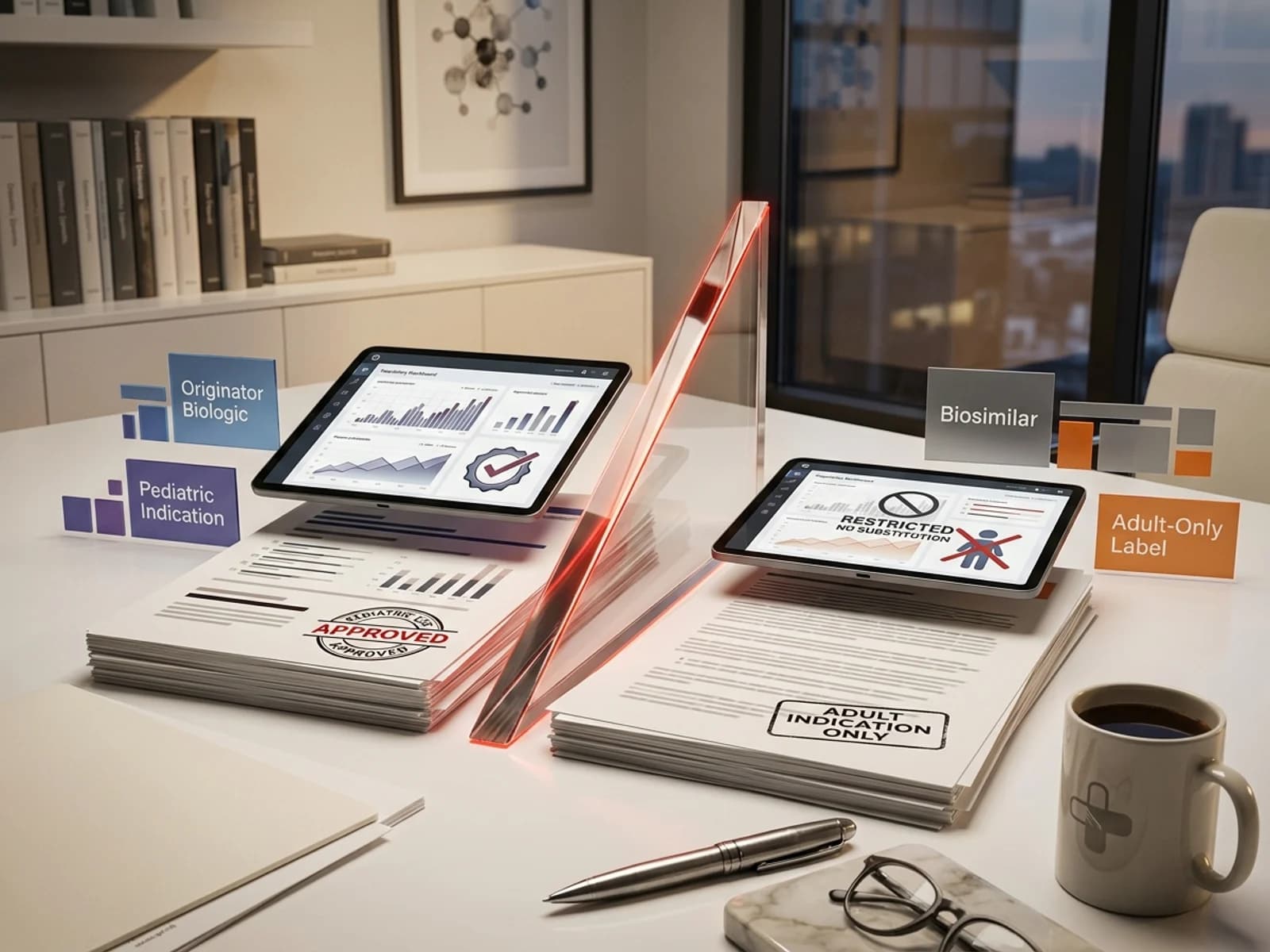
Biosimilar: The product is highly similar to and has no clinically meaningful differences from the reference product. It can be prescribed, but a pharmacist cannot substitute it without the explicit consent of the prescribing physician.
Interchangeable: The manufacturer must provide additional evidence—often involving clinical switching studies—to demonstrate that the product can produce the same clinical result in any given patient and that switching back and forth does not increase safety risks.
Under U.S. law, an Interchangeable biosimilar may be substituted for the reference product at the pharmacy counter without the intervention of the prescribing healthcare provider, subject to state-specific pharmacy practice laws. This designation is highly valued by U.S. market-access teams because it bypasses physician hesitation and allows automatic substitution.
To review the specific counts and BLA entries that have secured this designation, see our breakdown of interchangeable biosimilars by the numbers. For the latest regulatory changes, review the streamlined FDA biosimilar interchangeability pathway, which has simplified the evidence requirements for developers.
The European Decentralized Model
The European Union operates under a completely different paradigm:
Centralized Scientific Evaluation: The EMA evaluates biosimilars for safety, efficacy, and quality. If the EMA approves a biosimilar, it is scientifically declared comparable to the reference biologic.
Decentralized Substitution Decisions: The EMA does not issue interchangeability designations. Instead, decisions regarding pharmacy-level substitution, tender design, and automatic replacement are left to the individual national health authorities of the 27 EU member states.
Because there is no centralized "interchangeable" tier, European member states have developed their own unique access and substitution frameworks:
Germany: After years of physician-led prescribing with only rebate-contract-based substitution (under the Aut-idem rules' §40a and §40b mechanisms), Germany introduced mandatory pharmacy-level substitution of biologics with lower-cost biosimilars. The Medicines Directive (AM-RL) §40c rule took effect on April 1, 2026, requiring pharmacies to dispense a biosimilar when one is available that matches the prescribed product in strength, pack size, dosage form, container, indication, and route of administration—unless the physician explicitly forbids substitution.
France: The national health system allows pharmacy substitution of biosimilars under a restricted list managed by the ANSM, with physician "do not substitute" (non-substituable) overrides permitted.
Nordic Countries (e.g., Norway and Denmark): These markets rely on centralized, national-level tenders. The government selects the lowest-priced biosimilar as the national winner, and health systems mandate that hospital pharmacies switch 100% of patients to the preferred agent. This has led to rapid, near-instantaneous biosimilar uptake exceeding 95% within months of launch.
This geographic variation means that a biosimilar manufacturer entering the EU must navigate 27 different commercial models. While the EMA marketing authorization is central, the commercial strategy must be local, adapting to the tender dynamics of each country. To see how this contrasts with other non-U.S. jurisdictions, read our report on the Korea MFDS biosimilar reform, which highlights another model of regulatory alignment.
Frequently Asked Questions
Why did the EU authorize biosimilars nine years before the US?
The European Union established a comprehensive, dedicated regulatory framework for biosimilars (Part II of Annex I to Directive 2001/83/EC) in 2003–2004, enabling the EMA to issue scientific guidelines and authorize the first biosimilar (Omnitrope) in 2006. In contrast, the United States did not establish an abbreviated regulatory pathway for biological products until the passage of the BPCIA as part of the Affordable Care Act in March 2010. The FDA then required several years to issue draft guidance documents, finalize scientific requirements, and resolve patent litigation frameworks before licensing its first biosimilar (Zarxio) in March 2015.
Does the EU have an interchangeability or automatic-substitution designation like the US?
No. The EMA centrally evaluates and authorizes biosimilars for safety and efficacy, declaring them biosimilar to their reference products, but it has no mandate to designate them as "interchangeable" or "substitutable." Decisions regarding pharmacy-level substitution, automatic replacement, physician override rules, and competitive bidding tenders are governed entirely by the national health authorities of the individual EU member states.
Which active substance has the most EU biosimilars, and why?
Denosumab leads the EMA biosimilar cohort with 30 marketing authorizations. This high concentration is driven by the impending patent expiration of Amgen's blockbusters Prolia (for osteoporosis) and Xgeva (for bone metastases). Because denosumab represents a massive, multi-billion-dollar global market split between retail osteoporosis and oncology supportive care, major generic and biosimilar developers (including Sandoz, Celltrion, Samsung Bioepis, and Teva) filed parallel applications under different brand names in 2024 and 2025 to capture separate commercial channels.
How should a market-access team interpret the difference between EU medicines-count and US product-count?
A market-access team must recognize that the EMA medicines register counts individual marketing authorization licenses (brand names owned by specific corporate entities), which can represent the same physical product sold under different names. The FDA Purple Book database, however, is closer to a package-level registry that includes duplicate entries for different strengths, configurations (vials vs. prefilled syringes), and NDC numbers under a single BLA holder. To compare competitor density accurately, teams should count the number of unique BLA/MAH holders per active substance rather than comparing raw registry row counts.
Sources
European Medicines Agency (EMA). Medicines Register: Centrally Authorised Medicines Catalogue. EMA Centrally Authorised Medicines
U.S. Food and Drug Administration (FDA). Purple Book: Lists of Licensed Biological Products. FDA Purple Book
Generics and Biosimilars Initiative (GaBI) Journal. Biosimilars approved in Europe. GaBI Biosimilar Approvals
European Medicines Agency (EMA). Biosimilar medicines in the EU: Information guide for healthcare professionals. EMA Biosimilar Guide
U.S. Food and Drug Administration (FDA). Biosimilar and Interchangeable Products: Definitions and Framework. FDA Biosimilar Information
IQVIA Institute for Human Data Science. The Impact of Biosimilar Competition in Europe. IQVIA Biosimilars Report
U.S. Code of Federal Regulations. Title 21, Chapter I, Subchapter H — Medical Devices and Biological Products. 21 CFR Part 600-680
German Federal Ministry of Health (BMG). Act on the Reform of the Market for Medicinal Products (AMNOG) and Substitution Rules. German Health Reform
French National Agency for the Safety of Medicines and Health Products (ANSM). Répertoire des médicaments biosimilaires (ANSM Biosimilar Directory). ANSM Biosimilar List