Gilead Sciences occupies a singular position in biopharma: it is the only large-cap company whose franchise risk concentrates in a single therapeutic area — HIV — that simultaneously generates the majority of revenue and defines the company's identity. In FY2025, HIV products contributed $20.752 billion of Gilead's $29.443 billion total revenue, with Biktarvy alone accounting for $14.334 billion. That concentration creates a binary question for every formulary director, payer analyst, and competitive-intelligence team watching Gilead into the 2030s: what happens when Biktarvy's exclusivity ends?
The answer, as of mid-2026, is more nuanced than a simple cliff date. October 2025 patent settlements with Lupin, Cipla, and Laurus Labs block US generic Biktarvy until April 1, 2036, and the latest Orange Book product patents do not expire until November 8, 2036. Meanwhile, Gilead has layered a second growth engine beneath the HIV franchise: Yeztugo (twice-yearly lenacapavir for PrEP), approved June 18, 2025 at a $28,218 annual list price, is guided toward approximately $800 million in 2026 revenue (off roughly $150 million in 2025). And the oncology portfolio, once dismissed as a costly distraction after the $21 billion Immunomedics acquisition, reached an inflection point on June 24, 2026 when Trodelvy won first-line triple-negative breast cancer — even as the HR+/HER2- expansion missed.
This is the ninth portfolio dossier in the PharmaDossier series. It follows the same methodology used in the Amgen portfolio dossier, drawing from the FDA Orange Book, CMS NADAC files, CMS HCPCS coding updates, FDA approval letters, and Gilead's Q4/FY2025 earnings disclosures. For cross-portfolio patent-cliff context, see the 2026-2032 patent cliff by the numbers; for HIV safety surveillance data, see HIV antiretrovirals in FAERS by the numbers; and for IRA Medicare negotiation exposure, see IRA Medicare third-cycle selected drugs.
Quick Answer
Scenario question: If I am evaluating Gilead's durability into the 2030s, what protects the HIV franchise after Biktarvy, what is Yeztugo PrEP worth, and how real is the oncology reset?
Direct answer: Gilead enters 2026 with $29.4 billion in FY2025 revenue, led by Biktarvy ($14.3 billion, +7% year-over-year). The HIV moat is freshly extended: October 2025 patent settlements with Lupin, Cipla, and Laurus Labs block US generic Biktarvy until April 1, 2036, and the latest Orange Book product patents (US 11,744,802 and US 12,594,244) expire November 8, 2036. The growth bet is Yeztugo (twice-yearly lenacapavir for PrEP, approved June 18, 2025 at $28,218/year list, HCPCS J0738 injection / J0752 oral, Medicare Part B-covered with no cost-sharing), guided toward approximately $800 million in 2026 (off a $150 million 2025 base). Oncology is mid-reset: Trodelvy won first-line TNBC on June 24, 2026 (ASCENT-03 monotherapy plus ASCENT-04 combination with pembrolizumab), but ASCENT-07 (first-line HR+/HER2- metastatic breast cancer) missed progression-free survival by BICR on November 7, 2025. For payers, the action items are clear: lock in Biktarvy rebate contracts knowing generics are a decade away, build Yeztugo Part B billing workflows now, and prepare Trodelvy site-of-care policies for the expanded TNBC indication.
How big is Gilead's HIV franchise and what is driving growth?
Gilead's HIV franchise generated $20.752 billion in FY2025, representing 70 percent of total company revenue and growing 6 percent year-over-year. The franchise is anchored by three revenue tiers:
Tier 1: Biktarvy ($14.334 billion)
Biktarvy (bictegravir/emtricitabine/tenofovir alafenamide, NDA 210251) is the most prescribed HIV treatment in the United States. In FY2025, Biktarvy generated $14.334 billion in global sales (+7%), of which $11.467 billion came from the US market. The drug's commercial dominance rests on three pillars: a high barrier to resistance (no treatment-emergent resistance observed in pivotal trials through 96 weeks), a once-daily single-tablet regimen, and a favorable renal and bone safety profile compared to tenofovir disoproxil fumarate (TDF)-based regimens. For payers, Biktarvy's NADAC per-tablet cost of approximately $136.70 (roughly $49,000 annually) is a premium price point, but the drug's formulary position is nearly unassailable given its clinical profile and the lack of generic alternatives through 2036.
Tier 2: Descovy ($2.758 billion)
Descovy (emtricitabine/tenofovir alafenamide, NDA 208215) functions as both an HIV treatment backbone and, critically, a PrEP agent. FY2025 revenue of $2.758 billion (+31% year-over-year) reflects the continued shift from Truvada to Descovy in PrEP populations. The 31 percent growth rate is notable because generic Truvada has been available since 2020 — Descovy's growth reflects prescriber and patient preference for the TAF backbone over TDF, driven by bone and renal biomarker advantages. NADAC per-tablet cost is approximately $71.43 (about $25,700 annually). With the launch of Yeztugo, payers should watch for potential cannibalization of Descovy PrEP volume, though the conversion will be gradual given Yeztugo's injectable administration model and different reimbursement channel (medical benefit vs. pharmacy benefit).
Tier 3: Legacy STRs (Genvoya $1.498B, Odefsey $1.167B)
Genvoya (elvitegravir/cobicistat/emtricitabine/tenofovir alafenamide, NDA 207561) and Odefsey (rilpivirine/emtricitabine/tenofovir alafenamide) are declining legacy single-tablet regimens. Combined FY2025 revenue of $2.665 billion represents a managed erosion as patients transition to Biktarvy. Genvoya's NADAC per-tablet cost is approximately $136–143, comparable to Biktarvy, while Odefsey sits at $124–130. These products continue to contribute meaningful revenue but are not growth drivers.
Non-HIV Segments
Beyond HIV, Gilead's FY2025 revenue breaks down as follows:
| Segment (product sales) | FY2025 | YoY Change | Key Products |
|---|---|---|---|
| HIV | $20.752B | +6% | Biktarvy ($14.334B), Descovy ($2.758B), Yeztugo ($150M) |
| Liver disease | $3.217B | +6% | Epclusa/Velpatasvir, Vemlidy, Livdelzi; see Hepcludex bulevirtide coverage guide |
| Oncology (Trodelvy) | $1.4B | +6% | Trodelvy (sacituzumab govitecan) |
| Cell therapy (Kite) | $1.8B | −7% | Yescarta, Tecartus |
| Veklury | $911M | −49% | COVID-19 treatment wind-down |
| Total product sales | $28.9B | +1% | total revenues incl. royalties: $29.4B |
Product sales totaled $28.915 billion; total revenues including royalty, contract, and other income were $29.443 billion. Gilead's 2026 guidance calls for product sales of $29.6–30.0 billion, with HIV growing approximately 6 percent (driven by the Yeztugo ramp) and Yeztugo specifically guided to approximately $800 million on top of $150 million in 2025.
When does Biktarvy go generic and what shields Gilead through the 2036 cliff?
The Biktarvy patent cliff is among the most consequential loss-of-exclusivity events in biopharma. At $14.3 billion in annual sales, it is one of the largest single-product cliffs on record, on the scale of the Humira loss-of-exclusivity event. Gilead has constructed a multi-layered defense.
The October 2025 Patent Settlements
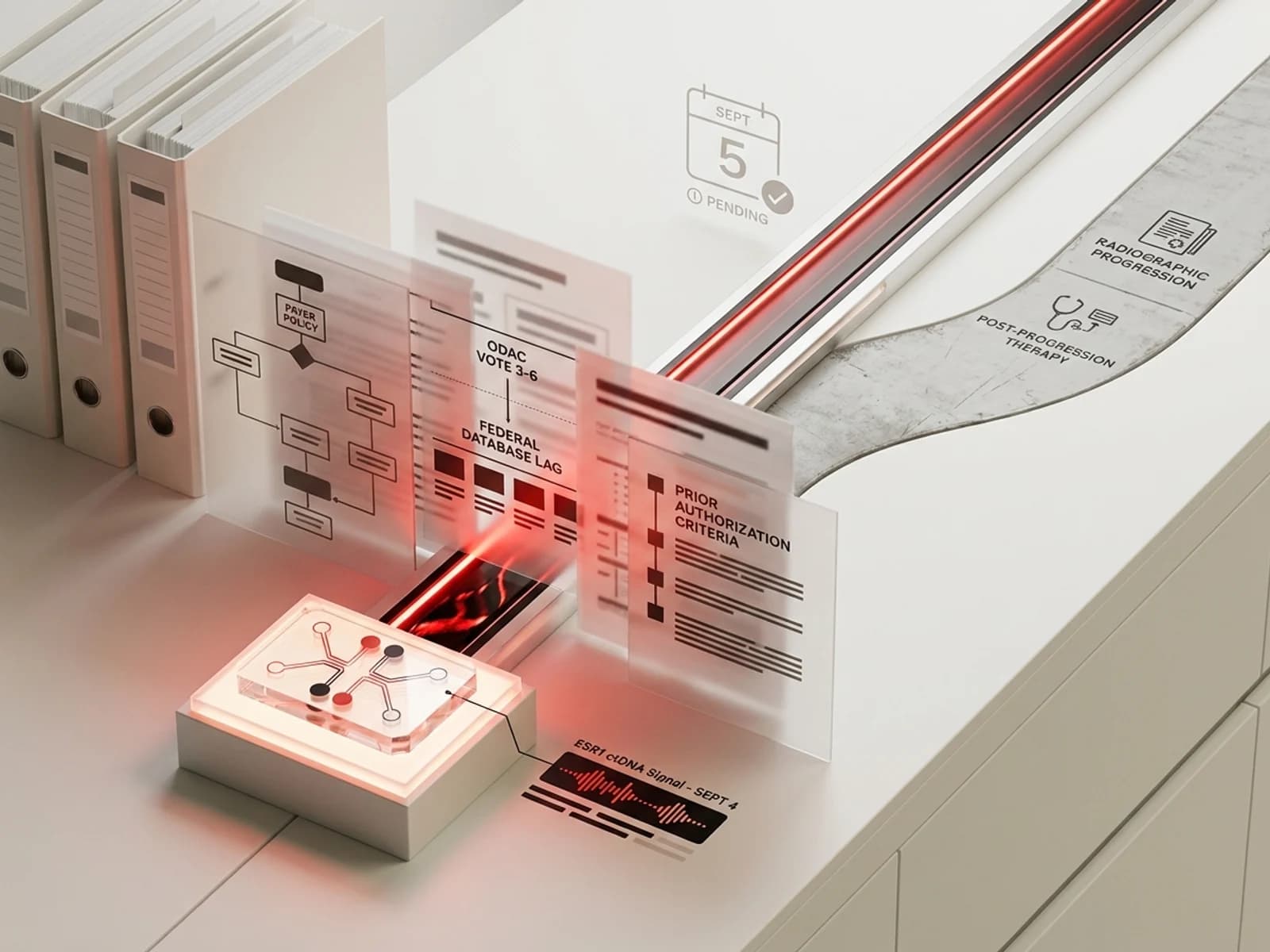
In October 2025, Gilead announced settlement agreements with three generic filers — Lupin, Cipla, and Laurus Labs — that resolve Paragraph IV patent litigation over generic Biktarvy. Under the terms of these settlements, these companies are blocked from launching generic bictegravir/emtricitabine/tenofovir alafenamide in the United States until April 1, 2036. This is a critical date for payers to internalize: regardless of what the Orange Book shows, the practical earliest US generic launch is April 2036.
Orange Book Patent Fortress
The FDA Orange Book lists extensive patent protection for Biktarvy (NDA 210251). The latest listed product patents — US 11,744,802 and US 12,594,244 — expire on November 8, 2036. These patents cover aspects of the bictegravir compound and the fixed-dose combination formulation. Any generic filer must either wait for these patents to expire or successfully challenge them under Paragraph IV — and the October 2025 settlements demonstrate that Gilead has resolved the most advanced challenges through negotiated entry dates.
Orphan Drug Exclusivities
Biktarvy also carries two orphan drug exclusivities that provide additional regulatory barriers in pediatric and neonatal HIV populations:
ODE-468: Exclusive through February 23, 2031
ODE-540: Exclusive through July 30, 2032
While orphan exclusivities do not block generic entry for the broader adult market, they protect Biktarvy's pediatric formulations and may complicate the economics of generic entry in those subpopulations.
The ViiV Healthcare Royalty
Biktarvy's commercial position also carries a known cost: the January 2022 settlement with ViiV Healthcare (GSK's HIV subsidiary) resolved patent litigation in which ViiV alleged that bictegravir infringed patents related to dolutegravir. Under the settlement, Gilead paid $1.25 billion upfront and agreed to a 3 percent royalty on US Biktarvy net sales running through October 5, 2027. At FY2025 US sales of $11.467 billion, this royalty represents approximately $344 million annually. After October 2027, this cost drops off, providing a modest margin tailwind.
Payer Implication: A Decade of Brand Pricing
For formulary managers, the net effect is that Biktarvy will remain a brand-only, single-source product in the United States through at least April 2036 — a full decade from today. This means that rebate negotiations with Gilead on Biktarvy must be evaluated as long-term contracts with no generic leverage point until the mid-2030s. Payers who built their HIV formulary around Biktarvy exclusivity expiring in the early 2030s need to revise those assumptions. The October 2025 settlements extended the effective monopoly by several years beyond earlier estimates. For a broader view of how this cliff stacks against the industry, see the 2026-2032 patent cliff by the numbers.
How is Yeztugo (lenacapavir) PrEP priced, coded, and covered?
Yeztugo represents the most commercially significant HIV prevention product since daily oral PrEP itself. As the first twice-yearly injectable PrEP agent, it addresses the core adherence challenge that limits oral PrEP effectiveness in real-world populations.
FDA Approval and Clinical Foundation
Yeztugo (lenacapavir, NDA 220018) was approved by the FDA on June 18, 2025 for HIV pre-exposure prophylaxis. The approval was based on two landmark Phase III trials:
PURPOSE 1 (cisgender women in sub-Saharan Africa): Zero HIV infections among 2,134 participants receiving lenacapavir, representing a 100 percent reduction in HIV incidence compared to background rates. This is an unprecedented result in PrEP research.
PURPOSE 2 (cisgender men, transgender women, transgender men, and gender non-binary individuals): 2 infections among 2,179 participants, representing a 96 percent risk reduction versus background incidence and 99.9 percent protection among adherent participants.
These results establish lenacapavir PrEP as the most effective PrEP intervention ever tested. The CDC issued a strong recommendation for lenacapavir PrEP in its MMWR publication of September 18, 2025 (mm7435a1), placing it alongside daily oral TDF/FTC and daily oral TAF/FTC as recommended PrEP options.
Pricing: $28,218 per Year List
Gilead set the US list price for Yeztugo PrEP at $28,218 per year, representing the wholesale acquisition cost for two subcutaneous injections annually plus an oral lead-in. This is notably lower than the Sunlenca (lenacapavir for HIV treatment) list price of approximately $42,200 per year, reflecting Gilead's strategic recognition that a prevention product must clear a different willingness-to-pay threshold than a treatment product.
For context against other PrEP options:
| PrEP Agent | Route | Dosing | Approximate Annual Cost |
|---|---|---|---|
| Yeztugo (lenacapavir) | SC injection + oral lead-in | Twice yearly | $28,218 (list) |
| Descovy (TAF/FTC) | Oral tablet | Daily | ~$25,700 (NADAC) |
| Generic Truvada (TDF/FTC) | Oral tablet | Daily | ~$21,800 (NADAC) |
| Apretude (cabotegravir LA) | IM injection | Every 2 months | ~$25,000 (list) |
Yeztugo's list price is higher than daily oral options, but the twice-yearly dosing interval represents a fundamentally different value proposition for populations with demonstrated adherence challenges on daily oral PrEP.
HCPCS Coding: J0738 and J0752
CMS established permanent HCPCS codes for Yeztugo PrEP effective October 1, 2025:
J0738: Injection, lenacapavir, for pre-exposure prophylaxis, 1 mg (for the subcutaneous injection component)
J0752: Oral lenacapavir, for pre-exposure prophylaxis, 300 mg (for the oral lead-in component)
These codes are distinct from the Sunlenca treatment HCPCS code, which was revised to J1961. The separation of PrEP and treatment codes is operationally critical for medical billing teams: Yeztugo PrEP claims submitted under the treatment J1961 code will be denied or misdirected. Practices administering both Sunlenca for treatment and Yeztugo for PrEP must maintain strict coding separation.
Medicare Part B Coverage: No Cost-Sharing
The Medicare Part B PrEP National Coverage Determination (NCD) became effective September 30, 2024, establishing that Medicare Part B covers FDA-approved PrEP medications — including injectable PrEP — with no beneficiary cost-sharing. This coverage determination applies to Yeztugo.
For Medicare beneficiaries, the Part B PrEP NCD means:
No deductible applies to Yeztugo PrEP
No coinsurance applies to Yeztugo PrEP
Coverage includes the injection administration and clinician visit
The product is billed under the medical benefit (Part B), not the pharmacy benefit (Part D)
For commercial payers, the Affordable Care Act's preventive services mandate (Section 2713) requires first-dollar coverage of PrEP with a USPSTF A-rating or CDC recommendation. The CDC's September 2025 strong recommendation for lenacapavir PrEP triggers this mandate, meaning commercial plans must cover Yeztugo without cost-sharing once the recommendation takes effect in plan designs. Payers who delay implementation risk regulatory enforcement and member complaints. For details on how the Part B PrEP NCD operates, consult the CMS PrEP coverage page.
Revenue Trajectory
Gilead guided Yeztugo to approximately $800 million in 2026 revenue, up from roughly $150 million in 2025 — which would still represent one of the faster ramps for an HIV prevention product launch, on a path the company describes as "blockbuster." The revenue trajectory depends on three operational factors: (a) clinic readiness for buy-and-bill administration, (b) payer prior authorization turnaround times, and (c) patient awareness and referral from primary care. Market-access teams should build Yeztugo-specific buy-and-bill workflows now, including J0738/J0752 coding validation, inventory management for a twice-yearly injection, and clinical documentation templates that satisfy the NCD requirements for Part B PrEP coverage.
Where does Trodelvy fit after the first-line TNBC win and the ASCENT-07 miss?
Trodelvy (sacituzumab govitecan-hziy) is Gilead's principal oncology asset, acquired through the $21 billion Immunomedics acquisition in 2020. The drug is an antibody-drug conjugate (ADC) that targets Trop-2, a transmembrane glycoprotein overexpressed in multiple solid tumors, delivering a topoisomerase I inhibitor (SN-38) payload directly to tumor cells.
The June 24, 2026 First-Line TNBC Approval
On June 24, 2026, the FDA approved Trodelvy for first-line metastatic triple-negative breast cancer (TNBC), based on two Phase III trials:
ASCENT-03 (monotherapy, n=558): Trodelvy monotherapy reduced the risk of disease progression or death by 38% versus chemotherapy in first-line metastatic TNBC patients who are not candidates for PD-1/PD-L1 inhibitor therapy, a statistically significant progression-free survival benefit. This trial established Trodelvy as a single-agent option in a setting previously dominated by chemotherapy.
ASCENT-04 / KEYNOTE-D19 (combination with pembrolizumab, n=443, PD-L1 CPS ≥ 10): Trodelvy plus pembrolizumab reduced the risk of disease progression or death by 35% versus pembrolizumab plus chemotherapy in PD-L1-positive first-line TNBC, a statistically significant progression-free survival benefit. This is a critical result because it positions Trodelvy as a replacement for chemotherapy in the pembrolizumab combination backbone — the established first-line treatment backbone.
Together, these two approvals transform Trodelvy from a later-line salvage therapy into a first-line anchor in TNBC, the most aggressive breast cancer subtype. For oncology payers, this means Trodelvy utilization will increase substantially as it moves from a post-progression setting (smaller patient pool, shorter duration) to a first-line setting (larger patient pool, longer duration of therapy). Site-of-care management and infusion center capacity planning should be updated accordingly. For detailed access and billing guidance, see Trodelvy access guide for breast cancer coverage.
The ASCENT-07 Miss
Not all of Trodelvy's expansion program succeeded. On November 7, 2025, Gilead disclosed that ASCENT-07, a Phase III trial evaluating Trodelvy in first-line HR-positive/HER2-negative metastatic breast cancer (the largest breast cancer subtype by volume), did not meet its primary endpoint of progression-free survival by blinded independent central review (BICR).
This is a significant commercial setback. HR+/HER2- metastatic breast cancer represents a far larger addressable market than TNBC. The ASCENT-07 miss means Trodelvy's oncology revenue ceiling is constrained: it will be a TNBC franchise, not a pan-breast-cancer franchise. For payers, this simplifies formulary management — Trodelvy prior authorization criteria can focus on TNBC histology without needing to accommodate HR+/HER2- indications.
Oncology Segment Financial Context
Trodelvy generated $1.4 billion in FY2025 (+6% year-over-year — growth achieved even after the end-2024 U.S. withdrawal of the urothelial/bladder-cancer indication), and cell therapy (Yescarta, Tecartus) contributed an additional $1.8 billion (−7%). The first-line TNBC approval should accelerate Trodelvy's growth in FY2026 and FY2027, but the ASCENT-07 miss caps the upside in HR+/HER2- disease. Analysts and payers should model Trodelvy as a TNBC-anchored franchise (first-line plus later-line metastatic disease), not the $8–10 billion pan-tumor ADC franchise that some models projected before the ASCENT-07 readout.
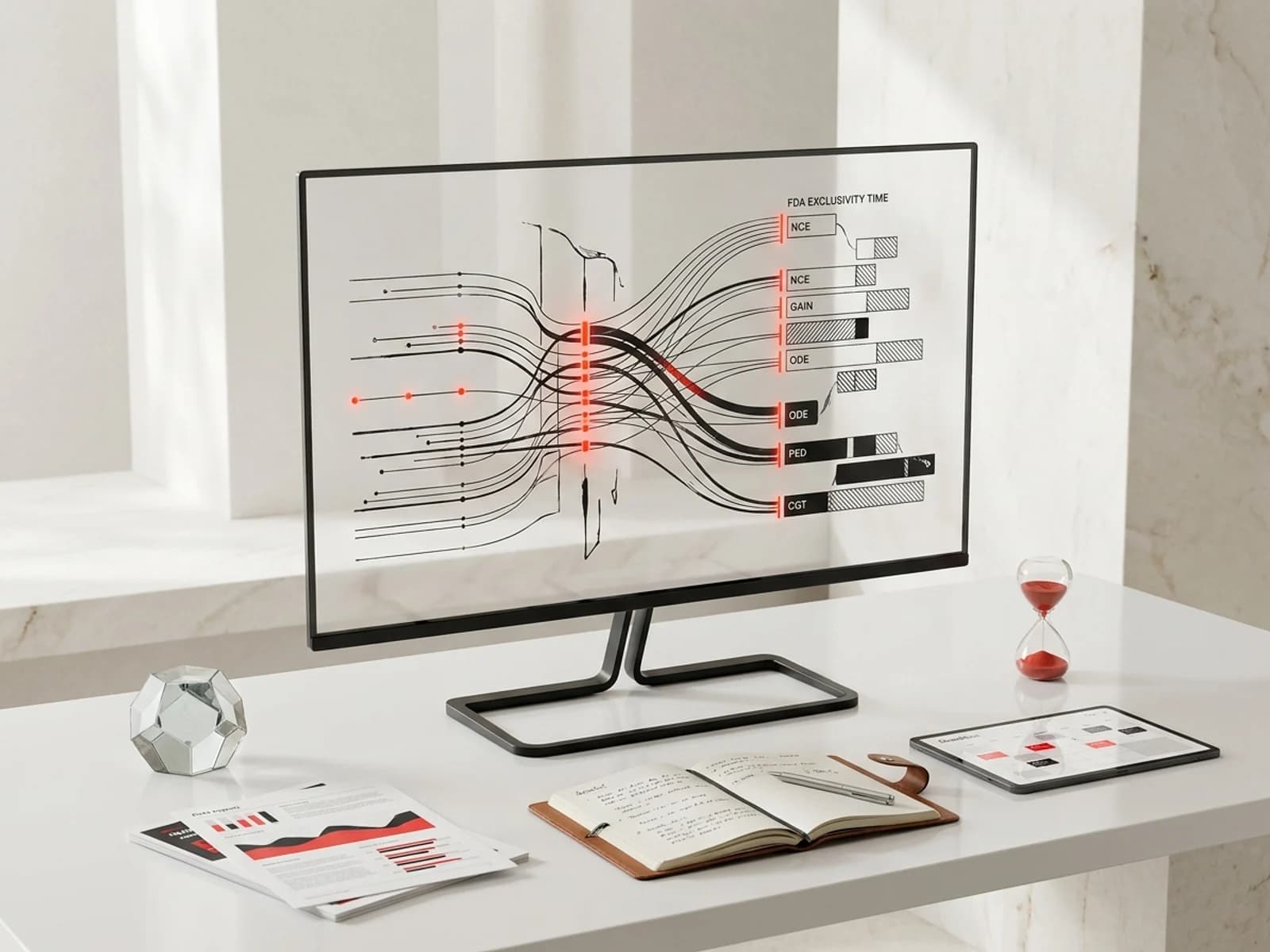
What is the Orange Book patent-cliff picture across Gilead's portfolio?
The table below summarizes the latest Orange Book patent expiry dates for Gilead's key NDA-approved products. These dates represent the latest listed product patents; actual generic entry dates may differ based on settlement agreements, Paragraph IV challenges, and orphan exclusivities.
| NDA | Product | Latest Patent Expiry | Notes |
|---|---|---|---|
| 210251 | Biktarvy | Nov 8, 2036 | ODE-468 Feb 2031, ODE-540 Jul 2032; settlement blocks to Apr 1, 2036 |
| 220018 | Yeztugo | Nov 25, 2040 | PrEP-only NDA; lenacapavir composition patents |
| 215973 | Sunlenca | Aug 28, 2041 | Treatment NDA; separate from Yeztugo PrEP NDA |
| 208215 | Descovy | Jun 29, 2036 | TAF/FTC backbone; both treatment and PrEP |
| 217899 | Livdelzi | Mar 19, 2035 | NCE exclusivity through Aug 14, 2029 |
| 214787 | Veklury | Nov 28, 2041 | Remdesivir; declining COVID revenue base |
| 207561 | Genvoya | Apr 6, 2033 | Earliest cliff in the portfolio; legacy declining STR |
Reading the Patent-Cliff Table
Several patterns emerge for payer planning:
Biktarvy's cliff is real but distant. The November 2036 latest patent expiry, combined with the April 2036 settlement date, means that generic Biktarvy is a 2036 event regardless of pathway. No payer should model generic Biktarvy savings before Q2 2036.
Yeztugo and Sunlenca have separate, distant cliffs. Lenacapavir has two distinct NDAs — Yeztugo (PrEP, NDA 220018) and Sunlenca (treatment, NDA 215973) — with latest patent expiries in 2040 and 2041, respectively. These dates suggest that lenacapavir will be a brand-only franchise for at least 14–15 years from initial launch, providing Gilead with a long commercial runway.
Genvoya is the nearest cliff. With latest patents expiring April 6, 2033, Genvoya is the first Gilead HIV product likely to face generic competition. Given Genvoya's already-declining revenue ($1.498 billion in FY2025), the commercial impact of this cliff is modest relative to Biktarvy.
Livdelzi (seladelpar) is a watch item. Gilead's recently launched primary biliary cholangitis (PBC) therapy carries new chemical entity (NCE) exclusivity through August 14, 2029 and latest patents through March 2035. As a specialty liver product, Livdelzi's commercial trajectory is still early-stage.
NADAC Acquisition Cost Benchmarks
For pharmacy benefit managers, health-system purchasers, and 340B covered entities evaluating Gilead's HIV portfolio costs, the CMS National Average Drug Acquisition Cost (NADAC) provides the most reliable benchmark of actual pharmacy acquisition prices. The following table reflects recent NADAC data for Gilead's key oral HIV products:
| Product | NADAC per Tablet | Approximate Annual Cost |
|---|---|---|
| Biktarvy 50-200-25 mg | ~$136.70 | ~$49,000 |
| Descovy 200-25 mg | ~$71.43 | ~$25,700 |
| Truvada (generic TDF/FTC) | ~$59.75 | ~$21,800 |
| Vemlidy (TAF) | ~$49–52 | ~$17,700–$19,000 |
| Genvoya | ~$136–143 | ~$49,600–$52,200 |
| Odefsey | ~$124–130 | ~$45,300–$47,400 |
| Symtuza (Janssen) | ~$152.95 | ~$55,800 |
| Epclusa (HCV) | ~$866.82 | ~$76,300 (84-day course) |
Interpreting NADAC for HIV Formulary Design
NADAC per-tablet costs confirm that Biktarvy and Genvoya occupy the same acquisition-cost tier (~$136–143/tablet), which is consistent with their shared TAF-backbone composition. Descovy at ~$71/tablet reflects its two-drug composition (vs. three-drug STRs). For plans managing HIV spend, the relevant comparison is not per-tablet cost alone but total cost of care: Biktarvy's clinical profile (no boosting agent, lower drug interaction potential, high resistance barrier) justifies its premium over Genvoya, which requires cobicistat boosting and carries more drug–drug interaction risk.
The Symtuza (darunavir/cobicistat/emtricitabine/tenofovir alafenamide) comparator at ~$152.95/tablet represents the highest-cost daily oral STR in the HIV market, reflecting Janssen's protease-inhibitor-based pricing. Plans seeking to manage HIV spend should maintain Biktarvy as the preferred agent and step-edit Symtuza behind Biktarvy failure or documented darunavir clinical need.
What pipeline and IRA exposure should watchers track next?
IRA Medicare Negotiation Exposure
Under the Inflation Reduction Act, CMS selects high-expenditure Medicare drugs for price negotiation. Gilead's exposure to IRA negotiation risk is concentrated in three products:
Biktarvy: As one of the highest-expenditure drugs in Medicare Part D, Biktarvy is a candidate for future IRA negotiation cycles. A negotiated Maximum Fair Price (MFP) could compress Biktarvy's net revenue per patient, though the clinical necessity of HIV treatment limits the practical discount CMS could impose without disrupting access. For the latest on IRA drug selection, see IRA Medicare third-cycle selected drugs.
Trodelvy: Depending on post-approval Medicare Part B spend following the first-line TNBC approval, Trodelvy could be nominated for negotiation. The expanded indication will increase Part B utilization, potentially pushing Trodelvy above the expenditure thresholds for IRA selection.
Yeztugo: Yeztugo's Part B billing (J0738/J0752) means it accrues Medicare Part B spend, which is subject to IRA negotiation under the Part B track. However, the PrEP preventive-service classification may complicate CMS's negotiation calculus given the no-cost-sharing NCD.
Pipeline Catalysts to Watch
Beyond approved products, several pipeline events will shape Gilead's portfolio through 2028:
Lenacapavir treatment combinations: Gilead is developing lenacapavir-based two-drug and three-drug combination regimens for HIV treatment, aiming to simplify treatment with the same long-acting backbone used in PrEP. Regulatory filings for lenacapavir-based treatment STRs are expected in 2027, which could create a new patent-protected franchise that outlasts Biktarvy.
Trodelvy additional indications: Despite the ASCENT-07 miss in HR+/HER2-, Trodelvy is being evaluated in additional solid tumor indications including non-small cell lung cancer (NSCLC) and endometrial cancer. Positive data in any of these indications would expand the addressable market, though TNBC remains the commercial anchor.
Cell therapy next-generation: Yescarta (axicabtagene ciloleucel) and Tecartus (brexucabtagene autoleucel) generated $1.839 billion in FY2025 but declined 7 percent. Gilead's cell therapy strategy depends on label expansions into earlier lines of therapy (second-line DLBCL was approved in 2022) and operational improvements to reduce manufacturing turnaround times and vein-to-vein costs.
Liver disease portfolio: Epclusa (sofosbuvir/velpatasvir) continues to generate meaningful revenue ($3.217 billion across the liver segment in FY2025), though HCV treatment volumes are declining as the curable patient pool shrinks. Livdelzi (seladelpar) for primary biliary cholangitis represents a new liver growth driver, though PBC is a niche market. For context on the competitive HBV landscape, see Hepcludex bulevirtide coverage guide.
Competitive Threats
Gilead's HIV franchise faces two competitive vectors:
ViiV Healthcare (GSK): Cabotegravir (Cabenuva for treatment, Apretude for PrEP) competes directly with lenacapavir in the long-acting injectable space. However, Apretude requires injections every two months versus Yeztugo's twice-yearly dosing — a significant adherence advantage for Gilead. The ViiV settlement royalty on Biktarvy (3% through October 2027) represents a quantifiable ongoing cost of this competitive relationship.
Generic Truvada and TAF competition: Generic TDF/FTC has been available since 2020 and provides a low-cost daily oral PrEP alternative. However, generic oral PrEP has not eroded Descovy's growth, suggesting that the market is segmenting by patient preference and clinical profile rather than competing purely on price.
FAQ
When will generic Biktarvy launch in the US?
No earlier than April 1, 2036, per the October 2025 patent settlements with Lupin, Cipla, and Laurus Labs. The latest Orange Book product patents (US 11,744,802 and US 12,594,244) expire November 8, 2036. Payers should not model generic Biktarvy savings before mid-2036.
What HCPCS code is used for Yeztugo lenacapavir PrEP?
J0738 (injection, lenacapavir, for pre-exposure prophylaxis, 1 mg) and J0752 (oral lenacapavir, for pre-exposure prophylaxis, 300 mg), both effective October 1, 2025. The Sunlenca treatment code remains J1961. Practices administering both products must use the correct PrEP-specific codes for Yeztugo to ensure proper billing and coverage determination.
How much does Yeztugo PrEP cost and does Medicare cover it?
Yeztugo's US list price is $28,218 per year for the twice-yearly injectable regimen (including oral lead-in). Medicare Part B covers PrEP with no beneficiary cost-sharing under the National Coverage Determination effective September 30, 2024. Commercial plans are also required to cover PrEP without cost-sharing under the ACA preventive services mandate, following the CDC's September 2025 strong recommendation for lenacapavir PrEP.
Did Trodelvy succeed in first-line breast cancer?
Yes for TNBC; no for HR+/HER2-. On June 24, 2026, the FDA approved Trodelvy for first-line metastatic TNBC based on ASCENT-03 (monotherapy) and ASCENT-04/KEYNOTE-D19 (combination with pembrolizumab in PD-L1 CPS ≥ 10). However, ASCENT-07, evaluating Trodelvy in first-line HR+/HER2- metastatic breast cancer, did not meet its primary endpoint of progression-free survival by BICR (announced November 7, 2025). Trodelvy's breast cancer indication is therefore limited to the TNBC subtype.
Sources
Gilead Sciences. "Gilead Sciences Announces Fourth Quarter and Full Year 2025 Financial Results." Press release, February 2026. https://www.gilead.com/news-and-press/press-room/press-releases
U.S. Food and Drug Administration. "FDA Approves Trodelvy for First-Line Treatment of Metastatic Triple-Negative Breast Cancer." FDA news release, June 24, 2026. https://www.fda.gov/drugs/resources-information-approved-drugs
FDA Orange Book: Approved Drug Products with Therapeutic Equivalence Evaluations. U.S. Food and Drug Administration. July 2026. https://www.accessdata.fda.gov/scripts/cder/ob/index.cfm
Centers for Medicare & Medicaid Services. "Medicare Part B Coverage of Pre-Exposure Prophylaxis (PrEP) for HIV Prevention." CMS PrEP coverage page. https://www.cms.gov/medicare/coverage/prEP-coverage
Centers for Disease Control and Prevention. "Recommendations for Use of Lenacapavir for HIV Pre-Exposure Prophylaxis." MMWR Morb Mortal Wkly Rep 2025;74(mm7435a1). September 18, 2025. https://www.cdc.gov/mmwr/
Gilead Sciences. "U.S. FDA Approves Gilead's Yeztugo (Lenacapavir) for HIV Pre-Exposure Prophylaxis." Press release, June 18, 2025. https://www.gilead.com/news-and-press/press-room/press-releases
"Gilead Settles Biktarvy Patent Cases with Lupin, Cipla, and Laurus Labs." FiercePharma, October 7, 2025. https://www.fiercepharma.com/
Centers for Medicare & Medicaid Services. National Average Drug Acquisition Cost (NADAC) weekly reference data. https://www.medicaid.gov/medicaid/prescription-drugs/pharmacy-pricing/index.html
ViiV Healthcare. "ViiV Healthcare Announces Settlement of Patent Litigation with Gilead Sciences." Press release, January 2022. https://www.viivhealthcare.com/