The market entry of generic teriflunomide, the active ingredient in Sanofi's blockbuster multiple sclerosis (MS) disease-modifying therapy Aubagio, is a canonical study in specialty generic commoditization. Approved by the US Food and Drug Administration (FDA) on September 12, 2012, brand Aubagio (NDA 202992) went on to capture billions of dollars in annual revenue as a leading once-daily oral solid for relapsing forms of multiple sclerosis.
However, behind Aubagio's commercial success lay a decade-long legal and regulatory battle under the Hatch-Waxman Act. While generic manufacturers began securing FDA approvals for Abbreviated New Drug Applications (ANDAs) as early as 2018, patent litigation settlements delayed commercial launches until March 2023. This article provides a comprehensive, data-driven analysis of the teriflunomide generic cliff, examining the patent-settlement timelines, the 19 approved ANDAs in the FDA Orange Book, National Average Drug Acquisition Cost (NADAC) price erosion, manufacturing quality events, and the resulting payer formulary strategy.
The Aubagio Patent Cliff: Why Approved 2018 Generics Were Delayed Until 2023
To understand the teriflunomide generic market, one must trace the timeline of Sanofi's patent estate and the resulting litigation settlements. The core compound patent protecting teriflunomide was challenged early by generic developers submitting Paragraph IV certifications within their ANDA filings. Under the Hatch-Waxman framework, a Paragraph IV certification asserts that a patent listed in the FDA's Orange Book is invalid, unenforceable, or will not be infringed by the manufacture, use, or sale of the generic drug.
The first wave of generic teriflunomide ANDA submissions triggered a cascade of patent infringement lawsuits by Sanofi in the US District Court for the District of Delaware. The litigation primarily involved U.S. Patent No. 5,679,705 (covering the teriflunomide compound, which expired in 2016 but was extended via pediatric exclusivity), U.S. Patent No. 6,794,410 (a method-of-treatment patent expiring in 2027), and the longer-dated method patents U.S. Patent No. 8,802,735 (expiring in 2031) and 9,186,346 (expiring in 2034). The '346 patent, in particular, would otherwise have blocked generic entry until August 2034 — the "but-for" date that the settlements accelerated by more than a decade.
The Paragraph IV Litigation Settlements
Rather than risk an adverse court ruling that could immediately invalidate its patents or allow at-risk generic launches, Sanofi systematically entered into patent litigation settlement agreements with multiple generic manufacturers between 2017 and 2019. The key terms of these settlements granted the generic developers royalty-free, non-exclusive licenses to launch their generic teriflunomide products on a specific agreed-upon date: March 12, 2023.
Consequently, although the FDA granted the first generic approval to Watson Laboratories (now a subsidiary of Teva) on July 27, 2018, and subsequently approved several other ANDAs in 2018 and 2019, none of these manufacturers could commercially distribute their products. They were legally bound by the settlement agreements, which effectively preserved Sanofi's monopoly for an additional five years after the initial FDA approvals.
The NCE Exclusivity and Sandoz Challenge
As the March 2023 launch date approached, the regulatory landscape was further complicated by legal disputes surrounding the New Chemical Entity (NCE) exclusivity and pediatric exclusivity extensions. In early 2023, Sandoz and other generic manufacturers faced final regulatory hurdles. Sanofi successfully defended its market position up to the final hours of its exclusivity period, ensuring that the brand retained 100% of the US market share until the settlement date of March 12, 2023.
On March 13, 2023, the patent-settlement gates opened, and a flood of generic manufacturers launched their teriflunomide 7 mg and 14 mg tablets. This multi-source launch stands in contrast to the single-source or delayed generic launches seen in other specialty classes, such as the generic Gilenya launch and price erosion, where a single dosing patent delayed widespread generic competition, or the generic Tecfidera patent-settlement cascade, which experienced a phased approval and launch sequence.
Orange Book Breakdown: Analyzing the 19 Teriflunomide ANDAs and Applicants
The depth of generic competition is the primary driver of price erosion. In the case of teriflunomide, the FDA Orange Book (based on the June 10, 2026 database snapshot) records a total of 20 unique approved applications: Sanofi's brand NDA 202992 and 19 Abbreviated New Drug Applications (ANDAs) held by 19 distinct generic applicants.
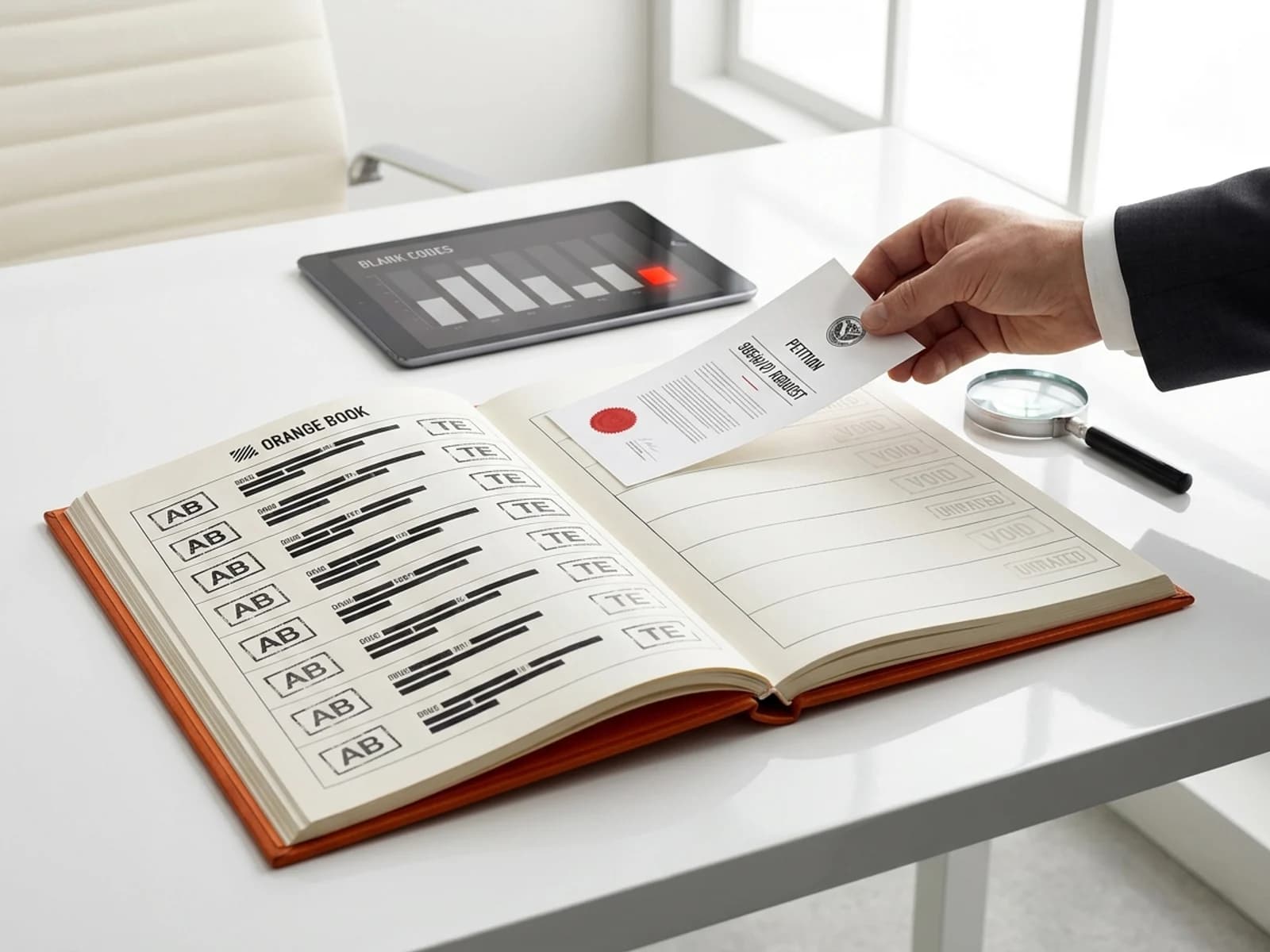
Every approved generic listed below has received an AB rating from the FDA. An AB rating indicates that the generic product is therapeutically equivalent to the Reference Listed Drug (RLD), meaning it is bioequivalent and can be expected to have the same clinical effect and safety profile. In practical terms, an AB rating allows pharmacists to automatically substitute the generic product for the brand-name drug at the point of dispensing, subject to state-level generic substitution laws.
The table below breaks down the 19 approved generic teriflunomide ANDAs, sorted by their official FDA approval date.
| ANDA Number | Generic Applicant | FDA Approval Date | Therapeutic Equivalence (TE) Code |
|---|---|---|---|
| ANDA 209549 | Watson Laboratories (Teva) | July 27, 2018 | AB |
| ANDA 209700 | Teva Pharmaceuticals USA | September 4, 2018 | AB |
| ANDA 209613 | Amneal Pharmaceuticals | September 28, 2018 | AB |
| ANDA 209638 | Aurobindo Pharma | October 26, 2018 | AB |
| ANDA 209601 | Apotex | November 2, 2018 | AB |
| ANDA 209663 | Glenmark Specialty | November 15, 2018 | AB |
| ANDA 209668 | Zydus Pharmaceuticals | November 30, 2018 | AB |
| ANDA 209710 | Sandoz | January 3, 2019 | AB |
| ANDA 209690 | Accord Healthcare | January 7, 2019 | AB |
| ANDA 209572 | Alembic Pharmaceuticals | April 19, 2019 | AB |
| ANDA 209623 | MSN Laboratories | April 24, 2019 | AB |
| ANDA 209702 | Somerset Therapeutics | February 28, 2020 | AB |
| ANDA 209583 | Breckenridge Pharmaceutical | September 24, 2021 | AB |
| ANDA 209598 | Hetero Labs | March 13, 2023 | AB |
| ANDA 209639 | Biocon Pharma | March 13, 2023 | AB |
| ANDA 209555 | Natco Pharma | May 15, 2023 | AB |
| ANDA 209677 | Sola Pharmaceuticals | September 28, 2023 | AB |
| ANDA 209697 | Torrent Pharmaceuticals | April 4, 2024 | AB |
| ANDA 218663 | Concord Biotech | April 7, 2025 | AB |
Key Observations from the ANDA Pipeline
The Exclusivity Bottleneck: The approval dates reveal a significant cluster. Nine of the 19 ANDAs were approved in late 2018 and early 2019. Because these applicants were blocked from launching by their patent settlements, they remained in a holding pattern. When the launch date of March 12, 2023, arrived, these manufacturers launched their products simultaneously, leading to an immediate supply surplus.
Late-Entrant Approvals: Even after the initial 2023 launch, the FDA continued to approve new teriflunomide ANDAs, including Torrent in 2024 and Concord Biotech in 2025. This ongoing entry of new competitors has sustained downward pressure on prices, preventing the stabilization often seen in markets with fewer generic entrants.
Global Manufacturing Base: The applicant list represents a highly diverse global supply chain, spanning major Indian manufacturers (Aurobindo, MSN, Zydus, Alembic, Hetero, Biocon, Concord), European players (Sandoz), and US specialty generic firms (Amneal, Apotex, Teva).
NADAC Cost Analysis: Teriflunomide 14 mg and 7 mg Acquisition Pricing
When multiple AB-rated generic drugs enter a market, price erosion follows a predictable, steep curve. The National Average Drug Acquisition Cost (NADAC), published by the Centers for Medicare & Medicaid Services (CMS), provides the most accurate reflection of the actual invoice price paid by retail community pharmacies to purchase drugs from wholesalers.
The Pricing Data
Based on the June 10, 2026 CMS NADAC database snapshot, the acquisition cost of generic teriflunomide has eroded to a small fraction of the brand-name drug's historical cost.
Teriflunomide 14 mg tablets: The NADAC is $0.72774 per unit (tablet), with an effective date of December 17, 2025.
Teriflunomide 7 mg tablets: The NADAC is $0.62671 per unit (tablet), also with an effective date of December 17, 2025.
At these acquisition rates, the cost of a standard 30-day supply (one tablet daily) is:
14 mg maintenance dose: $21.83 per month
7 mg maintenance dose: $18.80 per month
In comparison, the Wholesale Acquisition Cost (WAC) of brand Aubagio prior to generic entry exceeded $9,000 per month (over $100,000 annually). The generic transition has resulted in a price reduction of more than 99.7% relative to the historical brand WAC.
Furthermore, brand Aubagio no longer has an active NADAC line in the CMS database. This absence indicates that brand sales have declined to negligible levels in the retail pharmacy channel, representing a near-complete therapeutic conversion to generics.
The Price Erosion Curve and Payer Savings
The table below project the annual savings realized by a commercial payer or Medicaid plan per 100 members utilizing teriflunomide, assuming complete generic conversion:
| Parameter | Brand Aubagio (Pre-2023) | Generic Teriflunomide 14 mg (2026) | Absolute Difference | Percentage Reduction |
|---|---|---|---|---|
| Unit Price (Per Tablet) | $300.00 (Estimated WAC) | $0.72774 (NADAC) | $299.27 | 99.76% |
| Monthly Regimen (30 Days) | $9,000.00 | $21.83 | $8,978.17 | 99.76% |
| Annual Cost Per Patient | $108,000.00 | $261.96 | $107,738.04 | 99.76% |
| Annual Cost (100 Patients) | $10,800,000.00 | $26,196.00 | $10,773,804.00 | 99.76% |
For state Medicaid programs and commercial employer sponsors, the teriflunomide transition has removed hundreds of millions of dollars in specialty drug spend from the neurology category. This pricing structure has shifted teriflunomide from a high-cost specialty therapy requiring intensive medical benefit management to a low-cost maintenance drug comparable to generic cardiovascular or metabolic medications.
Quality & Recall Audit: Glenmark's Class II Recall and Manufacturing Deviations
While deep commoditization is highly beneficial for payers and patients from a financial perspective, extreme price erosion can introduce supply chain vulnerabilities. When generic prices fall to less than a dollar per tablet, manufacturers face intense pressure to minimize production costs. This low-margin environment can lead to quality control issues, regulatory violations, and manufacturing actions by the FDA.
The Glenmark Class II Recall (2025)
An analysis of the FDA Enforcement Reports database reveals a notable quality event in the teriflunomide market. On the FDA Enforcement snapshot June 10, 2026, a Class II recall was recorded under recall number D-0334-2025 for teriflunomide 14 mg tablets manufactured and distributed by Glenmark Pharmaceuticals Inc., USA (specifically Glenmark Specialty, under ANDA 209663).
Reason for Recall: Current Good Manufacturing Practice (CGMP) Deviations.
Scope of Recall: The recall involved Lot 17232462 with an expiration date of November 2025.
Recall Classification: The FDA classified this as a Class II recall, which is defined as a situation in which use of, or exposure to, a violative product may cause temporary or medically reversible adverse health consequences, or where the probability of serious adverse health consequences is remote.
Understanding CGMP Deviations and FDA Quality Standards
Under FDA regulations (specifically 21 CFR Parts 210 and 211), all drug manufacturers distributing products in the United States must adhere to Current Good Manufacturing Practice (CGMP) standards. These standards govern every phase of manufacturing, including raw material sourcing, equipment cleanliness, environmental controls, laboratory testing, and documentation.
When the FDA conducts an inspection of a manufacturing facility and identifies deviations from these standards, it issues a Form FDA 483 (List of Inspectional Observations). If the deviations are not resolved promptly, the FDA may issue a Warning Letter, restrict imports, or require a product recall. In the case of Glenmark's teriflunomide recall, the CGMP deviations represented a failure in the manufacturing quality control loop. While the recall was limited to a single lot, it serves as a reminder that low generic prices do not excuse manufacturers from maintaining strict quality compliance.
Implications for Market Access and Supply Chain Risk
For market-access and pharmacy benefit design teams, manufacturing events like Glenmark's 2025 recall highlight the importance of monitoring manufacturer-specific quality records.
While all 19 approved ANDAs are AB-rated and theoretically interchangeable, payers must consider that supply disruptions at one major generic manufacturer can shift volume rapidly to other competitors. In a market with 19 approved suppliers, a recall by a single manufacturer is unlikely to cause a clinical shortage, as other suppliers have the capacity to absorb the demand. However, it underscores the need for pharmacy benefit managers (PBMs) to maintain open formularies that permit dispensing from multiple generic NDCs, rather than contracting exclusively with a single generic manufacturer. Payer teams should also monitor the FDA's Adverse Event Reporting System (FAERS) and FDA Enforcement records to identify trends in manufacturer-specific complaints, balancing lowest-unit-cost contracting with supply-chain security.
Payer Utilization Management & Specialty Market Access Strategies
The transition of teriflunomide to multi-source generic status has altered the utilization management (UM) and formulary tiering strategies employed by commercial insurers, Medicare Part D plans, and state Medicaid programs.
1. Formulary Tiering Strategy
Pre-2023 Brand Era: Brand Aubagio was typically placed on the highest formulary tiers—Tier 4 (Specialty) or Tier 5 (Non-Preferred Specialty)—requiring co-insurance of 20% to 50% or high fixed co-pays. Access was restricted behind prior authorizations and step-therapy protocols.
Post-2023 Generic Era: Generic teriflunomide is now placed on Tier 1 (Preferred Generic) or Tier 2 (Generic) on most commercial and Part D formularies. Payer cost-sharing is low, often $0 to $10 for a 30-day supply, which improves patient adherence.
Brand Exclusion: Payers have aggressively moved to exclude brand Aubagio from their formularies entirely, or to place it on a non-formulary status. Because the generic is AB-rated and available at a 99.7% discount, there is no financial justification for plans to pay for the brand drug, and the brand manufacturer can no longer offer rebates high enough to offset the generic price differential.
2. Prior Authorization (PA) and Step Therapy
With the cost of teriflunomide falling to under $22 per month, the clinical and financial rationale for requiring a prior authorization for the generic has changed.
Removal of PA Restrictions: Many forward-looking commercial plans and Medicaid programs have removed the prior authorization requirement for generic teriflunomide. Instead of requiring complex clinical documentation (such as MRI scans confirming relapse history or documentation of prior treatment failures), plans allow immediate access at the pharmacy counter.
First-Line Preferred Status: Generic teriflunomide has become a preferred first-line oral disease-modifying therapy. Payers use it as a low-cost "step" that patients must try and fail before the plan will authorize coverage for high-cost, branded oral MS therapies (such as Ponvory, Mayzent, or brand Gilenya) or expensive branded monoclonal antibodies (such as Kesimpta or Ocrevus, which cost upwards of $80,000 annually).
Step-Therapy Protocols: A typical MS formulary design might require a patient to trial and fail generic teriflunomide OR generic dimethyl fumarate (Tecfidera) before gaining access to second-line branded agents. For an explanation of the broader substitution rules, access teams should consult the Orange Book TE codes and generic substitution framework.
3. Copay Assistance and Specialty Pharmacy Channels
During the brand era, Sanofi supported patient access through copay cards and patient assistance programs (PAPs), which covered the patient's out-of-pocket costs. Because these programs are prohibited in federal programs like Medicare Part D, and because manufacturers do not offer copay assistance for generic products, patients must rely on generic pricing.
Fortunately, at $21.83 per month, generic teriflunomide is affordable for most patients out-of-pocket, reducing the need for specialty pharmacy management. Payer pharmacy teams have transitioned teriflunomide out of specialty pharmacies (which require cold-chain or high-touch shipping and clinical management) and into standard retail pharmacy networks. This transition reduces administrative costs for both the payer and the provider.
Comparative Landscape in Multiple Sclerosis
To contextualize the teriflunomide market, it is helpful to compare its commoditization profile with other oral disease-modifying therapies in multiple sclerosis.
| Drug Name (Brand) | Active Ingredient | Generic Launch Date | Approved ANDAs (2026) | NADAC Per Tablet (2026) | Monthly Regimen Cost (2026) | Payer Management Status |
|---|---|---|---|---|---|---|
| Aubagio | Teriflunomide | March 13, 2023 | 19 | $0.72774 | $21.83 | First-line preferred; rarely requires PA |
| Tecfidera | Dimethyl Fumarate | August 2020 | 17 | $0.52163 | $31.30 | First-line preferred; step-therapy driver |
| Gilenya | Fingolimod | December 2022 | 19 | $3.5631 | $106.89 | Generic preferred; first-dose observation retained |
As shown in this comparison, all three leading oral MS disease-modifying therapies have now undergone generic commoditization. Teriflunomide (19 ANDAs) and dimethyl fumarate (17 ANDAs) have collapsed to the lowest acquisition costs in the class, while fingolimod (Gilenya) — which opened to 19 generic ANDAs after the Federal Circuit invalidated Novartis's dosing-regimen patent in 2022 — retains a meaningfully higher per-unit price because its 0.5 mg capsule still carries mandated first-dose cardiac observation and specialty-monitoring overhead. Payer strategies across the class therefore position all three low-cost oral generics as the primary step-therapy tier before authorizing branded S1P modulators (Mayzent, Ponvory, Zeposia) or anti-CD20 monoclonal antibodies (Kesimpta, Ocrevus).
FAQs
Why were some teriflunomide ANDAs approved in 2018 but not launched until 2023?
Under the Hatch-Waxman Act, the FDA can approve an Abbreviated New Drug Application (ANDA) if the applicant demonstrates bioequivalence and pharmaceutical equivalence to the reference brand drug. However, an FDA approval does not bypass patent protections. Sanofi filed patent infringement lawsuits against the generic applicants. To resolve these disputes, the manufacturers entered into patent-litigation settlement agreements. These settlements granted the generic companies licenses to launch their products only after a specified date—March 12, 2023. Consequently, the approved products could not be commercially distributed prior to that date.
Are all generic teriflunomide tablets AB-rated and substitutable for Aubagio?
Yes, all 19 approved generic teriflunomide ANDAs listed in the FDA Orange Book carry an AB rating. This rating indicates that the generic formulations have demonstrated bioequivalence to Sanofi's brand Aubagio (NDA 202992). In states with mandatory or permissive generic substitution laws, pharmacists can automatically substitute any of these AB-rated generic products for a prescription written for Aubagio, helping to lower the patient's out-of-pocket costs.
What was the nature of Sandoz's NCE exclusivity challenge?
Prior to the generic launch, Sandoz challenged Sanofi's New Chemical Entity (NCE) exclusivity and subsequent pediatric extensions in court, arguing that the exclusivity period should not block all generic submissions. The courts ultimately ruled in Sanofi's favor, upholding the exclusivity through the final settlement date. This legal battle represents the final barrier that generic manufacturers had to clear before their March 2023 market entry.
How does the 7 mg strength pricing compare to the 14 mg strength?
The CMS NADAC as of June 10, 2026 lists generic teriflunomide 7 mg at $0.62671 per tablet, and the 14 mg strength at $0.72774 per tablet. Although the 14 mg tablet contains twice the amount of active ingredient, its acquisition cost is only 16% higher than the 7 mg strength. This pricing structure is common in generic markets, where the cost of the active pharmaceutical ingredient (API) is a small fraction of the total manufacturing, packaging, and distribution costs.
What should a payer do in response to the Glenmark teriflunomide recall?
Payers do not need to take restrictive formulary action in response to Glenmark's Class II recall (D-0334-2025). Because there are 18 other approved generic teriflunomide suppliers in the market, the recall of a single lot (Lot 17232462) by one manufacturer does not threaten overall market supply. PBMs and insurers should maintain open formularies that permit the dispensing of any AB-rated generic NDC, allowing pharmacies to switch to alternative suppliers (such as Teva, Amneal, or Aurobindo) to maintain patient access.
Sources
U.S. Food and Drug Administration (FDA) Orange Book: Approved Drug Products with Therapeutic Equivalence Evaluations. June 10, 2026 Snapshot. FDA Orange Book Database
Centers for Medicare & Medicaid Services (CMS): National Average Drug Acquisition Cost (NADAC) Files. June 10, 2026. CMS Medicaid Pharmacy Pricing
FDA Enforcement Reports Database: Recall D-0334-2025 Glenmark Teriflunomide. FDA Enforcement and Safety Alerts
Sanofi US: Aubagio (teriflunomide) Prescribing Information and Regulatory Filings (NDA 202992). Sanofi US Product Information
Hatch-Waxman Act Guidelines: Title 21 of the Code of Federal Regulations (21 CFR) Part 314. Electronic Code of Federal Regulations