On August 19, 2026, at 03:17 CEST, Xspray Pharma announced via a regulatory Market Abuse Regulation (MAR) release that the U.S. Food and Drug Administration (FDA) issued a Complete Response Letter (CRL) regarding the New Drug Application (NDA) for Dasynoc (dasatinib oral tablets/formulation). The regulatory decision arrived six days ahead of the application's scheduled August 25, 2026 Prescription Drug User Fee Act (PDUFA) action date.
In financial media and trade headlines, the news was immediately reported under broad "FDA rejects dasatinib" framing. However, Xspray's regulated Market Abuse Regulation disclosure, the resubmission framework under 21 CFR 314.110, and the current competitive landscape in the FDA Orange Book show a different picture for generics strategists, specialty pharmacies, and market-access teams:
Did FDA reject Dasynoc's clinical efficacy or bioequivalence story, and if Xspray resubmits and wins approval, can pharmacies auto-substitute Dasynoc against brand Sprycel, against generic dasatinib ANDAs, or against already-marketed 505(b)(2) comparator Phyrago?
The direct answer is no on both counts:
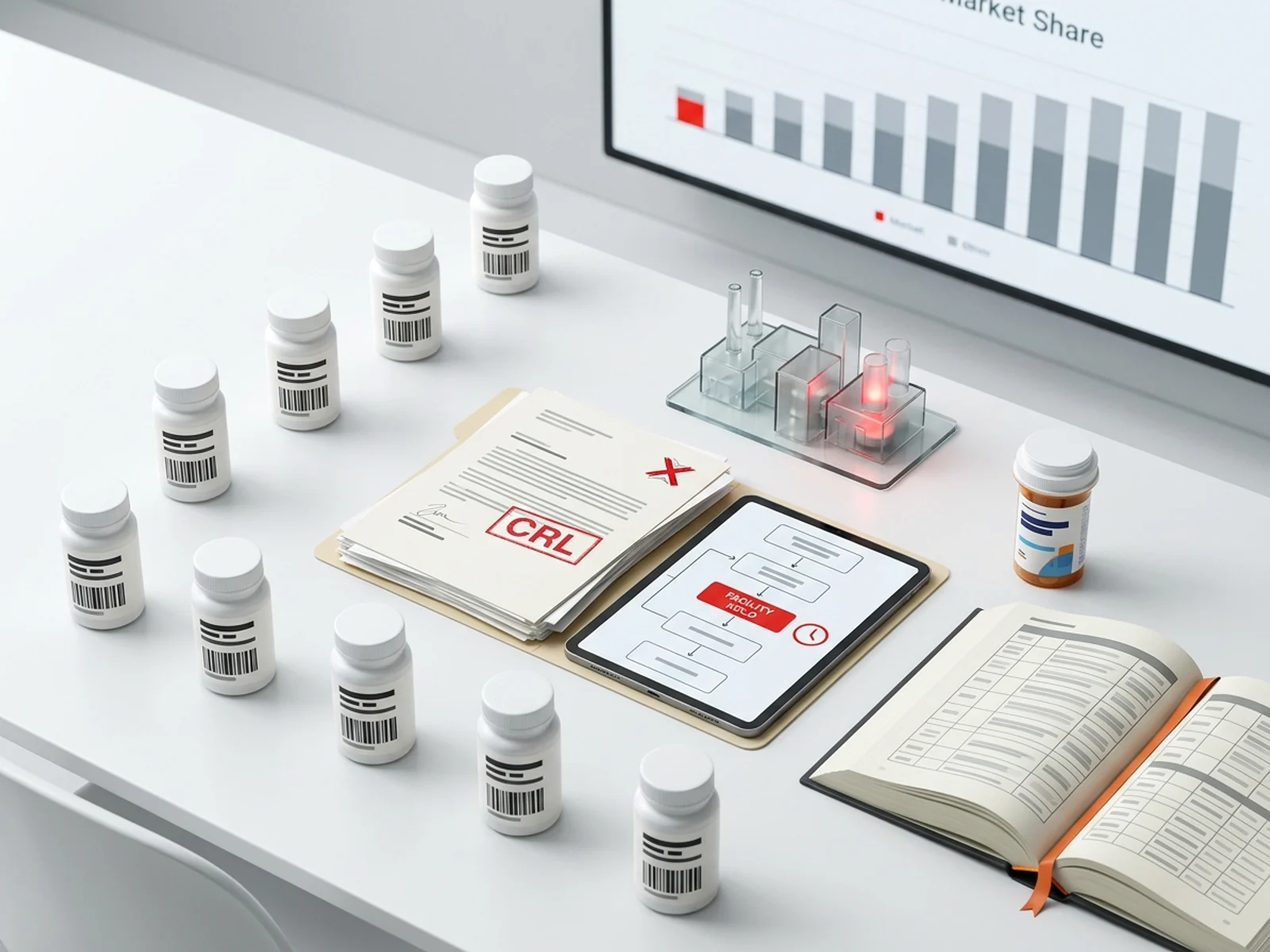
The CRL is a facility and manufacturing letter, not a clinical kill. According to Xspray's regulated disclosure, the remaining deficiencies relate to outstanding Good Manufacturing Practice (GMP) observations at third-party manufacturer NerPharMa, plus a request for additional consecutive commercial-scale batch data. The MAR states FDA did not raise questions on clinical data, bioequivalence, or stability, and that medication-error issues from previous CRLs have been resolved.
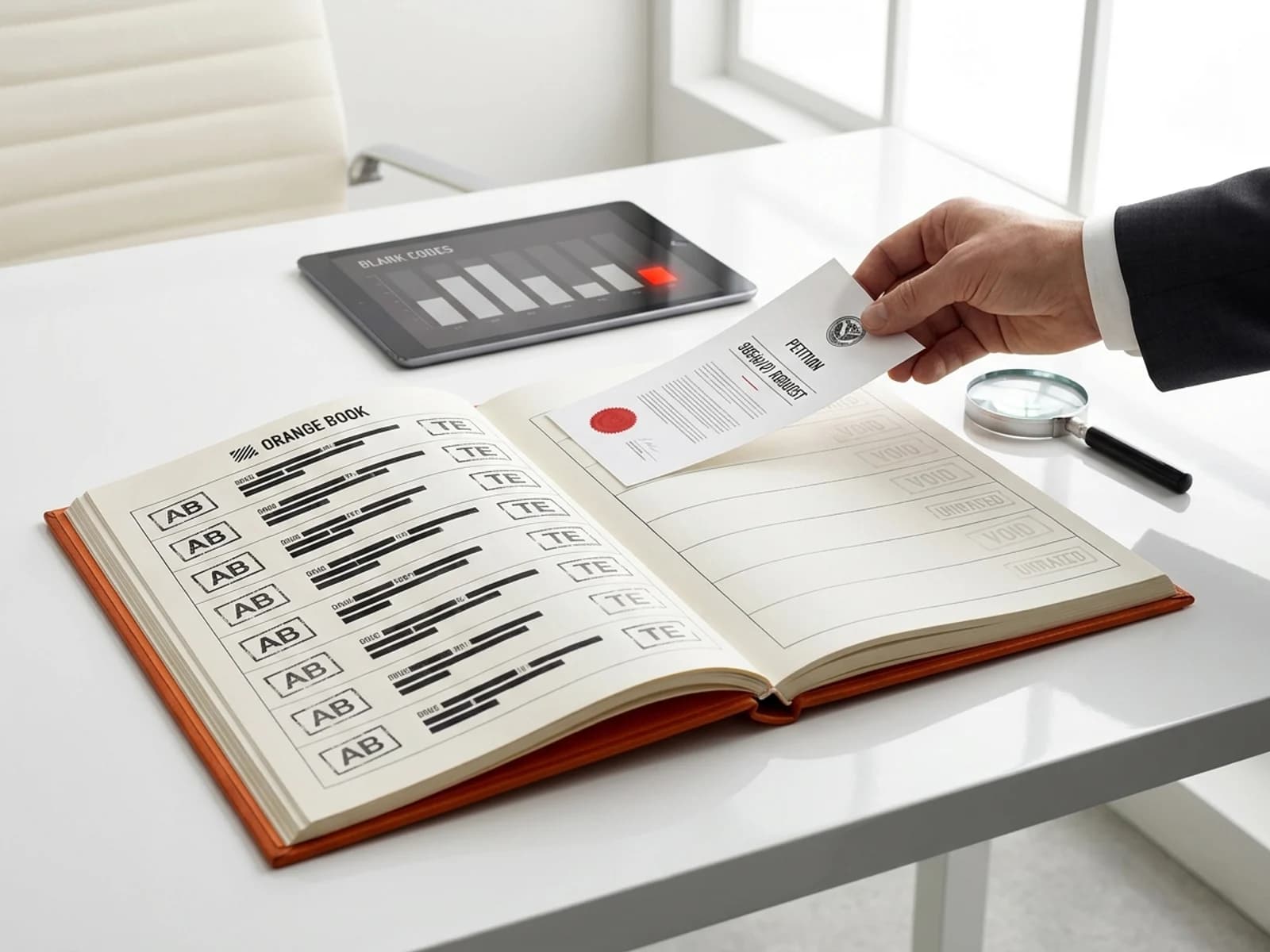
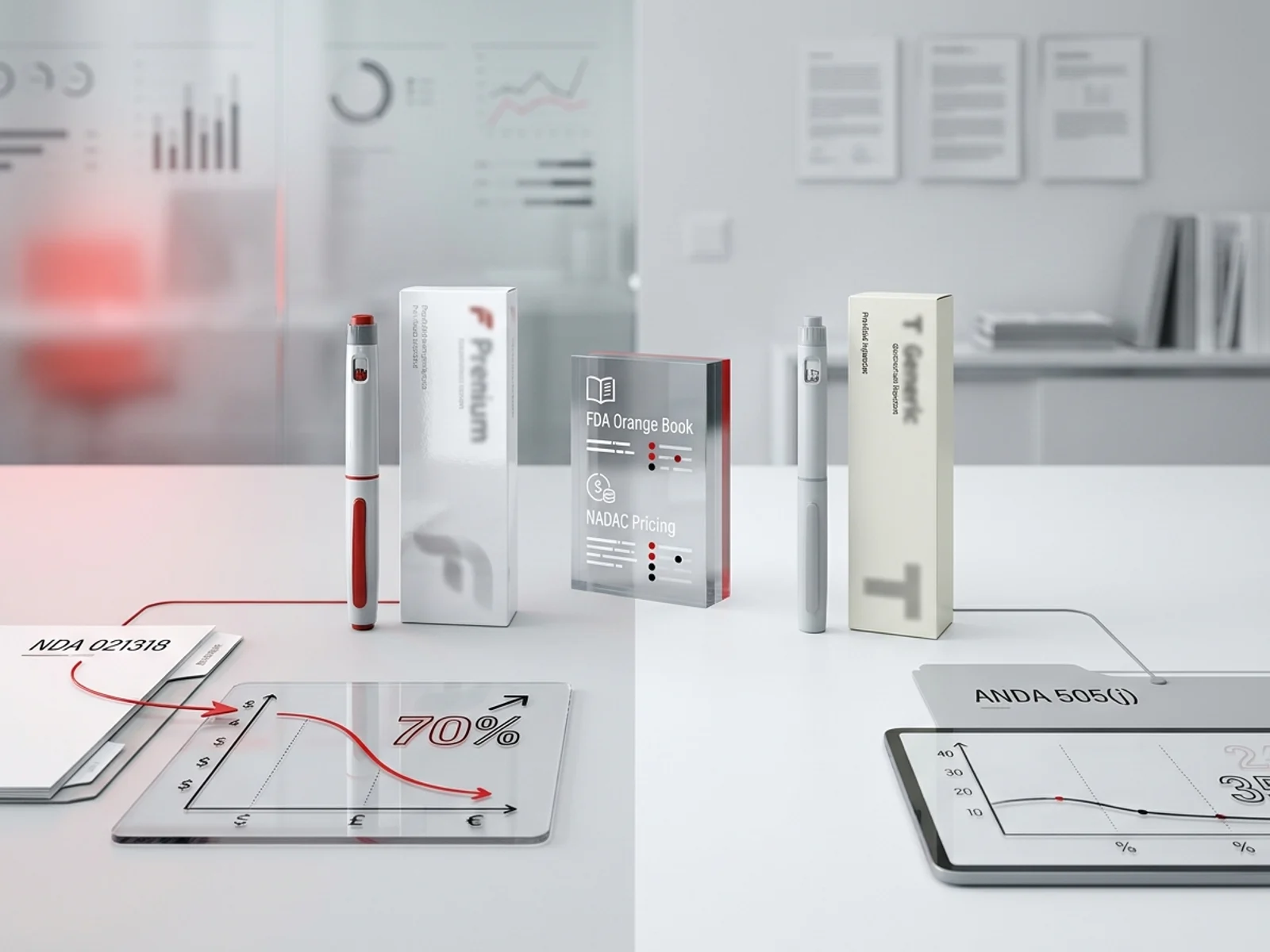
An approved Dasynoc cannot automatically substitute at the pharmacy. Because Dasynoc is submitted under Section 505(b)(2) of the Federal Food, Drug, and Cosmetic Act (FD&C Act), an approval would enter the Orange Book with a blank therapeutic equivalence (TE) rating by default—the exact same regulatory posture currently held by Handa Therapeutics' Phyrago (NDA 216099). Meanwhile, nine generic ANDAs are already approved with full AB therapeutic equivalence. Phyrago's label reports no clinically significant pharmacokinetic differences with omeprazole or famotidine; Sprycel's Drug Interactions section tells clinicians not to administer H2 antagonists or PPIs with SPRYCEL. Neither product lists acid reducers in Section 4 Contraindications.
DASATINIB ORANGE BOOK & REGULATORY ACCESS LANDSCAPE (AUGUST 2026)
| Product / Sponsor | App / Type | RLD / RS | TE Code | Strengths | Acid-reducer |
|---|---|---|---|---|---|
| Sprycel (BMS) | NDA 021986 505(b)(1) | Yes / 100 mg RS | AB | 20, 50, 70, 80,100,140mg | Do not give H2/PPI (DI 7) |
| Phyrago (Handa) | NDA 216099 505(b)(2) | Yes / 100 mg RS | [BLANK] (No Auto-Sub) | 20, 50, 70, 80,100,140mg | No clin. PK Δ omep/famot. |
| 9 Generic ANDAs (Apotex, Teva, etc.) | 9 ANDAs 505(j) | No / No | AB (Auto-Sub) | Multiple (Matched) | Same as RLD DI language |
| Dasynoc (Xspray) | NDA [Unpub] 505(b)(2) | No / No | UNAPPROVED (CRL Issued) | Multiple (HyNap Tech) | Sponsor Claim (Unlabeled) |
Below, we parse what Xspray's August 19 MAR actually disclosed about the CRL, trace the statutory clock under 21 CFR 314.110, present a complete census of the 60 dasatinib product listings in the Orange Book, compare the acid-reducing drug interaction labels between Sprycel and Phyrago, and assess the commercial access hurdles facing Dasynoc upon any future resubmission. FDA has not posted the CRL itself.
What FDA Actually Refused on August 19, 2026
The regulatory document issued to Xspray Pharma on August 19, 2026 is a formal Complete Response Letter issued under 21 CFR 314.110. A CRL indicates that FDA has completed its review cycle for an application but cannot approve it in its current form.
Crucially, the reasons for non-approval disclosed by the sponsor fall entirely within Chemistry, Manufacturing, and Controls (CMC) and current Good Manufacturing Practice (cGMP) compliance:
Facility GMP Observations at NerPharMa: The primary deficiency, as disclosed by Xspray, relates to outstanding GMP observations at third-party manufacturer NerPharMa. NerPharMa's commercial site is in Nerviano, Italy; the MAR does not itself name the city. NerPharMa has told FDA that remediation work at the facility is complete. FDA has not said whether a reinspection is required.
Consecutive Commercial-Scale Batch Data: FDA requested additional production data demonstrating batch-to-batch reproducibility across consecutive commercial-scale batches produced under the final manufacturing process.
No Clinical or Bioequivalence Deficiencies: The MAR release and accompanying documentation explicitly state that FDA raised no questions regarding the clinical safety, efficacy, or pharmacokinetic bioequivalence of Dasynoc.
Resolution of Medication-Error Concerns: Prior questions raised in earlier review interactions regarding product strength nomenclature, labeling, and medication-error prevention were confirmed by FDA as satisfactorily resolved.
XSPRAY DASYNOC CRL DEFICIENCY & RESOLUTION AUDIT
| Review Discipline | FDA Finding | Sponsor Status / Next Step |
|---|---|---|
| Clinical Efficacy & Safety | No questions | Sponsor MAR only; FDA letter not |
| raised (MAR) | posted. | |
| Pharmacokinetics & Bioequivalence | No questions | Sponsor MAR only. |
| raised (MAR) | ||
| Stability Testing | No questions | Sponsor MAR only. |
| raised (MAR) | ||
| Medication-Error Risk | Resolved (MAR) | Prior CRL medication-error issues |
| described as closed. | ||
| Facility CGMP (NerPharMa) | Open (MAR) | NerPharMa reports remediation |
| complete; reinspection undecided. | ||
| Commercial Batch Reproducibility | Deficient / Open | Requires additional consecutive |
| commercial-scale batch dataset. |
As we analyzed in our foundational framework on CMC-only complete response letters and commercial risk, manufacturing-isolated CRLs preserve the underlying clinical asset value but introduce substantial, unpredictable calendar delays tied to agency reinspection queues and data generation.
The Statutory Resubmission Framework Under 21 CFR 314.110
Following receipt of a CRL, an applicant cannot simply submit loose data in ad-hoc correspondence. Under 21 CFR 314.110(b), the applicant must formally respond to FDA by choosing one of three statutory actions:
Resubmit the application: File a complete response addressing all deficiencies cited in the CRL.
Withdraw the application: Formally withdraw the NDA without prejudice to a subsequent submission.
Request a hearing: Request an opportunity for a formal evidentiary public hearing on whether grounds exist for denying approval.
Xspray has confirmed its intent to resubmit the NDA within 2026. However, the subsequent review timeline is governed strictly by PDUFA classification standards.
Class 1 vs. Class 2 Resubmission Cycles
When an applicant files a resubmission under 21 CFR 314.110, FDA conducts an initial triage to classify the submission into one of two tiers:
Class 1 Resubmission (2-Month Clock): Reserved for minor administrative revisions, final draft labeling changes, safety updates, or minor assay methodology details that do not require substantial agency review or site inspections.
Class 2 Resubmission (6-Month Clock): Applied to any resubmission containing complex CMC data, new validation batches, stability protocols, or any item that requires an on-site establishment inspection of a manufacturing facility.
21 CFR 314.110 RESUBMISSION CLOCKS & DECISION RULES
| Resubmission Class | Review Clock Duration | Triggering Criteria |
|---|---|---|
| Class 1 Resubmission | 2 Months from Receipt Date | Minor labeling, simple assay updates, no facility audit. |
| Class 2 Resubmission | 6 Months from Receipt Date | Facility GMP reinspection, consecutive batch data, CMC. |
Because the Dasynoc CRL, as disclosed by Xspray, involves consecutive commercial-scale batch data and unresolved facility observations, a later resubmission is more likely to be classified as Class 2 (6-month review) than Class 1 if FDA requires complex CMC review or a facility inspection. Xspray has not published a class, and FDA has not classified a resubmission. Do not treat a 2-month clock as the base case.
Importantly, Xspray's regulated MAR release did not publish an NDA number or state whether FDA has committed to Class 1 or Class 2 timing. Industry observers should not assume a 2-month turnaround until FDA formally issues its resubmission acknowledgment letter.
Orange Book Census: Nine AB Generics and Phyrago Already Occupy the Market
To understand why Dasynoc's delay is commercially consequential, one must look at the competitive structure of the dasatinib market in the FDA Orange Book: Approved Drug Products with Therapeutic Equivalence Evaluations.
An audit of the FDA Orange Book data files (product file dated August 14, 2026; 48,664 product rows) reveals exactly 60 dasatinib product listings across 11 approved drug applications:
Total Applications: 11 (2 NDAs and 9 ANDAs).
Total Product Rows Listed: 60 dasatinib strength rows (not unique commercial SKUs).
Therapeutic Equivalence (TE) Codes: 54 rows are coded AB; exactly 6 rows have blank TE codes.
Blank TE Code Concentration: All 6 blank TE rows belong to a single application: Phyrago (NDA 216099).
COMPLETE FDA ORANGE BOOK DASATINIB APPLICATION ROSTER
| Appl No. | Applicant / Sponsor | Drug Name | App Type | TE Rating | Approval Date |
|---|---|---|---|---|---|
| NDA 021986 | Bristol Myers Squibb | SPRYCEL | 505(b)(1) | AB (RLD/RS) | Jun 28, 2006 |
| NDA 216099 | Handa Therapeutics LLC | PHYRAGO | 505(b)(2) | [BLANK] (RLD) | Dec 05, 2023 |
| ANDA 202103 | Apotex Inc. | DASATINIB | 505(j) | AB | Jun 10, 2016 |
| ANDA 203180 | Apotex Inc. | DASATINIB | 505(j) | AB | Nov 23, 2021 |
| ANDA 211094 | Teva Pharmaceuticals | DASATINIB | 505(j) | AB | Aug 27, 2025 |
| ANDA 213383 | Dr. Reddy's Labs | DASATINIB | 505(j) | AB | Mar 03, 2025 |
| ANDA 214350 | Lupin Pharmaceuticals | DASATINIB | 505(j) | AB | Aug 25, 2025 |
| ANDA 216261 | Alembic Pharmaceuticals | DASATINIB | 505(j) | AB | Nov 06, 2025 |
| ANDA 216547 | Eugia Pharma | DASATINIB | 505(j) | AB | Apr 22, 2025 |
| ANDA 217217 | Biocon Pharma | DASATINIB | 505(j) | AB | Mar 03, 2025 |
| ANDA 218719 | Zydus Pharmaceuticals | DASATINIB | 505(j) | AB | Mar 03, 2025 |
(Note: Cross-referencing against the Drugs@FDA relational database snapshot of August 16, 2026 reveals 61 product rows and 12 application records. The extra application is NDA 022072 for Sprycel 70 mg, with MarketingStatusID 1 (Prescription) in that snapshot and empty TE rows. It is omitted from the active Orange Book product file. Do not treat 022072 as a second marketed brand solely because Drugs@FDA still lists it.)
Patent and Exclusivity Status
The Orange Book patent file and exclusivity file show the following structural milestones:
Sprycel (NDA 021986): Core composition-of-matter patent US 7,491,725 expired on March 28, 2026, with pediatric exclusivity (
7491725*PED) running through September 28, 2026. Orphan drug exclusivity (ODE-225) expired on December 21, 2025 (pediatric extension expired June 21, 2026).Phyrago (NDA 216099): Protected by 6 unique patents (US 11,202,778; 11,298,356; 11,324,745; 12,433,891; 12,465,606; and 12,544,376) encompassing 120 strength-specific patent listings, all running to January 22, 2041. Phyrago also holds unexpired 3-year Hatch-Waxman new-product exclusivity (
M-307), which expires on December 5, 2026.
This patent and generic entry wave explains why standard multi-source dasatinib price erosion is already well underway, with nine AB-rated generic manufacturers competing directly on commercial and Medicare Part D formularies.
Acid-Reducer Interaction: How Phyrago Preempts Dasynoc's Clinical Story
Dasynoc's core commercial value proposition—developed using Xspray's proprietary HyNap amorphous solid dispersion technology—is formulated to overcome the pH-dependent solubility limitations of standard dasatinib crystalline monohydrate, aiming to allow patients with chronic myeloid leukemia (CML) or acute lymphoblastic leukemia (ALL) to take dasatinib concurrently with acid-reducing agents like proton pump inhibitors (omeprazole, esomeprazole, pantoprazole) or H2 blockers (famotidine).
However, access and formulary teams must recognize that Dasynoc is not the first 505(b)(2) dasatinib to solve this problem. Handa Therapeutics' Phyrago (NDA 216099; DailyMed lists Cycle Pharmaceuticals Ltd. as the U.S. marketer) is already FDA-approved and marketed with explicit label claims distinguishing its gastric acid interaction profile from Sprycel.
A direct comparison of the FDA-approved Prescribing Information in DailyMed establishes the clinical and labeling delta:
SPRYCEL VS. PHYRAGO: ACID-REDUCING DRUG INTERACTION COMPARISON
| Drug / Class | Sprycel (NDA 021986 Label) | Phyrago (NDA 216099 Label) |
|---|---|---|
| Proton Pump Inhibitors (PPIs) (e.g., Omeprazole) | DO NOT ADMINISTER (Drug Interactions, not Section 4 Contraindications) • "Do not administer H2 antagonists or proton pump inhibitors with SPRYCEL." • Omeprazole 40 mg steady state cut dasatinib AUC by 43% and Cmax by 42%. | NO CLINICALLY SIGNIFICANT PK DIFFERENCE • "No clinically significant differences in the pharmacokinetics of PHYRAGO were observed following concomitant use with omeprazole (proton pump inhibitor) or famotidine." |
| H2-Receptor Antagonists (e.g., Famotidine) | Same "do not administer" instruction as PPIs • Famotidine 10 hours prior cut AUC 61% and Cmax 63%. | Same sentence covers famotidine • Famotidine is grouped with omeprazole: no clinically significant PK differences. |
| Locally Acting Antacids | SEPARATE BY 2 HOURS • Simultaneous antacids cut dasatinib AUC by 55% and Cmax by 58%. | SEPARATE / AVOID SIMULTANEOUS • Calcium carbonate antacid cut Cmax 47.9% and AUC 31.7%. • Avoid or separate by 2 hours. |
While Xspray has promoted its HyNap technology as enabling a ~30% dose reduction relative to Sprycel while maintaining bioavailability, these statements remain sponsor marketing claims until evaluated, accepted, and codified in final FDA-approved labeling. Phyrago already holds the approved FDA label demonstrating no clinically significant PK impact from omeprazole or famotidine.
Why an Approved Dasynoc Cannot Auto-Substitute at the Pharmacy
A critical operating concept that separates generic portfolio planning from 505(b)(2) commercialization is the distinction between Abbreviated New Drug Applications (ANDAs) and 505(b)(2) NDAs, as detailed in our guide on the generic entry ANDA vs. 505(b)(2) playbook.
When a retail or specialty pharmacist receives a prescription written for "Sprycel 100 mg," state pharmacy substitution laws govern what may be dispensed:
State Mandatory / Permissive Substitution Laws: Pharmacists are authorized (or mandated) to substitute a lower-cost generic only if the product is rated therapeutically equivalent (AB) to the reference listed drug in the FDA Orange Book.
The 505(j) ANDA Default: All nine approved dasatinib ANDAs (Apotex, Teva, Lupin, etc.) are evaluated under 505(j) against Sprycel. They possess identical active moiety, dosage form, strength, route of administration, and bioequivalence, earning an automatic AB rating. When a doctor writes for Sprycel, the pharmacist can seamlessly substitute an AB generic.
The 505(b)(2) Blank TE Rule: As formalized in FDA's August 2026 final guidance on therapeutic equivalence for 505(b)(2) applications, 505(b)(2) drugs do not receive automatic therapeutic equivalence ratings upon approval. Because they often feature formulation differences, modified excipients, or altered pharmacokinetic absorption curves, they are assigned blank TE fields.
Phyrago's Blank Status: Phyrago is designated as a Reference Listed Drug (RLD) for its own formulation, but its TE field across all six approved strengths is completely blank. A pharmacist cannot auto-substitute Phyrago for Sprycel; it requires an explicit, brand-specific prescription from the oncologist.
Dasynoc's Default TE Posture: Even if Dasynoc resolves its CRL and secures FDA approval, it would enter the Orange Book with a blank TE rating unless FDA later assigns one. As this site's August 2026 TE final guidance article explains, a 505(b)(2) holder typically requests a TE evaluation by citizen petition under 21 CFR 10.25(a) and 10.30, or under the narrow statutory inactive-ingredient exception. That petition is a separate filing, not the default of NDA approval.
DISPENSING & AUTO-SUBSTITUTION WORKFLOW AT SPECIALTY PHARMACY
| Written Prescription | Pharmacist Dispensing & Substitution Options |
|---|---|
| Rx: "Sprycel (dasatinib) 100 mg" | 1. May dispense Brand Sprycel (NDA 021986). 2. MAY AUTO-SUBSTITUTE any AB Generic ANDA (Teva, Apotex, Dr. Reddy's, Lupin, etc.). 3. CANNOT AUTO-SUBSTITUTE Phyrago (Blank TE). 4. CANNOT AUTO-SUBSTITUTE Dasynoc (Blank TE). |
| Rx: "Phyrago (dasatinib) 100 mg" | • MUST DISPENSE Phyrago (NDA 216099). • Cannot substitute Sprycel or generic ANDAs. |
| Rx: "Dasynoc (dasatinib) [Dose]" | • MUST DISPENSE Dasynoc (once approved). • Requires dedicated prescriber demand generation. |
As outlined in our operational guide on Orange Book TE codes and generic substitution workflows, a blank TE code forces a drug to compete as a branded specialty pharmaceutical requiring dedicated sales-force detailing, patient hub services, and separate payer formulary contracting, rather than riding the automatic generic substitution wave.
What Generics and Market-Access Teams Should Watch Next
With the August 19 CRL in place and the August 25 PDUFA milestone lapsed, market-access directors, specialty pharmacy contracting leads, and generic portfolio managers should track three critical milestones:
1. The Resubmission Filing and FDA Classification
Watch for Xspray's official announcement of NDA resubmission. The key operational variable is whether FDA issues a Class 1 (2-month) or Class 2 (6-month) review goal date. Given the requirement for consecutive commercial batch datasets and NerPharMa facility clearance, a Class 2 timeline extending well into 2027 represents the standard regulatory assumption.
2. NerPharMa Inspection Resolution
Track FDA's Inspection Classification Database for NerPharMa. The MAR does not publish a current OAI, VAI, or NAI classification. What matters for the NDA is whether FDA closes the facility observations—with or without reinspection—and accepts the additional consecutive commercial-scale batch data.
3. Formulary Tiering in a Post-Patent Dasatinib Market
As generic dasatinib ANDAs expand their market share following the September 28, 2026 expiration of Sprycel's pediatric exclusivity, commercial and Medicare Part D plans will increasingly place AB generics on Tier 1 / Tier 2 generic specialty tiers with nominal copayments.
For a 505(b)(2) product (Phyrago or a later-approved Dasynoc) placed on a branded specialty tier, payers may require a prior authorization that prefers an AB generic first. That is a contracting pattern, not a rule in the CRL or the Orange Book. Do not treat concurrent PPI use as an automatic medical-exception pathway.
Frequently Asked Questions
Did FDA reject Dasynoc because it failed bioequivalence to Sprycel?
No. Xspray's regulated MAR release dated August 19, 2026 states that FDA did not raise questions regarding Dasynoc's clinical data, bioequivalence, or stability. That is sponsor disclosure of a CRL, not the FDA letter. The remaining items described in the MAR are outstanding GMP observations at NerPharMa and a request for additional consecutive commercial-scale batch data.
Can a retail pharmacist automatically substitute Dasynoc for Sprycel once approved?
No. Dasynoc is an NDA submitted under Section 505(b)(2). Under FDA regulations and the August 2026 therapeutic equivalence final guidance, 505(b)(2) products enter the Orange Book with blank TE codes. Pharmacists cannot automatically substitute a blank-coded 505(b)(2) drug for brand Sprycel or generic ANDAs without an explicit prescription from the physician.
Is Phyrago already an approved, PPI-compatible dasatinib on the market?
Yes. Handa Therapeutics' Phyrago (NDA 216099) was approved by FDA on December 5, 2023 and is marketed in the U.S. by Cycle Pharmaceuticals. Its Prescribing Information reports no clinically significant pharmacokinetic differences with omeprazole or famotidine. Sprycel's Drug Interactions section instructs not to administer H2 antagonists or PPIs with SPRYCEL; Section 4 Contraindications for both labels is "None."
When does the FDA review clock start after Xspray resubmits the NDA?
Under 21 CFR 314.110, the clock begins on the date FDA receives the complete resubmission package. If classified as a Class 1 resubmission, FDA has 2 months to act; if classified as Class 2 (which is typical for manufacturing and facility deficiencies requiring data validation or reinspection), FDA has a 6-month review cycle.
Sources
Xspray Pharma MAR Announcement: Xspray Pharma receives Complete Response Letter (CRL) from FDA for Dasynoc (August 19, 2026)
Xspray Pharma Regulatory Release PDF: Complete Response Letter Release (MFN Storage)
eCFR 21 CFR 314.110: Complete Response Letter to the Applicant
FDA Orange Book Database Files: Orange Book Data Files (August 14, 2026 Update)
DailyMed - Sprycel Prescribing Information: SPRYCEL (dasatinib) Tablets Label (Set ID: 4764f37b-c9e6-4ede-bcc2-8a03b7c521df)
DailyMed - Phyrago Prescribing Information: PHYRAGO (dasatinib) Tablets Label (Set ID: 60976d1e-c415-417f-8168-4e07999a7281)
FDA Drug Approval Package: PHYRAGO NDA 216099s003 Prescribing Information Label
FDA Drugs@FDA Database: Drugs@FDA Relational Data Files