The market access landscape for specialty biologics and complex drug-device combination products has historically been protected by a double moat: molecular patents and device-engineering complexities. Eli Lilly’s Forteo (teriparatide injection) is a prime example. Approved in 2002 as a recombinant human parathyroid hormone analog (1-34) for severe osteoporosis, Forteo remained a multi-billion-dollar brand long after its primary peptide compound patents expired. This persistence was driven by the challenges of replicating its multi-dose pre-filled pen injector, which required generic manufacturers to clear high regulatory and engineering hurdles.
Today, the teriparatide market represents a mature multi-source generic category. Payer response has been swift and aggressive, with pharmacy benefit managers (PBMs) implementing sweeping exclusions of the brand-name product in favor of highly discounted generic equivalents. This analysis explores the regulatory pathways that enabled teriparatide generic entry, the Orange Book landscape of approved applications, the CMS National Average Drug Acquisition Cost (NADAC) data demonstrating the financial impact of generic launches, and the manufacturing recalls and clinical triaging workflows that govern its distribution in specialty pharmacy channels.
Short Answer
Yes, generic teriparatide is widely available in the United States. Eli Lilly’s original brand-name Forteo (approved under NDA 021318) faces direct multi-source generic competition from approved Abbreviated New Drug Applications (ANDAs) held by Teva Pharmaceuticals (ANDA 208569), Apotex Inc. (ANDA 211097), and Amphastar Pharmaceuticals (ANDA 213641). Additionally, Alvogen markets Bonsity (approved under NDA 211939), which represents a follow-on teriparatide product approved via the 505(b)(2) pathway.
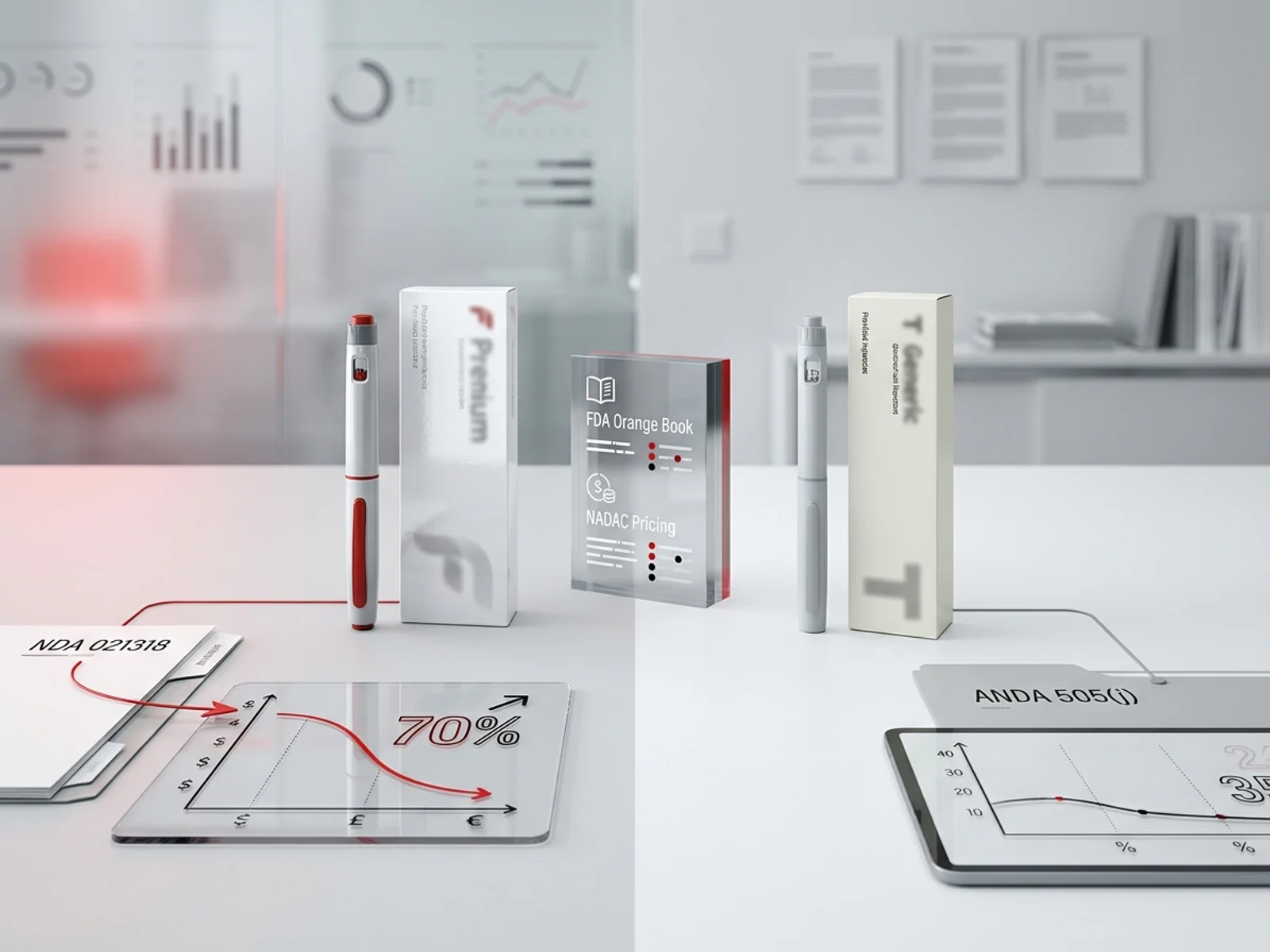
The FDA Orange Book returns 8 unique approved applications when searched for teriparatide: 5 NDAs and 3 generic ANDAs. The relevant osteoporosis-market applications are Lilly's Forteo (NDA 021318), Alvogen's 505(b)(2) follow-on Bonsity (NDA 211939), a 2024 Almaject NDA (218771), and 3 AB-rated generic ANDAs held by Teva (ANDA 208569), Apotex (ANDA 211097), and Amphastar (ANDA 213641). Two additional NDAs surface in the same search but sit outside the Forteo substitution pool: a historical Sanofi Parathar NDA (019498) and Ascendis's Yorvipath (NDA 216490, palopegteriparatide for hypoparathyroidism — a different molecule and indication). According to CMS NADAC data from June 2026, the average pharmacy acquisition cost for brand Forteo (560 mcg/2.24 mL pre-filled pen injector) is $1,842.4658 per unit, while generic teriparatide is priced at $535.0936 per unit (representing a 70.96% cost reduction). In response, commercial PBMs have widely excluded brand Forteo from their preferred formularies, mandating substitution with generic teriparatide.
Who This Is For
This dossier is written for specialty pharmacy directors, formulary managers, PBM clinical analysts, and generic pharmaceutical portfolio planners who must model long-term osteoporosis therapeutic class spend, evaluate drug-device combination product regulatory files, and manage specialty pharmacy fulfillment logistics. For the NDC registry backdrop these teriparatide pens sit inside, see our analysis of the U.S. drug product landscape through NDC data; for how teriparatide approvals compare across regulators, see our review of what the EU approves via the EMA.
The Drug-Device Combination Challenge: Regulatory Pathways for Teriparatide ANDAs
To understand why generic teriparatide entry was delayed for years, it is necessary to examine how the FDA regulates drug-device combination products under 21 CFR Part 4. Teriparatide injection is a combination of a drug (a synthetic peptide drug substance) and a device (a pre-filled pen injector designed to deliver exactly 20 mcg of teriparatide per dose over a 28-day treatment course).
A generic sponsor seeking to launch a substitutable version under the Hatch-Waxman framework has two primary regulatory routes: the 505(j) Abbreviated New Drug Application (ANDA) pathway and the 505(b)(2) New Drug Application pathway.
+---------------------------------------------------------------------------------+
|                    Teriparatide Regulatory Pathway Comparison                    |
+---------------------------------------------------------------------------------+
|                                                                                 |
|  505(j) ANDA Pathway (Teva, Apotex, Amphastar)                                  |
|  - Must prove identical drug substance (synthetic peptide sameness).            |
|  - Device user interface must have "threshold analyses" showing same steps.     |
|  - Automatically substitutable (AB-rated) at the pharmacy counter.              |
|                                                                                 |
|  505(b)(2) NDA Pathway (Alvogen - Bonsity)                                      |
|  - Can utilize reference drug safety data but allow device design variations.  |
|  - Requires separate human factors studies for device differences.              |
|  - Not automatically substitutable unless BX-rated or separate rating granted.  |
|                                                                                 |
+---------------------------------------------------------------------------------+
1. The 505(j) ANDA Pathway
The 505(j) pathway requires the generic sponsor to demonstrate that their product is the "same" as the reference listed drug (RLD) in terms of active ingredient, dosage form, strength, route of administration, and labeling.
Peptide Sameness: The drug substance in Forteo is teriparatide, a recombinant peptide consisting of 34 amino acids. The FDA requires generic applicants to demonstrate that their peptide active ingredient is identical to Forteo's. For synthetic peptides of recombinant origin, this involves advanced chromatography, mass spectrometry, and impurities profiling to show that the generic's impurity profile does not introduce new immunogenicity risks compared to the RLD.
Device User Interface Sameness: The FDA requires that the generic pen injector be functionally equivalent to the Forteo pen. Under the FDA’s guidance for drug-device combination products, the generic device must not require additional patient training or introduce new user-error risks. Manufacturers must conduct "threshold analyses" comparing the physical design, labeling, and user interface of their pen against the Forteo pen. The generic pen must deliver the same number of doses (28 doses of 20 mcg each) and follow the same preparation and injection steps.
When a manufacturer successfully meets these requirements, the FDA grants an AB rating, allowing automatic, pharmacy-level substitution of the generic pen for a Forteo prescription under state substitution laws.
2. The 505(b)(2) NDA Pathway
The 505(b)(2) pathway allows an applicant to rely, in part, on the FDA's finding of safety and effectiveness for an approved drug (such as Forteo) while submitting new data to support changes to the product.
Device Variations: If a manufacturer designs a pen injector that has minor operational differences (e.g., a different priming mechanism, a distinct needle attachment method, or a different number of total doses), they cannot file a 505(j) ANDA because they violate the "same device user interface" rule. Instead, they must file a 505(b)(2) application.
Human Factors and Ergonomic Validation: The 505(b)(2) route requires the manufacturer to conduct extensive human factors validation studies under simulated use conditions. These studies must include representative patient populations (e.g., elderly patients with osteoporotic arthritic hands, visual impairments, or mild cognitive changes) and clinicians. The purpose is to verify that these users can perform all critical tasks—such as dialing the dose, inserting the needle, delivering the full volume, reading the dose window, and resolving errors—without experiencing dosing failures or needle sticks.
Engineering and Physical Testing: The physical mechanism of the pen must undergo rigorous laboratory testing. This includes measuring the injection force (the force required to depress the dose button), the dose accuracy across temperature extremes, the structural integrity of the cartridge glass, and the reliability of the auditory "clicks" that confirm dosing increments.
Substitution Status: Because a 505(b)(2) product has design differences, it does not automatically receive an AB rating to the reference drug. Alvogen’s Bonsity (approved via 505(b)(2) in October 2019) was initially categorized as therapeutically equivalent to Forteo under a special designation, but its lack of standard 505(j) AB status required payers and specialty pharmacies to manage its substitution through explicit formulary preferences rather than automatic retail switching.
3. Human Factors Validation: The Barrier to Entry
The requirement to prove that patients will not make dosing errors when switching between different pens is the single biggest barrier to generic drug-device entry. When a generic manufacturer submits a 505(j) ANDA, they must perform a thorough "Threshold Analysis" of the user interface. This analysis compares the physical dimensions, materials, dialing feedback, and label layout of both devices.
If the generic pen has a button that requires higher force to push, or a dose indicator dial that turns in the opposite direction, the FDA may determine that these differences pose a risk of user confusion. For a patient population with severe osteoporosis—who may also suffer from age-related osteoarthritis—a difference in button resistance or injection duration is not just an aesthetic issue; it can lead to incomplete dosing or needle withdrawal before the full drug volume is delivered. Consequently, the FDA demands that generic sponsors match the injection mechanics of the RLD as closely as possible, ensuring that the user experience is virtually seamless.
FDA Orange Book Analysis: Evaluating Approved Teriparatide Applications
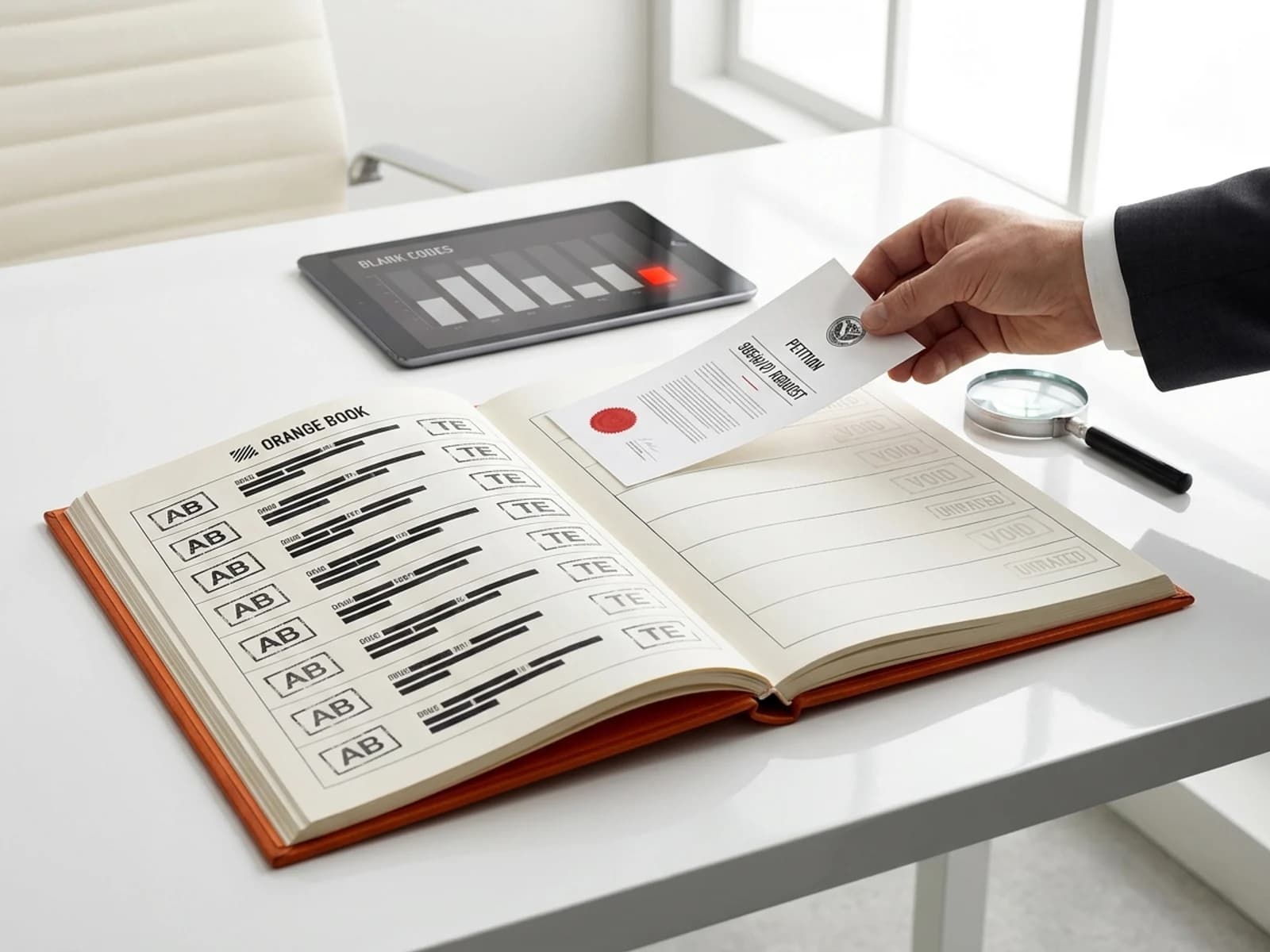
A careful extraction of the FDA Orange Book (as of June 2026) shows 8 applications matching a teriparatide search. The brand, follow-on, and substitutable generics most relevant to Forteo market access are listed below; the Yorvipath and Parathar NDAs are included for completeness because they appear in the same query.
| Application Number | Application Type | Sponsor | Strength | Approval Date | TE Code | Trade / Product Name |
|---|---|---|---|---|---|---|
| NDA 021318 | NDA (RLD/RS) | Eli Lilly | 250 mcg/mL (560 mcg/2.24 mL) | Nov 26, 2002 (current pen Jun 25, 2008) | RS | Forteo |
| NDA 211939 | NDA (505(b)(2)) | Alvogen Pine Brook | 250 mcg/mL (560 mcg/2.24 mL) | Oct 4, 2019 | — | Bonsity |
| NDA 218771 | NDA (RS) | Almaject | 250 mcg/mL (560 mcg/2.24 mL) | Jun 4, 2024 | AP | Teriparatide |
| ANDA 208569 | ANDA | Teva Pharmaceuticals | 250 mcg/mL (560 mcg/2.24 mL) | Nov 16, 2023 | AP | Teriparatide |
| ANDA 211097 | ANDA | Apotex Inc. | 250 mcg/mL (560 mcg/2.24 mL) | Nov 16, 2023 | AP | Teriparatide |
| ANDA 213641 | ANDA | Amphastar Pharmaceuticals | 250 mcg/mL (560 mcg/2.24 mL) | Dec 12, 2025 | AP | Teriparatide |
| NDA 216490 | NDA | Ascendis Pharma | palopegteriparatide (different molecule) | Aug 9, 2024 | — | Yorvipath (hypoparathyroidism) |
| NDA 019498 | NDA (historical) | Sanofi-Aventis | 200 units/vial | Dec 23, 1987 | — | Parathar (historical) |
Strategic Developer Mapping:
Eli Lilly (Forteo): The brand developer dominated the anabolic osteoporosis space for over two decades. Forteo was originally approved in November 2002 as a 250 mcg/mL subcutaneous solution delivered by a pre-filled pen device (560 mcg of total active peptide per pen).
Alvogen (Bonsity): Alvogen secured approval for Bonsity (NDA 211939) on October 4, 2019, the first U.S. FDA-approved 505(b)(2) follow-on teriparatide injection. Because it used the 505(b)(2) route rather than a 505(j) ANDA, it reached market ahead of the first direct-copy generics but is not a textbook AB-rated substitutable at launch.
Teva and Apotex (First 505(j) ANDAs): On November 16, 2023, the FDA approved the first true 505(j) ANDAs for teriparatide — Teva (ANDA 208569) and Apotex (ANDA 211097). Both carry an AP rating, establishing direct therapeutic equivalence (AB-rated) to Forteo and enabling automatic retail-level substitution.
Amphastar (Vertical Integration): Amphastar received approval for ANDA 213641 on December 12, 2025. As a specialist in complex injectables, Amphastar is a vertically integrated developer capable of manufacturing its own peptide API and pen components, rounding out a three-sponsor generic ANDA field (Teva, Apotex, Amphastar) alongside the Bonsity 505(b)(2) follow-on.
Almaject and Ascendis (NDAs outside the Forteo substitution pool): A June 2024 Almaject NDA (218771) and the Ascendis Yorvipath NDA (216490, palopegteriparatide for hypoparathyroidism) also appear under a teriparatide search, but neither is a 505(j) substitutable for Forteo; Yorvipath is a distinct long-acting PTH analog for a different indication, included here only to explain the full 8-application count.
Market Access and Formulary Exclusion: How PBMs Handle Brand Forteo
In the commercial U.S. insurance market, the launch of multi-source AB-rated generics triggers immediate, aggressive cost-containment measures by pharmacy benefit managers (PBMs). Teriparatide represents a textbook case of this market dynamic.
NADAC Cost Erosion Analysis
To quantify the financial impact of generic teriparatide, we analyze the CMS NADAC pricing snapshot from June 2026.
Brand Forteo 560 mcg/2.24 mL Pen (NDA 021318): The NADAC is $1,842.4658 per unit (representing a single 28-day pre-filled pen injector). The annual cost for a patient on brand Forteo stands at $23,952.05.
Generic Teriparatide 560 mcg/2.24 mL Pen (ANDAs): The NADAC is $535.0936 per unit. For the equivalent 28-day pen, the pharmacy acquisition cost is $535.0936. This yields an annual generic acquisition cost of $6,956.22.
Calculated Cost Reduction: $$\text{Savings %} = 1 - \left( \frac{535.0936}{1842.4658} \right) = 70.9577% \approx 70.96%$$ This represents a direct savings of $1,307.37 per month per patient for pharmacy drug spend.
PBM Formulary Exclusion Strategies
Because the generic drug acquisition cost is 70.96% lower than the brand list price, PBMs have implemented aggressive formulary exclusion strategies.
Formulary Exclusion of Forteo: CVS Caremark, Express Scripts, and OptumRx have excluded brand Forteo from their standard commercial formularies. Prescriptions written for brand Forteo are rejected at the pharmacy point-of-sale, requiring clinical exception documentation.
Preferred Specialty Placement: Generic teriparatide (AP-rated) is designated as the preferred specialty drug in the anabolic bone agent category. Payers also list alternative branded agents like Tymlos (abaloparatide) as preferred co-alternatives depending on contracted rebate levels.
Step-Therapy Rungs: Payers commonly mandate that patients fail first-line bisphosphonate therapy (e.g., generic oral alendronate or intravenous zoledronic acid) before they can receive coverage for generic teriparatide, restricting the anabolic class to patients with severe osteoporosis or high fracture risk.
Sterility Recalls and Compounding Risks
Because teriparatide is a sterile aqueous solution designed for daily subcutaneous injection, any manufacturing or compounding quality failure presents significant patient safety and infection risks. The FDA enforces strict current Good Manufacturing Practice (cGMP) standards under 21 CFR Part 4 for combination products to ensure sterility and dose accuracy.
A key quality signal in this class occurred in late 2022, involving compound-source teriparatide.
The TMC Acquisition (Tailor Made Compounding) Recall D-1229-2022
Classification: Class II Recall
Reason for Recall: Lack of sterility assurance. During an FDA inspection of the Tailor Made Compounding facility, inspectors identified systemic failures in environmental monitoring, sterile compounding cleanroom hygiene, and media fill validations.
Recall Scope: The recall affected multiple sterile compounded drug products, including custom-formulated teriparatide injections distributed to clinics and individual patients.
Clinical Significance: Compounded teriparatide is prepared by 503A or 503B outsourcing facilities that buy bulk peptide powder and reconstitute it into multi-dose vials or syringes. Unlike FDA-approved ANDAs, compounded products do not undergo the rigorous combination-product testing required to prove pen-device dose uniformity or long-term sterility. Sterile injectables lacking sterility assurance pose a high risk of bacterial contamination, local injection site infections, or systemic sepsis.
+---------------------------------------------------------------------------------+
|                        Sterile Compounder vs. Approved ANDA                     |
+---------------------------------------------------------------------------------+
|                                                                                 |
|  Compounded Teriparatide (503A/503B)                                            |
|  - Uses bulk peptide powder; manually filled into vials/syringes.               |
|  - High sterility risk; prone to cleanroom processing control failures.          |
|  - Lacks device-engineering validation for consistent dose delivery.             |
|  - Example: TMC Class II Recall D-1229-2022 due to lack of sterility assurance. |
|                                                                                 |
|  Approved Generic ANDA (505j)                                                   |
|  - Manufactured in cGMP-validated industrial facilities.                        |
|  - Undergoes automated sterile fill-finish with 100% inspection.                |
|  - Pen device verified for precise 20 mcg dose uniformity over 28 days.         |
|  - AB-rated; subject to rigorous post-market surveillance and reporting.        |
|                                                                                 |
+---------------------------------------------------------------------------------+
This recall reinforced the importance of FDA-approved ANDAs. Payers and health systems have actively discouraged the use of compounded teriparatide, utilizing the 70.96% discount of approved generic ANDA pen devices to satisfy clinical needs without exposing patients to sterile processing failures.
Specialty Pharmacy Fulfillment & Patient Training Workflows
Because teriparatide injection requires cold-chain distribution, patient self-injection, and regular adherence monitoring, its distribution is managed through specialty pharmacies (such as CVS Specialty, Accredo, or AllianceRx Walgreens Prime).
1. Cold-Chain Logistics Triage and Temperature Monitoring
Teriparatide is a recombinant polypeptide drug product that loses its structural conformation and therapeutic activity if exposed to freezing temperatures or temperatures exceeding standard refrigeration.
Storage Specifications: Prior to dispensing, the product must be stored under constant refrigeration between $36^\circ\text{F}$ and $46^\circ\text{F}$ ($2^\circ\text{C}$ to $8^\circ\text{C}$). Once in the patient's possession, the pen must be returned to the refrigerator immediately after each daily injection. The pen can remain unrefrigerated during use, but it must not be exposed to temperatures outside the $36^\circ\text{F}$ to $77^\circ\text{F}$ ($2^\circ\text{C}$ to $25^\circ\text{C}$) range. A pen injector must be discarded exactly 28 days after first use, even if some drug solution remains in the cartridge, due to preservative degradation and potential sterility loss.
Logistical Quality Control: Specialty pharmacies ship teriparatide using overnight courier services. The drug is packed in insulated containers containing pre-conditioned polyurethane foam panels and phase-change gel packs. To prevent freezing, which is a major risk when shipping in winter months, pharmacies use buffer layers to separate the drug box from the ice packs. Each shipment includes a chemical or digital temperature sensor card. If the patient receives a shipment where the sensor has turned red (indicating a freeze event or heat excursion), the patient is instructed not to inject and to contact the specialty pharmacy hub to coordinate an immediate replacement and carrier investigation.
2. Clinical Context: Transitioning from Bisphosphonates to Anabolics
Formulary managers and clinical pharmacists must understand the clinical positioning that drives teriparatide utilization.
Bisphosphonate Limitations: Traditional osteoporosis drugs like bisphosphonates (e.g., alendronate, ibandronate, zoledronic acid) are anti-resorptive agents—they slow down bone loss by inhibiting osteoclasts. However, long-term use of bisphosphonates is associated with rare but serious safety risks, including osteonecrosis of the jaw (ONJ) and atypical subtrochanteric femur fractures. Additionally, anti-resorptive therapies cannot rebuild bone structure in patients who have already suffered multiple vertebral compression fractures.
The Anabolic Advantage: Teriparatide is an anabolic agent—it directly stimulates osteoblasts to form new bone. It increases bone mineral density (BMD) and restores microarchitectural integrity, making it the preferred treatment for patients at extremely high risk of fracture or those who have failed bisphosphonate therapy.
Safety Gating (Osteosarcoma Warning): Clinical pharmacists must monitor the duration of teriparatide therapy. Historically, teriparatide carried a Boxed Warning regarding the risk of osteosarcoma (bone cancer) based on rodent studies. Although the FDA removed the Boxed Warning in late 2020 based on long-term human surveillance data, the drug’s labeling still recommends that patients should not use teriparatide or other parathyroid hormone analogs (e.g., abaloparatide) for more than a cumulative lifetime duration of two years. Specialty pharmacies maintain electronic lifetime dose trackers to ensure patients are capped at 24 months of therapy.
3. Patient Device Education and User Interface Validation
Because osteoporosis patients are often elderly and may suffer from age-related hand osteoarthritis, visual impairment, or cognitive deficits, specialty pharmacies must conduct device validation training:
Dose Dialing and Delivery: The clinical nurse must verify that the patient can properly dial the dose knob to the "20" marker. The patient must understand that the dose knob must be fully depressed and held down for at least 5 seconds after injection to ensure the complete 20 mcg dose is delivered.
Needle Attachment Mechanics: Patients are instructed to screw on a new sterile pen needle (typically 31G or 32G, 5mm) before each injection. Using a new needle is critical; leaving a needle attached to the pen between doses can allow air to enter the cartridge or cause solution to leak, resulting in inaccurate dosing on subsequent days.
Disposal & Sharps Compliance: The pharmacy coordinates the delivery of a red FDA-cleared sharps container and instructs the patient on safe needle disposal, providing automated reminders when the container is near capacity.
4. Copay Cards and Enrollment Coordination
Under commercial insurance, specialty pharmacies utilize copay assistance cards provided by generic manufacturers (e.g., Teva's or Amphastar's co-pay support programs) to reduce the patient's out-of-pocket obligation to $0, mitigating abandonment at the counter. For government-insured patients (Medicare Part D), federal anti-kickback laws prohibit the use of manufacturer copay cards. In these cases, specialty pharmacies must coordinate with independent charitable foundations (such as the Patient Access Network Foundation or Patient Advocate Foundation) to secure co-pay assistance grants for eligible low-income seniors.
FAQ
Is generic teriparatide AB-rated to brand Forteo?
Yes. Approved generic teriparatide pen injectors manufactured by Teva, Apotex, and Amphastar carry an "AP" rating (representing therapeutically equivalent injectables) in the FDA Orange Book. This means they are therapeutically equivalent and AB-rated to Eli Lilly’s Forteo, allowing pharmacists to substitute them automatically under state generic substitution laws.
Are patient training requirements the same for generic teriparatide pen devices?
Yes, the patient training requirements are identical because the generic pens must carry the same device user interface as the RLD. Under the 505(j) combination product guidelines, the generic pen's operational steps (priming, dose dialing, needle attachment, and injection) must match those of the Forteo pen, ensuring that patients can switch without requiring retraining or experiencing dosing errors.
How does the 505(b)(2) follow-on Bonsity differ from 505(j) ANDA generics in pharmacy substitution?
Alvogen's Bonsity was approved under the 505(b)(2) pathway, which allowed it to be marketed before some of the standard 505(j) generic pens. However, because it was approved via a 505(b)(2) NDA, it was not automatically AB-rated to Forteo at launch. While the FDA later aligned its therapeutic rating to permit substitution, standard 505(j) generic teriparatide pens are the preferred vehicle for automatic pharmacy-level substitution because they are direct copy ANDAs.
Sources
FDA, Approved Drug Products with Therapeutic Equivalence Evaluations (Orange Book). Search criteria: "Teriparatide" (NDAs 019498, 021318, 211939, 216490, 218771; ANDAs 208569, 211097, 213641). https://www.accessdata.fda.gov/scripts/cder/ob/
FDA, Drugs@FDA: Approved Drug Products — approval history for teriparatide ANDAs 208569 (Teva) and 211097 (Apotex), both approved November 16, 2023; ANDA 213641 (Amphastar), approved December 12, 2025; and NDA 211939 (Alvogen Bonsity), approved October 4, 2019. https://www.accessdata.fda.gov/scripts/cder/daf/
Centers for Medicare & Medicaid Services (CMS), National Average Drug Acquisition Cost (NADAC) Files, June 10, 2026 snapshot (prices effective May 20, 2026). NDCs compared: Brand Forteo 250 mcg/mL (00002-8400-01), Generic Teriparatide 250 mcg/mL (Teva 00093-1106-16). https://www.medicaid.gov/medicaid/prescription-drugs/pharmacy-pricing/index.html
FDA, Product-Specific Guidance for Teriparatide Injection (Draft Guidance, revised November 2018). https://www.fda.gov/drugs/guidances-drugs/product-specific-guidances-generic-drug-development
FDA Enforcement Reports and Recalls Database. Recall tracked: TMC Acquisition LLC compounded sterile teriparatide drug products due to lack of sterility assurance (Recall Number D-1229-2022). https://www.fda.gov/safety/recalls-market-withdrawals-safety-alerts
Alvogen Inc., "Alvogen announces U.S. FDA approval of Bonsity™ (teriparatide injection)," October 2019. https://www.alvogen.com/news/
Disclaimer: This article provides independent regulatory, clinical-pipeline, and market-access analysis for biopharma professionals and does not constitute clinical, legal, or investment advice.