Anticoagulants are among the most widely prescribed high-alert medications in modern medicine. While newer direct oral anticoagulants (DOACs) have captured a significant share of the market, traditional non-DOAC agents—including the vitamin K antagonist warfarin, unfractionated heparin (UFH), low-molecular-weight heparins (LMWHs) such as enoxaparin and dalteparin, the synthetic pentasaccharide fondaparinux, and parenteral direct thrombin inhibitors (DTIs) like argatroban and bivalirudin—remain clinical cornerstones in acute coronary syndromes, venous thromboembolism (VTE) prophylaxis, valve replacements, and cardiopulmonary bypass. However, the narrow therapeutic index of these agents necessitates rigorous monitoring and clinical oversight.
This article provides a detailed, class-level descriptive analysis of the non-DOAC anticoagulant safety footprint within the FDA Adverse Event Reporting System (FAERS). Written for clinical pharmacists, hematologists, hospital P&T committees, and pharmacovigilance specialists, this analysis translates raw reporting data into actionable insights for therapeutic monitoring and risk assessment. All figures cited are computed directly from the public openFDA FAERS database extract. Spontaneous reporting systems such as FAERS capture reported events but do not establish direct causality or provide exposure denominators. For broader methodology, see inside 20 million FAERS reports. For DOAC-specific safety comparisons, see DOAC adverse events in FAERS and the DOAC access landscape. For patent and commercial cliffs, see the 2026-2032 patent cliff.
How many FAERS reports do warfarin, heparin, and the LMWHs account for, and how serious are they?
Across all reporting years in the public openFDA FAERS extract (comprising 20,328,575 total reports with an export date of June 8, 2026), the non-DOAC anticoagulants (any-role named) account for 243,887 deduplicated reports.
This cohort represents one of the largest safety footprints in our pharmacovigilance series. To understand the clinical severity of these reports, we evaluate the proportion of serious cases and fatal outcomes. A "serious" report is defined by the FDA as an event resulting in death, a life-threatening condition, hospitalization or prolongation of existing hospitalization, persistent or significant disability, congenital anomaly, or another medically important event.
The overall outcome profile for the non-DOAC anticoagulant class is detailed in the table below:
| Metric | Total Reports | Proportion of Class |
|---|---|---|
| Total deduplicated reports (any role) | 243,887 | 100.0% |
| Serious cases | 203,588 | 83.5% |
| Cases with a fatal outcome | 35,680 | 14.6% |
| Male patients | 109,516 | 44.9% |
| Female patients | 108,341 | 44.4% |
| Sex unspecified | 26,030 | 10.7% |
The 83.5% serious case rate is exceptionally high, reflecting the high-alert status of these medications. However, the 14.6% fatal outcome rate must be interpreted within a clinical and population-level context rather than as a direct measure of drug toxicity.
Anticoagulants are primarily prescribed to patients with severe underlying cardiorenal, thromboembolic, and oncological comorbidities. Spontaneous reports in FAERS reflect the overall health status of this elderly and medically fragile cohort. Furthermore, these reports capture "any mention" of a substance, meaning the anticoagulant may have been concomitant therapy during a fatal cardiac arrest or terminal cancer event, rather than the primary cause of death.
Per-Agent Report Distribution
The distribution of reports across the individual non-DOAC molecules shows a clear concentration:
Warfarin sodium: 101,020 reports
Enoxaparin sodium: 53,003 reports
Heparin sodium: 12,159 reports
Dalteparin sodium: 9,961 reports
Fondaparinux sodium: 7,791 reports
Argatroban: 1,478 reports
Bivalirudin: 945 reports
Heparin (generic stem): 8 reports
Heparin, bovine: 1 report
Warfarin sodium represents 41.4% of the entire class volume, followed by the LMWH enoxaparin at 21.7%. This ranking reflects the historical volume of warfarin use prior to the widespread adoption of DOACs, as well as the high clinical utilization of LMWH in inpatient prophylaxis and bridging therapies.
What is the bleeding signal profile across the non-DOAC anticoagulants?
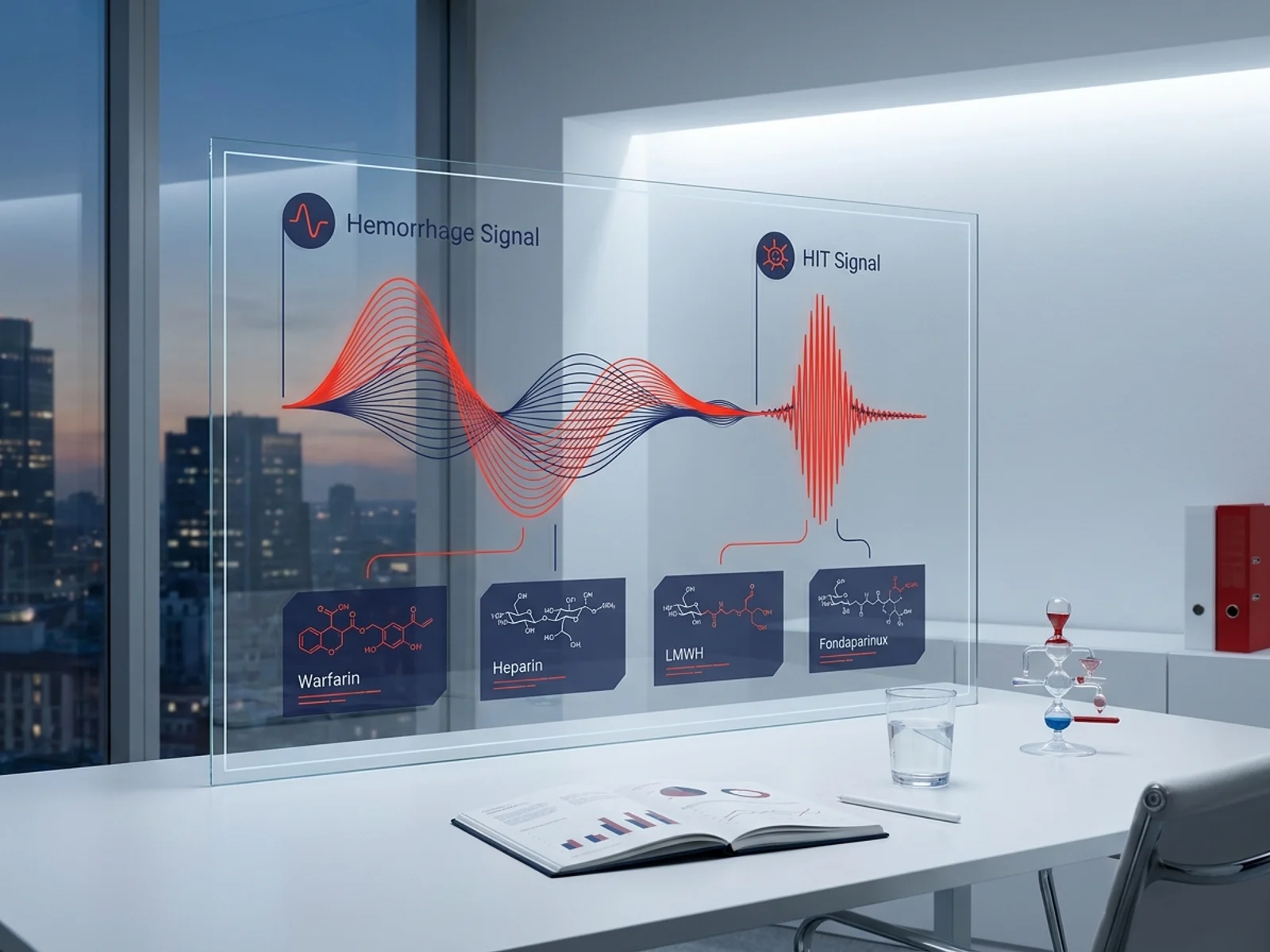
Bleeding is the primary safety hazard associated with all anticoagulants and is the subject of FDA boxed warnings across the class. In our analysis, we mapped MedDRA Preferred Terms (PTs) relating to hemorrhage, hematoma, anemia, and decreased hemoglobin to evaluate the overall bleeding footprint.
The combined bleeding signal represents 44,060 reports, or about 18% of the entire non-DOAC anticoagulant cohort. The largest individual bleeding Preferred Terms in this cohort include:
| MedDRA Preferred Term (PT) | Report Count | Clinical Context |
|---|---|---|
| Anaemia | 7,797 | Secondary to chronic or acute blood loss, often prompting iron or transfusion support. |
| Haemorrhage | 7,243 | General/unspecified bleeding, spanning minor and major presentations. |
| Gastrointestinal haemorrhage | 5,149 | Upper or lower GI bleeding, frequently exacerbated by concomitant NSAID use. |
| Haemoglobin decreased | 5,086 | Objective laboratory marker of acute or chronic blood loss, often prompting admission. |
The remaining bleeding signal is distributed across additional terms—among them epistaxis, haematuria, haematoma, and intracranial (cerebral) haemorrhage—covering the full anatomical spectrum of anticoagulant-related bleeding. Intracranial hemorrhage is the least frequent but most feared manifestation, while mucosal bleeding such as epistaxis is a common early sign of over-anticoagulation.
Clinical Context of the Bleeding Signal
The clinical presentation of bleeding varies significantly between oral agents like warfarin and parenteral agents like heparin and LMWH. For warfarin, bleeding is frequently associated with fluctuations in dietary vitamin K intake, drug-drug interactions, or poor therapeutic monitoring.
For parenteral agents (heparin and LMWH), bleeding is typically an acute, inpatient event. It often occurs post-operatively, at vascular access sites, or in patients with acute kidney injury (AKI) where LMWH (which is renally cleared) accumulates, leading to over-anticoagulation. Payers and hospitals manage this risk by implementing strict renal dosing adjustment protocols and maintaining immediate access to reversal agents like protamine sulfate.
How large is the heparin-induced thrombocytopenia (HIT) signal and which agents drive it?
Heparin-induced thrombocytopenia (HIT) is a life-threatening, immune-mediated complication of heparin therapy. It is triggered by IgG antibodies directed against the complex of heparin and platelet factor 4 (PF4). This immune complex binds to Fc receptors on platelets, causing platelet activation, thrombocytopenia, and a paradoxical hypercoagulable state that leads to arterial and venous thrombosis (often referred to as heparin-induced thrombocytopenia and thrombosis, or HITT).
In our analysis, the combined signal for thrombocytopenia and heparin-induced thrombocytopenia accounted for 13,099 reports. Because this cohort is reported at the substance level (any role), we do not attribute individual HIT counts to each agent here; the signal is concentrated, as expected, in unfractionated heparin and the LMWHs (enoxaparin and dalteparin).
Pharmacovigilance Insights on HIT
Unfractionated Heparin (UFH) vs. LMWH: The clinical literature consistently shows that UFH carries a roughly 5- to 10-fold higher risk of HIT than the LMWHs, because the larger molecular size of unfractionated heparin more readily forms the immunogenic PF4–heparin complex. A 2023 FAERS pharmacovigilance study of LMWH-associated HIT (Frontiers in Pharmacology) localized the heparin-specific immune signal to the LMWHs—enoxaparin (242 suspect-cohort reports), dalteparin (34), and tinzaparin (30)—with tinzaparin showing the highest reporting disproportionality.
Fondaparinux and HIT: Fondaparinux is a synthetic pentasaccharide structurally too short to form the immunogenic PF4–heparin complex; clinically it does not cause HIT and is often used to treat patients with a history of HIT. Its appearance alongside HIT terms in this cohort is a classic example of channeling bias or concomitant reporting: patients who develop HIT on heparin are switched to fondaparinux, so fondaparinux is co-reported on the same case.
Clinical Management: The American Society of Hematology (ASH) guidelines recommend immediate cessation of all heparin products upon suspicion of HIT and initiation of a non-heparin anticoagulant. The direct thrombin inhibitor argatroban (1,478 any-role reports in this cohort) is FDA-approved specifically for anticoagulation in HIT, and its presence reflects its role as salvage therapy.
What do the INR-increased and coagulopathy signals tell us about warfarin monitoring?
The safety profile of warfarin is distinct from injectable anticoagulants because of its reliance on routine laboratory monitoring of the International Normalized Ratio (INR). Warfarin works by inhibiting vitamin K epoxide reductase, depleting active clotting factors II, VII, IX, and X. Its therapeutic window is narrow, typically requiring an INR target of 2.0 to 3.0.
In our cohort, the combined INR and coagulopathy signal accounted for 13,825 reports, with the MedDRA Preferred Term "international normalised ratio increased" recording 10,945 reports.
This signal highlights the clinical challenges of managing warfarin:
Drug-Drug Interactions (DDIs): Warfarin is metabolized by CYP2C9. Concomitant administration of drugs that inhibit this enzyme (such as azole antifungals, amiodarone, or sulfamethoxazole-trimethoprim) leads to rapid warfarin accumulation, causing a sharp increase in INR and severe bleeding. This clinical scenario is a major driver of warfarin-related hospitalizations.
Reversal and Intervention: When the INR is elevated without major bleeding, clinical protocols recommend withholding warfarin and administering oral vitamin K (phytonadione). In cases of life-threatening bleeding, clinicians utilize 4-factor prothrombin complex concentrates (PCC) or fresh frozen plasma (FFP) to restore clotting factors immediately. The administrative and clinical cost of this monitoring and reversal infrastructure has been a primary driver of the payer transition toward DOACs, which do not require routine INR monitoring.
Pharmacological Comparison of Non-DOAC Anticoagulants
To support P&T committees and clinical pharmacists in designing institutional safety protocols, we have synthesized a comparative pharmacological matrix of the non-DOAC anticoagulant class. This table contrasts the pharmacokinetic, pharmacodynamic, monitoring, and clearance profiles of these high-alert medications:
| Drug Class & Molecule | Primary Mechanism of Action | Typical Half-Life | Primary Route of Clearance | Routine Laboratory Monitoring | Designated Reversal Agent |
|---|---|---|---|---|---|
| Warfarin Sodium (Coumadin) | Vitamin K antagonist; depletes factors II, VII, IX, X | 36–42 hours | Hepatic (CYP2C9/3A4) | International Normalized Ratio (INR) | Phytonadione (Vitamin K1), 4-Factor PCC (Kcentra) |
| Unfractionated Heparin (UFH) | Binds antithrombin III; inhibits thrombin (IIa) and Xa | 1–2 hours | Reticuloendothelial system | Activated partial thromboplastin time (aPTT) or anti-Xa | Protamine Sulfate (fully reverses) |
| Enoxaparin Sodium (Lovenox) | LMWH; binds antithrombin; high anti-Xa to anti-IIa ratio | 4.5–7 hours | Renal excretion | Anti-Xa activity (only in renal impairment/pregnancy) | Protamine Sulfate (partially reverses ~60%) |
| Dalteparin Sodium (Fragmin) | LMWH; binds antithrombin; high anti-Xa to anti-IIa ratio | 3–5 hours | Renal excretion | Anti-Xa activity (rarely monitored) | Protamine Sulfate (partially reverses ~60%) |
| Fondaparinux Sodium (Arixtra) | Synthetic pentasaccharide; selective indirect factor Xa inhibitor | 17–21 hours | Renal excretion | Anti-Xa activity (requires fondaparinux calibrators) | None (Protamine is ineffective; use recombinant Factor VIIa/PCC) |
| Argatroban | Direct thrombin inhibitor (DTI); univalent binding to IIa | 39–51 mins | Hepatic clearance | aPTT, Activated Clotting Time (ACT) | None (short half-life limits duration of toxicity) |
| Bivalirudin (Angiomax) | Direct thrombin inhibitor (DTI); bivalent binding to IIa | 25 minutes | Renal (80%) and enzymatic cleavage | aPTT, ACT (used in PCI/cardiopulmonary bypass) | None (rapid clearance is the primary defense) |
This comparison highlights why low-molecular-weight heparins (enoxaparin, dalteparin) and fondaparinux present significant risks in renal impairment. Because they are cleared by the kidneys, patients with creatinine clearance (CrCl) below 30 mL/min experience drug accumulation, resulting in prolonged half-lives and an elevated risk of major hemorrhage. For these patients, unfractionated heparin (which is cleared via the non-renal reticuloendothelial system) is generally the preferred parenteral anticoagulant.
Clinical Safety Workflows and Institutional Guidelines
Under Joint Commission National Patient Safety Goals (NPSG 03.05.01), hospitals must implement specific clinical protocols to reduce the risk of patient harm associated with anticoagulant therapy. The two primary clinical safety workflows include the transition (bridging) protocol and the management of CNI/heparin-induced thrombocytopenia.
1. Inpatient Heparin-to-Warfarin Bridging Protocol
Because warfarin depletes protein C and protein S (which have short half-lives of 8 hours and 30 hours, respectively) before depleting prothrombin (half-life of 60–72 hours), the initial phase of warfarin therapy paradoxically induces a hypercoagulable state. To prevent thrombosis during this initiation window, patients must receive overlapping parenteral anticoagulation:
Initiation: Begin warfarin (typically 5 mg orally once daily) while the patient is receiving therapeutic doses of unfractionated heparin (IV infusion) or low-molecular-weight heparin (subcutaneous injection).
Monitoring: Draw daily INR and aPTT/anti-Xa levels.
Overlap Duration: Continue overlapping therapy for a minimum of 5 days.
Discontinuation Criteria: Discontinue the parenteral heparin only after the patient's INR has been therapeutic (typically 2.0 to 3.0) for at least 24 hours (measured across two consecutive daily draws).
P&T Action: Hospital order entry systems utilize hard stops to prevent the premature discontinuation of heparin, ensuring the full 5-day bridging window is met.
2. Heparin-Induced Thrombocytopenia (HIT) Management Workflow
The clinical safety workflow for managing suspected HIT relies on the 4Ts score and immediate therapeutic switching:
Clinical Scoring: Calculate the 4Ts score (evaluating Thrombocytopenia severity, Timing of platelet drop, Thrombosis presence, and oTher causes of thrombocytopenia).
Intervention (Score 4–8): If the score indicates intermediate or high probability:
Stop Heparin: Discontinue all heparin products immediately, including heparin flushes and heparin-coated catheters.
Do Not Transfuse: Avoid platelet transfusions, as this can fuel the thrombotic cascade.
therapeutic Switch: Initiate therapeutic anticoagulation with a non-heparin alternative, primarily argatroban (dosed at 2 mcg/kg/min IV infusion, adjusted to target aPTT of 1.5–3.0 times baseline).
Avoid Warfarin: Do not initiate warfarin until the platelet count has recovered to at least 150,000/mcL. Initiating warfarin during active HIT can trigger microvascular thrombosis and venous limb gangrene due to rapid protein C depletion.
Which indications and patient populations dominate these reports?
To evaluate the clinical context of the non-DOAC anticoagulant cohort, we analyzed the reported indications and patient demographics. The indication profile is dominated by cardiovascular and thromboembolic conditions, reflecting the primary therapeutic uses of these medications. The leading specified indications include:
Atrial fibrillation: 21,025 reports
Thrombosis prophylaxis: 15,849 reports
Anticoagulant therapy: 15,063 reports
Deep vein thrombosis: 9,113 reports
Pulmonary embolism: 7,575 reports
The remaining indication volume is distributed across general prophylaxis, hypertension and pulmonary hypertension, pain, and malignancy-related states (including plasma cell myeloma, where lenalidomide-type immunomodulatory regimens carry heightened venous-thromboembolism risk).
Patient Demographics and Confounders
The gender distribution within the class is roughly balanced, on the order of 109,500 reports for male patients and 108,300 for female patients.
The indication profile highlights two major confounding factors in anticoagulant safety data:
The Atrial Fibrillation Cohort: Patients with atrial fibrillation are typically elderly and carry multiple cardiovascular comorbidities such as congestive heart failure and chronic kidney disease. This age-related susceptibility raises the risk of falls and the subsequent subdural hematoma or intracranial hemorrhage that appears in the bleeding signal.
The Oncology Cohort: Patients with active malignancy are in a hypercoagulable state and frequently require deep vein thrombosis prophylaxis. The presence of malignancy-related indications (for example, plasma cell myeloma, where lenalidomide-type IMiDs heighten VTE risk) reflects routine LMWH or warfarin use in these patients—who are also often cytopenic from chemotherapy, heightening their susceptibility to the thrombocytopenia (13,099) and bleeding signals.
Disproportionality and Real-World Benchmark Studies
To cross-validate our any-role FAERS findings against peer-reviewed literature, we reviewed several benchmark studies. In a 2026 disproportionality study published in PLOS One (PMC12893537), researchers analyzed 5,788 reports of fondaparinux adverse events extracted from a 20-year FAERS window. The study highlighted that while fondaparinux exhibited a lower Reporting Odds Ratio (ROR) for heparin-induced thrombocytopenia compared to unfractionated heparin and low-molecular-weight heparins, it maintained a significant class-effect signal for major hemorrhage (particularly in patients with renal impairment).
This external benchmark validates our any-role count of 7,791 fondaparinux reports (which is slightly higher than the study's 5,788 suspect-only reports, as expected under our any-role convention) and reinforces the critical role of renal function monitoring in patients receiving synthetic pentasaccharides.
How does the non-DOAC footprint compare to the DOAC FAERS analysis?
A key clinical question for P&T committees is how the safety profile of traditional non-DOAC anticoagulants compares to that of DOACs (apixaban, rivaroxaban, dabigatran, and edoxaban). The table below compares the headline pharmacovigilance metrics of the two class halves, using each post's own any-role totals:
| Pharmacovigilance Metric | Non-DOAC Anticoagulants (this analysis) | DOACs (companion analysis) | Key Clinical Comparison |
|---|---|---|---|
| Total reports (any role) | 243,887 | 330,426 | The DOAC total is larger, reflecting rivaroxaban's high report volume (185,369) and the litigation-amplified 2011–2016 reporting window; both classes carry large, mature footprints. |
| Serious-case share | 83.5% | 84.9% | Both classes are heavily serious-flagged; the DOAC share is a reporting-channel artifact (reports skew to hospitalized, HCP-filed bleeding events), not a measure of intrinsic danger. |
| Fatal-outcome share | 14.6% | 13.1% | Comparable fatal shares—each driven by elderly, cardiorenal-comorbid, polypharmacy populations and spontaneous-reporting confounders rather than causality. |
| Reporting profile | Clinical-use dominated; lawyer reports ~1.3% (3,074) | Marked litigation-driven reporting in the 2011–2016 rivaroxaban scrutiny window | Non-DOAC reports reflect routine inpatient and outpatient clinical use; DOAC reporting was additionally amplified by early-2010s bleeding litigation. |
| Primary safety signal | Bleeding (~18%) plus immune-mediated HIT (~5%) | Bleeding (gastrointestinal-dominant; intracranial lower than warfarin in pivotal trials) | Bleeding dominates both classes; the non-DOAC class uniquely carries the heparin-induced thrombocytopenia signal, which is absent from DOAC therapy. |
This comparison underscores that both halves of the anticoagulant class carry large, predominantly serious FAERS footprints dominated by bleeding—but they differ in mechanism and reporting context. Non-DOACs add the heparin-specific immune HIT signal and the warfarin INR-monitoring burden, while DOAC reporting was disproportionately shaped by early post-launch litigation. As always, these are reporting volumes without exposure denominators, so they describe surveillance intensity and population context, not comparative safety.
FAQs
Does this FAERS analysis include the DOACs (apixaban, rivaroxaban, dabigatran, edoxaban)?
No. This analysis deliberately excludes DOACs (apixaban, rivaroxaban, dabigatran, edoxaban, and betrixaban) to isolate the safety footprint of traditional vitamin K antagonists (warfarin) and parenteral agents (heparins, LMWHs, fondaparinux, and DTIs). DOAC safety data is evaluated in a separate companion post.
Why is the death share 14.6% — does that mean warfarin/heparin are unusually lethal?
No. The 14.6% fatal outcome share reflects the severe underlying cardiovascular and thromboembolic comorbidities of the patients receiving these drugs (e.g., atrial fibrillation, acute coronary syndromes, mechanical heart valves, and advanced cancers), as well as the spontaneous nature of FAERS reporting. It does not establish direct drug-induced mortality.
What is heparin-induced thrombocytopenia and how does it appear in FAERS?
Heparin-induced thrombocytopenia (HIT) is an immune-mediated reaction where antibodies form against the heparin-PF4 complex, causing platelet activation and thrombosis. In our analysis, it appears as a combined thrombocytopenia/HIT signal of 13,099 reports, driven primarily by heparin sodium and enoxaparin sodium.
Are these reports suspect-level or any-mention, and what is the limitation?
These figures represent any-role-named reports, meaning the drug was listed as suspect, concomitant, or interacting. This is an inclusive pharmacovigilance standard that captures the overall clinical environment of the patient. The primary limitation is that FAERS cannot establish direct causality, lacks an exposure denominator, and is subject to spontaneous reporting biases.
Which is reported more in FAERS, warfarin or enoxaparin?
Warfarin sodium is reported more frequently, with 101,020 reports, compared to 53,003 reports for enoxaparin sodium. This reflects warfarin's decades of clinical use and its high rate of monitoring-related adverse events.
Sources
U.S. Food and Drug Administration. FDA Adverse Event Reporting System (FAERS), via openFDA. Public extract (20,328,575 total reports, export dated June 8, 2026). openFDA FAERS Portal
Scientific Reports (2025). Safety comparisons among different subcutaneous anticoagulants for VTE prophylaxis and treatment: a pharmacovigilance analysis of the FDA Adverse Event Reporting System. Scientific Reports Article
Frontiers in Pharmacology (2023). Heparin-induced thrombocytopenia associated with low-molecular-weight heparins: a real-world pharmacovigilance study based on the FDA Adverse Event Reporting System. Frontiers Article
PLOS One (2026). Disproportionality analysis of fondaparinux adverse events in the FDA Adverse Event Reporting System (2004–2024). PMC12893537. PLOS One Article
U.S. National Library of Medicine. DailyMed Prescribing Information: Warfarin Sodium, Heparin Sodium, Enoxaparin Sodium. DailyMed Database