Opdivo Qvantig (nivolumab and hyaluronidase-nvhy, Bristol Myers Squibb) is the first subcutaneously administered PD-1 inhibitor approved in the United States. The FDA cleared it on December 27, 2024 under BLA 761381, using Halozyme's ENHANZE hyaluronidase technology to deliver a 3-to-5-minute subcutaneous injection that replaces the standard 30-minute IV infusion of Opdivo (nivolumab). It is approved across most previously approved adult solid-tumor Opdivo indications as monotherapy, monotherapy maintenance after Opdivo plus Yervoy (ipilimumab) combination, or in combination with chemotherapy or cabozantinib.
For oncology access teams, Opdivo Qvantig introduces a new billing code (J9289), new administration logistics, and a critical limitation — it is not indicated in combination with IV ipilimumab. This guide covers the full access landscape for switching patients from IV to subcutaneous nivolumab.
Short answer
| Opdivo (IV nivolumab) | Opdivo Qvantig (SC nivolumab + hyaluronidase) | |
|---|---|---|
| Generic name | nivolumab | nivolumab and hyaluronidase-nvhy |
| Manufacturer | Bristol Myers Squibb | Bristol Myers Squibb / Halozyme |
| FDA approval | December 2014 | December 27, 2024 (BLA 761381) |
| Administration | IV infusion over 30 minutes | SC injection over 3–5 minutes by HCP |
| Dosing options | 240 mg q2w, 480 mg q4w, weight-based | 600 mg q2w or 1,200 mg q4w (fixed dose) |
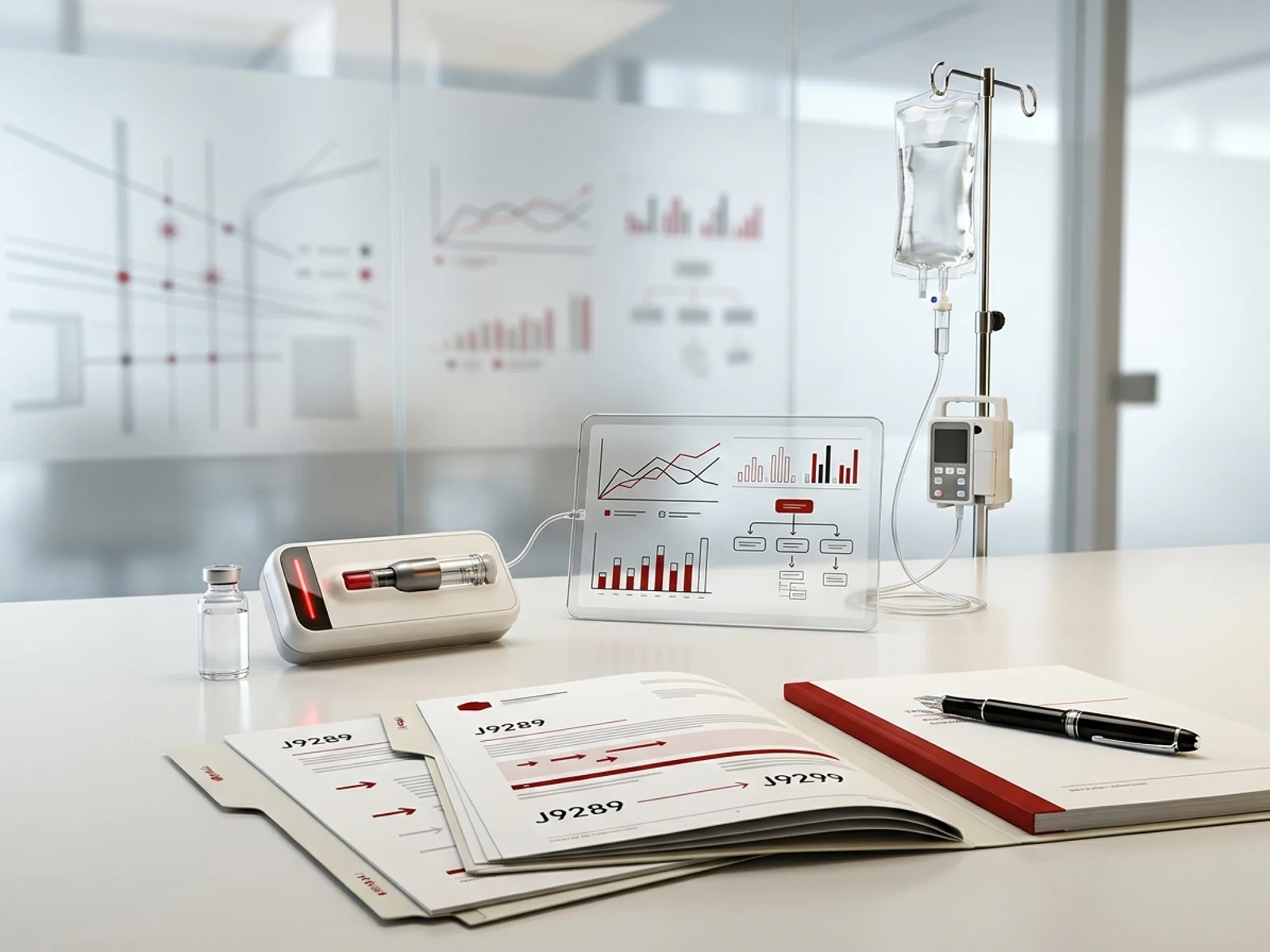
| HCPCS code | J9299 (1 mg) | J9289 (2 mg; effective July 1, 2025) |
| Billing units per 600 mg dose | N/A (different dose) | 300 units |
| Benefit channel | Medical benefit (buy-and-bill) | Medical benefit (buy-and-bill) |
| Key limitation | None | Not indicated with IV ipilimumab |
| WAC per unit | ~$27.70/mg (IV) | ~$20.70/2 mg unit (SC) |
| Administration CPT | 96413 (chemo infusion) | 96401 (chemo SC/IM injection) |
| REMS | No | No |
FDA-approved indications for Opdivo Qvantig
Opdivo Qvantig carries the same solid-tumor monotherapy indications as IV Opdivo for adults. Based on the approval letter and prescribing information, these include:
Melanoma: adjuvant (unresectable stage III or IV after complete resection); metastatic as monotherapy or after ipilimumab + nivolumab combination
Non-small cell lung cancer (NSCLC): neoadjuvant (resectable stage IB–IIIA, with chemotherapy) followed by adjuvant monotherapy; metastatic as monotherapy after prior chemotherapy; metastatic with ipilimumab
Renal cell carcinoma (RCC): advanced as monotherapy after prior anti-angiogenic therapy; first-line with cabozantinib; intermediate/poor-risk first-line with ipilimumab
Urothelial carcinoma: adjuvant after radical resection; metastatic after platinum chemotherapy; metastatic with cisplatin as first-line (unresectable or metastatic)
Head and neck squamous cell carcinoma (HNSCC): metastatic or recurrent after platinum chemotherapy
Colorectal cancer (MSI-H/dMMR): metastatic after fluoropyrimidine, oxaliplatin, and irinotecan; first-line with ipilimumab (unresectable or metastatic)
Hepatocellular carcinoma (HCC): previously treated; first-line with ipilimumab (unresectable or metastatic)
Esophageal/gastroesophageal junction cancer: adjuvant after neoadjuvant chemoradiotherapy; metastatic after chemotherapy
Gastric/gastroesophageal junction adenocarcinoma: metastatic after chemotherapy
Classical Hodgkin lymphoma: relapsed or refractory; consolidated after autologous stem cell transplant (March 2026 expanded approval)
Critical limitation of use
Opdivo Qvantig is not indicated in combination with intravenous ipilimumab. Patients requiring the Opdivo + Yervoy combination regimen must continue on IV nivolumab for those treatment cycles. This is not a clinical safety concern but a formulation limitation — the subcutaneous co-formulation has not been studied with IV ipilimumab. Access teams should identify patients on combination regimens who cannot be switched.
CheckMate-67T pivotal evidence
The FDA approval was supported by CheckMate-67T (NCT04810078), a randomized, open-label, multicenter Phase III trial in 495 patients with advanced or metastatic clear cell RCC who received no more than two prior systemic therapies. Patients were randomized 1:1 to Opdivo Qvantig 1,200 mg SC every 4 weeks or IV nivolumab 3 mg/kg every 2 weeks.
Key results:
Primary endpoint met: geometric mean ratio of nivolumab Cavg,ss was 1.21 (90% CI: 1.12, 1.30), above the prespecified noninferiority margin of 0.80. Cmin,ss ratio was 1.01 (90% CI: 0.88, 1.15)
ORR: 24% (95% CI: 19, 30) for SC vs 18% (95% CI: 14, 24) for IV
Safety profile: consistent between SC and IV formulations. Injection-site reactions were the most common SC-specific adverse event
HCPCS coding and billing
Permanent J-code
CMS established a permanent HCPCS code effective July 1, 2025:
J9289: Injection, nivolumab, 2 mg and hyaluronidase-nvhy
1 billable unit = 2 mg nivolumab component
For a 600 mg dose: bill 300 units of J9289
For a 1,200 mg dose: bill 600 units of J9289
Before July 1, 2025, providers used miscellaneous codes J9999 (not otherwise classified, antineoplastic) or C9399 (unclassified drugs, hospital outpatient only).
NDC
00003-6120-01: Single-dose vial, 600 mg nivolumab and 10,000 units hyaluronidase per 5 mL (120 mg/2,000 units per mL)
IV Opdivo coding (for comparison)
J9299: Injection, nivolumab, 1 mg
240 mg dose = 240 units; 480 mg dose = 480 units
Administration codes
| Setting | Opdivo Qvantig (SC) | IV Opdivo |
|---|---|---|
| Physician office | 96401 (chemo SC/IM injection) | 96413 (chemo IV infusion, first hour) |
| Hospital outpatient | 96401 | 96413 + 96415 (additional 30 min) |
Revenue codes (hospital outpatient)
| Code | Description |
|---|---|
| 0636 | Drugs requiring detailed coding |
| 0250 | Pharmacy |
| 0331 | Chemotherapy injected |
JW/JZ modifiers
Medicare requires JW (discarded drug) and JZ (no discarded drug) modifiers for single-use vials under both J9289 and J9299.
Buy-and-bill economics and infusion-chair savings
Opdivo Qvantig changes the economics of nivolumab delivery in several ways:
Drug cost
Both formulations are 351(a) BLA products without biosimilar competition. The SC formulation uses a fixed dose (600 mg or 1,200 mg) rather than weight-based IV dosing. For a 70 kg patient, IV Opdivo at 240 mg q2w delivers 480 mg over 4 weeks; SC Opdivo Qvantig at 600 mg q2w delivers 1,200 mg over 4 weeks. The q4w option (1,200 mg) halves the number of administration visits per year.
Administration savings
The 3–5 minute SC injection replaces a 30-minute IV infusion (plus chair setup, line check, and 30-minute post-infusion observation in some protocols). This reduces:
Nursing time per administration (estimated 30–45 minutes saved per visit)
Chair time in infusion centers
Consumables (IV tubing, infusion pump, saline)
Facility overhead per visit
For a q4w schedule, patients make 13 visits per year instead of 26, cutting administration costs roughly in half.
Reimbursement
Medicare Part B reimburses J9289 at ASP + 6% (buy-and-bill model), same as J9299 for IV Opdivo. The administration fee for CPT 96401 is lower than 96413, reflecting the shorter administration time. The net margin impact depends on each practice's drug acquisition cost versus the ASP-based reimbursement.
Oncology pathway and NCCN positioning
NCCN Guidelines include nivolumab and hyaluronidase-nvhy across multiple tumor types:
Kidney Cancer V.1.2026
NSCLC V.2.2026
Melanoma V.2.2025
Colon Cancer V.5.2025
Hepatocellular Carcinoma V.2.2025
Head and Neck Cancers V.5.2025
Bladder Cancer V.2.2025
Esophageal and Esophagogastric Junction Cancers V.3.2025
Gastric Cancer V.2.2025
NCCN Compendium listings allow Opdivo Qvantig to be referenced for the same indications as IV Opdivo where SC administration is appropriate. Pathway committees should note the ipilimumab combination limitation.
Payer prior authorization criteria
Most payers apply the same clinical criteria to Opdivo Qvantig as to IV Opdivo, since the indications are identical. The key PA differences relate to the formulation switch itself.
Aetna
Aetna Clinical Policy Bulletin 0892 covers nivolumab products including Opdivo Qvantig. HCPCS J9289 is listed as covered when selection criteria are met. ICD-10 codes span C15.3–C15.9 (esophagus), C16.0–C16.9 (stomach), C18.0–C18.9 (colon), C22.0 (HCC), C34.00–C34.92 (lung), C43.0–C43.9 (melanoma), C64.1–C64.9 (kidney), C67.0–C67.9 (bladder). Authorization is typically 6 months with renewal.
UnitedHealthcare / Optum
Arkansas Blue Cross (UnitedHealthcare family) coverage policy 2025024 lists Opdivo Qvantig dosing at 600 mg q2w or 1,200 mg q4w. Criteria follow standard nivolumab PA pathways: confirmed diagnosis, ECOG 0–2, no prior anti-PD-1/PD-L1 therapy (for first-line settings), and NCCN-supported use. Authorization duration: 6 months.
Prime Therapeutics / Moda Health
Prime Therapeutics policy IC-0784 covers Opdivo Qvantig under medical benefit with 6-month authorization. Uses J9999/C9399 (pre-July 2025) or J9289 (post-July 2025). Criteria mirror IV nivolumab with the addition of confirming the SC formulation is appropriate (no concurrent IV ipilimumab need).
Florida Blue
Medical Coverage Guideline 09-J2000-33 (effective July 1, 2025) updated to include HCPCS J9289 for Opdivo Qvantig and removed J9999. Covers both J9299 (IV) and J9289 (SC) with identical clinical criteria per indication.
Step therapy considerations
Payers generally do not require trial of IV Opdivo before Opdivo Qvantig, since they share the same active ingredient and indications. However:
Some plans may require a "medical necessity" justification for the SC formulation, especially if there is a cost differential
Document why SC is preferred: patient access barriers to infusion, infusion-reaction history, patient preference, or infusion-center capacity constraints
BMS Access Support
Bristol Myers Squibb provides access support through BMS Access Support (bmsaccesssupport.com):
Coding and reimbursement
J-code flashcards for both Opdivo Qvantig (J9289) and IV Opdivo (J9299)
Appeals and denial support
Benefits investigation
Patient assistance
Co-pay assistance for commercially insured patients
Patient Assistance Foundation referrals for uninsured or underinsured
Bridge supply during PA review (case-by-case)
Contact
BMS Access Support: 1-800-862-4274
Website: bmsaccesssupport.com
Key takeaways for access teams
Opdivo Qvantig is not a biosimilar — it is a new BLA for a subcutaneous co-formulation of the same PD-1 inhibitor. It does not trigger step edits relative to IV Opdivo.
HCPCS J9289 is permanent effective July 1, 2025. Before that date, use J9999 or C9399 with the correct NDC (00003-6120-01).
The ipilimumab combination limitation is real: patients on Opdivo + Yervoy must remain on IV nivolumab for combination cycles. Only monotherapy, maintenance, and chemo/cabozantinib combinations are eligible for SC.
The q4w dosing option (1,200 mg every 4 weeks) halves administration visits compared to the standard q2w IV schedule, with significant infusion-chair savings.
Payer PA criteria are identical to IV Opdivo for clinical eligibility, but document the rationale for the SC formulation when the indication supports it.
NCCN placement is established across kidney, lung, melanoma, colon, HCC, head and neck, bladder, and esophageal/gastric cancers.
Sources
FDA. FDA Approves Nivolumab and Hyaluronidase-nvhy for Subcutaneous Injection. December 27, 2024. https://www.fda.gov/drugs/resources-information-approved-drugs/fda-approves-nivolumab-and-hyaluronidase-nvhy-subcutaneous-injection
FDA. Opdivo Qvantig Approval Letter. BLA 761381. December 27, 2024. https://www.accessdata.fda.gov/drugsatfda_docs/appletter/2025/761381Orig1s000correctedltr.pdf
FDA. Opdivo Qvantig Approval Letter. BLA 761381/S-002. October 27, 2025. https://www.accessdata.fda.gov/drugsatfda_docs/appletter/2025/761381Orig1s002ltr.pdf
National Cancer Institute. FDA Approves Injectable Nivolumab. February 19, 2025. https://www.cancer.gov/news-events/cancer-currents-blog/2025/fda-opdivo-injection
CMS. 2025 HCPCS Application Summary, Quarter 1 2025. https://www.cms.gov/files/document/2025-hcpcs-application-summary-quarter-1-2025-drugs-and-biologicals.pdf
BMS Access Support. Opdivo Qvantig Codes and Coverage. https://www.bmsaccesssupport.com/opdivoqvantig/codes-coverage
Aetna. Nivolumab Products Clinical Policy Bulletin. CPB 0892. https://www.aetna.com/cpb/medical/data/800_899/0892.html
BuyandBill.com. Opdivo Qvantig J9289 Code and Cost. https://buyandbill.com/opdivo-qvantig-j9289