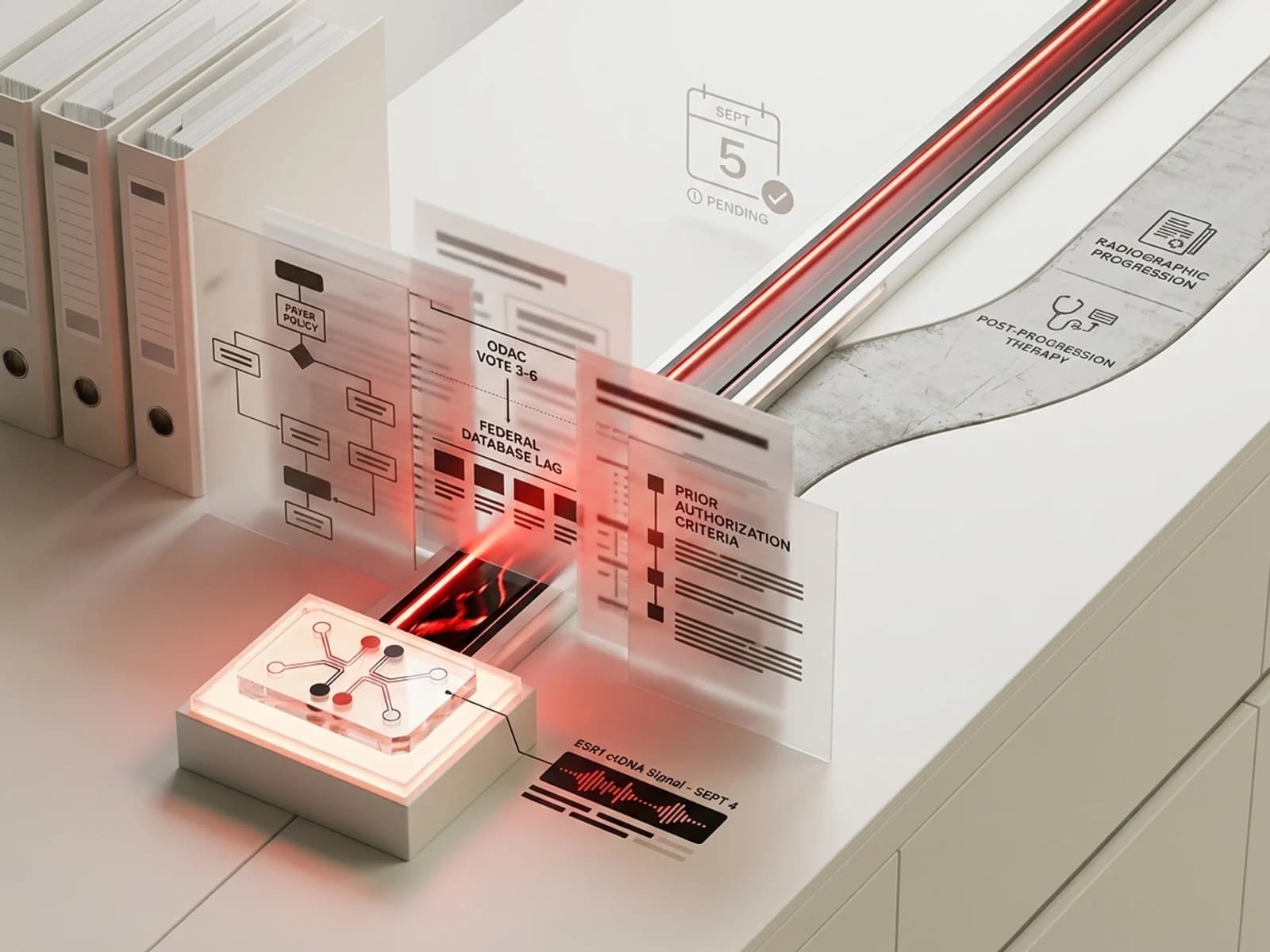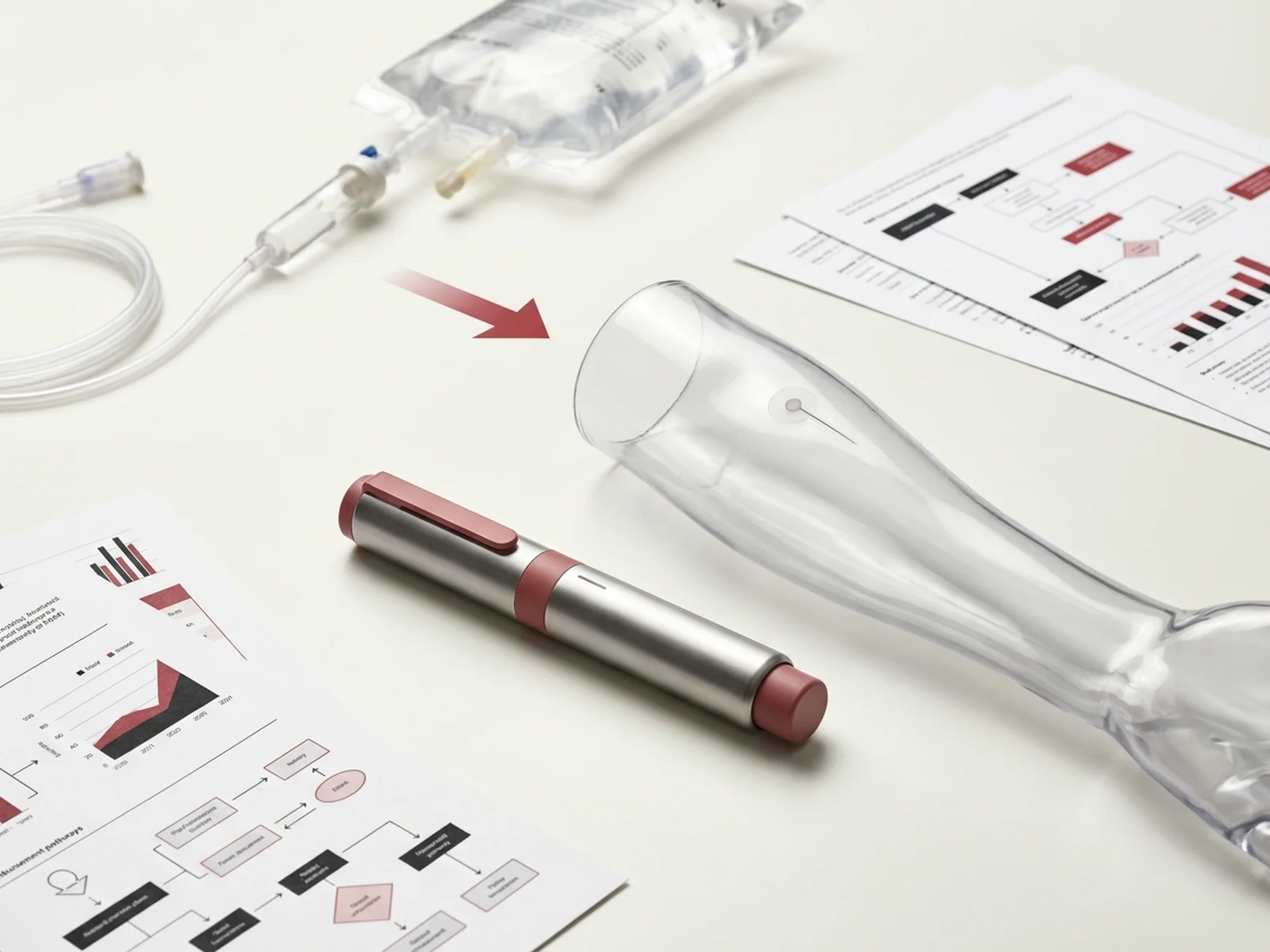
The operational and commercial landscape of Alzheimer's disease therapeutics reaches a structural inflection point in late August 2026. With the U.S. Food and Drug Administration's (FDA) approval of Eisai and Biogen's supplemental Biologics License Application (sBLA) for once-weekly subcutaneous lecanemab-irmb (Leqembi IQLIK) as an initiation dose, newly diagnosed patients with early Alzheimer's disease can start amyloid-clearing therapy at home via an autoinjector rather than entering an outpatient infusion suite every two weeks.
While clinical headlines have celebrated the convenience of a 15-second autoinjector injection, the most profound disruption is occurring behind the scenes in healthcare reimbursement. Shifting initiation from biweekly intravenous (IV) infusions to weekly subcutaneous (SC) self-administration or caregiver administration moves the primary access channel from medical benefit buy-and-bill to specialty pharmacy adjudication.
For neurology practices, health-system infusion centers, specialty pharmacies, and commercial and Medicare payers, this transition fundamentally alters clinical workflows, billing codes, site-of-care economics, and Medicare Coverage with Evidence Development (CED) compliance.
This guide provides a comprehensive, source-documented analysis of what changed with the July 13, 2026 initiation approval, how dosing and treatment duration compare across routes, how benefit routing functions under major payer policies, and what operational steps clinical and market-access teams must execute ahead of commercial availability.
What did the FDA approve on July 13, 2026, and what is the full dosing timeline now?
On July 13, 2026, the FDA approved supplemental Biologics License Application SUPPL-1 under BLA 761375, authorizing the use of subcutaneous lecanemab-irmb (Leqembi IQLIK) as an initiation regimen for patients with early Alzheimer's disease (mild cognitive impairment or mild dementia with confirmed amyloid-beta pathology).
The regulatory history of lecanemab sits across two distinct Biologics License Applications (BLAs) within FDA CDER records:
BLA 761269 (Intravenous Leqembi): Granted accelerated approval on January 6, 2023, and converted to traditional FDA approval on July 6, 2023, following the Phase 3 Clarity AD readout. It is marketed in 200 mg/2 mL and 500 mg/5 mL single-dose vials for IV infusion.
BLA 761375 (Subcutaneous Leqembi IQLIK): Granted original BLA approval (ORIG-1) on August 29, 2025, for weekly subcutaneous maintenance dosing (360 mg weekly) following an initial 18-month treatment period. The subsequent supplement (SUPPL-1), accepted on January 25, 2026 under Priority Review, was approved on July 13, 2026, expanding the label to cover initiation dosing.
The PDUFA Review Timeline
The initiation sBLA review timeline included an extension. Initially accepted on January 25, 2026, with a Prescription Drug User Fee Act (PDUFA) action date of May 24, 2026, Eisai and Biogen announced on May 8, 2026, that the FDA had extended the review timeline by three months to August 24, 2026.
The companies attributed the extension to additional information submitted during the review, which functioned as a major amendment resetting the review clock. In that same announcement, Eisai and Biogen reported that the FDA had raised no concerns to date regarding the approvability of the subcutaneous starting regimen. The FDA finalized its review and granted approval on July 13, 2026—six weeks ahead of the extended PDUFA deadline.
| Parameter | Intravenous Leqembi (BLA 761269) | Subcutaneous Leqembi IQLIK Initiation (BLA 761375) | Subcutaneous Leqembi IQLIK Maintenance (BLA 761375) |
|---|---|---|---|
| Initial FDA Licensure | January 6, 2023 (Traditional: July 6, 2023) | July 13, 2026 (sBLA SUPPL-1) | August 29, 2025 (ORIG-1) |
| Route & Delivery | Intravenous Infusion | Subcutaneous Autoinjector | Subcutaneous Autoinjector |
| Approved Regimen | 10 mg/kg every 2 weeks | 500 mg once weekly (as two 250 mg injections) | 360 mg once weekly (as one 360 mg injection) |
| Timing in Care Pathway | Months 1 through 18+ | Months 1 through 18 | Month 19 and onward (post-18 mo IV or SC) |
| Administration Setting | Hospital outpatient / Infusion clinic | At home (patient/caregiver) or clinic | At home (patient/caregiver) or clinic |
| Total Injections / Infusions (18 Mo) | 39 IV infusions | ~156 SC autoinjector injections | N/A (Maintenance phase) |
| Primary Benefit Channel | Medical Benefit (Buy-and-Bill) | Pharmacy Benefit (Specialty Dispense) | Pharmacy Benefit (Specialty Dispense) |
Regimen Architecture and Route Switching
The approved initiation regimen for Leqembi IQLIK is 500 mg administered subcutaneously once weekly. Because the concentrated formulation is packaged in 250 mg prefilled autoinjectors, each weekly dose requires two consecutive autoinjector injections (each taking approximately 15 seconds) at separate injection sites.
After completing 18 months of treatment—whether started via weekly subcutaneous injections or biweekly IV infusions—patients whose amyloid plaques have been cleared or stabilized can transition to the 360 mg once-weekly maintenance autoinjector (a single 360 mg/1.8 mL injection).
The FDA label supports bi-directional route flexibility:
IV to SC Transition: Patients currently receiving biweekly IV infusions can switch to weekly SC autoinjectors at any point in their treatment trajectory without repeating baseline loading periods.
SC to IV Transition: Patients who experience localized injection-site intolerance or preference shifts can transition to biweekly 10 mg/kg IV infusions.
Over an initial 18-month treatment course, a patient receiving IV therapy undergoes 39 clinical infusion visits. A patient initiating with Leqembi IQLIK receives approximately 156 subcutaneous injections across 78 weekly sessions, avoiding 39 outpatient visits and intravenous line placements.
Which benefit does at-home lecanemab route through — medical or pharmacy?
The introduction of an at-home subcutaneous autoinjector creates an immediate benefit-design fork.
Intravenous Leqembi is billed almost exclusively through the medical benefit using Healthcare Common Procedure Coding System (HCPCS) code J0174 (Lecanemab-irmb, for intravenous injection, 1 mg). Infusion centers bill J0174 alongside Current Procedural Terminology (CPT) infusion administration codes (such as CPT 96365 for the initial hour of intravenous infusion).
Because J0174's CMS descriptor explicitly specifies "for intravenous injection," it cannot be legitimately billed on a medical claim for a subcutaneous autoinjector. Furthermore, Medicare Part B and commercial medical policies generally exclude self-administered drugs (SADs) from medical benefit coverage when supplied for home administration.
                  ┌────────────────────────────────────────────────────────┐
                  │ Early Alzheimer's Patient (Confirmed Amyloid-Beta)     │
                  └───────────────────────────┬────────────────────────────┘
                                              │
                     Prescriber Regimen & Route Selection
                                              │
                      ┌───────────────────────┴───────────────────────┐
                      ▼                                               ▼
      ┌───────────────────────────────┐               ┌───────────────────────────────┐
      │  Intravenous Leqembi (IV)     │               │  Subcutaneous IQLIK (SC)      │
      │  10 mg/kg every 2 weeks       │               │  500 mg weekly (2x 250 mg)    │
      └───────────────┬───────────────┘               └───────────────┬───────────────┘
                      │                                               │
             Benefit Routing                                 Benefit Routing
                      │                                               │
                      ▼                                               ▼
      ┌───────────────────────────────┐               ┌───────────────────────────────┐
      │       MEDICAL BENEFIT         │               │       PHARMACY BENEFIT        │
      │  • HCPCS J0174 (IV only)      │               │  • Specialty Pharmacy NDCs    │
      │  • Buy-and-Bill / Infusion    │               │  • Electronic PA (ePA)        │
      │  • CPT 96365 Administration   │               │  • Tier 4 / Tier 5 Specialty  │
      │  • Part B Registry Claims CED │               │  • Home Cold-Chain Delivery   │
      └───────────────────────────────┘               └───────────────────────────────┘
The Payer Policy Precedent: Aetna CPB 1026
Payer policies have already codified this separation. In Aetna's Clinical Policy Bulletin (CPB) 1026 on Lecanemab-irmb (last reviewed January 27, 2026), Aetna established clear benefit boundaries:
"For subcutaneous lecanemab (Leqembi IQLIK), see pharmacy benefit plan."
While Aetna provides coverage for IV lecanemab under the medical benefit (J0174) subject to medical necessity criteria, it directs all subcutaneous autoinjector claims to the member's pharmacy benefit plan, and its policy describes IQLIK as a subcutaneous injection for self-administration that may be given by a caregiver.
This operational flip means:
Specialty Pharmacy Fulfillment: Instead of the clinic purchasing drug vials wholesale through buy-and-bill distribution (AmerisourceBergen/Cencora, Cardinal Health, McKesson), prescriptions are routed via electronic prescribing (e-prescribing) to contracted specialty pharmacies (such as CVS Specialty, Accredo, Optum Specialty, or health-system specialty pharmacies).
Prior Authorization Infrastructure: Prior authorizations move from medical management portals (such as Availity, eviCore, or Cohere) to Pharmacy Benefit Manager (PBM) electronic prior authorization (ePA) engines (CoverMyMeds, Surescripts).
Patient Cost-Sharing Shift: Rather than 20% Medicare Part B coinsurance (often covered by Medigap supplement plans), commercial and Medicare Advantage patients face pharmacy-benefit cost sharing. Under Medicare Part D, the $2,000 annual out-of-pocket prescription cap established under the Inflation Reduction Act (IRA) establishes a hard ceiling on patient out-of-pocket costs for pharmacy-dispensed specialty drugs.
For a deeper dive into payer utilization management across anti-amyloid therapies, see our detailed Leqembi vs Kisunla access guide.
What happens to Medicare's registry-based coverage requirement when dosing moves out of the infusion suite?
The primary regulatory pillar governing Medicare reimbursement for Alzheimer's monoclonal antibodies is National Coverage Determination (NCD 200.3, CAG-00460N).
Under NCD 200.3, Medicare covers anti-amyloid monoclonal antibodies directed against amyloid that receive traditional FDA approval only under Coverage with Evidence Development (CED). Specifically:
Prescribing physicians must participate in a CMS-facilitated registry (such as the Alzheimer's Association ALZ-NET registry).
The registry collects demographic, clinical, dosing, APOE genotype, and safety data (including Amyloid-Related Imaging Abnormalities, or ARIA).
In Medicare Part B claims processing, CMS and Medicare Advantage (MA) plans mandate that the 8-digit clinical trial registry identifier (e.g., NCT registry number) and specific CED claim modifiers appear on every medical claim.
As reaffirmed in the CMS Health Plan Management System (HPMS) memorandum of August 14, 2023, Medicare Advantage organizations are legally required to cover anti-amyloid mAbs under the terms of NCD 200.3 and to enforce CED data submission.
The Pharmacy-Benefit Registry Friction
When lecanemab is dispensed through a specialty pharmacy under the pharmacy benefit (Part D or commercial pharmacy benefit), standard NCPDP telecommunication claim transactions do not possess native fields for clinical trial registry numbers or CED modifier codes in the same manner as CMS-1500 / UB-04 medical claims.
Consequently, compliance with CED requirements for subcutaneous Leqembi IQLIK shifts to prescriber portal attestation and specialty pharmacy hub coordination:
Prescribers must attest to active registry participation during the prior authorization and reauthorization process.
The specialty pharmacy hub (Eisai's Leqembi Companion support program) facilitates insurance verification and support-option identification before drug ships.
Health systems operating memory clinics must establish internal registry tracking protocols that capture subcutaneous dosing events even when no infusion billing event occurs in the electronic health record (EHR).
What monitoring and administration rules stay mandatory after the switch to injections?
Moving drug delivery from the clinic to the home does not relax the stringent diagnostic, safety, and imaging requirements mandated in the FDA boxed warning and prescribing information.
Mandatory Diagnostic and Safety Requirements
Amyloid Confirmation: Objective confirmation of amyloid-beta pathology via amyloid Positron Emission Tomography (PET) scanning or validated cerebrospinal fluid (CSF) biomarker testing (Abeta42/Abeta40 ratio and phosphorylated tau) remains an absolute prerequisite for prior authorization approval. For diagnostic context, review our analysis on tau PET diagnostics coverage.
APOE Genotyping: Testing for Apolipoprotein E (APOE) epsilon-4 allele status is strongly recommended prior to initiation. In the Clarity AD trial:
Overall ARIA incidence was 21% with lecanemab vs. 9% with placebo.
ARIA-E (edema/effusion) occurred in 13% of lecanemab patients vs. 2% on placebo.
ARIA-H (microhemorrhages and superficial siderosis) occurred in 17% vs. 9%.
In APOE epsilon-4 homozygotes (representing approximately 15% of Alzheimer's patients), ARIA incidence rose to 45% versus 22% in homozygote placebo patients - versus 19% vs. 9% in heterozygotes and 13% vs. 4% in non-carriers.
Scheduled Brain MRI Surveillance: Magnetic Resonance Imaging (MRI) monitoring remains mandatory:
Baseline brain MRI prior to initiating therapy, with periodic monitoring thereafter.
Enhanced vigilance during the first 14 weeks of treatment - the window in which most ARIA-E events occurred (the majority within the first 7 doses).
Prompt clinical MRI evaluation if patients experience symptoms suggestive of ARIA (headache, confusion, dizziness, visual changes, or gait instability).
┌─────────────────────────────────────────────────────────────────────────────┐
│                      LEQEMBI IQLIK SURVEILLANCE PROTOCOL                    │
└──────────────────────────────────────┬──────────────────────────────────────┘
                                       │
                  ┌────────────────────┴────────────────────┐
                  ▼                                         ▼
   ┌───────────────────────────────┐         ┌───────────────────────────────┐
   │ Baseline Screening            │         │ Clinical Administration       │
   │ • Amyloid PET or CSF ratio    │         │ • Doses 1 & 2: Clinic-guided  │
   │ • APOE genotype counseling    │         │ • Dose 3+: Home/caregiver use │
   │ • Baseline brain MRI          │         │ • Dual 250 mg SC autoinjector │
   └──────────────┬────────────────┘         └──────────────┬────────────────┘
                  │                                         │
                  └────────────────────┬────────────────────┘
                                       │
                                       ▼
   ┌─────────────────────────────────────────────────────────────────────────┐
   │ MRI Safety Monitoring Windows                                           │
   │ • Baseline MRI before dose 1                                            │
   │ • Enhanced vigilance: first 14 weeks of treatment                       │
   │ • Most ARIA-E events: within the first 7 doses                          │
   │ • Symptomatic MRI: Immediate scan if ARIA-related symptoms occur        │
   └─────────────────────────────────────────────────────────────────────────┘
The "First-Two-Doses" Clinic Supervision Requirement
Although marketed as an at-home therapy, Leqembi IQLIK initiation is not unassisted on day one. In public guidance issued on July 13, 2026, the Alzheimer's Association highlighted that clinical protocols require a healthcare provider to guide and supervise at least the first two autoinjector doses in a clinical setting.
This initial in-office observation serves three distinct clinical functions:
Verifying that the patient or designated care partner demonstrates proficient autoinjector technique (including 15-second hold times and site rotation).
Monitoring for immediate systemic hypersensitivity or severe injection-site reactions.
Establishing direct communication channels for symptom-triggered MRI referrals.
How does the Leqembi IQLIK switch compare with Keytruda Qlex, Opdivo Qvantig, and Ocrevus Zunovo?
The biopharma industry has witnessed several high-profile intravenous-to-subcutaneous formulation switches. However, comparing Leqembi IQLIK with oncology and neurology precedents reveals critical structural distinctions in how care and billing are delivered.
| Feature | Leqembi IQLIK (lecanemab) | Keytruda Qlex (pembrolizumab) | Opdivo Qvantig (nivolumab) | Ocrevus Zunovo (ocrelizumab) |
|---|---|---|---|---|
| Therapeutic Area | Neurology (Early AD) | Immuno-Oncology | Immuno-Oncology | Neurology (Multiple Sclerosis) |
| Administration Setting | Home self/caregiver injection | Clinic / Office injection | Clinic / Office injection | Clinic / Office injection |
| Formulation Strategy | Concentrated mAb (Autoinjector) | Co-formulated with hyaluronidase | Co-formulated with hyaluronidase | Co-formulated with hyaluronidase |
| Primary Reimbursement | Pharmacy Benefit (Specialty) | Medical Benefit (Buy-and-Bill) | Medical Benefit (Buy-and-Bill) | Medical Benefit (Buy-and-Bill) |
| Payer Site-of-Care Edit Exposure | High (Drives volume out of HOPD) | Moderate (Payer pushes to physician office) | Moderate (Physician office preference) | High (Home infusion vs. suite) |
| HCPCS Billing Code | None (Pharmacy NDC only) | Specific subcutaneous J-code | Specific subcutaneous J-code | Specific subcutaneous J-code |
In oncology (such as Keytruda Qlex vs IV Keytruda), subcutaneous administration is co-formulated with recombinant human hyaluronidase and remains an office-administered medical procedure billed under buy-and-bill J-codes.
In contrast, Leqembi IQLIK uses a mechanical autoinjector without hyaluronidase and transitions completely out of the clinic into patient hands. This makes Leqembi IQLIK subject to the aggressive site-of-care edits for IV and subcutaneous specialty drugs that commercial payers employ to eliminate hospital outpatient facility fees.
For an understanding of how buy-and-bill billing risks compare when new codes launch, review our breakdown on J-code timing and interim billing risk.
What should payer teams and specialty pharmacies do before the late-August launch?
With commercial product shipments scheduled for late August 2026, healthcare stakeholders must address several immediate operational priorities:
1. P&T Committees and PBM Formulary Strategy
Add BLA 761375 NDCs to Pharmacy Formularies: Ensure that the 250 mg initiation autoinjector NDCs are loaded into PBM adjudication systems with Tier 4 or Tier 5 specialty copay structures.
Harmonize Prior Authorization Rules: Match clinical PA criteria across medical (J0174) and pharmacy benefits so that patients meet identical biomarker, cognitive score (MMSE >= 22, CDR-GS 0.5 to 1.0), and MRI prerequisites regardless of route.
Formulate Transition Protocols: Establish seamless mid-year transition rules that allow patients to shift between IV infusions and SC autoinjectors without triggering PA denials for "duplicate therapy" or resetting accumulator tracking.
2. Health System and Memory Clinic Operations
Redesign Infusion Suite Capacity: Forecast a gradual migration of stable lecanemab patients from biweekly infusion chairs to at-home maintenance, freeing infusion capacity for oncology and complex biologics while adapting to the loss of CPT 96365 infusion revenue.
Establish Injection Training Visits: Create dedicated nursing visit slots (e.g., CPT 99211 or education codes) to supervise and document the first two autoinjector doses as recommended by clinical guidelines.
Embed Registry Compliance in Specialty Workflows: Configure EHR templates to capture ongoing clinical assessments and MRI safety checks to maintain continuous registry documentation for CED.
3. Patient Access and Support Services
Patient-Support Enrollment: Ensure eligible uninsured and underinsured patients are routed to Eisai's Patient Assistance Program (PAP), which provides Leqembi and Leqembi IQLIK at no cost to individuals who meet financial eligibility criteria.
Cold-Chain Logistics Management: Specialty pharmacies must establish reliable cold-chain delivery and home-storage protocols for the autoinjector, with patient training on storage and handling before self-administration begins.
Frequently Asked Questions
Is subcutaneous Leqembi IQLIK available now, and where will patients get it?
Commercial availability of the initiation autoinjector is planned for late August 2026. Unlike IV Leqembi, which is shipped to hospital pharmacies and infusion centers, Leqembi IQLIK will be dispensed through specialty pharmacies for home delivery.
Can a patient who started on IV Leqembi switch to the autoinjector, or vice versa?
Yes. The FDA-approved label explicitly allows bi-directional switching. A patient who begins treatment with biweekly IV infusions can switch to weekly 500 mg SC initiation (or 360 mg SC maintenance if 18 months of therapy have elapsed) without interruption. Conversely, patients who prefer clinic administration or encounter injection difficulties can return to biweekly IV infusions.
Does Medicare cover at-home lecanemab the same way it covers the IV infusion?
Medicare coverage for all traditionally approved anti-amyloid mAbs requires compliance with NCD 200.3 Coverage with Evidence Development (CED). However, while IV Leqembi is billed under Medicare Part B (medical benefit) with registry numbers on each claim, subcutaneous IQLIK adjudicates under Medicare Part D (pharmacy benefit), where registry participation is verified through prior authorization attestations and hub tracking.
Why did the FDA action date move from May 24 to August 24, 2026, and why did approval arrive July 13?
The original PDUFA date of May 24, 2026 was extended by three months following the submission of supplemental modeling and immunogenicity datasets, which the FDA classified as a major amendment. The FDA completed its review ahead of schedule, issuing full approval on July 13, 2026—six weeks prior to the extended August 24 deadline.
What did the review-extension letter say about approvability concerns?
In their May 8, 2026 announcement, Eisai and Biogen reported that the FDA had raised no concerns to date regarding the approvability of the subcutaneous starting dose, while extending review by three months to August 24, 2026 after the companies submitted additional information.
Is there a J-code for the subcutaneous autoinjector?
No. HCPCS code J0174 is restricted by CMS to intravenous injection (Lecanemab-irmb, for intravenous injection, 1 mg). There is currently no subcutaneous-specific HCPCS code, and commercial payers (such as Aetna in CPB 1026) route Leqembi IQLIK exclusively to the pharmacy benefit.
Sources
U.S. Food and Drug Administration (FDA): Drugs@FDA Application Database, BLA 761375 (LEQEMBI IQLIK) Submissions and Approvals (ORIG-1 August 29, 2025; SUPPL-1 July 13, 2026). https://www.accessdata.fda.gov/scripts/cder/daf/
FDA Purple Book: Database of Licensed Biological Products, Licensure Records for BLA 761269 and BLA 761375 (lecanemab-irmb). https://purplebooksearch.fda.gov/
Eisai Co., Ltd. & Biogen Inc.: FDA Approves LEQEMBI IQLIK (lecanemab-irmb) Subcutaneous Injection as an Initiation Dose for Early Alzheimer's Disease (July 13, 2026). https://media-us.eisai.com/
Eisai Co., Ltd. & Biogen Inc.: Update on FDA Priority Review of LEQEMBI IQLIK Subcutaneous Injection as a Starting Dose for Early Alzheimer's Disease (May 8, 2026). https://www.prnewswire.com/news-releases/update-on-fda-priority-review-of-leqembi-iqlik-lecanemab-irmb-subcutaneous-injection-as-a-starting-dose-for-early-alzheimers-disease-302766585.html
Centers for Medicare & Medicaid Services (CMS): Monoclonal Antibodies Directed Against Amyloid for the Treatment of Alzheimer's Disease (CAG-00460N) National Coverage Determination (NCD 200.3). https://www.cms.gov/medicare-coverage-database/view/ncacal-decision-memo.aspx?proposed=N&ncaid=305
Centers for Medicare & Medicaid Services (CMS): Health Plan Management System (HPMS) Memorandum: Significant Cost Determination for NCD 200.3 (August 14, 2023). https://www.cms.gov/
Aetna Inc.: Clinical Policy Bulletin 1026: Lecanemab-irmb (Leqembi) (Reviewed January 27, 2026). https://www.aetna.com/cpb/medical/data/1000_1099/1026.html
Alzheimer's Association: Statement on FDA Approval of Subcutaneous Starter Dose for Lecanemab (July 13, 2026). https://www.alz.org/news/2026/alzheimers-association-welcomes-fda-approval-leqembi-subcutaneous-starter-dose
American Academy of Professional Coders (AAPC): HCPCS Level II Code J0174 Descriptor and Guidelines. https://www.aapc.com/codes/hcpcs-codes/J0174