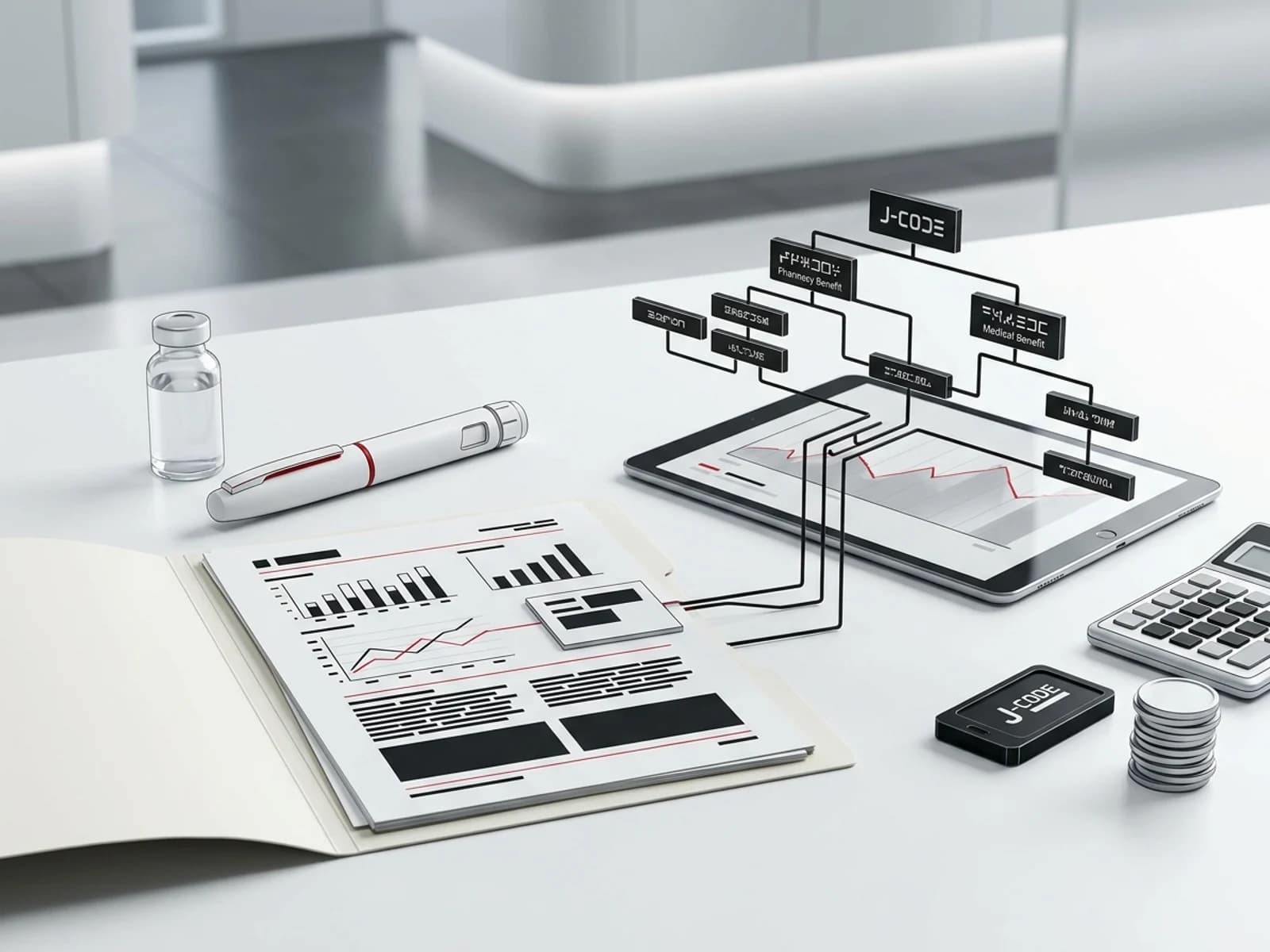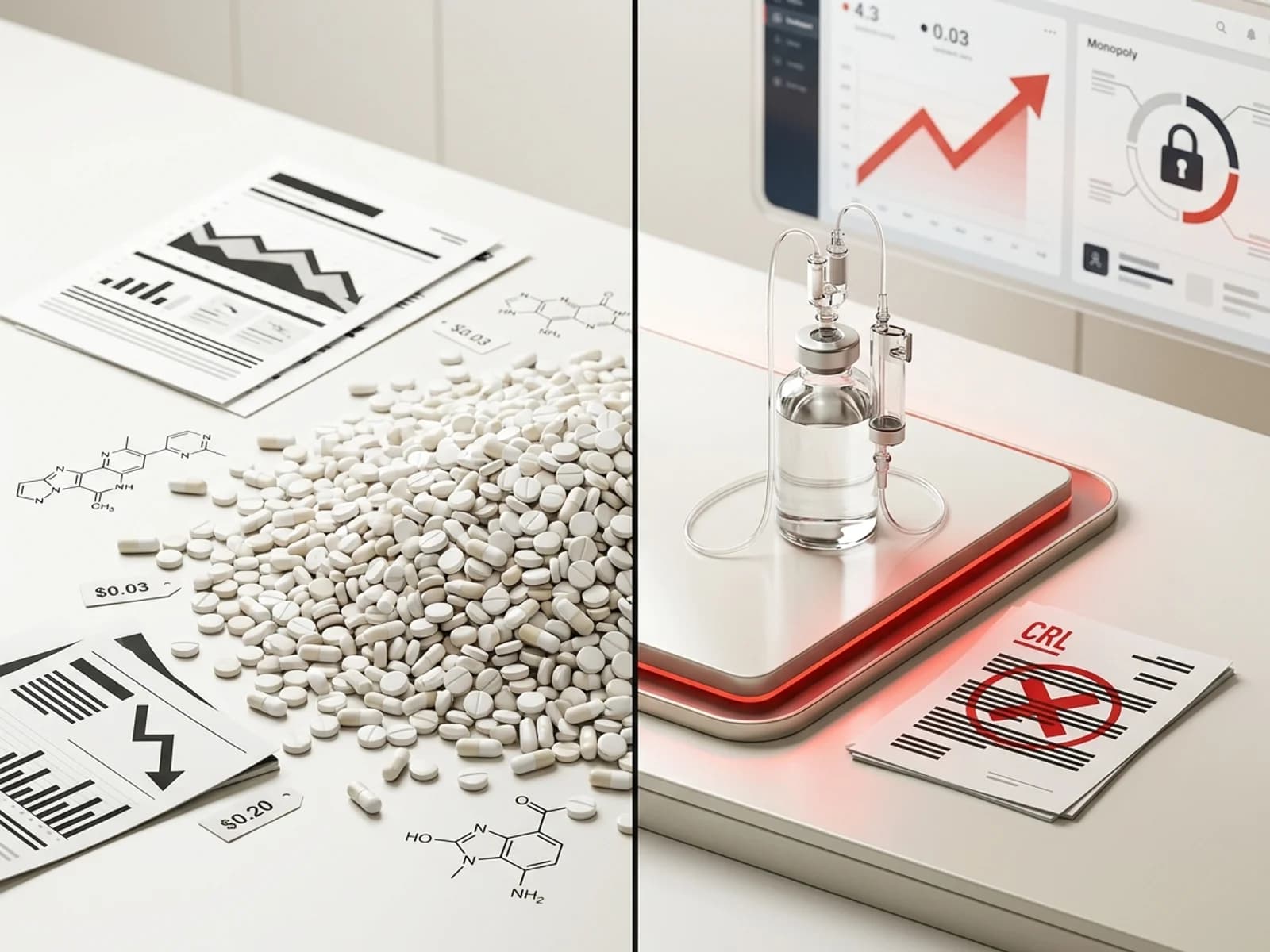
The pharmaceutical access landscape for gout exhibits one of the most extreme structural bifurcations in clinical medicine. At the foundation sits a hyper-commoditized, cheap-generic oral urate-lowering therapy (ULT) base—dominated by allopurinol at approximately $0.03 per tablet and generic febuxostat at $0.20 per tablet—which successfully controls serum uric acid (sUA) for over 90% of hyperuricemic patients. At the top sits a high-cost specialty biologic tier for chronic refractory gout, anchored exclusively by Horizon/Amgen's Krystexxa (pegloticase injection for intravenous infusion), which carries a wholesale acquisition cost (WAC) exceeding $60,000 annually.
This specialty monopoly was expected to face its first competitive challenge in June 2026. However, on June 26, 2026 (the day prior to its scheduled June 27 PDUFA action date), Swedish Orphan Biovitrum (Sobi) received an FDA Complete Response Letter (CRL) for NASP (nanoencapsulated sirolimus co-administered with pegadricase, formerly SEL-212). The FDA cited third-party contract manufacturing and biological-component quality control deficiencies—with zero clinical efficacy or safety concerns raised. As a result, Krystexxa’s position as the sole FDA-approved recombinant uricase remains completely unchallenged for the immediate future.
| Drug Name & Class | Primary Indication & Route | NADAC Lowest Per-Unit Price | Orange Book ANDAs / Biologic Type | Payer Gate & Formulary Tier |
|---|---|---|---|---|
| Allopurinol (Xanthine Oxidase Inhibitor) | First-line ULT (Oral tablet) | $0.03288 / tab (100mg) | 29 Approved ANDAs (24 Applicants) | Tier 1 Preferred Generic (Unrestricted) |
| Febuxostat (Xanthine Oxidase Inhibitor) | Second-line ULT (Oral tablet) | $0.20161 / tab (40mg) | 15 Approved ANDAs (15 Applicants) | Tier 2 Generic (Requires allopurinol failure/intolerance) |
| Colchicine (Mitotic Inhibitor / Prophylaxis) | Flare treatment & prophylaxis (Oral) | $0.12239 / tab (0.6mg tab) | 27 Approved ANDAs (22 Applicants) | Tier 1/2 Generic (Quantity limits apply; capsules ~$2.91/cap) |
| Probenecid (Uricosuric Agent) | Second-line add-on ULT (Oral) | $0.63389 / tab (500mg) | 7 Approved ANDAs (7 Applicants) | Tier 2 Generic (Requires normal renal function) |
| Krystexxa (Pegloticase — Recombinant Uricase) | Chronic Refractory Gout (IV Infusion) | NADAC-Absent (Specialty Buy-and-Bill) | BLA 125293 (Purple Book Biologic) | Tier 4/5 Specialty Biologic (Prior Auth, sUA ≥8 mg/dL, oral ULT failure) |
| Ilaris (Canakinumab — IL-1 beta Inhibitor) | Gout Flares (adults unable to use NSAIDs/colchicine/steroids) (SubQ) | NADAC-Absent (Specialty Pharmacy) | BLA 125319 (Purple Book Biologic) | Tier 5 Specialty (Prior Auth, contraindication/failure of NSAIDs, colchicine & corticosteroids) |
Data source: National Average Drug Acquisition Cost (NADAC) export (July 24, 2026) and FDA Orange Book / Purple Book databases (July 25, 2026). Pegloticase and canakinumab are biologics licensed under BLAs and are absent from NADAC retail surveys.
This report analyzes the full 2026 gout formulary, details the pricing and generic competition metrics across oral ULTs, evaluates the clinical and regulatory state of the specialty infusion market following the NASP CRL, and outlines payer prior-authorization (PA) step-therapy requirements.
What are the gout drug tiers and what does each cost (NADAC + Orange Book ANDA depth)?
To understand payer management in gout, therapies must be evaluated across three distinct clinical categories: oral urate-lowering base, flare treatment/prophylaxis, and specialty refractory biologics.
+-------------------------------------------------------------------------+
|                       GOUT FORMULARY ACCESS TIERING                      |
|                                                                         |
|  Tier 3: Specialty Biologic Tier (Krystexxa / Pegloticase IV)            |
|          [PA Gate: sUA ≥ 8 mg/dL, failed/intolerant to oral ULT]         |
|                                    ^                                    |
|  Tier 2: Second-Line Oral ULT (Febuxostat $0.20/tab, Probenecid)        |
|          [PA Gate: Allopurinol failure, CKD, or HLA-B*5801 positive]     |
|                                    ^                                    |
|  Tier 1: Preferred Generic Base (Allopurinol $0.03/tab, Colchicine)     |
|          [Unrestricted Access / First-Line 2020 ACR Guideline Standard] |
+-------------------------------------------------------------------------+
1. Oral Urate-Lowering Base: Deep Generic Competition
The oral urate-lowering market is heavily commoditized, providing payers with minimal acquisition cost friction:
Allopurinol (Generic Zyloprim): Per the CMS NADAC dataset, 100mg allopurinol tablets carry a lowest acquisition cost of $0.03288 per unit. The FDA Orange Book records 29 approved ANDA applications across 24 generic manufacturers. Allopurinol remains the recommended first-line ULT in the American College of Rheumatology (ACR) guidelines for all patients, including those with moderate-to-severe chronic kidney disease (CKD), provided dose titration is utilized.
Febuxostat (Generic Uloric): Generic febuxostat 40mg tablets carry a lowest NADAC unit price of $0.20161 per tablet, supported by 15 approved ANDAs. While significantly more expensive than allopurinol, generic entry has reduced annual acquisition costs from over $4,000 under brand Uloric down to under $85 annually.
Probenecid: Probenecid 500mg tablets carry a NADAC price of $0.63389 per tablet with 7 approved ANDAs. Probenecid acts as a uricosuric agent, blocking renal tubular reabsorption of uric acid, but requires intact renal function (eGFR > 50 mL/min) and adequate fluid intake to prevent uric acid nephrolithiasis.
2. Acute Flare Prophylaxis: Colchicine & NSAIDs
Initiating or titrating urate-lowering therapy frequently triggers acute gout flares due to rapid mobilization of tissue urate deposits.
Colchicine 0.6mg: Oral colchicine exhibits notable formulation price variance. Generic 0.6mg tablets carry a lowest NADAC price of $0.12239 per tablet (supported by 27 approved ANDA filings across 22 applicants). However, generic colchicine capsules (Mitigare brand and generic equivalents) trade across a range of roughly $1.86 to $2.91 per unit—a 15- to 24-fold price premium for an identical active ingredient depending on the manufacturer. Payer formularies typically restrict coverage to tablet formulations and enforce monthly quantity limits (e.g., 30 tablets/month for prophylaxis; 6 tablets per acute flare event).
Why does Krystexxa still own the uricase monopoly after the NASP CRL?
For patients with severe chronic refractory gout—defined by persistent hyperuricemia (sUA ≥ 8.0 mg/dL) despite maximum-tolerated oral ULT, frequent gout flares (≥2 flares/year), and non-resolving subcutaneous tophi—recombinant uricase therapy is the sole therapeutic option capable of rapidly clearing systemic urate burden.
Recombinant Uricase Mechanism (Krystexxa / Pegloticase)
Uric Acid (Insoluble)  +  Pegloticase (Uricase Enzyme)  --->  Allantoin (Highly Soluble, Easily Excreted)
The Sobi NASP (SEL-212) FDA Complete Response Letter
On June 26, 2026, Sobi received a Complete Response Letter from the FDA regarding its BLA for NASP (nanoencapsulated sirolimus co-administered with pegadricase). NASP was designed as a once-monthly IV infusion combining a novel fungal-derived uricase (pegadricase) with ImmTOR polymeric nanoparticles containing sirolimus to suppress anti-drug antibody (ADA) formation.
Crucially, the FDA's CRL was strictly limited to third-party contract manufacturing site inspections and biological-component process controls. The FDA requested no additional clinical trials, and raised no concerns regarding NASP’s Phase 3 DISSOLVE I and II efficacy or safety data. However, remediating contract manufacturing observations typically requires 9 to 18 months, leaving Horizon/Amgen's Krystexxa with an uninterrupted monopoly in the uricase market through at least late 2027.
Krystexxa + Methotrexate Co-Administration (MIRROR Trial)
Historically, Krystexxa (pegloticase, approved September 14, 2010) suffered from high immunogenicity. Up to 50% of treated patients developed high-titer anti-drug antibodies (ADAs), causing loss of efficacy (sUA rebound above 6 mg/dL) and triggering severe infusion reactions.
This therapeutic limitation was largely solved by the randomized, double-blind MIRROR trial (Botson et al., published in Arthritis & Rheumatology). The trial evaluated co-administering oral methotrexate (15 mg/week) as an immunomodulator alongside pegloticase (8 mg IV infusion every 2 weeks):
Primary Endpoint (sUA < 6.0 mg/dL at Month 6): 71.0% in the pegloticase + methotrexate co-administration arm vs. 38.5% in the pegloticase + placebo arm (p < 0.0001).
Infusion Reactions: Decreased from 30.6% in the monotherapy arm down to 4.2% in the methotrexate co-administration arm.
FDA Label Update: In July 2022, the FDA approved expanding Krystexxa’s label to include co-administration with methotrexate, establishing combination therapy as the recommended label standard for pegloticase administration.
In our NASP/pegadricase PDUFA preview, we analyzed the pre-decision pipeline expectations for SEL-212. The June 26 CRL confirms that while pegadricase showed strong clinical promise, manufacturing compliance remains a primary gatekeeper in biologic approvals.
How do febuxostat (CARES boxed warning) and allopurinol differ for first-line ULT?
The choice between allopurinol and febuxostat for oral urate-lowering therapy carries significant regulatory and safety history.
The CARES Trial and FDA Boxed Warning
In February 2019, the FDA added a Boxed Warning for increased risk of cardiovascular and all-cause mortality to Uloric (febuxostat). This labeling decision was mandated following the completion of the FDA-required CARES trial (White et al., NEJM 2018), a 6,190-patient cardiovascular safety trial comparing febuxostat to allopurinol in gout patients with established major CV disease:
All-Cause Mortality: Hazard Ratio (HR) 1.22 (95% CI, 1.01 to 1.47) for febuxostat vs. allopurinol.
Cardiovascular Mortality: HR 1.34 (95% CI, 1.03 to 1.73) for febuxostat vs. allopurinol.
The FAST Trial and Payer Nuance
Subsequent real-world registry studies and the European FAST trial (Febuxostat versus Allopurinol Streamlined Trial, Lancet 2020), which evaluated 6,128 European patients without pre-existing severe CV disease, demonstrated no increase in CV death or all-cause mortality for febuxostat relative to allopurinol (HR 0.85; 95% CI 0.70 to 1.03).
Despite the FAST trial findings, the FDA Boxed Warning remains active in 2026. Consequently, commercial health plans and pharmacy benefit managers (PBMs) strictly gate febuxostat as a Tier 2/3 second-line generic, requiring prior authorization proving:
Patient experienced documented therapeutic failure (failure to achieve sUA < 6.0 mg/dL after dose titration to 300-800 mg/day) on allopurinol; OR
Patient experienced severe adverse reaction (e.g., allopurinol hypersensitivity syndrome / DRESS) or carries the HLA-B*5801 allele (common in patients of Han Chinese, Thai, and Korean descent), which dramatically increases SJS/TEN risk.
What do payers require before covering Krystexxa or an IL-1 inhibitor?
Because Krystexxa is administered as a biweekly intravenous infusion in an outpatient infusion suite or physician clinic (buy-and-bill site of care), commercial payers and Medicare Advantage plans manage coverage through strict medical benefit prior authorization.
+-------------------------------------------------------------------------+
|                  KRYSTEXXA (PEGLOTICASE) PRIOR AUTH GATEWAY              |
|                                                                         |
|  1. Baseline Serum Uric Acid (sUA) ≥ 8.0 mg/dL                          |
|  2. Documented Trial & Failure of Maximum-Tolerated Oral ULT            |
|     (Allopurinol ≥300mg/day OR Febuxostat ≥800mg/day for ≥3 months)     |
|  3. Presence of Active Clinical Gout Burden                              |
|     (≥2 gout flares in past 12 months OR presence of non-healing tophi) |
|  4. Co-prescription of Methotrexate (15 mg/week) for immunomodulation   |
|  5. Discontinuation of all oral ULTs prior to first infusion            |
+-------------------------------------------------------------------------+
Medical Benefit PA Criteria for Krystexxa
To secure medical authorization for Krystexxa (J-code J2507), medical directors require documentation meeting five strict criteria:
Severe Refractory Disease: Baseline sUA ≥ 8.0 mg/dL.
Oral ULT Failure/Intolerance: Documented failure to achieve sUA < 6.0 mg/dL on maximum titration of allopurinol or febuxostat for at least 3 consecutive months, or medical contraindication.
Symptomatic Burden: Presence of at least one subcutaneous tophus, chronic gouty arthropathy, or ≥2 gout attacks in the preceding 12 months.
Mandatory Oral ULT Washout: Prescribers must explicitly certify that all oral urate-lowering agents (allopurinol, febuxostat, probenecid) will be discontinued upon commencing pegloticase. Continued oral ULT use masks early sUA rebounds caused by anti-drug antibodies, increasing the risk of severe anaphylactic infusion reactions.
Methotrexate Co-Administration Plan: Verification of co-prescription of oral/subcutaneous methotrexate (15 mg/week) and folic acid to prevent ADA formation per the MIRROR trial protocol.
IL-1 Beta Inhibitors for Severe Refractory Flares
In rare cases where acute gout flares cannot be managed with NSAIDs, colchicine, or systemic corticosteroids (e.g., severe renal impairment, solid organ transplant recipients, or steroid intolerance), payers permit coverage of interleukin-1 (IL-1) inhibitors:
Canakinumab (Ilaris — Novartis): In August 2023 the FDA approved canakinumab for the treatment of gout flares in adults who cannot be treated with NSAIDs, colchicine, or repeated courses of corticosteroids (or who are intolerant to or have an inadequate response to those agents) — the first and only biologic approved in the U.S. for gout flares. Administered as a single 150mg subcutaneous injection, it is also approved in the European Union for patients with at least three gout flares per year that cannot be managed with other anti-inflammatory options. With an acquisition cost exceeding $16,000 per dose, payers enforce Tier 5 specialty pharmacy PA controls requiring rheumatologist specialist prescribing and documented failure of or contraindication to colchicine and corticosteroids.
Anakinra (Kineret — Sobi): Used off-label (100mg SubQ daily for 3 days) as a lower-cost IL-1 alternative in hospitalized patients experiencing severe polyarticular gout flares.
Similar to the structural patterns detailed in the hereditary angioedema access landscape, specialty rheumatology market access hinges on proving failure of low-cost oral maintenance regimens before unlocking high-cost biologic specialty coverage.
Frequently Asked Questions
Is febuxostat's boxed warning still in effect in 2026?
Yes. The FDA Boxed Warning regarding increased risk of cardiovascular and overall mortality (based on the 2018 CARES trial) remains active on all generic febuxostat prescribing information in 2026. While the European FAST trial showed no increased CV risk in patients without baseline heart disease, U.S. payers continue to require prior authorization proving allopurinol failure or intolerance before covering febuxostat.
Why is Krystexxa given with methotrexate, and does it improve response?
Krystexxa (pegloticase) is co-administered with weekly low-dose methotrexate (15 mg/week) to suppress the formation of anti-drug antibodies (ADAs). In the pivotal MIRROR clinical trial, adding methotrexate increased the 6-month complete response rate (sUA < 6.0 mg/dL) from 38.5% with pegloticase alone up to 71.0% with combination therapy, while reducing infusion reaction rates from 30.6% down to 4.2%.
What was the NASP/pegadricase CRL and does it mean the drug failed?
On June 26, 2026, Sobi received an FDA Complete Response Letter for NASP (nanoencapsulated sirolimus + pegadricase). The CRL was issued due to manufacturing site inspections and biological-component quality control deficiencies at a third-party contract facility. The FDA raised zero clinical efficacy or safety concerns. The drug did not fail clinically, but approval is delayed until manufacturing deficiencies are resolved.
Sources
U.S. Food and Drug Administration (FDA): Krystexxa (pegloticase) Prescribing Information & Label Updates (BLA 125293). URL:
https://www.accessdata.fda.gov/drugsatfda_docs/label/2024/125293s058lbl.pdfCenters for Medicare & Medicaid Services (CMS): National Average Drug Acquisition Cost (NADAC) Weekly Export. Data dated July 24, 2026. URL:
https://data.medicaid.gov/dataset/NADACU.S. Food and Drug Administration (FDA): Approved Drug Products with Therapeutic Equivalence Evaluations (Orange Book). Database export July 25, 2026. URL:
https://www.fda.gov/drugs/drug-approvals-and-databases/orange-bookSwedish Orphan Biovitrum AB (Sobi): Sobi Receives Complete Response Letter from FDA for NASP (nanoencapsulated sirolimus + pegadricase). Press Release dated June 26, 2026. URL:
https://www.sobi.com/en/press-releasesBotson, J.K., et al.: Pegloticase Plus Methotrexate in Patients With Uncontrolled Gout: Primary Outcomes of a Randomized, Double-Blind, Placebo-Controlled Trial (MIRROR). Arthritis & Rheumatology, 2023; 75(2): 293-304. PubMed ID:
36099211.White, W.B., et al.: Cardiovascular Safety of Febuxostat or Allopurinol in Patients with Gout (CARES). New England Journal of Medicine, 2018; 378(13): 1200-1210. DOI:
10.1056/NEJMoa1710893.American College of Rheumatology (ACR): 2020 American College of Rheumatology Guideline for the Management of Gout. Arthritis Care & Research, 2020; 72(6): 744-760. URL:
https://rheumatology.org/gout-guideline