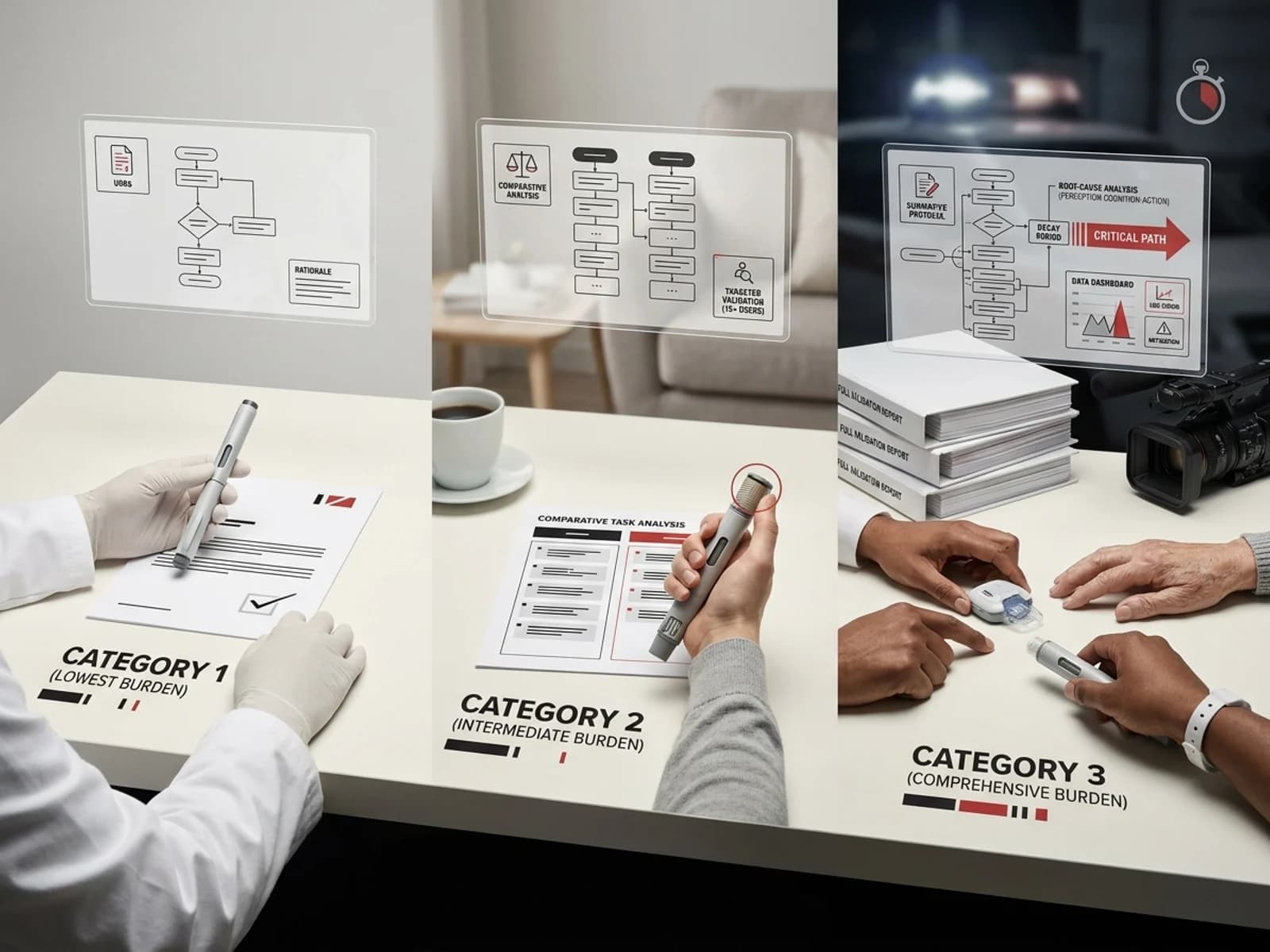
The integration of Digital Health Technologies (DHTs)—such as continuous glucose monitors, wrist-worn accelerometers, smart inhalers, and mobile symptom-tracking apps—into clinical investigations has changed how drug developers measure therapeutic efficacy. By shifting from episodic, clinic-based assessments to continuous, real-world data collection, DHTs promise to capture physiological and behavioral parameters that were previously inaccessible.
However, incorporating a digital endpoint into a drug development program is a complex undertaking. Sponsors must navigate two distinct review gates: first, securing FDA acceptance of the digital endpoint in the drug’s labeling; and second, demonstrating to health technology assessment (HTA) bodies and commercial payers that the digital measure represents a clinically meaningful and economically valuable outcome.
[Trial Data Collection (Wearable/App)]
       │
       ▼  (Gate 1: FDA Review)
[Four-Layer Evidence Bar & DDT Qualification]
       │
       ├─► Accepted as Exploratory/Supportive ──► Gated Label (No Efficacy Claim)
       │                                              │
       │                                              ▼ (Gate 2: Payer/HTA Review)
       │                                         [The Handoff Gap: Denial of Coverage]
       │
       └─► Accepted as Primary/Secondary ────────► Pivotal Label (Basis for Coverage)
Too often, digital endpoints that satisfy the FDA's regulatory requirements are dismissed by payers during formulary evaluations. Because most digital endpoints land in drug labels as "exploratory" or "supportive" rather than primary or secondary efficacy endpoints, payers frequently exclude them from value-dossier assessments.
This article outlines the FDA’s evidence requirements for DHT-derived endpoints, details the Drug Development Tool (DDT) qualification pathway, analyzes the payer handoff gap, and explores the underappreciated device-regulation risks that can disrupt digital endpoints in global trials.
The FDA's digital health framework
The regulatory foundation for digital endpoints in the United States is established across three key FDA policy documents:
1. Framework for the Use of DHTs in Drug and Biological Product Development (March 2023)
This framework outlines the FDA's internal and external initiatives to support the use of DHTs. It establishes CDER’s Digital Health Technologies Committee and coordinates efforts across the Center for Biologics Evaluation and Research (CBER) and the Center for Devices and Radiological Health (CDRH).
2. Digital Health Technologies for Remote Data Acquisition in Clinical Investigations (Final Guidance, December 2023)
This guidance provides recommendations on selecting DHTs, validating measurements, ensuring data integrity, and addressing security concerns. It explains how sponsors should describe DHTs in investigational new drug (IND) applications and trial protocols.
3. Advancing the Use of Digital Health Technologies in Clinical Investigations (March 2026 Federal Register Notice)
This notice (Docket No. FDA-2026-N-06184) updated the FDA's DHT framework. It emphasized the need for standardized data formats and outlined the agency's plans to expand its public catalog of qualified digital health technologies.
Under these policies, the FDA does not require a DHT used in a clinical trial to obtain its own 510(k) clearance or Premarket Approval (PMA) solely because it is being used to collect data in an investigational study. If the DHT is not marketed as a medical device, the FDA reviews the technology as part of the investigational drug submission. However, the sponsor must still submit evidence that the DHT is fit for its purpose in the trial.
The four-layer evidence bar
To accept a DHT-derived endpoint in a regulatory submission, the FDA evaluates the technology across a four-layer evidence chain. If any layer is incomplete, the agency will reject the endpoint or relegate it to exploratory status.
┌────────────────────────────────────────────────────────┐
│ The FDA's Four-Layer DHT Evidence Chain                │
├────────────────────────────────────────────────────────┤
│ Layer 4: Context of Use (Trial Design & Indication)   │
├────────────────────────────────────────────────────────┤
│ Layer 3: Clinical Validation (Clinically Meaningful)  │
├────────────────────────────────────────────────────────┤
│ Layer 2: Verification & Analytical Validation (V&V)    │
├────────────────────────────────────────────────────────┤
│ Layer 1: Data-Flow Integrity (Security & Transmission) │
└────────────────────────────────────────────────────────┘
1. Data-Flow Integrity
This layer focuses on data security, transmission, and retention. The sponsor must demonstrate that the DHT secures data at the point of capture, transmits it without loss or alteration, and maintains an audit trail that complies with 21 CFR Part 11.
This includes documenting the data pathway from the sensor to the patient's smartphone, through the cellular network to the sponsor's clinical trial database, ensuring encryption at rest and in transit. The protocol must also account for data loss due to battery failure, loss of connectivity, or user non-compliance, demonstrating how the database handles missing values without biasing the analysis.
2. Verification and Analytical Validation (V&V)
Verification proves that the hardware and software perform their technical functions reliably (e.g., a wearable sensor measures acceleration within specified tolerances).
Analytical validation demonstrates that the DHT measures the target physiological or behavioral parameter (such as step count, sleep duration, or heart rate) accurately under expected conditions. This requires comparing the DHT's output against a reference standard, such as polysomnography for sleep or manual observation for gait. Sponsors must establish the measurement's limit of detection, linear range, and precision across diverse patient demographics and environments.
3. Clinical Validation
Clinical validation establishes that the parameter measured by the DHT correlates with a clinical state or symptom in the target patient population. The sponsor must prove that the digital measurement is relevant to how patients feel, function, or survive.
For example, showing that an accelerometer-derived gait parameter correlates with a patient's self-reported mobility limitations or functional capacity on a six-minute walk test. In oncology, this might involve demonstrating that a digital activity tracker's measure of active hours correlates with a patient's Eastern Cooperative Oncology Group (ECOG) performance status.
4. Context of Use
The context of use defines the patient population, disease stage, trial setting, and role of the endpoint (e.g., primary, secondary, or exploratory) in the study. An endpoint validated for mild-to-moderate osteoarthritis patients in a home setting may not be valid for severe rheumatoid arthritis patients in an inpatient setting. The sponsor must justify why the DHT is appropriate for the specific trial context, specifying the clinical utility of the measurement within the targeted therapeutic lane.
Technical data standards for DHT submissions
When submitting digital health data to the FDA, sponsors cannot simply dump raw sensor files into the electronic Common Technical Document (eCTD). The FDA expects digital data to be structured in accordance with established industry standards to facilitate regulatory review.
Sponsors must implement the following data standards:
CDISC SDTM (Study Data Tabulation Model): Raw sensor measurements must be aggregated and mapped to SDTM domains, such as the Physical Activity (electronic) domain or the Cardiovascular domain.
CDISC ADaM (Analysis Data Model): Sponsors must define the algorithms used to convert raw epoch-level data into patient-level analysis summaries. For example, detailing how raw 30 Hz acceleration data is processed into "average daily active minutes."
Epoch-Level Metadata: Submissions should include detailed metadata describing the measurement interval (e.g., 60-second epochs), wear-time criteria (e.g., minimum 10 hours of wear per day for a valid day), and the mathematical filters applied to remove artifact noise.
The Drug Development Tool (DDT) qualification pathway
A drug sponsor can validate a digital endpoint for a specific drug program through the IND or NDA review process. However, this project-specific route does not establish the endpoint for broader industry use. To create a reusable digital endpoint, sponsors must use the FDA’s formal Drug Development Tool (DDT) Qualification Programs.
Administered by CDER, the DDT program includes pathways for both Biomarkers and Clinical Outcome Assessments (COAs):
Biomarker Qualification Program: Used if the digital endpoint measures a physiological signal (e.g., continuous blood pressure, heart rate variability, or electrocardiogram metrics).
Clinical Outcome Assessment Program: Used if the digital endpoint measures a patient’s performance or behavior (e.g., home-based activity monitoring, gait speed, or tremor frequency).
The qualification process is structured into three formal stages:
[Letter of Intent (LOI)] ──► [Qualification Plan (QP)] ──► [Full Qualification Package (FQP)]Letter of Intent (LOI): The sponsor defines the proposed DHT, the clinical measurement, and the target context of use. The FDA reviews the LOI to determine the feasibility of the project and ensure it addresses a significant drug development need.
Qualification Plan (QP): If the LOI is accepted, the sponsor submits a detailed plan outlining the analytical and clinical validation studies they intend to run to support qualification. This plan must describe the study protocols, statistical analysis plans, and the data-acquisition hardware.
Full Qualification Package (FQP): The sponsor submits the accumulated validation data, which the FDA reviews to determine if the tool is qualified for the defined context of use.
Once qualified, the digital endpoint is published in CDER's public registry. Any drug developer can then use the endpoint in their clinical trials within the qualified context of use without needing to resubmit validation data. This establishes the digital measurement as a standard regulatory tool, reducing the regulatory risk for future drug submissions.
Global regulatory divergence: FDA DDT vs. EMA qualification
For international trials, sponsors cannot assume that an FDA-qualified digital endpoint will be accepted by European regulators. The European Medicines Agency (EMA) operates its own pathway: the Qualification of Novel Methodologies for Drug Development.
While the FDA and EMA pathways share the goal of validating new technologies, they differ in several key aspects:
| Feature | FDA CDER DDT Program | EMA Qualification Pathway |
|---|---|---|
| Program Scope | Separated into Biomarker and COA pathways, each with its own review committee. | Consolidates all technologies under the Scientific Advice Working Party (SAWP). |
| Review Clock | Structured review stages with variable timelines that can extend over several years. | Runs on a structured, multi-month review clock aligned with the EMA scientific advice procedures. |
| Output Type | Produces a formal qualification decision for a specific context of use. | Produces a "Letter of Support" or a formal "Qualification Opinion." |
| Payer Integration | Does not coordinate reviews with U.S. payers. | Regularly invites HTA bodies (e.g., NICE, G-BA) to participate in the qualification review. |
Because the EMA regularly incorporates HTA feedback into its qualification reviews, securing an EMA Qualification Opinion can provide a stronger foundation for European market access. Sponsors running global trials should consider pursuing parallel qualification procedures with both the FDA and EMA.
UK MHRA and the AI Airlock regulatory sandbox
In addition to the FDA and EMA pathways, sponsors must monitor the United Kingdom’s Medicines and Healthcare products Regulatory Agency (MHRA). Post-Brexit, the MHRA has introduced its own digital health framework, including the AI Airlock regulatory sandbox.
The AI Airlock, piloted in 2024 and expanded through 2026, is a collaborative space where software and AI-based medical devices (including SaMD used to calculate trial endpoints) can be evaluated under real-world conditions with early regulator feedback.
For drug sponsors, the AI Airlock provides a pathway to address validation gaps in a controlled, local environment. It allows sponsors to test adaptive algorithms and remote monitoring systems before executing pivotal registration trials in the UK.
The payer and HTA handoff gap
Securing FDA acceptance of a digital endpoint is a major regulatory milestone, but it does not guarantee commercial reimbursement. Payers and health technology assessment (HTA) bodies evaluate clinical evidence through a different lens than regulatory agencies.
While the FDA focuses on safety and efficacy (whether a drug works under controlled conditions), payers evaluate clinical utility and value (whether the drug improves patient outcomes and reduces overall healthcare costs compared to existing treatments).
This difference in focus leads to the payer handoff gap. When review teams evaluate a digital endpoint, they look for evidence across several domains:
| Evidence Domain | FDA Expectation | Payer / HTA Expectation | Access Risk |
|---|---|---|---|
| Endpoint Hierarchy | Accepts exploratory or secondary digital endpoints to support labeling claims. | Ignores exploratory endpoints. Focuses on primary endpoints that demonstrate clinical utility. | High If the digital endpoint is exploratory, payers will not consider it when evaluating efficacy. |
| Clinical Meaningfulness | Accepts surrogate measures (e.g., mean daily steps) if analytically validated. | Demands proof of clinical relevance (e.g., does an increase in steps reduce hospitalization?). | High Without evidence linking the digital measure to health outcomes, payers will reject surrogate endpoints. |
| Patient-Reported Relevance | Focuses on the objective accuracy of the sensor data. | Demands concordance with patient-reported outcomes (PROs) and quality-of-life metrics. | Moderate If a device shows a statistical change that patients cannot feel, payers will dismiss the benefit. |
| Economic Utility | Does not evaluate cost offsets or healthcare resource utilization. | Requires evidence of cost-effectiveness, reduction in hospital visits, or drug-sparing effects. | High Without economic data, payers will not approve premium pricing based on digital endpoints. |
A common issue in oncology and immunology trials is that digital endpoints, such as nocturnal scratch frequency for atopic dermatitis or continuous activity tracking for multiple sclerosis, are often relegated to exploratory secondary endpoints.
When a drug sponsor presents their Value Evidence Binder—typically formatted according to the AMCP Dossier Version 5.0 standard (see our guide to building the AMCP dossier and value-evidence template)—payers often discount exploratory digital metrics. They default to traditional clinical endpoints, such as the Eczema Area and Severity Index (EASI) or the Expanded Disability Status Scale (EDSS).
To bridge this gap, HEOR (health economics and outcomes research) teams must design validation studies that link DHT-derived measurements to patient-centered outcomes. For example, if a sponsor can prove that an accelerometer-derived mobility metric correlates with a reduction in outpatient visits or physical therapy requirements, they can build a stronger value case for payers.
Similarly, in HTA jurisdictions like the UK (NICE) or Canada (CADTH), digital endpoints must be mapped to utility scores (such as EQ-5D) to calculate quality-adjusted life years (QALYs). Simply showing that a drug statistically increases a patient's average daily step count is rarely sufficient to secure formulary coverage.
NICE early value assessment (EVA) for digital health
In the UK, the National Institute for Health and Care Excellence (NICE) operates the Early Value Assessment (EVA) program. This program is specifically designed to evaluate digital health technologies that address national clinical needs.
The EVA provides a structured framework for temporary, conditional reimbursement. If a digital technology (such as a remote monitoring app or an algorithm used to track disease progression) shows promising clinical data but lacks long-term outcomes evidence, NICE can recommend it for early clinical use. During this temporary reimbursement period, the sponsor must collect real-world evidence (RWE) to address the clinical and economic uncertainty, building the case for a permanent recommendation.
Detailed validation example: actigraphy in Parkinson's disease
To understand how the four-layer evidence bar applies in practice, consider a sponsor developing a drug to treat motor fluctuations in Parkinson's disease. The sponsor wants to use a wrist-worn accelerometer to measure "on-body active hours" and "tremor severity" as a key secondary endpoint.
Layer 1: Data-Flow Integrity Validation
The sponsor partners with a device vendor whose wearable sensor records raw acceleration data at 50 Hz. The data is stored locally on the device, encrypted using AES-256, and synchronized daily via Bluetooth to a dedicated mobile app.
The app uploads the data to a secure cloud server. The validation protocol must prove that the data transfer process preserves timestamps, prevents data duplication, and logs all transmission attempts. The database must maintain an audit trail detailing any manual data exclusions (e.g., if the patient removed the watch for swimming).
Layer 2: Verification and Analytical Validation
The vendor verifies the accelerometer's calibration using shaker-table testing, showing that the physical sensor measures acceleration accurately within a ±0.05g range.
Analytical validation is conducted by having 30 Parkinson's patients wear the device in a laboratory setting while performing a series of tasks (e.g., reaching, writing, walking) and resting. The device's automated algorithm, which counts tremor episodes, is validated against video recordings analyzed by two independent clinical raters. The study demonstrates that the algorithm has a 92% sensitivity and 89% specificity in identifying active tremors.
Layer 3: Clinical Validation
The sponsor must prove that the digital tremor count is clinically meaningful. They conduct a validation study showing that patients with higher digital tremor counts also report lower scores on the Unified Parkinson's Disease Rating Scale (UPDRS) Part II (motor experiences of daily living) and report a lower quality of life on the PDQ-39 questionnaire. This study establishes that the digital metric correlates with actual patient impairment.
Layer 4: Context of Use Justification
The sponsor restricts the context of use to patients with Stage II-IV Parkinson's disease on the Hoehn and Yahr scale who experience at least two hours of "off" time daily.
The device is validated for home use during normal waking hours. The protocol specifies that the device must be worn on the dominant wrist, as bilateral wearing would introduce noise and confound the tremor algorithm.
Detailed validation example: mobile cognitive testing in Alzheimer's disease
In another example, a sponsor developing a drug for early-stage Alzheimer's disease wants to incorporate a mobile application that tests "episodic memory recall" and "reaction time" through weekly micro-games.
Analytical Validation: The sponsor must demonstrate that the software records reaction times accurately within a millisecond range across different smartphone models, accounting for varying screen refresh rates and operating system latency.
Clinical Validation: The sponsor must show that performance on the mobile tests correlates with established clinical metrics, such as the Mini-Mental State Examination (MMSE) and the Alzheimer's Disease Assessment Scale–Cognitive Subscale (ADAS-Cog).
Context of Use: The testing is restricted to patients with mild cognitive impairment (MCI) or mild dementia who have prior experience using smartphones, ensuring that the results are not confounded by a patient's unfamiliarity with technology.
The hidden risk: SaMD regulation and global trial consistency
An underappreciated risk in digital drug development programs is that the software used to collect and analyze endpoint data may trigger medical device regulations. Under the International Medical Device Regulators Forum (IMDRF) N10 framework, software intended for medical purposes that runs on general-purpose hardware is classified as Software as a Medical Device (SaMD).
If a drug developer uses a custom mobile application to guide clinical dosing or analyze patient data in a trial, that app may be classified as SaMD. In this scenario, the software becomes subject to international device regulations, which vary significantly by market.
Sponsors must manage several key regulatory challenges when deploying SaMD in global trials:
Classification Divergence: A clinical app classified as Class II in the United States may face stricter requirements in other jurisdictions. Under the EU Medical Device Regulation (MDR) Rule 11, software that guides diagnostic or therapeutic decisions is classified as Class IIa or higher. In China, similar software is often classified as Class III. This divergence requires sponsors to maintain separate regulatory filings for the same application across different regions, which can delay study start times.
Post-Approval Change Control: As clinical trials progress, sponsors often need to update app code to fix bugs or optimize performance. In the U.S., a modification explicitly described in an FDA-authorized Predetermined Change Control Plan (PCCP) may be implemented under its authorized Modification Protocol without a new marketing submission; a change outside that plan still follows the ordinary change-assessment and submission pathway. FDA authorization does not authorize the same change in another jurisdiction. As PureGlobal's comparison of SaMD classification and adaptive-algorithm change control explains, a software update implemented in the U.S. may require a formal change submission or notified body review in the EU or China. This can lead to different versions of the software running in different regions, creating inconsistencies in how trial data is collected.
Adaptive AI and Machine Learning: If the DHT uses machine-learning models to analyze sensor data (such as scoring sleep stages or detecting cardiac arrhythmias), any updates to the model will trigger software change-control reviews. While the FDA's AI-enabled medical device registry includes over 1,000 cleared systems, most were approved as static algorithms. If a sponsor updates an adaptive algorithm mid-trial, they must navigate different postmarket review pathways in each region. For example, Japan's IDATEN framework and South Korea's Digital Medical Products Act (DMPA) provide pathways for pre-approved change protocols, but these systems are not harmonized, requiring custom filings in each market.
Pre-submission checklist for digital endpoints
Before initiating a clinical trial with a digital health technology endpoint, sponsors should complete the following pre-submission checklist to ensure regulatory alignment and payer readiness:
1. Confirm the DHT regulatory status in all trial jurisdictions
Determine whether the measuring app, sensor, or cloud analysis platform is classified as SaMD under IMDRF N10, and verify its regulatory class in the U.S., EU, UK, Canada, Australia, and China.
2. Verify V&V data against FDA’s December 2023 DHT guidance
Confirm that verification and analytical validation studies are complete, documented, and compared against an accepted clinical reference standard.
3. Establish the endpoint's place in the regulatory dossier
Define whether the digital measure is a primary, secondary, or exploratory endpoint, and justify the clinical meaningfulness of the metric for the target population.
4. Consult the FDA via the pre-submission (Q-Sub) process
Submit a Q-Submission request to CDER/CDRH to obtain formal feedback on the DHT validation plan, data-flow integrity, and context of use before starting the pivotal trial.
5. Evaluate the DDT qualification pathway for multi-program use
If the digital endpoint has utility across multiple drug programs, assess the feasibility of submitting a Letter of Intent to the CDER Biomarker or COA Qualification Program.
6. Design the HEOR validation plan for payer review
Create a plan to collect evidence linking the digital endpoint to patient-reported outcomes (PROs), quality-of-life scales, and healthcare resource utilization metrics to support the AMCP dossier.
7. Build a software change-control protocol for global sites
Establish a procedure to manage software updates, security patches, and machine-learning model adjustments across all international trial sites, ensuring compliance with regional SaMD change-control rules.
Frequently Asked Questions (FAQ)
Does a wearable used as a trial endpoint need its own FDA 510(k) clearance?
No. According to the FDA's December 2023 guidance on DHTs for remote data acquisition, a wearable sensor does not require its own 510(k) clearance solely because it is used to collect data in an investigational drug study. The FDA reviews the validation and performance data of the wearable as part of the drug’s investigational new drug (IND) application or new drug application (NDA). However, if the wearable is marketed to consumers as a medical device outside the trial, it must obtain separate clearance through the standard CDRH device review pathways.
What is the difference between a DHT that is accepted and one that is qualified as a Drug Development Tool?
An accepted DHT is approved by the FDA for use within a specific drug program's clinical trials, and its validation data is tied to that sponsor's NDAs or BLAs. A qualified DHT has completed the FDA’s formal Drug Development Tool (DDT) Qualification Program. Once qualified, the DHT and its digital endpoint are recorded in CDER’s public registry. This allows any drug developer to use the technology for the qualified context of use without needing to resubmit validation data.
Can digital-endpoint evidence alone secure payer coverage?
Rarely. Payers and HTA bodies generally do not base formulary coverage decisions solely on digital health measurements. They prioritize hard clinical outcomes, such as survival rates, reduction in clinical events, and established patient-reported outcomes (PROs). To secure coverage, drug developers must link the digital measurements to outcomes that payers value, such as a reduction in hospitalization rates or a demonstrated improvement in patient quality of life.
How does the FDA ensure data privacy for remote clinical trials?
Sponsors must ensure that all remote data collection complies with the Health Insurance Portability and Accountability Act (HIPAA) in the United States and the General Data Protection Regulation (GDPR) in the European Union. Raw sensor data must be de-identified at the patient level, and access to the decryption keys must be restricted to authorized trial personnel. The transmission protocols must use secure, end-to-end encryption to prevent unauthorized data interception.
What is a "wear-time compliance" rule in a clinical trial?
A wear-time compliance rule defines the minimum duration a participant must wear a digital sensor for the data collected on that day to be considered valid for the analysis. For example, a protocol might require the patient to wear an accelerometer for at least 10 waking hours a day, for at least 5 days out of a 7-day tracking window. Days that fail to meet this threshold are excluded from the dataset as non-compliant to prevent missing-data bias from confounding the treatment effect.
What happens if a patient stops wearing the device during a trial?
The clinical protocol must establish clear "wear-time compliance criteria." For example, requiring a patient to wear the sensor for at least 10 hours a day for at least 5 days a week for the data to be included in the final efficacy analysis. The trial statistical analysis plan must define how the study handles missing data points (such as utilizing mixed-effects models for repeated measures) to prevent bias.
Sources
U.S. Food and Drug Administration (FDA). Digital Health Technologies for Remote Data Acquisition in Clinical Investigations: Guidance for Industry, Investigators, and Other Stakeholders. December 2023. https://www.fda.gov/regulatory-information/search-fda-guidance-documents/digital-health-technologies-remote-data-acquisition-clinical-investigations
U.S. Food and Drug Administration (FDA). Framework for the Use of Digital Health Technologies in Drug and Biological Product Development. March 2023. https://www.fda.gov/science-research/science-and-research-special-topics/digital-health-technologies-dhts-drug-development
Federal Register. Advancing the Use of Digital Health Technologies in Clinical Investigations for Drugs and Biological Products; Public Workshop. March 31, 2026 (Docket No. FDA-2026-N-06184). https://www.federalregister.gov/documents/2026/03/31/2026-06184/advancing-the-use-of-digital-health-technologies-in-clinical-investigations-for-drugs-and-biological
International Medical Device Regulators Forum (IMDRF). Software as a Medical Device (SaMD): Key Definitions. IMDRF/SaMD WG/N10 FINAL: 2013. https://www.imdrf.org/documents/software-medical-device-samd-key-definitions
U.S. Food and Drug Administration (FDA). Drug Development Tool (DDT) Qualification Programs. https://www.fda.gov/drugs/development-approval-process-drugs/drug-development-tool-ddt-qualification-programs
PureGlobal. AI as a Medical Device: The Global Map of Regulation, Registration, and Market Access.
Academy of Managed Care Pharmacy (AMCP). Format for Formulary Submissions, Version 5.0. https://www.amcp.org/resource-center/format-formulary-submissions
U.S. Food and Drug Administration (FDA). Artificial Intelligence-Enabled Medical Devices. https://www.fda.gov/medical-devices/software-medical-device-samd/artificial-intelligence-enabled-medical-devices
Last updated July 16, 2026. This article is for informational purposes only and does not constitute medical, regulatory, or legal advice. Readers should verify current guidance and consult with qualified experts before designing clinical protocols or reimbursement strategies.