Dermatomyositis (DM) is a rare, severe autoimmune inflammatory myopathy characterized by systemic muscle weakness, skin rashes (such as Gottron’s papules and heliotrope rash), and potential extramuscular complications including interstitial lung disease and vasculopathy. For decades, therapeutic management has relied on non-specific immunosuppression, creating a complex access maze for patients, rheumatologists, neurologists, and dermatologists.
Update (August 27, 2026): FDA approved Lisraya (brepocitinib) 30 mg tablets for adult dermatomyositis. The labeled Table 3 TIS numbers, boxed warning, unapproved 15 mg arm, and WAC disclosure are in the Lisraya approval-and-access article. This page remains the csDMARD/Octagam ladder; VALOR NCT and pre-label TIS figures below are superseded by that label.
There is currently no oral targeted therapy approved by the FDA specifically for dermatomyositis. Clinical care relies on a foundation of high-dose corticosteroids supplemented by off-label steroid-sparing conventional synthetic disease-modifying antirheumatic drugs (csDMARDs) such as methotrexate, azathioprine, and mycophenolate mofetil. Intravenous immunoglobulin (IVIG)—specifically Octagam 10%, approved by the FDA in July 2021 based on the Phase 3 ProDerm trial—remains the only FDA-approved specialty biologic treatment for adult dermatomyositis (dosed at 2.0 g/kg per approved prescribing information), while off-label rituximab is reserved for severe or refractory cases.
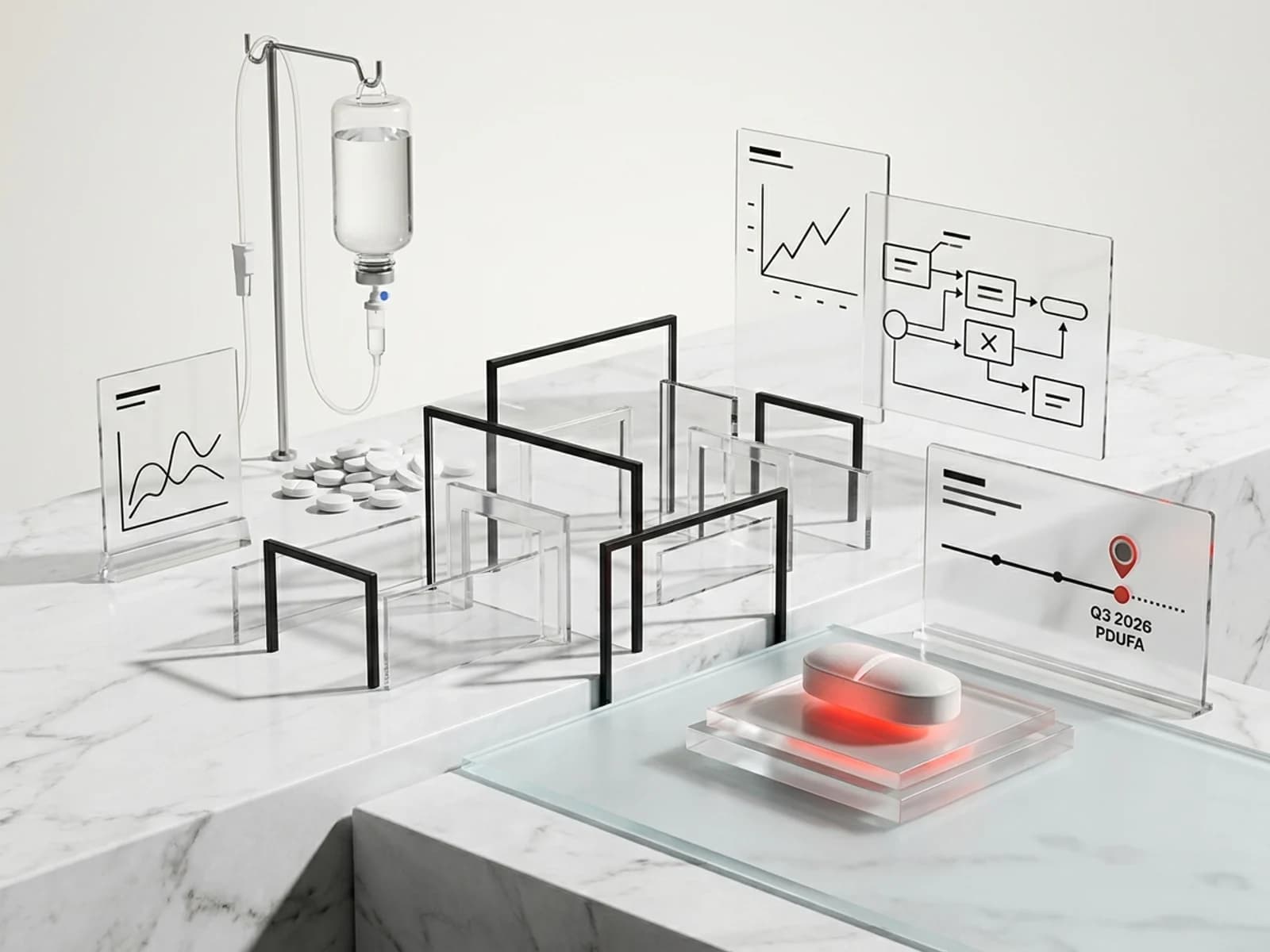
This therapeutic and access baseline is set to shift with the upcoming FDA Prescription Drug User Fee Act (PDUFA) action date in Q3 2026 (late September 2026) for brepocitinib (Priovant Therapeutics / Roivant Sciences, in collaboration with Pfizer). Brepocitinib, an oral dual tyrosine kinase 2 (TYK2) and Janus kinase 1 (JAK1) inhibitor, demonstrated statistically significant and clinically meaningful efficacy in the pivotal Phase 3 VALOR trial. If approved, brepocitinib will become the first oral targeted therapy for dermatomyositis, introducing novel formulary tiering, step-therapy prerequisites, and safety-monitoring considerations to commercial and Medicare formularies.
This landscape guide examines the current standard-of-care ladder, the on-label and off-label specialty options, the clinical and regulatory profile of brepocitinib, and the prior-authorization framework payers will enforce in 2026.
What is the scenario answer for dermatomyositis access at a glance?
A long-context question frequently facing clinicians, specialty pharmacies, and medical directors is: When a dermatomyositis patient experiences inadequate disease control or intolerable toxicity on high-dose glucocorticoids and first-line methotrexate, what FDA-approved and off-label options exist, what will brepocitinib add, and how do payers restrict access?
+-----------------------------------------------------------------------------------+
|                        DERMATOMYOSITIS ACCESS LADDER (2026)                       |
+-----------------------------------------------------------------------------------+
| STEP 1: Steroid Foundation & Generic csDMARD Floor                                |
| High-dose Glucocorticoids (Prednisone) + Generic csDMARD                          |
| - Methotrexate (NADAC ~$0.16/2.5mg, 52 ANDAs) or Azathioprine / Mycophenolate     |
| - Payers require documented 8-12 week trial and inadequate response/intolerance    |
+-----------------------------------------------------------------------------------+
                                         |
                                         v
+-----------------------------------------------------------------------------------+
| STEP 2: On-Label Specialty & B-Cell Depletion                                    |
| - Octagam 10% IVIG (FDA-Approved July 2021; ProDerm trial baseline)              |
|   Requires PA: confirmed DM diagnosis, muscle weakness/skin score, csDMARD failure|
| - Rituximab (Off-Label; BLA 103705 + 3 biosimilars: Truxima, Ruxience, Riabni)    |
|   Requires PA: failure of glucocorticoids + 2 csDMARDs or IVIG intolerance       |
+-----------------------------------------------------------------------------------+
                                         |
                                         v (Emerging 2026)
+-----------------------------------------------------------------------------------+
| STEP 3: Imminent Oral Targeted Therapy                                            |
| - Brepocitinib (Oral Dual TYK2/JAK1 Inhibitor; PDUFA Q3 2026)                      |
|   Pivotal VALOR Phase 3: TIS LS mean +15.3 vs PBO (p<0.001); 62% steroid sparing  |
|   Anticipated PA: Steroid + csDMARD failure; potential TNFi/biologic step logic   |
+-----------------------------------------------------------------------------------+
Direct Answer: Dermatomyositis management today is built upon a generic cost floor of systemic glucocorticoids and off-label csDMARDs. Octagam 10% IVIG is the single FDA-approved specialty drug for adult DM, backed by the Phase 3 ProDerm trial (dosed at 2.0 g/kg per FDA label), but requires intensive buy-and-bill or specialty pharmacy prior authorization demonstrating csDMARD failure. Off-label rituximab serves as a second-line biologic anchor. Brepocitinib’s anticipated late-September 2026 FDA approval as an oral once-daily TYK2/JAK1 inhibitor represents a major clinical advance. However, payers will construct prior-authorization protocols requiring documented failure of generic csDMARDs and will apply boxed warning monitoring consistent with the broader JAK inhibitor access landscape.
What is the standard-of-care ladder for dermatomyositis in 2026?
The therapeutic strategy in adult dermatomyositis aims to control muscle inflammation, resolve cutaneous lesions, prevent systemic complications (such as pulmonary fibrosis and dysphagia), and taper systemic corticosteroids to minimize long-term toxicities (osteoporosis, diabetes, hypertension, and infection).
Despite published consensus guidelines from the International Myositis Assessment and Clinical Studies Group (IMACS) and European Alliance of Associations for Rheumatology (EULAR), formal FDA-approved drug options remain remarkably sparse. As a result, the standard-of-care ladder relies heavily on off-label generic immunosuppressive agents.
Tier 1: Systemic Glucocorticoids and Conventional Synthetic DMARDs
First-line therapy for active moderate-to-severe dermatomyositis initiates with high-dose oral prednisone (1.0 mg/kg/day, up to 60–80 mg/day per EULAR/ACR guidelines) or intravenous pulse methylprednisolone for severe acute presentations (e.g., severe dysphagia or rapidly progressive interstitial lung disease). Because long-term monotherapy with high-dose steroids carries severe morbidity, a steroid-sparing csDMARD is initiated simultaneously.
The generic csDMARD floor is defined by four main agents:
Methotrexate: Recommended as the preferred first-line oral csDMARD by most rheumatologists. Administered weekly (15–25 mg) orally or subcutaneously.
Azathioprine: Preferred in patients with underlying lung involvement or liver dysfunction where methotrexate may be contraindicated. Dosed at 1.5–2.5 mg/kg/day per guidelines.
Mycophenolate Mofetil (MMF): Frequently selected for dermatomyositis with cutaneous-predominant disease or myositis-associated interstitial lung disease (ILD).
Calcineurin Inhibitors (Tacrolimus / Cyclosporine): Used as second-line csDMARDs or in combination with mycophenolate for severe myositis-ILD.
Generic DMARD Pricing and Availability Floor
To understand why health plans enforce rigid step therapy requiring csDMARD trials before approving specialty biologics or pending targeted therapies, one must examine the acquisition cost floor.
| Drug Name | Mechanism / Indication | FDA Orange Book ANDA Rows | National Average Drug Acquisition Cost (NADAC) |
|---|---|---|---|
| Methotrexate | DHFR inhibitor (Off-label DM) | 52 ANDAs (119 product rows) | $0.15807 per 2.5 mg tablet |
| Prednisone | Corticosteroid (SoC base) | 118 ANDAs (178 product rows) | $0.05617 per 10 mg tablet |
| Azathioprine | Purine synthesis inhibitor (Off-label) | 6 ANDAs (20 product rows) | $0.12824 per 50 mg tablet |
| Mycophenolate Mofetil | IMPDH inhibitor (Off-label DM/ILD) | 81 product rows | $0.26884 per 500 mg tablet |
| Tacrolimus | Calcineurin inhibitor (Off-label DM) | 63 product rows | $0.15126 per 1 mg capsule |
Because generic methotrexate costs approximately $0.16 per tablet and prednisone costs under $0.10 per tablet, a patient can be maintained on dual csDMARD therapy for under $30 per month. This generic baseline establishes a massive financial barrier that any novel specialty agent costing $4,000 to $8,000 per month must overcome through clear clinical trial superiority and payer prior authorization.
How do Octagam IVIG and Rituximab fit into specialty access?
When patients experience persistent muscle weakness, refractory skin lesions, or steroid dependency despite high-dose steroids and csDMARDs, therapy escalates to specialty biologics.
+-----------------------------------------------------------------------------------+
|                        SPECIALTY BIOLOGICS IN DERMATOMYOSITIS                     |
+-----------------------------------------------------------------------------------+
| OCTAGAM 10% (IVIG)                                                                |
| - Approval: FDA Approved July 2021 (Only FDA-approved DM specialty biologic)      |
| - Pivotal Trial: ProDerm Phase 3 (78.7% TIS response vs 43.8% PBO at W16)         |
| - Dosing: 2.0 g/kg IV split over 2-5 days every 4 weeks (FDA Label)               |
| - Payer Mode: Buy-and-bill (J1568) or Specialty Pharmacy                          |
+-----------------------------------------------------------------------------------+
                                         |
                                         v
+-----------------------------------------------------------------------------------+
| RITUXIMAB (Off-Label CD20 Biologic)                                               |
| - Approval: Off-label for DM (FDA approved for RA, GPA/MPA, PV)                   |
| - Pivotal Trial: RIM Trial (83% of refractory DM/PM met definition of improvement)|
| - Dosing: 1,000 mg IV at Day 1 and Day 15, repeated every 6 months                |
| - Biosimilars: Truxima, Ruxience, Riabni (3 FDA-licensed; cuts acquisition cost) |
+-----------------------------------------------------------------------------------+
Octagam 10% IVIG: The FDA-Approved Specialty Benchmark
In July 2021, Octapharma secured FDA approval for Octagam 10% [Immune Globulin Intravenous (Human)] for the treatment of adult dermatomyositis. This marked a historic milestone: Octagam became the first and only FDA-approved IVIG product—and the only approved specialty biologic overall—specifically indicated for dermatomyositis.
The approval was grounded in the international Phase 3 ProDerm trial (NCT02728752), a randomized, double-blind, placebo-controlled study evaluating 95 adults with active DM:
Primary Endpoint: At Week 16, 78.7% of patients receiving Octagam (dosed at 2.0 g/kg every 4 weeks per FDA labeling) achieved a minimal improvement on the IMACS Total Improvement Score (TIS ≥20) compared with 43.8% of patients on placebo (p < 0.001).
Secondary Endpoints: Statistically significant improvements in cutaneous dermatomyositis disease area and severity index (CDASI) and Manual Muscle Testing-8 (MMT-8).
Steroid Sparing: In the open-label extension phase (Weeks 16 to 40), IVIG maintained long-term efficacy while permitting corticosteroid dose reductions.
Octagam Access and Coverage Challenges
Despite its FDA approval, Octagam faces notable reimbursement hurdles:
High Acquisition and Administration Cost: IVIG dosing in DM per FDA label is 2.0 g/kg monthly. For a 70 kg patient, this requires 140 grams of IVIG per month. With IVIG average wholesale prices ranging from $120 to $180 per gram, drug cost alone exceeds $16,000 to $25,000 per monthly cycle.
Infusion Logistics and Site of Care: Administered via IV over 2 to 5 consecutive days every 4 weeks. Payers frequently mandate site-of-care diversion, redirecting patients from hospital outpatient departments (HOPD) to ambulatory infusion centers (AICs) or home infusion to reduce facility fees.
Product-Specific Prior Authorization: Although IVIG is a broad drug class (with products like Gammagard, Privigen, and Gamunex-C), Octagam 10% holds the explicit DM FDA label. Payers may restrict coverage specifically to Octagam or mandate therapeutic substitution policies if non-approved IVIG brands offer higher manufacturer rebates.
Off-Label Rituximab: B-Cell Depletion in Refractory DM
Rituximab, a chimeric monoclonal antibody targeting CD20 on B-lymphocytes, is widely utilized off-label for severe, refractory dermatomyositis, particularly in patients harboring anti-Mi-2, anti-Jo-1, or anti-TIF1-γ myositis-specific autoantibodies (MSAs).
Clinical validation stems from the landmark Rituximab in Myositis (RIM) trial published by Oddis and colleagues. Although the trial missed its primary endpoint of time to improvement between the early- and late-rituximab arms, 83% of refractory myositis patients met the definition of clinical improvement after rituximab administration, with strong efficacy observed in specific autoantibody subsets.
From a payer perspective, rituximab access has been reshaped by the availability of three FDA-licensed biosimilars (Truxima, Ruxience, and Riabni). Payers routinely approve off-label rituximab for dermatomyositis under medical exceptions, provided the prescribing physician submits documentation of:
Confirmed DM diagnosis with positive MSA serology or muscle biopsy.
Inadequate response or severe toxicity to high-dose corticosteroids plus at least two csDMARDs (or IVIG).
What does brepocitinib’s VALOR Phase 3 show and when could it launch?
The clinical and commercial profile of brepocitinib represents a potential watershed moment in rare autoimmune disease management. Developed by Priovant Therapeutics (a Roivant Sciences subsidiary formed in partnership with Pfizer, which holds a 25% equity stake), brepocitinib is an investigational oral, once-daily dual inhibitor of TYK2 and JAK1.
+-----------------------------------------------------------------------------------+
|                         BREPOCITINIB CLINICAL & REGULATORY PROFILE                 |
+-----------------------------------------------------------------------------------+
| - Mechanism: Dual TYK2 / JAK1 Oral Inhibitor (15 mg & 30 mg QD tablets)           |
| - Sponsor: Priovant Therapeutics / Roivant Sciences (Pfizer 25% equity)           |
| - Designations: FDA Breakthrough Therapy, Orphan Drug, Priority Review           |
| - PDUFA Action Date: Q3 2026 (Target: Late September 2026)                        |
|                                                                                   |
| PIVOTAL TRIAL: VALOR Phase 3 (NCT05517252; NEJM 394:1883-1893)                    |
| - Population: 241 adults with active adult DM failing ≥1 prior therapy            |
| - Primary Endpoint: Mean Total Improvement Score (TIS) at Week 52                 |
|   * Brepocitinib 30 mg: LS mean TIS difference +15.3 vs Placebo (p < 0.001)       |
| - Key Secondaries: All 9 key secondary endpoints met (p < 0.01)                   |
|   * MMT-8 muscle strength improvement (p < 0.001)                                 |
|   * CDASI skin score reduction (p < 0.001)                                        |
|   * Steroid Sparing: 62% reduced corticosteroids to ≤2.5 mg/day (p < 0.001)       |
+-----------------------------------------------------------------------------------+
The VALOR Phase 3 Clinical Results
The FDA New Drug Application (NDA) for brepocitinib in dermatomyositis is supported by data from the pivotal Phase 3 VALOR trial, published in the New England Journal of Medicine (Vleugels RA, Paik JJ, Aggarwal R, et al. N Engl J Med 2026; 394:1883-1893).
VALOR is the largest, most rigorous double-blind, placebo-controlled Phase 3 study ever conducted in dermatomyositis, enrolling 241 adult patients across 90 international clinical sites. Patients were randomized to receive brepocitinib 30 mg once daily, brepocitinib 15 mg once daily, or matching placebo for 52 weeks, alongside background immunosuppressants and a forced corticosteroid taper.
Key findings from the VALOR trial include:
Primary Efficacy (Total Improvement Score): At Week 52, patients treated with brepocitinib 30 mg achieved a least-squares (LS) mean TIS score of 46.5 compared with 31.2 in the placebo group, representing a statistically significant difference of +15.3 points (p < 0.001).
Secondary Clinical Endpoints: Brepocitinib met all 9 key secondary endpoints, demonstrating statistically superior improvements in muscle strength (MMT-8), skin disease activity (CDASI), patient-reported global activity, and physician global assessment.
Profound Corticosteroid Sparing: Crucially for long-term safety, 62% of patients in the brepocitinib 30 mg arm successfully reduced their daily prednisone dose to ≤2.5 mg/day by Week 52, compared with 34% in the placebo arm.
Onset of Action: Statistically significant separation from placebo on TIS and CDASI was observed as early as Week 4, underscoring rapid clinical benefit.
Regulatory Timelines and FDA Designations
The FDA accepted the NDA for brepocitinib in March 2026, granting Priority Review and establishing a PDUFA target action date in Q3 2026 (late September 2026). Commercial launch in the United States is anticipated immediately following approval.
Brepocitinib has received both Breakthrough Therapy Designation and Orphan Drug Designation from the FDA for dermatomyositis. If approved:
Brepocitinib will become the first oral targeted therapy approved for dermatomyositis.
It will represent the first new approved oral mechanism in DM in decades.
Priovant will secure 7 years of US Orphan Drug market exclusivity for the dermatomyositis indication.
How do payers cover IVIG and rituximab, and how will brepocitinib be managed?
Commercial health plans, PBMs (such as Carelon, Express Scripts, and CVS Caremark), and Medicare Advantage plans view dermatomyositis as a high-cost specialty therapeutic area. Prior authorization (PA) protocols are structured around diagnostic rigor, clinical documentation of disease severity, and enforced step-therapy requirements.
COMPARATIVE PAYER MANAGEMENT & PRIOR AUTHORIZATION MATRIX
| Parameter | Octagam 10% IVIG | Rituximab (Off-Label) | Brepocitinib (Pending) |
|---|---|---|---|
| FDA Status | On-label (July 2021) | Off-label for DM | NDA PDUFA Sept 2026 |
| Route | Intravenous infusion | Intravenous infusion | Oral once-daily tab |
| Formulary Tier | Specialty / Med Benefit | Specialty / Med Benefit | Tier 4 / Specialty Rx |
| Primary Step | Glucocorticoid + | Glucocorticoid + | Glucocorticoid + |
| Requirement | 1 csDMARD failure | 2 csDMARDs or IVIG fail | 1-2 csDMARD failures |
| Site of Care | AIC / Home Infusion | AIC / Outpatient Clinic | Retail Specialty Rx |
| Re-Auth Cycle | Every 6 months (TIS) | Every 6 months | Every 6-12 months |
Prior Authorization Criteria for Octagam 10% IVIG
To obtain PA approval for Octagam 10% under the medical benefit, prescribers must typically supply:
Confirmed Diagnosis: Skin biopsy showing interface dermatitis or muscle biopsy demonstrating perivascular inflammatory infiltrates, or characteristic skin rash (Gottron's papules, heliotrope rash) plus elevated muscle enzymes (CK, aldolase, LDH).
Documented Muscle Weakness or Severe Skin Disease: Baseline MMT-8 muscle score demonstrating moderate-to-severe weakness, or high CDASI skin activity score.
Prerequisite Step Therapy: Documented trial of at least 8 to 12 weeks of high-dose systemic corticosteroids combined with at least one generic csDMARD (methotrexate, azathioprine, or mycophenolate mofetil) yielding inadequate control or intolerable adverse effects.
Dosing Cap: Maximum authorized dose capped at 2.0 g/kg every 4 weeks (matching FDA prescribing information). Re-authorization at 6 months requires documented objective improvement on MMT-8 or CDASI.
Prior Authorization Criteria for Off-Label Rituximab
Because rituximab is administered off-label for DM, coverage requests undergo medical exception review:
Diagnostic & Serologic Verification: Proof of refractory adult or juvenile dermatomyositis, often requiring documentation of myositis-specific antibodies (e.g., anti-Jo-1, anti-Mi-2, anti-TIF1-γ).
Prior Therapy Failures: Documented failure, contraindication, or intolerable toxicity to systemic corticosteroids AND at least two csDMARDs, or failure of IVIG therapy.
Biosimilar Mandate: Payers routinely mandate the use of a preferred rituximab biosimilar (e.g., Truxima or Ruxience) over branded Rituxan.
Anticipated Payer Strategy for Brepocitinib
Upon FDA approval, brepocitinib will be billed primarily through the pharmacy benefit (Tier 4 or Specialty Tier) rather than the medical benefit. PBMs will establish PA criteria designed to manage spend and enforce clinical step therapy:
Indication Scoping: Coverage strictly limited to FDA-labeled adult dermatomyositis (confirmed diagnosis).
Step Therapy Prerequisite: Requirement of prior trial and failure of high-dose oral corticosteroids plus at least one generic csDMARD (methotrexate or azathioprine) for a minimum of 12 weeks.
Positioning Relative to IVIG: Because brepocitinib is an oral tablet and IVIG requires expensive monthly intravenous infusions and site-of-care management, payers may place brepocitinib ahead of IVIG in the step-therapy ladder for patients with moderate disease. For severe or rapidly progressive disease, dual-step options or parallel access pathways may be created.
Safety Monitoring and Boxed Warning Restrictions: As a dual TYK2/JAK1 inhibitor, brepocitinib’s prescribing information will likely include safety warnings regarding serious infections, thrombosis, and laboratory monitoring (CBC, lipids, liver enzymes). Payers will require baseline tuberculosis (TB) screening, hepatitis B/C screening, and periodic lab verification before approving re-authorization. For deeper analysis of JAK safety management, refer to JAK inhibitor regulatory divergence and boxed warnings.
How does brepocitinib compare to emerging mechanisms on the type-I-interferon axis?
Dermatomyositis pathophysiology is heavily driven by overactivation of the type I interferon (IFN-I) pathway. Plasmacytoid dendritic cells and damaged muscle tissue secrete high levels of IFN-α and IFN-β, triggering downstream transcription of interferon-stimulated genes (ISGs) that correlate directly with disease severity and muscle damage.
+-----------------------------------------------------------------------------------+
|               MECHANISTIC COMPARISON: TYPE-I INTERFERON AXIS IN DM                |
+-----------------------------------------------------------------------------------+
| BREPOCITINIB (Dual TYK2 / JAK1 Inhibitor)                                          |
| - Blocks intracellular signaling downstream of IFN-I (TYK2/JAK1 heterodimer),     |
|   IL-12/23 (TYK2/JAK2), and IL-6/IFN-γ (JAK1/JAK2).                                |
| - Oral QD tablet; rapid tissue penetration; dual pathway blockade.               |
+-----------------------------------------------------------------------------------+
                                         |
                                         v
+-----------------------------------------------------------------------------------+
| ANIFROLUMAB (Saphnelo - Anti-IFNAR1 Monoclonal Antibody)                         |
| - FDA approved for SLE (2021); Phase 2 trials in Dermatomyositis.                 |
| - Direct extracellular receptor blockade of IFNAR1; IV infusion every 4 weeks.    |
| - For cross-disease access framing, see our Lupus SLE Access Landscape.          |
+-----------------------------------------------------------------------------------+
                                         |
                                         v
+-----------------------------------------------------------------------------------+
| DAZUKIBART (Anti-IFN-β Monoclonal Antibody) & OTHER PIPELINE ASSETS               |
| - Targeted neutralization of interferon-beta isoform; Phase 2 clinical trials.    |
| - Highly selective cytokine targeted biologic; SC injection schedule.              |
+-----------------------------------------------------------------------------------+
Brepocitinib’s dual inhibition of TYK2 and JAK1 provides broad inhibition of the type I interferon pathway. Type I interferons signal through the IFNAR1/IFNAR2 receptor complex, which utilizes a heterodimer of TYK2 and JAK1 to phosphorylate STAT1 and STAT2. By inhibiting both TYK2 and JAK1 enzymes simultaneously, brepocitinib effectively shuts down IFN-α and IFN-β signal transduction.
Furthermore, brepocitinib blocks downstream signaling for key pro-inflammatory cytokines:
TYK2 Component: Inhibits IL-12 and IL-23 signaling, suppressing Th1 and Th17 cell differentiation.
JAK1 Component: Inhibits IL-6, IL-15, and IFN-γ signaling, reducing systemic muscle inflammation and epidermal damage.
This dual-action intracellular mechanism contrasts with extracellular biologics targeting the same axis:
Anifrolumab (Saphnelo): An anti-IFNAR1 monoclonal antibody approved for systemic lupus erythematosus (SLE) currently undergoing Phase 2 evaluation in DM. For detailed coverage of anifrolumab’s access precedent, see our lupus SLE treatment access landscape.
Dazukibart: An investigational anti-IFN-β monoclonal antibody designed to selectively neutralize the beta isoform of type I interferon.
Comparative clinical analyses presented at recent medical congresses, detailed in our report on EULAR 2026 readouts and formulary access, highlight brepocitinib’s oral route of administration and rapid onset of cutaneous and muscular relief as key competitive advantages over infusional biologics.
Strategic Access Takeaways for 2026
Prepare for the First Oral Targeted DM Launch: Brepocitinib’s PDUFA target date in Q3 2026 (late September) will introduce the first oral targeted option for dermatomyositis, transforming a market long restricted to steroids, generic csDMARDs, and IVIG.
Leverage the Generic DMARD Baseline: Specialty pharmacy teams and prescribers must thoroughly document initial trials of generic methotrexate or azathioprine ($0.13–$0.16 per tablet) to satisfy upcoming payer prior authorization criteria.
Positioning Relative to Octagam IVIG: While Octagam 10% remains the only FDA-approved IVIG for adult DM (dosed at 2.0 g/kg per label), its high monthly cost ($16,000+) and infusion logistics give oral brepocitinib a strong value proposition for commercial formularies seeking to avoid hospital infusion expenses.
Integrate Autoimmune Class Precedents: Lessons learned from the alopecia areata treatment access landscape demonstrate that payers will initially restrict novel oral targeted immunotherapies to specialty pharmacy distribution with mandatory baseline infection screening and routine 6-month re-authorization requirements.
Disclaimer
This article is intended for informational and educational purposes only and does not constitute clinical, legal, or financial advice. Coverage policies, prior authorization criteria, and formulary placement vary significantly across commercial health plans, PBMs, and government programs. Prescribers and access specialists should verify current plan-specific guidelines.
Sources
Vleugels RA, Paik JJ, Aggarwal R, et al. A Phase 3 Trial of Brepocitinib in Dermatomyositis (VALOR). N Engl J Med. 2026;394(19):1883-1893. https://www.nejm.org/doi/full/10.1056/NEJMoa2603183
Priovant Therapeutics & Roivant Sciences. FDA Accepts New Drug Application and Grants Priority Review for Brepocitinib in Dermatomyositis. March 3, 2026. https://investor.roivant.com/news-releases/news-release-details/priovant-announces-fda-acceptance-and-priority-review-new-drug
U.S. Food and Drug Administration (FDA). FDA Approves Octagam 10% [Immune Globulin Intravenous (Human)] for Adult Dermatomyositis. July 2021. https://www.fda.gov/vaccines-blood-biologics/octagam
Oddis CV, Reed AM, Aggarwal R, et al. Rituximab in the Treatment of Refractory Adult and Juvenile Dermatomyositis and Adult Polymyositis (RIM Trial). Arthritis Rheum. 2013;65(2):314-324. https://pubmed.ncbi.nlm.nih.gov/23124935/
Paik JJ, Lundberg IE, Mammen AL, et al. Treatment guidelines for idiopathic inflammatory myopathies in adults: a comparative review. Rheumatology (Oxford). 2025;64(6):3288-3302. https://academic.oup.com/rheumatology/article/64/6/3288
Healio Rheumatology. Dermatomyositis Systemic Therapies Clinical Guidance. Reviewed February 14, 2025. https://www.healio.com/clinical-guidance/dermatomyositis/systemic-therapies-treatment-options
Centers for Medicare & Medicaid Services (CMS). National Average Drug Acquisition Cost (NADAC) Monthly Files. July 2026. https://www.medicaid.gov/medicaid/prescription-drugs/ndc-based-drug-pricing/index.html
U.S. Food and Drug Administration (FDA). Orange Book: Approved Drug Products with Therapeutic Equivalence Evaluations. Monthly Cumulative Supplement, July 2026. https://www.fda.gov/drugs/drug-approvals-and-databases/approved-drug-products-therapeutic-equivalence-evaluations-orange-book