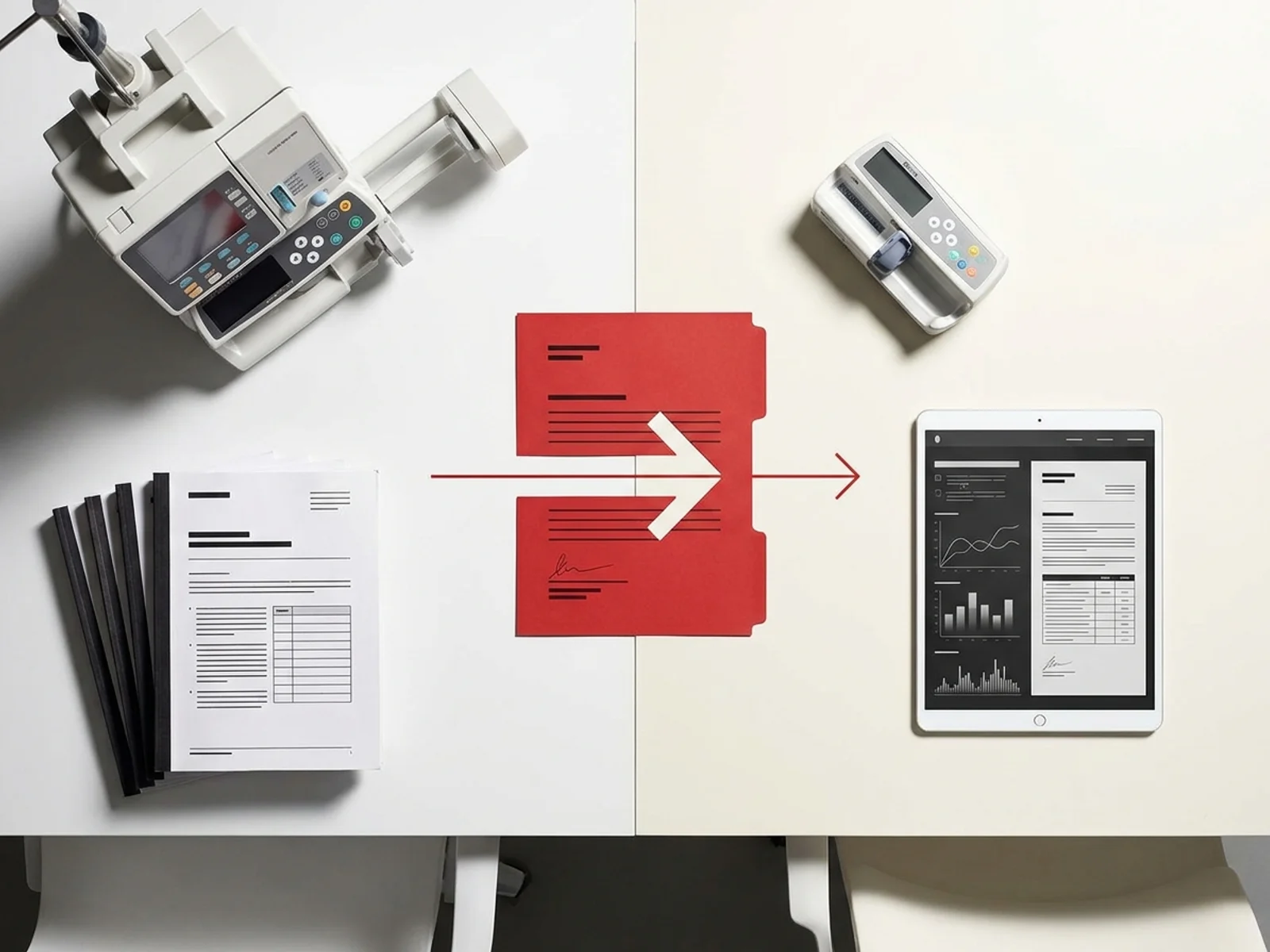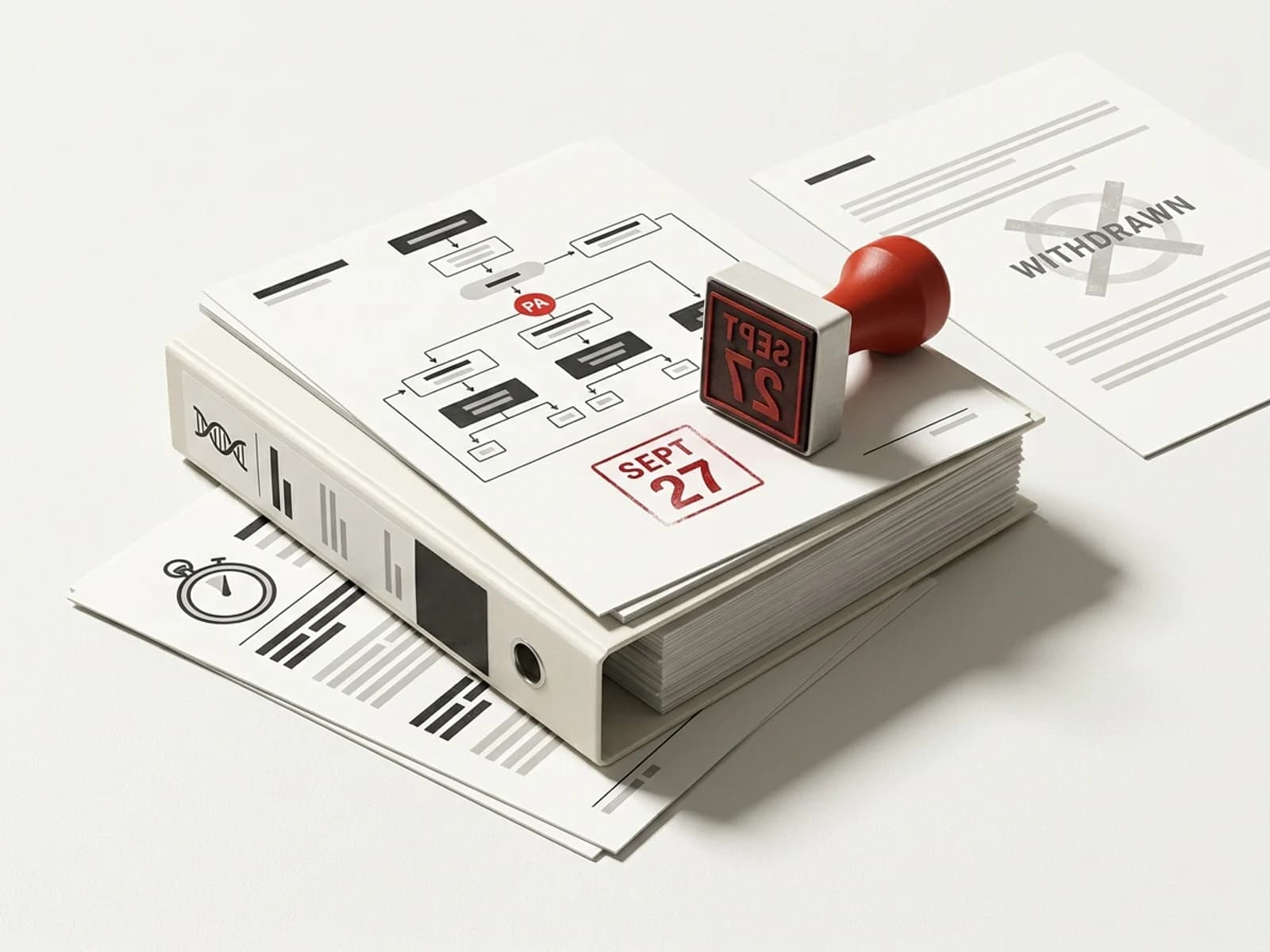
Specialty medications, especially infused oncology and autoimmune therapies, account for over 50% of U.S. drug spending despite representing only about 2% of total prescriptions. As costs have risen, insurers and PBMs have expanded policies that require clinician-administered drugs to be obtained through the payer's designated specialty pharmacy rather than purchased directly by the provider. These policies, known as white bagging and brown bagging, change how infusion biologics reach the patient, and they create operational, clinical, and financial friction for providers, manufacturers, and patients.
This article is for manufacturer market access teams, hub-services leads, specialty pharmacy directors, and provider-network managers who need to understand how white bagging and brown bagging policies affect product distribution, patient access, and channel economics.
Distribution model definitions
The four bagging models
| Model | How the drug reaches the infusion chair | Who purchases | Benefit billed |
|---|---|---|---|
| Buy-and-bill | Provider purchases drug from wholesaler; stocks in office pharmacy | Provider | Medical benefit |
| White bagging | Payer-designated specialty pharmacy ships patient-specific drug to provider office for administration | Specialty pharmacy (payer-affiliated) | Pharmacy benefit |
| Brown bagging | Specialty pharmacy ships drug to patient's home; patient transports to provider office for administration | Specialty pharmacy (payer-affiliated) | Pharmacy benefit |
| Clear bagging | Health system's own specialty pharmacy dispenses and internally delivers to infusion site | Health system | Varies (pharmacy or medical benefit) |
White bagging and brown bagging are payer-driven distribution models. Clear bagging is a health-system internal workflow. Buy-and-bill is the traditional physician-administered drug procurement model.
Why payers mandate white and brown bagging
The primary payer motivation is cost. White bagging shifts the drug from the medical benefit to the pharmacy benefit, which gives the payer access to manufacturer rebates that are not available under buy-and-bill. The payer's affiliated specialty pharmacy negotiates pricing directly with the manufacturer or through the PBM's rebate infrastructure. A 2023 study published in JAMA Network Open found that white bagging in oncology lowered payer costs but raised patients' out-of-pocket obligations.
Payers also argue that specialty-pharmacy dispensing provides better utilization management, prior authorization, and adherence monitoring. From the payer perspective, white bagging creates a more controlled and predictable cost structure for clinician-administered drugs.
The clinical and operational risk
Cold-chain integrity
Most infusion biologics require refrigeration at 2-8 degrees Celsius. Under white bagging, the specialty pharmacy ships the drug to the provider's office, where it must be stored until the patient arrives for administration. If the shipment arrives outside the temperature window, or if the clinic cannot verify cold-chain continuity, the drug may be compromised.
Under brown bagging, the patient receives the drug at home and must store and transport it to the infusion appointment. The risk of temperature excursion increases significantly when the drug is in the patient's custody. Most biologics can be damaged by both overheating and freezing.
Treatment delays and wasted drug
A 2021 Vizient survey found that 92% of respondents reported problems with medications received through white and brown bagging. The most common problems include:
Drug arrives after the scheduled appointment, forcing rescheduling
Drug arrives for the wrong patient, wrong dose, or wrong formulation
Drug is wasted because the treatment plan changed between shipment and administration (dose adjustment based on same-day labs)
Drug is wasted because the patient's appointment was canceled or rescheduled after shipment
In buy-and-bill, the provider stocks the drug and can adjust doses, swap patients, or reschedule without waste. Under white bagging, each dose is patient-specific and may not be returnable.
Provider operational burden
White bagging requires the infusion center to:
Receive and log patient-specific drug shipments from multiple specialty pharmacies
Verify cold-chain integrity for each shipment
Store patient-specific inventory separately from stocked drugs
Coordinate with the specialty pharmacy for timing and delivery
Manage returns or waste for unused medication
This adds labor and storage costs that are not reimbursed. For smaller community oncology practices and rural infusion centers, the operational burden can be substantial.
Patient out-of-pocket impact
When a drug shifts from buy-and-bill (medical benefit) to white bagging (pharmacy benefit), the patient's cost-sharing structure changes. Pharmacy benefit cost-sharing is often coinsurance-based, meaning the patient pays a percentage of the drug's cost. Under buy-and-bill, the medical benefit may have a fixed copayment or different coinsurance rate. The JAMA Network Open study documented that white bagging raised patient out-of-pocket costs compared to buy-and-bill for oncology drugs.
Rural access disparity
Patients in rural areas face disproportionately greater risks under white and brown bagging. Shipping delays are more likely to rural addresses. Brown bagging requires the patient to transport a temperature-sensitive biologic, which may not be feasible in areas without reliable same-day shipping or proximity to the infusion center. If the drug arrives compromised, the patient's treatment is delayed until a replacement can be shipped.
The state legislative landscape
States that have enacted restrictions
As of August 2025, 12 states have enacted legislation banning or restricting mandatory white bagging and brown bagging policies, according to the AMA and the Association for Clinical Oncology (ASCO):
Louisiana: Bans payers from requiring physician-administered drugs to be obtained through an affiliated pharmacy. Requires reimbursement for drugs obtained from out-of-network pharmacies. Passed unanimously.
Minnesota: Prohibits payers from requiring white bagging and prohibits varying patient cost-sharing by site of service.
Tennessee: Prohibits payers from requiring clinician-administered drugs to be infused at home and prohibits varying cost-sharing by site of service.
Arkansas: Restrictions apply specifically to hematology and oncology patients.
Vermont: Prohibits both white and brown bagging.
Virginia: Prohibits brown bagging.
Rhode Island: Prohibits insurers and PBMs from engaging in white bagging for infused drugs. Requires a report from the Office of the Health Insurance Commissioner by February 28, 2026.
Georgia: Prohibits white bagging at Critical Access Hospitals, hospitals located 30+ miles from another hospital, and hospitals eligible for the Georgia HEART program. Directives 22-EX-5 and 22-EX-6 (2022).
Additional states have enacted variations of these restrictions, including Indiana, which addressed patient safety challenges without using the term "white bagging."
Proposed but not enacted
Bills have been introduced in California, New York, Massachusetts, Texas, Illinois, Ohio, Kentucky, Missouri, and Arizona. California's proposed legislation would require payers to provide 45-day notice before requiring a drug to be delivered through a specified pharmacy. Many of these bills are advanced by state hospital associations and opposed by employer groups and payer organizations.
What the AMA and ASCO recommend
The AMA and ASCO issued a joint issue brief encouraging state medical associations to support legislation that prohibits mandatory white and brown bagging. Their position:
Patients should receive clinician-administered drugs through the provider's established procurement and preparation processes
Mandatory white bagging creates unnecessary delays and safety risks
Providers should not be forced to accept drugs from payer-affiliated specialty pharmacies when they can procure the same drugs through their own supply chain
The payer counterargument
Payers argue that white bagging reduces overall drug costs through rebate access and that safety concerns can be mitigated through proper specialty-pharmacy certification and cold-chain management. AHIM (America's Health Insurance Plans) maintains a state law chart tracking white and brown bagging legislation and argues that mandatory distribution through certified specialty pharmacies provides better oversight than buy-and-bill.
Impact on manufacturer market access strategy
Channel economics shift
When a payer mandates white bagging for a product, the manufacturer's channel economics change:
Revenue flows through the pharmacy benefit rather than the medical benefit
Rebate obligations may differ between the two benefit types
The specialty pharmacy that dispenses the drug may be PBM-owned, affecting the manufacturer's contracting leverage
Buy-and-bill margins for the provider disappear, which may affect provider willingness to administer the product if they have alternatives
Patient access monitoring
Manufacturer hub teams should track:
Which payers in their book of business mandate white or brown bagging for their product
Whether the mandated specialty pharmacy is in their limited distribution network (if applicable)
Time-to-therapy metrics comparing white-bagged vs. buy-and-billed patients
Patient out-of-pocket costs under each distribution model
Exception request volume and outcomes from providers seeking buy-and-bill alternatives
Formulary and contracting implications
If a payer mandates white bagging, the manufacturer's contract should specify:
Which specialty pharmacies are authorized to dispense the product
Whether the contract covers pharmacy-benefit dispensing or only medical-benefit buy-and-bill
How white bagging affects gross-to-net economics (rebates, chargebacks, administrative fees)
Whether the payer's white bagging policy applies to all sites of care or only certain settings
340B program interaction
Health systems participating in the 340B Drug Pricing Program face a unique challenge with white bagging. Under 340B, covered entities purchase outpatient drugs at discounted prices and use the savings to support care for underserved populations. When a payer mandates white bagging, the drug is purchased through the payer's specialty pharmacy rather than through the 340B-eligible supply chain, and the covered entity loses the 340B discount on that transaction. The Federal government does not explicitly address white bagging in 340B statute, creating regulatory ambiguity. As of August 2025, 12 states have banned mandatory white and brown bagging, but providers in the remaining states must navigate payer contracts without clear federal guidance on how white bagging interacts with 340B compliance.
REMS interaction
If the product has a REMS with ETASU that limits distribution to certified specialty pharmacies, white bagging mandates may align with the REMS distribution network or may require the payer's designated pharmacy to become REMS-certified. If the payer's preferred specialty pharmacy is not REMS-certified, the REMS requirements take precedence, but the resulting conflict creates access delays.
Provider strategies for managing white bagging
Exception requests
Many payers offer exception pathways that allow providers to continue buy-and-bill if they can demonstrate that white bagging would create clinical risk. Common exception criteria include:
Patient requires same-day dose adjustment based on lab results
Drug requires specialized handling or preparation not available at the designated specialty pharmacy
Provider is in a rural area with unreliable shipping
Drug is part of a multi-agent regimen that requires coordination of multiple products
Providers should document exception requests and outcomes, as this data supports both clinical care and legislative advocacy.
Clear bagging as an alternative
Health systems with integrated specialty pharmacies can use clear bagging to maintain control over drug procurement and preparation. Under clear bagging, the health system's specialty pharmacy dispenses the drug and delivers it internally to the infusion site. This model maintains chain-of-custody control, reduces waste from patient-specific shipping, and allows same-day dose adjustments. However, clear bagging requires the health system's pharmacy to be in-network with the payer for that product, which may not always be the case.
What to monitor next
State legislative activity: additional states are expected to introduce white bagging restrictions in 2026 legislative sessions
Payer policy changes: as states restrict mandatory white bagging, payers may shift to voluntary or incentive-based models
Site-of-care edits: payers are also implementing policies that restrict where infusion biologics can be administered (e.g., requiring hospital outpatient departments over physician offices)
J-code and ASP implications: white bagging shifts reimbursement from buy-and-bill ASP-based payment to pharmacy-benefit pricing, which may affect manufacturer pricing strategy
ICER and policy analysis: the Institute for Clinical and Economic Review has published white papers on white bagging and site-of-service policies that may influence payer and legislative decisions
Sources
CMS. Medicare Part B Drug Pricing. cms.gov/Medicare/Medicare-Fee-for-Service-Part-B-Drugs
FDA. Risk Evaluation and Mitigation Strategies (REMS). fda.gov/drugs/drug-safety-and-availability/risk-evaluation-and-mitigation-strategies-rems
Pearson, C., et al. (2023). White bagging, brown bagging and site of service policies. Journal of Comparative Effectiveness Research. Reference via ICER White Paper. icer.org
Shih, Y. C. T., et al. (2023). Financial outcomes of 'bagging' oncology drugs among privately insured patients with cancer. JAMA Network Open.
National Association of Boards of Pharmacy (NABP). White and Brown Bagging Emerging Practices, Emerging Regulation. April 2018. nabp.pharmacy
Vizient (2021). Survey data referenced in HOPA White Bagging Issue Brief. hoparx.org
AMA and ASCO. White and Brown Bagging Issue Brief. August 2025. ama-assn.org
AHIP. State Law Chart: Brown & White Bagging. January 2024. ahiporg-production.s3.amazonaws.com
Rhode Island General Assembly. Press release on white bagging legislation. rilegislature.gov
ACCC. New Louisiana Law Bans White Bagging. accc-cancer.org
AMCP. White, Brown, Clear, and Gold Bagging. Position statement approved February 2024. amcp.org
ICER. White Bagging, Brown Bagging, and Site of Service Policies. White Paper. April 2023. icer.org
Fein, A. J. (2024). White bagging update 2024: Providers' pushback preserves buy-and-bill. Drug Channels. drugchannels.net
McKesson. Benefits and Challenges of White, Brown, Clear, and Gold Bagging. mckesson.com
American Hospital Association (2023). Specialty drug spending data referenced in multiple sources.