UMR is a third-party administrator (TPA) owned by UnitedHealth Group that manages pharmacy and medical benefits for self-funded employer plans. Unlike traditional insurers that set one national coverage policy, UMR follows the benefit design choices each employer makes — which means GLP-1 coverage rules can differ dramatically from one UMR plan to the next, even within the same state or industry.
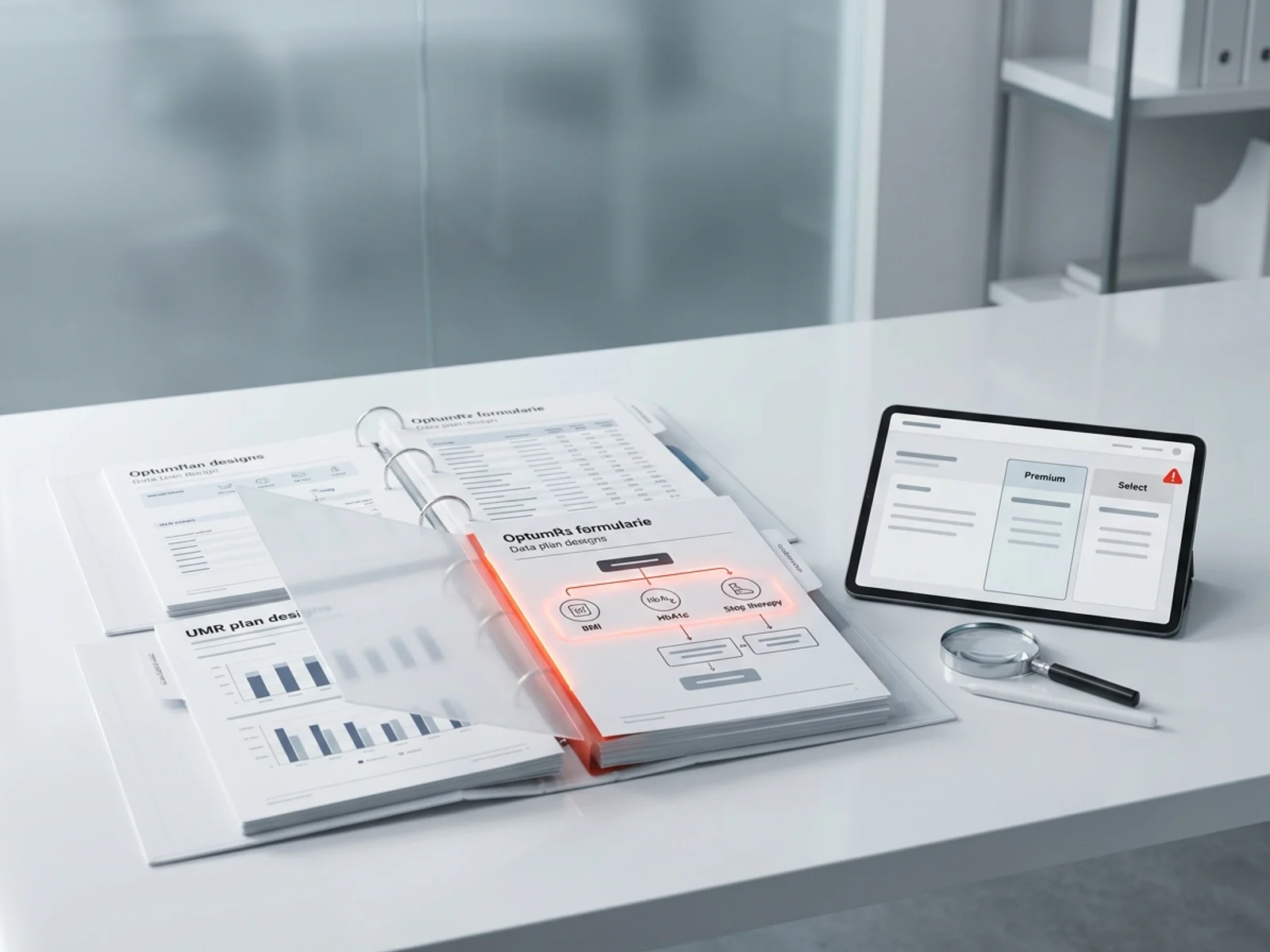
Most UMR plans use OptumRx as the pharmacy benefit manager, and most follow either the OptumRx Premium Formulary or the Select Standard Formulary for drug tier placement and prior authorization (PA) criteria. This guide maps how GLP-1 receptor agonists are typically covered under UMR-administered plans, details the PA and step therapy criteria that apply on OptumRx formularies, and explains why two patients with "UMR" insurance can face completely different access outcomes.
This is independent information and not medical advice or reimbursement guidance for a specific patient or plan.
Quick answer
| GLP-1 Drug | Typical UMR Plan (Premium Formulary) | Typical UMR Plan (Select Standard Formulary) | Key Restrictions |
|---|---|---|---|
| Ozempic (semaglutide injection) | Tier 2, PA required, QL | Tier 2, PA required, QL | T2D diagnosis required; HbA1c documentation |
| Mounjaro (tirzepatide injection) | Tier 2, PA required, QL | Tier 2, PA required, QL | T2D diagnosis required; HbA1c documentation |
| Rybelsus (semaglutide tablet) | Tier 2, PA required, QL | Tier 2, PA required, QL | T2D diagnosis required |
| Trulicity (dulaglutide injection) | Tier 2, PA required, QL | Tier 2, PA required, QL | T2D diagnosis required |
| Wegovy (semaglutide injection) | Tier 2, PA required, QL | Tier 2, PA required, QL | BMI ≥ 30 (or ≥ 27 with comorbidity); lifestyle mod required; may require step therapy |
| Zepbound (tirzepatide injection) | Tier 2, PA required, QL | Tier 2, PA required, QL | BMI ≥ 30 (or ≥ 27 with comorbidity); lifestyle mod required; may require step therapy |
| Saxenda (liraglutide injection) | Tier 2, PA required, QL | Tier 2, PA required, QL | Obesity indication; often step therapy before GLP-1 |
PA = prior authorization. QL = quantity limit. Tier placement and PA criteria vary by employer election.
What is UMR and why coverage varies
UMR is not an insurance company. It is a third-party administrator that processes claims and manages benefits on behalf of self-funded employers. UMR is a subsidiary of UnitedHealth Group and typically partners with OptumRx for pharmacy benefit management. This means:
Employers decide whether to cover GLP-1s for weight loss at all, and which utilization management rules apply.
OptumRx formularies (Premium or Select Standard) set the baseline drug tier and PA criteria, but employers can add restrictions or buy riders.
There is no single "UMR GLP-1 policy." Two employees at different companies with UMR cards can face different BMI thresholds, step therapy sequences, and cost-sharing tiers.
This structural reality is the most important thing to understand before calling UMR or checking formularies.
Formulary placement on UMR plans
Most UMR-administered employer plans use one of two OptumRx formularies:
OptumRx Premium Formulary (2026)
On the Premium Formulary, the tier structure for GLP-1s is:
| Drug | Tier | UM Requirements | Quantity Limit |
|---|---|---|---|
| Ozempic | 2 | PA, QL | 3 pens per 84 days |
| Mounjaro | 2 | PA, QL | 4 pens per 84 days |
| Rybelsus | 2 | PA, QL | 90 tablets per 90 days |
| Trulicity | 2 | PA, QL | 4 pens per 84 days |
| Wegovy | 2 | PA, QL | 4 pens per 28 days |
| Zepbound | 2 | PA, QL | 4 pens per 28 days |
| Saxenda | 2 | PA, QL | 5 pens per 30 days |
Tier 2 is "preferred brand" with moderate copay or coinsurance. The PA requirement means the prescriber must submit documentation before the prescription is filled.
OptumRx Select Standard Formulary (2026)
The Select Standard Formulary mirrors the Premium Formulary for GLP-1 tier placement, but some plans may exclude weight-loss GLP-1s entirely or move them to a higher tier. The 2025 Premium Formulary exclusions list noted that Contrave was excluded for obesity, with phentermine, Qsymia, Saxenda, Wegovy, and Zepbound single-dose pens as preferred alternatives — meaning employer plan design determines whether weight-loss GLP-1s are covered at all.
Comprehensive (Medicare/retiree) Formulary
For UMR-administered retiree or Medicare Part D plans, the OptumRx Comprehensive Formulary places GLP-1s differently:
| Drug | Tier | Notes |
|---|---|---|
| Ozempic | 2 | PA, QL — T2D only |
| Mounjaro | 2 | PA, QL — T2D only |
| Wegovy | 3 | PA, QL — weight loss excluded unless Part D demo |
| Zepbound | 3 | PA, QL — weight loss excluded unless Part D demo |
Medicare plans generally do not cover GLP-1s for weight loss, though the CMS $50/month demonstration program launching July 2026 may expand access for qualifying beneficiaries.
Prior authorization criteria
Type 2 diabetes GLP-1s (Ozempic, Mounjaro, Rybelsus, Trulicity)
On OptumRx-managed UMR plans, diabetes-indicated GLP-1s require:
Documented T2D diagnosis with at least one of:
HbA1c ≥ 6.5%
Fasting plasma glucose ≥ 126 mg/dL
2-hour OGTT glucose ≥ 200 mg/dL
Random plasma glucose ≥ 200 mg/dL with classic symptoms
May require step therapy — trial and failure of metformin or other first-line agents before GLP-1 approval, depending on employer election.
No dual therapy — GLP-1s should not be used in combination with other GLP-1 receptor agonists.
Weight-loss GLP-1s (Wegovy, Zepbound, Saxenda)
On plans that cover weight-loss GLP-1s (not all do), the standard OptumRx PA criteria require:
BMI threshold:
Age ≥ 18: BMI ≥ 30 kg/m², OR BMI ≥ 27 kg/m² with at least one weight-related comorbidity (hypertension, dyslipidemia, T2D, coronary heart disease, MASH/NASH, obstructive sleep apnea)
Age < 18: BMI ≥ 95th percentile for age and sex
Lifestyle modification documentation:
Participation in a supervised comprehensive weight management program that includes behavioral modification, reduced-calorie diet, and increased physical activity
Some plans require 3–6 months of documented participation before GLP-1 approval
No dual GLP-1 therapy — Wegovy, Zepbound, and Saxenda cannot be combined with other GLP-1 receptor agonists.
Step therapy may apply — some plans require prior trial of preferred alternatives (e.g., Contrave, phentermine, Qsymia) before Wegovy or Zepbound. For Zepbound specifically, some OptumRx plans require prior trial of preferred GLP-1 weight-loss products and/or oral weight-management medications, unless a valid medical exception exists. Specific step therapy sequences vary by employer election and formulary.
Reauthorization requirements — weight loss of ≥ 5% of baseline body weight is typically required for continued coverage, with medical records submitted at renewal.
Wegovy for MASH or cardiovascular disease
Some UMR plans cover Wegovy for FDA-approved indications beyond weight loss:
MASH (metabolic dysfunction-associated steatohepatitis): Requires documentation of fibrosis stage F2 or F3 confirmed by FibroScan, FIB-4, MRE, or liver biopsy. Must be prescribed by or in consultation with a gastroenterologist or hepatologist.
Cardiovascular risk reduction: Plans that follow UHC's 2026 PA criteria may cover Wegovy injection for patients with established cardiovascular disease when BMI thresholds and lifestyle modification requirements are met.
Zepbound for obstructive sleep apnea (OSA)
Following the 2024 FDA approval of Zepbound for moderate-to-severe OSA in adults with obesity, some UMR plans now cover Zepbound specifically for this indication:
BMI ≥ 30 kg/m²
Moderate-to-severe OSA confirmed by sleep study with AHI or REI > 15 events/hour
Prescribed by or in consultation with a sleep specialist
CPAP or BiPAP attempted or contraindicated
Patient counseled on positional therapy and avoidance of alcohol/sedatives
How employer plan design affects GLP-1 access
Because UMR is a TPA, the single most important factor in GLP-1 coverage is the employer's benefit election. Key variables include:
| Plan Design Element | What It Means for GLP-1 Access |
|---|---|
| Weight-loss drug rider | Employer must elect GLP-1 coverage for weight loss. Without it, Wegovy and Zepbound are excluded regardless of BMI. |
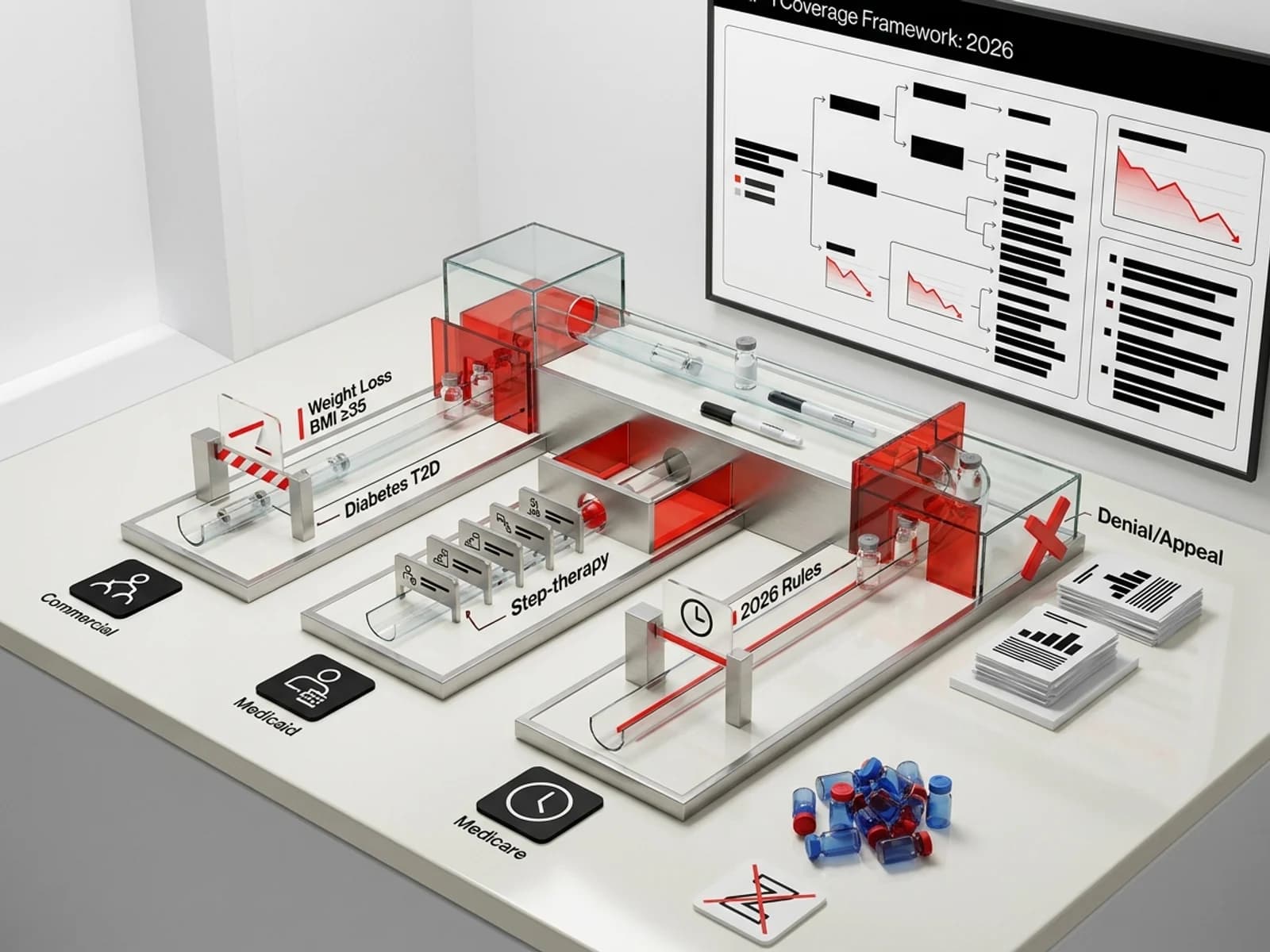
| BMI threshold | Some employers raise the bar to BMI ≥ 35 or ≥ 40 for weight-loss GLP-1s, stricter than the OptumRx standard of ≥ 30. |
| Step therapy requirements | Employers can add step therapy layers (e.g., must fail metformin AND phentermine AND Contrave before GLP-1). |
| Tier placement | Employers can move GLP-1s to Tier 3 (non-preferred) or specialty tiers, increasing patient cost-sharing. |
| Exclusion of obesity indication | Some employers cover GLP-1s for T2D only and exclude weight-loss coverage entirely — a growing trend in 2025–2026 as costs rise. |
| Annual spending cap | Some plans impose dollar caps on specialty drug spending or limit the number of GLP-1 fills per year. |
In 2025–2026, a growing number of employers have dropped or narrowed GLP-1 weight-loss coverage through UMR due to cost pressure. Large employers with 1,000+ covered lives are more likely to maintain coverage; smaller employers are more likely to exclude weight-loss GLP-1s.
How to check your specific UMR plan's GLP-1 coverage
Call the member phone number on your UMR ID card. Ask specifically: "Does my plan cover Wegovy/Zepbound for weight loss? What are the prior authorization criteria?"
Check the formulary online. UMR members can often access their plan's formulary through the UMR member portal or OptumRx website.
Ask your employer's HR/benefits team. For self-funded plans, the benefits administrator knows whether the employer elected a weight-loss drug rider.
Have your prescriber submit PA. The prescriber's office can contact OptumRx directly at the number on the back of the UMR card to initiate PA and get the specific criteria for your plan.
Common denial reasons and appeal steps
Common denials
Weight-loss GLP-1s excluded — the employer did not elect coverage.
BMI below threshold — documentation shows BMI under the plan's required level.
Missing lifestyle modification documentation — no records of supervised weight management program participation.
Step therapy not met — prior trials of preferred alternatives not documented.
Missing diagnosis code — prescriber did not include the appropriate ICD-10 code.
Stale BMI measurement — BMI older than 90 days may be rejected (must be measured in clinic, not self-reported).
Reauthorization denied — insufficient weight loss (< 5%) at renewal.
Appeal workflow
First-level appeal: Submit written appeal to UMR/OptumRx within 180 days of denial. Include supporting medical records, PA criteria documentation, and a letter of medical necessity from the prescriber.
Peer-to-peer review: Request a peer-to-peer conversation between the prescribing physician and the plan's medical reviewer.
Second-level appeal: If the first appeal is denied, request an independent review.
External review: Under the Affordable Care Act, members of self-funded plans may request an independent external review for medical necessity denials.
Employer escalation: For self-funded UMR plans, contacting the employer's benefits team can sometimes result in a plan-level exception.
Key contacts
UMR Member Services: Phone number on the back of your UMR ID card
OptumRx Prior Authorization: Phone number on the back of your UMR ID card or the OptumRx member portal
UMR Provider Portal: uhcprovider.com — UMR medical and drug policies
OptumRx Formulary Updates: business.optum.com/formulary-updates
Why UMR GLP-1 coverage is different from UHC
UMR is often confused with UnitedHealthcare (UHC), but they operate differently:
| Feature | UHC (fully insured) | UMR (self-funded TPA) |
|---|---|---|
| Coverage decisions | UHC sets national and state-level policies | Employer sets benefit design; UMR administers |
| Formulary | UHC/OptumRx standard formularies | OptumRx formulary, but employer can modify |
| PA criteria | Published UHC medical policies | May follow UHC criteria, or employer-specific rules |
| Appeal path | UHC internal grievance process | UMR process, then employer, then external review |
| Weight-loss GLP-1 coverage | Varies by state mandate and plan type | Entirely employer-dependent |
A patient with a UMR card is covered by an employer self-funded plan, not a UHC insurance policy. This distinction matters for appeals, coverage changes, and understanding who ultimately decides what is covered.
Sources
OptumRx 2026 Premium Formulary, effective January 1, 2026. Optum Rx, Inc. Available at: contenthub-aem.optumrx.com
OptumRx 2026 Select Standard Formulary, effective January 1, 2026. Optum Rx, Inc.
OptumRx Prior Authorization Form: GLP-1 Agonists (TennCare), revision August 2025. Available at: contenthub-aem.optumrx.com
UnitedHealthcare Pharmacy Clinical Pharmacy Programs: Prior Authorization/Notification — Plans with Weight Loss/Appetite Suppression Medication Coverage, Program 2026 P 1114-20, effective February 2026. Available at: uhcprovider.com
UMR Medical and Drug Policies, published at uhcprovider.com/en/policies-protocols/commercial-policies/umr-medical-drug-policies.html
OptumRx Formulary Update, Pharmacy Passages, September 2025. Available at: business.optum.com
Centers for Medicare & Medicaid Services (CMS): Medicare Part D GLP-1 Demonstration Program, 2026. Available at: https://www.cms.gov/newsroom/fact-sheets/medicare-drug-price-negotiation