Rybelsus (semaglutide tablets) is the first FDA-approved oral glucagon-like peptide-1 (GLP-1) receptor agonist for the treatment of type 2 diabetes. It is also the first oral incretin therapy to receive an FDA indication for cardiovascular risk reduction. Despite the convenience of a daily pill versus weekly injection, oral semaglutide faces distinct coverage barriers: prior authorization is required by approximately 69% of commercial plans, formulary tier placement varies, and the drug is not approved for weight loss — a frequent source of coverage confusion and denials.
This guide is for benefit verification specialists, prior authorization teams, prescribers managing type 2 diabetes, and market access professionals who need to understand Rybelsus formulary positioning, PA requirements, savings programs, and payer-specific coverage rules. It is not medical advice or reimbursement guidance for a specific patient or plan.
Quick answer
| Access Metric | Rybelsus |
|---|---|
| FDA-approved indications | Type 2 diabetes (glycemic control); cardiovascular risk reduction in T2D with established CVD |
| List price (WAC) | $997.58 per month (all doses) |
| Commercial coverage | ~98% of commercial plans (per Novo Nordisk) |
| Medicare Part D coverage | ~95% of Part D plans |
| Typical formulary tier | Tier 2 or Tier 3 (varies by plan) |
| PA required | ~69% of commercial plans |
| Step therapy | Common; metformin or other first-line agents often required first |
| Manufacturer savings | As low as $10/month with commercial coverage; $25/month for 3 mg dose |
| Generic available | No; semaglutide patent protection extends into the 2030s |
| Route | Oral tablet, once daily |
| Available doses | 3 mg, 7 mg, 14 mg (formulation R1); 1.5 mg, 4 mg, 9 mg (formulation R2 / Ozempic tablets) |
Who this is for
Benefit verification and prior authorization specialists at prescriber offices and specialty pharmacies
Endocrinologists, primary care physicians, and diabetes care teams
Market access and payer strategy teams
Patient assistance program coordinators
Pharmacists dispensing oral GLP-1 therapies
Source standard
Every fact in this guide is sourced from payer policy documents, FDA labeling, manufacturer resources, published coverage analyses, and trade reporting dated 2025–2026. Payer coverage rules change frequently. Always verify current formulary and PA criteria on the specific plan's portal before submitting authorization.
Drug reference
| Parameter | Rybelsus |
|---|---|
| Brand | Rybelsus |
| Generic | Semaglutide tablets |
| Manufacturer | Novo Nordisk |
| Drug class | GLP-1 receptor agonist (oral formulation) |
| Active ingredient | Semaglutide (with SNAC absorption enhancer) |
| FDA approval date | September 2019 |
| Indications | Type 2 diabetes mellitus; cardiovascular risk reduction in adults with T2D and established CVD |
| Route | Oral tablet, once daily |
| Dosing (formulation R1) | 3 mg → 7 mg → 14 mg (titration over 30 days per step) |
| Dosing (formulation R2) | 1.5 mg → 4 mg → 9 mg (Ozempic tablet branding) |
| Administration | Take on empty stomach with ≤4 oz water; wait ≥30 min before eating |
| List price | $997.58/month (all doses) |
| REMS | None |
| Supply channel | Retail and specialty pharmacy |
FDA-approved indications
Rybelsus is FDA-approved for two indications:
Type 2 diabetes mellitus: As an adjunct to diet and exercise to improve glycemic control in adults with T2D. It can be used as monotherapy (when metformin is inappropriate) or in combination with other antidiabetic agents including insulin.
Cardiovascular risk reduction: To reduce the risk of major adverse cardiovascular events (MACE — cardiovascular death, non-fatal myocardial infarction, or non-fatal stroke) in adults with type 2 diabetes mellitus and established cardiovascular disease.
Important: What Rybelsus is NOT approved for
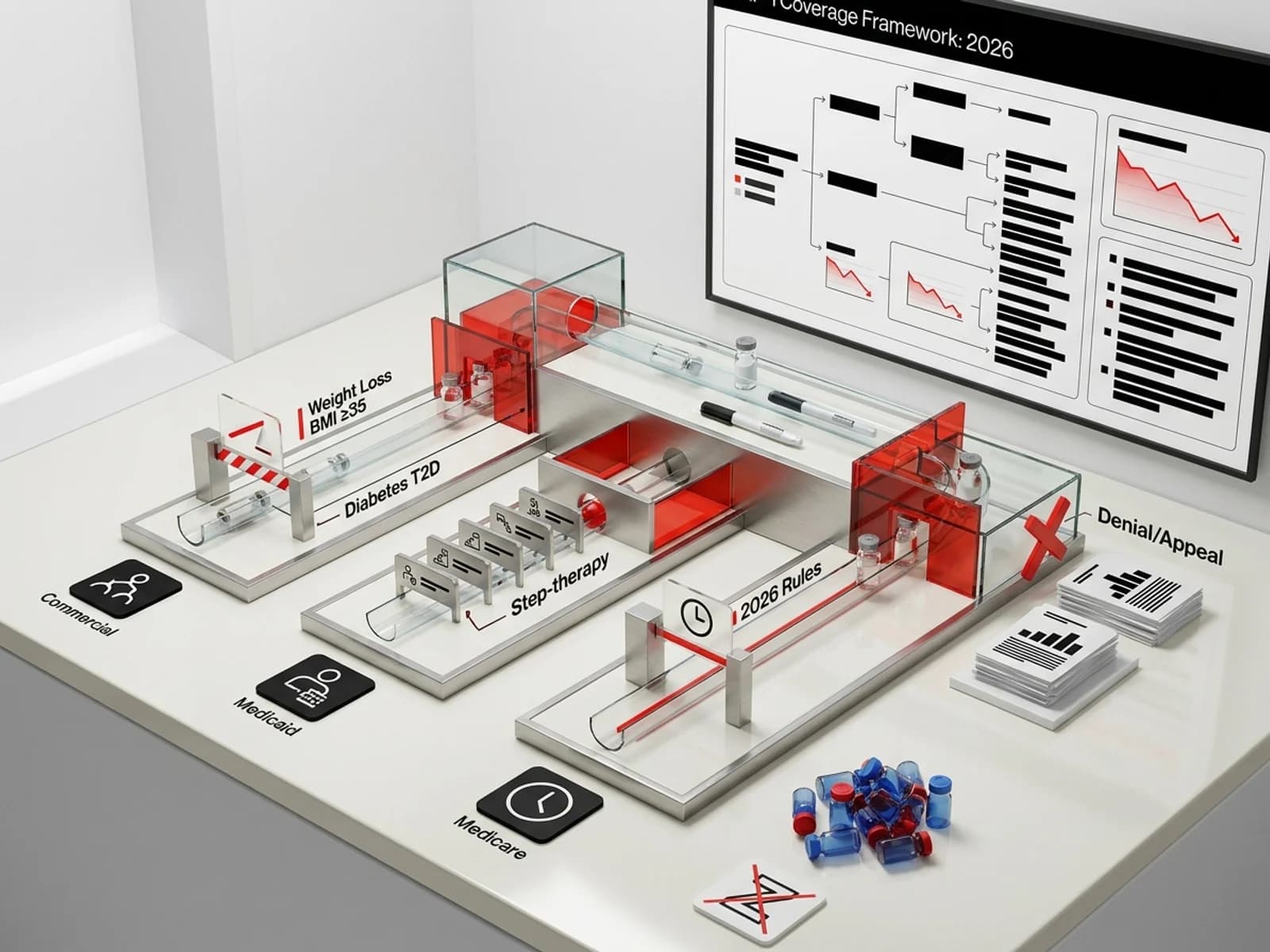
Rybelsus is not FDA-approved for weight loss or chronic weight management. Off-label prescriptions for weight loss are a common reason for coverage denial. Patients seeking semaglutide for weight management should be prescribed Wegovy (semaglutide 2.4 mg injection), Wegovy pill (oral semaglutide 25 mg), or Foundayo (orforglipron), depending on the approved formulation.
Formulary positioning by payer type
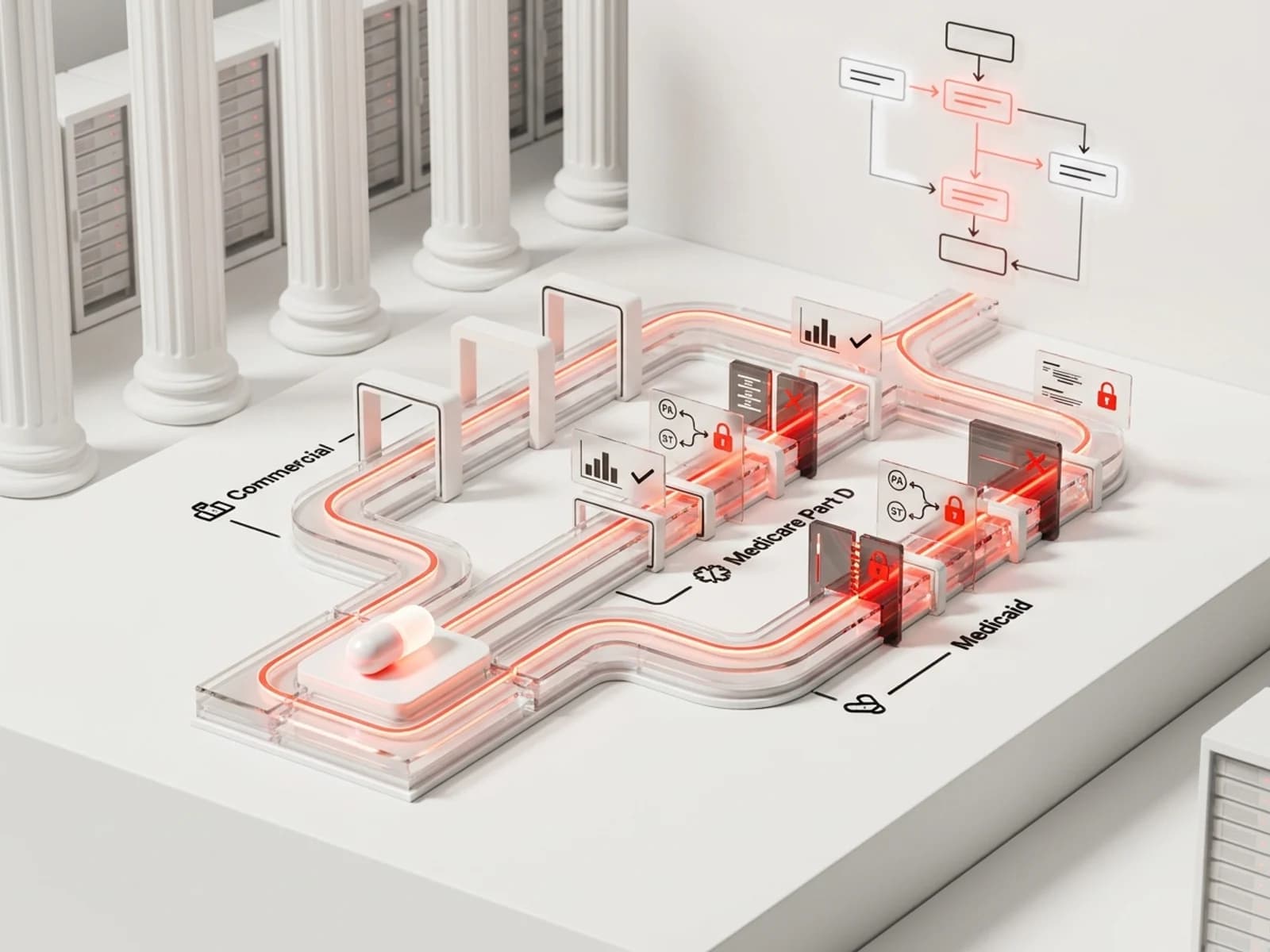
Commercial insurance
Novo Nordisk reports approximately 98% commercial coverage nationally. Coverage status and tier vary by plan:
| Payer | Typical Tier | PA Required | Notes |
|---|---|---|---|
| UnitedHealthcare | Tier 2 (commercial) / Tier 3 (AARP Medicare) | Yes; QL | T2D diagnosis with documented A1C required; quantity limits apply |
| CVS Caremark | Tier 2–3 (formulary dependent) | Yes; QL | Managed through Caremark formulary management; step edit common |
| Cigna / Evernorth | Tier 2–3 | Yes; QL | T2D documentation required; step therapy with metformin preferred |
| Aetna | Tier 2–3 | Yes; QL | Medical necessity documentation; T2D diagnosis codes required |
| Express Scripts | Tier 2 | Yes; QL | National formulary positioning; PA and quantity limits standard |
| Humana | Tier 2–3 | Yes; QL | T2D with A1C documentation; quantity limits |
| Blue Cross Blue Shield (plans vary) | Tier 2–3 | Usually | State-specific formulary; PA criteria vary by plan |
| Kaiser Permanente | Formulary | Yes | Integrated system; internal PA process through medical group |
Medicare Part D
Rybelsus is covered by approximately 95% of Medicare Part D plans, according to Novo Nordisk. Key considerations:
Tier placement: Typically Tier 2 or Tier 3, depending on the plan
2026 out-of-pocket cap: $2,100 annual maximum under the redesigned Part D benefit
Part D deductible: Up to $615 in 2026 before coverage begins
Copay/coinsurance: Varies by plan and tier. Under the AARP Medicare Rx Preferred plan (UHC), copay is approximately $47 for a 30-day supply of Tier 3 drugs.
Prior authorization: Most Part D plans require PA for Rybelsus, including documentation of T2D diagnosis
IRA negotiated price: Semaglutide (under the Ozempic brand) is among the drugs selected for Medicare price negotiation. The negotiated price of $274/month takes effect January 2027, which may influence Rybelsus Part D pricing dynamics.
Medicaid
Medicaid coverage for Rybelsus varies significantly by state. Coverage is generally available for the type 2 diabetes indication with prior authorization, but requirements differ:
| State | Coverage Status | Key Requirements |
|---|---|---|
| New York | Covered for T2D | PA required; BMI and A1C documentation |
| California (Medi-Cal) | Covered for T2D | PA required; formulary criteria apply |
| Massachusetts (MassHealth) | Covered for T2D | Expanded GLP-1 formulary in 2026; BMI and comorbidity criteria; PA rules vary by setting |
| Pennsylvania | Covered for T2D only | Weight-loss GLP-1 coverage restricted; T2D coverage continues with PA |
| Illinois | Covered for T2D | Verify via HFS prior approval tools; plan-specific rules |
| Ohio | Covered for T2D only | GLP-1 obesity coverage reversed in 2025; T2D coverage remains with PA |
| Texas | Limited | GLP-1 coverage restricted; verify formulary status |
| Florida | Limited | Verify plan-specific formulary |
TRICARE
TRICARE covers Rybelsus for type 2 diabetes with prior authorization and documented medical necessity. Weight loss use is not covered under TRICARE formulary rules.
Prior authorization criteria
Typical PA requirements
Most commercial and Medicare plans require the following documentation for Rybelsus PA approval:
Diagnosis confirmation: Type 2 diabetes mellitus (ICD-10: E11.x) with supporting clinical documentation
A1C level: Current or recent HbA1c result demonstrating inadequate glycemic control
Step therapy documentation: Proof of trial and failure, contraindication, or intolerance to first-line therapies:
Metformin (typically required first unless contraindicated)
May also require trial of sulfonylurea, SGLT2 inhibitor, or DPP-4 inhibitor depending on plan
Prescriber qualification: Some plans require or prefer prescribing by endocrinologist or diabetes specialist
Quantity limits: Most plans limit to 30-day supply; 90-day supply available through some mail-order programs
Cardiovascular indication: For the MACE reduction indication, documentation of established CVD may be required
Common denial reasons
Prescription for weight loss (off-label) without T2D diagnosis
Missing A1C documentation or A1C below plan threshold
Step therapy requirements not met (no prior metformin trial documented)
Incorrect ICD-10 code (using obesity codes rather than T2D codes)
Quantity limit exceeded
Step therapy and sequencing
Typical step therapy ladder
Most payers position GLP-1 receptor agonists as second-line or later therapy in the T2D treatment algorithm:
Step 1: Metformin (preferred first-line)
  ↓ If inadequate control or contraindicated
Step 2: Add or switch to second-line agent
  ├── SGLT2 inhibitors (Jardiance, Farxiga, Invokana)
  ├── DPP-4 inhibitors (Januvia, Tradjenta, Onglyza)
  ├── Sulfonylureas (glipizide, glimepiride)
  └── Thiazolidinediones (pioglitazone)
  ↓ If inadequate control
Step 3: GLP-1 receptor agonist (Rybelsus, Ozempic, Trulicity, Mounjaro) or insulin
Rybelsus vs. Ozempic injection: formulary dynamics
Because Rybelsus and Ozempic share the same active ingredient (semaglutide), payers may treat them as equivalent within formulary management:
| Factor | Rybelsus (oral) | Ozempic (injection) |
|---|---|---|
| Route | Daily oral tablet | Weekly SC injection |
| Indication | T2D + CV risk reduction | T2D + CV risk reduction + CKD |
| CKD indication | No | Yes (CKD with albuminuria) |
| Administration burden | Daily with food/water restrictions | Weekly injection |
| Formulary tier | Usually same tier | Usually same tier |
| Step therapy | May require trying oral first | May require step-through oral |
| Adherence advantage | Daily dosing may reduce adherence | Weekly dosing may improve adherence |
Some plans may require patients to try oral semaglutide (Rybelsus) before authorizing injectable semaglutide (Ozempic) as a cost-management strategy. Others may prefer the injection due to higher bioavailability and broader indications.
Ozempic tablets (formulation R2)
In 2026, Novo Nordisk introduced a new formulation of oral semaglutide under the Ozempic brand (Ozempic tablets, formulation R2), available in 1.5 mg, 4 mg, and 9 mg doses. This is distinct from Rybelsus (formulation R1, available in 3 mg, 7 mg, and 14 mg). The dose conversion table:
| Rybelsus (R1) | Ozempic Tablets (R2) |
|---|---|
| 7 mg daily | 4 mg daily |
| 14 mg daily | 9 mg daily |
From a coverage perspective, Ozempic tablets may carry the Ozempic brand formulary positioning, which could differ from Rybelsus tier placement on some plans. Benefit verification teams should confirm which formulation the plan covers and at which tier.
Savings and patient assistance
Novo Nordisk savings card
Novo Nordisk offers a manufacturer savings card for commercially insured patients with Rybelsus coverage:
7 mg or 14 mg dose: Pay as little as $10/month for a 1-, 2-, or 3-month supply
3 mg dose: Pay as little as $25/month for a 1-month supply
Maximum savings: $100 per 1-month supply, $200 per 2-month supply, $300 per 3-month supply
Eligibility: Commercially insured patients with product coverage only. Not valid for Medicare, Medicaid, or other government-funded programs.
NovoCare patient support
Novo Nordisk's NovoCare platform provides:
Online coverage checker to verify plan-specific coverage and estimated costs
Benefits investigation and prior authorization support
Patient education resources for oral GLP-1 administration
Text-based support program (text READY to 21848)
Patient assistance program
For uninsured or underinsured patients, Novo Nordisk offers a patient assistance program that may provide Rybelsus at no cost for eligible patients. Eligibility is based on income and insurance status.
Medicare cost considerations
Medicare patients are ineligible for manufacturer copay cards. Cost management strategies for Part D enrollees:
The $2,100 annual out-of-pocket cap (effective 2026) limits total drug spending
Negotiated Medicare price for semaglutide ($274/month under IRA) takes effect January 2027
Some Medicare Advantage plans may offer lower copays through preferred pharmacy networks
90-day mail-order supply may reduce per-dose cost
Specialty pharmacy routing
Unlike injectable GLP-1 therapies that may be routed through specialty pharmacy, Rybelsus is typically dispensed through retail pharmacy channels because it is an oral tablet. However:
Some plans may mandate specialty pharmacy dispensing for higher-tier placements
Mail-order pharmacy (90-day supply) is available through most major PBMs
Cold-chain storage is not required for Rybelsus tablets
Availability has improved significantly since 2023 supply constraints
Renewal and reauthorization
Prior authorizations for Rybelsus typically have the following renewal characteristics:
Initial authorization duration: 6–12 months (varies by plan)
Reauthorization criteria: Continued T2D diagnosis, no evidence of adverse effects requiring discontinuation, A1C documentation may be required
Failure to reauthorize: Coverage lapses if reauthorization is not submitted before expiration. Patients may face a gap in therapy.
Dose change: Escalation from 3 mg to 7 mg or 7 mg to 14 mg typically does not require new PA if the drug is already authorized, but quantity limits may need adjustment.
Appeal strategies for common denials
| Denial Reason | Appeal Strategy |
|---|---|
| Off-label use (weight loss) | Document T2D diagnosis with A1C; confirm ICD-10 codes are diabetes-specific; clarify with prescriber |
| Step therapy not met | Document metformin contraindication, intolerance, or failure with clinical notes and lab values |
| Not medically necessary | Provide peer-reviewed evidence of Rybelsus efficacy; cite ADA Standards of Care 2026 GLP-1 recommendations; document comorbidities (CVD, CKD) |
| Quantity limit exceeded | Request quantity limit exception with clinical justification for dose escalation |
| Preferred drug required | Request formulary exception if Rybelsus is non-preferred; cite patient-specific factors (needle phobia, injection intolerance, oral administration preference) |
What changed recently
Ozempic tablets (R2 formulation): Novo Nordisk launched the R2 oral semaglutide formulation (FDA-approved December 2024 as Rybelsus R2, rebranded as Ozempic tablets January 30, 2026) in the US on May 4, 2026, introducing dose variants (1.5 mg, 4 mg, 9 mg) and creating new formulary dynamics between Rybelsus and Ozempic tablets.
IRA negotiated price: Semaglutide is among the drugs selected for Medicare Part D price negotiation under the Inflation Reduction Act. The negotiated price of $274/month takes effect January 2027, which will impact the entire oral semaglutide market.
Medicare Part D redesign: The $2,100 annual out-of-pocket cap effective in 2026 significantly reduces patient cost exposure for chronic GLP-1 therapy.
Medicare GLP-1 Bridge: Starting July 1, 2026, CMS will operate the Medicare GLP-1 Bridge demonstration providing short-term access to GLP-1 drugs for eligible Part D beneficiaries. This program operates outside the standard Part D benefit.
What to monitor next
| Timeline | Development |
|---|---|
| July 1, 2026 | Medicare GLP-1 Bridge demonstration launches |
| January 2027 | IRA negotiated price for semaglutide ($274/month) takes effect |
| 2026–2027 | Formulary repositioning as oral GLP-1 market expands (Foundayo, Wegovy pill, Ozempic tablets) |
| Ongoing | State Medicaid GLP-1 coverage changes (multiple states reviewing or restricting obesity coverage) |
Source table
| Claim | Source |
|---|---|
| ~98% commercial coverage; ~95% Part D coverage | Novo Nordisk / NovoMedLink, 2026 |
| List price $997.58/month; savings card $10/month | Rybelsus.com Cost & Savings, 2026 |
| 69% of commercial plans require PA | PrescriberPoint Rybelsus page, 2026 |
| Tier 2 or Tier 3 placement typical | Medical News Today, 2026 |
| UHC AARP plan copay $47 for Tier 3 | SingleCare UHC Rybelsus coverage, 2026 |
| Rybelsus R1 vs Ozempic R2 dose conversion | Rybelsus prescribing information (DailyMed) |
| Part D $2,100 OOP cap (2026); $615 deductible | CMS Medicare Part D Benefit Design, 2026 |
| Optum Rx 2026: Rybelsus Tier 2, PA, QL | Optum Rx 2026 Premium Formulary |
| UHC 2026: Rybelsus Tier 2, PA, QL | UHC 2026 Commercial PDL |
| IBX 2026: Rybelsus Tier 2, PA, QL | IBX 2026 Premium Formulary |
| State Medicaid coverage variation | Noom insurance coverage guide, 2026 |
| IRA negotiated semaglutide price $274/month (2027) | CMS Medicare Drug Price Negotiation, 2026 |
| Medicare GLP-1 Bridge starts July 1, 2026 | CMS Medicare GLP-1 Bridge FAQ |
| PFS and coverage trends for oral semaglutide | PMC Coverage and PA Policies for Semaglutide/Tirzepatide in Medicare Part D |
Sources
Novo Nordisk. "Cost & Savings: Rybelsus." 2026. rybelsus.com
Novo Nordisk. "Cost & Coverage: Rybelsus." NovoMedLink, 2026. novomedlink.com
Novo Nordisk. "Check Coverage for Rybelsus." NovoCare, 2026. novocare.com
Novo Nordisk. "Rybelsus Prescribing Information." 2026. novo-pi.com
PrescriberPoint. "Rybelsus Savings Card & Coupon 2026: PA & Coverage." 2026. prescriberpoint.com
Medical News Today. "How much does Rybelsus cost with Medicare?" 2026. medicalnewstoday.com
SingleCare. "Does UnitedHealthcare cover Rybelsus?" 2026. singlecare.com
Noom. "Does Insurance Cover Rybelsus? Check Coverage & Costs 2026." 2026. noom.com
CMS. "Medicare GLP-1 Bridge." 2026. cms.gov
PMC. "Coverage and Prior Authorization Policies for Semaglutide and Tirzepatide in Medicare Part D Plans." 2026. pmc.ncbi.nlm.nih.gov
PandaMeds. "Rybelsus Cost 2026." March 2026. pandameds.com
KFF. "Medicaid Coverage of and Spending on GLP-1s." 2026. kff.org