In the landscape of modern biopharmaceuticals, Roche and its U.S. subsidiary Genentech represent the premier innovator of large-molecule therapeutic agents. From the pioneering approvals of Rituxan, Herceptin, and Avastin in the late 1990s and early 2000s to modern blockbusters in oncology and neurology, the Roche/Genentech franchise has historically defined the clinical therapeutic guidelines for complex diseases.
However, as biosimilar competition dismantles older intravenous (IV) biologic monopolies, Roche is executing a high-stakes transition strategy. By reformulating its key IV therapies into subcutaneous (SC) administrations, Roche is attempting to extend the lifecycle of its products, protect its market share from biosimilar erosion, and shift patients from hospital-based infusion centers to home- or clinic-based injection settings.
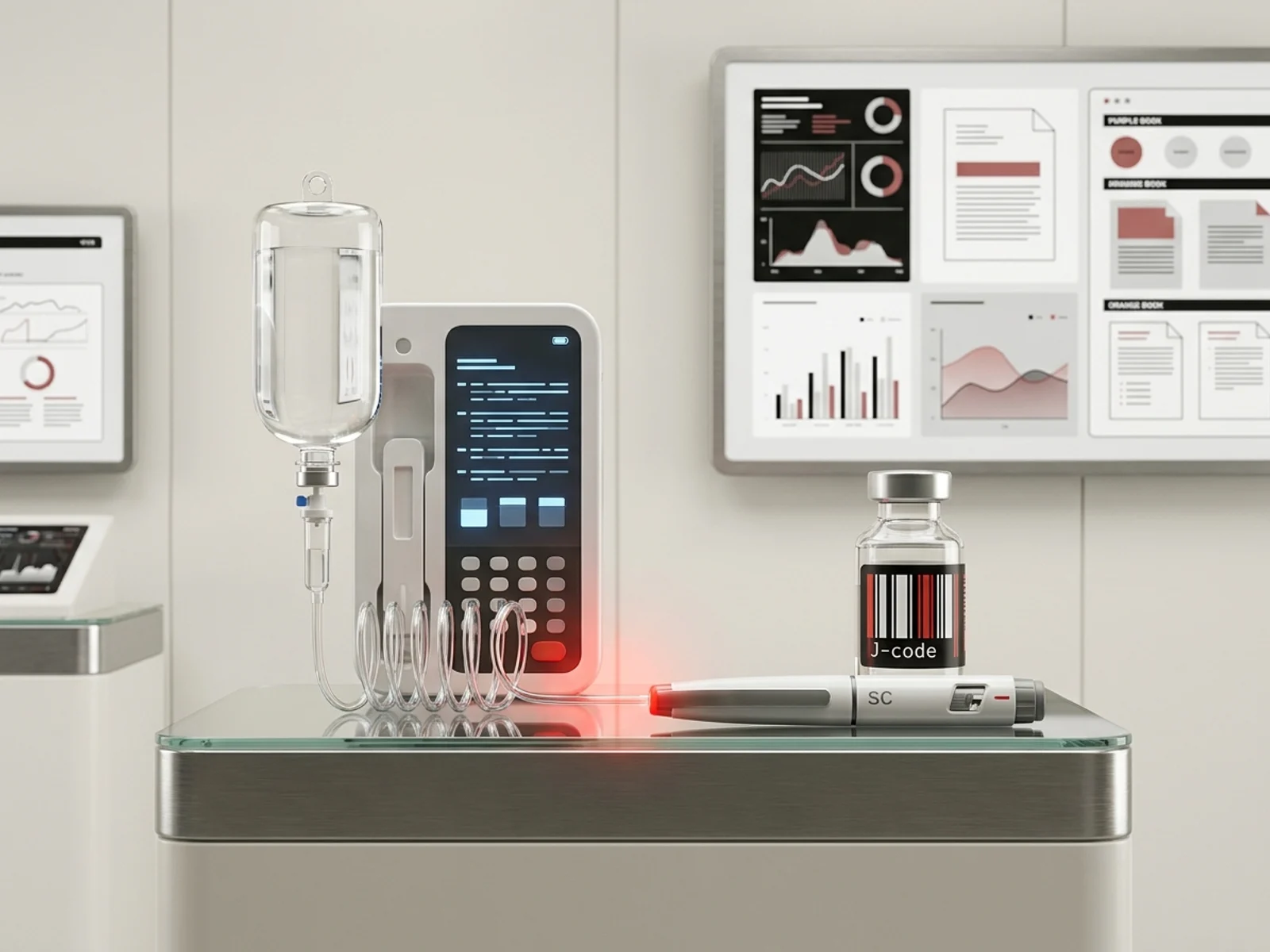
For commercial payers, specialty pharmacy directors, and medical benefit managers, this subcutaneous transition represents a major structural shift in utilization management. Subcutaneous formulations bypass traditional retail pharmacy channels, are billed under the medical benefit using distinct HCPCS Level II J-codes, and require specialized prior authorization and site-of-care policies.
This portfolio dossier provides a quantitative and regulatory analysis of the Roche/Genentech biologic portfolio. Drawing on data from the FDA Purple Book, FDA Orange Book, CMS HCPCS Level II billing files, CMS National Average Drug Acquisition Cost (NADAC) registry, and ClinicalTrials.gov, this dossier maps out Roche's biological assets, details the subcutaneous defense strategy, analyzes the J-code reimbursement landscape, and documents the historical transition of the company from small-molecule generics to pure innovative biologics.
Executive Summary & Scenario Analysis
To align on the clinical and economic implications of Roche/Genentech's portfolio transitions, we must address the primary questions facing clinical pharmacy directors, health system purchasing teams, and medical benefit managers.
Scenario Question
What does public regulatory and reimbursement data reveal about Roche/Genentech's subcutaneous transition strategy, and how should payer formulary teams adapt?
Direct Answer
Public regulatory datasets reveal that Roche/Genentech holds 34 unique reference 351(a) BLA licenses (representing 75 Purple Book rows) and zero biosimilar 351(k) licenses, confirming its pure innovative focus. In late 2024, Genentech obtained FDA approvals for subcutaneous Ocrevus Zunovo (ocrelizumab and hyaluronidase-ocsq) under BLA 761371 and Tecentriq Hybreza (atezolizumab and hyaluronidase-tqjs) under BLA 761347. Because these subcutaneous formulations are administered under the medical benefit and billed using distinct J-codes (J2351 for Ocrevus Zunovo; J9024 for Tecentriq Hybreza), payer formulary teams must implement strict site-of-care edits, medical prior authorizations, and step-therapy requirements to manage higher-cost brand subcutaneous formulations relative to lower-cost IV biosimilars.
Biologics Leadership: Roche/Genentech's Purple Book Footprint
The FDA Purple Book (Database of Licensed Biological Products) houses the regulatory records for all licensed biological therapies in the United States, indicating whether a biologic is licensed as a reference product under the 351(a) BLA pathway or as a biosimilar/interchangeable under the 351(k) BLA pathway.
An analysis of the June 10, 2026 FDA Purple Book database snapshot reveals that Roche/Genentech holds 75 product rows, representing 34 unique approved biological license applications (BLAs).
This approved biologic portfolio is characterized by several key patterns:
100% Reference Biologics (351(a)): All 34 of Roche/Genentech's unique BLAs are approved under the 351(a) pathway as original, reference biological products.
Zero Biosimilars (351(k)): Roche/Genentech holds exactly zero biosimilar 351(k) approvals in the United States. This demonstrates that Roche has maintained a pure innovator strategy, opting not to enter the biosimilar market as a developer, unlike competitors such as Pfizer, Amgen, and Sandoz.
Extensive Oncology and Immunology Footprint: The portfolio spans monoclonal antibodies, antibody-drug conjugates (ADCs), bispecific antibodies, and enzyme replacement therapies.
The table below lists the key approved reference biologics owned by Roche and Genentech in the U.S. market:
| BLA Number | Trade Name | Proper (Nonproprietary) Name | FDA Approval Date | Primary Therapeutic Indication | BLA Pathway |
|---|---|---|---|---|---|
| BLA 103705 | Rituxan | Rituximab | Nov 26, 1997 | Non-Hodgkin Lymphoma, CLL, RA | 351(a) Reference |
| BLA 103792 | Herceptin | Trastuzumab | Sep 25, 1998 | HER2-positive Breast/Gastric Cancer | 351(a) Reference |
| BLA 125085 | Avastin | Bevacizumab | Feb 26, 2004 | Colorectal, Lung, Glioblastoma, Renal Cancer | 351(a) Reference |
| BLA 125276 | Actemra | Tocilizumab | Jan 8, 2010 | Rheumatoid Arthritis, Giant Cell Arteritis, CRS | 351(a) Reference |
| BLA 125427 | Kadcyla | Ado-trastuzumab emtansine | Feb 22, 2013 | HER2-positive Metastatic Breast Cancer | 351(a) Reference |
| BLA 761053 | Ocrevus | Ocrelizumab | Mar 28, 2017 | Relapsing and Primary Progressive MS | 351(a) Reference |
| BLA 761034 | Tecentriq | Atezolizumab | May 18, 2016 | Non-Small Cell Lung Cancer, Small Cell Lung Cancer | 351(a) Reference |
| BLA 761083 | Hemlibra | Emicizumab-kxwh | Nov 16, 2017 | Hemophilia A (with/without inhibitors) | 351(a) Reference |
| BLA 761170 | Phesgo | Pertuzumab, trastuzumab, & hyaluronidase | Jun 29, 2020 | HER2-positive Breast Cancer (Subcutaneous) | 351(a) Reference |
| BLA 761121 | Polivy | Polatuzumab vedotin-piiq | Jun 10, 2019 | Diffuse Large B-Cell Lymphoma (DLBCL) | 351(a) Reference |
| BLA 761235 | Vabysmo | Faricimab-svoa | Jan 28, 2022 | Neovascular AMD, Diabetic Macular Edema | 351(a) Reference |
| BLA 761347 | Tecentriq Hybreza | Atezolizumab & hyaluronidase-tqjs | Sep 12, 2024 | All approved IV indications of Tecentriq (SC) | 351(a) Reference |
| BLA 761371 | Ocrevus Zunovo | Ocrelizumab & hyaluronidase-ocsq | Sep 13, 2024 | Relapsing and Primary Progressive MS (SC) | 351(a) Reference |
Clinical Foundations of Roche's Legacy Blockbusters
To understand Roche's transition strategy, we must review the clinical foundations of its three legacy oncology blockbusters. These drugs redefined oncology therapeutics and established Roche as the global leader in biologics.
1. Rituxan (rituximab)
Approved in 1997, rituximab was the first monoclonal antibody approved for oncology. It targets the CD20 antigen on B cells, triggering immune-mediated cell lysis. Rituximab was established in clinical guidelines through trials in follicular lymphoma and diffuse large B-cell lymphoma (DLBCL), showing that adding rituximab to standard chemotherapy (such as CHOP) significantly prolonged progression-free and overall survival in oncology patients.
2. Herceptin (trastuzumab)
Approved in 1998, trastuzumab targets the Human Epidermal Growth Factor Receptor 2 (HER2). Approximately 15% to 20% of breast cancers overexpress HER2, which drives aggressive tumor growth. Trastuzumab's clinical benefit was established in landmark Phase III trials in metastatic and adjuvant breast cancer, demonstrating a 50% reduction in recurrence risk when combined with chemotherapy in early-stage HER2-positive breast cancer.
3. Avastin (bevacizumab)
Approved in 2004, bevacizumab is an angiogenesis inhibitor that binds to Vascular Endothelial Growth Factor (VEGF), preventing its interaction with receptors on endothelial cells. This halts the growth of new blood vessels that supply oxygen and nutrients to tumors. Avastin was established in clinical guidelines through randomized Phase III trials in metastatic colorectal, non-small cell lung, and renal cell cancers, showing significant survival extensions when combined with standard chemotherapy regimens.
Deep Dive: Clinical Profiling of Roche Specialty Assets
To maintain its biological leadership, Roche has continuously launched specialized biological therapies that expand into ophthalmology, immunology, and oncology ADCs.
1. Vabysmo (faricimab-svoa)
Indication: Neovascular (wet) age-related macular degeneration (nAMD) and diabetic macular edema (DME).
Mechanism of Action: Faricimab is a bispecific antibody designed to target two distinct pathways: vascular endothelial growth factor-A (VEGF-A) and angiopoietin-2 (Ang-2). By simultaneously inhibiting both pathways, Vabysmo stabilizes the vascular structure, reduces vascular leakage, and inhibits abnormal blood vessel growth in the retina.
Clinical Foundation (TENAYA, LUCERNE, YOSEMITE, RHINE): The approval was supported by four randomized, double-masked Phase III trials:
nAMD (TENAYA and LUCERNE): Faricimab (administered up to every 16 weeks) demonstrated non-inferior visual acuity gains compared to aflibercept (Eylea, administered every 8 weeks). Over 60% of faricimab-treated patients were able to extend their treatment interval to every 16 weeks at Year 1.
DME (YOSEMITE and RHINE): Faricimab showed non-inferior visual acuity gains compared to aflibercept, with over 50% of patients achieving a 16-week dosing interval by Year 1.
Market Impact: The ability to extend dosing intervals to 16 weeks significantly reduces the burden of intravitreal injections on patients and eye clinics, making Vabysmo a preferred clinical alternative to shorter-duration anti-VEGF therapies.
2. Actemra (tocilizumab)
Indication: Rheumatoid arthritis, giant cell arteritis, systemic sclerosis-associated interstitial lung disease, and CAR-T cell-induced cytokine release syndrome (CRS).
Mechanism of Action: Tocilizumab is a recombinant humanized monoclonal antibody that selectively binds to both soluble and membrane-bound interleukin-6 (IL-6) receptors, blocking IL-6-mediated inflammatory signaling.
Biosimilar Competition: Following patent expiration, the FDA has approved several tocilizumab biosimilars:
Tofidence (tocilizumab-bavi, developed by Biogen, approved as an IV formulation).
Tyenne (tocilizumab-aazg, developed by Fresenius Kabi, approved as both IV and subcutaneous formulations).
Market Impact: The entry of tocilizumab biosimilars introduces multi-source competition into the IL-6 inhibitor class. Payers are implementing preferred-biosimilar step edits under both medical and pharmacy benefits, routing volume to lower-cost biosimilar formulations.
3. Kadcyla (ado-trastuzumab emtansine)
Indication: HER2-positive metastatic breast cancer and adjuvant treatment of HER2-positive early breast cancer with residual invasive disease.
Mechanism of Action: Kadcyla is an antibody-drug conjugate (ADC) consisting of the HER2-targeted monoclonal antibody trastuzumab covalently linked to the microtubule inhibitor DM1 (a cytotoxic agent). Trastuzumab guides the conjugate to HER2-expressing cancer cells, where the ADC is internalized and degraded, releasing DM1 to destroy the cell from within.
Clinical Foundation (The EMILIA Trial): The Phase III EMILIA trial compared Kadcyla to the combination of lapatinib and capecitabine in 991 patients with HER2-positive metastatic breast cancer who had previously received trastuzumab and a taxane.
Progression-Free Survival: Kadcyla achieved a median PFS of 9.6 months compared to 6.4 months in the control arm (HR: 0.65; 95% CI: 0.55–0.77; $p < 0.001$).
Overall Survival: Kadcyla demonstrated a statistically significant survival extension, with median OS reaching 30.9 months vs. 25.1 months in the control group.
Market Impact: Kadcyla is billed under the medical benefit. Due to its complex ADC construction and patent protections, it maintains high pricing power, requiring medical prior authorizations to verify HER2 status and prior therapy progression.
4. Susvimo (ranibizumab ocular implant)
Indication: Neovascular (wet) age-related macular degeneration (nAMD).
Description & Refillable Port Delivery: Susvimo is a refillable ocular implant surgically inserted into the eye. It provides continuous, sustained release of ranibizumab (a VEGF inhibitor) over a 6-month period, replacing the need for monthly intravitreal injections.
Clinical Foundation (The ARCHWAY Trial): The Phase III ARCHWAY trial evaluated 415 patients with nAMD. The trial demonstrated that Susvimo refilled every 24 weeks was non-inferior in visual acuity gains compared to monthly ranibizumab injections.
Recall and Re-launch History: In October 2022, Roche voluntarily recalled the Susvimo ocular implant and insertion tool due to device integrity issues, where the implant's self-sealing septum failed to perform consistently after repeated refills. Roche redesigned the septum component, performed validation testing, and secured FDA clearance for the updated device, re-launching Susvimo to the eye care market with updated training protocols for ophthalmologists.
5. Hemlibra (emicizumab-kxwh)
Indication: Routine prophylaxis to prevent or reduce the frequency of bleeding episodes in adult and pediatric patients (neonates and older) with hemophilia A (congenital factor VIII deficiency) with or without factor VIII inhibitors.
Mechanism of Action: Emicizumab-kxwh is a first-in-class bispecific monoclonal antibody designed to bridge factor IXa and factor X. In doing so, it mimics the cofactor function of activated factor VIII (FVIII), restoring the coagulation cascade in hemophilia A patients who lack functional FVIII or have developed FVIII neutralizing antibodies (inhibitors).
Clinical Foundation (The HAVEN Trials): The clinical validation of Hemlibra was established through four pivotal Phase III trials (HAVEN 1, 2, 3, and 4) which evaluated routine prophylaxis across various dosing intervals and patient age groups:
HAVEN 1 (NCT02622321): Evaluated 109 adolescent and adult patients with hemophilia A and FVIII inhibitors. Patients randomized to emicizumab prophylaxis (1.5 mg/kg once weekly) achieved a mean annualized bleed rate (ABR) for treated bleeds of 2.9 compared to 23.3 for patients on no prophylaxis, representing a statistically significant 87% reduction in bleed frequency.
HAVEN 2 (NCT02798471): Evaluated pediatric patients under 12 years of age with hemophilia A and FVIII inhibitors. Prophylaxis with weekly (1.5 mg/kg), biweekly (3 mg/kg), or monthly (6 mg/kg) dosing resulted in descriptive mean ABRs for treated bleeds of 0.3, 0.2, and 1.8, respectively. Across these regimens, 77% to 90% of pediatric patients achieved zero treated bleeds.
HAVEN 3 (NCT02847637): Evaluated 152 adolescent and adult patients with hemophilia A without FVIII inhibitors. Emicizumab prophylaxis administered once weekly (1.5 mg/kg) or every two weeks (3.0 mg/kg) achieved mean ABRs of 1.5 and 1.3, respectively, compared to 38.2 in patients on no prophylaxis, representing a 96% and 97% reduction in bleed rates.
HAVEN 4 (NCT03020160): Evaluated 41 adolescent and adult patients with hemophilia A (with or without inhibitors) receiving a monthly dosing regimen (6.0 mg/kg every 4 weeks). Patients achieved a mean ABR for treated bleeds of 2.4, with 56.1% of participants experiencing zero treated bleeds over the study period.
Safety Profile and TMA Risk: During clinical evaluation, a critical safety signal was identified regarding thrombotic microangiopathy (TMA) and thromboembolic events. These events occurred when activated prothrombin complex concentrate (aPCC, Feiba) was administered at cumulative doses exceeding 100 U/kg/24 hours for breakthrough bleeds while on emicizumab. Consequently, prescribing guidelines restrict concomitant aPCC dosing and mandate standardizing breakthrough bleed protocols with recombinant factor VIIa (rFVIIa) or factor VIII concentrates to mitigate TMA risks.
The Subcutaneous Defense Strategy: IV-to-SC Conversion
For biologics, loss of exclusivity occurs when biosimilars approved under the 351(k) pathway enter the market. Because biologics are highly complex molecules, biosimilar substitution is not automatic at the pharmacy level unless the biosimilar has received an "interchangeable" designation. Furthermore, because most innovator biologics are administered intravenously in hospital outpatient infusion centers, the transition is heavily influenced by hospital pharmacy formulary choices and payer medical benefit preferences.
To defend its massive biologic revenue stream, Roche pioneered the subcutaneous transition strategy. By reformulating its blockbusters into subcutaneous injections, Roche creates a differentiated product with several commercial advantages:
Patent Extension: The subcutaneous formulations are protected by new, secondary patents covering the specific formulation, delivery system, and methods of administration. This extends the patent protection window by 10 to 15 years beyond the expiration of the original IV compound patents.
Locked-in Setting of Care: IV biosimilars cannot be substituted for subcutaneous brand-name drugs at the pharmacy or clinical level. If a physician writes a prescription for a subcutaneous formulation, a pharmacist cannot substitute an IV biosimilar. This effectively isolates the subcutaneous patient volume from IV biosimilar competition.
Clinical Convenience & Administration Time: Intravenous infusions require specialized infusion chairs, nursing supervision, and hours of patient time (e.g., Ocrevus IV infusions take 2 to 3 hours). In contrast, subcutaneous formulations are administered in a matter of minutes. This convenience drives rapid patient and physician adoption, shifting volume away from the IV formulation before IV biosimilars launch.
The Technology: Halozyme's ENHANZE Platform
The key molecular technology behind Roche’s subcutaneous transition is Halozyme's ENHANZE drug delivery platform.
Large-molecule biologics cannot typically be injected subcutaneously in large volumes because the extracellular matrix of the subcutaneous tissue (specifically hyaluronan) acts as a physical barrier, restricting fluid flow and causing pain.
Halozyme’s technology utilizes recombinant human hyaluronidase PH20 (rHuPH20). When co-formulated with a biologic, rHuPH20 temporarily degrades hyaluronan in the local injection site. This increases the permeability of the subcutaneous tissue, allowing large volumes of fluid (up to 15–20 mL) to be injected rapidly and absorbed into the lymphatic and systemic circulation.
The degradation of hyaluronan is completely reversible, with the subcutaneous barrier fully reconstructing itself within 24 to 48 hours.
Roche has utilized this technology across several key products:
Herceptin Hylecta (trastuzumab and hyaluronidase-oysk)
Rituxan Hycela (rituximab and hyaluronidase)
Phesgo (pertuzumab, trastuzumab, and hyaluronidase-zzxf)
Tecentriq Hybreza (atezolizumab and hyaluronidase-tqjs)
Ocrevus Zunovo (ocrelizumab and hyaluronidase-ocsq)
The Clinical Evidence: OCARINA II and IMscin012
Genentech secured regulatory approvals for its 2024 subcutaneous products based on non-inferiority trials demonstrating equivalent clinical exposure and safety compared to the original IV formulations:
Ocrevus Zunovo (BLA 761371): Approved on September 13, 2024. The approval was supported by the Phase III OCARINA II trial (NCT05050136). This randomized, open-label trial evaluated 236 patients with relapsing multiple sclerosis (RMS) or primary progressive multiple sclerosis (PPMS). The trial compared the pharmacokinetics, safety, and clinical efficacy of subcutaneous ocrelizumab (920 mg) to the approved intravenous formulation (600 mg).
Pharmacokinetics: Subcutaneous ocrelizumab demonstrated non-inferior blood concentration levels (AUC and Cmax) over a 24-week period compared to IV administration.
Efficacy: Both groups showed equivalent suppression of localized brain lesions (gadolinium-enhancing T1 lesions and new/enlarging T2 lesions) on MRI scans, indicating consistent clinical protection.
Administration: The subcutaneous injection took approximately 10 minutes, replacing the standard 2-hour or 3.5-hour IV infusion.
Tecentriq Hybreza (BLA 761347): Approved on September 12, 2024. The approval was supported by the Phase III IMscin012 trial (NCT03735121). This trial evaluated 371 patients with locally advanced or metastatic non-small cell lung cancer (NSCLC) who had progressed on prior chemotherapy. The trial compared subcutaneous atezolizumab (1,875 mg) to IV atezolizumab (1,200 mg).
Pharmacokinetics: Subcutaneous atezolizumab met the primary endpoint of non-inferior serum trough levels (Ctrough) compared to the IV arm.
Safety & Efficacy: Subcutaneous administration showed comparable safety profiles, with no new safety signals, and equivalent progression-free survival (PFS) rates.
Administration: The injection was administered over approximately 7 minutes, compared to 30 to 60 minutes for the IV infusion.
For a deeper dive into the specific clinical trial outcomes and patient access criteria comparing the subcutaneous and intravenous formulations of Ocrevus, refer to the Ocrevus Zunovo vs Ocrevus IV coverage guide.
Biosimilar Competition: The IV Erosion Profile
While subcutaneous transitions protect new patient starts, the mature IV oncology portfolio has experienced significant biosimilar competition. Under the 351(k) pathway, multiple competitors have launched biosimilars targeting Roche's core assets.
For market access teams, tracking these approved biosimilars is critical to constructing multi-source step-therapy sheets. The table below lists the approved biosimilars competing with Roche's legacy oncology portfolio:
| Reference Product | Approved 351(k) Biosimilar Brand | Nonproprietary Name | Developer | FDA Approval Date |
|---|---|---|---|---|
| Rituxan | Truxima | Rituximab-abbs | Teva / Celltrion | Nov 28, 2018 |
| Rituxan | Ruxience | Rituximab-pvvr | Pfizer | July 23, 2019 |
| Rituxan | Riabni | Rituximab-arrx | Amgen | Dec 17, 2020 |
| Herceptin | Ogivri | Trastuzumab-dkst | Mylan / Biocon | Dec 1, 2017 |
| Herceptin | Herzuma | Trastuzumab-pkrb | Teva / Celltrion | Dec 14, 2018 |
| Herceptin | Ontruzant | Trastuzumab-dttb | Organon / Samsung Bioepis | Jan 18, 2019 |
| Herceptin | Trazimera | Trastuzumab-qyyp | Pfizer | Mar 11, 2019 |
| Herceptin | Kanjinti | Trastuzumab-anns | Amgen | June 13, 2019 |
| Avastin | Mvasi | Bevacizumab-awxb | Amgen | Sept 14, 2017 |
| Avastin | Zirabev | Bevacizumab-bvzr | Pfizer | June 27, 2019 |
| Avastin | Alymsys | Bevacizumab-maly | Amneal | April 13, 2022 |
| Avastin | Vegzelma | Bevacizumab-adcd | Celltrion | Sept 27, 2022 |
Reimbursement Realities: HCPCS J-Codes and Medical Benefit Access
Unlike small-molecule generic drugs, which are distributed through retail pharmacies and tracked in databases like the CMS National Average Drug Acquisition Cost (NADAC) registry, innovator biologics are typically managed under the medical benefit.
A query of the CMS NADAC database reveals that brand Ocrevus, Ocrevus Zunovo, Tecentriq, and Tecentriq Hybreza have zero pricing records. This indicates that these products do not flow through standard retail pharmacy channels where invoice-based retail acquisition costs are tracked. Instead, they are distributed via specialty distributors and specialty pharmacies, billed under the "buy-and-bill" model, and reimbursed by commercial and government payers under the medical benefit.
HCPCS Level II Billing Codes (J-Codes)
Under the Healthcare Common Procedure Coding System (HCPCS), CMS assigns permanent J-codes to medical-benefit drugs to facilitate standardized billing. When a manufacturer reformulates a drug from IV to subcutaneous, CMS typically issues a distinct, separate J-code for the subcutaneous version.
For Roche's core portfolio, the J-code mapping is as follows:
IV Ocrevus (ocrelizumab): Billed under HCPCS code J2350 (Injection, ocrelizumab, 1 mg). A standard 600 mg maintenance dose requires billing 600 units.
SC Ocrevus Zunovo (ocrelizumab and hyaluronidase-ocsq): Billed under HCPCS code J2351 (Injection, ocrelizumab, 1 mg and hyaluronidase-ocsq). A standard 920 mg dose requires billing 920 units.
IV Tecentriq (atezolizumab): Billed under HCPCS code J9022 (Injection, atezolizumab, 10 mg). A standard 1,200 mg dose requires billing 120 units.
SC Tecentriq Hybreza (atezolizumab and hyaluronidase-tqjs): Billed under HCPCS code J9024 (Injection, atezolizumab, 5 mg and hyaluronidase-tqjs). A standard 1,875 mg dose requires billing 375 units (since 1 unit = 5 mg).
Payer Management: Managing the SC Premium
For commercial payers, the subcutaneous versions are commercially marketed as cost-saving because they reduce the administration fee (infusion center facility fees and nursing hours). However, the drug itself is priced at a premium or parity to the IV brand.
If IV biosimilars are available at a steep discount (often 50% to 80% below the reference biologic's WAC), the subcutaneous brand formulation becomes significantly more expensive on a net-cost basis than the IV biosimilar, even when accounting for the reduced administration fee.
To manage this dynamic, medical directors are implementing Site-of-Care Edits and Medical Benefit Prior Authorizations:
IV Biosimilar Step Therapy: Requiring patients to step through a preferred IV biosimilar (e.g., preferred rituximab biosimilars like Pfizer's Ruxience or Teva's Truxima) before approving the subcutaneous brand (Rituxan Hycela).
Home Infusion Sourcing: Restricting the administration of subcutaneous brand biologics to home health settings or doctor offices, completely excluding high-cost hospital outpatient department (HOPD) billing.
Strict Prior Authorization Criteria: Restricting subcutaneous approvals to patients with documented "difficult venous access" or those who have experienced severe infusion-related reactions to the IV formulation.
To understand how J-code timelines and interim billing codes impact provider financial risk during buy-and-bill administration, refer to J-code billing timelines and reimbursement risk.
The table below provides a comparison matrix of the IV vs. SC formulations for Ocrevus and Tecentriq:
| Brand Name & Formulation | BLA Number | HCPCS Billing Code | Standard Clinical Dose | Administration Time | Setting of Care | Payer Management Strategy |
|---|---|---|---|---|---|---|
| Ocrevus IV | BLA 761053 | J2350 | 600 mg IV every 6 months | 2 to 3.5 hours | Infusion Center / HOPD | Prior authorization, preferred over SC if net cost after rebates is lower. |
| Ocrevus Zunovo SC | BLA 761371 | J2351 | 920 mg SC every 6 months | ~10 minutes | Physician Office / Clinic / Home | Restrict to patients with poor venous access; require home health administration. |
| Tecentriq IV | BLA 761034 | J9022 | 1,200 mg IV every 4 weeks | 30 to 60 minutes | HOPD / Oncology Clinic | Step therapy requiring preferred IV oncology biosimilars where applicable. |
| Tecentriq Hybreza SC | BLA 761347 | J9024 | 1,875 mg SC every 4 weeks | ~7 minutes | Oncology Clinic / Office | Prior authorization, manage site-of-care to avoid hospital outpatient markups. |
Historical Small-Molecule ANDA Legacy
Roche's modern identity is entirely centered on biotechnology. However, this was not always the case. Prior to its strategic acquisition of Genentech (which began with a majority stake purchase in 1990 and concluded with a complete buyout in 2009) and its subsequent divestment of mature chemical portfolios, Roche was a traditional small-molecule pharmaceutical giant.
An analysis of the FDA Orange Book database reveals that Roche holds a legacy of 8 unique small-molecule Abbreviated New Drug Applications (ANDAs). These registrations predate the company’s transition to a pure biologic innovator and represent mature generic formulations that Roche historically manufactured and distributed.
Among these, two core products stand out:
Ceftriaxone Sodium (Rocephin): Roche holds historical ANDA approvals for Ceftriaxone Sodium under ANDA 062510, 062654, and 063239. Rocephin was Roche's blockbuster broad-spectrum cephalosporin antibiotic, widely used in hospital settings for bacterial meningitis, sepsis, and surgical prophylaxis. Following patent expiration, Roche maintained these ANDA registrations to participate in the institutional multi-source market before completely phasing out generic manufacturing.
Amitriptyline Hydrochloride (Endep): Roche holds historical ANDA approvals for the tricyclic antidepressant Amitriptyline Hydrochloride under ANDA 083639, 085303, and 085749. Approved in the 1970s and 1980s under the brand name Endep, these registrations represent Roche's historical presence in the retail central nervous system (CNS) market.
The Strategic Shift
The presence of these ANDAs in the Orange Book serves as a historical marker of a broader industry trend: the innovator-to-biotech pivot. During the early 2000s, Roche realized that small-molecule chemical entities were highly vulnerable to rapid price erosion from global generic manufacturers.
To secure sustainable, high-margin revenue, Roche divested its small-molecule generic operations and redirected its capital toward Genentech's biologic pipeline. This shift was driven by the understanding that biologics—due to their manufacturing complexity and the lack of automatic substitution laws—would maintain their pricing power and resist generic-style erosion for years after patent expiration.
Today, Roche's product portfolio is almost entirely biologics, with its remaining Orange Book listings consisting primarily of innovative small-molecule oncology target therapies (such as Alecensa, Cotellic, and Xeloda) rather than mature generic solids.
Clinical Trial and Pipeline Analysis
To maintain its biological franchise, Roche maintains a high level of R&D investment. An analysis of the ClinicalTrials.gov registry snapshot from June 10, 2026 indicates that Roche/Genentech sponsored:
71 Clinical Trials starting in 2024
91 Clinical Trials starting in 2025
83 Clinical Trials starting in the first half of 2026
This significant clinical footprint (totaling 245 new interventional trials over a 2.5-year period) is focused on feeding Roche’s specialty pipeline.
Key Pipeline Focus Areas
Roche’s active clinical trials are concentrated in several high-value specialty areas:
Bispecific Antibodies: Following the success of Hemlibra (a bispecific antibody for Hemophilia A) and Columvi/Lunsumio (bispecifics for lymphoma), Roche has multiple active Phase I and Phase II trials evaluating bispecific and multispecific antibodies in solid oncology and autoimmune diseases. Key products in this category include:
Columvi (glofitamab-gxbm, BLA 761309): Approved under the accelerated approval pathway in June 2023 for relapsed/refractory diffuse large B-cell lymphoma (DLBCL) or large B-cell lymphoma (LBCL) after two or more lines of systemic therapy. Glofitamab is a bispecific CD20xCD3 T-cell engaging antibody. Its approval was based on the pivotal multi-cohort Phase I/II NP30179 trial (NCT03075696) evaluating heavily pretreated patients. In patients with DLBCL, glofitamab achieved an Objective Response Rate (ORR) of 56% and a Complete Response (CR) rate of 43%. In patients with relapsed/refractory Mantle Cell Lymphoma (MCL), the ORR was 85.0%, with a CR rate of 78.3%, showing high efficacy in refractory hematologic malignancies.
Lunsumio (mosunetuzumab-axgb, BLA 761263): Approved in December 2022 for relapsed or refractory follicular lymphoma (FL) after two or more lines of systemic therapy. Mosunetuzumab is a bispecific CD20xCD3 T-cell engager. Its clinical efficacy was demonstrated in the Phase I/II GO29781 trial (NCT02500407) in patients with 3rd-line or later R/R FL. The study reported a high ORR of 80% and a CR rate of 60%, with long-term follow-up confirming sustained responses (ORR of ~75% and CR rate of 59%). Subcutaneous formulations of mosunetuzumab are actively in clinical development to shift administration settings.
Ophthalmology: Expanding on the approval of Vabysmo (faricimab-svoa), a bispecific antibody targeting VEGF-A and Ang-2. Roche is sponsoring trials evaluating longer-duration delivery systems (such as the Susvimo ocular implant) and combination therapies to treat geographic atrophy and diabetic retinopathy.
Neurology: Roche is actively pursuing clinical trials in neurodegenerative diseases, including Alzheimer's disease (evaluating monoclonal antibodies that cross the blood-brain barrier using Roche's proprietary "Brain Shuttle" technology) and Huntington's disease.
Oncology ADCs: Evaluating novel payload-linker technologies to target breast, ovarian, and lung cancers.
For market access teams, tracking these pipeline programs is essential. Payers must anticipate that Roche's next generation of approvals will consist of high-cost, specialized biologics requiring complex prior authorization and clinical biomarker testing.
FAQ Section
What is the clinical and economic rationale behind Genentech's subcutaneous formulations?
Clinically, subcutaneous formulations reduce administration time from hours (for IV infusions) to minutes, improving patient convenience and reducing infusion-related reactions. Economically, subcutaneous delivery allows administration in lower-cost settings (physician offices or home health) rather than high-cost hospital outpatient infusion centers, saving on facility fees. For Genentech, subcutaneous formulations protect brand market share from IV biosimilars by preventing pharmacy-level substitution.
How are Ocrevus Zunovo and Tecentriq Hybreza billed under medical benefits?
Both medications are billed under the medical benefit using distinct HCPCS J-codes:
Ocrevus Zunovo: Billed under J2351 (Injection, ocrelizumab, 1 mg and hyaluronidase-ocsq).
Tecentriq Hybreza: Billed under J9024 (Injection, atezolizumab, 5 mg and hyaluronidase-tqjs). These codes are distinct from their IV counterparts (J2350 and J9022), requiring providers to submit separate claims.
Does Roche have any approved biosimilars in the United States?
No. Roche/Genentech holds zero 351(k) biosimilar licenses in the United States. The company's strategic focus is entirely dedicated to developing innovative reference biologics under the 351(a) BLA pathway and defending those franchises through subcutaneous reformulations and secondary patenting.
What is the role of Halozyme's ENHANZE technology in Roche's subcutaneous transition?
Halozyme's ENHANZE platform utilizes recombinant human hyaluronidase PH20 (rHuPH20), an enzyme that temporarily degrades hyaluronan in the subcutaneous extracellular matrix. This temporarily increases tissue permeability, allowing large volumes of biological fluid (such as Ocrevus Zunovo's 15 mL injection) to be administered subcutaneously in minutes and absorbed systemically.
Sources
FDA Purple Book: Database of Licensed Biological Products. U.S. Food and Drug Administration. June 10, 2026 snapshot. https://purplebooksearch.fda.gov/
FDA Orange Book: Approved Drug Products with Therapeutic Equivalence Evaluations. U.S. Food and Drug Administration. June 10, 2026 snapshot. https://www.accessdata.fda.gov/scripts/cder/ob/index.cfm
Centers for Medicare & Medicaid Services (CMS). HCPCS Level II Coding Files and Quarterly HCPCS Updates. U.S. Department of Health and Human Services. Accessed June 2026. https://www.cms.gov/medicare/coding-billing/hcpcs-level-ii
Centers for Medicare & Medicaid Services (CMS). National Average Drug Acquisition Cost (NADAC) Files, database update dated June 10, 2026. https://www.medicaid.gov/medicaid/prescription-drugs/pharmacy-pricing/index.html
ClinicalTrials.gov Registry Database. National Institutes of Health / National Library of Medicine. June 10, 2026 snapshot. https://clinicaltrials.gov/
Halozyme Therapeutics, Inc. ENHANZE Technology Platform Overview and Licensing Disclosures. Accessed June 2026. https://www.halozyme.com/enhanze/
Genentech, Inc. Prescribing Information: OCREVUS ZUNOVO (ocrelizumab and hyaluronidase-ocsq) and TECENTRIQ HYBREZA (atezolizumab and hyaluronidase-tqjs). U.S. Food and Drug Administration. Approved September 2024. https://www.gene.com/