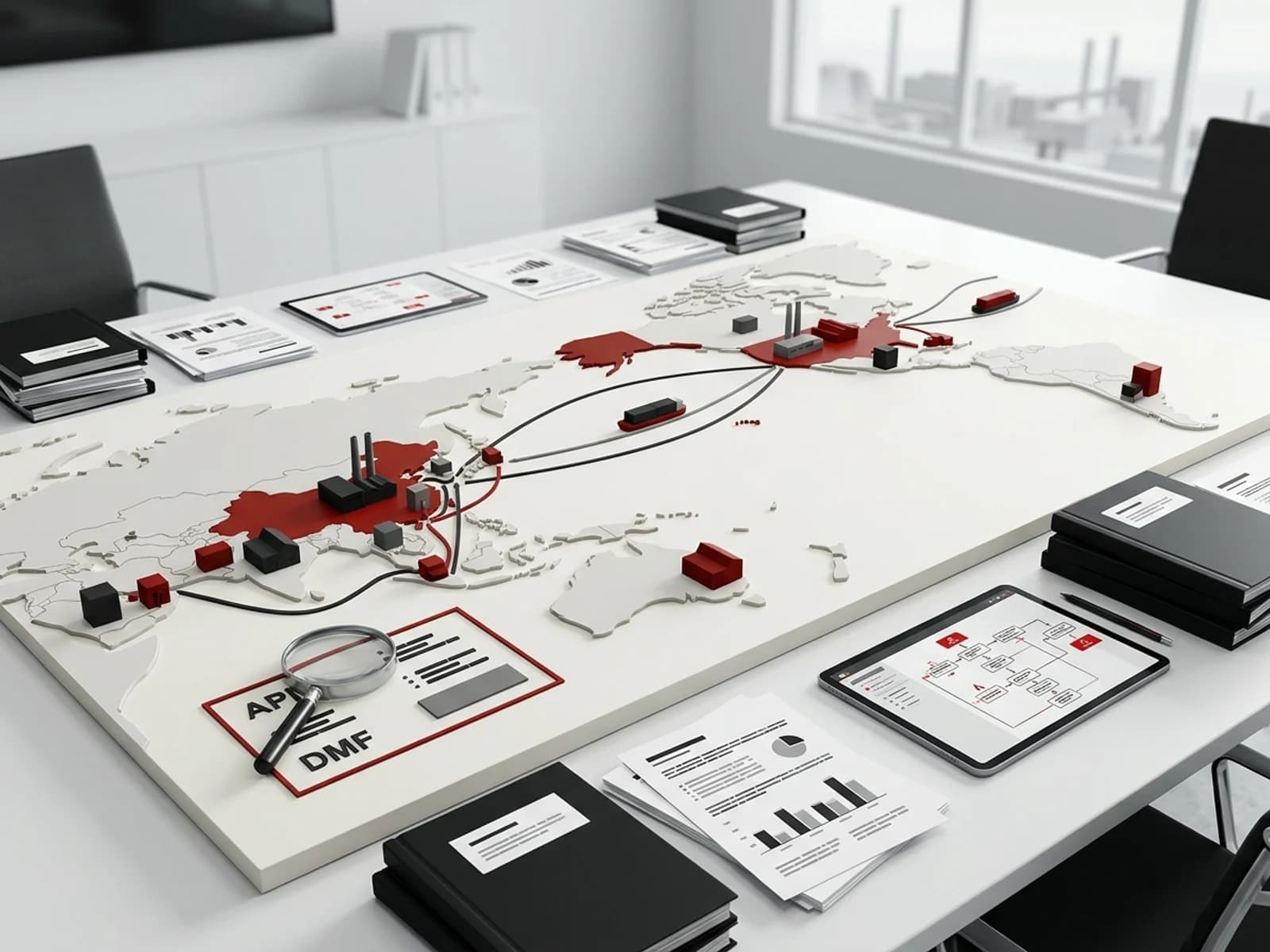
The U.S. Food and Drug Administration's (FDA) Unique Device Identification (UDI) system was established to create a standardized, unambiguous method for identifying medical devices throughout their distribution and clinical use. At the core of this system is the Global Unique Device Identification Database (GUDID), managed by the FDA and the National Library of Medicine (NLM). GUDID acts as a public registry containing key catalog and packaging attributes for every Device Identifier (DI) registered by medical device labelers.
As of July 2026, the GUDID registry contains 5,083,948 unique device identifier records, reflecting the immense size and diversity of the medical technology industry. However, a closer look at this registry reveals that a single clinical specialty—orthopedics and plastic surgery—occupies a massive share of the database. Devices registered under orthopedic and plastic surgery product codes account for 2,252,591 records, or 44.3% of the entire GUDID registry.
For procurement managers, hospital supply-chain administrators, orthopedic surgeons, and medtech manufacturing specialists, understanding this orthopedic UDI footprint is vital. However, raw database counts can be highly misleading. In this analysis, we process the 2.2M orthopedic and plastic surgery UDI records to separate actual implant original equipment manufacturers (OEMs) from distributors, consolidate fragmented corporate entities, analyze sub-specialty concentration (focusing on the spine sector), and highlight the emerging presence of Asian implant manufacturers.
Why is Orthopedics 44% of the GUDID registry?
The fact that orthopedics represents nearly half of all device registrations does not mean that orthopedic implants represent 44% of healthcare spending or clinical usage. Instead, it is an artifact of variant explosion in orthopedic manufacturing.
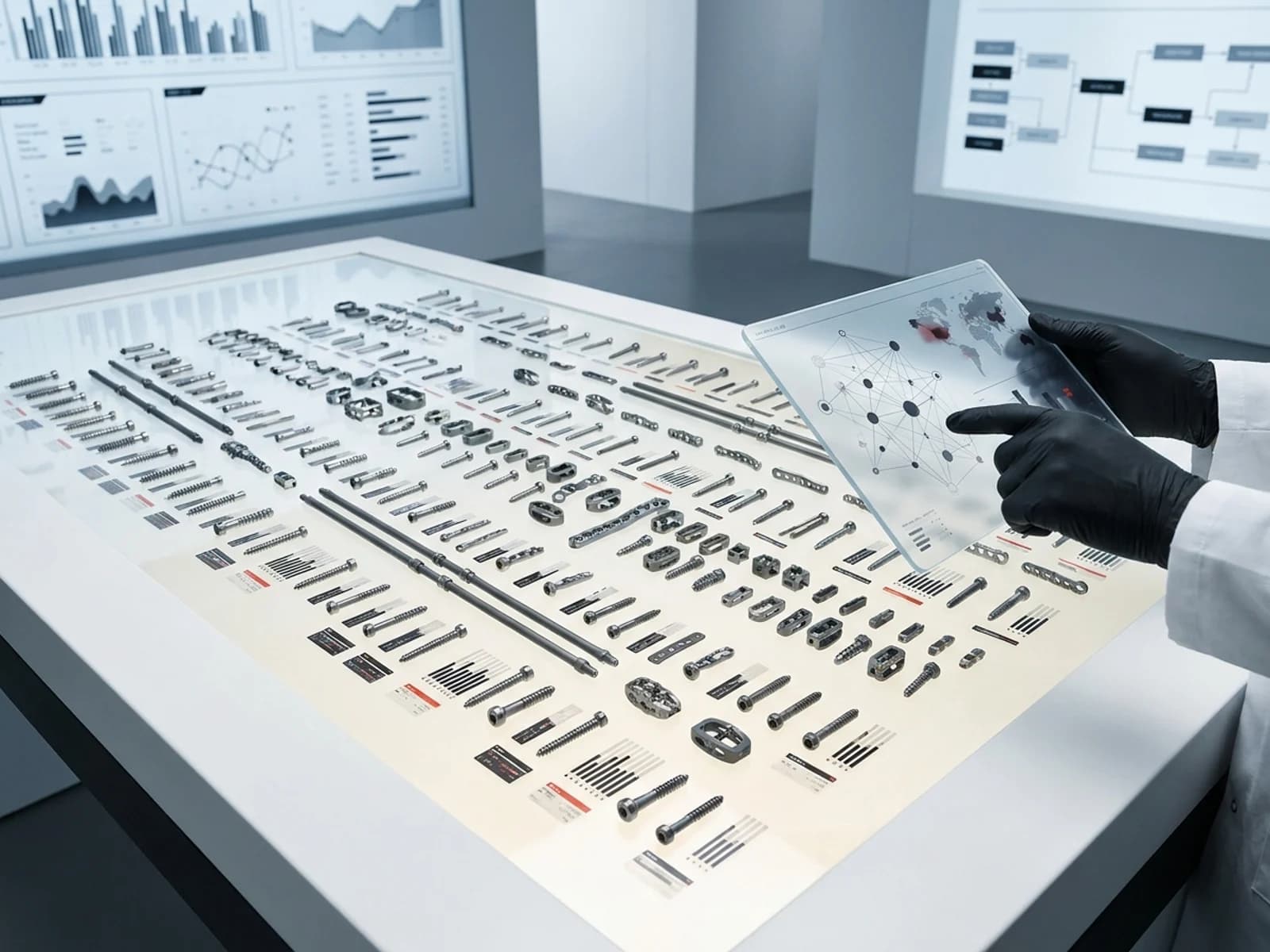
Unlike a cardiac pacemaker, which might be registered as a single device identifier for a given model, or a drug-delivery autoinjector that has one DI for a specific dose, orthopedic hardware relies on massive modular systems. A single joint-reconstruction or spinal-fixation system requires hundreds of physical variants to accommodate human anatomical variation:
Bone Screws: A single screw design is manufactured in dozen of lengths (e.g., 20mm to 80mm in 2mm increments), multiple diameters (e.g., 4.5mm, 5.5mm, 6.5mm), and varying thread pitches (cortical vs. cancellous).
Fixation Plates: A single anatomical plate system requires left and right configurations, varying hole counts (e.g., 4-hole to 18-hole options), and different metal thicknesses.
Joint Reconstruction: Hip stems, femoral heads, acetabular cups, and tibial trays require a multi-dimensional matrix of sizes, offsets, and materials.
Under the FDA UDI rule, every individual physical variant must be assigned a unique Device Identifier (DI). Consequently, a single knee system or spinal fixation system can generate thousands of individual DI records in the GUDID. This structural trait explains why the orthopedic database is so large.
To see how this product breadth relates to manufacturing location compliance, see our analysis on FDA registered device establishments by country (2026).
Separating Distributors from Implant OEMs
When ranking the top registrants in the GUDID orthopedic dataset, the raw counts are dominated by large healthcare distributors rather than implant manufacturers. These distributors register thousands of commodity surgical supplies (such as sterile surgical drapes, tubing, bone wax, and standard surgical tools) that happen to be coded under orthopedic product codes.
To map the actual implant manufacturing landscape, we must filter out these distributors. The table below lists the top registrants in the raw orthopedic GUDID dataset, highlighting the need for distributor exclusion:
| Rank | Company Name | GUDID DIs | Single-Use (%) | Classification | Primary Brands / Products |
|---|---|---|---|---|---|
| 1 | Cardinal Health 200, LLC | 181,923 | 100% | Distributor | Cardinal Health, Convertors, Devon sterile packs |
| 2 | MEDLINE INDUSTRIES, INC. | 126,121 | 99% | Distributor | Medline commodity surgical supplies, drapes |
| 3 | Smith & Nephew, Inc. | 52,443 | 50% | Implant OEM | EVOS, Peri-Loc plates, Legion knee systems |
| 4 | GBS Commonwealth Co.,Ltd. | 50,195 | 99% | Implant OEM | The JASPER Spinal Fixation, Peridot |
| 5 | ALPHATEC SPINE, INC. | 45,586 | 70% | Implant OEM | Invictus, IdentiTi, Arsenal spinal systems |
| 6 | MEDTRONIC SOFAMOR DANEK, INC. | 43,947 | 62% | Implant OEM | CD Horizon, TSRH spinal systems |
| 7 | NuVasive, Inc. | 42,204 | 40% | Implant OEM | ReLine, CoRoent, Brigade spinal systems |
| 8 | GLOBUS MEDICAL, INC. | 42,008 | 87% | Implant OEM | CREO, REVERE, Autobahn spinal systems |
| 9 | Biomet Orthopedics, LLC | 41,918 | 59% | Implant OEM | A.L.P.S. plates, Vanguard knee systems |
| 10 | Zimmer, Inc. | 32,490 | 55% | Implant OEM | NexGen, Natural-Knee joint systems |
| 11 | BIOMET SPINE LLC | 32,052 | 95% | Implant OEM | Vital, Vitality, Polaris spinal systems |
| 12 | AVID MEDICAL, INC. | 31,203 | 100% | Distributor | Avid TruCustom sterile convenience trays |
Data Source: FDA/NLM AccessGUDID Database (July 2026). Distributor classification based on corporate keyword filtering.
By identifying and separating distributors like Cardinal Health, Medline, and Avid Medical (which represent 100% single-use convenience trays and surgical accessories), we can isolate the actual implant original equipment manufacturers (OEMs).
Corporate Entity Fragmentation
Another major challenge in analyzing the GUDID database is corporate entity fragmentation. Major medical device manufacturers rarely register all products under a single corporate name. Instead, due to historical acquisitions, international manufacturing hubs, and specialized divisions, their portfolios are split across multiple legal entities.
To find the true product catalog breadth of the leading manufacturers, we must consolidate these fragmented entities. The three case studies below illustrate this pattern:
1. Zimmer Biomet Consolidated Catalog
Zimmer Biomet operates through at least three major distinct registrants in the GUDID database:
Biomet Orthopedics, LLC: 41,918 records (representing reconstructive and trauma portfolios).
Zimmer, Inc.: 32,490 records (representing legacy Zimmer joint reconstruction lines).
BIOMET SPINE LLC: 32,052 records (representing legacy Biomet spinal fixation lines).
Consolidated Zimmer Biomet Catalog: 106,460 unique Device Identifiers.
This consolidated total makes Zimmer Biomet the largest single implant OEM catalog in the GUDID database, reflecting its dominant position in joint reconstruction and spinal hardware.
2. Stryker Corporation Catalog
Stryker’s GUDID registrations are split across international boundaries and brand families:
Stryker GmbH: 17,697 records (representing European manufacturing divisions).
Howmedica Osteonics Corp.: 16,157 records (representing the primary reconstructive joint and trauma brand).
Stryker Spine / Stryker Corp. (US): Additional US-based entities.
Consolidated Stryker Catalog: Exceeds 33,854 unique Device Identifiers across these two primary divisions alone.
This division reflects Stryker's acquisition history, particularly its 1998 buyout of Howmedica (the orthopedic division of Pfizer), which remains the legal labeler for major product lines like the Triathlon knee system.
3. Johnson & Johnson / DePuy Synthes Catalog
Similar to Stryker, J&J’s orthopedic catalog is split across legal entities:
Synthes GmbH: 28,257 records (representing the Swiss-based trauma and spinal division acquired by J&J in 2012).
DePuy Orthopaedics, Inc. / DePuy Synthes (US): US-based reconstructive and spinal divisions.
Consolidating these legal entities is necessary for hospital value analysis committees (VACs) and procurement teams. Evaluating a vendor's portfolio size using unconsolidated database records will lead to underestimating their actual product breadth and supply-chain integration.
For details on how these same manufacturers perform in safety evaluations, see our analysis on FDA Class I medical device recalls by the numbers (2026).
Top Implant OEMs by Sub-Specialty Concentration
Once distributors are excluded and major corporate entities are consolidated, we can analyze the catalog composition of the top implant OEMs. We keyword-categorized the device names associated with each company's registrations to determine their concentration across three orthopedic sub-specialties: Spine, Joint Reconstruction, and Trauma/Fixation.
The table below breaks down the top implant OEMs by their sub-specialty UDI registrations:
| Rank | Implant OEM | Total GUDID DIs | Spine DIs | Joint Recon DIs | Trauma & Fixation DIs | Key Brands & Product Families |
|---|---|---|---|---|---|---|
| 1 | Smith & Nephew, Inc. | 52,443 | 0 | 22,672 | 13,944 | EVOS, Peri-Loc trauma, Legion knee systems |
| 2 | GBS Commonwealth Co.,Ltd. | 50,195 | 49,890 | 0 | 0 | The JASPER Spinal Fixation, Peridot |
| 3 | ALPHATEC SPINE, INC. | 45,586 | 86,884 | 0 | 52 | Invictus, IdentiTi, Arsenal spinal systems |
| 4 | MEDTRONIC SOFAMOR DANEK, INC. | 43,947 | 100,787 | 0 | 1,102 | CD Horizon, TSRH, Medtronic Reusable Instruments |
| 5 | NuVasive, Inc. | 42,204 | 127,451 | 0 | 18 | ReLine, CoRoent, Brigade, Armada spinal lines |
| 6 | GLOBUS MEDICAL, INC. | 42,008 | 109,801 | 0 | 6,970 | CREO, REVERE, Autobahn, Anthem systems |
| 7 | Biomet Orthopedics, LLC | 41,918 | 0 | 67,171 | 31,393 | A.L.P.S. plates, Vanguard knee systems |
| 8 | Zimmer, Inc. | 32,490 | 0 | 38,223 | 5,823 | NexGen, Natural-Knee, Persona joint systems |
| 9 | BIOMET SPINE LLC | 32,052 | 110,940 | 0 | 15 | Vital, Vitality, Polaris 4.75 & 5.5 spinal systems |
| 10 | L&K BIOMED CO. ,LTD. | 28,533 | 75,301 | 0 | 92 | LnK Spinal Fixation, AccelFix, LnK Interbody |
| 11 | Synthes GmbH | 28,257 | 18,291 | 0 | 11,617 | LCP plates, VOLT, VA-LCP trauma systems |
| 12 | Medacta International SA | 24,747 | 9,245 | 8,825 | 0 | MUST Pedicle Screws, MyKnee, knee instruments |
Data Source: FDA/NLM AccessGUDID Database (July 2026). Sub-specialty DIs represent the count of keyword hits in device name fields. Due to multi-code registrations, sub-specialty counts can exceed the unique DI record count (see Dataset Gotcha below).
Sub-Specialty Profile Insights
Joint Reconstruction Leaders: Reconstructive portfolios are led by Biomet Orthopedics (67,171 joint reconstruction DIs), Zimmer, Inc. (38,223 DIs), and Smith & Nephew (22,672 DIs). These numbers reflect the high degree of size customization required for hip and knee arthroplasty components.
Trauma & Fixation Leaders: Orthopedic trauma (fixation plates, nails, intramedullary rods, and screws) is led by Biomet Orthopedics (31,393 trauma DIs), Smith & Nephew (13,944 DIs), and Synthes GmbH (11,617 DIs). Trauma catalogs are characterized by a high volume of small mechanical variants, such as varying screw lengths and plate hole counts.
Spine Specialization: The spinal implant sector is highly fragmented, with several firms showing a near-total focus on spinal hardware.
Detailed Focus: The Spinal Implant OEM Landscape
Spinal fusion and stabilization surgeries utilize complex hardware, including pedicle screws, rods, crosslinks, interbody cages, and vertebral plates. Because spinal anatomy is highly variable, spinal system catalogs exhibit extreme variant counts.
The table below ranks the top Spine-Specialist OEMs in the GUDID database, filtered to exclude distributors and sorted by their specific spinal implant DI registrations:
| Rank | Spinal Specialist OEM | Spine DIs | Total GUDID DIs | Primary Brands & Systems |
|---|---|---|---|---|
| 1 | NuVasive, Inc. | 127,451 | 42,204 | ReLine, CoRoent, Brigade, Armada |
| 2 | BIOMET SPINE LLC | 110,940 | 32,052 | Vital, Vitality, Polaris 4.75 & 5.5 systems |
| 3 | GLOBUS MEDICAL, INC. | 109,801 | 42,008 | CREO, REVERE, Autobahn, Anthem |
| 4 | MEDTRONIC SOFAMOR DANEK, INC. | 100,787 | 43,947 | CD Horizon, TSRH, Medtronic Reusable Instruments |
| 5 | ALPHATEC SPINE, INC. | 86,884 | 45,586 | Invictus, IdentiTi, Arsenal |
| 6 | L&K BIOMED CO. ,LTD. | 75,301 | 28,533 | LnK Spinal Fixation, AccelFix, LnK Interbody |
| 7 | SPINECRAFT, LLC | 74,039 | 17,455 | APEX Spine System, ASTRA Spine System |
| 8 | VB Spine LLC | 55,483 | 24,471 | Aleutian Interbody, Everest Spinal, Cascadia |
| 9 | GBS Commonwealth Co.,Ltd. | 49,890 | 50,195 | The JASPER Spinal Fixation, Peridot |
| 10 | Seaspine Orthopedics Corporation | 37,828 | 23,728 | Mariner, Specials, Malibu, Coral |
| 11 | Astura Medical | 32,463 | 14,632 | OLYMPIC, SIRION, BRIDALVEIL |
| 12 | GS Medical Co., Ltd. | 31,609 | 12,809 | AnyPlus Spinal Fixation, GSS Pedicle |
| 13 | Medyssey Co., Ltd. | 25,410 | 15,274 | Hedjet System, Zenius Spinal, Iliad |
| 14 | Zavation LLC | 21,611 | 13,998 | Zavation, Zavation Deformity Polyaxial |
Data Source: FDA/NLM AccessGUDID Database (July 2026). Spine DIs represent keyword-matched registrations under spinal product codes.
Crucial Dataset Gotcha: Why Spine DIs Exceed Total GUDID DIs
A key database anomaly appears in this table: for companies like NuVasive (127k spine DIs vs. 42k total DIs) and GLOBUS MEDICAL (109k spine DIs vs. 42k total DIs), the sub-specialty count is significantly higher than the company's total GUDID records.
This occurs because of how product codes are mapped in the GUDID database:
In the GUDID database, the
product_codesfield is a pipe-separated string that can list multiple FDA product codes for a single Device Identifier (e.g., "GAS|GAT|DZE"). This is common for customized surgical kits, implant sets, or combination packages that contain multiple parts.Our query scans this field and counts the sub-specialty matches for each code listed in the registration.
Consequently, if a single UDI record (one row in the database) lists three different spinal product codes, it will increment the "Spine DI" count by three.
This "variant overlap" represents a significant database gotcha. A raw count of database rows will underrepresent the true product-code complexity of these companies. The high sub-specialty counts reflect the modular, system-based nature of spinal implant kits, where single registrations bundle multiple clinical classifications.
Vendor Selection and Decision Matrix for Spinal Implants
To help clinical value analysis committees (VACs) evaluate spine hardware vendors, the table below provides a comparative decision matrix based on GUDID catalog breadth, specialization, and supply-chain characteristics:
| Vendor | Catalog Breadth (DIs) | Primary Specialty | Key Supply-Chain Strategy | Risk & Compliance Considerations |
|---|---|---|---|---|
| NuVasive | High (127k spine DIs) | Spine exclusive | Direct sales model, high-end specialized training centers | High specialization but premium price points; acquisition integration with Globus may affect support. |
| Zimmer Biomet | High (110k spine DIs) | Joint & Spine | Hybrid distributor/direct, extensive inventory pools | Corporate entity fragmentation requires consolidated contract reviews. |
| Medtronic Sofamor Danek | High (100k spine DIs) | Spine & Vascular | Direct sales, bundled navigation/robotics contracts | Strong capital equipment bundle (StealthStation, O-arm) but high overall contract pricing. |
| Alphatec Spine | Moderate (86k spine DIs) | Spine exclusive | Rapid product cycle, focus on lateral surgical approaches | High growth and specialization, but smaller total corporate footprint compared to Medtronic or J&J. |
| L&K Biomed | Moderate (75k spine DIs) | Spine exclusive | South Korean OEM, regional distributor networks | Competitive pricing for standard fixation, but requires close verification of local distributor stocking capability. |
This matrix illustrates how procurement teams can balance catalog depth, clinical specialization, and contracting strategies when selecting vendors.
The Rising Presence of Asian Spine OEMs & BIOSECURE Act Implications
When examining the spinal-specialist leaderboard, a significant trend emerges: the prominent position of Asian, particularly South Korean, implant manufacturers.
Companies such as L&K BIOMED CO. ,LTD. (75,301 spine DIs), CG MedTech Co.,Ltd. (19,649 total DIs, 16,551 spine DIs), GS Medical Co., Ltd. (31,609 spine DIs), and Medyssey Co., Ltd. (25,410 spine DIs) hold massive product registries in the GUDID. This indicates that these companies have registered extensive catalogs of screws, rods, and cages for the US market.
Historically, these companies operated primarily as contract manufacturing organizations (CMOs) or original design manufacturers (ODMs) for major US brands. However, they have increasingly registered their own proprietary catalogs to compete directly in the US market.
This trend carries significant supply-chain and regulatory implications:
Supply Chain Redundancy: As US hospitals seek to reduce procurement costs, these Asian OEMs offer high-quality implants at lower price points compared to dominant US players.
Geopolitical and Regulatory Risks: With the progression of the BIOSECURE Act in Congress, which restricts US federal funding and contracting with biotech "companies of concern," supply chain compliance has become a priority. While the current focus of the BIOSECURE Act is on genomic and biopharma CDMOs (such as WuXi AppTec), the policy discussions have heightened scrutiny on all medical manufacturing dependencies in Asia.
Audit Trail Verification: Procurement teams evaluating Asian OEMs must verify that their manufacturing sites are FDA-registered and have a history of successful FDA quality system inspections. For a global breakdown of device manufacturing facilities, see our analysis on FDA registered device establishments by country (2026).
Recommendations for Hospital Procurement and Supply Chain Teams
Based on this GUDID database analysis, we recommend that hospital procurement, clinical value analysis committees, and supply chain directors implement the following strategies:
Consolidate Vendor Portfolio Audits: When negotiating contracts with joint-reconstruction or spinal vendors, do not evaluate their product catalog size using single database listings. Consolidate legal entities (e.g., combining Biomet Orthopedics, Zimmer Inc., and Biomet Spine) to evaluate a vendor's true portfolio breadth and negotiate volume-based discounts.
Audit Supplier CDMO Compliance: Verify the manufacturing locations of your implant suppliers. Ensure that both domestic and international OEMs manufacture their hardware in registered facilities with clean FDA inspection reports.
Evaluate Asian OEMs for Non-Fusion and Trauma Lines: For commodity trauma hardware (such as standard plates and screws) or standard spinal fixation systems, consider qualified South Korean OEMs (such as L&K Biomed or Medyssey) to diversify your supplier base and reduce procurement costs.
Map UDI Data to Electronic Health Records (EHR): Ensure your hospital's supply chain system automatically maps GUDID device identifiers to patient records. This traceability is essential for quickly identifying patients in the event of a Class I safety alert. For details on recall triage workflows, see FDA Class I medical device recalls by the numbers (2026).
Frequently Asked Questions
What is the difference between a UDI and a GUDID record?
A Unique Device Identifier (UDI) is the physical barcode or numeric code printed on a device label, consisting of a Device Identifier (DI) identifying the specific model/variant and a Production Identifier (PI) detailing the lot/serial number. The GUDID is the public database managed by the FDA where manufacturers (labelers) must submit the static catalog attributes associated with each Device Identifier (DI).
Why do orthopedic companies have so many device identifiers?
Orthopedic systems require extensive size and shape configurations to fit human anatomy. Because the FDA UDI rule mandates that every individual mechanical variant (such as every screw length, plate hole configuration, and implant offset) must have a unique Device Identifier (DI), a single orthopedic product system can generate thousands of individual GUDID records.
How do healthcare distributors affect raw GUDID rankings?
Large distributors (such as Cardinal Health and Medline) register thousands of commodity surgical supplies, sterile drapes, and tools that fall under orthopedic product codes. If these are not filtered out, distributors will rank as the top orthopedic companies, which obscures the actual implant OEM landscape.
Why do some companies have more Spine DIs than total GUDID records?
Some GUDID records list multiple FDA product codes in their registration (pipe-separated) to represent customized kits or systems that bundle several classifications. Because our sub-specialty query counts matches for each product code listed, a single multi-code record will increment the "Spine DI" count multiple times, causing it to exceed the unique record total.
How does the BIOSECURE Act affect orthopedic supply chains?
While the BIOSECURE Act primarily targets genomic and biopharma contract development and manufacturing organizations (CDMOs), the legislation has increased focus on healthcare supply chain vulnerabilities in Asia. Procurement teams are increasingly auditing their dependencies on Asian medical device manufacturers to ensure long-term compliance and security.
Sources
U.S. Food and Drug Administration (FDA). Unique Device Identification System (UDI) Rule. FDA UDI Rule Page
National Library of Medicine (NLM). AccessGUDID Database Registry. AccessGUDID Search
U.S. Food and Drug Administration (FDA). Establishment Registration and Medical Device Listing Database. FDA Establishment Database
U.S. Congress. H.R.8333 — BIOSECURE Act. Congress.gov H.R.8333
Orthopaedic Product News. Global Orthopaedic Market Report: Zimmer Biomet, Stryker, and DePuy Synthes Portfolio Analysis. Orthopaedic Product News Analysis
Journal of Bone and Joint Surgery. Unique Device Identification in Orthopaedic Surgery: Implementation, Clinical Benefits, and Supply Chain Traceability. JBJS Article
South Korea Ministry of Food and Drug Safety (MFDS). Medical Device Export and UDI Registration Guidelines (2025). MFDS Guidelines