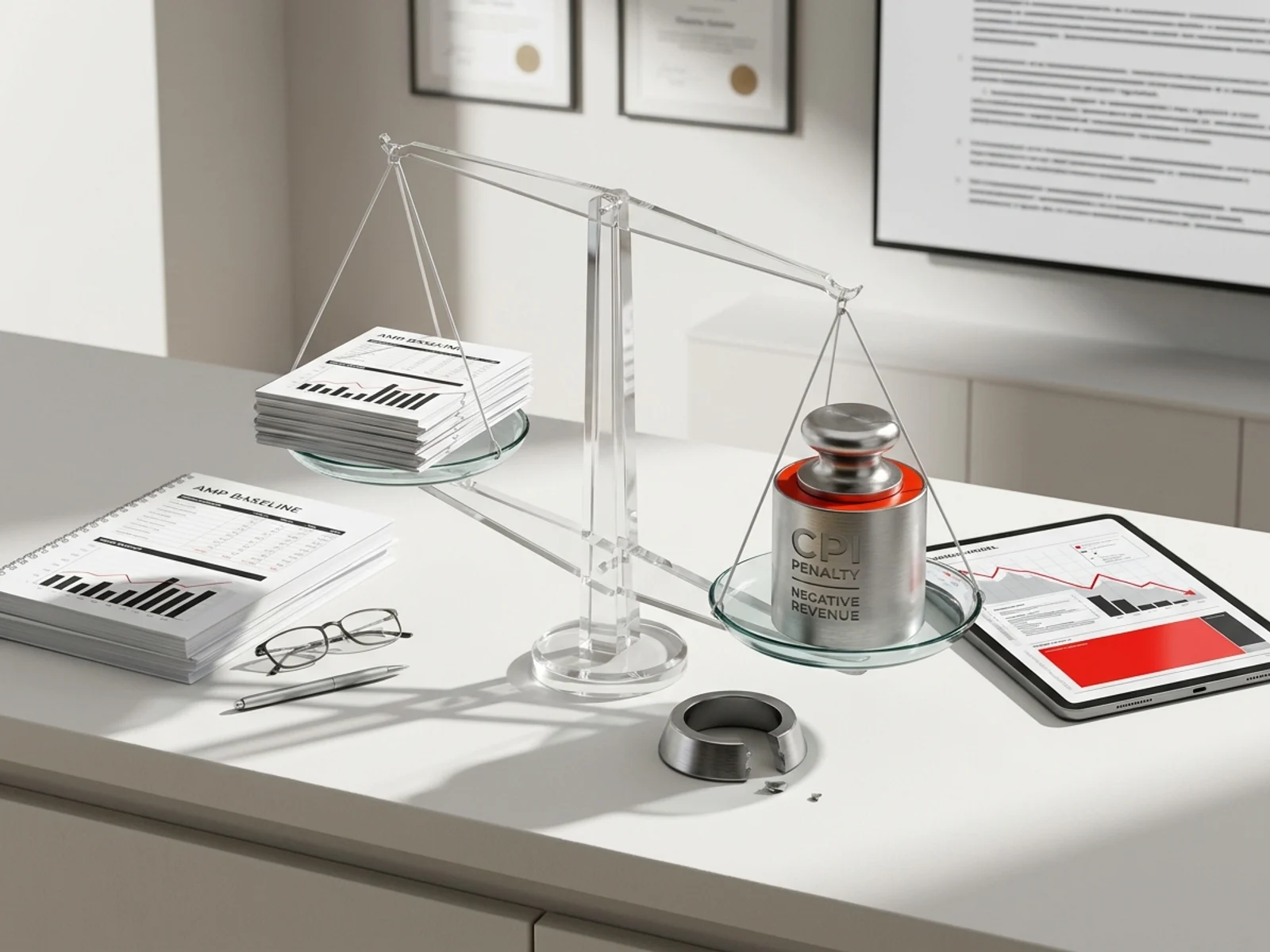
The Medicaid Drug Rebate Program (MDRP) is the cornerstone of drug pricing regulation in the United States. Established under Section 1927 of the Social Security Act and codified at 42 U.S.C. § 1396r-8, the program requires drug manufacturers to enter into a National Drug Rebate Agreement (NDRA) with the Secretary of Health and Human Services (HHS) as a condition for having their outpatient drugs covered by state Medicaid programs. In exchange for coverage, manufacturers agree to pay quarterly rebates to state Medicaid agencies for drugs dispensed to Medicaid beneficiaries.
For biopharmaceutical executives, government pricing directors, and managed care strategy leads, the MDRP defines the commercial price floor and shapes rebate liability across all commercial and public markets. The calculations are complex, linking key metrics such as Average Manufacturer Price (AMP) and Best Price to statutory percentages and inflation-based penalties.
This article provides an in-depth explainer of the MDRP statutory formulas, the mechanics of the consumer price index (CPI-U) inflation penalty, the relationship between Medicaid rebates and other federal programs (such as 340B ceiling prices), and the massive strategic disruption caused by the elimination of the 100% AMP rebate cap on January 1, 2024.
The Statutory Formula: Basic Rebates for Brands vs. Generics
The rebate paid by a manufacturer for a single unit of a drug is known as the Unit Rebate Amount (URA). The URA calculation is bifurcated based on whether the drug is classified as an innovator (brand-name) drug or a non-innovator (generic) drug.
Innovator Drugs (Single-Source and Multi-Source Brands)
For brand-name innovator drugs—categorized by CMS with drug category codes S (Single Source) or I (Innovator Multiple Source)—the statutory URA consists of a basic rebate plus an additional inflation rebate.
The basic rebate is calculated as the greater of:
23.1% of the Average Manufacturer Price (AMP) for the rebate quarter, or
The difference between the AMP and the Best Price for the rebate quarter.
$$Basic\ Rebate = \max(AMP \times 0.231, AMP - Best\ Price)$$
For pediatric innovator drugs and certain clotting factors, the statutory percentage is reduced under 42 U.S.C. § 1396r-8(c)(1)(B)(ii):
The basic rebate floor is 17.1% of AMP instead of 23.1%.
This reduction is designed to preserve commercial incentives for therapeutic classes that serve specialized pediatric or rare disease populations.
Non-Innovator Drugs (Generics)
For generic non-innovator drugs—categorized by CMS under drug category code N (Non-Innovator Multiple Source)—the URA calculation is significantly simpler:
The basic rebate is a flat 13% of the AMP.
Generic drugs are not subject to the Best Price matching requirement. This is a critical distinction; a generic manufacturer can offer a deep discount to a commercial customer (e.g., a large hospital system or buying group) without resetting its national Medicaid rebate liability.
$$Basic\ Rebate = AMP \times 0.13$$
Defining the Key Metrics: AMP and Best Price
To perform these calculations accurately, manufacturers must report monthly and quarterly pricing metrics to CMS within 30 days of the end of each reporting period. Errors in reporting can lead to civil monetary penalties and audit exposure.
Average Manufacturer Price (AMP)
Under 42 C.F.R. § 447.504, the Average Manufacturer Price is defined as the average price paid to the manufacturer by:
Wholesalers for drugs distributed to retail community pharmacies.
Retail community pharmacies that purchase drugs directly from the manufacturer.
The calculation of AMP requires manufacturers to exclude certain price concessions and customer classes:
Exclusions: Prompt pay discounts to wholesalers, rebates paid to pharmacy benefit managers (PBMs), discounts offered under the Medicare Part D program, and federal supply schedule (FSS) sales.
Bona Fide Service Fees (BFSFs): Fees paid by manufacturers to wholesalers or pharmacies for services (such as distribution or inventory management) that represent fair market value for an actual service rendered, which are not passed through as a price concession, are excluded from the AMP calculation.
Best Price
Codified at 42 C.F.R. § 447.505, Best Price is the lowest price available from the manufacturer to any entity in the United States. This includes:
Wholesalers, retailers, providers, health maintenance organizations (HMOs), non-profit entities, and governmental entities.
It must reflect all price concessions, including free goods, rebates, volume discounts, and chargebacks.
However, certain transactions are statutory exclusions from Best Price:
Prices charged to the Department of Veterans Affairs (VA), the Department of Defense (DoD), and the Indian Health Service (IHS).
Federal Supply Schedule (FSS) prices.
340B covered outpatient drug transactions.
State pharmaceutical assistance program (SPAP) discounts.
Understanding how Best Price is reset is critical when negotiating commercial contracts. For example, if a manufacturer offers a deep refund to a commercial payer under a value-based arrangement, that single transaction can reset the national Best Price floor. For an analysis of these risks and how to structure value-based pricing, see Medicaid Best Price risk and value-based pricing.
The CPI-U Inflation Penalty: How the Additional Rebate Prevents Price Hikes
To prevent manufacturers from raising prices faster than inflation, the MDRP includes an additional rebate (commonly referred to as the inflation penalty). This penalty is added to the basic rebate for both innovator and non-innovator drugs.
The Inflation Rebate Formula
The inflation rebate compares the drug's current-quarter AMP to an inflation-adjusted baseline AMP:
$$Additional\ Rebate = \max(0, AMP_{Current} - Baseline\ AMP_{Adjusted})$$
Where the baseline AMP is adjusted using the Consumer Price Index for All Urban Consumers (CPI-U):
$$Baseline\ AMP_{Adjusted} = Baseline\ AMP \times \left( \frac{CPI\text{-}U_{Current\ Quarter}}{CPI\text{-}U_{Baseline\ Month}} \right)$$
Determining the Baseline
The baseline period depends on when the drug was launched:
For drugs approved after 1990, the baseline AMP is the AMP for the first full quarter following the drug's launch date.
The baseline CPI-U is the CPI-U for the month in which that first full quarter began.
Once established, the baseline AMP and baseline CPI-U remain fixed for the lifetime of the drug, except in rare circumstances (such as a restatement due to recalculation errors or product acquisition).
Because the inflation rebate uses the CPI-U index as its yardstick, any price increase that exceeds the rate of inflation triggers a dollar-for-dollar penalty. If a manufacturer raises a drug's AMP by $10.00 above the inflation-adjusted baseline, the inflation penalty increases by exactly $10.00, rendering the price increase financially neutral or negative on Medicaid sales.
The 2024 Cap Elimination: Why Some Brand Drugs Now Face Negative Medicaid Revenue
Prior to 2024, manufacturers faced a statutory limit on their rebate liability:
Under the Affordable Care Act (ACA), the total Medicaid rebate (basic + additional inflation rebate) was capped at 100% of the Average Manufacturer Price (AMP).
If a drug's price had risen so fast that the URA formula yielded a rebate of 110% of AMP, the manufacturer paid exactly 100% of AMP.
The Legislative Change: American Rescue Plan Act (ARPA) of 2021
Section 9816 of the American Rescue Plan Act of 2021 formally eliminated the 100% AMP rebate cap, effective January 1, 2024.
Pre-2024:
Total Rebate (Basic + Inflation) capped at 100% of AMP.
Net Revenue floor = $0.00.

Post-2024:
Rebate Cap removed. Total Rebate can exceed 100% of AMP.
Net Revenue can become negative (Manufacturer pays to sell the drug).
Without the cap, the inflation penalty has no ceiling. If a long-established brand-name drug has undergone compounding price increases over the past 15 to 20 years, its current AMP is far higher than its inflation-adjusted baseline. In 2026, the URA for these highly-inflated products can reach 150%, 200%, or even 300% of AMP.
For these products, selling a unit to a Medicaid patient results in negative net revenue. The manufacturer must pay the state Medicaid agency more in rebates than the gross price it received for the drug.
Strategic Portfolio Adjustments
The elimination of the cap forced a massive wave of strategic adjustments across the biopharmaceutical industry in late 2023 and throughout 2024, which have settled into standard operational practice by 2026:
Drastic List Price Reductions: Several manufacturers of major high-volume drugs—most notably insulins (such as Eli Lilly's Humalog, Novo Nordisk's Novolog, and Sanofi's Lantus)—slashed their wholesale acquisition costs (WAC) by up to 70% to 80%. By lowering the WAC and corresponding AMP, they reset the price closer to the historical baseline, eliminating the massive inflation penalties.
Product Discontinuations and Authorized Generics: Some manufacturers discontinued their highly-inflated brand-name products entirely and transitioned patients to authorized generics or newly launched brands with clean baseline AMPs.
Pacing Price Increases: For newly launched drugs, manufacturers now manage price increases with extreme caution. Launch pricing is set to reflect the full long-term value of the drug, and subsequent price hikes are kept strictly within the projected bounds of CPI-U to prevent triggering an inflation penalty that could erode future net margins.
Worked Example: Calculating a Brand Drug's URA
To illustrate the mechanics of the MDRP calculation under the uncapped 2026 framework, let us walk through a hypothetical worked example for a brand-name drug:
Step 1: Establish the Baseline parameters
Drug: Innovator Brand (Category S)
Launch Date: Q1 2015
Baseline AMP: $100.00
Baseline CPI-U (Q1 2015): 234.7
Step 2: Current Quarter Parameters (Q2 2026)
Current AMP: $250.00
Current Best Price: $180.00
Current CPI-U (Q2 2026): 318.2
Step 3: Calculate the Basic Rebate
The basic rebate is the greater of:
$23.1%$ of current AMP: $$250.00 \times 0.231 = $57.75$
AMP minus Best Price: $$250.00 - $180.00 = $70.00$
Since $$70.00 > $57.75$, the Basic Rebate is $70.00.
Step 4: Calculate the Inflation-Adjusted Baseline AMP
First, determine the inflation factor:
$$Inflation\ Factor = \frac{CPI\text{-}U_{Current}}{CPI\text{-}U_{Baseline}} = \frac{318.2}{234.7} \approx 1.35577$$
Next, calculate the adjusted baseline AMP:
$$Baseline\ AMP_{Adjusted} = Baseline\ AMP \times Inflation\ Factor = $100.00 \times 1.35577 = $135.58$$
Step 5: Calculate the Additional (Inflation) Rebate
The inflation rebate is the difference between the current AMP and the adjusted baseline:
$$Additional\ Rebate = Current\ AMP - Baseline\ AMP_{Adjusted} = $250.00 - $135.58 = $114.42$$
Step 6: Calculate the Total URA
The total URA is the sum of the basic rebate and the inflation rebate:
$$Total\ URA = Basic\ Rebate + Additional\ Rebate = $70.00 + $114.42 = $184.42$$
Step 7: Analyze the Net Pricing
Gross Price (AMP): $250.00
Rebate Paid (URA): $184.42
Net Medicaid Price: $$250.00 - $184.42 = $65.58$ (an effective discount of 73.8% off AMP).
If the current AMP in this example were raised further to $350.00 due to aggressive pricing decisions while the baseline remained fixed, the inflation rebate would balloon to $$350.00 - $135.58 = $214.42$. The total URA would then reach $$284.42$ (exceeding the baseline margin), significantly shrinking the net revenue return. Under the post-2024 rules, if the price had been escalated even more aggressively over a decade, the URA could easily exceed the $350.00 gross price, demonstrating the destructive potential of the uncapped inflation penalty.
Generic Drug Pricing: Linking MDRP to CMS NADAC
For generic drug manufacturers, the MDRP URA calculation is heavily influenced by community pharmacy acquisition costs and state reimbursement limits. Specifically, states use the National Average Drug Acquisition Cost (NADAC) database to set maximum allowable reimbursement rates.
The NADAC Price Limit
The NADAC database is managed by CMS and updated weekly based on national pharmacy invoice surveys. It represents the average price retail pharmacies pay to wholesalers to acquire generic and brand-name drugs.
CMS publishes the NADAC file as a public weekly release. The mid-2026 snapshot contains 696,293 active pricing records and demonstrates how generic prices are tracked:
Teriflunomide 14 mg (generic Aubagio): NADAC Per Unit is $0.72774 (effective date December 17, 2025).
Teriflunomide 7 mg: NADAC Per Unit is $0.62671 (effective date December 17, 2025).
For more context on how these pricing lists affect generic launches and pharmacy margins, see generic-aubagio-market-litigation-settlement-nadac-pricing.
Interaction with Generic URA
Because the generic URA is calculated as a flat 13% of the AMP, generic manufacturers must ensure their AMP remains aligned with wholesale transaction prices. If a generic manufacturer's AMP is too high relative to the NADAC price:
The manufacturer is paying a 13% rebate on a high reported AMP.
However, pharmacies are being reimbursed by Medicaid at the lower NADAC rate, causing pharmacies to demand lower acquisition costs from the manufacturer to protect their dispensing margins.
This creates a tight, downward margin corridor for generic products, where manufacturers must balance wholesale pricing, AMP reporting, and retail acquisition realities.
The Broader Impact: 340B Ceilings and Double-Discounting Audit Workflows
The calculations and rebate values established under the MDRP flow directly into other federal drug pricing programs, most notably the 340B Drug Pricing Program.
The 340B Ceiling Price Formula
Under Section 340B of the Public Health Service Act, the ceiling price (the maximum price a manufacturer can charge a 340B covered entity for an outpatient drug) is calculated directly from the Medicaid rebate data:
$$340B\ Ceiling\ Price = AMP - URA$$
Because the 340B ceiling price is subtracting the URA from the AMP, any increase in the Medicaid rebate directly lowers the 340B price:
If a drug's URA reaches 100% of AMP, the 340B ceiling price drops to $0.01 per unit (known as the "penny pricing" rule).
When the 100% AMP rebate cap was eliminated in 2024, it did not lead to negative 340B prices (manufacturers do not pay 340B clinics to take drugs). Instead, HRSA maintained that if the calculated URA exceeds the AMP, the ceiling price remains capped at the nominal rate of $0.01.
However, the increase in drugs hitting the $0.01 ceiling price has drastically increased the volume of 340B purchases, as covered entities can acquire high-cost specialty drugs for a penny and dispense them to insured patients, pocketing the commercial spread.
The Double-Discounting Conflict
Because 340B clinics and Medicaid programs both serve low-income populations, there is a constant risk of double-discounting:
Under federal law, manufacturers are not required to pay a Medicaid rebate on a drug unit that was already purchased at a discounted 340B price.
To prevent this, state Medicaid programs use National Drug Codes (NDCs) and 340B modifier codes on medical claims to filter out 340B units from their quarterly rebate invoices.
However, billing errors are common, and manufacturers routinely pay double discounts on the same unit.
To combat this, manufacturer commercial operations teams must implement robust audit workflows to identify and dispute duplicate claims. For a detailed guide on operationalizing these audits and preventing double-discounting under the IRA, see 340B and Medicaid rebate non-duplication.
Statutory Reporting Traps: Monthly vs. Quarterly AMP and Line Extensions
Beyond basic formulas, manufacturers must navigate complex reporting timelines and product lifecycle rules that can trigger unintended rebate liabilities.
Monthly vs. Quarterly AMP Reporting Traps
Under CMS rules, manufacturers must calculate and report two distinct versions of AMP:
Monthly AMP: Calculated each month to determine the Federal Upper Limit (FUL) for generic drug reimbursement and to provide states with timely pricing indicators. Monthly AMP does not include a rolling average of lagged discounts and is highly sensitive to transaction timing.
Quarterly AMP: Calculated at the end of each quarter. Quarterly AMP incorporates a 12-month rolling average of lagged price concessions (such as chargebacks and returns) and is the metric used to compute the URA on quarterly state Medicaid invoices.
A common trap arises when a manufacturer restates a historical quarterly AMP. If a pricing audit reveals that certain discounts were misclassified, the manufacturer must submit restated data to CMS. Under federal regulations, manufacturers are permitted to restate AMP and Best Price for up to 12 quarters (3 years) after the original report. A restatement that lowers AMP can reduce rebate liability, but a restatement that increases AMP (or lowers Best Price) will trigger retroactive rebate invoices from all 50 states, plus potential interest and administrative fees.
Line Extension Rebate Stacking (The Bipartisan Budget Act of 2015)
Another major hurdle is the Line Extension Alternative URA rule. Under the Bipartisan Budget Act of 2015 and subsequent CMS regulations, if a manufacturer introduces a line extension of an oral solid brand drug (for example, converting an immediate-release tablet to an extended-release capsule or introducing a new strength), CMS calculates a special "alternative URA."
The alternative URA formula links the line extension's inflation penalty to the parent drug's pricing history:
If the parent drug has been on the market for a long time and has accumulated a high inflation penalty, the line extension inherits that inflation history.
This blocks manufacturers from resetting their baseline AMP by simply introducing slight reformulations or new strengths of an existing product.
If the parent drug's inflation rebate is extremely high, the alternative URA can cause the newly launched line extension's rebate to immediately jump to 100% of AMP (or exceed it under the post-2024 uncapped rules) upon launch, destroying the commercial viability of the reformulation.
Strategic Manufacturer Checklist: Navigating MDRP
Launch Phase Strategy
Establish a clean baseline AMP: Model the launch price to reflect long-term value, reducing the need for aggressive subsequent price increases.
Evaluate pediatric formulations: Determine if the product qualifies for the 17.1% basic rebate floor to protect margins.
Assess line extension risk: Under MDRP rules, line extensions (e.g., extended-release formulations) can inherit the inflation penalty of the parent drug, eliminating the ability to reset baseline AMP via reformulations.
Pricing Maintenance
Track price increases against projected CPI-U: Keep annual WAC and AMP increases strictly within the forecasted rate of inflation to avoid triggering additional rebates.
Model the URA trajectory: For legacy brands with significant historical price increases, model the exact quarter when the URA is projected to exceed 100% of AMP, prompting a portfolio review or price adjustment.
Review commercial contracts for Best Price impact: Ensure any commercial rebate, discount, or value-based refund does not inadvertently trigger a Best Price reset.
Frequently Asked Questions (FAQs)
What is 'Best Price' under the Medicaid Drug Rebate Program?
Best Price is the lowest price at which a manufacturer sells a covered outpatient drug to any purchaser in the United States, net of all discounts, rebates, and other price concessions. It sets a floor for the Medicaid rebate, as the basic rebate for a brand-name drug must match the difference between AMP and Best Price if that difference is greater than the standard 23.1% statutory rebate.
How does the elimination of the 100% AMP rebate cap affect generic drug manufacturers?
While generic manufacturers face lower basic rebate rates (13% of AMP), they are still subject to the additional CPI-U inflation rebate. If a generic manufacturer has raised its prices significantly above its historical baseline (for example, during a drug shortage or supply constraint), its inflation penalty can accumulate, causing the URA to exceed the generic AMP.
What is the pediatric rebate rate under the MDRP?
For innovator drugs approved by the FDA solely for pediatric use, the statutory basic rebate is reduced from 23.1% of AMP to 17.1% of AMP. The inflation penalty still applies.
Sources
Social Security Act § 1927, 42 U.S.C. § 1396r-8: Statutory authority for the Medicaid Drug Rebate Program. Available at https://www.govinfo.gov/content/pkg/USCODE-2023-title42/pdf/USCODE-2023-title42-chap7-subchapXIX-sec1396r-8.pdf.
42 C.F.R. Part 447, Subpart I: Payment for Drugs — federal regulations governing AMP, Best Price, and URA calculations. Available at https://www.ecfr.gov/current/title-42/chapter-IV/subchapter-C/part-447/subpart-I.
Centers for Medicare & Medicaid Services (CMS). "Medicaid Drug Rebate Program (MDRP) Overview." Available at https://www.medicaid.gov/medicaid/prescription-drugs/medicaid-drug-rebate-program/index.html.
Medicaid and CHIP Payment and Access Commission (MACPAC). "Medicaid Drug Rebate Program Fact Sheet." Available at https://www.macpac.gov/subtopic/medicaid-drug-rebate-program/.
KFF. "The Medicaid Drug Rebate Program: Policy Basics." KFF Issue Brief. Available at https://www.kff.org/medicaid/issue-brief/the-medicaid-drug-rebate-program-policy-basics/.
American Rescue Plan Act of 2021, Pub. L. No. 117-2, § 9816: Legislative provision eliminating the 100% AMP rebate cap. Available at https://www.congress.gov/117/plaws/publ2/PLAW-117publ2.pdf.
Health Resources and Services Administration (HRSA). "340B Drug Pricing Program Ceiling Price Regulations." Available at https://www.hrsa.gov/opa.