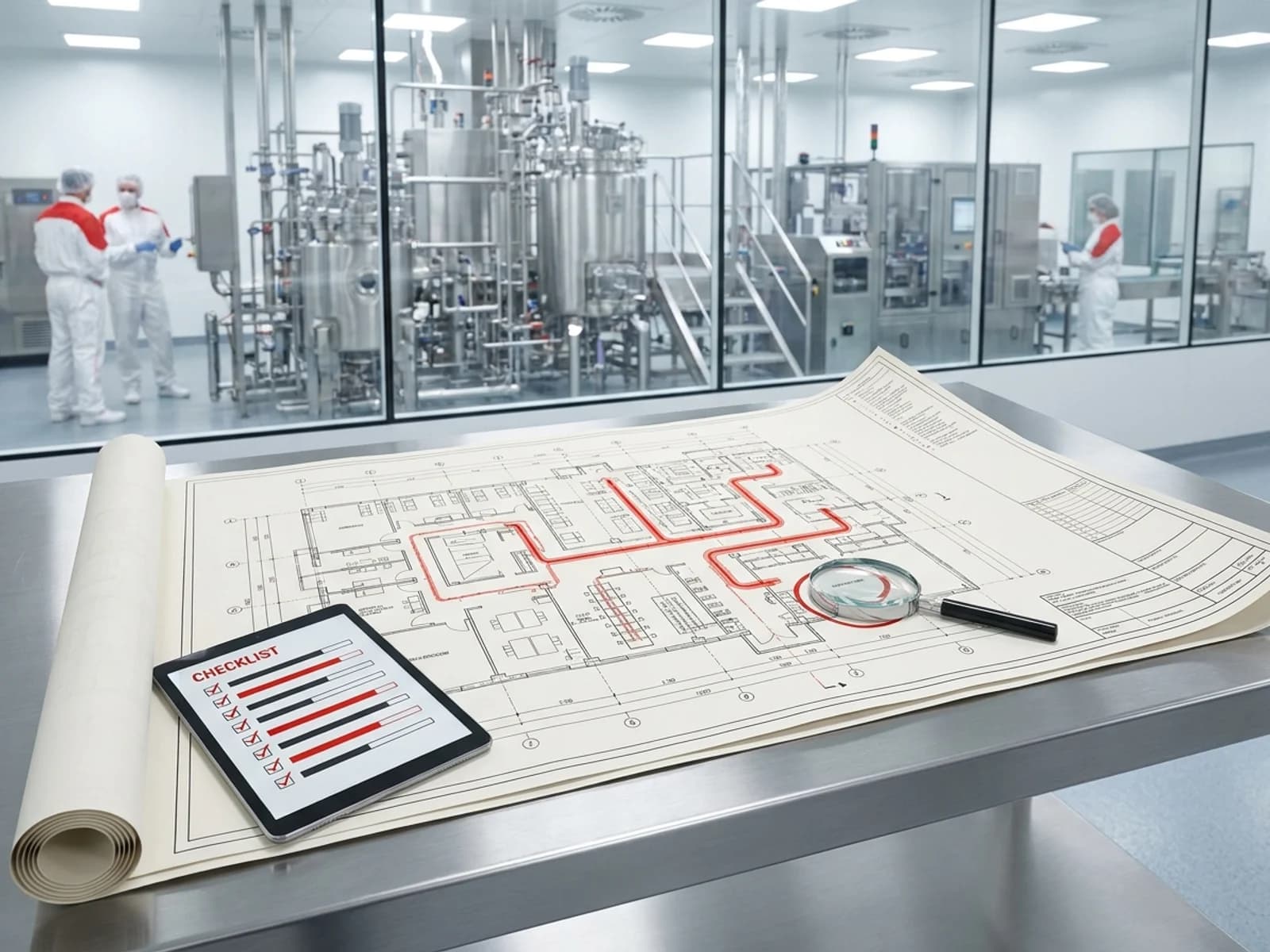
Mark one commercial line: equipment qualification is not PPQ
When auditing qualification documentation for a commercial pharmaceutical manufacturing facility, teams frequently encounter thick binders labeled with qualification acronyms: IQ, OQ, IOQ, PQ, and PPQ. A recurring operational error in technical transfers, contract manufacturing oversight, and inspection preparation is assuming that because a modern high-speed machine has successfully completed its installation qualification (IQ) and operational qualification (OQ)—or even an equipment-specific performance qualification (PQ)—the commercial process run on that machine is qualified for commercial distribution. It is not.
Under 21 CFR 211 and the January 2011 process-validation guidance, equipment qualification and process performance qualification are distinct operational identities. 21 CFR 211 does not use the labels IQ, OQ, equipment PQ, or PPQ. Those captions come from EU GMP Annex 15 and, for APIs, ICH Q7. U.S. element 1 sits on 21 CFR 211.42 facility design and 21 CFR 211.63 equipment design, size, and location, with 21 CFR 211.68(a) routine calibration, inspection, or checks as an ongoing performance identity. PPQ is Stage 2 element 2 in the 2011 guidance: commercial batches produced with facility, utilities, and equipment each now qualified, plus trained personnel, control procedures, and components. 21 CFR 211.100 and 211.110 are the process-control hooks; they are not satisfied by a signed equipment packet.
For one labeled fictional commercial line, mark each packet present, missing, or unknown against facility or utility qualification under 21 CFR 211.42, 21 CFR 211.63/211.68 equipment identity, Annex 15 IQ, Annex 15 OQ, Annex 15 equipment PQ, and FDA Stage 2 PPQ. Captions can stack without becoming PPQ. The 2011 guidance, Annex 15, ICH Q7, and the 2016 quality-agreement guidance are nonbinding in the United States except where they cite statute or 21 CFR.
FDA's PQ is the Stage 2 umbrella; Annex 15's PQ is equipment
The primary driver of confusion in global qualification programs is a direct terminology collision on the two-letter abbreviation PQ. Depending on whether an auditor, validation engineer, or regulatory affairs manager reads U.S. FDA guidance or European Union GMP regulations, the letters PQ denote entirely different tiers of the validation hierarchy.
FDA describes its lifecycle validation framework in Process Validation: General Principles and Practices (January 2011, Revision 1) (issued by CDER, CBER, and CVM; notice of availability 25 January 2011, 76 FR 4360, FR Doc. 2011-1437; HTML landing page still marked current as of 24 August 2018 at access on 17 September 2026). The document is nonbinding except where it cites statute or regulation. During the process qualification (PQ) stage, the process design is evaluated to determine if it is capable of reproducible commercial manufacture. Stage 2 has two elements; FDA names that Stage 2 umbrella Process Qualification (PQ). Under FDA's schema, PQ is not a single test protocol, nor is it limited to an equipment shake-down. Instead, Stage 2 PQ is an overarching umbrella comprising two distinct, sequential elements:
Stage 2, Element 1: Design of the facility and qualification of the equipment and utilities. This element encompasses activities undertaken to demonstrate that utilities (such as purified water, compressed gases, and clean steam) and manufacturing equipment are suitable for their intended use and perform properly across anticipated operating ranges under load.
Stage 2, Element 2: Process Performance Qualification (PPQ). This element combines the actual facility, utilities, and equipment (each now qualified) and the trained personnel with the commercial manufacturing process, control procedures, and components to produce commercial batches.
The 2011 glossary defines process qualification as confirming that the manufacturing process as designed is capable of reproducible commercial manufacturing, and process validation as the collection and evaluation of data, from the process design stage through commercial production, which establishes scientific evidence that a process is capable of consistently delivering quality products. The glossary does not define IQ, OQ, equipment PQ, or PPQ. PPQ is defined in the body as the second element of Stage 2. FDA describes element 1 functionally without mandating IQ/OQ/equipment-PQ captions.
In sharp contrast, the European Commission's EudraLex Volume 4, Annex 15: Qualification and Validation (which came into operation on 1 October 2015) retains the classical four-part qualification hierarchy for facilities, systems, and equipment: Design Qualification (DQ), Installation Qualification (IQ), Operational Qualification (OQ), and Performance Qualification (PQ). Annex 15 explicitly defines PQ in its glossary as documented verification that systems and equipment can perform effectively and reproducibly based on the approved process method and product specification. Annex 15 then treats Process Validation in a separate section (Section 5) as the documented evidence that the manufacturing process itself produces a medicinal product meeting its quality attributes.
| Framework & Authority | Regulatory Term | Exact Scope & Definition | Statutory / Guidance Basis | Supports U.S. commercial distribution on its own? |
|---|---|---|---|---|
| FDA 2011 Guidance (CDER/CBER/CVM) | Process Qualification (Stage 2 Umbrella) | Complete Stage 2 umbrella covering both facility/utility/equipment qualification (Element 1) and PPQ (Element 2). | FDA 2011 § IV.C; 21 CFR 211.22, 211.100, 211.110 | No. 2011 guidance: successful Stage 2 completion is necessary before commercial distribution. |
| FDA 2011 Guidance (CDER/CBER/CVM) | Qualification of Utilities & Equipment (Stage 2, Element 1) | Demonstrating that utilities and equipment are suitable for intended use, installed to specification, and operate across ranges under load. | FDA 2011 § IV.C.1; 21 CFR 211.42, 211.63, 211.68, 211.22 | No. Qualified equipment is an input to PPQ, not 21 CFR 211.165 lot release. |
| FDA 2011 Guidance (CDER/CBER/CVM) | Process Performance Qualification (PPQ) (Stage 2, Element 2) | Execution of commercial manufacturing process with qualified equipment, trained staff, commercial components, and routine controls. | FDA 2011 § IV.C.2; 21 CFR 211.100, 211.110 | Necessary before distribution per 2011 guidance; each lot still needs 21 CFR 211.165 release. Concurrent PPQ-batch release is expected to be used rarely. |
| EU GMP Annex 15 (European Commission) | Installation & Operational Qualification (IQ / OQ) | Verification that systems comply with approved design (IQ) and perform as intended throughout anticipated operating ranges (OQ). | Annex 15 Sections 3.8–3.12; EudraLex Volume 4 | No; technical prerequisites confirming mechanical and automation readiness. |
| EU GMP Annex 15 (European Commission) | Performance Qualification (PQ - Equipment) | Documented verification that systems and equipment perform effectively and reproducibly using approved methods and materials. | Annex 15 Sections 3.13–3.14; EudraLex Volume 4 | No; verifies equipment capability under load, distinct from commercial process validation. |
| EU GMP Annex 15 (European Commission) | Process Validation (PV) | Lifecycle documented evidence that the manufacturing process produces medicinal product meeting predetermined specifications. | Annex 15 § 5; § 5.2 treats the EMA guideline as submission data only | EU GMP process-validation identity (Annex 15 § 5). Not U.S. lot release and not the EMA dossier guideline. |
| ICH Q7 Guidance (FDA September 2016) | API Equipment Qualification (DQ/IQ/OQ/PQ) | Qualification of critical equipment and ancillary systems connected together prior to initiating API process validation. | ICH Q7 Section 12.3; FDA API Guidance | No; API equipment qualification precedes API process validation batches. |
This terminology split has serious practical consequences. When a global engineering vendor reports that "PQ is complete," the quality control unit must immediately ask: Did you execute equipment Performance Qualification under Annex 15 Section 3.14, or did you execute Stage 2 Process Performance Qualification of the commercial drug product under FDA 2011 Stage 2 Element 2? Treating them as the same packet is how a signed equipment file gets filed as if the commercial process were qualified for distribution.
flowchart TD
    subgraph FDA_Stage2["FDA 2011 Stage 2 process qualification (PQ) umbrella"]
        E1["Element 1: facility design and qualification of equipment and utilities"]
        E2["Element 2: process performance qualification (PPQ)"]
        E1 -->|"each now qualified; prerequisite"| E2
    end

    subgraph Annex15["EU GMP Annex 15"]
        AIQ["IQ (section 3.8)"]
        AOQ["OQ (section 3.10); may combine as IOQ"]
        APQ["Equipment PQ (sections 3.13-3.14)"]
        APV["Process validation (section 5)"]
        AIQ --> AOQ
        AOQ --> APQ
        APQ -->|"5.9: qualified equipment is an input, not a substitute"| APV
    end

    E1 -.->|"same letters PQ; not the same identity"| APQ
E2 -.->|"do not treat as identical packets"| APVIdentity worksheet for Line F-PD-EQ-2026
To establish a repeatable audit method, consider a concrete, labeled hypothetical commercial line: Line F-PD-EQ-2026. This fictional facility packet represents a commercial solid-oral dosage processing line consisting of a high-shear wet granulator, a fluid-bed dryer, a rotary tablet press, and an automated high-barrier blister packaging suite. It is designed to illustrate qualification classification and cannot be mistaken for any real-world facility or specific manufacturer.
When a quality unit examines the binder for Line F-PD-EQ-2026, mark each packet against the identity fields: facility or utility qualification under 21 CFR 211.42; 21 CFR 211.63/211.68 equipment identity; Annex 15 IQ; Annex 15 OQ or combined IOQ; Annex 15 equipment PQ; FDA Stage 2 PPQ; or unknown. These fields are not mutually exclusive captions — a 211.63 design packet can also carry an Annex 15 IQ title — but none of those captions is PPQ. The worksheet below works four caption patterns plus a routine-check packet and an unknown file. The line is hypothetical.
| Packet Identifier | Document Scope & Challenged Parameters | Applicable Standard | Regulatory Identity | Worksheet Finding & Distribution Impact |
|---|---|---|---|---|
| Packet A: HVAC & Suite Pressurization Report | HEPA filter integrity, air velocity, differential room pressure cascades, and temperature/humidity control in the tableting suite. | 21 CFR 211.42 (ISO 14644 ratings are not by themselves CGMP facility qualification; see FDA CGMP Q&A Q6) | Facility / Utility Qualification (Stage 2, Element 1) | Prerequisite facility foundation. Does not validate tablet compression or authorize commercial lot distribution. |
| Packet B: Rotary Tablet Press IQ Binder | Verification of 316L stainless steel contact parts, mill certificates, punch turret dimensions, motor wiring, and emergency stops. | 21 CFR 211.63; Annex 15 Section 3.8 | Equipment Design / Annex 15 IQ (Stage 2, Element 1) | Verifies physical installation to specification. Equipment is not yet functionally operational or process qualified. |
| Packet C: Combined IOQ Automated Blister Suite | Integrated installation and operational testing of blister forming, optical tablet inspection, sealing temperature, and cartoning speeds. | Annex 15 Sections 2.5, 3.10; 21 CFR 211.68 | Combined IOQ / Automated Checks (Stage 2, Element 1) | Confirms packaging machinery operates across mechanical ranges. Packaging process validation of commercial drug product remains required. |
| Packet D: Tablet Press Equipment PQ (Placebo) | Hypothetical placebo/load challenge under worst-case turret speeds to verify the press performs under load (Annex 15 3.14). Not an FDA PPQ batch count. | Annex 15 §§ 3.13–3.14 | Equipment Performance Qualification (Annex 15 PQ) | Demonstrates press performance under load. Not FDA PPQ: lacks active formulation, chemical content uniformity, and dissolution controls. |
| Packet E: Commercial Tablet PPQ Protocol & Execution | Hypothetical commercial-scale PPQ lots of the active formulation, made by routine operators on approved batch records, evaluating blend uniformity, hardness, and dissolution. Batch count is not an FDA minimum (see Q5/Q24). | 21 CFR 211.100, 211.110; FDA 2011 § IV.C.2 | Stage 2 Process Performance Qualification (PPQ) | This is the Stage 2 PPQ identity. Completing the protocol is not 21 CFR 211.165 laboratory release of any lot. |
| Packet F: Monthly Load Cell Calibration Certificate | Routine calibration sticker and balance service report for tablet press compression force transducers. | 21 CFR 211.68(a) | 211.68 routine calibration/inspection check (not 211.182 use log) | Ongoing equipment maintenance check. Not a qualification protocol and not process validation. |
| Packet G: Unsigned vendor SAT / commissioning file | Vendor punch-list and factory screenshots with no protocol number, no quality-unit approval, and no stated IQ/OQ/PQ/PPQ identity. | None identified on the face of the file | Unknown | Do not guess. Unknown is not Element 1 and is not PPQ. |
Packet D versus Packet E is the letters-PQ trap. Packet D can satisfy Annex 15 § 3.14 equipment PQ, including tests that use production materials, qualified substitutes, or simulated product. Using placebo or even production materials in an equipment-PQ test does not convert that test into FDA Stage 2 PPQ. Packet E is the commercial-process identity: qualified equipment plus trained personnel, commercial process, control procedures, and components. If the binder has A–D and F but not E, element 1 is present and PPQ is missing.
| Identity field | Mark if binder has A–D and F only | Meaning |
|---|---|---|
| Facility / utility qualification (211.42 / Stage 2 element 1) | Present (Packet A) | Prerequisite, not PPQ |
| 21 CFR 211.63 / 211.68 equipment identity | Present (Packets B and F) | Design/location plus routine checks; not PPQ |
| Annex 15 IQ | Present (Packet B) | Installation verification |
| Annex 15 OQ / combined IOQ | Present (Packet C) | Operating-range tests; combined documents still element 1 |
| Annex 15 equipment PQ | Present (Packet D) | Equipment-under-load identity; not FDA PPQ |
| FDA Stage 2 PPQ | Missing (no Packet E) | Commercial-process identity still absent |
| Unknown leftover | Packet G if present | Leave unknown; do not promote to IQ/OQ or PPQ |
What a signed IQ/OQ actually documents
To understand why equipment qualification cannot substitute for process performance qualification, we must examine the specific evidentiary claims that a signed IQ/OQ packet establishes. Under U.S. regulations and EU GMP guidelines, installation qualification (IQ) and operational qualification (OQ) verify the mechanical, electrical, and control integrity of equipment in isolation from commercial product performance.
Under 21 CFR 211.63 (section text still the 29 September 1978 promulgation, 43 FR 45077, at access), equipment used in manufacture, processing, packing, or holding of a drug product shall be of appropriate design, adequate size, and suitably located to facilitate operations for its intended use and for its cleaning and maintenance. That identity is not PPQ. Annex 15 § 3.9 lists typical IQ contents — not 211.63-required captions — including:
Construction Materials and Fluid Contact: Verification of materials of construction (Annex 15 § 3.9(v)). The cited sources do not require a 316L, PTFE, USP Class VI, or Ra formula.
Installation and Engineering Utilities: Verification of correct installation of components, instrumentation, equipment, pipe work and services against engineering drawings and specifications (Annex 15 § 3.9(i)–(ii)), plus supplier operating and maintenance instructions (§ 3.9(iii)).
Instrumentation and Calibration Baselines: Calibration of instrumentation (Annex 15 § 3.9(iv)). A baseline calibration is not 21 CFR 211.68 routine checks and is not PPQ.
Operational qualification builds on IQ by verifying that facilities, systems, and equipment, as installed or modified, perform as intended throughout the anticipated operating ranges. Annex 15 § 3.11 says OQ should include tests developed from process, system, and equipment knowledge to ensure the system is operating as designed, and tests to confirm upper and lower operating limits and/or worst-case conditions. FDA's 2011 guidance describes the matching element 1 activities functionally: verifying that utilities and equipment operate in accordance with process requirements in all anticipated operating ranges, including challenging functions under a load comparable to routine production and showing that operating ranges can be held as long as would be necessary during routine production.
Annex 15 §§ 2.5 and 3.10 permit combining IQ and OQ documents, including as a combined Installation/Operation Qualification (IOQ), where appropriate. FDA's 2011 guidance describes element 1 functionally and does not require those captions. Combining binders does not alter the underlying identity. An IOQ confirms that an automated machine powers up, responds to HMI commands, executes safety stops, and holds setpoints. It does not prove that a therapeutic drug product can be reproducibly formulated on that machine.
Furthermore, under 21 CFR 211.22, the 2011 guidance states that the quality control unit must review and approve the qualification plan and report. 211.22 itself assigns the quality control unit authority to approve or reject components, in-process materials, and drug products — including products manufactured under contract — and to approve or reject procedures or specifications impacting identity, strength, quality, and purity. A vendor or engineering-only signature is not that quality-unit approval. Once equipment is qualified, qualification status is maintained through 21 CFR 211.68(a), which requires routine calibration, inspection, and checks according to a written program with contemporaneous records. A routine monthly calibration or semi-annual maintenance check maintains qualified status; it is not a new qualification protocol and never constitutes process validation.
What Stage 2 PPQ adds once equipment is each now qualified
Stage 2 Process Performance Qualification (PPQ) is the critical pivot where qualified facility hardware transitions into validated pharmaceutical manufacturing. Under FDA's 2011 guidance, PPQ is defined as combining the actual facility, utilities, equipment (each now qualified), and trained personnel with the commercial manufacturing process, control procedures, and components to produce commercial batches.
The regulatory foundation for PPQ rests on two core CGMP regulations:
21 CFR 211.100(a) and (b): Requires written procedures for production and process control designed to assure that drug products have the identity, strength, quality, and purity they purport or are represented to possess. These master procedures must be drafted, reviewed, and approved by the appropriate organizational units and the quality control unit, and followed strictly in execution.
21 CFR 211.110(a): Mandates control procedures to monitor output and to validate the performance of manufacturing processes that may be responsible for causing variability in in-process materials and finished drug product.
When a company executes a PPQ protocol, it does not challenge the machine's mechanical limits; it challenges the process's ability to control product quality under commercial operating conditions. FDA's 2011 guidance explicitly requires that PPQ lots be manufactured under normal operating conditions by the personnel routinely expected to perform each step, following routine commercial batch records. PPQ integrates four critical operational dimensions that equipment qualification never evaluates:
Component and Raw Material Variability: Challenging active pharmaceutical ingredients (APIs) and excipients across expected commercial variability (e.g., lot-to-lot particle size distribution, moisture content, polymorphic form) to demonstrate that the formulation robustly yields uniform product.
Critical Process Parameter (CPP) Linkage to Critical Quality Attributes (CQAs): Demonstrating that operating parameters identified during Stage 1 Process Design (such as granulator impeller speed, wet-massing time, drying endpoint, and compression force) reliably maintain in-process CQAs (such as blend uniformity, tablet hardness, friability, disintegration) and finished product CQAs (dissolution, assay, degradation products).
Enhanced In-Process Sampling Plans: The 2011 PPQ-protocol discussion recommends a sampling plan, including sampling points, number of samples, and frequency, adequate to provide statistical confidence of quality within a batch and between batches. That sampling identity is not an IQ/OQ challenge.
Personnel and Operational Control Procedures: The 2011 guidance states that PPQ lots should be manufactured under normal conditions by the personnel routinely expected to perform each step, following the commercial manufacturing process and routine procedures (citing 21 CFR 211.100(b) and 211.110(a)). Part 11 electronic-record controls are a labeled boundary, not this worksheet.
Crucially, successful completion of Stage 2 PPQ is necessary before commencing commercial distribution of the drug product. As explored in our companion analysis of A PPQ Protocol Is Not Commercial Batch Release: Stage 2 Versus Stage 3 Records, completing PPQ execution does not automatically release individual batches for commercial distribution. Each manufactured PPQ batch must still undergo comprehensive laboratory determination of conformance to final specifications under 21 CFR 211.165 and independent production-record review under 21 CFR 211.192. That lot-release job is owned by the companion PPQ-versus-release article, not this worksheet.
When EU equipment PQ runs alongside process validation
In European regulatory practice, the relationship between equipment qualification and process validation includes a specific procedural overlap that must be managed with care. Under EU GMP Annex 15 Section 3.13, Performance Qualification (PQ) should normally follow the successful completion of Installation Qualification (IQ) and Operational Qualification (OQ). However, Section 3.13 explicitly notes: "in some cases it may be appropriate to perform it in conjunction with OQ or Process Validation."
Furthermore, Annex 15 Section 3.14 states that equipment PQ should include tests using production materials, qualified substitutes, or simulated product proven to have equivalent behavior under normal operating conditions with worst-case batch sizes. When a manufacturer utilizes active commercial formulation to execute equipment PQ simultaneously with process validation, validation teams sometimes erroneously claim that equipment PQ and process validation have merged into a single identical document. They have not.
Annex 15 Section 5.9 maintains this boundary with absolute clarity: "Facilities, systems, utilities and equipment used for process validation should be qualified." Even if an equipment PQ protocol is executed during the same calendar week or on the same physical lots as process validation, the legal objectives remain distinct:
The Equipment PQ Objective (Annex 15 Section 3.14): Demonstrates that the equipment, as installed and integrated, performs effectively and reproducibly under routine operating load without mechanical, thermal, or control failure.
The Process Validation Objective (Annex 15 Section 5.1): Demonstrates that the manufacturing method consistently delivers medicinal product complying with approved specifications and marketing authorization commitments.
Another critical distinction between European and U.S. validation practice concerns batch count expectations. Annex 15 Section 5.20 states that under the traditional approach to process validation, "it is generally considered acceptable that a minimum of three consecutive batches manufactured under routine conditions could constitute a validation of the process," while acknowledging that an alternative number may be justified through quality risk management.
In the United States, FDA has firmly rejected the notion that process validation is a rigid "three-batch exercise." In FDA's official Current Good Manufacturing Practice Questions and Answers on Production and Process Controls (Question 5, content current as of 5 May 2026), the Agency states unequivocally:
Finally, regulatory teams must distinguish between EU GMP Annex 15 operational shop-floor validation and marketing authorization dossier filings. EMA's scientific guideline, Guideline on process validation for finished products (EMA/CHMP/CVMP/QWP/BWP/70278/2012 Rev. 1, Corr. 1), defines the specific process validation data required inside Module 3 of a Common Technical Document (CTD) submission. As noted in Annex 15 Section 5.2, that guideline governs regulatory submissions, whereas GMP requirements for process validation continue throughout the product lifecycle.
CDMO packets: who signed IQ/OQ is not who completed PPQ
The division between equipment qualification and process performance qualification becomes particularly contentious in outsourced manufacturing arrangements involving Contract Development and Manufacturing Organizations (CDMOs). In a typical commercial arrangement, a CDMO owns the physical facility, cleanrooms, and processing equipment, while the pharmaceutical sponsor (the product owner) holds the New Drug Application (NDA) or Biologics License Application (BLA).
During pre-launch audits, sponsors frequently receive qualification packages from CDMOs containing executed vendor commissioning and IQ/OQ protocols. Treating a CDMO-signed tablet-press or filling-line IQ/OQ as completion of the owner's Stage 2 PPQ collapses element 1 into element 2. FDA's 2016 quality-agreement guidance and 21 CFR 211.22 do not allow that merger.
In FDA's guidance, Contract Manufacturing Arrangements for Drugs: Quality Agreements (November 2016) (docket FDA-2013-D-0558; landing page current as of 7 May 2020) states that a quality agreement should indicate which party will be validating processes and qualifying and maintaining equipment and applicable systems relevant to the contracted operations, including IT and automated control systems, environmental monitoring and room classification, and utilities. Allocation of who authors IQ/OQ and who executes PPQ is a role-split. It is not identity merger.
However, FDA emphasizes that a quality agreement cannot exempt owners or contract facilities from statutory or regulatory responsibilities to comply with CGMP. Under 21 CFR 211.22(a), the quality control unit shall be responsible for approving or rejecting drug products manufactured, processed, packed, or held under contract by another company. Specifically:
The CDMO's Role: A contract facility may hold the executed IQ/OQ. That packet is still Stage 2 element 1 — facility, utility, or equipment qualification — even when the CDMO's quality engineering function signed it.
The Sponsor's Role: The owner's quality control unit still has 21 CFR 211.22 authority to approve or reject drug products manufactured under contract, and the 2011 guidance still calls for quality-unit review and approval of the qualification plan and report. A contract-facility IQ/OQ signature is not owner Stage 2 PPQ.
As detailed in our dedicated review of CDMO quality agreement red flags that become FDA inspection findings. The companion page inspects agreement-clause risk; this worksheet only marks identity. When a CDMO provides executed IQ/OQ, those documents remain element 1 equipment readiness. They do not convert into owner PPQ of the commercial process.
What FDA did when IQ/OQ was offered instead of process validation
Treating executed equipment qualification as a substitute for commercial process validation is not a hypothetical filing error. FDA has rejected that substitution in a site-specific warning letter. The letter is enforcement evidence, not the fictional worksheet line.
On 28 July 2025, FDA issued a formal Warning Letter to Health and Natural Beauty USA Corp. (Warning Letter MARCS-CMS 700187) following an inspection of its manufacturing facility. The Agency cited the firm under 21 CFR 211.100(a) for failing to adequately validate the production and process controls used to manufacture over-the-counter (OTC) drug products, including Sprinjene Natural Toothpaste. During the inspection, the firm was unable to provide process validation studies demonstrating that its manufacturing operations were capable of consistently producing uniform product.
In its formal written response to the inspection observations, the company attempted to cure the deficiency by submitting documentation of its equipment qualification. Specifically, the firm provided an unexecuted master validation plan alongside executed Installation Qualification (IQ) and Operational Qualification (OQ) records for its manufacturing equipment. FDA called the response inadequate. The quoted passages below are sequential excerpts from the letter, not one concatenated sentence:
The enforcement reasoning in MARCS-CMS 700187 reinforces every operational principle established in this guide:
Equipment IQ/OQ does not evaluate process control parameters: Verifying that mixing vessels, agitators, and transfer pumps operate mechanically within engineering tolerances does not evaluate whether active drug ingredients, binders, and abrasives are uniformly dispersed across batch cycle times.
Equipment qualification ignores process variability: IQ and OQ protocols do not account for raw material lot variability, viscosity shifts, thermal holding times, or environmental changes that affect finished product quality.
Commercial distribution requires a process performance protocol: FDA cited 21 CFR 211.100(a) for missing process validation and pointed to the 2011 guidance. That guidance states that successful process qualification studies are necessary before commercial distribution. 211.100(a) requires written production and process-control procedures; it does not itself use the words IQ, OQ, or PPQ.
Labeled boundaries: cleaning logs, lot release, media fills, PAI
To maintain complete technical accuracy during audits, quality professionals must establish rigorous procedural fences around adjacent manufacturing documentation. A common compliance vulnerability occurs when audit teams mistakenly allow peripheral records to masquerade as equipment qualification or process performance qualification. The following regulatory boundaries must remain strictly observed:
| Adjacent CGMP Identity | Governing Regulation | Document Scope & Purpose | Why It Must Stay Off This Worksheet |
|---|---|---|---|
| Equipment Cleaning & Maintenance | 21 CFR 211.67 | Written procedures and records for cleaning, sanitizing, and maintaining equipment to prevent contamination and carryover. | Cleaning validation demonstrates residue removal. It does not qualify mechanical operation (IQ/OQ) or validate product formulation (PPQ). |
| Equipment Cleaning & Use Logs | 21 CFR 211.182 | Contemporaneous equipment logbooks recording date, time, product name, and lot number of each batch processed. | As noted in FDA CGMP Q&A Question 1, use logs document operational history. A signed use log confirms execution sequence, not process validation. |
| Testing & Release for Distribution | 21 CFR 211.165 | Laboratory testing of finished drug product to ensure satisfactory conformance to final specifications prior to lot release. | Release testing evaluates individual batch disposition. Meeting 211.165 specifications on one lot does not prove commercial process reproducibility. |
| Aseptic Process Simulation (Media Fills) | Labeled boundary (not 211.42(c)(10) as a media-fill statute) | Aseptic process simulation is a separate identity from equipment qualification and from PPQ of the commercial process. | Media fills evaluate microbiological contamination risk, not chemical, physical, or content uniformity attributes of a commercial drug process. |
| Pre-Approval Inspection (PAI) Clocks | 21 U.S.C. 355; FDA CP 7346.832 | FDA field investigator facility audits assessing commercial readiness, application data integrity, and CGMP compliance before NDA/ANDA approval. | PAI is an agency inspection program (CP 7346.832), not this packet's IQ/OQ or PPQ identity. PreCheck versus PAI is a separate published job. |
| API Equipment Qualification | ICH Q7 Section 12.3 | Design, installation, operational, and connected-system performance qualification for bulk active drug substance synthesis equipment. | ICH Q7 governs API substance manufacture. Connected-system equipment PQ under Q7 precedes API process validation and does not rewrite 21 CFR 211. |
| ASTM E2500 Verification Standard | ASTM E2500-07 | Industry guide for specification, design, and verification of pharmaceutical manufacturing systems and equipment. | Cited only as a useful reference in 2011 footnote 18 among others. That citation is not a requirement to use ASTM E2500, not a ban on IQ/OQ captions, and not permission to treat a commissioning/verification report as Stage 2 PPQ. |
Keep those fences. Equipment qualification shows utilities and equipment are suitable for intended use; 211.68 keeps that status through routine checks; Stage 2 PPQ is the commercial-process identity. A signed IQ/OQ is not distribution.
Sources
U.S. Food and Drug Administration. Guidance for Industry: Process Validation: General Principles and Practices (January 2011, Revision 1). Current Good Manufacturing Practice guidelines defining the three-stage process validation lifecycle and the Stage 2 two-element split.
Office of the Federal Register. Guidance for Industry on Process Validation: General Principles and Practices; Notice of Availability (76 FR 4360, 25 January 2011, FR Doc. 2011-1437). Federal Register notice announcing the final process validation guidance.
U.S. Food and Drug Administration. Process Validation: General Principles and Practices (FDA guidance landing page, docket FDA-2008-D-0559). Official FDA regulatory information repository for the process validation guidance.
U.S. Code of Federal Regulations. Title 21 CFR 211.63 — Equipment design, size, and location. Finished pharmaceutical CGMP requirements for equipment suitability and design.
U.S. Code of Federal Regulations. Title 21 CFR 211.68 — Automatic, mechanical, and electronic equipment. Routine calibration, inspection, check programs, and electronic record controls.
U.S. Code of Federal Regulations. Title 21 CFR 211.42 — Design and construction features. Facility design, contamination prevention, and aseptic processing area controls.
U.S. Code of Federal Regulations. Title 21 CFR 211.22 — Responsibilities of quality control unit. Non-delegable quality control unit authority to approve qualification plans, reports, and commercial release.
U.S. Code of Federal Regulations. Title 21 CFR 211.100 — Written procedures; deviations. Production and process control procedures governing commercial drug manufacturing.
U.S. Code of Federal Regulations. Title 21 CFR 211.110 — Sampling and testing of in-process materials and drug products. In-process monitoring and statutory requirement to validate manufacturing process performance.
U.S. Code of Federal Regulations. Title 21 CFR 211.165 — Testing and release for distribution. Finished drug product laboratory testing and disposition prior to commercial distribution.
U.S. Code of Federal Regulations. Title 21 CFR 211.67 — Equipment cleaning and maintenance. Written procedures and documentation for equipment sanitization and maintenance.
U.S. Code of Federal Regulations. Title 21 CFR 211.182 — Equipment cleaning and use log. Logbook requirements for major manufacturing equipment cleaning and processing history.
European Commission. EudraLex Volume 4: EU Guidelines for Good Manufacturing Practice for Medicinal Products for Human and Veterinary Use, Annex 15: Qualification and Validation (October 2015). EU GMP qualification definitions (IQ, OQ, PQ) and process validation lifecycle principles.
European Commission. EudraLex Volume 4 — Good Manufacturing Practice (GMP) Guidelines. Official compendium of European pharmaceutical manufacturing regulations and annexes.
European Medicines Agency. Guideline on process validation for finished products — information and data to be provided in regulatory submissions (EMA/CHMP/CVMP/QWP/BWP/70278/2012 Rev. 1, Corr. 1). Scientific guideline on Module 3 dossier documentation for finished pharmaceutical products.
U.S. Food and Drug Administration. Questions and Answers on Current Good Manufacturing Practice Regulations — Production and Process Controls. FDA CGMP Q&A guidance clarifying batch counts (Q5, Q24), equipment status labels (Q1), and cleanroom ratings (Q6).
U.S. Food and Drug Administration. Contract Manufacturing Arrangements for Drugs: Quality Agreements — Guidance for Industry (November 2016). CGMP guidance defining owner versus contract facility qualification and validation responsibilities.
U.S. Food and Drug Administration. Contract Manufacturing Arrangements for Drugs: Quality Agreements (FDA guidance landing page, docket FDA-2013-D-0558). Official FDA regulatory information repository for the quality agreements guidance.
U.S. Food and Drug Administration. ICH Q7 Good Manufacturing Practice Guidance for Active Pharmaceutical Ingredients (September 2016). International harmonization guidance on API equipment qualification and validation.
U.S. Food and Drug Administration. Warning Letter: Health and Natural Beauty USA Corp. (MARCS-CMS 700187, 28 July 2025). CGMP enforcement action rejecting executed equipment IQ/OQ as a substitute for process validation under 21 CFR 211.100(a).