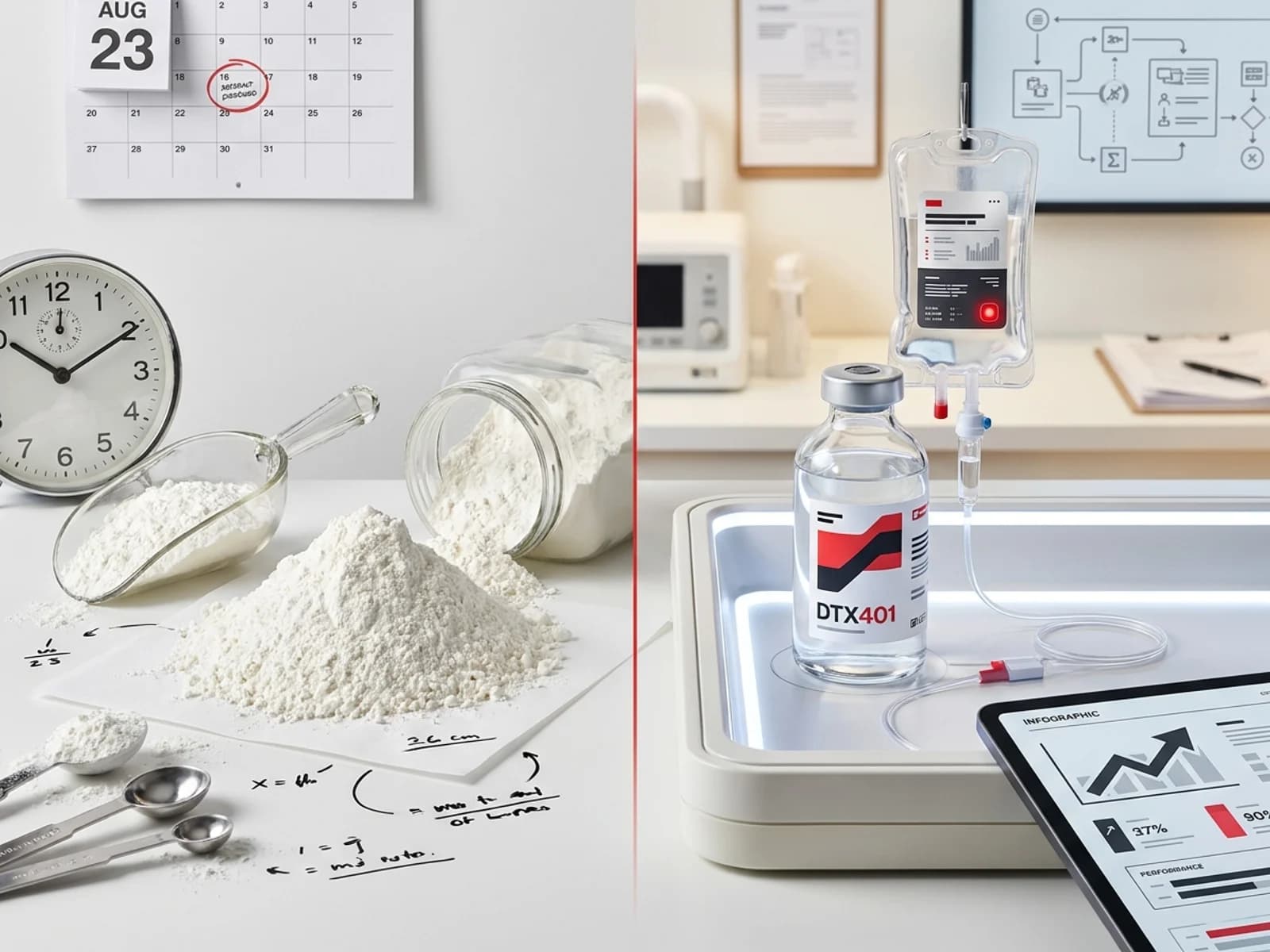
On August 23, 2026, the U.S. Food and Drug Administration (FDA) faces a Prescription Drug User Fee Act (PDUFA) target action date for the Biologics License Application (BLA) of DTX401 (pariglasgene brecaparvovec), developed by Ultragenyx Pharmaceutical. If approved, DTX401 will become the first therapy targeting the underlying molecular defect of Glycogen Storage Disease Type Ia (GSDIa), an ultra-rare, life-threatening metabolic disorder characterized by severe hypoglycemia and long-term hepatic and renal organ damage.
For state Medicaid programs, commercial health plans, and pharmacy and therapeutics (P&T) committees, DTX401 presents a classic modern market-access challenge. Its clinical evidence demonstrates a tangible reduction in daily uncooked cornstarch consumption—the rigid, life-sustaining dietary regimen required by GSDIa patients—supported by randomized, placebo-controlled Phase 3 data.
Yet behind the clinical milestone lies a complex operational reality: DTX401 will arrive entirely outside the Centers for Medicare & Medicaid Services (CMS) Cell and Gene Therapy (CGT) Access Model, forcing individual health plans and state Medicaid fee-for-service programs to construct single-dose reimbursement pathways, value-based refund agreements, and prior authorization (PA) criteria from scratch under compressed priority-review timelines.
What FDA is deciding by August 23, 2026: BLA scope and review designations
FDA accepted Ultragenyx's rolling BLA submission for DTX401 on February 23, 2026, following the completion of the submission dossier on December 30, 2025. The application was granted Priority Review, establishing an expedited six-month review clock culminating on August 23, 2026.
DTX401 REGULATORY DOSSIER SNAPSHOT
| Product Name | DTX401 (pariglasgene brecaparvovec) |
|---|---|
| Sponsor | Ultragenyx Pharmaceutical Inc. |
| Mechanism of Action | Recombinant AAV8 vector delivering functional human G6PC gene to hepatocytes via single peripheral IV |
| Target Indication | Glycogen Storage Disease Type Ia (von Gierke Disease) |
| Regulatory Status | Priority Review (PDUFA Date: August 23, 2026) |
| Designations | Rare Pediatric Disease (RPD), Orphan Drug, Fast Track, RMAT (FDA); PRIME, Orphan (EMA) |
| Commercial Channel | Medical Benefit (Buy-and-bill / Specialty Hub) |
DTX401 is an adeno-associated virus serotype 8 (AAV8) vector designed to deliver a functional copy of the human glucose-6-phosphatase catalytic subunit (G6PC) gene to liver hepatocytes. In GSDIa (von Gierke disease), mutations in the G6PC gene prevent the enzymatic hydrolysis of glucose-6-phosphate into free glucose, completely shutting down both hepatic glycogenolysis and gluconeogenesis. Without endogenous glucose production, patients experience catastrophic hypoglycemia within 2 to 4 hours of fasting, leading to seizures, lactic acidosis, hyperuricemia, hepatic adenomas, and progressive renal insufficiency.
Current established medical management is entirely supportive: round-the-clock oral administration of uncooked cornstarch (a slow-release complex carbohydrate) every 3 to 4 hours, supplemented in many pediatric patients by nocturnal continuous enteral feeding through nasogastric or gastrostomy (G-tube) buttons.
If licensed, DTX401 would become the first disease-modifying gene therapy approved for GSDIa, qualifying Ultragenyx for a Rare Pediatric Disease Priority Review Voucher (PRV) under Section 529 of the FD&C Act.
The clinical evidence in payer terms: Phase 3 endpoints and durability
Unlike oncology or cardiovascular therapies that evaluate progression-free survival or major adverse cardiac events, the pivotal evaluation of DTX401 centered on a functional surrogate biomarker directly tied to disease burden: the reduction of daily uncooked cornstarch intake while maintaining strict glycemic control.
DTX401 CLINICAL EVIDENCE SUMMARY
| Trial / Population | Key Efficacy Outcomes | Statistical Significance |
|---|---|---|
| Phase 1/2 (NCT03517085) n = 12 adults | • Mean daily cornstarch fell from 284g to 85g (68% mean reduction) • Controlled fasting tolerance increased 46% • Durability sustained | p < 0.001 46% increase Evaluated through year 6 |
| Phase 3 GlucoLAR1 (NCT05139316) n = 20 treated arm (Ages 8 and older) | • Daily cornstarch intake reduced 41% vs 10% on placebo at Week 48 • Daily cornstarch doses cut by 1.1 vs 0.2/day • CGM glucose control | p < 0.0001 p = 0.0011 Non-inferior |
1. Phase 1/2 Study (NCT03517085, PubMed 40064185)
In the open-label, dose-escalation Phase 1/2 trial evaluating 12 adult patients across four dose cohorts (2.0 or 6.0 × 10¹² GC/kg):
Cornstarch Reduction: Mean total daily cornstarch requirement dropped from 284 g/day at baseline to 85 g/day at Week 52 (in the 10 participants with measurements at both time points), representing a statistically significant 68% mean reduction (p < 0.001).
Fasting Tolerance: Time to hypoglycemia during a controlled inpatient fasting challenge (stopped at blood glucose below 54 mg/dL, 15 hours, or symptoms) rose from 5.0 to 6.9 minutes per gram of carbohydrate—a mean increase of 46%.
Long-Term Durability: Long-term follow-up presented at metabolic society congresses confirmed that cornstarch reductions and hepatic G6Pase expression remained sustained for up to six years post-infusion.
2. Pivotal Phase 3 GlucoLAR1 Trial (NCT05139316)
The randomized, double-blind, placebo-controlled Phase 3 study enrolled patients aged 8 and older who were optimized on stable cornstarch therapy:
Primary Endpoint: At Week 48, patients receiving DTX401 achieved a mean 41% reduction in total daily cornstarch intake, compared to a 10% reduction in the placebo arm (p < 0.0001).
Dosing Frequency: DTX401 patients reduced their daily cornstarch intake frequency by an average of 1.1 doses per day versus 0.2 doses per day for placebo (p = 0.0011).
Glycemic Stability: Continuous glucose monitoring (CGM) confirmed that cornstarch tapering did not compromise metabolic stability; percentage of time spent in euglycemia (70–180 mg/dL) was non-inferior to baseline and placebo.
For broader context on how rare-disease regulatory dossiers utilize small-cohort datasets and natural history controls, see our analysis of external control arm evidence in rare disease packages.
Why cornstarch grams are a real endpoint and what they do not prove
P&T committees evaluating DTX401 must carefully parse what cornstarch reduction demonstrates clinically—and where evidence gaps remain:
WHAT THE EVIDENCE PROVES VS REMAINS UNPROVED
| DEMONSTRATED BENEFIT | UNRESOLVED OUTCOMES |
|---|---|
| ✔ 68% mean cornstarch reduction (Ph1/2) | ✖ Zero proof of adenoma regression |
| ✔ 1.1 fewer cornstarch doses/day (Ph3) | ✖ Unknown impact on adult renal decline |
| ✔ Fasting tolerance up 46% (min/g carb) | ✖ Does not eliminate cornstarch 100% |
| ✔ No dose-limiting or serious related | ✖ Lifetime durability beyond 6 years |
| treatment-emergent toxicity |
The Burden of Cornstarch: In GSDIa, missing a scheduled cornstarch dose can precipitate hypoglycemia, seizures, and lactic acidosis. Reducing or eliminating nighttime cornstarch and enteral-feed burden transforms patient independence and caregiver quality of life.
Not a Total Cure: The Phase 3 trial achieved a 41% mean reduction, not 100% elimination. Most patients continue taking a reduced basal dose of cornstarch. Health plan utilization criteria must not condition coverage on complete dietary cessation.
Hard Organ Endpoints Unmeasured: The pivotal trials were not powered to prove long-term prevention of hepatic adenomas (common in adult GSDIa and carrying transformation risk to hepatocellular carcinoma) or progressive proteinuria and focal segmental glomerulosclerosis (FSGS). Payers must recognize that DTX401 would be approved on metabolic-functional endpoints rather than long-term histologic preservation.
Launch risk: Ultragenyx's manufacturing history and the Bedford facility
Commercial teams and pharmacy directors assessing approval probability must evaluate sponsor-specific regulatory context.
On July 11, 2025, FDA issued a Complete Response Letter (CRL) to Ultragenyx for UX111 (abo-onasemnogene abeparvovec), an AAV9 gene therapy for Sanfilippo syndrome Type A (MPS IIIA). The UX111 CRL did not cite clinical safety or efficacy deficiencies, but focused entirely on Chemistry, Manufacturing, and Controls (CMC) information needs and pre-license inspection (PLI) observations at the manufacturing site.
DTX401 is produced at Ultragenyx's dedicated commercial gene therapy manufacturing facility in Bedford, Massachusetts. The sponsor has stated that the CMC package for DTX401 was updated with refined analytical assays, potency testing, and empty-to-full capsid separation methods. However, pre-license inspection clearance remains a primary binary risk factor heading into the August 23 decision.
To understand the broader commercial and regulatory implications of CMC-driven regulatory rejections, see our comprehensive guide on CMC-only complete response letters and commercial launch risk.
The Priority Review Voucher (PRV) economics
Because DTX401 holds FDA Rare Pediatric Disease (RPD) designation, its approval on August 23, 2026, will trigger the awarding of a transferable Priority Review Voucher to Ultragenyx.
RARE PEDIATRIC DISEASE PRV COMMERCIAL IMPACT
| Statutory Authority | Section 529 of the FD&C Act (21 U.S.C. 360ff) |
|---|---|
| Triggering Event | Final BLA approval of DTX401 on or before Aug 23 |
| Market Value Range | ~$100M historical average; recent sales to $205M |
| Financial Utility | Monetization provides non-dilutive capital to fund commercial launch and postmarketing commitments |
For a commercial biotech with growing infrastructure costs, monetizing a PRV provides immediate non-dilutive capital. Voucher prices vary widely: transactions over the program's first decade averaged roughly $100 million, while more recent disclosed sales include Zevra Therapeutics' $150 million rare-pediatric-disease voucher sale in April 2025, Denali Therapeutics' $195 million agreement in June 2026, and Fortress Biotech's $205 million sale—evidence that the current market clearing price sits well above the historical average. Proceeds of that scale substantially de-risk the early commercial rollout, subsidizing patient hub services, copay assistance, and postmarketing registry requirements.
The policy gap: why the CMS CGT Access Model does not cover GSDIa
The most consequential reimbursement factor for DTX401 is its exclusion from federal centralized access mechanisms.
In January 2025, the Center for Medicare and Medicaid Innovation (CMMI) launched the CMS Cell and Gene Therapy (CGT) Access Model. Under this model, CMS negotiates standard multi-year, outcomes-based agreements (OBAs) directly with manufacturers on behalf of participating state Medicaid agencies—34 participating Medicaid programs as of the current CMS model page (32 states plus the District of Columbia and Puerto Rico). However, CMS explicitly limited the initial wave of the CGT Access Model strictly to sickle cell disease therapies—specifically Casgevy (exagamglogene autotemcel) and Lyfgenia (lovotibeglogene autotemcel).
CMS CGT ACCESS MODEL VS DTX401 REALITY
| Operational Feature | CMS CGT Access Model | DTX401 (GSDIa) Reality |
|---|---|---|
| Covered Conditions | Sickle Cell Disease ONLY (Casgevy & Lyfgenia) | Glycogen Storage Disease Type Ia (Excluded) |
| Contract Negotiation | CMS Negotiates Uniform Federal OBA Terms | Individual State Medicaid & Plan OBAs |
| Rebate Administration | Centralized CMS Data Hub & Standardized Rebates | Direct Manufacturer-to- Plan Reconciliation |
| Best Price Protection | CMS Model Exemption Rule Under Federal Framework | Payer-Specific VBDR Tracking Required |
Because GSDIa falls outside the CMS CGT Access Model, state Medicaid programs (which insure a disproportionate share of pediatric rare-disease patients) cannot rely on CMS-negotiated pricing or standardized outcome milestones. Each state Medicaid agency and commercial payer must negotiate bilateral agreements with Ultragenyx.
To review the operational architecture of the federal sickle cell framework, see our Casgevy access guide and CMS CGT model analysis. For regulatory guidance on how value-based contracts intersect with federal statutory pricing, review our analysis of Medicaid Best Price risk in value-based drug contracts.
The in-vivo gene therapy arrival rate in the FDA Purple Book
To understand the budget impact of DTX401, health plans must examine the accelerating arrival rate of in-vivo gene therapies. A census of the FDA Purple Book database identifies eight previously licensed in-vivo gene therapy BLAs:
| Product Name | Proper Name / Mechanism | BLA Number | Licensure Date | Target Indication & Status |
|---|---|---|---|---|
| Luxturna | voretigene neparvovec-rzyl (AAV2) | BLA 125610 | Dec 19, 2017 | RPE65 Retinal Dystrophy |
| Zolgensma | onasemnogene abeparvovec-xioi (AAV9) | BLA 125694 | May 24, 2019 | Spinal Muscular Atrophy (SMA) |
| Hemgenix | etranacogene dezaparvovec-drlb (AAV5) | BLA 125772 | Nov 22, 2022 | Hemophilia B |
| Roctavian | valoctocogene roxaparvovec-rvox (AAV5) | BLA 125720 | Jun 29, 2023 | Hemophilia A |
| Elevidys | delandistrogene moxeparvovec-rokl (AAVrh74) | BLA 125781 | Jun 22, 2023 | Duchenne Muscular Atrophy (DMD) |
| Kebilidi | eladocagene exuparvovec-tneq (AAV2) | BLA 125722 | Nov 13, 2024 | AADC Deficiency |
| Beqvez | fidanacogene elaparvovec-dzkt (AAVRh74) | BLA 125786 | Apr 25, 2024 | Hemophilia B (Discontinued Marketing) |
| Itvisma | onasemnogene abeparvovec-brve (AAV9) | BLA 125856 | Nov 24, 2025 | Spinal Muscular Atrophy, ages 2+ (intrathecal) |
DTX401 represents the next entrant in this steady expansion of in-vivo viral vector therapies.
Site of care advantages
Unlike ex-vivo gene therapies (such as Casgevy, Lyfgenia, or Skysona) that require myeloablative busulfan conditioning, weeks of inpatient stem-cell transplantation, and intensive specialized burn-unit care, DTX401 is administered as a single peripheral intravenous infusion.
Patients do not undergo cytotoxic conditioning. Administration can occur in qualified outpatient specialty infusion suites or academic medical centers, eliminating inpatient bone-marrow transplant facility fees.
For an evaluation of state-level certificate-of-need laws governing specialty infusion suites, see our analysis of certificate-of-need states and gene therapy infusion access. For total trial volume trends across the sector, see cell and gene therapy clinical trials by the numbers.
Actionable payer blueprint: coverage, billing, and outcomes contracts
Managed care pharmacy directors and Medicaid medical officers preparing for the August 23 decision should execute the following five-step plan:
DTX401 PAYER OPERATIONAL IMPLEMENTATION BLUEPRINT
| 1. Prior Auth Criteria | Require confirmed biallelic G6PC gene mutation by CLIA genetic sequencing and baseline cornstarch dependency. |
|---|---|
| 2. Antibody Titer Screening | Screen for anti-AAV8 neutralising antibodies; mandate titer thresholds consistent with clinical trial protocol |
| 3. Billing & Code Management | Route claim through Medical Benefit (miscellaneous HCPCS J3590 / C9399) pending permanent J-code assignment |
| 4. Outcomes-Based Contracting | Establish multi-year risk-share: partial refund if daily cornstarch reduction < 30% or severe hypoglycemia recurs |
| 5. Steroid Course Coverage | Ensure concurrent coverage for protocolized prophylactic corticosteroid taper to mitigate hepatic transaminitis |
Genetic Confirmation: Restrict coverage strictly to patients with documented biallelic pathogenic mutations in the G6PC gene confirmed by CLIA-certified molecular genetic testing. Exclude Glycogen Storage Disease Type Ib (SLC37A4 deficiency) and other non-Ia subtypes.
Serological Screening: Require documentation of negative or low-titer anti-AAV8 neutralizing antibodies prior to infusion to prevent immune-mediated neutralization of vector transduction.
Corticosteroid Prophylaxis Management: Transaminase elevations (ALT/AST) represent the primary anticipated immune reaction following liver-directed AAV vector clearance. In the phase 1/2 protocol, eleven of twelve participants received prednisone 40–60 mg/day for ALT elevations (administered prophylactically in the highest-dose cohort), for a mean of roughly 13 weeks (range 42–199 days). Formulary policies must accommodate corticosteroid courses of that scale alongside the infusion benefit.
Outcomes-Based Contracting Design: Health plans should contract for multi-year warranty or installment rebates tied to verifiable clinical milestones:
Year 1 Milestone: ≥ 30% reduction in daily cornstarch requirement from baseline and absence of hospitalizations for hypoglycemic acidosis.
Years 2–5 Milestones: Sustained reduction in cornstarch intake and absence of nocturnal G-tube dependence.
Frequently Asked Questions
What is DTX401 and what condition does it treat?
DTX401 (pariglasgene brecaparvovec) is an investigational AAV8-mediated in-vivo gene therapy designed to deliver a functional G6PC gene to liver cells, treating Glycogen Storage Disease Type Ia (GSDIa).
When is the FDA decision expected for DTX401?
FDA accepted the BLA with Priority Review, establishing a PDUFA target action date of August 23, 2026.
What did the pivotal clinical trials demonstrate?
In the Phase 3 GlucoLAR1 trial, DTX401 achieved a statistically significant 41% mean reduction in daily uncooked cornstarch consumption at Week 48 compared to 10% on placebo (p < 0.0001), while maintaining glycemic control. In Phase 1/2, adult patients achieved a 68% mean cornstarch reduction sustained for up to six years.
Will DTX401 be covered under the CMS CGT Access Model?
No. The CMS CGT Access Model is currently restricted to sickle cell disease therapies (Casgevy and Lyfgenia). State Medicaid agencies and commercial payers must negotiate individual value-based contracts directly with Ultragenyx.
Does DTX401 require bone marrow conditioning chemotherapy?
No. DTX401 is administered as a single peripheral intravenous infusion without myeloablative busulfan or stem-cell transplantation.
What is a Rare Pediatric Disease Priority Review Voucher (PRV)?
A PRV is an incentive granted by FDA to sponsors who develop treatments for rare pediatric diseases. The voucher can be redeemed to grant Priority Review to any subsequent drug application or sold to another biopharma company; recent disclosed sales have ranged from roughly $100 million to more than $200 million.
Sources
Ultragenyx Pharmaceutical Inc. Ultragenyx Announces U.S. FDA Acceptance and Priority Review of the BLA for DTX401 for the Treatment of Glycogen Storage Disease Type Ia. Corporate Press Release, February 23, 2026.
https://ir.ultragenyx.com/news-releases/news-release-details/ultragenyx-announces-us-fda-acceptance-and-priority-reviewU.S. Securities and Exchange Commission (SEC). Ultragenyx Pharmaceutical Inc. Form 8-K filings (BLA acceptance regulatory update), February 23, 2026.
https://www.sec.gov/edgar/browse/?CIK=0001515673BioSpace. Priority Review Vouchers: By the Numbers (PRV transaction prices); and Zevra Therapeutics investor release on the closing of its rare pediatric disease PRV sale, April 2025.
https://www.biospace.com/business/priority-review-vouchers-by-the-numbersNational Center for Biotechnology Information (NCBI / PubMed). Safety and Efficacy of DTX401, an AAV8-Mediated Liver-Directed Gene Therapy, in Adults With Glycogen Storage Disease Type Ia. PubMed ID: 40064185.
https://pubmed.ncbi.nlm.nih.gov/40064185/Ultragenyx Pharmaceutical Inc. Ultragenyx Announces Positive Top-Line Results from Phase 3 Study of DTX401 (GlucoLAR1) in Patients with Glycogen Storage Disease Type Ia. Corporate Press Release, May 30, 2024.
https://ir.ultragenyx.com/news-releases/news-release-details/ultragenyx-announces-positive-top-line-results-phase-3-studyClinicalTrials.gov. Study of DTX401 in Adults with Glycogen Storage Disease Type Ia (NCT03517085).
https://clinicaltrials.gov/study/NCT03517085ClinicalTrials.gov. Phase 3 Study of Gene Therapy DTX401 in Participants With Glycogen Storage Disease Type Ia (GlucoLAR1 - NCT05139316).
https://clinicaltrials.gov/study/NCT05139316Centers for Medicare & Medicaid Services (CMS) Innovation Center. Cell and Gene Therapy (CGT) Access Model Overview, Scope, and FAQs.
https://www.cms.gov/priorities/innovation/innovation-models/cgtFDA Purple Book Database of Licensed Biological Products. In-vivo gene therapy BLA records (snapshot dated July 24, 2026).
https://purplebooksearch.fda.gov/U.S. Food and Drug Administration (FDA). Rare Pediatric Disease Priority Review Voucher Program (Section 529 FD&C Act Guidance).
https://www.fda.gov/industry/developing-products-rare-diseases-conditions/rare-pediatric-disease-voucher-program