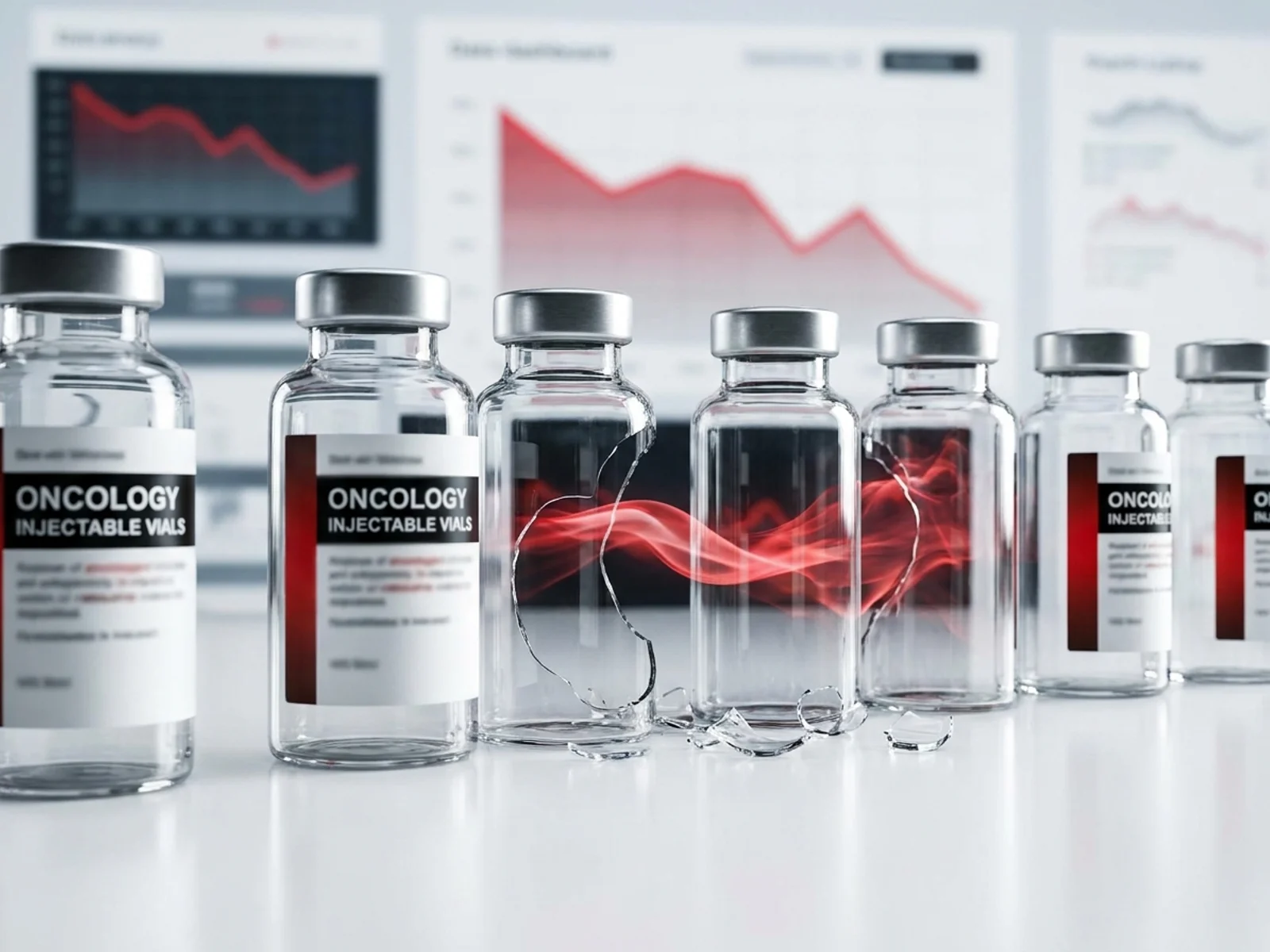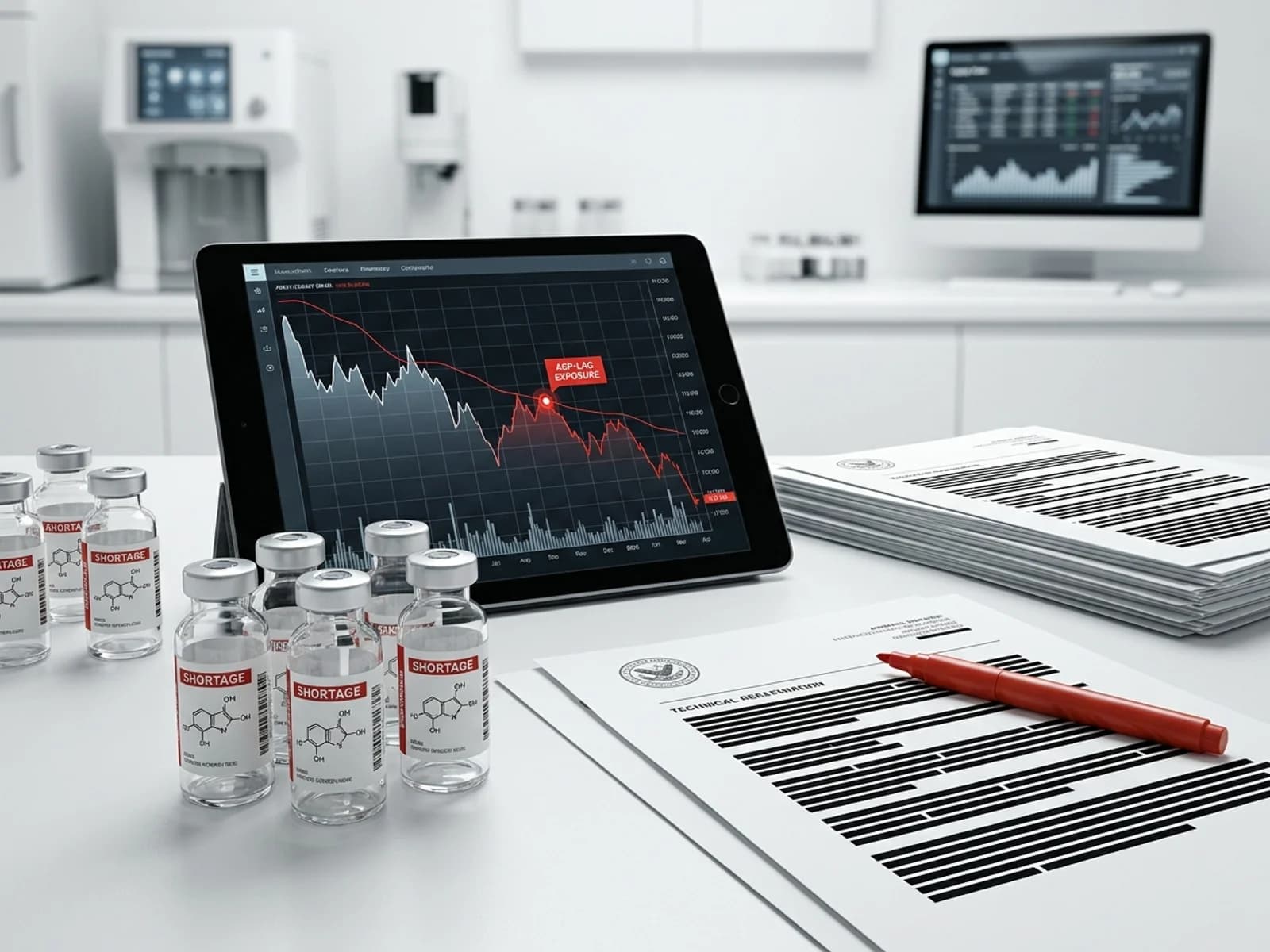
In the second quarter of 2026, active U.S. drug shortages escalated to 227—marking the third consecutive quarterly increase in national supply disruptions according to data published by the American Journal of Managed Care (AJMC) and the American Society of Health-System Pharmacists (ASHP). While supply chain vulnerability spans multiple therapeutic classes, the operational burden is most acute in clinical oncology. Chemotherapy injectables, particularly alkylating agents and platinum compounds, face severe supply constraints. Most notably, ifosfamide—a cornerstone alkylating agent essential for curative regimens in testicular cancer, sarcomas, and lymphomas—entered severe national shortage in mid-2026 following manufacturing quality disruptions across key generic suppliers. Concurrently, carboplatin remains actively constrained across 29 presentations, demonstrating that the chemotherapy shortage crisis of 2023 has evolved into a permanent structural feature of U.S. generic injectable manufacturing.
+---------------------------------------------------------------------------------------------------+
|                   2026 ONCOLOGY INJECTABLE SHORTAGE & BUY-AND-BILL IMPACT FLOW                   |
+---------------------------------------------------------------------------------------------------+
|                                                                                                   |
|   FDA DRUG SHORTAGES DATASET (1,629 TOTAL RECORDS)                                                |
|   • Current Status Rows: 1,175 (429 To Be Discontinued, 25 Resolved)                              |
|   • Oncology Category Shortage Rows: 135                                                          |
|   • Injection Dosage-Form Share: 61.5% (1,002 / 1,629)                                            |
|                                                                                                   |
|              │                                                  │                                 |
|              ▼                                                  ▼                                 |
|   ┌─────────────────────────────┐                    ┌─────────────────────────────┐              |
|   │     IFOSFAMIDE SHORTAGE     │                    │     CARBOPLATIN SHORTAGE    │              |
|   ├─────────────────────────────┤                    ├─────────────────────────────┤              |
|   │ • 7 Active Presentations    │                    │ • 29 Active Presentations   │              |
|   │ • Baxter (4), Hikma (2),    │                    │ • 6 Discontinued Rows       │              |
|   │   Fresenius Kabi (1)        │                    │ • Persistent Capacity Limit │              |
|   └──────────────┬──────────────┘                    └──────────────┬──────────────┘              |
|                  │                                                  │                             |
|                  └───────────────────────┬──────────────────────────┘                             |
|                                          │                                                        |
|                                          ▼                                                        |
|   ┌───────────────────────────────────────────────────────────────────────────────────────────┐   |
|   │                       CLINICAL & REIMBURSEMENT IMPACT AT CLINIC LEVEL                     │   |
|   ├───────────────────────────────────────────────────────────────────────────────────────────┤   |
|   │ • Curative-Intent Regimen Triage & Dose Conservation                                      │   |
|   │ • Premium Spot Sourcing vs Medicare Part B ASP Reimbursement                              │   |
|   │ • ASP-Lag Margin Squeeze (2-Quarter Payment Delay)                                        │   |
|   └───────────────────────────────────────────────────────────────────────────────────────────┘   |
+---------------------------------------------------------------------------------------------------+
Direct Commercial & Regulatory Answer
With ifosfamide newly in severe shortage and carboplatin still constrained in 2026, how should oncology pharmacy directors and buy-and-bill practices triage chemotherapy injectables right now?
To manage the 2026 oncology injectable shortage, health-system pharmacy directors and buy-and-bill oncology practices must execute a dual clinical-and-financial strategy. On the clinical front, pharmacy and therapeutics (P&T) committees must immediately enact evidence-based triage protocols to reserve remaining ifosfamide and carboplatin inventory exclusively for curative-intent regimens—such as VIP (etoposide, ifosfamide, cisplatin) and TIP (paclitaxel, ifosfamide, cisplatin) in germ cell testicular cancers, pediatric osteosarcoma, and curative adjuvant non-small cell lung cancer. Patients in palliative or late-line settings should be transitioned to guideline-supported alternative regimens, such as oral cyclophosphamide or gemcitabine plus docetaxel, under formal oncologist order modifications.
On the financial and reimbursement front, practice managers sourcing replacement inventory from secondary distributors must perform real-time Average Sales Price (ASP) margin calculations before placing orders. Because Medicare Part B reimburses physician-administered chemotherapy at ASP plus 6% (ASP+6%) based on historical manufacturer net sales data from two calendar quarters prior ($T-2$), purchasing shorted vials at inflated spot-market premiums creates immediate, non-recoverable cash-flow losses per administered dose. Practices must document official FDA shortage status, secure prior invoice exception approvals from commercial managed care plans, and strictly apply CMS billing modifiers (-JW for discarded single-dose vial waste and -JZ for zero waste) to insulate the organization against post-payment audit clawbacks.
Which oncology injectables are in active shortage right now and how severe is ifosfamide?
Analysis of the official FDA Drug Shortages dataset (data snapshot current through July 2026, encompassing 1,629 total presentation records) reveals the full magnitude of generic sterile injectable instability. Nationwide, active status distribution splits into 1,175 Current active shortages, 429 To Be Discontinued presentations, and 25 Resolved entries. Within the dataset, the Oncology therapeutic category accounts for 135 shortage entries; restricting to oncology injection dosage forms yields 117 oncology injectable presentations (78 Current active, 31 To Be Discontinued, 8 Resolved).
KEY ONCOLOGY INJECTABLE SHORTAGE PRESENTATIONS & MANUFACTURERS
| Generic Agent | Active Shortage Presentations | Primary Manufacturers Involved (Current) |
|---|---|---|
| Carboplatin | 29 Current (6 To Be Disc.) | Hospira/Pfizer, Gland, Teva, Teyro, Accord, |
| Eugia, Ingenus, Avyxa, Fresenius Kabi | ||
| Dexamethasone Na Phos | 19 Current | Fresenius Kabi, Viatris, Hikma, Somerset |
| Methotrexate | 14 Current (7 To Be Disc.) | Assertio, Hospira/Pfizer, Teva, Hikma, |
| Accord, Fresenius Kabi | ||
| Azacitidine | 9 Current | BMS, Fresenius Kabi, Teva, Eugia |
| Ifosfamide | 7 Current (0 Discontinued) | Baxter Healthcare (4), Hikma (2), Fresenius |
Detailed Presentation-Level Breakdown
The FDA shortage dataset provides granular insight into presentation-level vulnerability across the lead oncology cohort:
IFOSFAMIDE & CARBOPLATIN: MANUFACTURER-LEVEL DATASET DETAIL (CURRENT)
| Generic Name | Current Rows / Mfr | Representative Presentations (NDC) |
|---|---|---|
| Ifosfamide | Baxter (4) | IFEX 1 g/20 mL; IFEX 3 g/60 mL; Ifosfamide 1 g/20 mL, |
| 3 g/60 mL (Baxter label) | ||
| Ifosfamide | Hikma (2) | Ifosfamide 50 mg/1 mL (two NDCs) |
| Ifosfamide | Fresenius Kabi (1) | Ifosfamide 1 g vial |
| Carboplatin | Hospira/Pfizer (8) | 50 mg/5 mL, 150 mg/15 mL, 450 mg/45 mL, 600 mg/60 mL |
| Carboplatin | Gland Pharma (4) | 50 mg/5 mL, 150 mg/15 mL, 450 mg/45 mL, 600 mg/65 mL |
| Carboplatin | Teva (4) | 10 mg/1 mL (multiple NDCs) |
| Carboplatin | Teyro Labs (4) | 50/150/450/600 mg multiple-dose vials |
| Carboplatin | Accord (4) | 10 mg/1 mL (multiple NDCs) |
| Carboplatin | Eugia (2) | 450 mg/45 mL, 600 mg/60 mL |
| Carboplatin | Avyxa / Kyxata (2) | 80 mg/8 mL, 500 mg/50 mL (Kyxata brand) |
| Carboplatin | Fresenius Kabi (1) | 10 mg/1 mL |
Two data-quality observations worth noting for procurement teams. First, the carboplatin market is far more fragmented than the 2023 narrative implies: nine companies hold active presentations, led by Hospira/Pfizer (8) and a cluster of 4-row holders (Gland, Teva, Teyro, Accord), plus Eugia, Avyxa (Kyxata), and Fresenius Kabi. Second, Sagent does not appear among current carboplatin holders in the dataset—an earlier assumption that it does should not guide sourcing.
Ifosfamide: The 2026 Severe Shortage Agent
Ifosfamide injection—a nitrogen mustard alkylating agent indicated for third-line germ cell testicular cancer and widely used off-label in osteosarcoma, Ewing sarcoma, and soft tissue sarcomas—entered severe national shortage in mid-2026. The FDA dataset identifies 7 active presentation rows across three primary manufacturers:
Baxter Healthcare Corporation: 4 presentations (IFEX and Baxter-label 1 g/20 mL and 3 g/60 mL vials).
Hikma Pharmaceuticals: 2 presentations (50 mg/1 mL concentration, two NDCs).
Fresenius Kabi USA: 1 presentation (1 g vial).
Because ifosfamide requires co-administration with mesna to prevent severe hemorrhagic cystitis, shortages of ifosfamide immediately disrupt complex inpatient chemotherapy regimens (such as VIP: etoposide, ifosfamide, cisplatin; and ICE: ifosfamide, carboplatin, etoposide). Manufacturing disruptions stem from sterile fill-finish particulate contamination and raw material active pharmaceutical ingredient (API) batch failures across shared contract manufacturing facilities.
In addition to ifosfamide, supportive-care and antimetabolite oncology injectables are experiencing collateral supply strains. Dexamethasone sodium phosphate injection—a workhorse antiemetic and steroid in oncology regimens—has 19 active shortage presentations (Fresenius Kabi, Viatris, Hikma, Somerset), and methotrexate injection has 14 active presentations with 7 additional lines marked for discontinuation (Assertio, Hospira/Pfizer, Teva, Hikma, Accord, Fresenius Kabi). Azacitidine has 9 active presentations. When multiple foundational chemotherapy and supportive-care agents short simultaneously, health-system compounding rooms face severe operational bottlenecks, as pharmacists must constantly recalculate vial sizes, reconstitute powder formulations, and adjust automated compounding technology parameters to accommodate non-standard container sizes.
Is carboplatin still in shortage in 2026, and how does it compare with the 2023 crisis?
A critical finding from our dataset inspection is that carboplatin never fully recovered from the nationwide crisis of 2023. The FDA shortage database lists 35 total carboplatin presentation records, of which 29 remain in Current active shortage status and 6 have been permanently discontinued by manufacturers.
2023 vs 2026 CARBOPLATIN SHORTAGE DYNAMICS COMPARISON
| Parameter | 2023 Chemotherapy Crisis | 2026 Structural Shortage |
|---|---|---|
| Primary Cause | Intas (India) FDA Inspection | Structural Capacity Cap & |
| Quality Shutdown (Sterility) | Low-Margin Market Exits | |
| Active Shortage Presentations | ~32 Presentations | 29 Presentations Active |
| Average Wholesale Acquisition Price | $6.00 - $12.00 / Vial | $4.50 - $9.00 / Vial |
| Foreign Importation Levers | Temporary QLU/Qilu FDA Imports | Restricted / Limited Imports |
| Mitigation Focus | Emergency Rationing | Long-Term Supply Contracting |
Why Carboplatin Persists in Shortage
During the 2023 crisis, the shutdown of Intas Pharmaceuticals' manufacturing plant in India wiped out roughly 50% of the U.S. supply of carboplatin and cisplatin (cisplatin carboplatin oncology injectable shortage analysis). While emergency temporary importation of unapproved Chinese-labeled carboplatin (Qilu Pharmaceutical) alleviated acute 2023 deficits, major U.S. generic suppliers (Teva, Hospira/Pfizer, Fresenius Kabi) have not expanded domestic sterile vial fill-finish capacity. Because generic carboplatin yields razor-thin profit margins (often under $8 per vial), manufacturers prioritize facility line time for higher-margin biologics or complex injectables. Consequently, any minor batch failure or glass vial component delay immediately plunges carboplatin back into deficit (sterile injectable shortage opportunity ledger).
The persistence of carboplatin shortages highlights a fundamental economic reality of generic sterile manufacturing. Generic producers operating on low single-digit gross margins lack the economic incentive to maintain dedicated backup production facilities or hold strategic raw material buffers. When global glass vial suppliers face supply chain friction, or when rubber stopper component quality falls below strict FDA sterility standards, generic manufacturers lack alternative certified fill-finish lines. As a result, even minor upstream component disruptions translate directly into months of domestic clinic stockouts.
Why do oncology injectables keep shorting, and what does sole-source concentration look like in the data?
Macro analysis published by AJMC in Q2 2026 highlights the structural root causes behind persistent U.S. drug shortages:
MACRO DRUG SHORTAGE VULNERABILITY METRICS (Q2 2026)
| Metric Category | Value / Proportion | Operational Significance |
|---|---|---|
| Total Active U.S. Shortages | 227 (AJMC, Q2 2026) | Third consecutive quarterly rise |
| Sole-/Dual-Source Concentration | Leading driver (ASHP/USP) | Shared CMOs/API amplify one-facility |
| failures; multi-brand stockouts | ||
| Injectable Dosage Form Share | 61.5% (1,002 / 1,629) | Sterile lines hardest to remediate |
| Oncology Category Rows | 135 (117 injections) | Direct cancer treatment disruption |
| Top Shortage Class: Anesthesia | 362 Rows | Surgical delays impact oncology |
The Sole-Source Vulnerability Trap
Industry reporting from ASHP and USP has long flagged sole- and dual-source concentration as a leading structural driver of U.S. drug shortages: when only one or two suppliers make a product, a single plant failure can wipe out national supply. For sterile injectables like ifosfamide, while three corporate entities hold ANDAs (Baxter, Hikma, Fresenius Kabi), they frequently contract fill-finish operations to the same underlying third-party CMO facility or source API from a single global supplier in India or China. When FDA investigators issue a Form 483 or warning letter to a shared facility, supply for multiple brand labels collapses simultaneously (FDA drug shortages 2026 by the numbers).
Furthermore, sterile injectables represent 61.5% of all active shortage records in the FDA database (1,002 out of 1,629 total rows). Unlike oral solid tablets or capsules, sterile liquid injectables require specialized ISO Class 5 cleanroom environments, continuous environmental monitoring, automated pyrogen testing, and complex aseptic processing lines. Remediating a sterile fill-finish quality failure requires months of facility de-contamination, media fills, equipment re-qualification, and formal FDA re-inspection before commercial distribution can resume.
What substitution, conservation, and importation options exist for ifosfamide and carboplatin?
When managing acute chemotherapy shortages, clinical oncology operations must adhere to structured regulatory and clinical protocols:
CLINICAL TRIAGE & REGULATORY MITIGATION FRAMEWORK
| Mitigation Lever | Clinical / Regulatory Mechanism | Operational Requirement |
|---|---|---|
| Curative Regimen Priority | Reserve shorted vials for curative-intent protocols | Establish P&T Committee emergency triage algorithm |
| Therapeutic Substitution | Switch to non-shorted agents (e.g., Cyclophosphamide) | Verify NCCN evidence level; check state board substitution rules |
| FDA Extended Use Dates | Utilize lot-specific shelf-life extensions backed by stability | Monitor FDA Drug Shortages page for approved lot numbers |
| Section 804 Importation | Import foreign-authorized equivalent formulations | Coordinate via specialized FDA Drug Shortage Staff (DSS) approval |
Evidence-Based Clinical Triage Rules (ASCO & NCCN)
To maintain equity and clinical efficacy during stockouts, pharmacy and therapeutics (P&T) committees must implement formal clinical decision algorithms:
Tier 1 (Curative Intent - Unrestricted Access):
Ifosfamide: Reserved strictly for pediatric osteosarcoma, Ewing sarcoma, relapse/refractory testicular germ cell tumors (VIP/TIP), and high-grade synovial sarcoma.
Carboplatin: Reserved for curative adjuvant non-small cell lung cancer, early-stage triple-negative breast cancer (TNBC), and pediatric neuroblastoma.
Tier 2 (Palliative Intent - Forced Substitution):
Ifosfamide: In metastatic soft-tissue sarcoma or relapsed non-Hodgkin lymphoma where curative intent is absent, substitute with oral cyclophosphamide (100 mg/m²/day) or gemcitabine + docetaxel.
Carboplatin: In metastatic non-small cell lung cancer or recurrent ovarian cancer, substitute with IV cisplatin (if renal function permits) or paclitaxel monotherapy.
When implementing therapeutic substitutions, clinical teams must carefully evaluate patient-specific organ function and toxicity profiles. Substituting cisplatin for carboplatin in elderly lung cancer patients, for example, demands mandatory pre-treatment renal function screening (serum creatinine and estimated GFR), baseline audiometry testing, and aggressive intravenous pre-hydration protocols (1,000 mL normal saline with potassium and magnesium supplementation) to mitigate severe nephrotoxicity and ototoxicity.
Operational Case Study: Navigating an Inpatient Ifosfamide Stockout
Consider the operational protocol executed by a 500-bed regional comprehensive cancer center confronting a sudden 0-day supply of ifosfamide:
500-BED CANCER CENTER IFOSFAMIDE STOCKOUT RESPONSE TIMELINE
| Time Elapsed | Operational & Clinical Emergency Actions Executed |
|---|---|
| Hour 0 (Inventory Alert) | Automated EHR alert shows 0 vials of 3g ifosfamide in IV room |
| Hour 2 (Emergency P&T Convene) | P&T Committee votes to restrict remaining 1g vials to pediatric |
| osteosarcoma and testicular germ cell patients (Tier 1) | |
| Hour 4 (Clinical Conversion) | 12 non-curative adult sarcoma patients converted to oral |
| cyclophosphamide 100 mg/m²/day with outpatient hydration | |
| Hour 8 (Inter-System Transfer) | Transfer of 6 vials of 3g ifosfamide executed from regional |
| academic partner under emergency 340B drug transfer rules | |
| Hour 24 (FDA DSS Filing) | Pharmacy Director submits Section 804 emergency importation |
| request to FDA Drug Shortage Staff for EU-labeled product | |
| Hour 48 (Billing Compliance) | Revenue cycle team configures CMS billing modifiers -JW |
| (discarded waste) and -JZ (zero waste) for 1g vial compounding |
By maintaining precise compliance documentation and billing modifier discipline, the health system averted treatment delays for high-risk pediatric and testicular cancer patients while insulating the hospital from post-audit billing clawbacks.
How are 503B outsourcing facilities and GPO committed contracts responding to the crisis?
To bridge supply deficits, health systems are turning to 503B outsourcing facilities and specialized Group Purchasing Organization (GPO) committed volume programs:
503B COMPOUNDING vs GPO COMMITTED CONTRACTS MODEL
| Feature | 503B Outsourcing Compounding | GPO Committed Supply Contract |
|---|---|---|
| Regulatory Framework | Drug Quality and Security Act | Direct Manufacturer Guarantee |
| Expiration Beyond-Use Date (BUD) | Up to 90 Days (Stability Tested) | Standard Manufacturer Exp Date |
| Average Unit Price | $75.00 - $120.00 / Dose | $6.50 - $12.00 / Dose |
| Supply Reliability | Batch-by-Batch Availability | Allocation Capped during Short |
503B outsourcing facilities play a vital role during severe drug shortages by compounding sterile injectable preparations in bulk without requiring patient-specific prescriptions. However, health systems must exercise rigorous quality oversight when contracting with 503B vendors. Pharmacy directors must inspect the 503B facility's recent FDA Form 483 inspection reports, verify compliance with cGMP (Current Good Manufacturing Practice) standards under 21 CFR Part 211, and review batch-specific Certificates of Analysis (CoAs) for sterility, bacterial endotoxin, and analytical potency testing.
Wholesaler Contracting & Failure-to-Supply (FTS) Enforcement
Hospital pharmacy procurement teams must actively enforce contract terms with primary national distributors (AmerisourceBergen/Cencora, Cardinal Health, McKesson) during national shortages:
WHOLESALER CONTRACTING & FTS RECOVERY WORKFLOW
| Procurement Mechanism | Contractual Rule & Implementation Step |
|---|---|
| Failure-to-Supply (FTS) Clause | Enforce contract provision requiring primary wholesaler to cover the price difference when primary contract fails |
| Secondary Wholesaler Vetting | Verify NABP Digital Pharmacy / VAWD accreditation for secondary vendors offering spot-market shorted vials |
| Direct Manufacturer Allocations | Establish direct manufacturer drop-ship accounts for emergency regional health-system allocations |
When primary distributors fail to meet 95% contract fill rates for critical chemotherapy injectables, hospital procurement officers should issue formal FTS claim notices to recover the price differential incurred by purchasing higher-cost secondary stock. Procurement teams should maintain a dedicated FTS audit log tracking the date of purchase order rejection, contract unit price, secondary wholesaler invoice price, and net financial claim submitted to the primary distributor for reimbursement.
Policy & Legislative Horizon: Proposed Federal Shortage Reforms
Recognizing that market failures stem from unsustainable generic pricing dynamics, policymakers and trade groups have advanced a recurring set of shortage-reform concepts. The specific bills below are illustrative of the policy directions in circulation (verify current bill numbers and status before relying on them operationally):
ILLUSTRATIVE SHORTAGE-REFORM POLICY DIRECTIONS
| Reform Concept | Proposed Mechanism & Economic Logic |
|---|---|
| API / finished-dose buffer stock | Require a domestic buffer (e.g. several months) of API and |
| mandates | finished generic injectables to absorb single-facility shocks |
| Part B ASP payment floor | Set a minimum Part B payment floor for low-cost sterile |
| injectables so margins cover redundant production capacity | |
| Fill-finish facility transparency | Require ANDA holders to disclose primary/secondary CMO |
| sites so buyers can see hidden single-point-of-failure risk |
The common thread is that razor-thin generic injectable economics leave no slack for redundancy; a payment floor or buffer-stock mandate would aim to make reserve capacity economically viable so that a single-facility disruption cannot paralyze cancer treatment centers.
How should buy-and-bill oncology practices handle ASP-lag and reimbursement during a shortage?
For physician-administered oncology drugs billed under Medicare Part B, shortages create severe financial risk due to CMS's Average Sales Price (ASP) reimbursement methodology.
MEDICARE PART B ASP-LAG SHORTAGE MARGIN MECHANICS
| Timeline / Quarter | Market Purchasing Dynamics | Medicare Part B Payment Basis |
|---|---|---|
| Q1 (Historical Baseline) | Normal contract price: $8.00 | CMS gathers manufacturer ASP |
| Q2 (Reporting & Lag Window) | Shortage begins; spot: $45.00 | CMS processes Q1 ASP data |
| Q3 (Current Treatment Quarter) | Practice buys spot at $45.00 | CMS pays Q1 ASP+6%: $8.48 |
Net Margin Loss Per Vial Practice acquires vial for $45.00, receives $8.48 reimbursement NET LOSS: -$36.52 PER VIAL
The Step-by-Step Invoice Loss Calculation
Medicare Part B reimburses physician practices under Social Security Act § 1847A at ASP plus 6% (reduced to ASP+4.3% under statutory sequester). The fundamental accounting flaw during a shortage is that CMS's ASP payment allowance is calculated from manufacturer transaction data submitted two quarters prior ($T-2$).
$$\text{Reimbursement Allowance (Q3)} = \text{ASP}_{Q1} \times 1.043$$
$$\text{Net Practice Cash Margin} = \text{Reimbursement Allowance (Q3)} - \text{Invoice Acquisition Price}_{Q3}$$
When a shorted 3-gram vial of ifosfamide with a historical Q1 ASP allowance of $38.50 is purchased from a secondary distributor in Q3 at a spot price of $185.00, the practice incurs an immediate, non-recoverable net cash loss of -$144.85 per vial administered (ASP lag and buy-and-bill economics).
To protect practice solvency during extended shortage periods, revenue cycle management (RCM) teams must establish real-time invoice cost monitoring protocols. Before administering high-cost secondary inventory, billing specialists should submit pre-service coverage inquiries to commercial health plans requesting invoice-based reimbursement adjustments or temporary authorization to bill under miscellaneous HCPCS unclassified codes (such as J3490 or J9999) accompanied by the actual distributor purchase invoice.
Summary Decision Matrix for Health-System Pharmacy Directors
SUMMARY OPERATIONAL MATRIX FOR ONCOLOGY SHORTAGE MANAGEMENT
| Clinical Domain | Key Shortage Risk | Required Operational Action |
|---|---|---|
| Testicular & Sarcoma Regimens | Severe Ifosfamide stockout | Enforce Tier 1 curative reserve |
| Adjuvant Lung & TNBC Protocols | Persistent Carboplatin deficit | Substitute IV Cisplatin if renal |
| 503B Compounded Stock Procurement | High unit cost vs ASP allowance | Submit invoice cost exception |
| Wholesaler Fill-Rate Deficits | Contract fill rates < 95% | File FTS price differential claim |
| Medicare Part B Billing Claims | ASP-lag negative cash margin | Document FDA shortage status |
Operational Checklist for Oncology Pharmacy & Practice Directors
Daily Inventory Audit: Track days-on-hand for ifosfamide, carboplatin, methotrexate, and cisplatin at the presentation/vial-size level.
P&T Triage Committee: Enact a formal policy restricting shorted alkylating and platinum agents to curative-intent treatment plans.
Secondary Wholesaler Vetting: Verify that any secondary distributor offering shorted chemotherapy injectables is VAWD/NABP-accredited to prevent counterfeit drug entry.
ASP Margin Exposure Analysis: Calculate the net financial loss per dose prior to purchasing secondary stock priced above current CMS ASP payment limits.
Frequently Asked Questions (FAQ)
Why is ifosfamide in shortage in 2026 and who manufactures it?
Ifosfamide entered severe shortage due to sterile fill-finish quality disruptions and API batch failures across primary suppliers. FDA dataset records show 7 active shortage presentations across Baxter Healthcare, Hikma Pharmaceuticals, and Fresenius Kabi.
Is cisplatin still in shortage along with carboplatin?
Not currently, at least not at the presentation level captured in the July 25, 2026 FDA shortage export, where cisplatin shows no active shortage rows—a notable contrast with the 2023 crisis when cisplatin and carboplatin shorted together. Carboplatin, by contrast, remains significantly constrained with 29 active shortage rows. Cisplatin status can change quickly with a single facility disruption, so procurement teams should still monitor the FDA Drug Shortages page rather than assume recovery is permanent.
Can importation or extended use dates help with chemotherapy injectable shortages?
Yes. FDA's Drug Shortage Staff can authorize extended expiration dates for specific lot numbers backed by stability data, or permit temporary importation of foreign-approved formulations under Section 804.
Does a shortage justify therapeutic substitution under payers and boards of pharmacy?
Therapeutic substitution requires an order modification by the prescribing oncologist. While state pharmacy boards permit emergency substitutions during declared shortages, commercial payers may require explicit prior authorization for substitute regimens.
How can oncology clinics avoid severe financial losses from secondary wholesaler markups?
Clinics must perform real-time ASP margin calculations before executing spot-market purchases, submit invoice-cost exception requests to commercial plans prior to administration, and request secondary payer approval for non-contracted acquisition costs.
What causes sole-source vulnerability in generic oncology injectables?
Low generic profit margins force multiple ANDA holders to contract fill-finish operations to the same third-party contract manufacturing organization (CMO) or rely on a single global active pharmaceutical ingredient (API) supplier, causing multi-brand stockouts whenever one facility experiences regulatory or quality holds.
Sources
U.S. Food and Drug Administration (FDA). FDA Drug Shortages Database (Current and Resolved). Data export current through July 25, 2026. https://www.fda.gov/drugs/drug-safety-and-availability/drug-shortages
American Journal of Managed Care (AJMC). Active US Drug Shortages Rise for Third Straight Quarter (Q2 2026 Report). July 2026. https://www.ajmc.com/view/active-us-drug-shortages-rise-for-third-straight-quarter
American Society of Health-System Pharmacists (ASHP). Current Drug Shortages List & Statistics. August 2026. https://www.ashp.org/drug-shortages/current-shortages/drug-shortages-list
National Comprehensive Cancer Network (NCCN). NCCN Clinical Practice Guidelines in Oncology: Mitigation Strategies for Chemotherapy Shortages. 2026. https://www.nccn.org/guidelines
Centers for Medicare & Medicaid Services (CMS). Medicare Part B Drug Average Sales Price (ASP) Payment Methodology. July 2026. https://www.cms.gov/medicare/payment/fee-for-service-providers/part-b-drugs/asp-reporting